weekly roundup

Happy Friday! This week we add three more special features to our Wonderful/Wretched series on racial dynamics in the Twin Cities. We also bring you a special feature investigating changes in public opinion about the Black Lives Matter movement, an interview with a prominent Harvard sociologist, and an examination of trends in happiness.

Special Features:

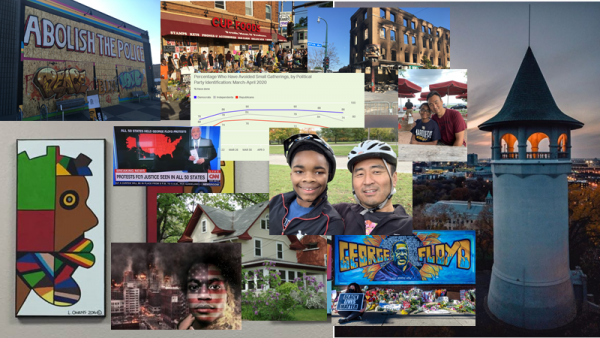
Wonderful/Wretched Memories of Racial Dynamics in the Twin Cities, Minnesota” by Walter R. Jacobs. In this series, social scientists with ties to the Twin Cities share their stories and reflections about experiencing race in the “Land of 10,000 Lakes.”

If you are a social scientist who also has ties to the Twin Cities of Minneapolis and St. Paul but now lives elsewhere, we’d love to include your stories as a component of this collective action. Stories from White social scientists as well as from social scientists of color are welcome, as we aspire to document the full range of experiences of the racial dynamics of the Twin Cities. Please send your reflections to Walt Jacobs at walt.jacobs@sjsu.edu.

In “Protests and Pandemic Jolt Public Opinion,” Ron Anderson examines the factors contributing to dizzying shifts in American attitudes toward the Black Lives Matter movement.

The Fire This Time,” a reprint from the Harvard Gazette by staff writer Christina Pazzanese, features a deep and wide-ranging interview with sociologist Lawrence D. Bobo about police killings of black men, racial bigotry, and violence.

From Our Partners:

Council on Contemporary Families:

Challenges Facing Cohabiting Couples Differ from those of Married Couples in this Crisis” by Amanda Miller and Sharon Sassler.

Sociological Images:

What’s Trending? The Happiness Drop” by Evan Stewart.

Contexts:

Police Officers Need Liability Insurance” by Rarkimm Fields.

#courageisbeautiful but PPE is Better: White Supremacy, Racial Capitalism, and COVID-19” by Jean Beaman and Catherine J. Taylor.

Intimacy on the Mats and in the Surf” by Kyle Green and Clifton Evers.

From Our Community Pages:

Last Week’s Roundup

Sign Up for Inbox Delivery of the Roundup

TSP Edited Volumes

Welcome back! This week we bring you a series of special features showcasing reflections on racial dynamics in the Twin Cities and a special feature unpacking the potential benefits and challenges of requiring police officers to carry their own misconduct insurance.

Special Features:

Wonderful/Wretched Memories of Racial Dynamics in the Twin Cities, Minnesota” by Walter R. Jacobs. In this series, social scientists with ties to the Twin Cities share their stories and reflections about experiencing race in the “Land of 10,000 Lakes.”

If you are a social scientist who also has ties to the Twin Cities of Minneapolis and St. Paul but now lives elsewhere, we’d love to include your stories as a component of this collective action. Stories from White social scientists as well as from social scientists of color are welcome, as we aspire to document the full range of experiences of the racial dynamics of the Twin Cities. Please send your reflections to Walt Jacobs at walt.jacobs@sjsu.edu.

In “How Individual Professional Liability Insurance Could Reform US Policing,” Stephen Wulff shows how police misconduct insurance would work in practice, and explains why more routinely holding individual officers financially accountable for their misconduct could reduce undue police violence.

From Our Partners:

Contexts:

Discrimination Affects Generations” by Kelsey Drotning.

Gender Sucks for You and Me” by Sydney Yarbrough.

Racial Disparities in Job Seeking” by Natasha Chhabra.

Council on Contemporary Families:

Uber-Rich Parents and Their Fixers May Be Just the Tip of the Iceberg. Turns Out It’s Hard for Teachers to Resist Pushy Parents” by Virginia Rutter.

Sociological Images:

Viral Votes & Activism in the New Public Sphere” by Evan Stewart and Bob Rice.

Party Affiliation in a Pandemic” by Ron Anderson.

From Our Community Pages:

The Center for Holocaust and Genocide Studies discusses the need to dismantle white supremacy and reexamines the play Biedermann and the Arsonists as a parable of the complacency and cowardice of the common man.

Last Week’s Roundup

Sign Up for Inbox Delivery of the Roundup

TSP Edited Volumes

Welcome back! During the past two cataclysmic weeks, sociologists have been working to process the horrific murder of George Floyd. Some have channeled their thoughts and emotions into the pieces featured here on TSP. These include research examining the experiences with and attitudes towards police among Black residents of North Minneapolis, an analysis of how social movements like the recent protests for justice generate social consensus, and advice for educators working to make the world a more just and democratic place.

Discoveries:

Service and Social Class in College Students’ Plans” by Jean Marie Maier explores how participants in programs like Teach for America and Peace Corps differ by social class in their motivations for joining.

Public Assistance Provides Food and Shelter” by Allison Nobles. New research examines the relationship between cash assistance and food insecurity and student homelessness.

Teaching TSP:

Online Learning On the Fly, Lessons from Minnesota by Jillian LaBranche. A graduate-level “Teaching Sociology” course reports on how the mid-semester transition to online learning impacted the workload of teaching assistants.

Special Features:

Legal Estrangement and Police Reform in Minneapolis.” Michelle Phelps, Amber Joy Powell, and Christopher Robertson trace the process of police reform through the eyes of the local police, professionals and activists involved in reform, and residents in North Minneapolis, the residential community most impacted by high rates of poverty, racial segregation, street crime, and police contact.

From Our Partners:

Council on Contemporary Families:

When “Helicopters” Go to School: Who Gets Rescued and Who Gets Left Behind?” by Jessica McCrory Calarco.

Can This Time at Home Help Your Marriage?” by Barbara Risman.

Sociological Images:

Conflict Brings Us Together” by Evan Stewart.

From Our Community Pages:

Dispatches from a Dean suggests tangible steps that we can take as social scientists and educators to contribute to solutions to social problems.

Cyborgology examines the social psychology of “Zoom fatigue” and the risks and challenges of online sex work.

Sociological Toolbox explains how the disproportionate use of lethal force by police officers against Blacks is measured and provides actionable steps that antiracists can take to further social equity.

The Center for Holocaust and Genocide Studies explores how a genocide’s number of casualties is used in debates over true victimhood and recaps an interview with Ran Zwigenberg about survivor politics, the gendered dimensions of social work, praxis of care, and the notion of social trauma.

Last Week’s Roundup

Sign Up for Inbox Delivery of the Roundup

TSP Edited Volumes

Welcome back! This week, we feature new research on media verification, a reflection on the advantages of e-service learning, and a synthesis of TSP titles commemorating this strange semester’s end.

Discoveries:

Check it out, or check out? When audiences spend extra time with content” by Nick Mathews. New research investigates whether people are more likely to verify content when it comes from a source they distrust or one they consider credible. The results may surprise you.

Teaching TSP:

Social distancing is no reason to stop service learning – just do it online.” In this article reposted from The Conversation, Marianne Krasny argues that online service learning can be just as valuable as service learning done in person — and sometimes more.

The Editors’ Desk:

In “Ode to TSP: COVID-19 Edition,” Amy August “celebrates” one of the strangest and most challenging semesters we’ve faced, using the titles of recent and classic TSP posts.

TSP Classics:

Screen Time in Summer Time” by Amy August. Last year, The Atlantic talked with Jessica Calarco about how screen time guidelines make assumptions that may not be true for all families. In the time of the Covid-19 school closures, her message seems especially apt.

From Our Partners:

Contexts:

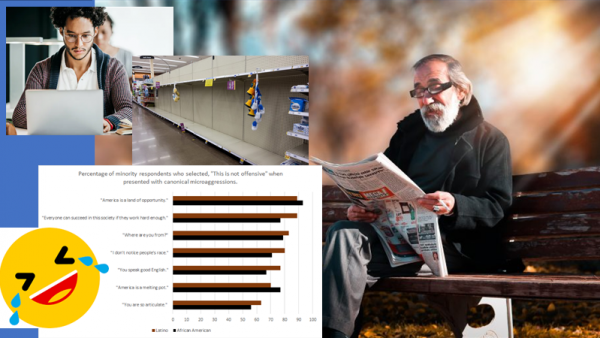
Who Gets to Define What’s ‘Racist?’” by Musa al-Gharbi.

From Our Community Pages:

Cyborgology asks, “What’s so funny about derogatory memes?

Last Week’s Roundup

Sign Up for Inbox Delivery of the Roundup

TSP Edited Volumes

Happy Friday! This week, we feature a guest post on the UFC; a reflection on TSP, community, and belonging; and new research on hip hop. We also share sociological accounts of Covid caretaking and the illusion-destroying power of the pandemic.

Features:

In “Refusing to Throw in the Towel,” Kyle Green and Nancy Kidder examine the story of the UFC’s decision to resume fighting and what it reveals about the social pressures sporting organizations face in returning to action.

The Editors’ Desk:

In “Ode to TSP,” graduate editor Allison Nobles shares a heartfelt reflection on her time at the helm of The Society Pages.

Discoveries:

Emcees and Communities, Black Placemaking as Artist-Shaping” by Neeraj Rajasekar. We bring you new research exploring how hip hop artists build community resilience and solidarity as they bring their artistic visions to life.

From Our Partners:

Council on Contemporary Families:

Connecting Crises of Carework in the Era of Coronavirus” by Amber Crowell and Jennifer Randles.

From Our Community Pages:

Center for Holocaust and Genocide Studies discusses connections between Wilhelm II’s Germany and Trump’s USA.

A Backstage Sociologist explores how the pandemic serves to remind us of the human condition.

Last Week’s Roundup

Sign Up for Inbox Delivery of the Roundup

TSP Edited Volumes

Welcome Back! This week, we feature guest posts on death and COVID-19 and on the challenges of communicating via Zoom. We also bring you research on carework and historical changes in the mortality rate, and an analysis of the reopening of Taiwanese baseball.

Features:

It’s true. Isolated COVID-19 deaths are terrible. But where does inequality fit in?Karen Lutfey Spencer and Aubrey Limburg show us that while coronavirus heightens existing inequalities, death may be the “great equalizer.”

Group Interaction in the Age of Zoom.” Ron Anderson examines how symbolic interactionism can help us to better understand the differences between online and in-person communication.

There’s Research on That:

Caring is Work” by Allison Nobles. We round up research on different forms of carework performed historically and around the world.

Changes in How and When We Die” by Jean Marie Maier. We round up epidemiological research explaining how the relationship between human beings and disease has changed over time.

From Our Partners:

Contexts:

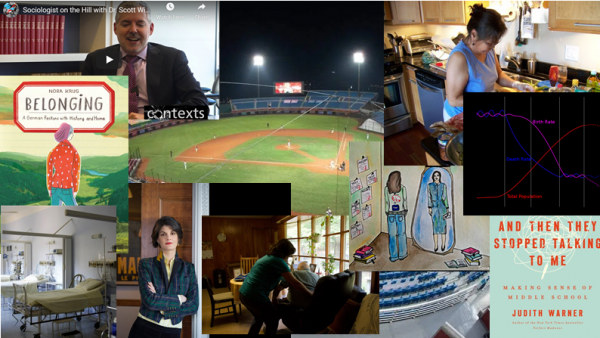
Sociologist on the Hill with Dr. Scott Winship” by Josh McCabe.

Council on Contemporary Families:

An Interview with Judith Warner about her new book on Middle Schoolers” by Arielle Kuperberg.

From Our Community Pages:

Engaging Sports examines nationalism in Taiwan as the nation’s professional baseball teams return to play in stadiums without fans.

Center for Holocaust and Genocide Studies interviews author and illustrator Nora Krug about her new visual memoir of her German family history and WWII.

Last Week’s Roundup

Sign Up for Inbox Delivery of the Roundup

TSP Edited Volumes

Welcome Back! This week, we spotlight medical sociologists’ analyses of how COVID-19 will affect the equity, delivery, and organization of the US healthcare system. We also feature new research on fertility decision-making.

Features:

COVID-19: Dispatches from Medical Sociology.” Tania M. Jenkins and Elaine M. Hernandez team up in this four-part series to provide insight on how the current COVID-19 pandemic is changing the landscape of American healthcare.

Discoveries:

Siblings and Coworkers as Fertility Influencers” by Jean Marie Maier. New research shows that the decision to have kids is contagious. Find out which members of women’s personal networks are the most influential.

From Our Partners:

Contexts:

COVID-19 and the Future of Society” by Rashawn Ray and Fabio Rojas.

Council on Contemporary Families:

Your Gift to Health Care Providers, Yourself, and Your Family” by Stefan Timmermans and Chloe Bird.

Last Week’s Roundup

Sign Up for Inbox Delivery of the Roundup

TSP Edited Volumes

Welcome Back! This week, we feature a sociological review of the new Netflix drama Orthodox and research showing how social distancing might shape demand for sexbots. We also share new research on multiracial churches and women in leadership.

Features:

In “Love, Sex (Dolls) and Robots in the Age of Coronavirus?Katherine Bright examines what sex-toys-for-hire can teach us about the intersections of eroticism, technology, and consumerism.

Unorthodox Captures Many Truths of Leaving Hasidic Communities” by Schneur Zalman Newfield. This review highlights three themes of the exit process from religion that are backed by research and dramatized in Unorthodox.

Discoveries:

Gendered Risk and Leadership Ambitions” by Jean Marie Maier. New research helps explain why many women turn down leadership opportunities.

White Pastors Hoard Social Capital” by Erika Sanborne. We bring you new research revealing differences in Black and white pastors’ access to the resources that come from social relationships.

From Our Partners:

Contexts:

Education under COVID-19” by Rashawn Ray and Fabio Rojas.

Council on Contemporary Families:

Sex and Consent on Campus: Definitions, Dilemmas, and New Directions” by Deborah L. Rhode.

Sociological Images:

Partisanship and the Pandemic” by Morgan C. Matthews.

From Our Community Pages:

Last Week’s Roundup

Sign Up for Inbox Delivery of the Roundup

TSP Edited Volumes

Welcome Back! This week, we share ASA’s COVID-19 resources for instructors along with research to help explain why teaching and meeting online can be so exhausting. We also feature new health research on the impacts of discrimination and anti-vaxxers’ complicated attitudes about medical interventions.

The Editors’ Desk:

Sociological Resources from ASA During COVID-19.” We bring the invaluable sociological resources made available on ASA’s website to TSP’s broader audience.

Discoveries:

How Children’s Discrimination Harms Mothers’ Health” by Allison Nobles. New research explores the “spillover effects” of stressors like unfair treatment on the health of family members.

“Calling the Shots:” Anti-Vaxxers and Medicinal Intervention” by Jillian LaBranche. New research shows that, despite anti-vaxxers’ strong feelings about pharmaceutical interventions, many do not reject them all.

Teaching TSP:

Three Reasons You Might Be Exhausted Right Now” by Erika Sanborne. Social psych research weighs in on why videoconferencing can feel so draining.

In “Teaching synchronously? Asynchronously? Which is really better?,” Erika Sanborne weighs the pros and cons of each method, and reminds instructors: hang in there and be kind to yourself–you’re probably doing great!

From Our Partners:

Contexts:

Welfare Policy, Prisons, and Families during the COVID-19 Pandemic” by Rashawn Ray and Fabio Rojas.

Inequality during the Coronavirus Pandemic” by Rashawn Ray and Fabio Rojas.

Council on Contemporary Families:

Fixing Parental Leave: The Six Month Solution” by Gayle Kaufman.

From Our Community Pages:

Last Week’s Roundup

Sign Up for Inbox Delivery of the Roundup

TSP Edited Volumes

Welcome Back! This week, we round up sociological research on astrology, and feature guest posts critiquing the use of the phrase “social distancing” and explaining how to make sense of the COVID-19 models that are now omnipresent.

Special Features:

In “What are COVID-19 Models Modeling?,” jimi adams explains three commonly used models, how they work, and what kinds of clarity they can provide despite their uncertainty.

The Editors’ Desk:

In “Why Social Distancing is the Wrong Phrase,” Ron Anderson explains the origin of the term “social distancing” as a way to measure the amount of separation between social groups.

There’s Research on That:

Reach For the Stars” by Christine Delp and Jillian LaBranche. We round up research examining how alternative belief systems like astrology can help us find community and grapple with uncertainty.

Teaching TSP:

Using TSP’s Partner and Community Pages to Teach Online” by Allison Nobles. This post provides an overview of the high-interest and accessible sociological content that’s available on TSP and great for teaching.

From Our Partners:

Contexts

COVID-19 Policies from Around the World” by Rashawn Ray and Fabio Rojas.

Structural Shocks and Extreme Exposures” by Rashawn Ray and Fabio Rojas.

Council on Contemporary Families

What Covid-19 Reveals About the Social Safety Net in the United States” by Sinikka Elliott.

From Our Community Pages:

Last Week’s Roundup

Sign Up for Inbox Delivery of the Roundup

TSP Edited Volumes