weekly roundup

Happy Friday! This week, we feature new research on stereotypes and reporting, algorithms used to drive policy, and the importance of Census data for understanding race, diversity, and inequality.

Discoveries:

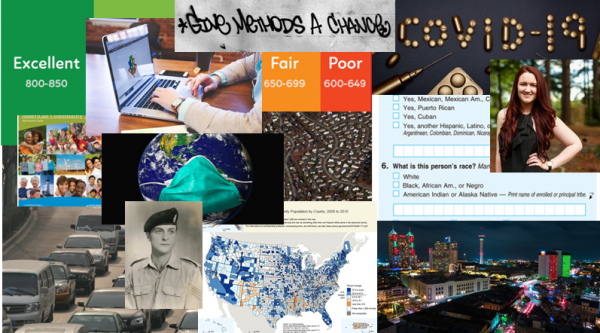
Traffic Accident Reporting Drives Gender Stereotypes” by Jean Marie Maier. We bring you new research investigating how gender stereotypes about bad drivers are perpetuated by the media.

Algorithmic Blues: Accuracy Versus Morality in Policy Debates” by Mahala Miller. New research explores how policymakers feel about insurance companies’ use of credit scores to predict prices–one consequential example of a predictive algorithm used to set policy.

There’s Research on That:

A #TSPClassics Collection: The Sociology of the Census” by Neeraj Rajasekar. We round up research on the history and methods of conducting the Census, and how social scientists have used Census data in research and theory-building.

From Our Partners:

Contexts

Con Corazón San Antonio” by Fabio Rojas.

Healthcare and Critical Infrastructure” by Rashawn Ray and Fabio Rojas.

COVID-19 Impact on Asia and Beyond” by Rashawn Ray and Fabio Rojas.

Council on Contemporary Families

Online learning will be hard for kids whose schools close – and the digital divide will make it even harder for some of them” by Jessica Calarco.

From Our Community Pages:

Last Week’s Roundup

Sign Up for Inbox Delivery of the Roundup

TSP Edited Volumes

Welcome back! This week, we provide resources to help instructors move the courses they designed to teach in person fully online. We also bring you new research examining colorism in NCAA basketball commentary, and a roundup of research on the impact of economic recessions on family life.

Discoveries:

Throwin’ Shade On the Court” by Christine Delp. New research helps us to understand how NCAA broadcast announcers talk differently about the physical performance, physicality, and mental ability of lighter and darker-skinned players.

There’s Research on That:

Portent of Things to Come? How the Great Recession of 2008 Changed Family Life” by Mahala Miller. We round up research on how the Great Recession of 2008 impacted families’ decision-making to help us imagine what might lie ahead.

Teaching TSP:

Using TSP to Teach Online” by Allison Nobles. We offer a guide to the clear, concise, and public-facing sociological content on our site, and suggestions for how to incorporate it in lessons for undergraduates! 

Teaching Something Suddenly-Online that you Designed for an In-Person Course due to #COVID19” by Erika Sanborne. This post offers helpful and reassuring advice for making online courses accessible, delivering course content, and assessing student learning.

From Our Partners:

Contexts

The Global Coronavirus Epidemic: Commentary on East Asia’s Response” by Rashawn Ray and Fabio Rojas.

Council on Contemporary Families

Love in the time of Corona: How to stay connected with family when we “gotta keep ’em separated”” by Patricia N. E. Roberson.

Last Week’s Roundup

Sign Up for Inbox Delivery of the Roundup

TSP Edited Volumes

Welcome back! This week, we bring you new research on rural college-goers and a TSP Classic on the sociology of public outings. We also bring back a popular piece from Soc Images that helps us understand the relationship between social inequality, fears about health, and pandemics.

Discoveries:

Parents’ Lack of Education Fuels Push for Children’s Education” by Nick Matthews. New research helps us to understand how rural parents, often lacking financial resources or higher education, can be an asset to their children’s college-going.

Best of 2018: More Than Just a Walk in the Park” by Brooke Chambers. We bring back this TSP Classic exploring how our public outings are influenced by social factors, like identity and bias.

From Our Partners:

Contexts

Call for Papers: The Global Impact of the Coronavirus” by Rashawn Ray and Fabio Rojas.

Working to Live: Winter 2020” by Rashawn Ray and Fabio Rojas.

Gender in the One Percent” by Jill Yavorsky, Lisa Keister, and Yue Qian.

American Academics’ Apathy and Complicity in Palestinian Oppression” by Johnny E. Williams and David G. Embrick.

Sociological Images

Back by popular demand! We reposted “Social Inequality, Medical Fears, and Pandemics” by Joseph O. Baker, Ann Gordon, L. Edward Day, and Christopher D. Bader.

From Our Community Pages:

Last Week’s Roundup

Sign Up for Inbox Delivery of the Roundup

TSP Edited Volumes

Welcome back! This week, we round up research on disease and discrimination to help make sense of the coronavirus from a sociological perspective. And, as spring break looms large, we offer a collection of scholarship on celebration and solidarity, and new research on exchange rates.

There’s Research on That:

Disease Exposes Discrimination” by Allison Nobles. We bring together research on the long, problematic history of blaming marginalized groups for the spread of infectious disease.

The Social Science of Spring Break” by Neeraj Rajasekar. Partying is packed with sociological ideas, and we round up research unpacking the social processes of rituals, festivals and trips.

Discoveries:

Vitriol & Volatility: How Trump’s Tweets Affect the Peso” by Jillian LaBranche. New scholarship finds a relationship between the President’s derogatory tweets about Mexico and the U.S. Dollar-Mexican Peso exchange rate.

From Our Partners:

Sociological Images

Social Inequality, Medical Fears, and Pandemics” by Joseph O. Baker, Ann Gordon, L. Edward Day, and Christopher D. Bader.

Does Blindness Beat Bias?” by Evan Stewart.

Council on Contemporary Families:

Working Parents are Leaders” by Stew Friedman and Alyssa Westring.

From Our Community Pages:

Last Week’s Roundup

Sign Up for Inbox Delivery of the Roundup

TSP Edited Volumes

Welcome back! This week we’ve got new research on who’s having same-sex sex and what resources Black and white teachers get from same-race social ties. We also round up research on how American history textbooks cover violence, national figures, and more.

There’s Research on That:

ConTEXTualizing Historical Knowledge,” by Jillian LaBranche. American history textbooks vary wildly in educational content. To understand more, we review social science research on how textbooks cover violence, national figures, and more.

Discoveries:

Black and White Teachers’ Access to School Resources,” by Amber Joy Powell. New research in the American Journal of Sociology finds that Black teachers do not get the same resources as white teachers do from same-race social ties at work.

Who Is Having More Same-Sex Sex? by Jean Marie Maier. New research in Gender & Society finds that younger people demonstrate more same-sex sexual behavior than older people, with a greater increase for women and black men.

From Our Partners:

Council on Contemporary Families:

What’s New About Consent,” by Rebecca L. Davis.

From Our Community Pages:

Last Week’s Roundup

Sign Up for Inbox Delivery of the Roundup

TSP Edited Volumes

Welcome back! This week we’ve got new research on public health epidemics and media coverage, how social ties help refugees, and reflections on colleges’ role in reducing unwanted sex on campus.

There’s Research on That:

Contagion and Panic in the Media,” by Allison J. Steinke. In light of current coronavirus concerns, we review social science research on public health epidemics and media coverage.

Journalism’s Evasive Objectivity Norm,” by Allison J. Steinke. In recent years ideals of fairness, accuracy, and balance in journalism have come under increasing attack, so we rounded up research on objectivity in journalism.

Discoveries:

How Social Ties Help Refugees,” by Allison Nobles. New research in Socius finds that refugees need both strong and weak social ties to meet their needs in an unfamiliar society.

From Our Partners:

Council on Contemporary Families:

No Easy Answers: Can Colleges Define Consent and Reduce Unwanted Sex?” by Stephanie Coontz and Paula England.

Sociological Images:

What’s Weird about Where You’re From?” by Evan Stewart.

From Our Community Pages:

Last Week’s Roundup

Sign Up for Inbox Delivery of the Roundup

TSP Edited Volumes

Welcome back! This week, we bring you research on graduate student debt, and a review of a new book investigating the stress and sleeplessness of Gen X women. We also feature a roundup of 16 TSP Classic posts that demonstrate why it’s important to celebrate Black history all year long.

Discoveries:

Graduate Student Debt is Growing but Stratified” by Jean Marie Maier. New research on student loans identify graduate school as a major contributor to rising debt. Find out which students are better positioned by their degrees to pay it off.

The Editor’s Desk:

American Women on the Verge: A review of Ada Calhoun’s Why We Can’t Sleep” by Syed Ali.

From Our Partners:

Council on Contemporary Families:

The Puzzling Persistence of Gendered Dating” by Ellen Lamont.

Sociological Images:

Hopeful Research on Romance” by Evan Stewart.

From Our Community Pages:

TSP Classics:

As Black History Month draws to a close, we bring you “From the #TSPClassics Collection: Black History Month, a TROT that rounds up our favorite, timeless posts about the history, meaning, and importance of celebrating Black history.

Presidents Pick the Power Elite” by Mark Lee. This TSP Classic Clipping draws on sociological expertise to understand the influence of millionaire investors on government leaders.

Last Week’s Roundup

Sign Up for Inbox Delivery of the Roundup

TSP Edited Volumes

Welcome back! This week, we round up research on different understandings of virginity and the high costs imposed on the poor. We also bring back two classics from the archives: one features research on ways to engage in constructive conversations about political issues, and the other, a discussion of how who is allowed to claim an American Indian identity has changed over time.

There’s Research on That!:

Virginity as a Social Construction” by Allison Nobles and Amber Joy Powell. We round up research on the different meanings of virginity and its loss and how many of these beliefs can have negative consequences for women and girls.

Poverty is Expensive” by Allison Nobles. We gather research showing that, relative to their income, the poor pay far more for necessities like food and housing. Compounded by the burden of debt, these expenses adversely affect the lives of the poor in many ways.

From Our Partners:

Sociological Images:

Cut the Turkey and Run” by Evan Stewart.

Council on Contemporary Families:

Why we won’t call 911: Too often, police officers’ response to mental illness is deadly” by Stacy Torres.

From Our Archives:

There’s Research on That!:

Table Talk for Thanksgiving” by the Grad Board. We provide research-backed suggestions for engaging with family members across the political aisle during holiday dinners.

Clippings:

Measuring American Indian Identities” by Lucas Lynch. We recap an NPR conversation among social scientists about the changing criteria for establishing an American Indian identity.

Last Week’s Roundup

Sign Up for Inbox Delivery of the Roundup

TSP Edited Volumes

Welcome back! This week, we round up research on fake news and its role in political polarization, and we feature new studies on the effects of school suspensions and a form of managerial household work known as cognitive labor. 

There’s Research on That!:

Fake News: Definitions, Facts, and Implications,” by Allison J. Steinke. We rounded up social science research on what fake news is and why it matters.

Discoveries:

How School Suspension Impacts Friendships,” by Amber Joy Powell. New research in Criminology finds that disciplinary practices like suspension, which are disproportionately targeted towards racial and ethnic minority youth, weaken friendships with fellow classmates.

Household Management is Double the Toil and Trouble for Women,” by Amy August. New research in American Sociological Review finds that women do most of the cognitive labor in a household, like anticipating needs of family members.

Teaching TSP:

Teaching Students to Think Sociologically about Climate Change,” by Amy August. New research in Teaching Sociology finds that environmental concerns are usually overlooked in introductory sociology classes. The authors suggest ways to interweave climate change into all areas of curriculum.

From Our Partners:

Sociological Images:

Fragile Families in Lilo and Stitch,” by Lena Denbroeder.

Council on Contemporary Families:

Fears of Violence: Concerns of Middle-Class Latinx Parents,” by Lorena Garcia.

And from the Community Pages:

Last Week’s Roundup

Sign Up for Inbox Delivery of the Roundup

TSP Edited Volumes

Welcome back! Submissions are open for this year’s Teach with TSP contest – if you use TSP in your classroom, tell us how! This week we’ve got research on sociological storytelling to explain why fans hated the last season of Game of Thrones. We also bring back content on Indigenous People’s Day and for-profit prisons.

There’s Research on That!:

What Makes a Good Story?” by Amy August. Earlier this year the Scientific American suggested fans despised the last season of Game of Thrones because the storytelling changed from sociological to psychological. This made us think about what makes a good story and we rounded up social science research on storytelling.

Why We Honor Indigenous Peoples’ Day,” by Allison Nobles. For Indigenous Peoples’ Day earlier this week, we gathered social science research to help us understand the underlying gender and racial components of colonial settlement in the United States.

For Profit Prisons and the Immigrant Industrial Complex,” by Caity Curry. In light of California’s recent decision to not renew contracts with for-profit prisons, we brought back a post from the archive on how for-profit prisons enable mass incarceration of immigrant populations.

From Our Partners:

Council on Contemporary Families:

Raising a Village: Identifying Social Supports for All Kinds of Families,” by Caitlyn Collins.”

And from the Community Pages:

Last Week’s Roundup

Sign Up for Inbox Delivery of the Roundup

TSP Edited Volumes