Uncategorized

Welcome back! During the past two cataclysmic weeks, sociologists have been working to process the horrific murder of George Floyd. Some have channeled their thoughts and emotions into the pieces featured here on TSP. These include research examining the experiences with and attitudes towards police among Black residents of North Minneapolis, an analysis of how social movements like the recent protests for justice generate social consensus, and advice for educators working to make the world a more just and democratic place.

Discoveries:

Service and Social Class in College Students’ Plans” by Jean Marie Maier explores how participants in programs like Teach for America and Peace Corps differ by social class in their motivations for joining.

Public Assistance Provides Food and Shelter” by Allison Nobles. New research examines the relationship between cash assistance and food insecurity and student homelessness.

Teaching TSP:

Online Learning On the Fly, Lessons from Minnesota by Jillian LaBranche. A graduate-level “Teaching Sociology” course reports on how the mid-semester transition to online learning impacted the workload of teaching assistants.

Special Features:

Legal Estrangement and Police Reform in Minneapolis.” Michelle Phelps, Amber Joy Powell, and Christopher Robertson trace the process of police reform through the eyes of the local police, professionals and activists involved in reform, and residents in North Minneapolis, the residential community most impacted by high rates of poverty, racial segregation, street crime, and police contact.

From Our Partners:

Council on Contemporary Families:

When “Helicopters” Go to School: Who Gets Rescued and Who Gets Left Behind?” by Jessica McCrory Calarco.

Can This Time at Home Help Your Marriage?” by Barbara Risman.

Sociological Images:

Conflict Brings Us Together” by Evan Stewart.

From Our Community Pages:

Dispatches from a Dean suggests tangible steps that we can take as social scientists and educators to contribute to solutions to social problems.

Cyborgology examines the social psychology of “Zoom fatigue” and the risks and challenges of online sex work.

Sociological Toolbox explains how the disproportionate use of lethal force by police officers against Blacks is measured and provides actionable steps that antiracists can take to further social equity.

The Center for Holocaust and Genocide Studies explores how a genocide’s number of casualties is used in debates over true victimhood and recaps an interview with Ran Zwigenberg about survivor politics, the gendered dimensions of social work, praxis of care, and the notion of social trauma.
Last Week’s Roundup

Sign Up for Inbox Delivery of the Roundup

TSP Edited Volumes

In “celebration” of the most challenging academic semester of our lives, our summer grad editor Amy August challenged herself to write a column based only on recent and classic TSP titles. Here’s what she produced. Feel free to link to actual stories along the way!  

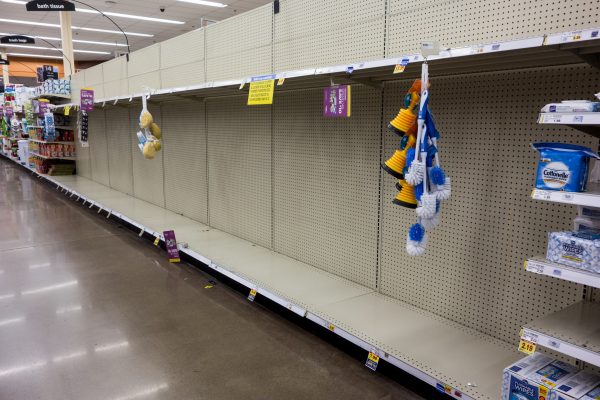
As the Coronavirus pandemic spread, Krogers experienced a toilet paper shortage. Photo by Danielteolijr via Wikipedia.

During the Coronavirus Pandemic, it would be ludicrous to claim that there were No Big Surprises in the First Month. From the beginning, it started to seem like  We Are Living In A Computer Simulation and that Computer Voices are “Calling the Shots:” We had to “Take Courage,” they said. And so we asked ourselves Why We are Uncomfortable Talking to Our Computers, and Whose Problem Is It? that we don’t have enough toilet paper. How can we continue Squatting with Dignity in India and everywhere else without Some Resources that are absolutely necessary? We started to imagine The bathroom of the future, pondering topics like, just How does a waterless urinal work? (But, then again, What’s Ikea for? if not supplying answers to these Big Questions.)

Education Under COVID-19 has changed as well, and even though our own American Parents Emphasize Hard Work, we’re still not used to seeing that Caring is Work. As teachers and TAs, there are at least Three Reasons You Might Be Exhausted Right Now, but probably many more. Nobody is good enough, and we may accomplish Perfection, but not Brilliance, no matter what we do. It seems that Students of All Backgrounds Prefer Teachers of Color, but also Community Building in the Classroom. After all, Online learning will be hard for kids whose schools close – and the digital divide will make it even harder for some of them.

We keep trying to be The Way We Still Never Were, but “Doing Nothing” During the COVID-19 Suspension of everything is not an option. Merely acclimating to the new  “Normal” Is Not Good Enough. We must engage in Spring Cleaning, Food Shopping, and succumb to The Drain of Doing the Dishes. Make sure to Do Your Chores (Whatever They Are), lest you wind up living in a Care Vacuum. There really is No Rest for the Weary.

Moreover, we have entered a time When Breadwinning Is Not Enough; now we have to be Superheroes at work as well. We stretch the Definition of ’Hero’ when we say, “ This guy is my new hero!” everytime we go to the grocery store or convenient care. Yet we still don’t know How to Honor our Heroes adequately, and these Changes in How and When We Die are hard to handle. 

But depending on Where You’re From? you may now face Too Many Choices with regard to your time. Some of us have traded in Working for the Long Weekend for the indefinite future. The appropriate answer to the question, “Whose Time is it?”: your time! Some of us have managed to combine Work + Leisure = Weisure quite effectively, after all. Others have used the time to become YouTuber Influencers. (What is an internet celebrity anyway?)

While some may be writing odes On Graduate School Misery, the TSP editors and grad board have handled all of this with Creative Resistance and The beauty and strength of Wonder Woman. As they say, The More Things Change. And we’ve gotta be at least Halfway There by now. To this, I say, Frack Yes! and make a (hopefully) Graceful Exit

Friday was the final TSP Board meeting for long-time member and graduate editor Allison Nobles. Allison marked the occasion with some remarkably candid and heartfelt reflections of her time on TSP, which she generously agreed to share with our readers. Although a bit more backstage than our usual TSP fare, we offer Allison’s remarks because they are such a powerful tribute to the special group of graduate students who make TSP possible–AND because it’s more important than ever to share such moments of gratitude, grace, and togetherness with each other in the face of the COVID-19 crisis.

— TSP Editors Doug Hartmann and Chris Uggen

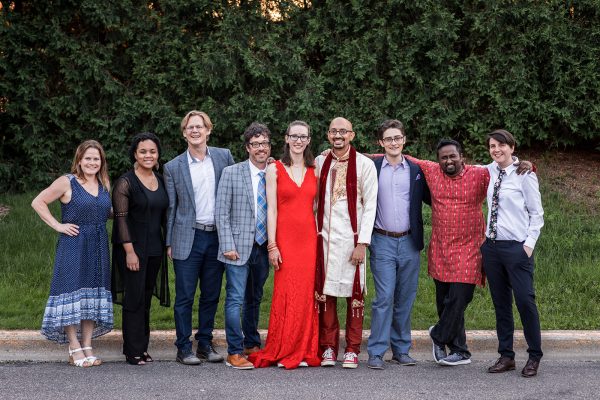
The TSP crew at Allison and Bala’s wedding, Summer 2019. Photo by Penny Photographics.

In the spring semester of my first year in grad school, in 2015, several of my cohort-mates joined The Society Pages (TSP). I tried to pretend not to be interested, but in reality, I was super jealous. I remember one morningI heard the TSP crew laughing from another room. It just sounded like everyone was having a great time. Plus, my cohort-mates were actually writing stuff in their first year of grad school and sharing it all over facebook — “look at this new thing I wrote!” 

I knew I had to get in there. 

Essentially, The Society Pages  is a website where grad students (and others) write stuff about sociological research — what new research is coming out, how sociology can speak to current events, and so on. But it’s much, much more than that. TSP supplies you with all sorts of intangible skills and social connections that go beyond its purpose on paper. 

For me, TSP was a community, a space where I found friendship and support, and a place where I learned I had value. Maybe that sounds harsh — but as a grad student in my early 20s, constantly struggling with imposter syndrome and trying to figure out my place in the world, I seriously needed that validation. Through my time with TSP, I learned that my writing is worth reading, that people actually want to know my opinions, that they cherish my friendship, and that they value my leadership. 

I also learned a lot about the field of sociology, about academia, and I picked up quite a few useful skills along the way. Sociology is HUGE, diverse, and I learned that mostly, I like all of it. It doesn’t have to be boring — there’s plenty of space for creativity in sociology — and it doesn’t have to be jargony or confusing for the sake of being confusing. In my time at TSP, I came to truly value public sociology and doing public sociology in a way that can be understood by people who don’t know much about it. 

Here’s another big thing I learned: my colleagues are freaking awesome. When you’re in grad school, it’s hard to get a sense of your fellow grad students’ talents, skills, and ambitions (again, see imposter syndrome). You often don’t even get to read anything they’ve written until it’s published in a journal. In TSP, you not only get to see people write stuff pretty often, you get to workshop their writing during Friday meetings, hear their creative ideas in brainstorming sessions, and listen to why they are passionate about particular research during the days we pitch discovery articles. And if you pay attention, you also learn what your colleagues are good at: you see who is great at rephrasing things other people say, who asks really detailed questions you never would have thought of, who sees the “big picture,” who can type and talk at the same time, who gives constructive yet supportive feedback, who can teach you how to do a literature search without making you feel like a kindergartener, and whose energy makes everyone else perk up. To all of my colleagues during my time at TSP, I’m so glad I got to learn about you.

I’d be remiss if I didn’t mention that I spent nearly my whole term as grad student editor suffering some pretty serious and persistent concussion symptoms. I spend a lot of time thinking about how much more I could have done if that wasn’t the case, how much more I could have written, the new blogs I could have started, the ideas that never came to fruition. But I’m going to trust my very smart colleagues who have told me numerous times what a good job I’ve done as editor — and I know from the way they say it there isn’t an asterisk that says “even though you had a brain injury.” 

I’ve never told anyone this, but I think in some ways TSP saved me during the past two years. Sure, maybe sometimes I pushed myself too hard or tried to do more than my brain was capable of because I was editor and felt like I couldn’t take a break. But I probably would have done that no matter what. TSP gave me a supportive space to still feel productive — something I desperately needed (see definition of grad student). It also kept me connected to people. I wasn’t able to attend very many things in the department at that time or really go out and do anything (I was social distancing before it was cool). TSP was my community. I showed up every Friday for our board meeting — often wearing dark sunglasses and a floppy hat — knowing I would be greeted with smiles, hugs, and sometimes bagels. 

For all of those things and more, I say thank you.

Welcome Back! This week, we share ASA’s COVID-19 resources for instructors along with research to help explain why teaching and meeting online can be so exhausting. We also feature new health research on the impacts of discrimination and anti-vaxxers’ complicated attitudes about medical interventions.

The Editors’ Desk:

Sociological Resources from ASA During COVID-19.” We bring the invaluable sociological resources made available on ASA’s website to TSP’s broader audience.

Discoveries:

How Children’s Discrimination Harms Mothers’ Health” by Allison Nobles. New research explores the “spillover effects” of stressors like unfair treatment on the health of family members.

“Calling the Shots:” Anti-Vaxxers and Medicinal Intervention” by Jillian LaBranche. New research shows that, despite anti-vaxxers’ strong feelings about pharmaceutical interventions, many do not reject them all.

Teaching TSP:

Three Reasons You Might Be Exhausted Right Now” by Erika Sanborne. Social psych research weighs in on why videoconferencing can feel so draining.

In “Teaching synchronously? Asynchronously? Which is really better?,” Erika Sanborne weighs the pros and cons of each method, and reminds instructors: hang in there and be kind to yourself–you’re probably doing great!

From Our Partners:

Contexts:

Welfare Policy, Prisons, and Families during the COVID-19 Pandemic” by Rashawn Ray and Fabio Rojas.

Inequality during the Coronavirus Pandemic” by Rashawn Ray and Fabio Rojas.

Council on Contemporary Families:

Fixing Parental Leave: The Six Month Solution” by Gayle Kaufman.

From Our Community Pages:

Last Week’s Roundup

Sign Up for Inbox Delivery of the Roundup

TSP Edited Volumes

The American Sociological Association has some great sociological resources on their website related to COVID-19. While they are primarily meant to support sociologists during this time, we think many of the resources will appeal to TSP’s broad audience. For example, ASA has curated a list of journal articles (open-access for the time being – no paywall!) related to COVID-19, like this article on how job insecurity relates to mental health. For instructors, ASA’s teaching resources platform, TRAILS, is currently open-access. Read more about the resources ASA is offering below.

Open Access ASA Journal Articles Relevant to COVID-19  

ASA has worked with our journal editors to create a curated collection of existing articles from ASA journals that could be useful when trying to respond to, cope with, and teach about the enormous disruptions this pandemic has produced.  A few examples of what you will find in the collection:

  • A graphic visualization of the cumulative effects of natural hazards on racial wealth gaps between 1999-2013 which sheds light on disparities in economic impact this pandemic may have.  
  • A socio-organizational approach to explaining empirical variation in rates of altruism. In the midst of the COVID-19 pandemic, social distancing might be conceptualized as an altruistic act that can be more or less effectively structured and developed by the organizational and institutional environment. 
  • The now classic article “Social Conditions as Fundamental Causes of Disease,” which has been cited nearly 5,000 times since it was first published in 1995.

Click here to freely access the full collection of articles.

Crowd Sourced: Sociologists in the News on COVID-19

Journalists are turning to sociologists to help them explain the social dimensions of the current crisis. We have created an open-access spread sheet devoted to collecting and sharing information about these media mentions and media appearances. Please help spread the word about sociologists in the news by adding information about your own media appearances and those you have seen.

Crowd Sourced: COVID-19 Projects Initiated by Sociologists

Sociologists are responding in creative ways to learn more about the pandemic and its consequences. They are collecting data, creating interdisciplinary research collaborations, and supporting their communities. We have launched an open-access spread sheet devoted to collecting and sharing information about these projects. You’ll see that some initiatives are already listed. We’re hoping you will add initiatives of which you are aware, and together we can disseminate information about these projects.  

TRAILS Remains Temporarily Open Access 

In response to COVID-19, ASA has temporarily made TRAILS, its peer-reviewed library of teaching and learning materials for sociology, available to everyone. Anyone may log in to TRAILS using their ASA username and password, regardless of their membership status. If someone does not have an ASA username and password, they can create one here. Please share this information with your colleagues.  

ASA Webinars – All Welcome

Sociology Student Town Hall: Navigating COVID-19. April 16, 2020. 3:00 p.m. Eastern. The Student Forum Advisory Board invites sociology graduate and undergraduate students to a town hall to discuss how to navigate the challenges of being a student during this difficult time. Whether you are taking courses or are in the final stages of writing your dissertation, the COVID-19 pandemic has impacted students in unique ways. We invite students at all stages to join us for a conversation to share resources, discuss coping strategies, and commiserate. Click here to register

Best Practices and Strategies for Successful Online Teaching. April 22, 2020. 3:00 p.m. Eastern.  Because of COVID-19, faculty have quickly moved their courses online, and their immediate focus is getting through the crisis. As institutions look beyond the current semester, a growing number are moving summer courses online and some are planning for this possibility for fall. In this previously scheduled webinar, Melinda Messineo will cover best practices for online teaching and learning, as well as sociology-specific recommendations to help faculty prepare for and improve their online teaching. Dr. Messineo is a professor of sociology at Ball State University. She was a member of theASA Task Force on Liberal Learning and the Sociology Major, where she was part of the subcommittee on online learning. Click here to register.

Expanded: ASA Webpage with COVID-19 Resources for Sociologists

ASA has expanded its webpage devoted to collecting and sharing resources useful to sociologists during the current crisis. New additions to the page include a recorded webinar, “College Students and Mental Health: Strategies for Supporting Students,” resources for students, and resources to support teaching and advising, including new links to online sociological content for courses. Among those, don’t miss the brand new video in the Sociological Insights series, “An Embrace of Christian Nationalism,” featuring research by Andrew Whitehead.

Welcome Back! This week, we round up sociological research on astrology, and feature guest posts critiquing the use of the phrase “social distancing” and explaining how to make sense of the COVID-19 models that are now omnipresent.

Special Features:

In “What are COVID-19 Models Modeling?,” jimi adams explains three commonly used models, how they work, and what kinds of clarity they can provide despite their uncertainty.

The Editors’ Desk:

In “Why Social Distancing is the Wrong Phrase,” Ron Anderson explains the origin of the term “social distancing” as a way to measure the amount of separation between social groups.

There’s Research on That:

Reach For the Stars” by Christine Delp and Jillian LaBranche. We round up research examining how alternative belief systems like astrology can help us find community and grapple with uncertainty.

Teaching TSP:

Using TSP’s Partner and Community Pages to Teach Online” by Allison Nobles. This post provides an overview of the high-interest and accessible sociological content that’s available on TSP and great for teaching.

From Our Partners:

Contexts

COVID-19 Policies from Around the World” by Rashawn Ray and Fabio Rojas.

Structural Shocks and Extreme Exposures” by Rashawn Ray and Fabio Rojas.

Council on Contemporary Families

What Covid-19 Reveals About the Social Safety Net in the United States” by Sinikka Elliott.

From Our Community Pages:

Last Week’s Roundup

Sign Up for Inbox Delivery of the Roundup

TSP Edited Volumes

Image of people each standing 6 feet apart from the others by Gordon Johnson from Pixabay

We share this writing in memoriam of Ron Anderson (June 14, 1941 – December 21, 2020) Professor Emeritus of sociology, University of Minnesota, Twin Cities. In the coming weeks, to honor Ron’s memory, we will share more of his writing.

Over the past month with lightning speed the phrase ‘social distancing’ became part of the American vocabulary. Epidemiologists invented the phrase in earlier epidemics to refer to avoiding close contact with other people during the outbreak of a contagious disease. The word now evokes such actions as staying six feet away from others, avoiding crowded places, stop handshakes and hugs and even washing your hands a lot.

But the phrase is not perfect. In fact, the World Health Organization and quite a few bloggers have called for use of an alternative phrase, ‘physical distancing’ to bring clarity. Their argument is that the word ‘social’ in social distancing suggests we should cut off relations with people. But in a pandemic, we desperately need social connecting via technology to avoid the social isolation that distancing demands.

From a sociological perspective another consideration is worth noting. Most of us have been advocating the reduction of social distance in the sense of reducing distance among race, class and sex-based groupings. Furthermore, almost 100 years ago a sociologist Emory S. Bogardus designed the research tool called the Bogardus Social Distance Scale. The tool measures the degree of separateness rather than closeness among any kind of social groups including race, class and gender. 

The long tradition of sociological measurement of social distance implies another argument against using ‘social distance’ to talk about being safe in an epidemic. We don’t want to inadvertently suggest people increase their distance with minority ethnic groups. We are living in a time when white nationalism has been rising and there are many reports of prejudice and discrimination toward Asians. We need to build less, not more social distance.

It is probably too late to get most people to switch phrases from ‘social distancing’ to ‘physical distancing’ or just ‘distancing.’ But you can add your thoughts about this issue to the dialog on Wikipedia or elsewhere on this important topic. And you can be more precise in your own use of distancing terminology.

Happy Friday! This week, we feature new research on stereotypes and reporting, algorithms used to drive policy, and the importance of Census data for understanding race, diversity, and inequality.

Discoveries:

Traffic Accident Reporting Drives Gender Stereotypes” by Jean Marie Maier. We bring you new research investigating how gender stereotypes about bad drivers are perpetuated by the media.

Algorithmic Blues: Accuracy Versus Morality in Policy Debates” by Mahala Miller. New research explores how policymakers feel about insurance companies’ use of credit scores to predict prices–one consequential example of a predictive algorithm used to set policy.

There’s Research on That:

A #TSPClassics Collection: The Sociology of the Census” by Neeraj Rajasekar. We round up research on the history and methods of conducting the Census, and how social scientists have used Census data in research and theory-building.

From Our Partners:

Contexts

Con Corazón San Antonio” by Fabio Rojas.

Healthcare and Critical Infrastructure” by Rashawn Ray and Fabio Rojas.

COVID-19 Impact on Asia and Beyond” by Rashawn Ray and Fabio Rojas.

Council on Contemporary Families

Online learning will be hard for kids whose schools close – and the digital divide will make it even harder for some of them” by Jessica Calarco.

From Our Community Pages:

Last Week’s Roundup

Sign Up for Inbox Delivery of the Roundup

TSP Edited Volumes

Hello, everyone! This week TSP staff took a look at everything from Black history and intersectionality to the politics of planting trees.

There’s Research on That!:

Intersectionality and its Roots” by Allison Nobles. Everyone is talking about “intersectionality,” and we’re looking at the research behind the buzzword.

Discoveries:

Digital Activism Gap and Organizing” by Allison J. Steinke. New research in Social Problems shows us how the digital divide shapes the success of social movements.

Clippings:

The First Step Act and the Implementation of Criminal Justice Reform” by Caity CurryMichelle Phelps explains in The Conversation how politicians’ attempts to change the criminal justice system have often worked through uneasy alliances.

Redistributing Trees and Social Power” by Mark LeeCityLab draws on sociology to explain why some neighborhoods resist city “greening” efforts.

From Our Partners:

Sociological Images:

Hidden Black History in Appalachia by Jacqueline Clark

Council on Contemporary Families:

Good news about Gender Equality: Why won’t anyone listen? by Barbara J. Risman, William J. Scarborough, and Ray Sin

And from the Community Pages:

Last Week’s Roundup

Sign Up for Inbox Delivery of the Roundup

TSP Edited Volumes

Here at The Society Pages we are committed to making sociology accessible and clear to everyone, and we’d like to honor the people who are taking TSP from the web to the classroom! To do this, we’re announcing the “Teach with TSP” Contest. Tell us how you use TSP in your classes — whether as part of an assignment, lecture, or discussion activity —and we’ll publish our favorites and share them widely with our followers!

Any TSP content is fair game, from core to community pages, CCF to Cyborgology, TROT, Discoveries, Sociological Images, and more. Winners will have their work featured on the site and get some TSP swag!

To submit your nomination, send a short overview (no longer than one page) on how you use TSP materials in an assignment, classroom activity, or lecture to tsp@thesocietypages.org with the subject line “Teach with TSP Submission.” Feel free to attach pictures or sample materials as well! The deadline for submissions is November 30, 2018.