Uncategorized

New & Noteworthy

From the Archives

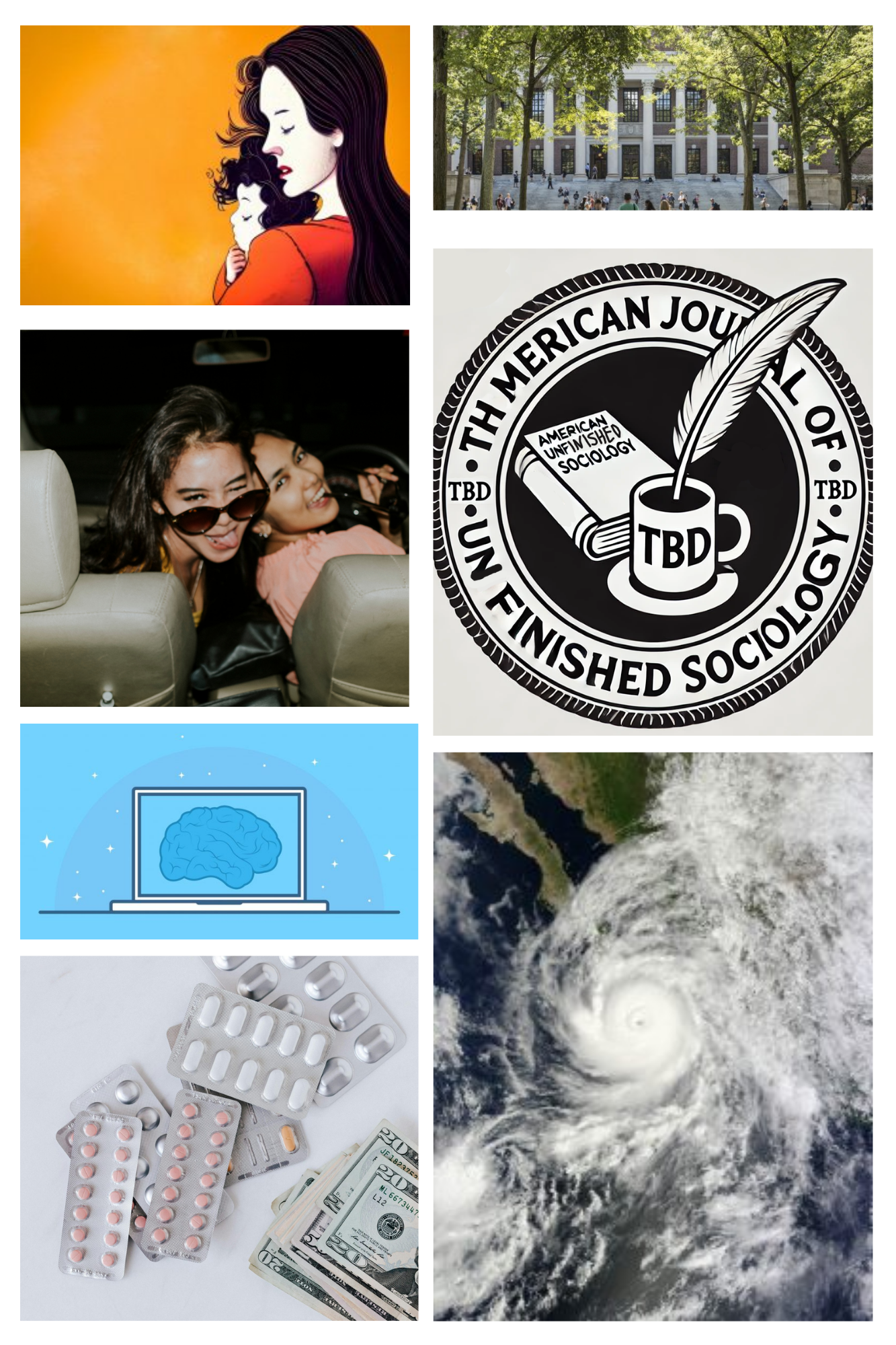
  • TikTok was abuzz this week with many “apocalyptic influencers” believing that the rapture would take place on September 23rd, 2025. For those of us left behind, check out this 2008 article by Brooke Harrington on how Christian Protestant ideas about the “end of days” enable economic inequality. [4 min read]
  • On Monday, President Trump told pregnant women not to take Tylenol during pregnancy, despite inconclusive evidence linking the drug to autism. Some worry the President’s comments contribute to a pattern of “mother blame,” where women are held responsible for children’s outcomes by sexist and perfectionistic standards. In this piece for Girl w/ Pen, Alison Piepmeier responds to perceived “mother blame” in Annie Murphy Paul’s 2010 book, Origins. [3 min read]

More from our Partners & Community Pages

Contexts

Council on Contemporary Families

New & Noteworthy

April 1st, 2025 marks the official launch date of TSP’s official journal, The American Journal of Unfinished Sociology. We have several submissions that we will be sharing in the next few weeks, so stay tuned.

Gender-Affirming Care and Gender Stereotypes, our latest Discovery my Mallory Harrington, ​covers research by Tara Gonsalves‘s research reveals that insurance coverage for gender-affirming healthcare has expanded over the past two decades, but insurers often rely on gender stereotypes to determine which procedures are deemed medically necessary.

This week’s Clippings by Mallory Harrington includes:

  • Rebecca HansonDavid Smilde, and Verónica Zubillaga argue that deportations of Venezuelan migrants to El Salvador echo the authoritarian practices they fled, warning that criminalizing these individuals based on exaggerated fears of gang mobility undermines both justice and U.S. credibility.
  • Oneya Fennell Okuwobi critiques corporate diversity programs that prioritize optics over equity, showing how they often burden employees of color with performative expectations while corporations reap the reputational rewards.
  • Lucius Couloute shares how parole, once meant to support reentry, now functions as a carceral extension—trapping individuals in cycles of surveillance and punishment that undermine rehabilitation.
  • Manuela Perrotta and Lucius Couloute explores how I.V.F. technologies are reshaping emotional relationships to embryos, as patients develop profound attachments to time-lapse videos of developing cells—perceiving them not as potential life, but as life already unfolding.
  • Christine L. William’s concept of the “glass escalator,” describing how men in female-dominated professions are often fast-tracked to leadership, gained national recognition this week when it appeared as a clue on Jeopardy.

From the Archives

Severe storms and tornadoes have recently devastated parts of the South and Midwest, resulting in at least seven fatalities and widespread destruction. But what makes something a natural disaster? In this 2018 piece, such events become disasters not just because of nature, but because of how society shapes people’s risk and ability to respond. Things like poor infrastructure, uneven government response, and economic inequality all play a role in who gets hurt the most. This reminds us that behind every weather event, there’s a social story about who is most vulnerable and why.

With nationalist rhetoric escalating and reshaping policies in unprecedented ways, it’s crucial to understand why nationalism can also escalate tensions. This piece from the Sociological Images breaks down some of the dangers of nationalism.

More from our Partners & Community Pages

Contexts

Council on Contemporary Families

First Publics

New & Noteworthy

This week’s Clippings by Mallory Harrington includes Swiss sociologist and mental health advocate Jennifer Walter’s Threads post on the Trump administration’s “shock doctrine” to cognitively overwhelm citizens; Tonika Lewis Johnson and Maria Krysan’s new book, Don’t Go: Stories of Segregation and How to Disrupt It, highlighting how warnings to avoid Chicago’s South and West sides reinforce harmful segregation; Ardeshir Geravand’s caution that Iran’s soaring inflation may foment social unrest if citizens’ legitimate paths to economic mobility remain blocked; and Jamie Lee Kucinskas’s forthcoming The Loyalty Trap: Conflicting Loyalties of Civil Servants Under Increasing Autocracy, on the challenges American civil servants faced during Trump’s first term.

Our latest podcast episode includes TSP Board members Jordyn Wald, Emma Goldstein, and Forrest Lovette discussing Tressie McMillan Cottom recent opinion piece in The New York Times on “Dry January”, or avoiding drinking alcohol during the month of January.

Francesca Bernardino‘s new piece, Listening to Music (and Being Tracked) In the Streaming Age, writes on research by Michael James Walsh in Media, Culture & Society, covering how music streaming services like Spotify and Apple Music blur the line between personal listening habits and public identity. These social media-like elements heighten self-consciousness and spotlight the burden of constant data collection.

From the Archives

According to a recent NYT article, 33% of 8th graders read at a “below basic” level according to the National Assessment of Educational Progress. COVID-19 and the move to online classes (which has been associated with absenteeism) has been one suggested source of the decline, as well as the increased shift of reading on devices. Check out this Discovery from 2022 on how virtual schooling had (and has) impacts beyond the classroom.

President Trump signed an executive order directing the Education Department to prioritize funding school choice programs and making alternative schooling more accessible to families. This TROT from 2019 reviews research on school choice and public education, showing that school choice can reinforce inequality.

The Super Bowl is this weekend. Check out this list of some sociology pieces by us and our partners before the big game.

More from our Partners & Community Pages

Contexts

Center for Holocaust and Genocide Studies

Council on Contemporary Families

First Publics

New & Noteworthy

Gender, Cultural Change, and the Catholic Church, adapted by Jordyn Wald from work by Christine Delp, examines the evolving role of women in the Catholic Church amidst cultural shifts. The article highlights Pope Francis’s 2024 synod, which, while falling short of ordaining women as deacons sparked ongoing debates about gender roles.

From the Archives

Stunning Embers by Jenny Davis brings us back to 2019-2020 for the Australian fires. This piece highlights a unique response to “disaster tourism,” where emergency services not only closed roads to prevent unnecessary risks but also leveraged social media to control the narrative and discourage unsafe behaviors.

The Missing Story behind the Coverage of the Trump Inauguration: Class by Sarah Diefendorf and Emily Kalah Gade argues that disparities in attendance between Trump’s 2017 inauguration and the Women’s March reflect how class, race, and cultural capital shape political mobilization. Their analysis may prove relevant in the coming weeks as Trump’s 2024 inauguration approaches.

More from our Partners & Community Pages

Contexts

Council on Contemporary Families

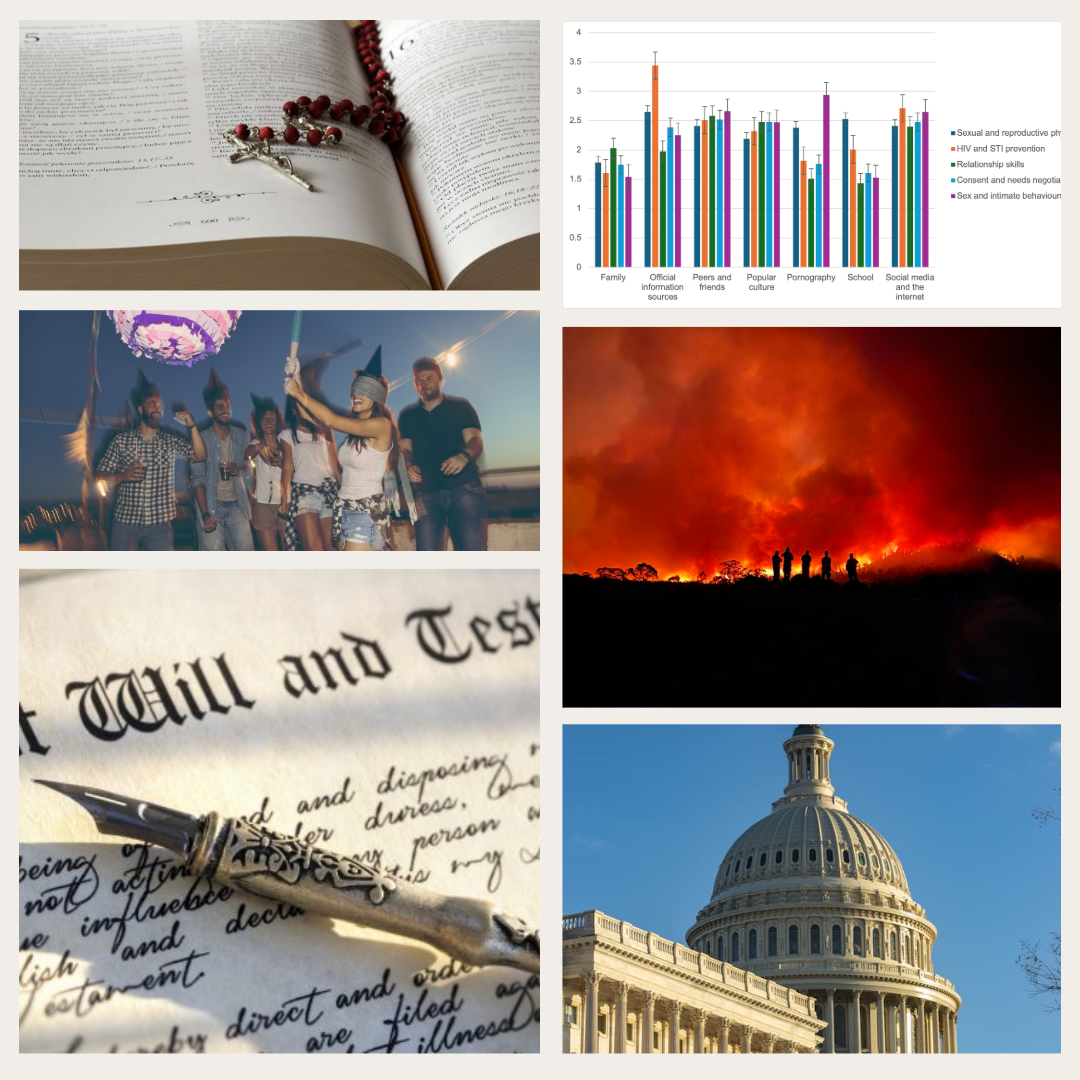
  • What’s Missing in Sex and Relationship Education for Sexual Minority Men? by James Newton writes up his research highlighting the inadequacy of traditional sex and relationship education for sexual minority men — revealing that schools, families, and even modern sources like social media fail to fully address their unique needs. The findings emphasize the urgent need for inclusive programs that teach relationship skills, intimacy, consent, and HIV prevention in ways that resonate with diverse sexual orientations.

New & Noteworthy

Shania Kuo and Eleanor Nickel’s latest ‘There’s Research on That’ explores the “model minority” myth and its role in perpetuating the discrimination Asian Americans face in the workplace. While Asian Americans are overrepresented in professional fields like tech, law, and business, they remain underrepresented in leadership due to stereotypes that cast them as submissive and unfit for managerial roles, creating a “bamboo ceiling.” Additionally, the intersection of race and gender further complicates their advancement, with Asian American women often facing gendered discrimination that undermines their authority.

This week’s Clippings includes Arlie Russell Hochschild in Salon discussing how former president Donald Trump appeals to white, working-class voters by fostering a sense of pride, despite his policies not materially benefiting them. The New York Times covered the 2024 MacArthur Foundation ‘Genius’ fellowship recipients, highlighting sociologists Loka Ashwood, Ruha Benjamin, and Dorothy Roberts, who are tackling environmental justice, technological inequalities, and racial disparities in social service systems. Diario de Cuba featured Helen Ochoa Calvo on the Cuban “migration crisis,” focusing on the distressing separation of families as many Cubans leave the country.

From the Archives

Migration at the U.S. southern border remains a key issue, with recent policies in the media cycle. For insights on how the 2024 election may shape migration for the next 4 years, explore Lucas Lynch’s ‘There’s Research on That’ for some notable social science research on the topic.

The WNBA playoffs has received heightened visibility, and sparked increased online racism and misogyny. Revisit this 2020 Engaging Sports piece, Being a Basketball Fan During the Black Lives Matter Movement and a Global Pandemic, by Aaron L. Miller and Ziggy Tummalapalli on how basketball players are using their platform to fight against racial injustice.

Fans have a tendency to form emotional attachments with their favorite (or least favorite) professional athletes – as highlighted by recent high-profile trades. Check out this Engaging Sports piece, Professional Sports Fans Will Always Be Disappointed, by Jeffrey Montez de Oca.

More from our Partners & Community Pages

Contexts:

Council on Contemporary Families:

First Publics:

  • In a recent First Publics webinar, Engaging Elections: Making Sense of Student Engagement, panelists discussed the tension between student apathy and political engagement, emphasizing the importance of local activism and strategies like get-out-the-vote campaigns to help students connect their immediate concerns with broader political systems.

The summer is finally here! To celebrate the season, the TSP board has put our heads together to bring you a list of sociology reading recommendations. Whether you’re lounging by the pool, relaxing at the beach, or simply enjoying some downtime at home, we hope these books will provide you with both entertainment and insights. Dive into these selections and have a restful summer. Happy reading!

  • In 2020: One City, Seven People, and the Year Everything Changed, Eric Klinenberg provides an in-depth, probing, and intimate sociological analysis of a year that none of us who lived through it will likely forget. As one of our most trusted public sociologists, Klinenberg examines the challenges of social solidarity and its unique fragility in the United States. His work not only helps us understand the pandemic but also lays a foundation for reimagining (or not) our politics, culture, and institutions in the future. – Recommended by Doug and Chris
  • Very Important People by Ashley Mears brings the reader into the exclusive, extravagant, and disturbing world of the elite global party circuit. Mears blends sociological analysis with an engaging narrative to reveal the extreme gender inequalities of these VIP spaces and update Veblen’s theory of conspicuous consumption for the 21st Century. – Recommended by Mallory
  • In Elusive Jannah, Cawo Abdi explores the varying experiences of members of the Somali diaspora in three countries: the United States, South Africa, and the United Arab Emirates. It’s a fascinating examination of how people’s experiences are uniquely shaped by culture, religion, and government policy. – Recommended by S
  • Mona Lynch’s Hard Bargains provides an engaging examination of how federal prosecutors induce guilty pleas in drug cases tried in federal courts. The book begins by providing readers with a brief history of America’s approach to confronting drug crimes, which sets the stage for the findings of Lynch’s research of how prosecutors in different regions of the U.S. used markedly different tactics when trying to indict drug defendants. – Recommended by John
  • The Minneapolis Reckoning: Race, Violence, and the Politics of Policing in America by Michelle Phelps analyzes the roots of George Floyd’s murder by Derek Chauvin and the conflicts between Minneapolis’s BIPOC communities and its police department. This book explores why Minneapolis was poised to be the perfect place for political protest by examining its intertwined histories of activism and policing. This book covers the deep complexity of how activism and accountability work to push for policing change. – Recommended by Ellie
  • In Before the Badge, Samantha J. Simon explores the selection and training of police officers, revealing how it instills a mindset of state violence. After spending a year training with cadets, Simon shows how the process encourages viewing Black and Latino communities as enemies, perpetuating patterns of police violence. Her work calls for a reimagining of policing in the United States. – Recommended by Leo
  • Examining the shifting lines over gun rights in the United States after the 2020 election fallout, Jennifer Carlson‘s Merchants of the Right covers the surge in liberal gun buyers. Conducting interviews with gun sellers, Carlson discovered that traditional gun supporters faced a new dilemma of either 1) welcoming the new liberal gun owners or 2) doubling down on gun ownership as an exclusively conservative identity. – Recommended by Forrest
  • MacArthur Genius Reuben Miller‘s book, Halfway Home: Race, Punishment, and the Afterlife of Mass Incarceration, centers around the conditions and realities in one of the largest and historically recognized American jails, Cook County, Chicago. As a social work and sociology grad student, I connected with the personal stories Dr. Miller shared of incarcerated loved ones and the importance of working as a grounded academic. I highly recommend Halfway Home for anyone interested in the current criminal justice system. – Recommended by Jake
  • Jessica Calarco, Professor of Sociology at the University of Wisconsin-Madison, in her new book, Holding It Together: How Women Became America’s Safety Net, describes how the lack of an effective social safety net in the U.S. pushes women into undervalued labor, particularly care work. Using data on 4k parents and 400 hours of interviews, broader patterns are combined with stories that paint a picture of the daily realities of un-underpaid work women do. – Recommended by Jake

New & Noteworthy

Forrest Lovette‘s new Discovery, Volunteering or Vacationing? covers research by Netta Kahana on the shifting public opinions about combining travel with volunteering activities–practices, known widely as volunteer tourism or sometimes “voluntourism”. The research found that the participants shared positive self-evaluations of their characters and used them to dispel any perceived judgments from society that might be raised about their participation. 

This week’s Clippings includes Zeynep Tufekci in NHPR on organizing pre-post social media, Beth Linker in The New York Times on their new book Slouch: Posture Panic in Modern America, Nicole Kravitz-Wirtz in The New York Times on gun violence and COVID-19, and Jess Carbino on The League dating app in Yahoo! Life.

Backstage with TSP

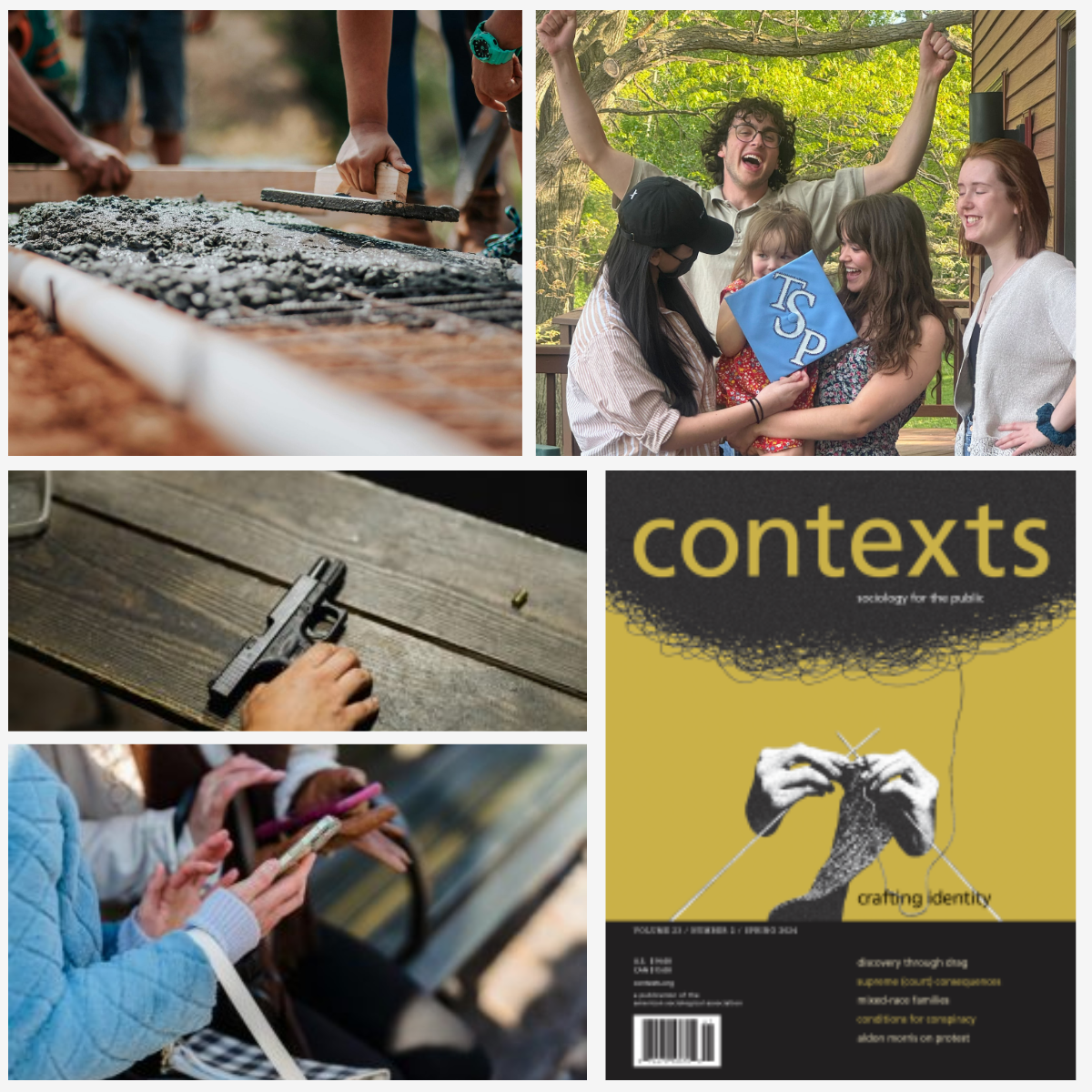
The TSP board held our end-of-the-year gathering, and celebrated our star graduating undergrads – Leo LaBarre, Caroline Garland, Ellie Nickel (coming back as grad student!), John Purnell, and Nicole Schmitgen. See pics above.

TSP Tuesdays, Clippings, and new Discoveries/TROTs will now be biweekly until September.

More from our Partners & Community Pages

Contexts has its Spring 2024 issue live! It includes (but is not limited to) pieces on the stigmatizing labels faced by sexual violence survivors, the racial pressures on mixed-race families, the social needs driving conspiracy beliefs, and the impact of Twitter/X’s data access cut on global research. Check it out!

New & Noteworthy

Paula Fomby, Professor of Sociology at Penn Arts & Sciences and Associate Director at the Penn Population Studies Center, published a new TSP Special, Families change. The way we support kids should change too. This piece covers some of the realities of children’s experiences, marriage, and some sociology-based research policies that could benefit children and marriage in the United States.

Shania Kuo has a new Discovery on Asian American Views Towards Affirmative Action from research by Ji-won Lee and W. Carson Byrd. Their research finds that “Over 50% of Koreans, Bangladeshis, Filipinos, and Cambodians were in favor or strongly in favor of race-conscious admissions” and “Chinese, Vietnamese, and Hmong respondents were the least likely to be in favor of affirmative action and more likely to be opposed to it.” Give it a read to learn more about race-conscious admissions attitudes of Asian Americans.

From the Archives

March Madness ended this past weekend, with stories of disparities affecting gender and racial differences in working conditions continuing. Check out this Engaging Sports piece from 2022 on the topic.

The solar eclipse was yesterday – learn more about the prominence of Astrology in society, and meaning/community finding under this non-traditional belief.

More from our Partners & Community Pages

The latest from Contexts includes:

The Council on Contemporary Families has a new piece:

New & Noteworthy

This week Mallory Harrington writes up work by Aruna Ranganathana and Aayan Dasa on Baul sangeet folk-music and the level of asynchronous and synchronous creativity experienced by men and women musicians. There were different experiences for women and men in the recording space and asynchronous environments were preferred by women.

From the Archives

The first Native American actress, Lily Gladstone, is the first to be nominated Best Actress for the upcoming Academy Awards. Check out this Sociological Images piece to learn about how U.S. schools teach about indigenous history in the United States.

Texas’s governor Greg Abbott has mobilized the Texas National Guard and state troopers at the U.S.-Mexico border, leading to issues with the federal border patrol. Read more about the border from a recent Sociological Images piece by Ghazah Abbasi.

More from our Partners & Community Pages

There are two new pieces in Contexts this week:

Council on Contemporary Families also has two new reads:

First Publics has a new Reflections:

Here are some Thanksgiving-themed pieces to read as you are recovering from your food coma!