Uncategorized

Hi Folks! Evan here, subbing in for your usual Friday roundup from Allison Nobles. Read on for the latest social science on everything from big money and body cameras to student activists and a smash stage production in the Twin Cities. Happy Friday!

There’s Research on That!:

When Youth Become Activists,” by Amber Joy Powell. Youth play a vital role in shaping social movements. Sociological studies on movements and young people’s mobilization help us understand the energy behind their activism.

Discoveries:

Big Money Bridging the Political Divide,” by Evan Stewart. New research in American Journal of Sociology shows how longtime donors are more bipartisan than we think.

Clippings:

Why Poor Parents Say “Yes” to Junk Food,” by Nahrissa Rush. In a recent op-ed for the Los Angeles Times, Priya Fielding-Singh explains that junk food consumption is an emotionally-rooted decision for impoverished parents.

From Our Partners:

Sociological Images:

Are We Really Looking at Body Cameras?” by Evan Stewart

Contexts:

Auditing macroeconomic data production,” by Andrew Kerner and Charles Crabtree

Council on Contemporary Families:

Three Questions for Trevor Hoppe on Punishing Disease” by Arielle Kuperberg
And a Few from the Community Pages:

Last Week’s Roundup

Sign Up for Inbox Delivery of the Roundup

TSP Edited Volumes

This week I am giving a talk about TSP’s work at a conference for UMN’s Office for Public Engagement. To supplement the talk, and save room on the slides, we pulled together a few of our favorite resources on public sociology for the attendees.

There are many different ways that sociologists do outreach. We have a broad range of approaches and goals, and so the conversation about public sociology is a great place to start for scholars in any field interested in public engagement. These resources provide a good overview of core issues, debates, and approaches:

There are also many different places to do public scholarship. Here are a few to start:

Welcome sociology friends! This week we’re wrapping up our “Best of 2017” posts and ramping up for 2018! We’ve got new pieces on Trump’s tweets and racial injustice, screen capping news stories, and neighborhood segregation.

Discoveries:

*~* Best of 2017 *~*

When Your In-Law is an Outlaw,” by Ryan Larson. New research in Criminology finds that previously convicted brothers-in-law increase the likelihood of crime for new husbands — regardless of their own criminal histories.

Clippings:

*~* Best of 2017 *~*

How College Became Synonymous with Sex,” by Brooke ChambersLisa Wade writes for Time Magazine and explains how colleges went from being rigid institutions to hubs for parties and casual sex.

How Trump’s Tweets Distract from Racial Injustice,” by Lucas LynchABC News talked with Ben Carrington and Doug Hartmann about Trump’s tweets about athletes may reveal racial bias.

From Our Partners:

Sociological Images:

Screen Capping the News Shows Different Stories for Different Folks,” by Kyle Green.

Contexts:

Education Changes Neighborhood Segregation,” by Kelsey Drotning.

And a Few from the Community Pages:

Last Week’s Roundup

Sign Up for Inbox Delivery of the Roundup

TSP Edited Volumes

Happy Friday Everyone! This week we’ve got some new pieces on parole revocations and Alabama’s special election, as well as revisits from 2017 on the immigration-crime paradox and gender gaps in tenure promotion.

There’s Research on That!:

*~* Best of 2017 *~*

The Immigration-Crime Paradox,” by Ryan Larson. Research shows that even though immigrants and the areas they inhabit are associated with lower levels of crime, both documented and undocumented individuals are more likely to be incarcerated and receive longer prison sentences.

Discoveries:

*~* Best of 2017 *~*

Biased Evaluations Contribute to Gender Gaps in Tenure Promotion,” by Amber Joy Powell. A new study in Social Forces explores why female academics have a harder time achieving tenure promotion than their male peers.

Clippings:

Violations of Parole Supervision Increase Prison Time,” by Caity CurryShawn Bushwayand David Harding talk to The Conversation about how violations of parole conditions appear to be a key driver of high prison populations, rather than new offenses.

From Our Partners:

Sociological Images:

In Alabama’s Special Election, What about the Men?” by Mairead Eastin Moloney.

Contexts:

On Culture, Politics, and Poverty,” by Lawrence M. Eppard, Noam Chomsky, Mark R. Rank, and David Brady.

Pushes and Pulls for Professional Women,” by Mary DeStefano.

Self-fulfilling status?” by Shilpa Venkatraman.

Friends in Low Places,” by Shaun Genter.

Parents’ Faith brings Friendship,” by  Rose Malinowski Weingartner.

Council on Contemporary Families:

Where the Millennials Will Take Us: A New Generation Wrestles with the Gender Structure,” by Barbara J. Risman.

And a Few from the Community Pages:

Last Week’s Roundup

Sign Up for Inbox Delivery of the Roundup

TSP Edited Volumes

Welcome to our first roundup of 2018! We’re glad to have you. In addition to more “Best of 2017” posts, we’ve got new pieces for you on how children learn rules for romance in preschool, race in adoptive families, and reflections on the NFL protests throughout 2017.

The Editor’s Desk:

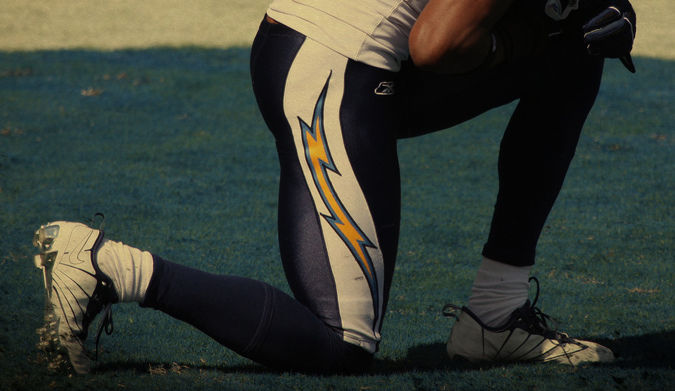
On the Eds’ Desk this week, Doug Hartmann reflects on the NFL National Anthem Protests in 2017 and how they might be remembered in the future.

Office Hours:

*~* Best of 2017 *~*

Best of 2017: Mimi Schippers on Polyamory and Polyqueer Sexualities,” with Allison Nobles. In this episode we talked with Mimi Schippers about the ways our cultural disposition toward compulsory monogamy reproduces inequalities and limits the ways we can view relationships.

Discoveries:

Children Learn Rules for Romance in Preschool,” by Allison Nobles. New Research in Sociology of Education finds that children in preschool classrooms learn that heterosexual relationships are normal and that boys and girls have different roles to play in them.

Clippings:

*~* Best of 2017 *~*

Best of 2017: Gendering Gender-Neutral Occupations,” by Caity CurryThe Globe and Mail covered research from Laura Doering and Sarah Thébaud examining how gender-ambiguous occupations become gendered over time.

From Our Partners:

Sociological Images:

Small Books, Big Questions: Diversity in Children’s Literature,” by Evan Stewart.

Social Studies MN:

Communicating Corporate Social Responsibility,” by Allison J. Steinke.

Contexts:

It’s Better to be Angry Together,” by Philip Cohen.

Hurricane Party,” by Rachel Tolbert Kimbro.

Where Intersectionality is a Strategy,” by Eric Stone.

Facing Race in Adoptive Families,” by Chandra Reyna.

And a Few from the Community Pages:

Last Week’s Roundup

Sign Up for Inbox Delivery of the Roundup

TSP Edited Volumes

Photo Credit: Nathan Rupert, Flickr CC

In case you were otherwise occupied, on Christmas Day the Associated Press named the “NFL National Anthem Protests” the top sports story of 2017. In a year of many huge sport stories both on and off the field, the AP said the story was the “runaway winner” for its staff. This doesn’t surprise me at all. I’ve studied sports-based social activism for a long time, but I’ve never had more media calls and requests for interviews in my career than these past few months.

The single biggest reason for the story, I’m pretty sure, involves our President’s seemingly unprompted and unusually profane attacks in September on football players who had engaged in demonstrations and the NFL. For better or for worse, Trump’s attention provoked a tidal wave of unprecedented gestures of protest and support across the league (and across both racial lines as well as those of management and ownerships) that gave the story its scale, scope, and intrigue. But there’s much more to say about it than that, much more.  I’ve been tracking this all fall as part of my own research project on the “new era” of African American athletic activism we are currently witnessing, and I am going to pull some of that together in a commentary with my sport and politics collaborator Kyle Green.  We are hoping to run that piece in the lead-up to the Super Bowl here in the Twin Cities at the end of January, so stay tuned!

There are two points I’d like to address here, by way of year-end retrospective: “kneeling” and “remembrance.” On kneeling, why do athletes feel the need to protest?

“Why do they do it?” is far and away the most common question I get from journalists and regular folks alike. Underlying this inquiry is the sense (a) that these demonstrations are disrespectful and (b) that professional athletes are super-rich, superstars who should be so satisfied with their lives and salaries and fame that they’d have no reason to complain or be angry, much less act out in public. At best, they see African American athlete activists as spoiled complainers, more interested in politics, making news, and making money than anything else. For many Americans, athletic protests are as incomprehensible as they are inappropriate.

Based on the athletes I’ve talked to and my earlier research on black athletic activism in the 1960s, I see the issue quite differently. and commitments. In a society that continues to be plagued by disproportionate police brutality, persistent racial gaps, and overt bigotry and bias, they feel compelled to do or say something. Sometimes it is in support of communities of color—their communities—who continue to face persistent racism and discrimination. Sometimes it is quite personal, stemming from their own ongoing individual experiences with racism and discrimination. And almost always it is quite principled and reasoned, with a clear understanding of the costs and consequences (which are far more real and extensive than most of us realize). Athlete activists don’t take their activities lightly or think of them as disrespectful or anti-American. Quite the contrary, they understand activism as consistent with the higher moral standards, ideals, and aspirations of both American democracy and sport culture.

But there is something else here too: It is also the fact that many —to make it seem like everything is okay. This was a major motivator for the African American athletes who participated in protests in the year leading up to the 1968 Olympic Games. As high jumper Gene Johnson explained in support of the “Olympic Project for Human Rights:”

“The United States exalts its Olympic star athletes as representatives of a democratic and free society, when millions of Negro and other minority citizens are excluded from decent housing and meaningful employment” (Race, Culture, and the Revolt, 2003, p. 84).

Or, as the OPHR organizing pamphlet put it: “We must no longer allow this country to use black individuals of whatever level to rationalize its treatment of the black masses.” 

So, that’s kneeling, now for remembrance. A few weeks back I was interviewed by a Time reporter for a special 50th anniversary retrospective issue on the tumultuous year of 1968. Among other things, the reporter asked me what my research on Tommie Smith and John Carlos’s iconic victory stand demonstration taught me about the meanings and implications of the protests of Colin Kaepernick and his NFL brethren. “How will we remember what is going on today, 50 years from now,” she wanted to know?

Social scientists like me, I told her, are loath to make predictions. However this topic is one where I was willing to make an exception. I’m pretty confident that one day in the not-to-distant near future, Kaepernick and company will be remembered far more positively across the American populace than is currently the case. In fact, it wouldn’t surprise me at all if, once the specifics of this moment and the larger racial politics that are unfolding are behind us, these athlete activists come to be revered as courageous, admirable, or even heroic—certainly ahead of their time. If you’re interested, my little quote to this effect can now be found in print on page 92 of the latest issue of Time (dated Dec. 25/Jan. 1) as well as online here.

Such historical re-remembering is a familiar pattern in American culture. It happened to our collective conceptions of Martin Luther King, Jr. and Muhammad Ali. Perhaps most pertinent to this discussion are the memories that surround the perpetrators of one of the most iconic sports demonstrations of all time, Tommie Smith and John Carlos’s 1968 clenched first, victory stand demonstration at the 1968 Mexico City Olympics. Today, most Americans celebrate Smith and Carlos as heroes of the Civil Rights Movement; back in 1968, they were seen as villains, traitors, and worse.

History and memory—what happened and how we think about what happened—are two different things. All too often, the way we remember and romanticize images, individuals, and events comes at the cost of forgetting all of the actual social issues and context that gave rise to them in the first place. As this year draws to a close and we begin to look to the future, let us not lose sight of the racial disparities and social injustices at the root of the biggest sports story of 2017.

If you you’re avoiding Black Friday shopping, recovering from a big meal, or just need some sociology in your life, we have the gobbledy-goods! This week we have new research on beliefs about meritocracy in the United States and China, social science on the meanings of “white supremacy,” and reflections on the role of private schools for inequality in higher education.

There’s Research on That!:

What is ‘White Supremacy’?” by Neeraj Rajasekar. Social science helps us parse out different meanings of the phrase,”white supremacy.”

Discoveries:

Who Believes in Bootstraps?” by Lucas Lynch. New research in The Sociological Quarterly finds that Chinese are more likely than Americans to believe hard work is not the only key to success, despite both countries having long histories of meritocracy.

Clippings:

Will Private Schools Pay Up?” by Evan StewartThe New York Times talked with Charlie Eaton about how private schools play a part in inequality in higher education.


From Our Partners:

Sociological Images:

Season’s Greetings from America’s Men,” by D’Lane R. Compton.

Silencing Sexual Harassment Complaints in Pakistan and the US,” by Fauzia Husain.


Social Studies MN:

Chatbots, Mobile Apps, and the Future of Journalism,” by Allison J. Steinke.


Council on Contemporary Families:

Revisit: A Review of National Crime Victim Victimization Findings on Rape and Sexual Assault,” by  Jessica L. Wheeler.

Revisit: Women not enrolled in Four-Year Universities and Colleges Have Higher Risk of Sexual Assault,” by Jennifer Barber, Yasamin Kusunoki, and and Jamie Budnick.


Last Week’s Roundup

Sign Up for Inbox Delivery of the Roundup

TSP Edited Volumes

Happy Friday! As you gear up for Halloween weekend check out our most recent posts on the social science of genetic testing, how some groups become “white,” and the ways local differences shape women’s incarceration rates in Oklahoma.

There’s Research on That!:

How Grown-Up Careers are Like Middle School Dances” by Sarah Catherine Billups. Research shows gender segregation in work results both from self-selection and discriminatory workplace practices.

‘Whiteness’ in American Immigration Politics” by Neeraj Rajasekar. Sociological research reminds us that some “white” groups were once racial outsiders in the United States.

Discoveries:

The Social Side of Genetic Testing” by Isabel Arriagada. New research in the American Journal of Sociology finds that a variety of factors influence how scientists understand the relationship between genetics and disease.

Clippings:

Who Really Benefits from “Diversity” Policies?” by Neeraj RajasekarThe New Yorker draws on research by Ellen Berrey and Natasha Warikoo on the unintended consequences of promoting diversity.

How Local Differences Influence Incarceration Rates in Oklahoma” by Lucas LynchReveal talked to Susan Sharp about how county differences influence variation in incarceration rates and sentencing severity for women in Oklahoma.

From Our Partners:

Sociological Images:

College pays…if you’re white” by Evan Stewart.

Monuments to the Racist “Heroes” of the North” by Abraham Gutman.

Social Studies MN:

The Color of Quality of Life in Nursing Homes” by  Sarah Catherine Billups.

Council on Contemporary Families:

Revisit: The Trouble with Averages” by Virginia Rutter.

And a Few from the Community Pages:

Last Week’s Roundup

Sign Up for Inbox Delivery of the Roundup

TSP Edited Volumes

Good Morning, Everyone!

It’s nerdy, I know, but I’ve always found the first day of school to be one of the most exciting, hopeful, and uplifting days of the entire calendar year. Maybe that’s what happens when your mom was a kindergarten teacher and your dad a grade school principal. Whatever your story may be, I hope you are ready for another great year of sociology.

I see sociology as a noble profession, vocation, a calling in the Weberian sense. And in this time of tumult, conflict, and change, I believe our work—our research, our ideas, and the information and insights we produce—is more needed than ever by people, in communities, all over the world. This is, in many ways, the essence of the public sociology movement of which The Society Pages has been such a proud and prominent player. And today, on this first day of classes, the people I’m thinking mostly about are students—our graduates and our undergrads. We do many things as sociologists, but given that we are all in the business of teaching and learning, it is good to recall Michael Burawoy’s suggestion from a little over a decade ago that our classrooms are our first public(s).

Our dean at the UMN College of Liberal Arts, John Coleman, gave new students some advice last week. He stressed the need for each student to find their own place here on campus, their community, and to help create a culture of respect across all of our differences. Sound—and very sociological—advice for all of us all over the country, I think. Here’s hoping that we can all do our part to make culture and community (and sociology!) in our departments in the year ahead.

Thanks so much for your continued participation in and commitment to our wonderful community. Have a great day and a great year!

Doug

I turned 50 this summer so maybe I’m feeling a little sentimental. Nevertheless, in this season of tumult, Trump, and 140 character tweets that pass for news, I have found myself sustained by the some of the most old-fashioned modes of media—weekly and monthly news magazines, and, more specifically, long-form journalism. Here are some of my favorites from the past few weeks, categorized in the ways that I think my sociology friends and colleagues would find meaningful:

Social movements: Nathan Heller’s analysis of the efficacy of collective protests “Out of Action: Do Protests Work? The New Yorker, August 2017.

Popular culture: “How American Lost its Mind,” a piece on culture and populism by Kurt Andersen in The Atlantic, September 2017. (Other solid treatments roughly in this category/vein: “The New Paranoia by Colin Dickey in July’s The New Republic; and “European Disunion: What the Rise of Populist Movements Means for Democracy” by Yascha Mounk, also in TNR, August/September).

Sociology of knowledge: David Session in The New Republic, “The Rise of the Thought Leader: How the Superrich have Funded a New Class of Intellectual,” June 2017.

Media studies: a trip down memory lane by my favorite television critic of how Donald Trump built his popularity (and personality) in and through the small screen, Emily Nussbaum in The New Yorker, July 2017.

Now, don’t get me wrong. Traditional journalism doesn’t (and can’t) solve all the problems of our fractious world, and indeed I sometimes worry that all of this great writing and reading can be its own kind of distraction or delusion. But the clear-thinking, the ability to put things in broader context, and the commitment to synthesizing social facts and cultural complexities—all qualities that us sociologists aspire to—displayed in these pieces is admirable and much needed. And I can only shake my head in awe for the way these writers, reporters, and critics are able to produce such great, insightful content in such timely and engaging fashion.