RU062113Don’t Call it a Comeback

You know, come to think of it, I’m sure I’ve used that title before somewhere on the site. But you know what? I haven’t used it enough. So there.

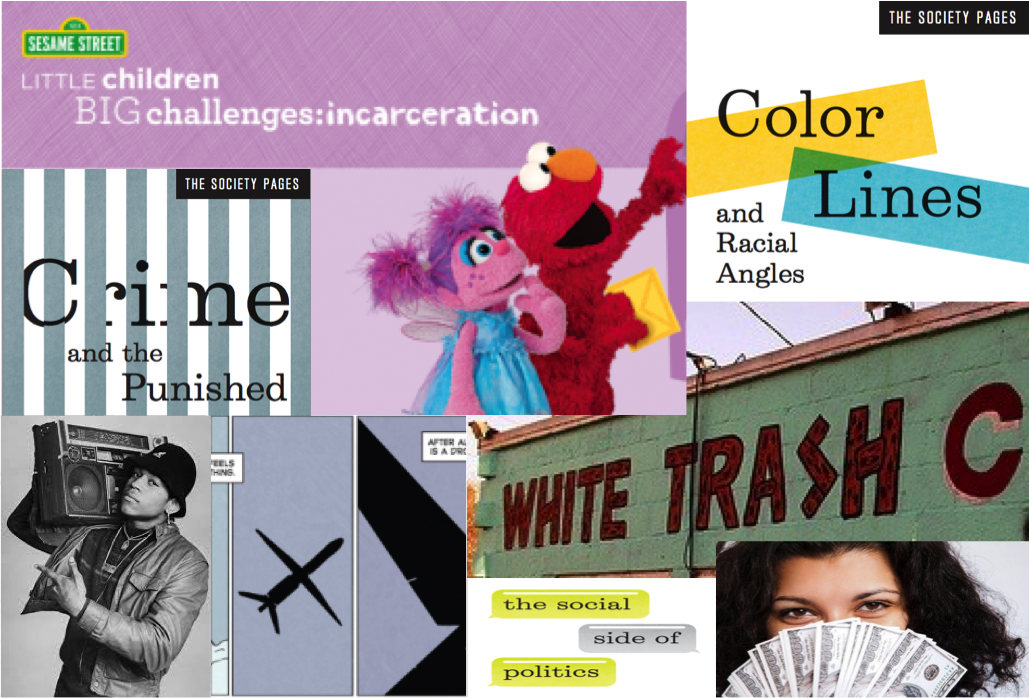
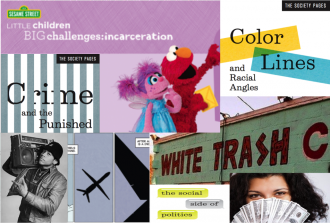
Hrm. After skipping last week, I’ve got a lot to round up, so let’s just go with that. In the meantime, know that we’ve been putting the finishing touches on the second of our TSP readers with W.W. Norton & Co., Crime and the Punished, which is now slated for a fall release. If you look closely in the picture at right, you can see three of our cover images coming into focus (they’re not finalized, but they’re looking sharp).

Until then, feast your eyes on this!

In Case You Missed It:

Since we’re talking (white) trash this week, don’t forget to read up on rebel rock and Southern masculinity with Jason Eastman—worth it for the music videos, alone! “Southern Culture on the Skids.”

Special Feature:

White Trash: The Social Origins of a Stigmatype,” by Matt Wray. In which we learn there’s been “white trash” since the 1820s and their compulsory sterilization has only recently been retired.

Editors’ Desk:

Social Facts and Conspiracy Theories,” by Doug Hartmann. Conspiracy theories are worth our attention, no matter how loony they may seem.

Kieran Healy on Paul Revere and Social Networke Analysis,” by Chris Uggen. Slate, sociology, and metadata come together on ye olde Ynternette.

Race: 50 Years Ago, Today,” by Doug Hartmann. Medgar Evers, JFK, and a look at 50 years of… progress?

Citings & Sightings:

National Numbers and North Dakota,” by Andrew Wiebe. My homeland continues to be the odd duck.

Class and Climate in China,” by Andrew Wiebe. Where smog isn’t really a #firstworldproblem.

Teaching TSP:

First Day of Class Activities 2,” by Kia Heise. Kia adds to Hollie’s first-day ice-breakers, sociology style.

Evil Men,” by Hollie Nyseth Brehm. How to use a podcast about war criminals in the classroom.

A Few from the Community Pages:

Scholars Strategy Network:

How the Heritage Foundation Uses Strange Math and Flawed Logic to Inflate the Cost of Immigration Reform,” by Richard Alba. Distorting numbers, distorting opinions.

How Lives Can Be Saved By Stressing Employer Verification Instead of Border Barriers for Immigration Enforcement,” by David FitzGerald. Militarized border crossings are ungodly expensive, in human and monetary terms.

Why Does Immigration Arouse Deep Feelings and Conflicts?” by John D. Skrentny. Immigrants keep inflation in check, increase community security, and, umm, founded the country. Why are they so contentious in the U.S.?

Immigration Reform and the Contentious Issue of Extra Visas for Science and Technology Workers,” by John D. Skrentny. Who counts as a “scientist”? The sticky issue of STEM Visas.
RU032913
Second verse, same as the first.

Yet Another Airport Post

This is becoming a frequent activity: writing the Friday Roundup from an airport. By my count, it’s at least the fourth I’ve written from a row of pleather seats. The wifi is spotty, the company is unpredictable, and my power cord frequently drops out of the not-so-conveniently-located power source tower. And yet, for this scaredy-cat, writing the Roundup is not only a great way to get my arms around what happens on our website each week—it’s become an excellent distraction from flight fears! Thus, on to the Roundup. No writing tips this week other than to write something today. Getting used to jotting down good phrases or dictating them into your iPhone for future use is a good way not to lose those fleeting treasures.

(Unpredicted awesome part of airport posting: my mate just showed up with a donut for me. That never happens at the office. Unpredicted crummy part of airport posting: 10:39am and a bachelorette party is fully drunk and cheering the boarding of their flight. Literally cheering. At least they’re not off to Detroit, like me.)

In Case You Missed It:

Juvenile Lifers, Learning to Lead,” by Michelle Inderbitzen, Trevor Walraven, and Joshua Cain. An educator and her students explore how long-time inmates navigate the transition to adulthood and into leadership roles, even as they remain incarcerated.

Citings & Sightings:

It Probably Wasn’t the Time of Your Life,” by Evan Stewart. Continuing his fine tradition of incorporating songs into social science, Stewart and Stephanie Coontz waltz down memory lane.

Graduates: The Pay Gap Starts Now,” by John Ziegler. Once thought to appear gradually as men and women’s life courses and careers diverge with detours like time-out for parenting, the pay gap is now known to start pretty much as soon as the work starts. The good news? This article claims the pay gap is down to $0.82 on the dollar, women to men. Cue the dancing!

Office Hours:

Jessica Holden Sherwood on Country Clubs,” with Kyle Green. Our latest podcast talks white privilege and the breeding grounds of the bourgoisie with a University of Rhode Island scholar.

A Few from the Community Pages:

Scholars Strategy Network:

How Targeted Deterrence Helps Police Reduce Gun Deaths,” by Michael Sierra-Arevalo. New police tactics hold hope for lower homicide rates across the U.S.

The New Deal and the Origins of Our Time,” by Ira Katznelson. How we continue to feel the effects of Roosevelt and Truman’s decisions, a quarter-century later.

RU053113Use Twitter to Refine Your Writing

As a prematurely old person (that is, I’m technically 33, but I make a suspicious number of references to “those damn kids” and know the difference between e.g. and i.e.), I can be wary of social media. Still, I’ve found one way Twitter is really useful for the writers I advise: forced brevity. 

Off the top of my head, I have two approaches to using Twitter to guide writing, and I’d be happy to hear others’ ideas.

  1. Use Twitter (or just its 140-character limit) to find your lede. That is, what’s the catchy selling point of your article? How would you draw in readers? Trust me, the first sentence of your abstract isn’t going to draw page views (let alone keep eyes on the page once they get there). Think hard, revise, and rewrite your opening line.
  2. Use Twitter to find your point. If you’re brutal, you really should be able to get an article’s point into a Tweet. What’s the essential core of your article? You have a whole paper to discuss your methods, delve into a thorough lit review, and otherwise prove your legitimacy as an expert on this topic. But you should only need a sentence or two to tell people what the paper is about.

Both of these ideas come back to thinking of your article in terms of how you’d tell your mom or kid or next door neighbor what you’re writing about this summer. What context would make it as interesting for them as it is for you? And how could you say it across the fence? That’s a lot of rhetorical questions for an editor who doesn’t like them, so trust that I’m being both serious and off-the-cuff here.

Now, we have some catching up to do. Time for the Friday Roundup!

In Case You Missed It:

Because we know not everyone gets to read everything we post (you really should be working TSP into your schedule better, readers!), I want to include a piece each week that deserves a second look. Here’s this week’s:

American Immigration and Forgetting,” by Stephen Suh. The topic that just won’t get settled, immigration is, again, in the news. Check in with top scholars Yen Le Espiritu,  Katherine Fennelly, and Douglas A. Massey for a historical overview and a sociological perspective.

Citings & Sightings:

What Does an Atheist Look Like?” by Evan Stewart. In which George Yancey looks for what makes an American Atheist.

Gendered Issues (of Sports Illustrated),” by Andrew Wiebe. In which sociologists don’t find female athletes on newsstands, at least not in the past couple of decades. I hear there’s a Sports Illustrated for Women now, though. Oh, please let it be pink! (Side note: seriously, check out the comments.)

Office Hours:

G. William Domhoff on Pension Fund Capitalism,” with Rahsaan Mahadeo. In which Domhoff, author of The New CEOs and Who Rules America?, discusses the relationship (or lack thereof) between retirement funding and corporate bottom lines.

Teaching TSP:

First Day of Class,” by Hollie Nyseth Brehm. In which summer instructors break the ice.

Racial Stereotypes, Scapegoating, and the Economic Crisis,” by Kia Heise. In which Heise shares a few ways to talk about Catherine Squires new Office Hours podcast with TSP.

A Few from the Community Pages:

Scholars Strategy Network:

The New Deal and the Origins of Our Time,” by Ira Katznelson.

Americans Care about Inequality when it Limits Opportunity,” by Leslie McCall.

Are Religious Americans Opposed to Science?” by John H. Evans.

Why American Controversies Are So Central to U.S. Politics,” by Drew Halfmann.

How Women Legislators Help States Become More Supportive of Older Citizens,” by Joanne Connor Green and Charles Lockhart.

RU050913End the Semester Right: With a Movie

What’s that you say? You’re swamped, your students are swamped, and everyone needs a chance to coast into summer? Final papers, class reflections, formal and informal evaluations—there has to be a better way!

There is, and I believe we all know it as: show a danged movie. And here at TSP, we like to provide inspiration. At the bottom of today’s roundup, there’s a list of 56 documentaries and other films that have been recommended to us as excellent fodder for crim, soc, social movements, gender, media studies, and every other class you might be teaching or taking. To learn more, visit this interview with Jessie Daniels and its extensive comments with suggestions from other profs and students (many with links) or this older post with some more good choices.

Now, here’s what we’ve been doing as the semester winds down:

The Editors’ Desk:

One More Shout-Out for Ethnography Article,” by Doug Hartmann. Why that Atlantic article was so very, very good.

Citings & Sightings:

An Opinion on Public Opinion Polls,” by Carolyn Lubben. Herb Gans in the Neiman Journalism Lab on why public opinion reports can be awfully misleading.

Feeling Good with God,” by John Ziegler. You guys, we found the perfect picture for this piece on mental health and religiosity.

Office Hours:

David Leonard on Jason Collins,” with Kyle Green. Gender, sport, sexuality, media, stigma, this interview has it all.

A Few from the Community Pages:

Scholars Strategy Network:

Why Autonomous Social Movements Hold the Key to Reducing Violence Against Women,” by S. Laurel Whedon and Mala Htun.

Black Politics and the Origins of America’s Prison Boom,” by Michael Javen Fortner.

And now, the Movie Pile:

  • The End of Poverty?
  • Garbage Dreams
  • The Road from Crime
  • 49 Up
  • The Split Horn: Life of a Hmong Shaman in America
  • Quiet Rage
  • The Devil’s Playground
  • We Live in Public
  • HIP-HOP: Beyond Beats & Rhymes
  • Southern Comfort
  • The Pill
  • Chisholm ’72: Unbought & Unbossed
  • Heart of the Game
  • An Inconvenient Truth
  • The Lottery (a good alternative, Jessie Daniels says, to Waiting for Superman)
  • Resolved
  • Sweethearts of the Prison Rodeo
  • Omar and Pete
  • The Dhamma Brothers
  • The Farm
  • Writ Writer
  • Ghosts of Attica
  • Manufactured Landscapes
  • Paradise Lost: The Child Murders at Robin Hood Hills
  • The War Room
  • Flow: For Love of Water
  • Secret of the Wild Child
  • Ikiru
  • The Seventh Seal
  • Of Gods and Men
  • Tell Me a Riddle
  • Dead Man
  • Race: The Power of an Illusion, pt. 3
  • The Color of Fear
  • Food, Inc.
  • The Battle for Whiteclay
  • Inside Job
  • Harvest of Shame
  • American Harvest
  • The Harvest/La Cosecha
  • New Harvest, Old Shame
  • Carolyn Liebler suggests clips from Little Miss Sunshine, Wedding Crashers, Ghostbusters, and Fiddler on the Roof
  • At the River I Stand
  • Merchants of Cool
  • Occupation: Dreamland
  • Stonewall Uprising
  • Generation M: Misogyny in Media & Culture
  • The Mickey Mouse Monopoly
  • Iron Jawed Angels
  • Tough Guise: Men and Masculinity in Media
  • Further Off the Straight & Narrow
  • Makers
  • Zeitgeist: Moving Forward
  • Power and Terror: Noam Chomsky
  • Forks over Knives
  • Pull of Gravity

RU050313Turn, Turn, Turn

Well, it seems to be winter again in Minnesota. It snowed last week about this time, then we had a day of spring, followed by two 80-degrees-and-sunny days, a rainy couple, and now, we’re back to winter. Two-day seasons, and the leaves couldn’t bud fast enough to change colors. You can imagine how we might get a bit down with this Seasonal ADD.

But then something awesome happened: this week marked the addition of the fine feminist blog Girl w/ Pen to our roster of illustrious “Community Pages”! Please do go visit their new digs and start reading. We got so distracted ourselves that the roundup is quite quick!

The Editors’ Desk

Welcoming Girl w/ Pen to TSP!” by Chris Uggen. In which we expand our global empire (yes, we enjoy hyperbole. Why do you ask?).

President Obama on NSF and the Social Sciences,” by Chris Uggen. In which all the bad news about federal funding is infiltrated by a wee ray of light. Some might call it hope.

Office Hours

Catherine Squires on Race and the Media,” by Rahsaan Mahadeo. In which the author of “Coloring in the Bubble: Perspectives from Black-Oriented Media on the (Latest) Economic Disaster” joins in on our podcast.

Reading List

Stepping Stones or Dead Ends?” by Erin Hoekstra. In which a scholar checks out mobility and “brown-collar” jobs.

Teaching TSP

Welcome Girl w/ Pen!” by Hollie Nyseth Brehm. In which Brehm shows off some of the teaching resources available to readers of our latest Community Page.

A Few from the Community Pages

Scholars Strategy Network

The Tea Party and the Revival of Paranoia in U.S. Politics,” by Christopher S. Parker. Who’s paranoid? I’m not paranoid. Why are you looking at me like that? Big government.

What Research Tells Us about Living a Productive and Satisfying Old Age,” by Lenard W. Kaye. Eat your vegetables and exercise? Dammit!

RU042613Clear Points, Full Hearts, Can’t Lose

When the media flat-out gets your research wrong or presses it into service in an argument that’s the opposite of what you’ve found, it’s hard to get stoked about taking journalists’ calls. But, as pay walls become costlier and less permeable, I’ve got one key, if difficult, bit of academic advice: start giving away the punchline.

Your abstract is now your calling card. “I present findings, discuss implications, and suggest directions for future research” is not a sufficient closing sentence when you may only have 250 words to say what your paper is about, what makes it special, what it actually means. This is to say, if you’re not clearly giving away information in the one place you can*, it’s your fault if others get it wrong. Of course, they still might use your findings in really dumb ways. No controlling that.

And now, what we’ve been controlling in the past couple of weeks:

The Editors’ Desk:

Help SocImages Find a New SocImage!” by Letta Page. In which we try to tap into a broad readership in the hopes that you’ll share ideas and rough sketches for a new SocImages logo.

Going Big with Online Learning and Teaching,” by Doug Hartmann. In which the Times checks out MOOCs.

They Like Us! They Really Like Us!” by Doug Hartmann. In which we earn the adjective “award-winning.”

Changing Lenses:

Lost in Translation,” by Doug Hartmann and Wing Young Huie. In which Wing and Doug consider advertising and stereotypes.

Reading List:

Ladies in the Red,” by Kia Heise. In which Dwyer, Hodson, and McCloud find even college debt is gendered.

When a Person Becomes a ‘Health Threat‘,” by Shannon Golden. In which Trevor Hoppe investigates the community health effects of sanctions and stigma.

Citings & Sightings:

March 2013 TSP Media Award for Measured Social Science,” by Carolyn Lubben. In which Graeme Wood gets into corporate anthropology in The Atlantic.

The Dirty World of Sanitation Work,” by Evan Stewart. In which NYU’s Robin Nagle studies another group of invisible workers: garbage collectors.

Fieldwork Fouls,” by Andrew Wiebe. In which, dammit. Really? Social scientists and PhD students are getting sexually harassed—by each other—in the field. C’mon, everyone.

Do Sisters Have to Do It for Themselves?” by Evan Stewart. In which a journalist calls on research from friends-of-TSP to talk about young women’s expectations and priorities around careers and relationships.

Guilty Pleasures No More?” by Carolyn Lubben. In which titillating TV works on women, too. Oh, and reflects at least someone’s reality. I’ve never watched “Gigolos,” but I feel like it might explain some things.

Teaching TSP:

Ripple Effects of Incarceration,” by Kia Heise. In which UCLA’s Marie E. Berry shares a teaching exercise to work alongside Megan Comfort’s “Repercussions of Incarceration on Close Relationships.”

Latino: Race or Ethnicity,” by Kia Heise. In which classrooms can discuss Wendy D. Roth’s “Creating a ‘Latino’ Race.”

A Few from the Community Pages:

A few? In two weeks, the Community Pages cover a constellation of topics through seemingly endless telescopes. The best I can do is offer up a few choice pieces, but by all means, get lost in the brilliance!

Scholars Strategy Network:

When Election Rules Undermine Democracy,” by Amel Ahmed. “We can’t just get rid of the electoral process, but we can educate each other on the rules of how it functions.”

The Role of Empathy in Crime, Policing, and Justice,” by Chad Posick. “Unlike the death penalty, restorative justice measures may prevent future crimes while letting the victims and offenders heal.”

How America’s Tradition of Localism Could Help Gun Control,” by Joseph Blocher. “Under American traditions of local rule, if people in Montana want to shoot elk with rifles, that should not prevent people in Manhattan from trying to keep residents from shooting each other with handguns.”

The Widening Partisan Gender Gap in the U.S. Congress,” by Karen Beckwith. “When 1992 was dubbed the ‘Year of the Woman,’ the female Congressional presence doubled. But even if that suddenly happened again, women would still constitute only 35% of the House. American voters would still need to elect 64 more women to the House to achieve gender parity.”

*I mean, you could still write stuff for The Society Pages, where we totally give it away. Just a thought. Another thought? German Death Reggae. Ever since they mentioned it on “Parks and Recreation,” I’ve needed to hear it.

socimagesSociological Images was one of the first TSP Community Pages, going back to our days as the Contexts editorial team. Gwen Sharp and Lisa Wade do awesome work there—with a host of excellent guest writers—but it’s time to give the site a refresh. And that’s where you come in.

Look, we don’t have giant Scrooge McDuck piles of money. Or any piles of money. In fact, our bloggers do their work entirely for free, Doug and Chris donate their time as editors, our grad students write and edit and provide great insight because this is the stuff that interests them. We love what we do. But we’re not great with graphic design, and so we’re reaching out.

If you’ve got just the barest, scrawled-on-a-napkin idea for a new logo for SocImages, we want to see it. Our five favorite sketches will get $50 apiece for going to the trouble of getting creative on our behalf. If our favorite one is submitted by someone with the design skills and know-how to turn in into a real working logo, then we’ll pay a full $500!

Parameters: This should be a sketch. We value designers’ and artists’ work and time, and we’re clearly asking for some affection here, too, but we don’t want you creating a fully-realized, finished logo at this point, just a mock up of one. The logo should be for the web, and should be adaptable to smaller format avatars, but follow the current size and shape of the Soc Images banner.

Inspirations/Dislikes: We like text. We don’t like eyeballs or magnifying glasses. We have two different taglines, either of which could be incorporated: “Seeing is believing” and “Inspiring Sociological Imaginations Everywhere.” Black, red, and white are good standards and we like them, but we’re open to color. In fact, here are some logos Gwen and Lisa have identified as personal favorites (note that what they like about the logo for Go Fug Yourself is that it’s simple, clean, and represents the content of the blog well)—click to expand each thumbnail:

Now, if you’ve gotten inspired (some in our office certainly have), please submit a pdf or jpeg of your idea to socimageslogos@gmail.com. Be sure to include your name and email in a corner of the image.  Submissions are due May 1st—not long, but that’ll keep you from trying to make a finished product!

All the best from the TSP team.

RU041213Write On

In Michael Pollan’s least-heralded, but perhaps best-loved, book, A Place of My Own: The Architecture of Daydreams, the author sets off to learn about architecture and building so as to create the perfect place to write. And he does! He eventually comes up with a little ship of a building, small but functional, with everything in its place and a pleasant view of his home at a nice enough remove to allow thoughts to bud and grow. How idyllic.

Back in the real world, I wrote my last roundup from an airport gate. This one’s being written from a parking lot on campus, where I hope that the wifi will hold out and my dogs, holed up in the car with me since our house is being painted and they’re known curmudgeons, will keep it down. Last week? I didn’t even manage to write one. Chaos—which is to say, actual life—gets in the way of so many grand ambitions.

The point here isn’t that Michael Pollan is a lucky bastard (though he is and, to his credit, he knows it). It’s that not having the ideal conditions in which to write isn’t what’s stopping us from brilliance. We could build our own refuge to write, we could dash off to a lovely quiet place like Green Gulch (a Buddhist community and farm in Northern California which, blessedly, doesn’t even get cell phone reception), we could Eat, Pray, and Love our way across every continent, and without simply putting pen to paper, we’d get nothing written.

So that’s the whole of my advice this week: to write, write. Write well, write badly, write on scraps of paper, and write by dictating good thoughts into your iPhone. Tweet, scribble, and call your friends. Find ways to just let your ideas out, perfectly imperfect, no matter where you are, and see what happens. Give yourself little assignments, write haikus, send a postcard. Or don’t. Writing is your choice, not some function of circumstance. If you don’t write this week, it’s because you chose not to. Clearly, I’m trying—join me!

Others who wrote in the past couple of weeks:

The Editors’ Desk:

Scalia Takes it from ‘Bad’ to ‘Really Bad’,” by Doug Hartmann. In which an amicus brief by the ASA is pushed aside in favor of one by Mark Regenerus.

Social Sciences as STEM Disciplines,” by Chris Uggen. In which we learn sociology is a gateway to the harder stuff. Don’t get pressured at parties, kids. Then again, YOLO.

Citings & Sightings:

Workplace Inflexibility,” by John Ziegler. In which companies like Yahoo! and Best Buy revoke work-from-wherever policies. No word on working from parking lots.

Moving on Marriage,” by Andrew Wiebe. In which the Supreme Court takes on Prop 8 and DOMA and we’re reminded of Loving v. Virginia.

American Cheese, Unwrapped,” by John Ziegler. In which an anthropologist seeks out a quiet, but tasty, social movement.

Caste from the Past,” by Andrew Wiebe. In which Britons discover “lower, middle, and upper” don’t quite describe the classes as they are.

His Biological Clock’s A’Ticking,” by Erin Hoekstra. In which, surprise! Dudes want kids, too.

 Reading List:

Why Medicalizing ‘The Mood’ May Not Work,” by Lisa Gulya. In which searching for “pink Viagra” might be replaced by a search for egalitarianism and stress reduction and all the laundry being done.

Funny Looks? Muslims and Islamophobia in the UK,” by Erin Hoekstra. In which overt racism is replaced by “microaggressions” in post-7/7 London.

The Obama Effect,” by Sarah Lageson. In which researchers find Obama’s presidential candidacy changed American race relations right through the TV.

A Few From the Community Pages:

Scholars’ Strategy Network:

Why the Decline of Catholic Schools Matters,” by Carol Ann McGregor.

Does Africa Need a New Green Revolution to Fight Hunger?‘ by Ron Aminzade.

Low Wage Workers and Paid Family Leave: The California Experience,” by Ruth Milkman and Eileen Appelbaum.

Fathers’ Work and Child Wellbeing,” by Christine Percheski and Christopher Wildeman.

RU032913In the airport!

(Sung, clearly, to the tune of Elvis Presley’s ridiculous but earworm-y “In the Ghetto.” Because the last thing the airport needs is another hungry editor to feed.)

There’s a lot to learn about humanity in an airport. From the way they dress to their choices to either hang back to board or hustle to get into the plane and loiter for longer than any of the other passengers like a WINNER, I can’t help but marvel at what everyone gets up to. And that’s sort of the thing, right? Social scientists get to make a career out of this curiosity. Hopefully, they get to go a step further, using what they learn through their observation and analysis to help society, inform policy, support and change and inform.

I’m in the airport today because I’m off to a good 26 hours of the Midwest Sociology Society to talk to academics about how to go about that last part: informing. That is, I’m going to take an hour and a half to demonstrate, explain, and encourage clarity, brevity, and accessibility, because I absolutely think social science should be of service to society. I hope you’ll be able to join me later today. 1pm, somewhere in the Chicago Mariott. Oh, I hope it’s the Mariott.

For now, it’s on to the Roundup, then boarding. In the aiiiiiiirport!

Features:

Repercussions of Incarceration on Close Relationships,” by Megan Comfort. In which Comfort shares her observations about just some of the trickle-down effects of prison policies on the family and friends of those behind bars. From accommodating clothing restrictions to creatively making birthday cakes from vending machine snacks, visitors experience prison in their own ways.

The Editors’ Desk:

Worst Spring Break Ever,” by Doug Hartmann. Not only was the basketball, weather, and travel disappointing, the Senate took a scythe to the NSF’s social science funding. To make matters worse, Doug then got sick. He doesn’t mention that part.

Citings & Sightings:

Workplace Inflexibility,” by John Ziegler. As Yahoo! and Best Buy both rein in their once-lauded programs for results-based, rather than attendance-based work policies, social scientists scratch their heads. (Social scientists: always itchy.)

Halfway There,” by Evan Stewart. In the grand tradition of TSP song lyric references, Stewart rocks some Bon Jovi while talking about divisions of household labor.

What is Love?” by John Ziegler. Social scientists like Pepper Schwartz and Helen Fisher have been advising online dating sites for some time now. How well are they doing at predicting the best combinations for sweet, sweet love?

Reading List:

Creating the Natural, Censoring the Wild,” by Kyle Green. Alternatively titled “No Monkey Business in the Zoo,” this item looks at new research from Penn’s David Grazian, who really won the title war by calling his original article, “Where the Wild Things Aren’t.” How could we top that?

Teaching TSP:

The Mating Game,” by Hollie Nyseth Brehm. Setting up fictional matches lets college students think through how their lives might be different depending on the families they form in the future.

And here’s where I’d add some cool stuff from the Community Pages, but it’s boarding time… (also there’s a sociologist on the airport news channel; it’s distracting)

RU032213Meet Us in Chicago

That’s right, we’re getting ready for a little Midwest Sociology Society roadtrip! Cheetos will be consumed, stereos will be cranked, and wordsmithing will be demonstrated. TSP will present a practicum on writing for the public on Friday afternoon next week at the MSS conference. Come talk, learn, educate, and hang out. We’re looking forward to it! In the meantime, here’s what we’ve been up to this week:

Features:

Discovering Desistance,” by Sarah Shannon and Sarah Lageson. In which we learn what criminologists know about desistance and about how research changes when it’s on film. Features Shadd Maruna and Fergus McNeill.

The Editors’ Desk:

Why So Stupid?” by Doug Hartmann. In which organizations make dumb moves and Doug gets to use the phrase “victim-blaming diaper dandies.” Okay, that might just be something the, ahem, captioner put in.

Citings & Sightings:

Contradictions on Chinese Women in Charge,” by Andrew Wiebe. In which social science tempers a new finding that 51% of Chinese organizations have women in senior leadership positions.

The Masculine Mystique (and Imagination),” by Evan Stewart. In which Stewart examines possibility and impossibility… and finally figures out why Breaking Bad bothers him so much.

Reading List:

Can I Get a Witness… Or at Least a Free Press?” by Rahsaan Mahadeo. In which researchers find even alternative media outlets stick to neoliberalist scripts when it comes to the housing crisis.

What We Wear When We Wed,” by Kia Heise. In which a photographic analysis shows same-sex marriage upends  sartorial norms (but not families, communities, etc. I editorialize…)

Teaching TSP:

The Mating Game,” by Hollie Nyseth Brehm. In which students play a little “arranged marriage” game to envision different possible lives and families.

A Few From the Community Pages:

  • Sociological Images. In a week where the United States’ (and international) rape culture was broadly on display, SocImages took up the challenge with relevant old posts and insightful, if often difficult to swallow, pieces about Stuebenville and beyond. The information is overwhelming and of the utmost importance—too important to distill into just a few posts, so please follow this link to get to an abundance of coverage.
  • Cyborgology. Meanwhile, over at Cyborgology, the discussion on digital dualism continues; Sarah Wanenchak talks drones and imagination; and Maneating Flower’s Ned Drummond presents the very first in Cyborgology’s exciting new “Data Based” feature of infographics. Tasty!
  • Sociology Lens. Cheryl Llwellyn explores Leanin.org and Candace Smith talks corrections and capitalism.

Scholars Strategy Network:

Will the Voting Rights Act of 1965 Survive?” by Richard Valelly. How the 2012 presidential election affects landmark legislation.

The Tea Party Lives On—And Pulls Republicans to the Right,” by Theda Skocpol. The founder of SSN weighs in on the still active Tea Party Movement.