Although Covid-19 has made dating more difficult, people are still finding ways to make connections and initiate more intimate relationships. Like a lot of life right now, people are using the internet to meet and date potential partners. But, unlike zoom birthday parties or virtual weddings, online dating is nothing new. Even before the pandemic, 3 in 10 Americans reported having ever used a dating website or app. Sociological research shows us both the promises of online dating and its potential to entrench existing inequalities.
The internet has expanded the dating pool, potentially displacing “traditional” ways of meeting partners in school or through family connections. This is particularly impactful for people who might have “thin” dating markets where they live and in their community including LGBTQ people and middle-aged heterosexual people. Online dating provides a way for people to seek connection, love, or monogamy with a broader social network, one that is connected to geography and place in both new and familiar ways.
The “online” in online dating introduces concerns about authenticity that are not necessarily present in face-to-face interactions. Users worry that their online dates are not who they say they are, and carefully analyze date’s online profiles to try to determine “the truth.” Individuals with stigmatized identities, such as disabled people, worry about how to “disclose” this identity in cyberspace, a concern that is not necessarily present in the embodied offline world.
Although it is tempting to view online dating as transformative, it can also entrench existing inequalities. “Assortive mating” in which people seek partners similar to them in terms of race, educational experience, and class happens online, too. For instance, users set their preferences and search profiles in ways that reinforce racial segregation and hierarchy. The inequalities of the “real world” are also present online, with the added barrier that only those who can access computers and the internet can participate.
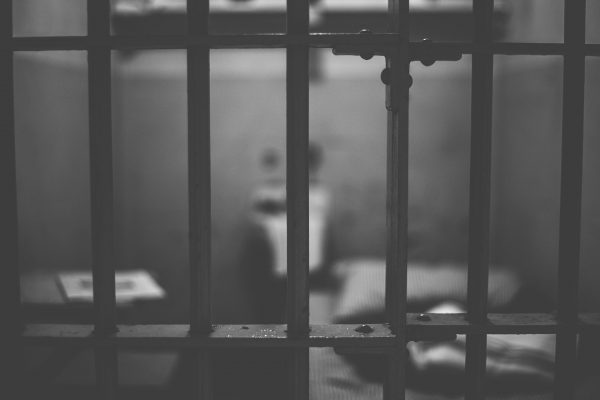
Image: Black and white photo of a jail cell, bars in the foreground. Image via pixabay,CC0.In many states people convicted of a felony lose their right to vote.
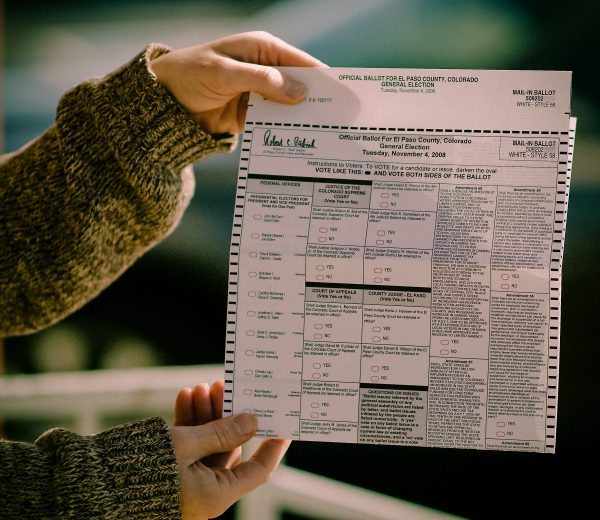
The election results are more or less in, along with a slew of disinformation about alleged voter fraud. You’ve probably head of #StoptheSteal, a viral-hashtag linked to groups claiming that the election results are inaccurate or illegitimate due to voter fraud. We at TheSocietyPages have published multiple articles and posts pointing to social science research demonstrating that voter fraud is not a big problem in the USA. Following the events of the last few weeks, we decided to provide you with an updated refresher of work in this area. It documents that voter fraud is virtually non-existent, and that if there are problems related to voting and voters in the USA, they have more to do with suppression and disenfranchisement.
Across a variety of social science fields, data and research in the last decade shows that voter fraud is extremely rare in the USA. Some scholars estimate the level to be less than one-thousandth of one percent of all votes (i.e less than 0.001%), and that number is actually considered high by other scholars! Furthermore, of the few instances that could qualify as “voter fraud,” most involve issues of individual registration or ballot damage. There is no evidence of systemic, malicious attempts to subvert the results of the election. Indeed, the existing system of voter registration, as well as processing, counting, and sorting ballots, has been validated by extensive quality-control checks and fraud-prevention procedures. It will be a while before social scientists publish research about the 2020 election, but this author is willing to bet that findings will continue to illustrate a lack of voter fraud in the USA. Remember that the Federal Elections Commission has already stated that the 2020 election was one of the safest, most-secure elections in recent history.
There is a real voting-related issue in the USA that goes unnoticed: voter disenfranchisement and voter suppression. In the past decade, the right to vote has come under attack in ways that are both typical and novel. For example, in many states people convicted of a felony lose their right to vote, even after their prison sentence is completed. This is a long-standing legal norm, but in recent decades, the population of incarcerated Americans has skyrocketed within a criminal justice system already rife with racial inequalities. Today, millions of Americans have been effectively barred from democratic participation, and a disproportionate number are Black, Hispanic, or Native-American.
Relatedly, voter suppression has grown throughf stricter ID laws, de-registration of voters, and other bureaucratic obstacles that make it harder for people to vote, even people who have voted in many elections beforehand. As the research below shows, voter suppression works in ways that skew the American electorate on racial and partisan lines, meaning the votes being cast are not truly representative of the American population.
Ideally, our society would take the energy spurred by the fantastical, imaginary arguments of the #StoptheSteal campaign and instead address the very real issues that compromise our democracy, taint the voting process, and unduly impact election outcomes. The research cited above suggests that removing obstacles to voting would increase individual political participation and general voter turnout; if we’re in pursuit of an ideal democracy, shouldn’t such issues be at the forefront?
Election Day is right around the corner. In this #TSPClassic Collection, we review several oldies-but-goodies about voting and elections. These include pieces on historical and contemporary patterns in voter turnout, and the evolution of voter laws in the USA.. We also take stock of how political participation and democracy itself goes beyond just voting on Election Day.
Who people vote for, and why they vote for them, is an important element of studying elections and political participation in social science, That doesn’t mean you can convince everybody on the other side of the political aisle to vote for your preferred candidate. This Sociological Images post considers the growing field of cognitive sociology to explain why voter choice and voter preferences are complex and hard to change.
A common question in American politics is whether people will vote: what motivates some people to vote regularly in national and local elections versus others who don’t really vote at all? This Soc Images post describes the answers people give when asked why they didn’t vote? This can range from personal attitudes such as opinions about the candidates on the ticket and or a general disinterest in politics. A lack of voter turnout can also be explained by barriers in the process including registering to vote, finding time to vote, and even dealing with bad weather on Election Day. Importantly, voter patterns differ by demographics. As described by this Soc Images post and this TSP Special, there are clear differences in voter registration and turnout among people of varying races, education, gender, and other differing backgrounds. This research question has been studied at length for decades, and considering such findings over time reveals important trends. This post from Sociological images discusses how voter turnout has both grown and dipped over the 20th and early 21st centuries. As described by this Soc Images post and this TSP Special, there are clear differences in voter registration and turnout among people of varying races, education, gender, and other differing backgrounds.
Gender is an important element in studying voter patterns, turnout, and political impacts during election season. Indeed, the stories of radicalism, feminism, and the women’s suffrage movement were important historical moments when key ideas about democracy and equality developed. These ideas shape how we think about voting, identity, and activism today, as described in this Soc Images post. This is particularly relevant in recent decades as more female politicians are represented in major races and as social conversations, norms, and understandings of gender evolve. This Council on Contemporary Families post breaks down the nuts and bolts of gender, voting, and the 2016 election, which point to interesting directions for for future research down the road; how will gender shape the 2020 election?
Voting in the 21st Century: A New Era of Oppression?
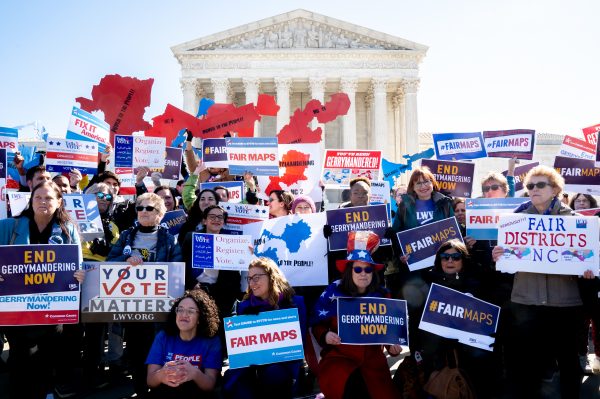
Protests against gerrymandering in front of the Supreme Court. Image via Flickr, CCO.
Voter suppression is on the rise in the USA, which is ironic given the prevalence of “Get Out the Vote!” messaging. Social scientists have investigated voter restriction laws, legislation, and policies implemented in the 2000’s and 2010’s as a new chapter in America’s troubled history with voter suppression and voting right’s restriction. As described by this TSP Special, we’re over fifty years past the Voting Rights Act, yet voter suppression seems to be gaining momentum in recent years. History is indeed repeating itself as shown in this Soc Images post about voter suppression in the past and in the present.
Voter suppression can happen at the level of large locales or entire states. “Gerrymandering” is a process in which electoral maps are redrawn to favor one party over the others; the name is inspired by a salamander-shaped picture of a district which politicians had redrawn so that voters from one region would cancel out others. Regardless of political affiliation or partisanship, we should all be concerned by the very real threat that Gerrymandering represents to our democracy, voting, and election outcomes, as explained by this TROT post and this Soc Images post.
One important dimension of voter suppression is felon disenfranchisement, wherein Americans convicted of a felony lose their right to vote. In recent decades, legislators have created new laws which expand the definition of felonious crimes; this has developed alongside other inequalities in policing, incarceration, and the criminal justice system. Thus, felon disenfranchisement represents an important product and driver of contemporary inequalities in the USA that unfold on racial and class lines, as described by several different #TSPClassics. TSP Editor Chris Uggen has been a major contributor to this area; his and colleagues’ research shows that millions of American votes have been lost to felon disenfranchisement, as discussed on The Sentencing Project.
Voter disenfranchisement has taken on a new face, as described in this post from Soc Images. As Scholar Strategy Network explains, seemingly-innocent but problematic methods of voter suppression include the passage of voter ID laws and other individual requirements. These laws require voters to have financial resources and access to public institutions such as a local DMV. These requirements disproportionately affect racial minorities, the poor, the elderly, and other groups in the USA who already experience structural inequalities. Voter ID laws, as explained here by Soc Images, represent another chapter in voter suppression which thusly works to prevent people from accessing their right to vote.
Scholars in sociology and beyond have raised concerns about the recent growth of voter suppression and its consequences. Learn about the many dimensions of social science research on voter suppression from this post by Scholars Strategy Network’s research compendium. Voter suppression is a fundamental attack on the rights of citizenship and the pursuit of specific laws and rules that make it harder to vote is often a targeted strategy to prevent certain populations from voting. This post from Scholars Strategy Network presents research on politicians’ and policymakers’ attempts to suppress the vote of racial minorities. Voter suppression is a fundamental attack on the rights of citizenship and the pursuit of specific laws and rules that make it harder to vote is often a targeted strategy to prevent certain populations from voting.
Voter suppression has not waned in the twenty-first century. Most scholars agree that the problem has only gotten worse in recent years. An important consequence of ongoing voter restriction is the distortion of the electorate. This means that rather than representing the general American population, the electorate is whiter and more conservative, as described by this Soc Images post. As described in this TROT post, the racial, class, and other inequalities heightened by voter suppression mean that gaps in who can vote have tangible, direct impacts on elections, politics, and policy.
“Democracy:” Elections and Beyond
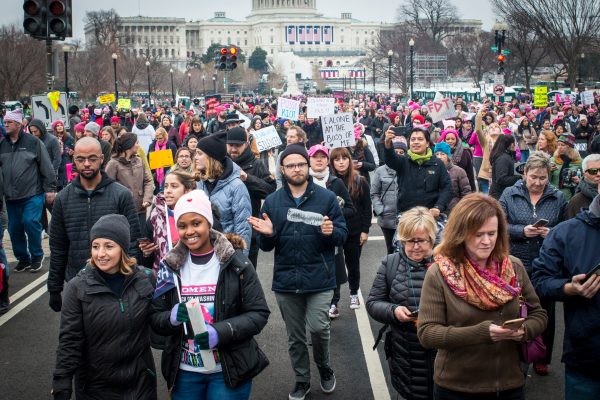
Image from the 2017 Women’s March in Washington, D.C. Image via Flickr, CCO.
Voting is a cornerstone of our democratic state and is the primary method by which the average citizen can impact politics. And yes, your vote matters! This post from Sociological Images discusses how voting relates to public policy and how voter turnout predicts how public policies unfold. As described in this post from Cyborgology, elections and voting represent an important symbolic, social ritual for the fulfilment of democracy.This post from Feminist Reflections, aptly titled “When Women Roar,” considers gender in the 2016 election and politics as related to pop culture and equality in representation.
Voting and election day can tell us a lot about our society; elections and voting are snapshots of social change and progress, as described by this TSP Special about the intersections of professional sports league, profits, and politics. We should remember, however, that being an involved citizen goes beyond Election Day. Social movements and activism are important parts of the democratic process and social change in a democracy, as described by this TSP Special. As we move forward, we should remember that voting is only one way to participate in democracy That being said, the right to vote–which some people take for granted–has been increasingly restricted in recent years via several forms of voter suppression. We must continue academic research and provide critical solutions to tackle this source of inequality and threat to our democracy. We could also expand access to voting by modernizing voter registration and voting as described in this post from SSN. And, as many of us vote remotely during COVID, it’s important to reiterate that voter fraud is not a major issue in the USA, as described by this TSP Teaching post. Social science can help us move towards a future with increased voting access and voter participation. We should remember, however, that being an involved citizen goes beyond Election Day. Social movements and activism are important parts of the democratic process and social change in a democracy, as described by this TSP Special.
A shopping cart full of groceries viewed from above. Eddie Welker viaflickr, CCO.
The Wall Street Journal recently interviewed Estefani Iraheta, a mother of two who requested donated food from her local Salvation Army when the pandemic hit. Every time she goes to pick up the canned food and staples, more people are waiting in line with her, seeking food for their families. As of August 2020, an estimated 12 percent of U.S. households, or roughly 1 in 8 U.S. households, did not have enough food within the last week; for U.S. households with children, nearly 20% stated they did not have enough food the previous week.
Food insecurity refers to inconsistent access to sufficient, nutritious food that is necessary to live a healthy life. While hunger is a related issue, food insecurity is fundamentally about a lack of household resources. And the COVID-pandemic has worsened U.S. food insecurity by increasing unemployment, raising food prices, and closing schools.
Schools are a vital institution, not only for learning but also for access to social services, including regular meals. From kindergarten to college, many schools offer a dependable source of community support and reliable access to food. Even before the pandemic, however, food insecurity has been a critical issue for U.S. students. In recent years, researchers have investigated how educational institutions handle this issue.
More recently, scholars have focused on the prevalence of food insecurity among college students, who are often viewed as a privileged group. In particular, research has devoted attention to how colleges do, or do not, address food insecurity.
Food insecurity is only one consequence of a larger societal issue: poverty and precarity in the United States. In 2019, approximately 34 million Americans were living in poverty, or 10% of the U.S. population. It’s important to recognize that poverty is structured not just by income, but by race, gender, citizenship, and other factors. Here are some key sociological resources on the experience of living poverty in the United States.
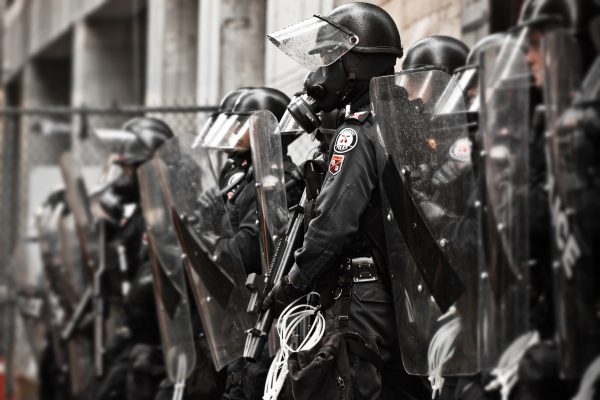
Police form a line in riot gear. Violence against citizens by police is often perceived as legitimate. Image via Flickr.
Can your country be a criminal? Until recently, the legal answer has often been no. Today, sociologists answer: it depends. For instance, this past summer, the federal government resumed executing death row inmates, and more recently, officer-involved shootings have drawn attention to how police officers are entrusted with violent force as part of their duty to protect and serve the people. In many circumstances, these killings are defended as legal or legitimate forms of violence. But many other kinds of killing, such as genocide or murder, are not.
Early sociologist Max Weber argued that countries have historically been defined by the power and right to exercise “legitimate violence,” or violence that is normalized and legal. Although they are entrusted to use violence to protect their citizens from violence, countries routinely use violence against their own citizens.
Legitimate violence, often carried out by a country’s police forces or military, is typically reserved for those that are marginalized or alienated. When a nation commits violence against criminals, those who present security risks, or even those whom we fear, it is often accepted as a “reasonable” use of force. Some scholars argue that most forms of police violence, in particular, are difficult to recognize as anything but legitimate and necessary for protection. For example, we often presume that police violence is committed against criminals, in an effort to protect innocent citizens.
It wasn’t until WWII and the Holocaust that the international community questioned a nation’s right to perpetuate violence against its people. For example, Hitler’s murderous campaign against the Jews and other social outcasts was, in fact legal, as genocide was not yet a crime. A state’s right to legitimate violence has only diminished with the recent development and globalization of human rights.
Both police violence and mass violence committed by states against their own populations are beginning to be understood as crimes. Internationally, we have seen this with the creation of the International Criminal Court. Closer to home, we see this with the calls to prosecute police officers who have engaged in police brutality. Yet many forms of violence committed by the state are still perceived as legitimate, despite the fact they involve the same type of violence. For example, intentionally targeting and killing a civilian may be labeled an illegal crime against humanity or the legal result of a capital criminal prosecution.
Covid-19 may be bringing long-term changes to workplaces and leisure activities as people become more attuned to potential infectious disease. But our shock, surprise, and general inability to deal with the virus also tells us something about how much our relationship with disease has changed.
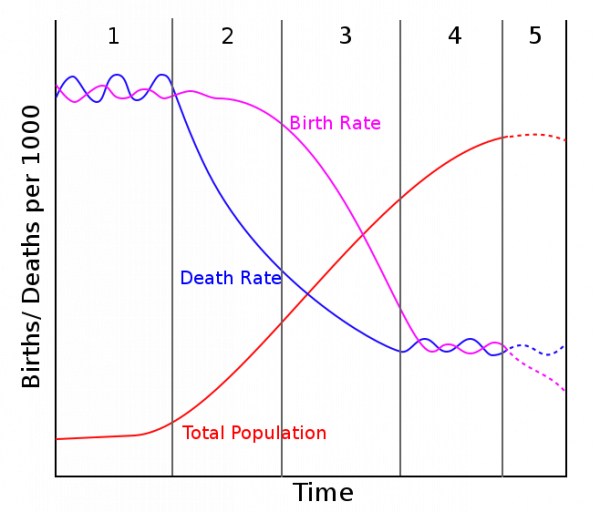
Graph showing the birth rates, death rate, and total population during each of the 5 stages of epidemiological transition. Image via Wikimedia Commons.
What scientists call the “epidemiological transition” has drastically increased the age of mortality. In other words, in the first two phases of the epidemiological transition lots of people died young, often of infection. Advancements in medicine and public health pushed the age of mortality back, and in later phases of the transition the biggest killers became degenerative diseases like heart disease and cancer. In phase four, our current phase, we have the technology to delay those degenerative diseases, and we occasionally fight emerging infections like AIDS or covid-19. Of course, local context matters, and although the general model above seems to fit the experience of many societies over a long period of time, it’s not deterministic.
Even before the epidemiological transition, not everyone had the same risk of contracting a deadly infection. Data from the urban U.S. shows that the level of mortality experienced by white Americans during the 1918 flu (a historic level considered to be a once-in-a-lifetime event by demographers), was the same level of mortality experienced by nonwhite Americans in every county in every year prior to 1918.
Clearly, as we are seeing today, the epidemiological transition isn’t a smooth line. There is also considerable year-to-year and place-to-place variability, and new diseases can cause a sharp uptick in infectious disease deaths. For instance, the emergence of AIDS in the 1980s was responsible for a rise in infectious mortality and demonstrated the need to be prepared for new diseases.
In just a few short weeks, covid-19 became a leading cause of death in the United States. The pandemic is a reminder that despite all of our health advances we aren’t beyond the disruptions of infectious disease, despite the broader long-term shift from high rates of childhood mortality to high rates of degenerative disease among elders.
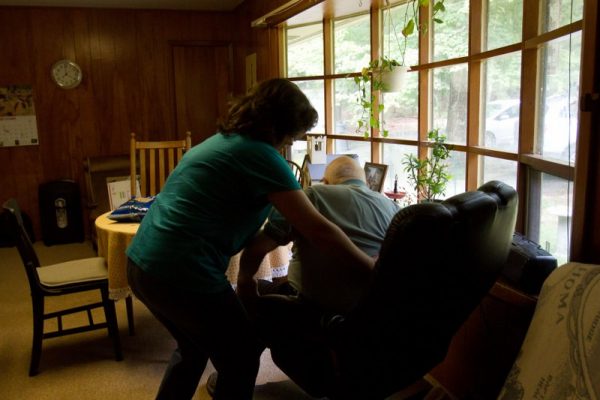
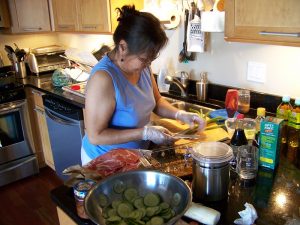
When we talk about work, we often miss a type of work that is crucial to keeping the economy going and arguably more challenging and difficult than ever under conditions of quarantine and social distancing: care work. Care work includes both paid and unpaid services caring for children, the elderly, and those who are sick and disabled, including bathing, cooking, getting groceries, and cleaning.
Sociologists have found that caregiving that happens within families is not always viewed as work, yet it is a critical part of keeping the paid work sector running. Children need to eat and be bathed and clothed. Families need groceries. Houses need to be cleaned. As many schools in the United States are closed and employees are working from home, parents are having to navigate extended caring duties. Globally, women do most of this caring labor, even when they also work outside of the home.
Globally, women do most of this caring labor, even when they also work outside of the home. Historically, wealthy white women were able to escape these caring duties by employing women of color to care for their children and households, from enslaved African Americans to domestic servants. Today people of color, immigrants, and those with little education are overrepresented in care work with the worst job conditions.
In the past decade, the care work sector has grown substantially in the United States. However, care workers are still paid low wages and receive little to no benefits. In fact, care work wages are stagnant or declining, despite an overall rise in education levels for workers. Thus, many care workers — women especially — find themselves living in poverty.
Caring is important for a society to function, yet care work — paid or unpaid — is still undervalued. In this time of COVID-19 where people are renegotiating how to live and work, attention to caring and appreciation for care work is more necessary than ever.
Christine Delp and Jillian LaBranche on April 9, 2020
Astrological signs from alchemical text entitled “Opus medico-chymicum” published in 1618 by Johann Daniel Mylius, via Wikimedia Commons.
Astrology is on the rise, and a recent New Yorker article argues that 30% of Americans now believe in astrology. This spike in belief has been tied to astrology’s popularity on the internet and social media. Astrological apps like Co-star and Align have gained traction, achieving millions of downloads a year, and mystical services more generally are generating 2.2 billion annually. But why is astrology on the rise? And what does sociology have to say about its practice?
During the 1970s, astrology was marginalized and socially stigmatized — considered part of the American counter-culture. The rise of religious nones and the “spiritual but not religious” category have led scholars to consider how belief systems once considered to be alternative may be becoming more mainstream. Scholars have found that even spiritual beliefs that are not part of organized religion may be highly organized in generating meaning and community, particularly in unsettled times. Given stressors like global warming, economic instability, and the recent COVID-19 pandemic, millennials may be turning to belief-structures once considered to be alternative to find community and to grapple with uncertainty.
2020 is a census year in the United States, meaning that this year represents the major moment of a constitutionally-mandated survey about the American population.
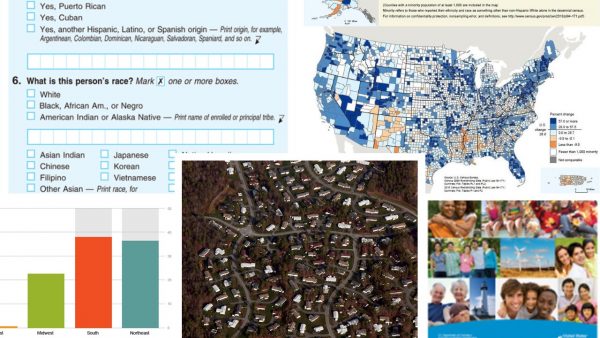
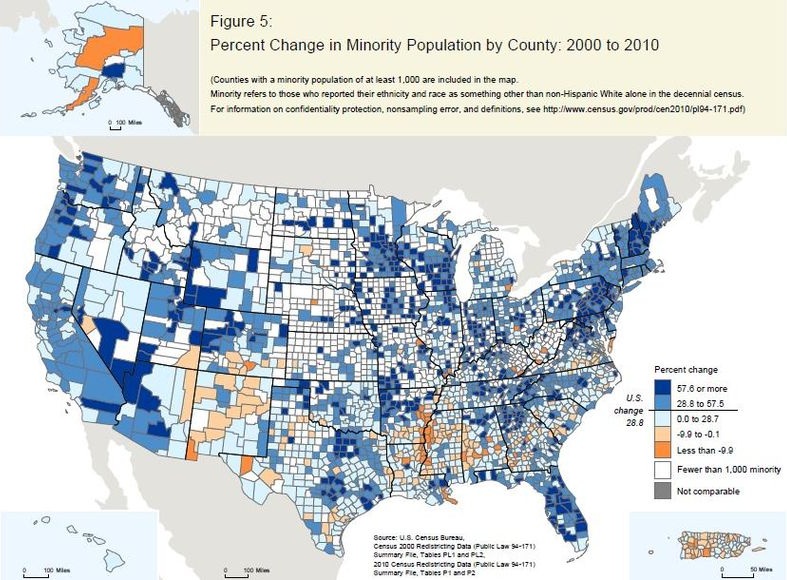
Since it was first introduced in the 18th century, the U.S. Census has always provided important data for guiding public policy and served as a crucial source of evidence for social science research. Considering we only get this chance once a decade, here at The Society Pages we took a quick census of our own content to bring you our favorites #TSPClassics about the Census. This collection covers a variety of topics, ranging from the nuts and bolts of conducting the Census itself, to how the history of the Census reflects and impacts changing racial and ethnic boundaries in the United States, and the variety of ways social scientists have used census data in conducting research and building theory. Read on!
The Census and Social Science: Lessons for and from Conducting Research
Advances in social science methodology and research have contributed to developments in the Census. Though it is a rare and large research endeavor unlike any other, the Census is a great example of theoretical and methodological considerations that social scientists grapple with every day. Not only does the Census give us a chance to put sociological theory and methodology into action, but Census data has been important in social science literature and research across a variety of fields.
As one of the largest endeavors in data collection, the Census has many complicated issues to consider as part of the practical processes involved with research and the interpretation of data.
In this #TSPClassic episode of Office Hours, we hear from Robert M Groves, a sociologist who was then Director of the Census Bureau, about how the Census manages and works through such complications.
In this Clipping, Robin Autry speaks with The Atlantic about how researchers clean census data to deal with ambiguous, fluid concepts such as race and ethnicity.
Then, read this #TSPClassic from The Color Line about the preparation and planning behind the 2010 Census; how does such thinking relate to the 2020 Census?
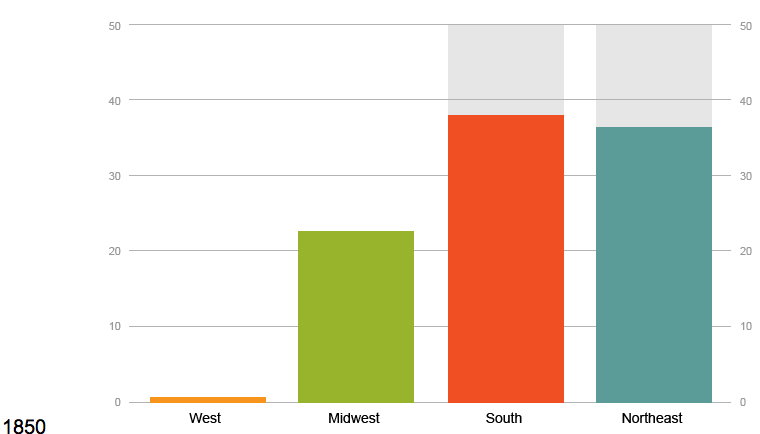
Click to enlarge. Graph shows U.S. regional distribution based on the 1850 census, SocImages
Census data and related research can tell us a lot about our lives, particularly when it comes to where we live and how we work.
Scholars have used such data to understand the history of urbanization and suburbanization in the United States; this Sociological Images post draws on census data to visualize the development of the modern American metropolis and contemporary communities.
The Census can tell us a lot about the big picture, but what can it tell you about yourself?
In this article from Contexts, Leah Sabo reflects on how thinking about the Census can teach us about the individual and make us think about our own lives. Read on to spark your sociological imagination about privilege, neighborhoods, diversity, and much more.
The Census, and subsidiary projects it manages such as the American Community Survey (ACS), provide incredibly important data for social science research. Though the ACS reaches fewer people than the one-a-decade Census, it gathers information about ancestry, neighborhoods, and communities in more detail and with more regularity.
In this #TSPClassic from Council on Contemporary Families, Philip Cohen challenges proposed budget cuts to the ACS and explains why it is important to fund this survey and social science in general.
Furthermore, such research processes are important around the world; read a Sociological Imagespiece about what other censuses around the world look like, based on resources from the American Anthropological Association.
The Census and Race: The Social Construction of Race and Diversity in the USA
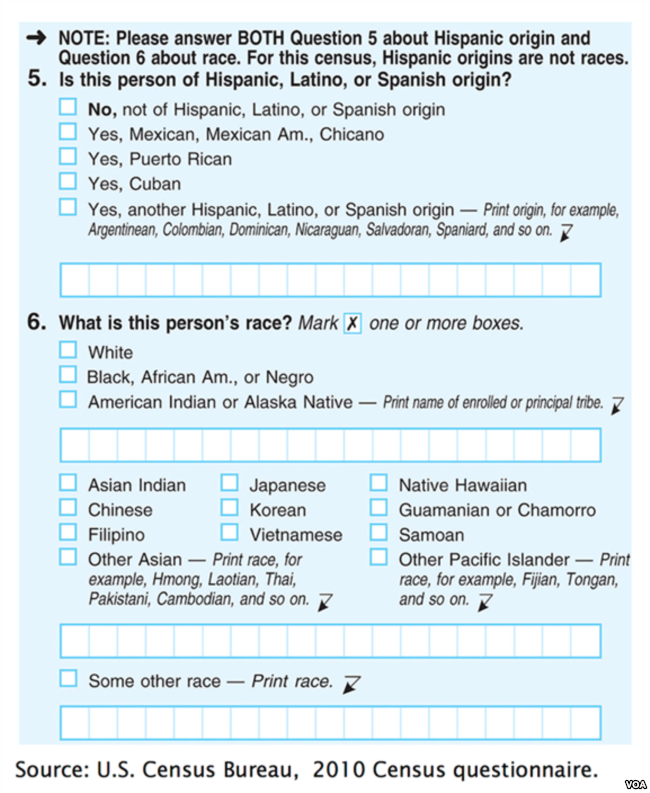
“Race” is a social construction. Social forces shape how physical characteristics and groups become seen in racialized ways, and this happens through a variety of cultural and material processes. The ways the Census approaches race, ethnicity, and identity have changed drastically over its centuries-long history; much of this reflects shifting norms about racial categories and racism itself in the United States. Census data thus shows us how race and racial landscapes change, and the complexities of race in the United States.
Racial identification on the Census has changed and evolved.
This Sociological Images post describes shifts in Census practices regarding the measurement of race through appearance versus identity.
Be sure to read this summary of research on how the fluidity of racial identification on the Census can itself be a fluid process.
These next two Clippings consider how the Census relates to the intersections of race, ethnicity, nationality, and citizenship: the first describes how the Census affects the historical development of “Hispanic” as an ethnic category, and the second points to complexities in measuring American-Indian identities in census data.
Census research has been used to study racial inequality both past and present.
This post from Sociological Images uses census data to illustrate discuss historical quantification of slavery.
And this #TSPClassic via Council on Contemporary Families draws on census data to discuss how, despite the passage of fifty years since the Civil Rights Act, racial inequality and disadvantage persist in a variety of outcomes.
Finally, read this Sociological Images post to learn more about racial residential segregation in several American metropolises.
The rise of difference and diversity has drawn discomfort, racial tensions, and backlash, and much of this comes from the ways that everyday people react to census data and population projects.
And this Clipping describes how census data can be used to stoke fears about immigration.
Finally, be sure to read this #TSPClassic, a special feature about the “whitelash” against diversity.
As American diversity continues to rise, push back and resentment will surely continue to be relevant to how people use and react to census data. What will we see once the 2020 numbers come out?
Finally, it is important to recognize that rising racial diversity does not necessarily mean that racial inequality will disappear; in fact, sociologists often find the opposite. One such area of research is related to segregation and concentrated disadvantage, wherein non-white communities often have less cultural, political, and economic power.
Be sure to read this Discoveries post about historical and contemporary racial segregation between the North and the South,
And read this Clippings piece about how segregation persists despite an increasingly racially diverse population.
As we move into a future of greater difference, such ideas are important to keep in mind; what will the 2020 Census tell us about race, diversity, and inequality?
We hope you enjoy these #TSPClassics as much as we do, and we look forward to working with the 2020 Census data!
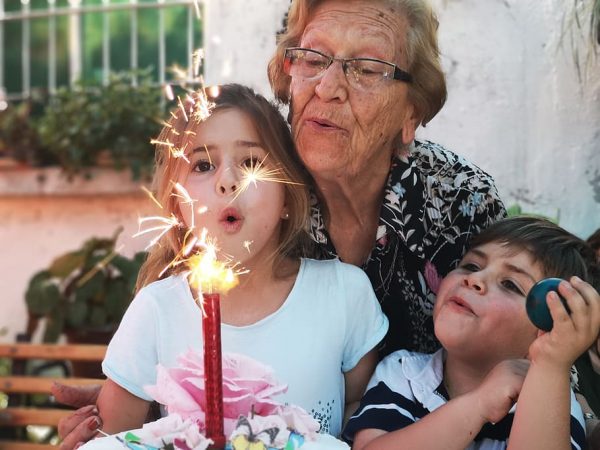
A young girl blows out a birthday candle with help from her grandmother and brother. In times of economic recession, many individuals experiencing hardship receive help from extended family members. Photo via Wallpaper Flare.
A few weeks ago, the Dow Jones fell 20% from its high. To many this is an indicator of great uncertainty about the future of the market and could be an indication of a coming recession. And this was even before the crisis of COVID-19. In these uncertain economic times, we look back to how the Great Recession of 2008 impacted families’ decision-making including whether or not to have children, where to live, and how much to rely on family members for financial support. Perhaps this recent history can help us imagine what might lie ahead.
Demographers and other social scientists are interested in the fertility rate, or the number of live births over the lifetime of a child-bearing woman. After the Great Recession, the fertility rate fell to below replacement rate (or 2 children per every one woman) for the first time since 1987. Scholars attribute this change in fertility to increased economic uncertainty; people do not feel confident about having a child if they are not sure what will come next. In fact, the fertility rate fell lowest in states with the most uncertainty, those hit hardest by the recession and “red states” concerned about the economic future under Obama.
Schneider, Daniel. 2015. “The Great Recession, Fertility, and Uncertainty: Evidence From the United States.” Journal of Marriage and Family 77(5):1144–56.
Guzzo, Karen Benjamin, and Sarah R. Hayford. 2020. “Pathways to Parenthood in Social and Family Contexts: Decade in Review, 2020.” Journal of Marriage and Family 82(1):117–44.
During the Great Recession there was also an increase in the number of young adults, both single and married, living with their parents. Rates of both young married adults living with their parents increased in 2006 to reach 1900 levels which is surprising considering that the century between 1900 and 2000 is considered the “age of independence,” when many more young people moved out and established households of their own. This effect was particularly strong for young adults with less education and those who had fewer resources to weather the storm of the recession on their own.
The economic challenges of the late 2000s also may have led to an increase in interpersonal conflict within families. In part, this may stem from the pressure family members feel to serve as a safety net for relatives who are struggling financially. For instance, Jennifer Sherman found that some individuals who were experiencing financial hardship withdrew from their extended family during the Great Recession rather than asking for support. This, along with findings that giving money to family members during the recession increased an individual’s chance of experiencing their own financial stress, raises questions about whether or not family networks can offer support in times of economic turmoil.
Sherman, Jennifer. 2013. “Surviving the Great Recession: Growing Need and the Stigmatized Safety Net.” Social Problems 60(4):409–32.
As the economic effects of covid-19 are felt across the country, many Americans are preparing for another severe economic downturn. Understanding how the Great Recession influenced family structure and life is an important lens for considering how large economic events shape people’s everyday lived experiences.
About There's Research on That
Offering up great research from across the social sciences that speaks to the big events of the day.