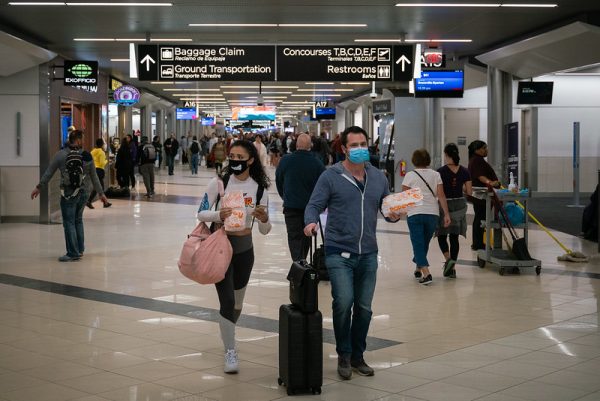
Flyers at Hartsfield-Jackson Atlanta International Airport wearing facemasks. Photo by Chad Davis, Flickr CC

During times of crisis, existing prejudices often become heightened. Fears about the current coronavirus, or COVID-19, have revealed rampant racism and xenophobia against Asians. Anti-Asian discrimination ranges from avoiding Chinese businesses to direct bullying and assaults of people perceived to be Asian. This discriminatory behavior is nothing new. The United States has a long history of blaming marginalized groups when it comes to infectious disease, from Irish immigrants blamed for carrying typhus to “promiscuous women” for spreading sexually transmitted infections. 

Historically, the Chinese faced blame time and again. In the 19th century, public health officials depicted Chinese immigrants as “filthy,” carriers of disease. These views influenced Anti-Chinese policies and practices, including humiliating medical examinations at Angel Island — the entry port for many Chinese immigrants coming to America — and the violent quarantine and disinfection of San Francisco’s Chinatown in the early 20th century when a case of the Bubonic plague was confirmed there. 
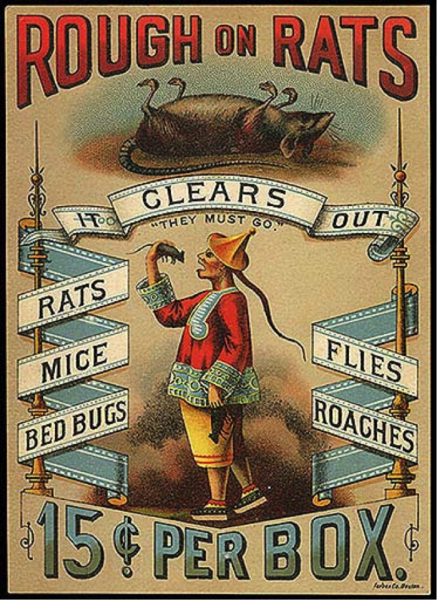
An advertisement for "Rough on Rats" rat poison. On the flyer there is an image of a stereotypically drawn "china man" eating a rat.
Late 19th century racist advertisement for rat poison

Discrimination against the Chinese is one example among many. Such discrimination had nothing to do with their actual hygiene and health, and everything to do with their social position relative to other racial groups. It’s easy to look back on the xenophobic U.S. policies and behavior in earlier times. Let’s not fall into the same patterns today.

For more on xenophobia and coronavirus, listen to Erika Lee on a recent episode of NPR’s podcast, Code Switch.
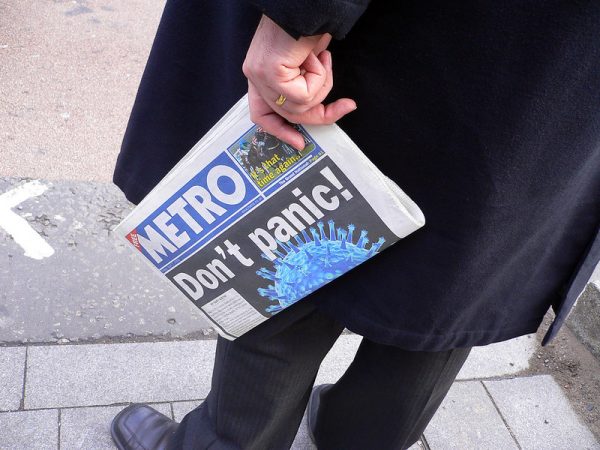
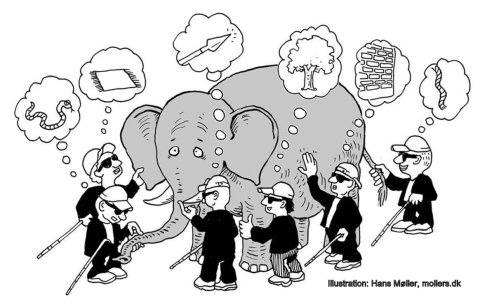
Photo by photologic, Flickr CC

This post was created in collaboration with the Minnesota Journalism Center

Coronavirus — also known as COVID-19 — has taken the global media world by storm. Over 2,000 have died and more than 79,000 are infected globally. The World Health Organization has been criticized for not declaring a public health emergency earlier than they did, but doctors including Dr. Emily Landon at the University of Chicago are saying that “people shouldn’t panic.” 

In cases of public health epidemics, whether people panic depends in part on how journalists cover the issue and which experts they cite. Journalists tend to quote official sources like government officials and public health officials to inform the public about outbreaks of illness including influenza, swine flu, Zika, Ebola, and more recently, coronavirus. Being quoted in news articles gives public health officials the opportunity to share their expertise on said topics to help inform readers about how to protect themselves and avoid infection. From a sociological perspective, focusing on the spread of information about pandemics and infectious diseases provides opportunities for scholars to comment on evolving social structures and processes in a way that will influence the biomedical sciences’ public and policy agenda.

As epidemiologist Adam Kucharski wrote in The Guardian, “stories sparking fear seem to have overtaken the outbreak in real life” and misinformation (a topic The Society Pages has written about here) seems to be more contagious than the virus itself. The “need for speed” in publishing journalistic updates about the virus as well as scholarly work has resulted in several retractions, including the retraction of a preprint of a scholarly paper after its analysis was found to be faulty. 

Further, the spread of information — and misinformation, including conspiracy theories — about health crises often occurs on social media platforms including Twitter and Instagram. Scholars found that false information spread especially quickly during Ebola outbreaks in West Africa and in the Zika outbreak in Brazil, which led to the formation of counterproductive policies passed by public health officials who struggled to combat false claims. In recent years, Instagram was found to be the most effective platform for health organizations including Centers for Disease Control, the World Health Organization, and Doctors without Borders to engage followers during global health crises.
Scholars, including Dr. Anita Varma, recently published five tips for journalists on covering coronavirus. These include paying attention to the frames used and including quotes from official sources like government officials as well as the people directly affected by the health concern. Dr. Karin Wahl-Jorgensen published an article on the role that fear plays in narratives about public health crises. The bottom line is: The way stories are told matters and affects the management of pandemics and policy responses.
Cartoon. Six blind men touch different parts of an elephant and each has a different idea of what the elephant is based on what they've touched

This post was created in collaboration with the Minnesota Journalism Center

Objectivity and neutrality have been cornerstone norms of journalistic practice in democracies in the Western world for over a century. However, in recent years ideals of fairness, accuracy, and balance have come under increasing attack from many different and sometimes unexpected directions. 

Many beliefs about the need for media objectivity go back to Alexis de Tocqueville’s 19th century argument that the circulation of newspapers are integral to fostering a functional and effective democracy. Indeed, objectivity became a news value in the 1830s, partly to do with the rise of the Associated Press (AP), created in 1848 by a group of New York newspapers that wanted to take advantage of the speed of the telegraph in transmitting news to multiple outlets. To transmit news to a variety of news outlets with a variety of political allegiances consistently, a sense of objectivity had to be maintained to be relevant to as wide an audience and clientele as possible. 
Cutting against these norms was the sensationalism of newspaper content in the late 19th century. While the use of emotion in reporting has often been connected to the commercialization and tabloidization of journalism, in recent years it has also appeared in coverage of disasters, crises, and human rights abuses — and has come to be seen as positive and valuable as well. The roles of objectivity and impartiality have always been contested within journalistic practice, so rather than seeing emotion as the opposite of objectivity, some scholars now argue it can come alongside and inform journalistic practice worldwide.
The role of objectivity has also come into question as a mechanism that can silence marginalized writers and populations. Relatedly, news can also reinforce institutions of power in society, for better or for worse. In populist countries including Argentina, Bolivia, Ecuador, Nicaragua, and Venezuela, “professional journalism” is often pitted against “militant journalism” promoted by neo-populist governments and their sympathizers — a movement that has critical implications for the freedom of the press in societies in the Global South. Also, news media has been found to negatively portray protests and protesters.

It’s Black History Month, and we at TSP have rounded up some of our favorite, timeless posts about the history, meaning, and importance of celebrating black history. These #TSPClassics include articles about Black History Month itself, as well as articles about research related to racial identity, racism, and anti-racism. Read about Black scholars’ early contributions to social sciences, recent innovations in scholarship about race, ongoing issues of racism and inequality, new strategies and actions in advocacy, and much more below; happy Black History Month!

From Our Main Page

Did you know W.E.B DuBois was a pioneering sociologist? Read more at “What Would W.E.B DuBois Do?
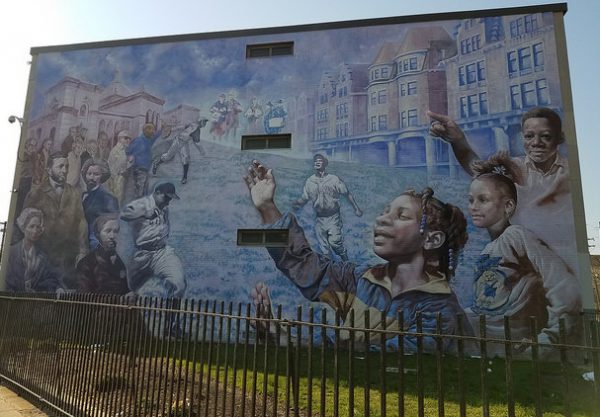
Photo of a mural honoring black history in Philadelphia. Photo by 7beachbum, Flickr CC.
Read about black women’s advanced sociology and social science at “Unearthing Black Women’s Early Contributions to Sociology.”
Read about why the idea of a “white history month” ignores the history of race and racism at “Why We Don’t Need a White History Month.”
“Black Panther,” one of the most successful movies in the Marvel universe, was a momentous film for black representation and imagery in Hollywood. Read more at “Black Panther as a Defining Moment for Black America.”
The word “racism” can mean a lot of different things in different contexts; read about different definitions, forms, and research traditions regarding “racism” in the USA at “Different Dimensions of Racism.” 
Even in the 21st century, Black Americans have to navigate racist stereotypes, imagery, and perceptions, and many learn such strategies at a young age. Read about related parenting strategies and challenges at “How Black Mothers Struggle to Navigate ‘Thug’ Imagery.”
Recent research about black identities, experiences, and community analyzes how themes studied by early sociologists of race relate to twenty-first century technology, such as social media platforms and digital communication. Read more about these and other new research directions at “A Thick Year For Tressie McMillan Cottom.” 
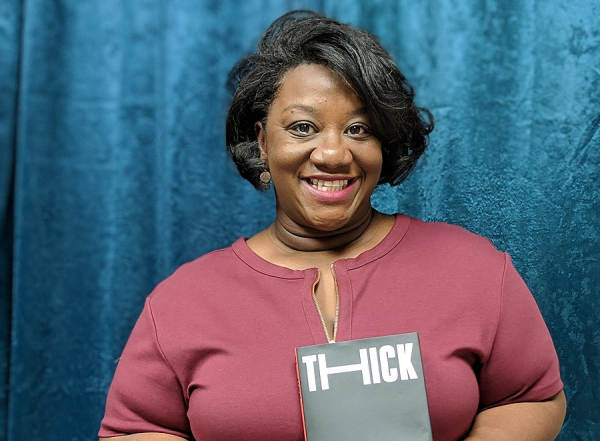
Tressie Mc Millan Cottom displays her essay collection Thick, which was nominated as a National Book Award Finalist. Photo via Wikimedia Commons.
Black athletes represent a new generation of leaders and anti-racist advocates; read more at “A New Era of Athlete Awareness and Advocacy.” 
Should educators promote colorblind rhetoric in the classroom? Read about problems with colorblind teaching practices at “Color-Blind Classrooms Socialize Students to Disregard History.”
Research shows that skin color intersects with race and racial identity in ways which perpetuate racial inequality. Read more at “Skin Color, Self-Identity, and Perceptions of Race.” 
Social norms, rules, and laws about mixed-race relationships have changed drastically across history, but many issues of inequality and identity remain for contemporary multiracial families. Read more at “Navigating Multiracial Identities.” 
Photo of a multiracial family by taylormackenzie, Flickr CC.

From Our Partners and Community Pages

Soc Images

Rural Appalachia is often discussed as a mainly-white region, but did you know about the richness of black history in the mountains? Read more at “Hidden Black History in Appalachia.”
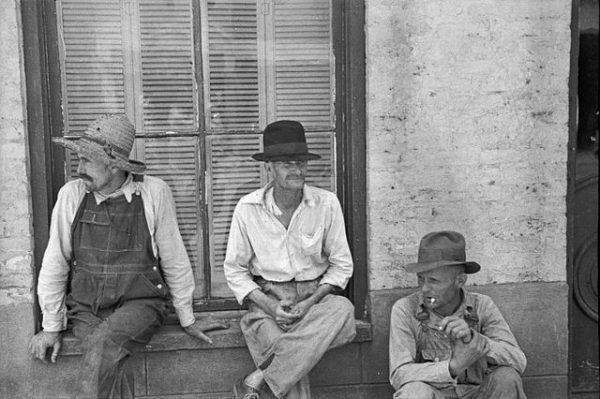
Rural sharecroppers in Appalachia. Source: Wikimedia Commons
Sometimes, businesses, corporations, and groups try to celebrate Black History Month in ways which are tone-deaf, ignorant, and just plain racist. SocImages archives several cringeworthy incidents over the years at “From Our Archives: Black History Month.”

Contexts

The field of sociology studies racism, but we’re not above criticism; read about why social science must divest from whiteness and white-centric logic at “Yes, Sociology is Racist Too.”
Why don’t we make WEB DuBois’ birthday a holiday? Read more at “A New Black Holiday, or Why W.E.B. DuBois’s 150th birthday matters.”
Well into the 21st century, discrepancies in the justice system are still a major site of racial inequality; read about racial inequality and policing at “Black and Blue.”
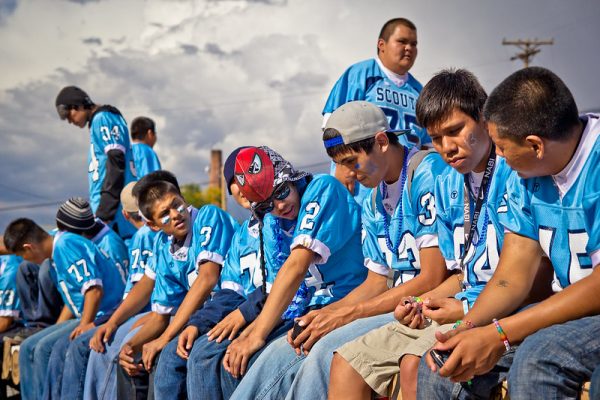
Photo of ten boys sitting together all wearing matching blue football jerseys. Some have blue face paint under their eyes.
Photo by Donovan Shortey, Flickr CC

After writing several bestsellers on girls and sexuality, journalist Peggy Orenstein has turned her attention to boys. Her new book, Boys & Sex, draws from hundreds of conversations with boys and young men about how they understand and participate in sex. Many of these boys struggle with ideas about what it means to be a man and how to live up to these ideals (or not). 

A desire for sex with women is a key component of “hegemonic masculinity” — the idealized, dominant form of masculinity. From a very early age, boys learn they should desire girls. For instance, preschool teachers regularly encourage “crushes” between boys and girls in their classrooms. 
Part of the way boys can demonstrate or prove their masculinity is by talking about their sexual experiences with their peers. Another way is through putting other boys down and undermining other boys’ heterosexuality with homophobic name-calling. 
As boys enter adolescence, they face even greater pressure to have sex with girls to demonstrate their masculinity. However, many boys do not actually buy into these expectations  — some openly reject the idea that they should be having sex with girls; others simply try to avoid the subject or deflect questions about their own sexual prowess when their friends bring it up. Those who do accept that sex with girls is part of showing their manhood often struggle with feelings of inadequacy if they do not live up to these expectations. 

Both social scientists and popular authors like Peggy Orenstein are contributing to public conversations around youth sex and sexuality. Their work shows the importance of understanding and addressing the sexual expectations that come with masculinity.  

Photo by torbakhopper, Flickr CC

Originally published July 30, 2019.

As candidates gear up for this week’s democratic debates, constituents continue to voice concerns about the student debt crisis. Recent estimates indicate that roughly 45 million students in the United States have incurred student loans during college. Democratic candidates like Senators Elizabeth Warren and Bernie Sanders have proposed legislation to relieve or cancel  this debt burden. Sociologist Tressie McMillan Cottom’s congressional testimony on behalf of Warren’s student loan relief plan last April reveals the importance of sociological perspectives on the debt crisis. Sociologists have recently documented the conditions driving student loan debt and its impacts across race and gender. 

In recent decades, students have enrolled in universities at increasing rates due to the “education gospel,” where college credentials are touted as public goods and career necessities, encouraging students to seek credit. At the same time, student loan debt has rapidly increased, urging students to ask whether the risks of loan debt during early adulthood outweigh the reward of a college degree. Student loan risks include economic hardship, mental health problems, and delayed adult transitions such as starting a family. Individual debt has also led to disparate impacts among students of color, who are more likely to hail from low-income families. Recent evidence suggests that Black students are more likely to drop out of college due to debt and return home after incurring more debt than their white peers. Racial disparities in student loan debt continue into their mid-thirties and impact the white-Black racial wealth gap.
Other work reveals gendered disparities in student debt. One survey found that while women were more likely to incur debt than their male peers, men with higher levels of student debt were more likely to drop out of college than women with similar amounts of debt. The authors suggest that women’s labor market opportunities — often more likely to require college degrees than men’s — may account for these differences. McMillan Cottom’s interviews with 109 students from for-profit colleges uncovers how Black, low-income women in particular bear the burden of student loans. For many of these women, the rewards of college credentials outweigh the risks of high student loan debt.
Photo by Andrew Turner, Flickr CC

Originally posted July 8, 2019.

On July 4th, 1776, signers of the Declaration of Independence declared their intent to “dissolve the political bands” holding the United States and Great Britain together. That subtle language quells the imagery of violent revolution — over nearly a decade of warfare, thousands died in the conflict. Today, in the midst of flags and cookouts, the violence of the revolution may yet again fade to the background. But many social scientists examine such violence deeply, and in doing so showcase the power of violence to remake identity, redraw state boundaries, and bring power to marginalized groups.

Acts of violence can redefine the boundaries of groups. During crises like civil war or political upheaval, political elites may seek to unite ethnic, racial, or religious groups to consolidate power. Threats of violence may motivate these groups, for fear or for self-protection, to mobilize. Historically, these changing groups have influenced national boundaries — indigenous groups were often targeted for violent elimination in order to conquer a space for a particular identity group, or areas were conquered to make more space for a group in power. In these ways, many of the symbolic and physical boundaries in the world around us carry traces of violence.
Violence and conflict can also create opportunities for those with limited political power. Elisabeth Jean Wood, for example, analyzed how insurgent groups of impoverished and exploited workers could use organizing and sometimes violent tactics to convince powerful leaders to negotiate, thus installing democratic governments. Marie Berry examines political power in the aftermath of conflict, showing how the participation of women in traditionally male spaces after violence enabled political organizing and gains in power. Though the extent and longevity of these changes differ between conflicts, violence and its aftermath have the capacity to result in political change.
While the transformative power of violence looks different across cases, its power doesn’t exist in a vacuum — global norms and regulations around violence often impact its destructive and constructive capacities. Today’s belligerents are often aware of laws surrounding the use of violence, like regulations about who or what can be targeted and what types of strategies are permitted. To garner favor with powerful international actors, many combatants abide by these regulations. Others abide selectively, like signing onto treaties in order to partake in other forms of violence with less oversight.

In the centuries that have passed since the revolution, many Americans now think of July 4thas a day of parades and parties, as representations of conflict have faded over time. But amongst the fireworks, social science shows the centrality of violence in national histories, international relations, and the relative power of social groups. 

A woman walks alone in a dark alley. Photo by renee_mcgurk via Flickr.
While opinions of particular environments, situations, or objects may appear to be objectively dangerous or safe, sociologists argue otherwise. Instead, they find that opinions about safety are subjective. While there is a physical reality of harm and fear, beliefs about safety and danger spread through socialization, rather than direct observation. For example, Simpson notes that snakes and turtles can both cause illness and death through the transmission of venom or bacteria, yet snakes are seen as dangerous and turtles as benign. In other words, danger and safety do not exist on their own; they are contextual.
Socialized beliefs about safety and danger are also raced, classed, and gendered. While statistics indicate that men are predominantly the victims of violent crime, women express greater fear of crime. This fear often acts as a form of social control by limiting women’s daily activities, like when they leave the house and what they wear. Furthermore, the construction of fear and crime is often tied to racist legacies. In the United States, white women express prejudicial fear about areas marked as “dangerous” or “sketchy,” due to the occupation of this space by men of color.
Safety and danger are also constructed at the international level, as national security is politicized. For example, instances of large-scale political violence, such as genocide, war, and acts of terrorism revolve around the social construction of an enemy. More generally, national enemies are constructed as dangerous and a threat to the safety of a nation’s people. This construction of the enemy and perception of fear can move people to join terrorist organizations, participate in genocidal regimes, and enlist in state militaries.

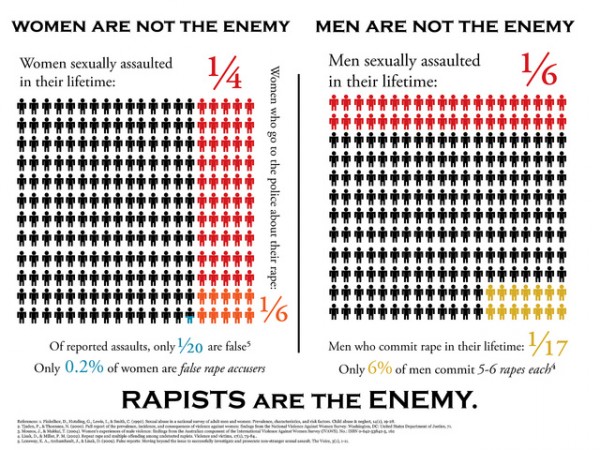
Infographic by snipergirl via Flickr CC.

Originally posted March 12, 2016.

Last week, a civil judge ruled that singer Kesha must fulfill her music contract despite allegations that her producer sexually assaulted her. While Kesha received an outpouring of support from fellow artists and fans creating the hashtag #FreeKesha, entertainment show host Wendy Williams critiqued the singer for not disclosing the “alleged” rape earlier. The media frequently questions the credibility of women like Kesha and the accusers of famous men like Mike Tyson and Bill Cosby because their stories deviate from what are perceived as “real rape” experiences (those committed by strangers and with a deadly weapon). Social science research helps us sort out how and why institutions risk “revictimizing” survivors as they navigate the criminal justice process.

The majority of victims do not report assaults to police, often because they don’t think they’ll be believed. Unsurprisingly, the cases most reported to police are those perpetrated by strangers and/or involving a weapon—what victims (and police) believe best constitute criminal, “authentic rapes.” Further, police treat victims perceived as “professional” as more credible than prostitutes.
Victims can also be revictimized if they opt to undergo a physical examination. Forensic nurse examiners often prioritize the preservation of forensic evidence while unintentionally neglecting the emotional care of the victim in service to the criminal investigation.
The court process is distinctly difficult for victims, too. They must attempt to satisfy the expectations of prosecutors and withstand cross-examination by defense attorneys. Prosecutors may prepare victims for testimony by encouraging them to use certain vocabulary, dress in a way that suggests they did not “ask for it,” and show emotion to convey the specific feelings expected of a rape survivor. Despite rape shield laws that prohibit attorneys from disclosing a victim’s sexual history, defense attorneys may still question the victim’s morality, interrupt victims, ask confusing questions, and limit their responses in an effort to transform sexual violence into mutual consent in the eyes of a judge and jury.
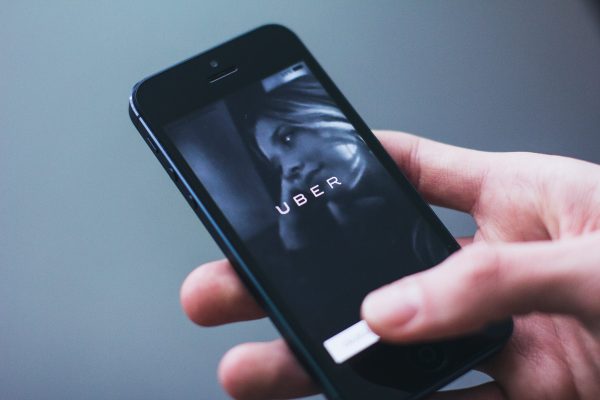
A gig economy worker checks the Uber app for an update about the next passenger. Photo by freestocks.org via Flickr.

Earlier this month, workers at the grocery delivery service Instacart organized a three-day strike over changes in the company’s tipping policy. Instacart has also been in the news this year for a controversial policy that included delivery tips as part of guaranteed worker pay, which they later said they would change. After the strike, Instacart eliminated a bonus for successful deliveries through the app. 

Instacart is just one example of worker resistance in the modern gig economy. Company platforms such as Instacart, Uber, and the transcription service rev.com ostensibly provide greater flexibility to workers, yet all are facing a wave of worker discontent over employment conditions and compensation. Work is changing, and becoming more “precarious.” Sociologists identify precarious work as “uncertain, unstable, and insecure.” Additionally, workers have little legal protection and bear much of the risk that employers previously bore.
Computer applications or apps organize and host a lot of gig work. But workers are finding that “algorithmic control” reproduces the same power dynamics as having an in-person supervisor. In particular, workers often do not know how they will be judged and rules and compensation policies may be rewritten with little or no notice. Rather than allowing workers to choose when and how they work, apps control the actions they must take to get jobs, such as maintaining minimum hours. 
For the most recent work on the gig economy see this 2018 book by Alexandrea Ravenelle. Ravenelle interviewed 80 participants of the gig economy, including those who have found success in the gig economy, those struggling to make ends meet, and those using the gig economy to supplement other income.