Search results for The

2 (1)Singer-songwriter Hozier played “guess the man buns” on VH1, and Buzzfeed facetiously claimed they had “Scientific Proof That All Celebrity Men are Hotter with Man Buns.” Brad Pitt, Chris Hemsworth, and David Beckham have all sported the man bun. And no, I’m not talking about their glutes. Men are pulling their hair back behind their ears or on top on their heads and securing it into a well manicured or, more often, fashionably disheveled knot. This hairstyle is everywhere now: in magazines and on designer runways and the red carpet. Even my neighborhood Barista is sporting a fledgling bun, and The Huffington Post recently reported on the popular Man Buns of Disneyland Instagram account that documents how “man buns are taking over the planet.”

x

At first glance, the man bun seems a marker of progressive manhood. The bun, after all, is often associated with women—portrayed in the popular imagination via the stern librarian and graceful ballerina. In my forthcoming book, Styling Masculinity: Gender, Class, and Inequality in the Men’s Grooming Industry, however, I discuss how linguistic modifiers such as manlights (blonde highlights for men’s hair) reveal the gendered norm of a word. Buns are still implicitly feminine; it’s the man bun that is masculine. But in addition to reminding us that men, like women, are embodied subjects invested in the careful cultivation of their appearances, the man bun also reflects the process of cultural appropriation. To better understand this process, we have to consider: Whocan pull off the man bun and under what circumstances?

I spotted my first man bun in college. And it was not a blonde-haired, blue-eyed, all-American guy rocking the look in an effort to appear effortlessly cool. This bun belonged to a young Sikh man who, on a largely white U.S. campus, received lingering stares for his hair, patka, and sometimes turban. His hair marked him as an ethnic and religious other. Sikhs often practice Kesh by letting their hair grow uncut in a tribute to the sacredness of God’s creation. He was marginalized on campus and his appearance seen by fellow classmates as the antithesis of sexy. In one particularly alarming 2007 case, a teenage boy in Queens was charged with a hate crime when he tore off the turban of a young Sikh boy to forcefully shave his head.

A journalist for The New York Times claims that Brooklyn bartenders and Jared Leto “initially popularized” the man bun. It’s “stylish” and keeps men’s hair out of their faces when they are “changing Marconi light bulbs,” he says. In other words, it’s artsy and sported by hipsters. This proclamation ignores the fact that Japanese samurai have long worn the topknot or chonmage, which are still sported by sumo wrestlers.

x

Nobody is slapping sumo wrestlers on the cover of GQ magazine, though, and praising them for challenging gender stereotypes. And anyway, we know from research on men in hair salons and straight men who adopt “gay” aesthetic that men’s careful coiffing does not necessarily undercut the gender binary. Rather, differences along the lines of class, race, ethnicity, and sexuality continue to distinguish the meaning of men’s practices, even if those practices appear to be the same. When a dominant group takes on the cultural elements of marginalized people and claims them as their own—making the man bun exalting for some and stigmatizing for others, for example—who exactly has power and the harmful effects of cultural appropriation become clear.

Yes, the man bun can be fun to wear and even utilitarian, with men pulling their hair out of their faces to see better. And like long-haired hippies in the 1960s and 1970s, the man bun has the potential to resist conservative values around what bodies should look like. But it is also important to consider that white western men’s interest in the man bun comes from somewhere, and weaving a narrative about its novelty overlooks its long history among Asian men, its religious significance, and ultimately its ability to make high-status white men appear worldly and exotic. In the west, the man bun trend fetishizes the ethnic other at the same time it can be used to further marginalize and objectify them. And so cultural privilege is involved in experiencing it as a symbol of cutting-edge masculinity.

Kristen Barber, PhD is a member of the faculty at Southern Illinois University. Her interests are in qualitative and feminist research and what gender-boundary crossing can teach us about the flexibility of gender, the mechanisms for reproducing gender hierarchies, and the potential for reorganization. She blogs at Feminist Reflections, where this post originally appeared.
2 (1)What creeps us out? Psychologists Francis McAndrew and Sara Koehnke wanted to know.

Their hypothesis was that being creeped out was a signal that something might be dangerous. Things we know are dangerous scare us — no creepiness there — but if we’re unsure if we’re under threat, that’s when things get creepy.

Think of the vaguely threatening doll, not being able to see in a suddenly dark room, footsteps behind you in an isolated place. Creepy, right? We don’t know for sure that we’re in danger, but we don’t feel safe either, and that’s creepy.


They surveyed 1,341 people about what they found creepy and, among their findings, they found that people (1) find it creepy when they can’t predict how someone will behave and (2) are less creeped out if they think they understand a person’s intentions. Both are consistent with the hypothesis that being unsure about a threat is behind the the feeling of creepiness.

They also hypothesized that people would find men creepy more often than women since men are statistically more likely than women to commit violent crimes. In fact, 95% of their respondents agreed that a creepy person was most likely to be a man. This is also consistent with their working definition.

Generally, people who didn’t or maybe couldn’t follow social conventions were thought of as creepy: people who hadn’t washed their hair in a while, stood closer to other people than was normal, dressed oddly or in dirty clothes, or laughed at unpredictable times.

Likewise, people who had taboo hobbies or occupations, ones that spoke to a disregard for being normal, were seen as creepy: taxidermists and funeral directors (both of which handle the dead) and adults who collect dolls or dress up like a clown (both of which blur the lines between adulthood and childhood)

If people we interact with are willing to break one social rule, or perhaps can’t help themselves, then who’s to say they won’t break a more serious one? Creepy. Most of their respondents also didn’t think that creepy people knew that they were creepy, suggesting that they don’t know they’re breaking social norms. Even creepier.

McAndrew and Koehnke summarize their results:

While they may not be overtly threatening, individuals who display unusual nonverbal behaviors… odd emotional behavior… or highly distinctive physical characteristics are outside of the norm, and by definition unpredictable. This activates our “creepiness detector” and increases our vigilance as we try to discern if there is in fact something to fear or not from the person in question.

Re-posted at Mental Floss.

Lisa Wade, PhD is an Associate Professor at Tulane University. She is the author of American Hookup, a book about college sexual culture; a textbook about gender; and a forthcoming introductory text: Terrible Magnificent Sociology. You can follow her on Twitter and Instagram.

2 (1)
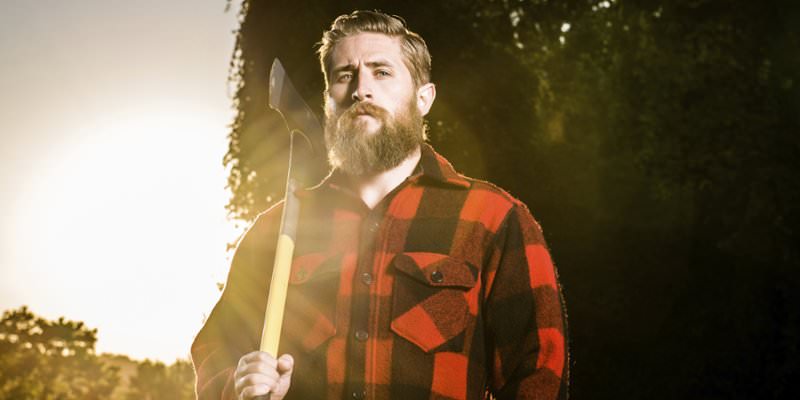
“Lumbersexual” recently entered our cultural lexicon. What it means exactly is still being negotiated. At a basic level, it’s an identity category that relies on a set of stereotypes about regionally specific and classed masculinities. Lumbersexuals are probably best recognized by a set of hirsute bodies and grooming habits. Their attire, bodies, and comportment are presumed to cite stereotypes of lumberjacks in the cultural imaginary. However, combined with the overall cultural portrayal of the lumbersexual, this stereotype set fundamentally creates an aesthetic with a particular subset of men that idealizes a cold weather, rugged, large, hard-bodied, bewhiskered configuration of masculinity.

Similar to hipster masculinity, “lumbersexual” is a classification largely reserved for young, straight, white, and arguably class-privileged men. While some position lumbersexuals as the antithesis of the metrosexual, others understand lumbersexuals as within a spectrum of identity options made available by metrosexuality. Urbandicionary.com defines the lumbersexual as “a sexy man who dresses in denim, leather, and flannel, and has a ruggedly sensual beard.”

One of the key signifiers of the “lumbersexual,” however, is that he is not, in fact, a lumberjack. Like the hipster, the lumbersexual is less of an identity men claim and more of one used to describe them (perhaps, against their wishes). It’s used to mock young, straight, white men for participating in a kind of identity work. Gearjunkie.com describes the identity this way:

Whether the roots of the lumbersexual are a cultural shift toward environmentalism, rebellion against the grind of 9-5 office jobs, or simply recognition that outdoor gear is just more comfortable, functional and durable, the lumbersexual is on the rise (here).

Many aspects of masculinity are “comfortable.” And, men don’t need outdoor gear and lumberjack attire to be comfortable. Lumbersexual has less to do with comfort and more to do with masculinity. It is a practice of masculinization. It’s part of a collection of practices associated with “hybrid masculinities”—categories and identity work practices made available to young, white, heterosexual men that allow them to collect masculine status they might otherwise see themselves (or be seen by others) as lacking. Hybridization offers young, straight, class-privileged white men an avenue to negotiate, compensate, and attempt to control meanings attached to their identities as men. Hybrid configurations of masculinity, like the lumbersexual, accomplish two things at once. They enable young, straight, class-privileged, white men to discursively distance themselves from what they might perceive as something akin to the stigma of privilege. They simultaneously offer a way out of the “emptiness” a great deal of scholarship has discussed as associated with racially, sexually, class-privileged identities (see herehere, and here).

The lumbersexual highlights a series of rival binaries associated with masculinities: rural vs. urban, rugged vs. refined, tidy vs. unkempt. But the lumbersexual is so compelling precisely because, rather than “choosing sides,” this identity attempts to delicately walk the line between these binaries. It’s “delicate” precisely because this is a heteromasculine configuration—falling too far toward one side or the other could call him into question. But, a lumbersexual isn’t a lumberjack just like a metrosexual isn’t gay. Their identity work attempts to establish a connection with identities to which they have no authentic claim by flirting with stereotypes surrounding sets of interests and aesthetics associated with various marginalized and subordinated groups of men. Yet, these collections are largely mythologies. The bristly woodsmen they are ostensibly parroting were, in fact, created for precisely this purpose. As Willa Brown writes,

The archetypal lumberjack—the Paul Bunyanesque hipster naturalist—was an invention of urban journalists and advertisers. He was created not as a portrait of real working-class life, but as a model for middle-class urban men to aspire to, a cure for chronic neurasthenics. He came to life not in the forests of Minnesota, but in the pages of magazines (here).

Perhaps less obviously, however, the lumbersexual is also coopting elements of sexual minority subcultures. If we look through queer lenses we might suggest that lumbersexuals are more similar to metrosexuals than they may acknowledge as many elements of “lumberjack” identities are already connected with configurations of lesbian and gay identities. For instance, lumbersexuals share a lot of common ground with “bear masculinity” (a subculture of gay men defined by larger bodies with lots of hair) and some rural configurations of lesbian identity. Arguably, whether someone is a “bear” or a “lumbersexual” may solely be a question of sexual identity. After all, bear culture emerged to celebrate a queer masculinity, creating symbolic distance from stereotypes of gay masculinities as feminine or effeminate. Lumbersexuals could be read as a similar move in response to metrosexuality.

Lumbersexual masculinity is certainly an illustration that certain groups of young, straight, class-privileged, white men are playing with gender. In the process, however, systems of power and inequality are probably better understood as obscured than challenged. Like the phrase “no homo,” hybrid configurations of masculinity afford young straight men new kinds of flexibility in identities and practice, but don’t challenge relations of power and inequality in any meaningful way.

Cross-posted at Feminist Reflections, Pacific Standard. and Inequality by (Interior) Design. Image borrowed from here.

D’Lane R. Compton, PhD is an associate professor of sociology at the University of New Orleans. Tristan Bridges is a sociologist at the College at Brockport (SUNY).  You can follow them on twitter at @drcompton and @tristanbphd.

The authors would like to thank the Orange Couch of NOLA, Urban Outfitters, the rural (&) queer community, and Andrea Herrera for suggesting we tackle this piece. Additional thanks to C.J. Pascoe and Lisa Wade for advanced reading and comments.

While I am fairly certain A Year Without a Santa Claus will not be receiving an Oscar this year, I do believe it will be a future cult Christmas classic particularly for your radical feminist friends. In fact, I expect this movie to have most people redder than a Starbucks Satan Sipper for its cautionary tale of the indispensability of women’s emotional labor and uncelebrated ingenuity.

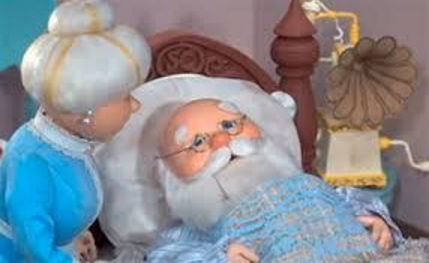
The story begins in the North Pole with Santa getting a man cold and feeling underappreciated.  So much so that he decides to just call off Christmas altogether. Ms. Claus to the rescue. As the true socio-emotional leader of all things Christmas, Ms. Claus sets forth a plan to get Santa out of bed. Recognizing that masculinity is so fragile, she sends two elves and Vixen to find evidence that Christmas won’t be Christmas without Santa.

3

The trick is to inspire the Christmas spirit by making it snow in Southtown, a town where, like my home region of Central Texas (I am in shorts and a tank as I type), it never snows. Southtown is controlled by Snow Miser, brother of Heat Miser. The brothers have divided up the country and fight over of where it can be warm and mild or cold and snowy.  They illustrate to the audience the pettiness of male-typical competitiveness.

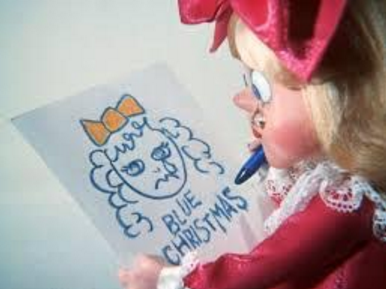
This time the emotion work is done by their mother, Mother Nature, who steps in to get her sons to stop the feud for just one day. It begins to snow in Southtown and, inspired, the children break their piggy banks to send gifts and cards to Santa saying “Let’s give Santa a Merry Christmas.” The movie takes an artistic twist to a wonderful cover of Elvis’ “Blue Christmas” by a child and spends a great bit of time on one mindful little girl and the construction of her Christmas card for Santa. Likely, the focus on the emotional intelligence of even girl children is meant to invoke women’s emotional  superiority as derived from an identification with the mother-nurturer.

4

It works. Christmas is on! He is missed and loved.

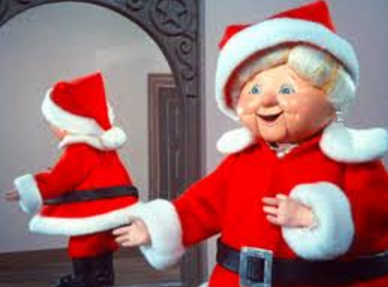
While there is no surprise how much women contribute to our holiday traditions and men’s careers, I thought the story took a gutsy twist in showing that Santa is merely a figurehead. In fact, my favorite scene is the one in which Ms. Claus dresses up in Santa’s suit and proclaims, “I could. I couldn’t, but I could!” Here she knows she could be Santa on this day, but realizes the importance of men feeling needed. She decides, instead, to be the wind beneath his sleigh. The end result is that “the squeaky wheel,” aka Santa, gets to be the hero, showing how men’s bad behavior all too often gets rewarded and even celebrated.

2

The director is smart to lure even non-feminists into watching A Year Without a Santa Claus by carefully obscuring its true message in its advertising. No women even appear on the movie poster (with the exception of Rudolph, who doesn’t even appear in the movie). Yet, in the movie, the women do all of the work and are portrayed as the true leaders. From Ms. Claus, to Mother Nature, to Vixen, and the little girl in blue, not one problem is resolved by a male character. Nor do any move the story forward. The male characters are mere set pieces and characters in place to highlight the capabilities and thoughtfulness of women.

2

The message of the movie is that women are taken for granted like air — invisible, unacknowledged, yet essential for life. Because #masculinitysofragile, they could lean in, but don’t. So they find what solace they can in the power of enabling.

D’Lane R. Compton, PhD is a lover of all things antler, feather, and fur. An associate professor of sociology at the University of New Orleans with a background in social psychology, methodology, and a little bit of demography, they are usually thinking about food, country roads, stigma, queer nooks and places, sneakers, and hipster subcultures. You can follow them on twitter.

Previous reviews include: Rudolph the Red-Nosed Reindeer.

Would Santa give you cancer? Not according to R. J. Reynolds, British American Tobacco, Philip and Morris, and other tobacco companies. They regularly used the jolly cultural icon to advertise cigarettes and other products during the early to mid-20th century.

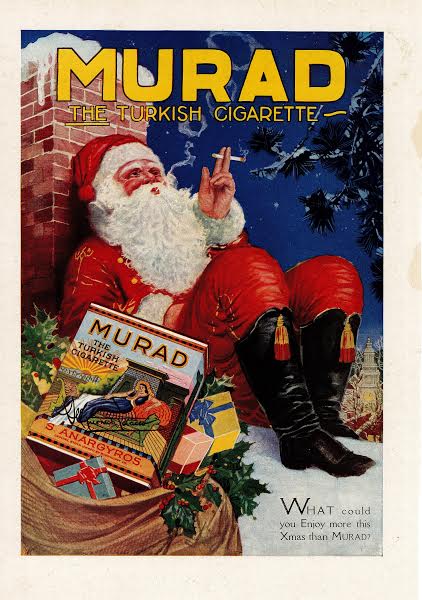
Print advertisements of the time often featured Santa savoring a smoke, presumably after a long night of delivering gifts. Such imagery suggests that he had earned the indulgence, and that consumers had too. For example, a 1920 advertisement for Murad Cigarettes shows Santa leaning against a chimney smoking, with the caption, “What could you Enjoy more this Xmas than MURAD?”

2

The tobacco industry also encouraged customers to purchase and give cigarettes as Christmas gifts. R. J. Reynolds provided some retailers with store displays to market products, including cardboard cutouts of Santa holding cartons of holiday wrapped Camels cigarettes.  Likewise, British American Tobacco supplied retailers with Christmas-themed packages, such as cartons of Pall Malls picturing Santa smoking and wishing customers a Merry Christmas.

3

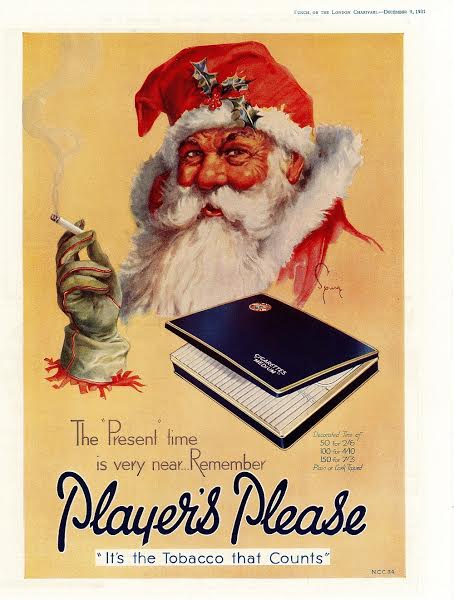
Print advertisements conveyed similar messages.  In a 1931 Player’s Please advertisement (manufactured by Imperial Tobacco Group), Santa reminded shoppers that “The ‘Present’ time is very near.” R. J. Reynolds advertisements from the 1950s showed Santa declaring that Camel, Cavalier, Winston, and Prince Albert were “4 Of The Grandest Gifts You Can Give.”

5

Pairing images of cigarettes with a benevolent figure like Santa Claus reinforced the notion that the products were safe.  However, researchers had started to formally document the connection between smoking and lung cancer as early as the 1930s.  And the tobacco industry itself (internally) documented links between the two in the early 1950s. By 1964, the causal connection was clear. In his “Smoking and Health” report, Surgeon General Luther Terry concluded that smoking caused lung cancer, and suggested that a causal link between smoking and heart disease also existed. That same year, almost one-half of Americans reported being smokers.

Advertising certainly contributed (and continues to contribute) to the behavior, as research reported by the World Health Organization indicates. Then, as today, the tobacco industry lured customers to its addictive and harmful products in enticing and jolly ways.

Jacqueline Clark, PhD is an Associate Professor of Sociology and Chair of the Department at Ripon College. Her research focuses on inequalities, the sociology of health and illness, and the sociology of jobs, work, and organizations.

3Movie Reviews

The History of Christmas

Christmas Across Cultures

The Economics of Christmas

Racializing Christmas

Christmas and Gender

Gift Guides and the Social Construction of Gender

Sexifiying Christmas

Christmas Marketing

Just for Fun

Flashback Friday.

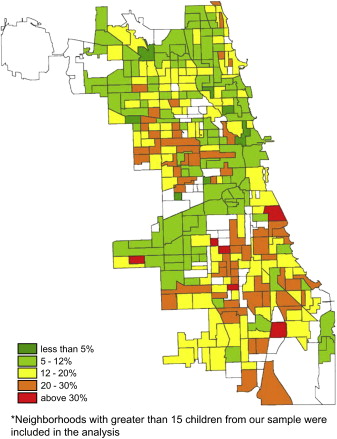
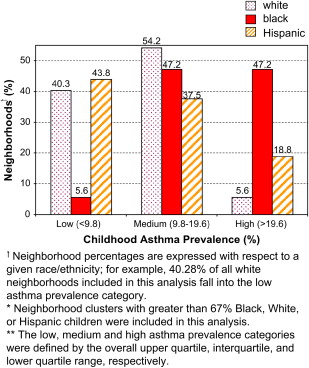
A study by doctor Ruchi Gupta and colleagues mapped rates of asthma among children in Chicago, revealing that they are closely correlated with race and income. The overall U.S. rate of childhood asthma is about 10%, but evidence indicates that asthma is very unevenly distributed. Their visuals show that there are huge variations in the rates of childhood asthma among different neighborhoods:

The researchers looked at how the racial/ethnic composition of neighborhoods is associated with childhood asthma. They defined a neighborhood’s racial make-up by looking at those that were over 67% White, Black, or Hispanic. This graph shows the percent of such neighborhoods that fall into three categories of rates of asthma: low (less than 10% of children have asthma), medium (10-20% of children have it), and high (over 20% of kids are affected). While 95% of White neighborhoods have low or medium rates, 56% of Hispanic neighborhoods have medium or high rates. However, the really striking finding is for Black neighborhoods; 94% have medium or high prevalence. And the racial clustering is even more pronounced if we look only at the high category, where only a tiny proportion (6%) of White neighborhoods fall but nearly half of Black ones do…a nearly mirror image of what we see for the low category:

It’s hard to know exactly what causes higher rates of asthma in Black and Hispanic neighborhoods than in White ones. It could be differences in access to medical care. The researchers found that asthma rates are also higher in neighborhoods that have high rates of violence. Perhaps stress from living in neighborhoods with a lot of violence is leading to more asthma. The authors of the study suggest that parents might keep their children inside more to protect them from violence, leading to more exposure to second-hand smoke and other indoor pollutants (off-gassing from certain types of paints or construction materials, for instance).

Other studies suggest that poorer neighborhoods have worse outdoor environmental conditions, particularly exposure to industries that release toxic air pollutants or store toxic waste, which increase the risk of asthma. Having a parent with asthma increases the chances of having it as well, though the connection there is equally unsure–is there a genetic factor, or does it simply indicate that parents and children are likely to grow up in neighborhoods with similar conditions?

Regardless, it’s clear that some communities — often those with the fewest resources to deal with it — are bearing the brunt of whatever conditions cause childhood asthma.

Originally posted in 2010.

Gwen Sharp is an associate professor of sociology at Nevada State College. You can follow her on Twitter at @gwensharpnv.

I don’t have much to add on the “consensus plan” on poverty and mobility produced by the Brookings and American Enterprise institutes, referred to in their launch event as being on “different ends of the ideological spectrum” (can you imagine?). In addition to the report, you might consider the comments byJeff Spross, Brad DeLong, or the three-part series by Matt Bruenig.

My comment is about the increasingly (to me) frustrating description of poverty as something beyond simple comprehension and unreachable by mortal policy. It’s just not. The whole child poverty problem, for example, amounts to $62 billion dollars per year. There are certainly important details to be worked out in how to eliminate it, but the basic idea is pretty clear — you give poor people money. We have plenty of it.

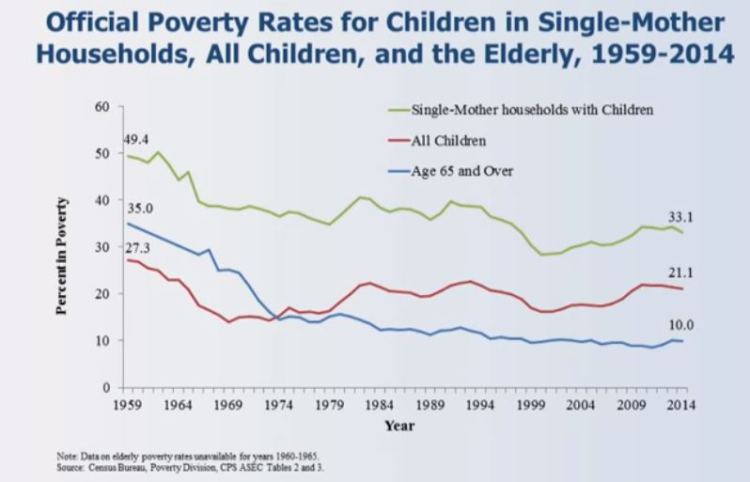
This was obvious yet amazingly not remarked upon in the first 40 minutes of the launch event (which is all I watched). In the opening presentation, by Ron Haskins — for whom I have a well-documented distaste — started with this simple chart of official poverty rates:

2

He started with the blue line, poverty for elderly people, and said:

The blue line is probably the nation’s greatest success against poverty. It’s the elderly. And it basically has declined pretty much all the time. It has no relationship to the economy, and there is good research that shows that its cause at least 90% by Social Security. So, government did it, and so Social Security is the reason we’re able to be successful to reduce poverty among the elderly.

And then everyone proceeded to ignore the obvious implication of that: when you give people money, they aren’t poor anymore. The most unintentionally hilarious illustration of this was in the keynote (why?) address from David Brooks (who has definitely been working on relaxing lately, especially when it comes to preparing keynote puff-pieces). He said this, according to my unofficial transcript:

Poverty is a cloud problem and not a clock problem. This is a Karl Popper distinction. He said some problems are clock problems – you can take them apart into individual pieces and fix them. Some problems are cloud problems. You can’t take a cloud apart. It’s a dynamic system that is always interspersed. And Popper said we have a tendency to try to take cloud problems and turn them into clock problems, because it’s just easier for us to think about. But poverty is a cloud problem. … A problem like poverty is too complicated to be contained by any one political philosophy. … So we have to be humble, because it’s so gloomy and so complicated and so cloud-like.

The good news is that for all the complexity of poverty, and all the way it’s a cloud, it offers a political opportunity, especially in a polarized era, because it’s not an either/or issue. … Poverty is an and/and issue, because it takes a zillion things to address it, and some of those things are going to come from the left, and some are going to come from the right. … And if poverty is this mysterious, unknowable, negative spiral-loop that some people find themselves in, then surely the solution is to throw everything we think works at the problem simultaneously, and try in ways we will never understand, to have a positive virtuous cycle. And so there’s not a lot of tradeoffs, there’s just a lot of throwing stuff in. And social science, which is so prevalent in this report, is so valuable in proving what works, but ultimately it has to bow down to human realities – to psychology, to emotion, to reality, and to just the way an emergent system works.

Poverty is only a “mysterious, unknowable, negative spiral-loop” if you specifically ignore the lack of money that is its proximate cause. Sure, spend your whole life wondering about the mysteries of human variation — but could we agree to do that after taking care of people’s basic needs?

I wonder if poverty among the elderly once seemed like a weird, amorphous, confusing problem. I doubt it. But it probably would if we had assumed that the only way to solve elderly poverty was to get children to give their parents more money. Then we would have to worry about the market position of their children, the timing of their births, the complexity of their motivations and relationships, the vagaries of the market, and the folly of youth. Instead, we gave old people money. And now elderly poverty “has declined pretty much all the time” and “it has no relationship to the economy.”

Imagine that.

Originally posted at Family Inequality; re-posted at Pacific Standard.

Philip N. Cohen, PhD is a professor of sociology at the University of Maryland, College Park. He is the author of The Family, a sociology of family textbook, and writes the blog Family Inequality. You can follow him on Twitter or Facebook.