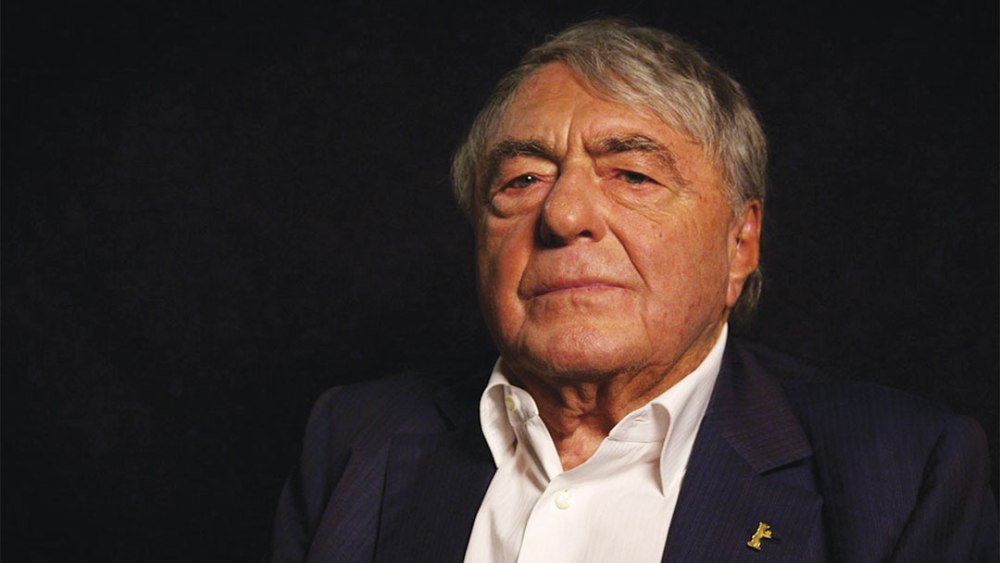
Claude Lanzmann, the French intellectual and filmmaker, has died at age 92. This is an age that suggests Lanzmann was not in a hurry. Instead, he took all his time to make an exit. It is hard to measure his legacy. His film Shoah is one of a kind. It was released in his maturity, in 1985, when Lanzmann was 60. It fell upon the film world like a meteorite. A UFO of cinema. In a world of young prodigies (artists, philosophers, writers and filmmakers), Lanzmann was more tortoise than hare–notwithstanding the title he chose for his Memoirs, The Patagonian Hare (2009).

He was slow, his film is slow–it has the rhythm of Marcel Proust’s Remembrance of Things Past. Long, and slow, it demands patience and persistence from the viewer. Shoah is not a documentary–its author called it an artwork. Lanzmann’s purpose was never representation, but rather presence and incarnation. It was not about explaining or understanding, but about reliving by creating a dialectical image in which the Then of the event would collide with the Now of the film.

For those who have seen Shoah and read The Patagonian Hare, the contrast could not be more striking. Shoah, a threnody to the victims of the Holocaust, would suggest that its creator was melancholic, dwelling in the past and possessed by the dead. By contrast, Lanzmann’s Memoirs stage an insatiable hedonist, an Epicurean, a man enamored of life and perilous adventures, a man hungry for new experiences. Hence his films on Israel, and his unflinching admiration for the rebirth of the Jewish people after the destruction of European Jewry. Friend and disciple of Jean-Paul Sartre, Lanzmann toured the young Jewish state for the first time in the 1960s. There he realized that Jews were not merely the invention of the gaze of the anti-Semite.

Shoah seems to be the work of Antigone, but The Hare can be read as the autobiography of Don Juan. Between ethics and esthetics, between mourning the past and embracing the present, Lanzmann’s life was all far from exemplary – it was rather an authentic life, in the Sartrean sense of the word, i.e., a life of his choice and of his own making.

Bruno Chaouat is a professor in the Department of French and Italian, and is also affiliated with the Center for Jewish Studies and the Center for Holocaust and Genocide Studies. He is interested in 19th and 20th century French literature and thought, and has recently published, Is Theory Good for the Jews? French Thought and the Challenge of the New Antisemitism.

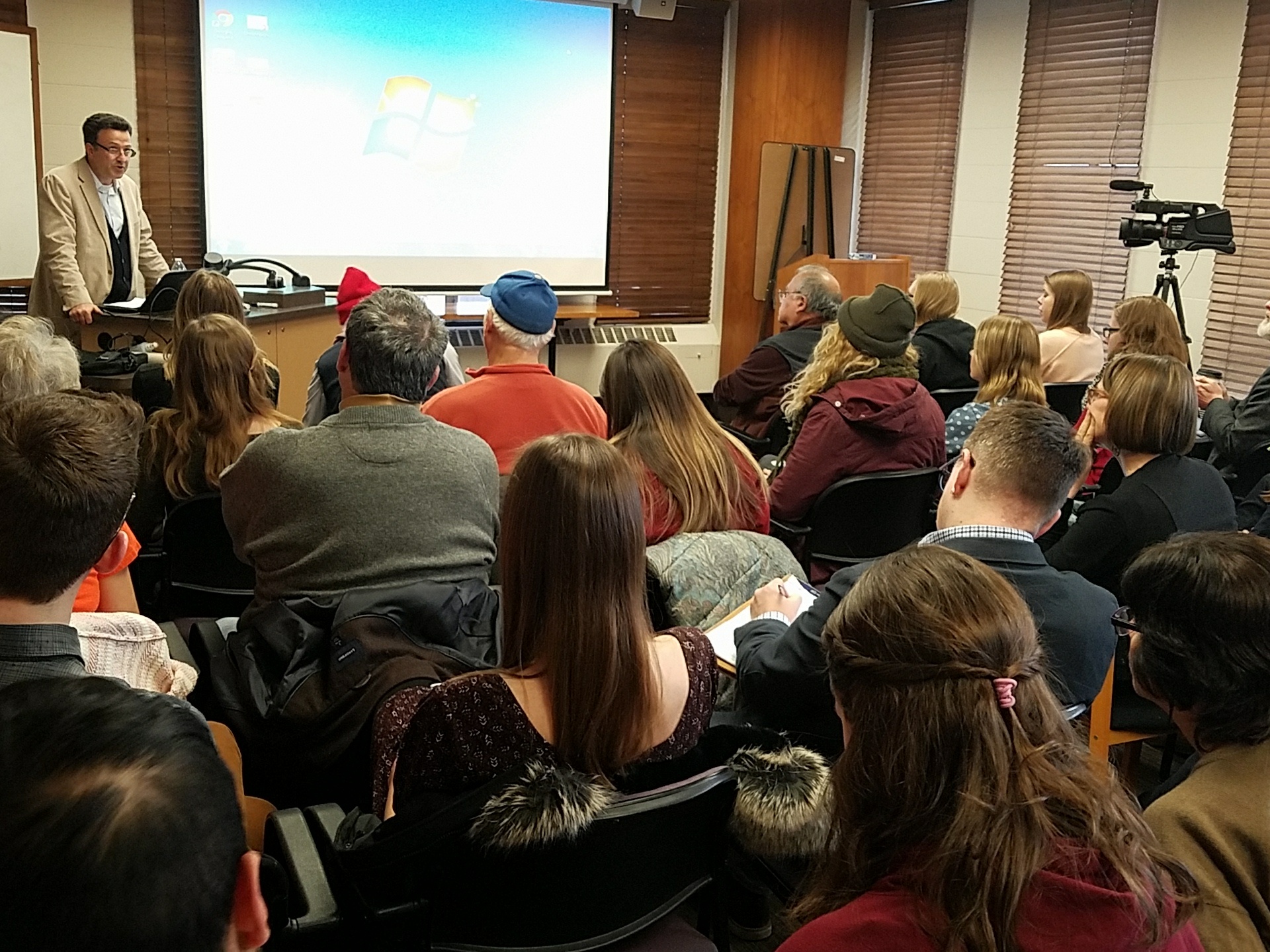
Michael Rothberg is the 1939 Society Samuel Goetz Chair in Holocaust Studies and Professor of English and Comparative Literature at the University of California, Los Angeles. His latest book is Multidirectional Memory: Remembering the Holocaust in the Age of Decolonization (2009). He is also the author of Traumatic Realism: The Demands of Holocaust Representation (2000), and has co-edited The Holocaust: Theoretical Readings (2003), and special issues of the journals Criticism, Interventions, Occasion, and Yale French Studies. As part of the Seeking Refuge in a Changing World Series, Rothberg was invited by the Center for Holocaust and Genocide studies to give a talk titled, “Inheritance Trouble: Migrant Archives of Holocaust Remembrance.” You can watch it here.


How did you decide to bring postcolonial studies and Holocaust studies together, and what compelled you to address interlocutions between these two realms of study?

Since graduate school I’ve had an interest in both Holocaust studies and postcolonial studies, but I thought about them for a long time as separate projects and interests. Parallel to that, I had an interest in the relationship between Jewish American culture and African American culture. It was reading Paul Gilroy’s book The Black Atlantic when it came out in the 1990s that made me realize I could bring these different fields together, and I started to do that in the conclusion to my first book, Traumatic Realism. After completing that book I discovered an essay by W.E.B. Du Bois, “The Negro and the Warsaw Ghetto,” which eventually became the origins of my idea of multidirectional memory, although I didn’t have the term at that time. I wrote an essay on DuBois and his visit to post-war Warsaw where he witnessed the rubble of the ghetto and saw the newly-erected Warsaw Ghetto Uprising monument. I thought this was a powerful response that had interesting things to say about race — especially in a comparative perspective. At the time, I thought I was working on a project on Blacks and Jews, a topic that is often grounded in an American national framework. I was interested in broadening that out into an international/transnational realm.

As I was thinking about that project, I started to discover some of the links between Holocaust memory and the Algerian War. Many of the French people who were involved in the struggle around the war – as well as many who were prosecuting it — had very real experiences of Nazi occupation or deportation, of torture, of concentration camps. It was those people who were making the links between what they had experienced in the 1940s under the Nazis and Vichy and what was happening at that moment in the conflict between France and the FLN (the national liberation movement of the Algerians). It was especially those links that crystalized the notion of multidirectional memory: the point was that at the very moment that Holocaust memory was starting to emerge as a public and global phenomenon, it was doing so in dialogue with ongoing processes of decolonization and memories of colonization, slavery, and other forms of racism. So it was through the discovery of these concrete and historically located instances of dialogue across experiences that I brought together Holocaust studies and postcolonial studies and conceptualized the multidirectionality of memory.


Multidirectional memory is an innovative way of thinking how memory works and how it can be framed in a noncompetitive way. You emphasize the need to talk comparatively about the Holocaust and moving away from a zero-sum game, understanding how genocide memories work and how they’re not crowding out or competing with each other. What happens when memory, conflict, and tension still arise from debates about the uniqueness of the Holocaust? Can competition still exist in this multidirectional framework?

There’s no doubt, and I’m not trying to ignore the fact that there’s a great deal of memory conflict and there’s a great deal of competition around memory and articulations in the public sphere — that’s absolutely the case. What I was responding to was a particular logic or way of thinking about that conflict and competition, which I ultimately identified with the logic of the zero-sum game. At the extreme, the logic of the zero-sum game suggests that if you have one memory, you can’t have another memory at the same time. It struck me that this was a logic you found on different sides of memory conflict.

In other words, for those who were concerned about preserving the so-called uniqueness of the Holocaust there was a concern that linking the Holocaust to other histories of trauma, violence, or racism was in fact a form of Holocaust relativization or Holocaust denial. But on the other side, you had very similar phenomena: those who were eager to articulate memories of, let’s say, the genocide of indigenous peoples, slavery, colonial crimes, and so on, also had a sense that it was the presence of the Holocaust in the public sphere — which has absolutely been more central than many of those other memories — that was the cause of the paucity of memories of colonialism, slavery, etc. Although I understand the impetus for those claims, that logic just seemed to me wrong. Logically speaking, but also in practice, it wasn’t the presence of the Holocaust museum in Washington D.C. that was preventing the memory of American crimes against humanity from being articulated—there were other things that were preventing that. The presence of Holocaust memory could, in fact, be what I call a “platform” or “occasion” for making articulations that would start to bring those other histories into discussion.


Public memory kind of works in a cross referencing way, maybe more memories are produced from interaction of these memories.

That’s my theory! I still hold to it even though there might be a tendency to think of this as a strictly celebratory model–the notion that “memory is multidirectional, isn’t that great, problem solved.” That’s really not the point I make. In fact, I start the book with what I consider a very negative example of a harsh articulation of a competitive position, setting African American memory against Jewish memory. I don’t start with a model of reconciliation, but with a model of competition. But what I try to show is that even in that moment of competition we find the reliance on the fact of Holocaust memory having been articulated in order to articulate another tradition of memory. The relation between the memory traditions turns out to be more productive than it looks at first.


Taking that sentiment to heart, you also write about this in the context of migrants in Germany. In an essay you co-authored with Yasemin Yildiz, you write that as collective memory scholars we must make it crucial to take migrants seriously and understand that they are also a part of this grid; we need to take them seriously as subjects of national/transnational memory rather than passive objects of commemoration. Can migrants or those with a migration background also become implicated within Germany’s past or, perhaps, “integrate” into Germany’s past and memory culture as Zafer Senocak once said?

That’s a great question and gets to the heart of the two larger projects I’m working on now. One of those projects is a co-authored book with Yasemin Yildiz on the way that immigrants, especially Turkish-German immigrants, negotiate with German Holocaust memory culture. Then, there’s another book that I’m writing parallel to that, called The Implicated Subject, which takes up the broader question of what it means to be implicated in histories of violence, especially histories that you have not participated in directly. Those two projects overlap, obviously.

I think, in a certain sense, you can’t live in Germany and not come to terms, in some way, with Germany’s history. I think that would be true of any country. I don’t think you can immigrate to the United States and not come to terms in some way with the histories of genocide, slavery, segregation, and more that have marked our country. Which doesn’t mean we always do it very well at all, but rather that there’s an ethical imperative to engage with those histories, and I’m interested in that in the American context as well as the German context.

The German context is tricky in a couple of different ways because, as the land of the perpetrators, so to speak, it’s very clear why there had to be the development of a very serious culture of historical responsibility. That development has gone through many stages. There’s always been a lot resistance and hesitation; it’s by no means as clear a success story on all levels as it’s often made out to be when people talk about the German model of coming to terms with the past.  But something has certainly been accomplished, you can’t deny that. In that context, to go back to the multidirectionality issue, the question of comparison of the Holocaust becomes very charged and very difficult. Nowhere have I seen as serious strictures on comparison of the Holocaust as I have in Germany among non-Jews. It is understandable because it is linked to a taking of responsibility — it is often articulated as “our responsibility” — and any kind of comparison would be a relativization of “our responsibility.” That’s understandable but it also produces perverse results at times, especially when it concerns people who are not considered “German” yet who may find themselves living in Germany or being German citizens. That’s where the question of migration comes in.

What we have found in our joint project is that in the last 15 years especially, immigrants to Germany have been subjected to what we call a “migrant double bind,” which is to say that, on one hand, they are told that in order to be German they must take responsibility for the Holocaust, but, on the other hand, they hear people say: “you migrants aren’t German, therefore this is not your history; stay away, you’re probably anti-Semitic anyway, you’re certainly not interested, this is our history.” There’s a paradoxical situation that arises in which to be German — to have full citizenship in a cultural/social sense — you have to take part in Holocaust memory discourse; but at the same time, you’re constantly pushed away from that as you are from everything that is considered German, including the language, cultural heritage, etc. But the Holocaust is a particularly central node of what it means to be German in unified Germany, so this is a significant bind that migrants find themselves in.


A follow up to that: I’m thinking of something that happened last year in April 2017, in the context of the far-right in Germany. At that time, the far-right Alternative für Deutschland (AfD) party published a Facebook post “defending” the Jewish community in Germany as news broke that a fourteen year old Jewish student faced anti-Semitic bullying from his classmates, who were of Arabic and Turkish origin. AfD capitalized on this, with former party leader Frauke Petry claiming that her party “is one of the few political guarantors of Jewish life, including in times of illegal anti-Semitic migration to Germany.” This speaks to how migrants, particularly Muslims targeted by the far-right in Europe, are often accused of not inheriting the past and, using this language of the double bind, not inheriting responsibilities of the past. Do you think this double bind is complicated at all with the recent validation of far-right discourse?

That’s an interesting question and something I will be talking about tonight in my lecture — not that particular case, but the issue. You know, I certainly don’t want to deny that there is anti-Semitism among immigrants to Germany — Muslim or otherwise. It’s a very complicated issue; in a lot of ways, a lot of it does end up intersecting with the question of Israel and Palestine. That doesn’t mean that anti-Israel/anti-Zionist discourse isn’t sometimes anti-Semitic but, I think, in Germany it tends to be automatically collapsed into anti-Semitism. So sometimes what is in fact a critique of Israel gets automatically re-coded as anti-Semitism. And again, it’s not impossible that some of that discourse is anti-Semitic but there’s a kind of assumption that it always is and I don’t think that’s the case. I think that does filter into a lot of these everyday interactions as well, which is not an excuse for them — they’re real, yet at the same time I think you have to look more broadly at German society and see who, in fact, are the perpetrators of most anti-Semitic deeds in contemporary Germany. It’s not Muslim immigrants, it’s the far-right. Statistics are tricky, and I don’t always find them entirely reliable, but pretty much every study I’ve seen recently asserts that a very large majority of those kinds of anti-Semitic incidents are perpetrated by ethnic Germans, presumably on the right.

You can’t simply displace the responsibility for these kinds of things on a scapegoated minority community, who themselves are suffering the same number of racist attacks from the far-right. Again, this is complicated terrain, but I think it argues pretty strongly against the attempt by the right — and not only the right but liberals and centrists — to scapegoat Muslim communities for acts that are actually more widespread among ethnic Germans. So, in the example you mentioned, you have a neo-fascist group trying to assert, in a very insincere way, solidarity with the Jewish community while trying to divide them from other religious/ethnic/cultural minorities in Germany. That is a devious action on their part and very obviously hypocritical, but that goes without saying.


Right, this is coming from a far-right party that’s saying that the collective guilt surrounding the Holocaust has been “worked through.” You have AfD members saying that the Holocaust memorial in Berlin is a “monument of shame.”

It’s a strategy that they’re using and it’s not uncommon; I don’t think it’s only the AfD and I don’t think it’s happening only in Germany. Again, it’s not entirely crazy and irrational from a political perspective because there are Jews on the right who would, in fact, buy into this kind of discourse, and would rather make an alliance with far-right parties than with other minority groups.


It also reveals, as you’ve written before, that Holocaust memory can function to “re-ethnicize” identity in contemporary Germany. What room is there for push back against that from a migrant’s perspective or somebody with a migration background who does consider themselves to be German?

That’s primarily what our project is about. We start out by laying out the framework of what we call the “German paradox” and the “migrant double bind.” We talked about the migrant double bind already, but the German paradox actually comes first and it involves the notion that in order to take responsibility for the Holocaust you have to reproduce an ethnic German identity, which, in a sense, was one of the conditions of possibility of the Holocaust; it doesn’t mean you’re reproducing a Nazi idea, exactly, but that you are holding on to an ethnicized or even racialized notion of what it means to be German.

In our project, in contrast, we’re ultimately interested in how immigrants and post-migrants creatively engage with the memory of the Holocaust – both on its own terms and by linking it to other histories in a multidirectional way. Thus, the main focus of our work is looking at cultural producers: artists, writers, performers, musicians. We also look at civic organizations who are in different ways confronting these questions of responsibility. They’re taking them on often very powerfully and articulating counter-discourses to ethnicized notions of German identity and German responsibility by saying, “Hey, we too are in Germany — we may or may not consider ourselves German or be considered as German — but we still see ourselves as part of this history, as inheriting some of these questions, and as wanting to deal with them by virtue of where we live – and what we inhabit, not necessarily ’who we are‘ but ’where we are.’”


One last question I want to ask in the context of your work concerns race: scholars in History and Comparative Literature, such as Rita Chin and Fatima El-Tayeb, both acknowledged that ever since post-war Germany rejected its Nazi past, the term “race” has all but disappeared from the German lexicon and public discourse. Because Europe now relies on the term “ethnicity,” it has in, some ways, obscured the deeper realities of race and Europe’s colonial past. I’d like to ask to what extent do you think the still-held emphasis on ethnicity in Europe today has emerged from this collective memory of the Holocaust? Has this collective memory, in some ways, led to the forgetting or repression of racial categories in Europe?

That’s an important question. I don’t know if it’s forgetting or repression, but certainly there is a kind of displacement that has happened. Again, sometimes for understandable reasons, the concept of race was considered tainted after the Nazi period. But that displacement ended up reproducing some of the same problems; that’s what we’re getting at with the German paradox and the migrant double bind—which represent, in a way, the afterlife of race in Europe today. And certainly Rita Chin and Fatima El-Tayeb’s work is really important to us and foundational for studies of postwar Germany. I think this inability to see race outside the framework of National Socialism has distorted the use of the category and has problematic effects in Germany; it does make it hard to see the various other kinds of racism that continue to exist, or were historically there and yet were not visible. And so, together with other scholars like those you just mentioned – as well as Damani Partridge and Esra Özyürek, anthropologists who have been working on these questions — we are dedicated to making links between what happened in the Holocaust and what happens today. Not to say that they’re the same at all. It’s not that immigrants suffer anything like what Jews during the Holocaust suffered — that’s certainly not the argument anyone is making, as far as I can tell. But that still, there are questions of racism that are difficult to articulate in Germany and I do think it’s true that it has something to do with the centrality of the Holocaust and the particular way that the Holocaust is thought of in Germany. The Holocaust is understood as not comparable to anything else and thus it ironically sometimes blocks from view the fact that racism can work in other ways.

Along with this disinclination to compare the Holocaust to any other history, which is very strong in Germany, there’s also a real disinclination to thinking about antisemitism in relation to other forms of racism. Or even that anti-Semitism is a form of racism. That’s also a big problem, I think, and it remains controversial to even speak of “antisemitism and other forms of racism,” and to think those things together. But, to me, that’s essential to do; not again to say they’re all the same, or to collapse them into one model, but that they still belong together in our thinking and it can elucidate these different experiences to think about them comparatively. In other words, there is a need today to think relationally about Islamophobia and antisemitism, but also about anti-Black racism and anti-Roma racism — obviously a really important prejudice throughout Europe and one with very clear links to the Holocaust. The important task, in my view, is to bring these ideologies and practices into the same frame and to think them comparatively — which means in their specificity but also in their conjunction.


Christopher Levesque is a graduate student in Sociology and a 2017-18 Hella Mears Fellow at the University of Minnesota – Twin Cities. His work focuses on migrant health in Germany and the United States, with emphasis on access, collective memory, and citizenship.
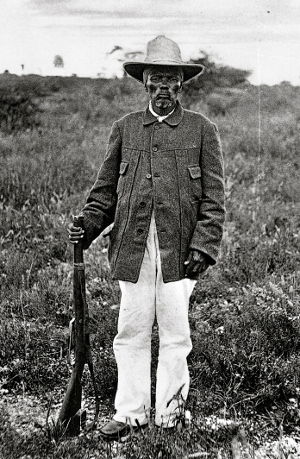
Hendrik Witbooi (Chief of the Witbooi Namaqua)

Depictions of colonized African peoples from Southwest Africa (DSWA, present-day Namibia), Germany’s first overseas colony, were prevalent throughout the German metropole at the turn of the twentieth century. Tobacconists catered to the erotic fantasies of colonial enthusiasts with images of Herero girls in their advertisements. Coffee companies used portraits of black African women to affirm the quality of their beans. Youth magazines allowed children to escape into “exotic” domains where their imaginations could wander unhindered by “civilized” social expectations. Anthropologists shifted the paradigms of scientific analysis by studying “natural peoples” as faceless objects. Novelists published romanticized accounts of faraway conflicts, a practice that over time made the realities of colonial bloodshed palpable for a continental audience. Though characterizations like these typified the contemporary discourse on Africa and epitomized Europe’s dominance over the continent, they belie the significant degree to which Africans in turn influenced the evolution of German imperial policy in southern Africa.

A focus on the Witbooi Namaqua—the largest ethnic group of the Khoikhoi community indigenous to the Cape Colony (present-day South Africa) and the Bechuanaland Protectorate (present-day Botswana)—offers an occasion to reorient our understanding of the relationship between Germany and its empire in southern Africa. In particular, they illustrate the prominent role of Africans in German colonial history and also reveal how peoples in distant places like Windhoek, Otjimbingwe, and Hoornkrans manipulated German efforts to control affairs in the colony. After the colonial administration raised the imperial flag in DSWA, the Witbooi tested the limits of German power using a variety of methods. They attacked rival communities aligned with the colonial government, rendered trade routes that ran through this territory impassable, forbade white settlers from prospecting on this land, and refused to sell cattle, supplies, and property to imperial forces. The Namaqua’s leader, Captain Hendrik Witbooi, also wrote letters to colonial officers, missionaries, and foreign diplomates where he mused on religious matters, his relationship with rival African societies, and the inherent violence of imperial occupation.

As Witbooi unmasked the realities of colonial life to settlers, German officials grew more determined to neutralize non-compliant African populations and increasingly relied on the colonial Schutztruppe (protection force) to impose their policies. It is not my intention to suggest that Africans made their own conditions worse through acts of resistance. Colonialism was an inherently violent enterprise that pressed entire societies into slavery, economic dependence, and cultural ruin. The conduct, practice, and rationale for imperialism may have differed from empire to empire, but all colonial powers pursued their national goals without the consent of colonized populations. It is also important to recognize that the Witbooi Namaqua were not the only group that challenged German imperial occupation. Many communities fought against German supremacy in Africa between 1884 and 1915. In fact, opposition to foreign rule was so relentless in DSWA that German administrators never gained full control of the colony until after Lothar von Trotha carried out the first genocide of the twentieth century.

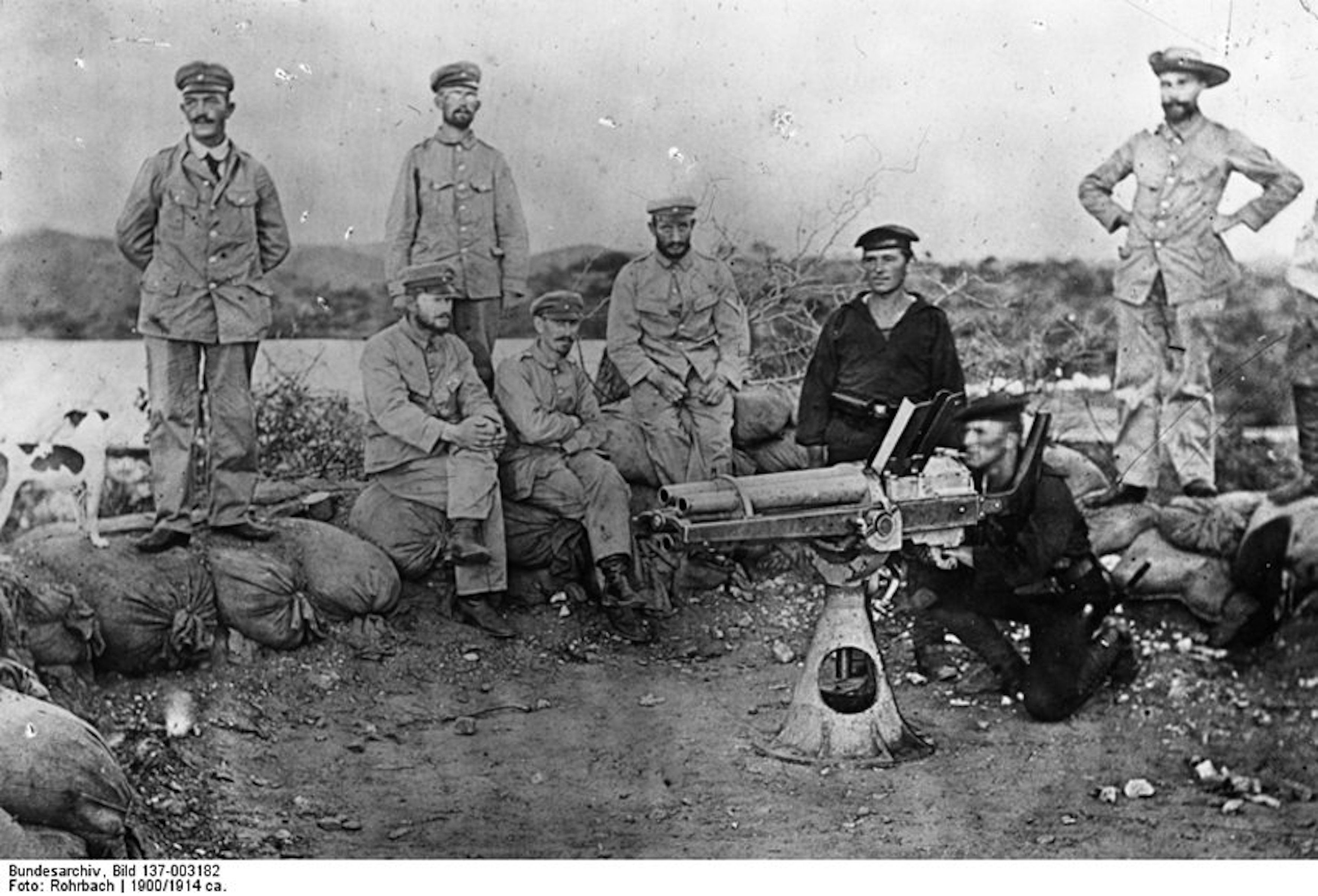
German Soldiers with a Rapid-Fire Weapon

Instead, my aim is to counter the persistent narrative that misrepresents colonized populations as passive victims in the face of German domination. Frederick Cooper and Ann Laura Stoler remind us that European colonial powers “were neither monolithic nor omnipotent.” They balanced a myriad of political agendas, economic strategies, and systems of control to maintain power in their respective empires. Germany’s occupation of DSWA exemplifies this argument in several notable ways. First, the appearance of German officials in DSWA did not immediately transform the political and social dynamics of the colony into one that favored the colonial government. Even after the first contingent of imperial soldiers in the Schutztruppe arrived in 1889, most local Africans, as well as resident German missionary associations, still regarded the Witbooi Namaqua as the most powerful society in southern Damaraland. Second, imperial leaders were at a loss over how to confront and overcome the persistent challenges to their authority. Witbooi’s refusal to accept German rule, along with his stubborn efforts to spread the Namaqua’s authority into central and northern Damaraland in particular, induced policy makers to consider a wide range of strategies. German officials not only tried diplomatic outreach and bribery, but also issued blanket threats—all in an attempt to pressure Witbooi to submit peacefully. When those policies failed, they sanctioned the use of armed aggression to drive the Namaqua from power. As more soldiers and military equipment landed in the colony, the role of the imperial regime grew in size and scope.

Though colonialism was a controversial issue in the Kaiserreich, the increased attention given to Africa in newspapers and political speeches elevated the Witbooi Namaqua’s acts of resistance into a national story. As calls to suppress them grew louder in the colonial and national press, the German government moved to expand its role in southern Africa, culminating in its declaration of DSWA as a settlement colony in March 1893. In the span of nearly ten years, what had started as a minor commercial enterprise in a faraway African territory had grown into an important extension of the German state. The Witbooi Namaqua played a significant role in this political transformation: their refusal to accept German authority forced colonial officers to confront their administrative limitations in the colony and to question the purpose behind imperial rule in southern Africa. Most significant, however, the Namaqua shattered the illusion of German cultural superiority. After 1884, settlers and colonial officials quickly discovered that they could not govern merely on the basis of their national convictions or sense of adventure. When the façade of imperial fantasy gave way to colonial reality, German policy makers realized that they needed to increase the scope of the colonial government to subdue the Namaqua. African resistance compelled imperial authorities to react with military force, a response that only a small minority celebrated in Germany. In spite of its controversial reception, however, armed aggression emerged as the principal instrument that colonial authorities used to defend their African empire by the turn of the twentieth century.


A longer version of this blog post can be found in Central European History, 2017, pages 449-470.

Dr. Adam A. Blackler is an assistant professor of history at Black Hills State University. His book manuscript, Heathens, “Hottentots,” and Heimat: The Boundaries of Germanness in Southwest Africa, 1842-1915, exposes the other side of imperial domination by looking specifically at how Africans confronted German rule. He will start a new position in the department of history at the University of Wyoming in Fall 2018.

This spring, CHGS offered a class titled, “The Armenian Genocide in the Age of Alternative Facts.”  This course was designed to discuss the historical origins, the social context, and the consequences of the Armenian Genocide in a modern key. As such it consisted of three parts: the Genocide itself, it effects on the Armenian and Turkish communities, and the persistent denialist discourse, i.e. the alternative facts angle. In all, the class had about a dozen students, each bringing different backgrounds and knowledge of the Genocide to the class discussions.We read two books, Goodbye, Antoura: A Memoir of the Armenian Genocide and Open Wounds: Armenians, Turks and a Century of Genocide,  by Karnig Panian and Vicken Cheterian respectively. Panian’s book recounted the author’s childhood experiences in the desert of Der el Zor and subsequently in the orphanage at Antoura, set up by the Ottoman government to Turkify orphaned Armenian children. While Cheterian’s work dealt with the historical and political component of the aftermath of the Genocide. Cheterian also guest lectured to the class via Skype from Switzerland. The latter part of the class dealt with academic denialism of the Armenian Genocide grounded in an alternative or parallel interpretational framework that seeks to justify, negate, question, or minimize its reality.

Artyom Tonoyan (Ph.D., Baylor University) is Education Program Specialist at the Center for Holocaust and Genocide Studies. He is also a visiting Research Fellow at the Institute of Archaeology and Ethnography, National Academy of Sciences of Armenia. His research interests include sociology of religion, religion and politics in the Caucasus, and the contemporary effects of the Armenian Genocide.

Editor’s Note: CHGS wanted to share some of the positive feedback from students in Artyom’s class:

“His breadth of knowledge on the topic was unsurpassed.”

“An outstanding learning experience…”

“The instructor gave us heartfelt lectures based on impressive academic research as well as his personal background experience.”

“Prof. T. presented a wide variety of information about the Armenian G and its denial and helped me see the context of why it is important.”

“AT (Artyom Tonoyan) is a driven, brilliant, and kind professor. He is deeply invested in his studies, has a knack for making the class enjoyable despite how hard the content is, and really invested in me as a student.

“Give him more lecture days!”

“Dr. Tonoyan is an excellent and thorough scholar that creates a positive classroom environment. His lectures were excellent.”

Natalie Belsky is Assistant Professor at the Department of History at the University of Minnesota. Her research interests include migration, minority politics in the USSR, Soviet citizenship, and East European Jewish history. She has conducted research in Russia, Kazakhstan, Israel and the United States. Invited by the Center for Holocaust and Genocide Studies, she recently gave a lecture titled, “Shelter from the Holocaust: Rethinking Jewish Survival in the Soviet Union.” After her talk, Belsky shared more insights with Meyer Weinshel (UMN Graduate Student, German, Scandinavian and Dutch).


The multilingualism central to Jewish life and culture in Eastern Europe is fascinating, especially as it was shifting over the course of the nineteenth and twentieth centuries. Can you speak to how Jews fleeing to the interior of the Soviet Union fared linguistically? Could they continue speaking the languages they knew, or did they have to adapt to their places of exile?

Soviet Jews are a particular case. Before 1939, Soviet Jews were relatively assimilated. But more broadly my research also includes Polish Jews, who had some knowledge of Russian but lived in rather multilingual communities. One of the things that I look at, is the encounter between Soviet and Polish Jews. In some cases, younger Soviet Jews found Polish Jews to be somewhat exotic, and it was difficult to see them as Jews like themselves. Over the course of those twenty years [between the Russian Revolution and the outbreak of the Second World War], the divergence taking place was profound. On the home front during the war, Central Asian languages factored into the equation as well. Jews who only spoke Yiddish, or who did not have the linguistic skills to navigate the Soviet system, faced additional challenges.


What was Jewish life like in Central Asia in cities like Tashkent and Alma-Ata prior to this historical moment?

There wasn’t much Jewish life in these places, and it certainly was not Ashkenazi. There are Central Asian Jewish communities, such as the Bukharan Jews and mountain Jews in the Caucasus, but those are distinct communities. From what we know, some of the Polish Jews that were resettled there interacted with them. However, Bukharan Jews had more in common with local Uzbeks, for example, than the refugees. Ashkenazi and Bukharan Jews come from very different traditions, and [I think] under the Soviet nationality categorization structure they would have been identified differently. There had not been much Ashkenazi Jewish life, however, prior to the war. In the 1930s, in the Republican capitals, there was a multinational Soviet elite, some of whom were Jewish, but they didn’t think very much about their Jewish identity.


You mentioned the different categories of people and how Jews were not always categorized in the same way. How did the categorization of peoples and groups under the Soviets work?

That of course becomes very complicated. The categories most relevant to my project, and what has impacted my research a lot, is that in the Soviet administration and apparatus; all of these people who were not incarcerated but who had fled on their own or were evacuated officially were under this catch-all category of “evacuees,” which is kind of a problematic category in many ways. It’s an odd category that Soviet authorities don’t really know what to do with to begin with, and the word itself was clunky for both refugees and bureaucrats alike. It was not a bad thing to be an evacuee, but it was also not a good thing. The Soviets insisted throughout the war that these people were evacuees, not refugees, because “refugees” were associated with the displaced persons of the First World War, which in turn alluded to the problematic and ineffective policies of the imperial regime.

The Soviet evacuation initiatives were also poorly organized, but this was how they were categorized regardless. The term also applied to a lot of people who fled on their own, and who weren’t formally evacuated by the Soviets, known as “self-evacuees.” I tend to say “Polish Jewish refugees” and “Soviet Jewish evacuees,” but that can also suggest significant differences in experiences, and in some cases there are and in some cases there aren’t. When looking at the meanings behind these categories, it can become very ambiguous, which is also why I tend to use the administrative designations found in the archival materials. But even local authorities were confused as to who these people are and what to do with them, and distinguishing between the many groups of people moving around at the time was difficult. Soviet authorities also did not always collect and record statistics about evacuees’ nationality, and instead focus on where they came from, where they went, their professions, and so on. As a result, it’s difficult to look at Soviet Jewish evacuees exclusively, because their experiences were not necessarily distinct from the experiences of non-Jews.


Did many refugees remain after the war? Or did they return home or migrate elsewhere?  

Few remained. Most Polish refugees went back to Poland, because they were repatriated, and most of them ended up in DP camps. If the Polish Jews could get out [of the Soviet interior], they did, and most were eager to return home anyway, and in fact many had not known what had happened in Poland during the war. Many of them had been interned by the Soviets and suffered hardships like forced labor, disease, loss of family, etc. and they had gone through this extremely difficult experience, only to return to Poland to find out what happened to relatives and friends. This is also why we don’t know so much about this story. There was this traumatic journey into the Soviet Union many of them witnessed, only to discover that there was this other traumatic experience [the Holocaust]. And of course many returned wanting to reunite with family members, who ultimately did not survive.

Some Soviet Jews did stay. Most went home. I met somebody in Kazakhstan, who had grown up in Alma-Ata, who said that after the war it was a “Jewish city” well into the postwar era. But she was talking about the elites. This is anecdotal, but shortly after the war when Stalin begins his anti-cosmopolitan campaign targeting Jews (1948), it was her sense that some well-educated professionals thought it was a good idea not to return to Ukraine or Belarus, and maybe stay in Central Asia where they were desired as well-qualified professionals and were out of the path of these campaigns. I think one had to be really smart or lucky to realize what was “coming down the pipe,” but there are already pogroms in Ukraine in 1945 that signalled to some what was to come. Some Soviet republics also wanted to keep these people, so some of them did stay, but it was not a big percentage.


Are there specific challenges that you face researching this topic? For example, I noticed you have undertaken archival research in Russia, Kazakhstan, and Israel; is there difficulty in finding and/or gaining access to these archival materials?

Atina Grossmann [at Cooper Union] has been a flagbearer for the project, looking at what was happening in the Soviet Union, and what was happening with this group of survivors. One of the things she has reiterated is that we need many people working on this [research project], and we need several people simply due to the number of languages and the number of archives involved. There are difficulties with traveling to so many places around the world, and there are institutional histories and bureaucracies to navigate, but there are indeed more materials than I or others working on this can encompass. This is definitely part of the story [the difficulties involved]; the refugee experience was much more common than previously acknowledged.


You mentioned the public did not, until recently, acknowledge these experiences. How is this particular episode of the Jewish past best remembered (or not) today? And what are the implications stemming from that?

There is renewed interest and renewed recognition, but this story wasn’t initially seen as part of the survivor narrative; it was just “something that happened.” And not many people talked about it as a result. Encountering this personally with my own family, three of my grandparents were evacuated, and they were all Soviet citizens. It took me a long time to convince my grandfather to write down his account, because for a long time he thought nobody but me was interested in this story. There was a sense that it was not an interesting story, and even when interviewers came to talk to these survivors, they would be pushed to talk to those who,for example, were in concentration camps instead, because there was this sense that that was the narrative to share. Things are certainly changing a bit now, because the Claims Conference has now recognized Jews who fled to the Soviet home front as recipients of compensation. Many of them are unfortunately no longer alive, but it is important for this community to demonstrate that this experience matters. That kind of formal recognition is important to bringing this story to light.


Are you able to include this research in your own teaching at UMD? Are students receptive to learning about these topics? Are there challenges when teaching on topics that seem less visible in the study of Jewish life before, during and after the Holocaust?

I talk about it only tangentially in my teaching, because I teach relatively general courses. This topic requires a lot of prefacing and it’s difficult to find the time to fit it into a broader course. I am teaching a seminar for the history majors at UMD, and it is focused on migration. I address the issue of displacement, what it looks like, how it affects states, etc. We haven’t talked about this story, but we have talked about the general themes. Nevertheless, my research has greatly affected how I teach the history of the Soviet Union, which is my main specialty. I like to present to students a history of Russia and the Soviet Union that is not just Moscow and Saint Petersburg. There’s this whole other part of the country and the empire, and it is a part of the story often left out. Thinking about Russia in this broader sense, and certainly in a multicultural and diverse sense, many of the challenges we see in the past are still there.

I have also taught courses on the Holocaust, and spent one section of the course discussing refugees. Who they were, where they went, and I was fortunate enough bring someone from the community who was born in Shanghai during the war, who was part of that Jewish community and that story. That worked well, and it showed the students that the history of the Holocaust goes beyond the borders of Europe.


Meyer Weinshel is a PhD student in Germanic Studies at the University of Minnesota. His research interests include Austrian Jewish literature and culture, and the translation of German-language poetry into Yiddish before and after the First World War in Central Europe.

Six years have passed since I joined the University of Minnesota and in a few weeks I will be starting my first sabbatical research leave.

In keeping with its founding goals, the Center has kept busy over these last six years.  We have welcomed new graduate students, hosted captivating scholars, developed new outreach initiatives, and built a robust intellectual agenda around the vital theme of responses to, remembrance and prevention of genocide and other atrocity crimes. Through lectures, symposiums, courses, exhibits, and teacher workshops we have been privileged to learn, teach, disseminate research findings and expand the community of engaged students, researchers and genocide educators. We have built new partnerships – at the U of M, nationally, and internationally — and nurtured fruitful relationships with community organizations, schools, and cultural institutions in the Twin Cities.

I have immensely enjoyed being part of the exceptional CHGS team, comprised currently of its terrific Program Coordinator, Jennifer Hammer, Outreach Coordinator Joe Eggers, Research Fellow Artyom Tonoyan, and graduate students Miray Philips (Sociology), Brooke Chambers (Sociology) and George Dalbo (School of Education). The team also includes an outstanding board of affiliate faculty members, whose continuous input and collaboration is instrumental in making CHGS a major academic center in the country, distinguished both by its international scope and local sensitivity.

This newsletter celebrates the achievements of the Center in this academic year. I look forward to following the continuation of outstanding work of the Center next year from afar, and to rejoin my colleagues in the fall of 2019.

We are fortunate and grateful that Dr. Klaas van der Sanden, Program Director of the Institute of Global Studies, will serve as CHGS’s interim director during the academic year 2018/2019.

Thank you for the many ways you support the Center for Holocaust and Genocide Studies.

Alejandro Baer is Associate Professor of Sociology and Director of the Center for Holocaust and Genocide Studies at the University of Minnesota.

Ali Ahmida is Professor at the Department of Political Science in University of New England. His research interests are in political theory, comparative politics, and historical sociology. His scholarship is cross-cultural and focuses on power, agency and anti-colonial resistance in North Africa, especially in modern Libya. He is currently working on two books, one about genocide in colonial Libya and the other a biography of the Libyan freedom fighter Omar al-Mukhtar. Ahmida recently gave a lecture titled, “When the Subaltern Speak: Researching Italian Fascist Colonial Genocide in Libya, 1929–1934” as part of the African Studies Initiative Symposium on Reframing Mass Violence in Africa: Social Memory and Social Justice. After his lecture, Ahmida shared more insights with Miray Philips (UMN Graduate Student, Sociology).


What happened to the Libyans during 1929-1934 at the hands of Italian fascists?

110, 000 were interned in concentration camps for four years as a strategy to cut the base of support for the anti-colonial resistance. They were starved and denied medical treatment, and only 40,000 came alive after 1934.

Why is this genocide unknown?

The fascist Italian government denied any international media access to the camps. The allies covered up any trail of war crimes, and the fascist government was never put on trial. Libya remained a colony until 1951. However, since the foundation of Libyan Studies Center in 1977, there has been Libyan scholarship and documentations of the genocide in Arabic. The Center collected archival material and oral history from that year until 2000.

In your talk, you mentioned that the study of Libya in the West as well as in the East is often problematic. Can you explain why?

Most American scholars rely uncritically on French colonial studies which largely remain silent on Libya and the Maghrib at large. Additionally, only few western scholars were allowed in to do research after 1969 because of the new nationalist regime and the conflict with the USA government. Consequently, Libya is viewed through an orientalist and colonial lens which largely focuses on Tribalism, Qaddafism, and anarchy. Yet even Arab and other African and Asian scholars knew little about the genocide because the oral history started a bit late in Libya.

In your talk, you suggested a reframing of our understanding of the Holocaust to understand its connections to colonial genocides. Can you elaborate on this point?

Libya, Namibia, and the Congo were a rehearsal of white supremacy, progress, and the civilizing mission. We must not forget the German experimentation on natives in Namibia, and the Nazi interest in Fascist colonies as a model. The Holocaust then has to be read not as a unique case, but a continuity of colonial genocide in Europe.

What can poetry; proverbs and oral history teach us about this genocide? What are the limits of the archives?

The archive is the product of colonial ideology, and thus to reach the subaltern voices one has to find them in their songs, poetry, and oral traditions

Finally, what drew you to researching this topic?

My own grandparents and parents experienced colonialism first hand in Libya. They told me their stories and struggle for survival as a child.


Miray Philips is a Ph.D. student in Sociology where she studies narratives of violence and suffering, collective memory, and knowledge production on conflict in the Middle East and North Africa. Miray was the 2016-17 Badzin Fellow.

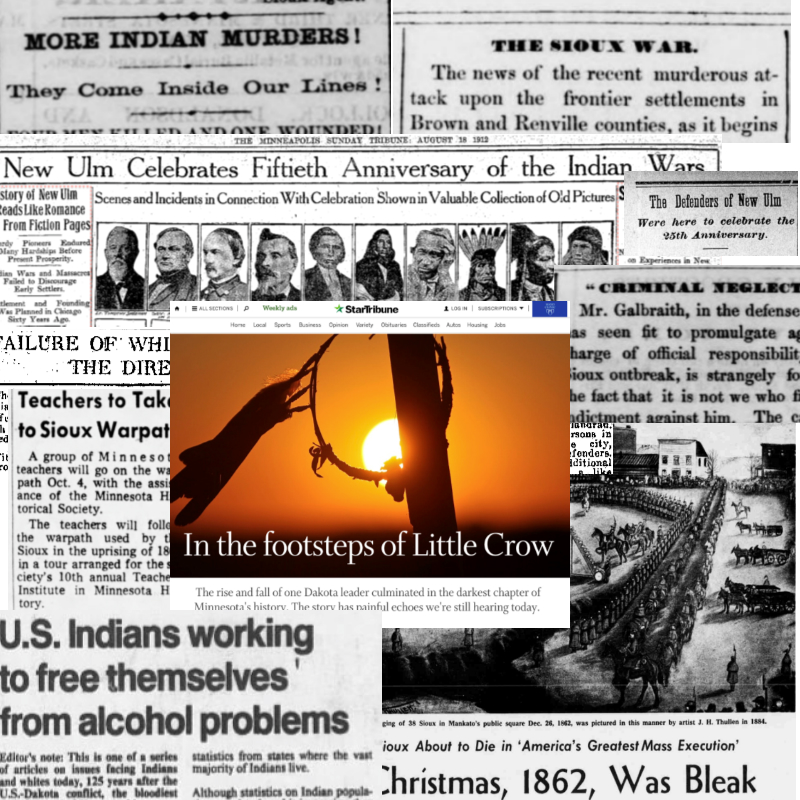
For the past few years, CHGS has been engaged in a research project on newspaper accounts from over 155 years related to the 1862 US-Dakota Conflict.

Through an analysis of more than 400 articles from newspapers of the Twin Cities and from towns in the Minnesota River Valley (Mankato and New Ulm), we trace how different generations of Minnesotans remembered, or in some cases chose to not remember, the six-week conflict itself and its dramatic consequences for the Dakota community.

Primary data and analysis helped understand how thinking has changed over time regarding, for example, the causes of the conflict, the attribution of responsibility for the violence, or the way actors involved in the conflict are labeled (“Sioux”, “Indian”, or “Dakota” for example). Further analysis explores references to the conflict in post-sesquicentennial commemorations, including the controversial display of “Scaffold” at the Walker Art Museum last year. Overall, our findings account for progress but also highlight the persistent inequality in access to the shaping of public narratives on the Dakota people, as indigenous sources and voices continue to be rare in mainstream media.
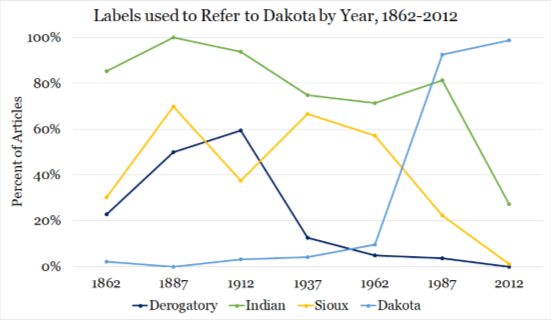
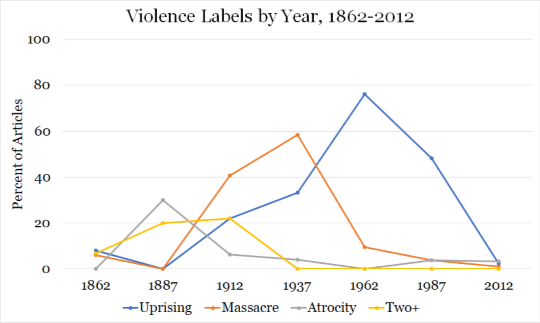
In this regard, this project understands the Dakota Conflict not as a discrete event in time, but as a continuing and evolving conflict over 155 years. Minnesotans have participated in history both as actors, and as narrators (selecting facts, choosing interpretative frameworks, labeling, quoting certain sources), the media being a primary site where history is produced.

After months of coding and analysis, the research team (CHGS Director Alejandro Baer, Sociology graduate student Brieanna Watters, CHGS Research Coordinator Joe Eggers), is now using their data to examine how educators in Minnesota accept, interrogate, or question the available representations of the conflict and the Dakota people.

This project received seed funding as one of the Minnesota Human Rights Labs in 2017 and, this spring, CHGS was awarded a grant from the Minnesota Historical Society in order to develop teaching resources for Minnesota educators based on the data. Next steps involve the analysis of other Minnesota voices (including Native and immigrant communities) in newspapers and other media to better understand how the state remembered this chapter of its past.

Derogatory terms include Redskin, Savage, and Red Man


Joe Eggers is the Outreach Coordinator for the Center for Holocaust and Genocide Studies. His master’s thesis explored residential schools as cultural genocide. 

The Holocaust, Genocide and Mass Violence (HGMV) Interdisciplinary Graduate Group continues to be a thriving community of graduate students, faculty and visiting scholars. This year, we decided to split the time between two speakers, to more accurately reflect presentation lengths in conferences, and to still be able to provide thoughtful feedback. We had a total of 20 presenters – the largest number to date!

We started off the year welcoming everyone back from the summer by sharing information about HGMV funding and other professional development opportunities. Our first speaker, Maria Jesus Fernandez, a CHGS visiting scholar, started us off with a fascinating talk on translations of Anne Frank into Spanish. Throughout the year, we were also visited by captivating scholars and educators, such as Jodi Elowitz who led a timely training session on how to teach about right-wing extremism, Carlo Tognato who argued for a civil pedagogy of solidarity for highly polarized societies, and Martha Stroud, who gave an engaging account of the lingering stigma after the 1965 killings in Indonesia, followed by a training session on how to use the Genocide Survivor Testimonies at the USC Shoah Foundation. Our student speakers came from 8 different departments throughout the University of Minnesota, and covered a wide range of topics, including Holocaust education, an analysis of Peruvian cinema and the genocide in Indonesia and . Students presented work in various stages, and they deployed a variety of interdisciplinary qualitative and quantitative methodologies.

HGMV is an opportunity for graduate students to share case studies, theories and methods in a collaborative environment with peers. It is a unique space in its interdisciplinary reach, challenging each presenter to think outside the box and to clearly articulate their ideas across the seemingly rigid boundaries of disciplines!

Interested in submitting your own work? Contact the 2018-19 HGMV coordinator, Brooke Chambers, for more information or to get on the schedule.

Miray Philips is a Ph.D. student in Sociology where she studies narratives of violence and suffering, collective memory, and knowledge production on conflict in the Middle East and North Africa. Miray was the 2016-17 Badzin Fellow.

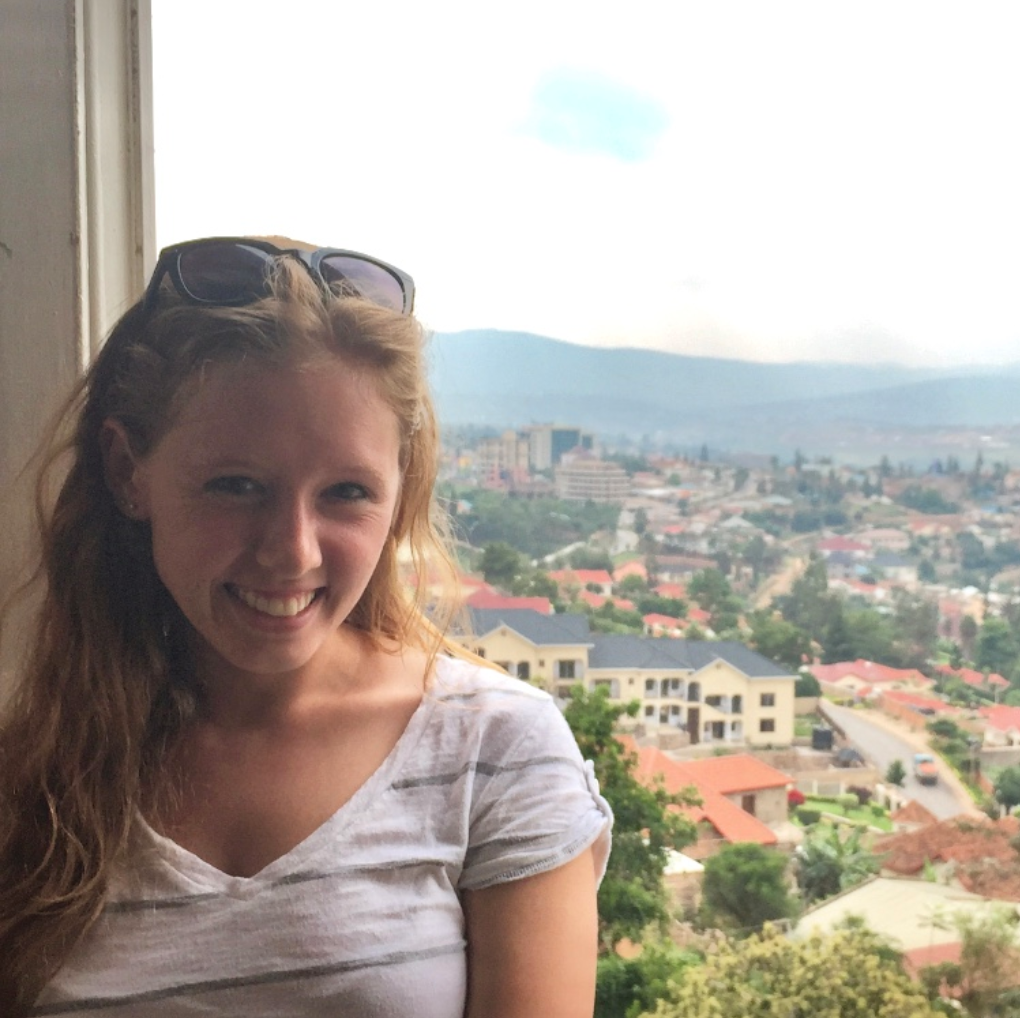
Brooke is from the small town of Chagrin Falls, Ohio. She graduated from The Ohio State University with a double BA in Sociology and Psychology and a minor in Italian. Before beginning graduate school, she worked at the 2015 World’s Fair in Milan, Italy and interned with the Center for the Prevention of Genocide at the United States Holocaust Memorial Museum in Washington, DC. She is now a Sociology PhD student at the University of Minnesota, where she is minoring in Human Rights. Brooke serves as a member of the graduate editorial board for The Society Pages, manages the Genocide Education Outreach (GEO) program, and works for the Center for Holocaust and Genocide Studies.

Brooke’s research interests include knowledge, violence, and reconciliation in Africa. Her research seeks to better understand generational trauma in contemporary Rwanda. She completed pre-dissertation research this past summer in Kigali, where she interviewed young Rwandans about their understandings of the 1994 genocide. She is interested in the commemorative process and has conducted ethnographic work at a number of memorial sites and ceremonies. For her research on the Rwandan genocide, Brooke was awarded the prestigious 2018-2019 Bernard and Fern Badzin Fellowship! In addition to her dissertation work, Brooke is involved on projects about denial of the Armenian genocide and the Rwandan gacaca courts.

Brooke in Kigali, Rwanda!