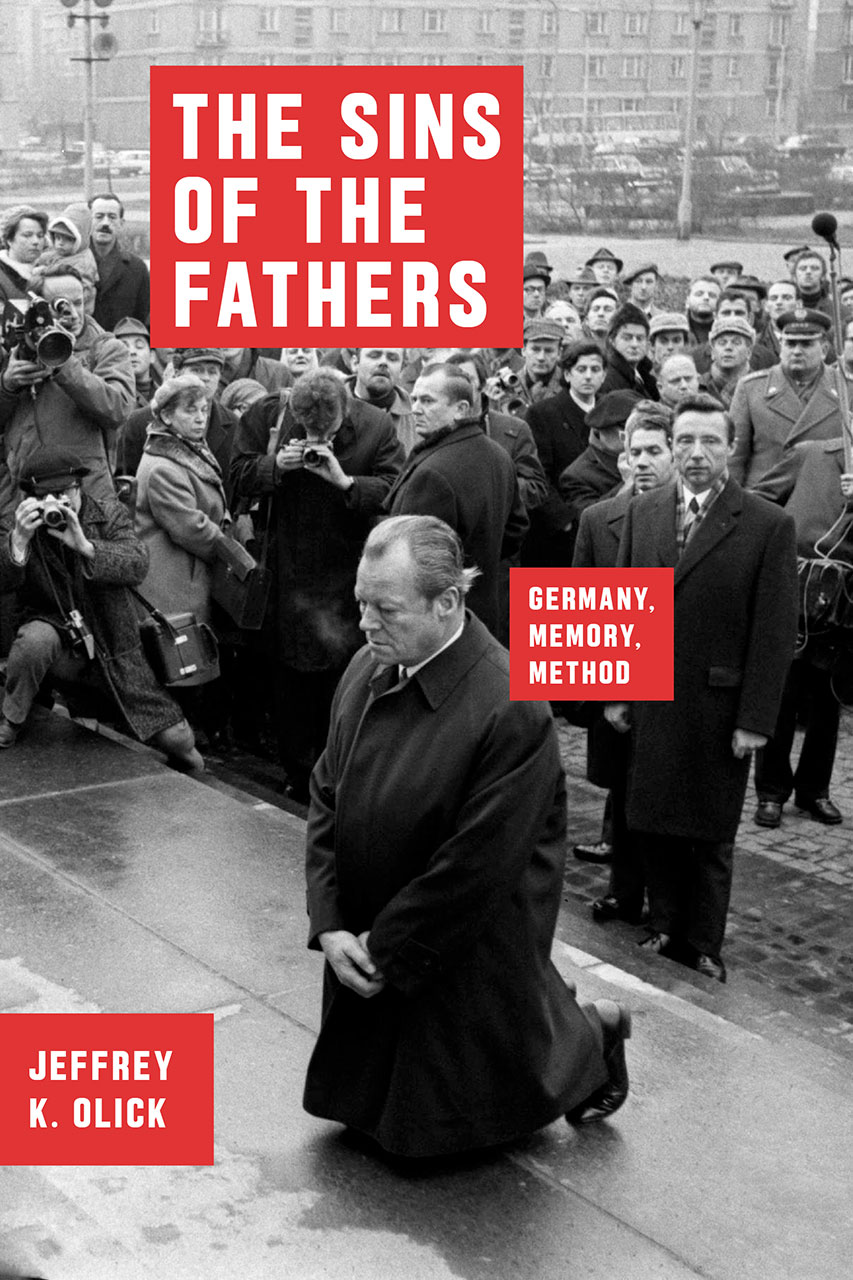
There is no state that has been and continues to be as haunted by the specters of a criminal past as is Germany. What happens when State leaders cannot tell a positive story about the nation’s past? A damaged national identity is, of course, not unique to Germany. For German leaders, however, the task at hand was, and continues to be, the mastering of a past that has become the symbol of ultimate evil. Jeffrey Olick’s The sins of the fathers: Germany, memory, method examines, with an impressive wealth of documentation and meticulous attention to detail, the process by which the Federal Republic of Germany (1949–1990) confronted the burden of the Nazi crimes and dealt with its political costs.

Germany’s ‘legitimation profiles’

Jeffrey Olick argues that ‘much of the state-sponsored memory in the Federal Republic of Germany has been organized as an effort to deny collective guilt’ (p. 29). The book is structured around the presentation of three succeeding ‘legitimation profiles’ – each confronting the problem of collective guilt in singular ways.

The first one, the ‘reliable nation’, which was centered on institutional reform, rather than symbolic gesture, aimed to prove that the newfound German state was a trustworthy and responsible member of the international community. During this time, the country’ s leaders draw a clear line separating the criminal Nazi leadership from the general German population. The Nazis had committed crimes ‘in the name of the German people’, as chancellor Adenauer put it in the1950s.

The ‘moral nation’ emerges in the mid-1960s with the coming of age of a second generation that was not burdened directly by the Nazi period and who could more easily pose questions regarding individual culpability and collective responsibility of their elders. The duty of remembrance was stressed now and this meant properly confronting the looming legacies of that past in the present, a past repressed and not yet ‘worked through’.

In the late 1970s and throughout the 1980s German leaders sought to become a ‘normal nation’ and invested in altering the image of a past, where Nazism appeared to be spoiling the nation’ s identity for perpetuity. Normalization meant reframing and relativizing: (a) other nations also had trouble with their pasts and (b) there was more to German history than the crimes of Hitler.

From the analysis that follows, Olick asserts that when the acknowledgment of guilt comes to the foreground of German history politics it is, necessarily, at the expense of national identity. The progressives, argues Olick, seek guilt without identity, while the conservatives claim an identity without guilt (p. 32). This leaves the reader with the stirring question behind this study: a criminal past, when acknowledged, poses a legitimation dilemma and thus Germany embodies the quintessential collective memory problem.

Guilt as Identity?

The book’s epilogue makes a necessary incursion into the post-unification memory debates. Still, the reader remains somewhat unapprised of how the developments in the last 25 years in Germany fit within the overall analytical framework. Have new legitimation profiles emerged? Is the irreducible tension between guilt and identity still pertinent in the unified Berlin Republic?

The chronic weakness of identity of the Germans, to the extent that their past cannot be integrated into a stable and positive self-image (a recurrent trope from the Historians’ debate in the 1980s), has given way to rather new formulations. Authors such as sociologist Darious Zifonun have argued that the Holocaust has shifted from a burden to an opportunity, paradoxically, for a redefined national identity – one which showcases a moral transformation. This discourse is not deepening a cleavage with conservative mainstream forces in society but functions transversely as a productive source of identity formation. This poses questions regarding the linkage between remembrance (of atrocious misdeeds) and national identity, which Jeffrey Olick sees as an irreconcilable legitimation problem.

One might also inquire into its broader political implications. Which is the collectivity whose identity is being built through remembrance? Germans here can only be those who identify as descendants of a perpetrator generation and accept, as Zifonun argues, the guilt of Germans as representatives of the collectivity. These are, ironically, necessarily ethnic Germans. In this respect, we see also the limitations and potential drawbacks of state-sponsored (national) remembrance of an ethnic crime (as any genocide is) in a society where citizenship is no longer defined in ethnic or national terms. How do such mnemonic practices concern those in Germany (immigrants, refugees, and also descendants of the persecuted) whose ‘fathers’ were not part of the Holocaust?

A Method for Studying Public Memory

Jeffrey Olick’s ‘historical sociology of mnemonic practices’ (or, more simply, the historical study of commemorations and images of the past) has for some time now provided conceptual clarity and very helpful analytical tools for examining the elusive workings of collective memory. To that end, Olick has also revisited theoretical traditions in a very fruitful fashion and The sins of the fathers is possibly the most refined outcome in this line of scholarship.

Drawing on Mikhail Bakhtin and the notion of dialogue and on Bourdieu’ s field theory, Olick departs from reified conceptions of collective memory and places the emphasis on practices and processes. Official representations of the past are not mere emanations of structural factors – or epiphenomena. While official memories are influenced or constrained by broader social trends and governmental agendas, they are also structuring, i.e. affecting what the state does and conditioning ensuing discursive constellations, implying both speech and actions. The productive notion of ‘memory of memory’ illustrates the dialogical approach. Earlier images of the past shape later ones, singular commemorative events being ‘always but moments in continually unfolding stories’ (p. 4).

The Sins of the Fathers: Germany, Memory, Method skillfully combines empirical exploration, historical and political erudition, and theoretical and methodical insight. For scholars and students in memory studies, this book is an excellent illustration of what rigorous and creative social memory research can look like.


The full review of the book can be found in the European Journal of Cultural and Political Sociology, Volume 4, 2017 – Issue 4, pages 494-497.

Alejandro Baer is Associate Professor of Sociology and Director of the Center for Holocaust and Genocide Studies at the University of Minnesota.

The recent “Truth, Trials and Memory Conference” at the University of Minnesota revealed an often overlooked concern in the field of Transitional Justice, namely that of the family, and its place and function for a forward-looking memory that is passed on from one generation to another. The panel on Memory in El Salvador took on a sentimental tone centered on the ideals and utopias held by one generation, as well as memories of political violence and victimhood experienced addressing how the next generation engages with them.

Human rights lawyer Irene Cuéllar introduced the project undertaken with her cousin Paula Cuéllar, a Ph.D. student in History at the University of Minnesota, called Cuéntame. This is an oral testimony bank of conversations between children and their parents which aims to break the norm of a culture of silence that exists in the country, and one that benefits certain social groups and individuals. The project also allows children to feel closure and forgiveness after doubting their parents, as it is meant to serve as a bridge between generations to minimize the polarization in the society. Irene Cuéllar expressed gratitude for the visibility this conference has given to both El Salvador and Guatemala, which she referred to as “una región chiquita” [“a small region”]. This perception of smallness may at times cloud the sheer impact and importance of the events in a region precisely because it is not talked about as much as the Southern Cone in the Latin American context for example. (Coming from Bosnia, I tend to share the sentiment when it comes to the European context.)

This presentation focused on the first chapter of many that are planned and in the works. The first conversation is between Paula and her father Benjamín, where her goal was to understand why her parents got involved in the Salvadorean guerrilla movement. The audience could glean from the six-minute clip that the involvements of the parents weighed heavily on the identity of the daughter. In fact, the premise relies heavily on the nuclear family as the basic unit of society, as the audience observed. A question posed by an audience member validly pointed out the void: What if the parent is not there to address the child’s questions? Even beyond that, I would push us to think of family in the context of genocide as much more flexible and open-ended than traditional family roles because the networks of relationships that emerge may take on a different shape, where strangers become family for instance.

The second presentation on the panel was by documentary film maker Julio López Fernández, who first and foremost emphasized his responsibility as a social actor, that of the archivist. His goal was to show us the growing network of directors who, including himself, deal with social problems and realities of what might be less visible, or “smaller regions,” to use Irene Cuéllar’s reference, cases such as El Salvador. Through a very compelling argument of representing the documentary as the product that reaches across disciplines, and has the power of the audiovisual medium, or “the king of all discourse” as Julio explained, we see that the collection of films serves as a “testimony of a generation,” further echoing the sentiment expressed by Paula and Irene Cuéllar. He explained that his primary audiences tend to be those at international film festivals, as well as academics and activists such as the members of our audience here at the UMN. One of the goals of the group is to form a part of the formal education in the affected countries, within which there is a lack of dialogue even though these are household topics. He hopes for more community distribution of the documentaries even though he remains very aware that these topics, while present in everyone’s lives, are more difficult to teach to children and should be approached with special care.

Both presentations thus left us to ponder how does the work of creating a testimony bank or a documentary film, and later distributing it, contribute to educating the public, and more specifically the younger generations without inflicting further trauma. This panel thus served as a nice bookend to a conference that allowed us to consider Guatemala and El Salvador from many angles of justice.


Erma Nezirevic is a Lecturer in the Department of Spanish and Portuguese at the University of Minnesota. She holds a Ph.D. in Hispanic Literatures and Cultures specializing in contemporary Spain.

Professor Méndez participated this month in the International Conference Truth, Trials and Memory. An Accounting of Transitional Justice in El Salvador and Guatemala at the University of Minnesota. After his panel on “Truth-seeking Lessons from the Guatemala Experience”, he shared more insights with Michael Soto (UMN Graduate Student, Sociology).

After more than half a century of armed conflict, Colombia is poised to transition to peace.  In 2016 a peace agreement was signed with the largest rebel group, the FARC, and there are currently negotiations with the second largest group the ELN.  One component of Colombia’s transitional justice program is the Special Jurisdiction for Peace, which is charged with investigating and prosecuting human rights violations. Below, is the third part of their exchange on the peace process in Colombia.

What are the broader opportunities and challenges in Colombia?

 We’re at a very early stage in the process of Colombia. We have a good blueprint. Good in the sense in that it is clear. Whether you agree whether there should be reduced sentences or not that is a different question and I am not giving an opinion on that because I have been given a task to perform and if I say anything beyond that it could raise a problem of a conflict of interest.

So, I don’t have an opinion on that, except to say that this is a process that to a great extent tries to achieve this confluence of peace and justice. And this idea that peace and justice should nurture each other in a formula that is complex and very complicated, but that is worth giving it a chance. I think the appointment process is a key question there because if we can instill confidence in the population that we have done a really good job of selecting the best Colombians to do this, those that enjoy the greatest confidence from the populace, those that have experience, and can not be mistrusted for anything they did in the past. Then I think this system has a chance.

But it is early, and who knows at the end of the process. It is legitimate to say, let’s wait to the end of the process to see whether it is a process that leads to justice or impunity.

In the meantime, it is leading to peace and that is important.


I would like to ask you about the Special Jurisdiction for Peace in Colombia, a body that will exercise judicial functions and is part of The Integral System of Truth, Justice, Reparation and Non-Repetition. You were one of five people selected to appoint the 51 magistrates. Can you tell us about this experience?

I am a member of the Selection Committee that the peace process agreed to have two Colombians and three non-Colombians in charge of the search and eventual appointment of all members of the different units of the Special Jurisdiction for Peace. There is an appellate side and a lower court side. Those are 51 magistrates, 38 between the two of them plus 13 substitutes.

And then the Truth Commission is 11 members. And then there are the three units that are a single person. One is the unit of Missing Persons, the unit of Accusation and Investigation, the sort of the prosecutor’s job before the Special Tribunals, and the last one is the chief of a unit of Dismantling Criminal Organizations. There we are going to appoint three persons to a terna is what they call it but it is the Public Prosecutor of Colombia that will appoint because that office will be part of the Prosecutor’s Office.

And then there are 14 foreign jurists that will act as amicus curiae at the disposal of the Special Jurisdiction for Peace. We have opened searches for all these positions, we have made it transparent, open, and told everybody on how to apply. We had to create a technological platform to do this, we have a small team that is very diligent and hardworking. And we have been able to keep to our calendar of decisions. We have already appointed the 51 magistrates and the chief of the Office of Missing Persons and the chief of the Unit of Accusations and Investigations. And all of them are about to start working, because congress needs to pass some legislation, but the President has appointed all of them.

Our next steps are the Truth Commission, and the terna that I mentioned and the foreign jurists. So we will be done in December. So what this Special Jurisdiction of Peace is supposed to do, the peace accord has several aspects, one an amnesty for the crimes of rebellion and sedition. So if people are accused of fighting, they get amnesty.

For the crimes that are excluded from the amnesty, meaning war crimes, crimes against humanity. For those, there is a special treatment, which includes reduction of sentences. But the special treatment is conditioned on being truthful on everything they did. So there has to be a special jurisdiction to organize those processes by which you are accused of these crimes, you come forward, you confess, you get the benefit. If you are not truthful you go to the regular accusations and you can get up to 20 years in prison. I should say that the reduced sentences are to be spent in some form of restrictions of liberty but not in jail.

All of that has to be monitored and ordered by a Special Jurisdiction. You could say, “Why not the regular courts?” Well, the parties to the peace process decided that they wanted a special jurisdiction. Now, the special jurisdictions are independent and impartial justice if they were individual judges. And their decisions are not reviewable by the regular courts but they are ultimately reviewable by the Constitutional Court. So, there is judicial control over everything they will be doing. But otherwise they are independent from the regular judiciary and it is a transitory jurisdiction. It is expected to live on for about ten years, with a possible extension to about 15 years. At the end of that they should have disposed of all the cases.

Read: Part 1, Part 2.


Juan E. Méndez, a native of Argentina, is a Professor of Human Rights Law in Residence at the American University – Washington College of Law, where he is Faculty Director of the Anti-Torture Initiative. In February 2017, he was named a member of the Selection Committee to appoint magistrates of the Special Jurisdiction for Peace and members of the Truth Commission set up as part of the Colombian Peace Accords. He has previously held positions as UN Special Rapporteur on Torture and Other Cruel, Inhuman and Degrading Treatment or Punishment, an advisor on crime prevention to the Prosecutor, International Criminal Court, Co-Chair of the Human Rights Institute of the International Bar Association, President of the International Center for Transitional Justice, and the Special Advisor to UN Secretary General Kofi Annan on the Prevention of Genocide.
Michael Soto is a PhD student in Sociology and fellow at the Interdisciplinary Center for the Study of Globalization Change (ICGC).  His dissertation research is on the transition to peace in Colombia, with a focus on reintegration and reconciliation processes.

Professor Méndez participated this month in the International Conference Truth, Trials and Memory. An Accounting of Transitional Justice in El Salvador and Guatemala at the University of Minnesota. After his panel on “Truth-seeking Lessons from the Guatemala Experience”, he shared more insights with Michael Soto (UMN Graduate Student, Sociology). Below, is the second part of their exchange on truth-telling.


Some authors, such as Martha Minow, have suggested that truth commissions are “second best” accountability tools. Could you please share your thoughts in response?

She was writing about South Africa, and I think her writing was very significant, and a great contribution to the transitional justice literature. But South Africa is a very special place, and special circumstance. I think it is true that for South Africa, if amnesty was part of the game, that a truth telling exercise was second best, but it was good to have. And I still think that the truth commission in South Africa made some great contributions.

But the good thing is that the South African model has not been replicated. Even in African countries, nobody goes for amnesty in exchange for truth anymore. Because it hasn’t really worked. Even in South Africa it didn’t work. The truth telling is great, but the giveaway of any possibility of justice, or almost any, because it also not true that prosecutions are completely barred, they are not. But they are not happening.

Nowadays we would say that truth telling is an important component and it is not a substitute for justice. I think that lesson has been learned. Again, if Martha Minow is referring to the very specific context of South Africa, I think she is probably right. In general or theoretical terms, that is not how we conceive of truth telling right now.

We conceive of truth telling as one leg of a process that also has to include justice. Ideally, it should contribute to justice, just as we have discussed in the past couple of days at this conference, the truth commission reports, in both cases, should serve to judicialize some of these cases and conduct the prosecutions. They are separate processes, but they should nurture each other.


During your panel presentation you said, “Truth seeking must be ongoing, and must go beyond the report.” Can you mention a couple cases that are exemplary in this regard?

A truth commission and its report are necessarily limited in time. Sometimes because, as in El Salvador, they have a very short time, only six months, but even if they have two years it is still a picture in time, a snapshot. And because they have to present a picture of the structural weaknesses that made the human rights violations possible, they do a lot of individual case truth seeking and truth telling, but that can by no means cover everything.

The universe of cases is so great, it is very difficult to cover everything. Even though they try, for example, in Chile they made an effort. They narrowed the definition to killings and disappearances and they didn’t deal with torture at first, unless it resulted in death, so the universe of cases was relatively smaller, and they were able to do an individualized truth. Which was then complimented with a second truth commission which specifically dealt with torture.

But those are exceptional cases. When you have literally thousands of disappearances, or massacres in the countryside where you can’t even begin to count the victims, of course a truth commission is not going to be complete and give the final narrative of what happened in every single case.

So, if that is the case, the truth commission report should be the skeleton, the basis that permits, truth telling to continue afterwards. In the case of Argentina for example, the democratic government created a Secretariat for Human Rights which was the repository of all the archives of the truth commission, and they continued to do the same work. They continued to receive complaints after the truth commission had submitted its reports. They continued to investigate them, and they continued to find documentation in government archives. So the truth telling at least on the individual scale continued.

And then when the judicial cases were opened, there was a lot more truth telling as well. There are a lot of things that happened during the Dirty War in Argentina that has been learned after the truth commission. But the truth commission was the vehicle, and especially their files, by which a prosecution could later proceed. And so, now we know a lot more than what the truth commission told us. That is what I was referring to.

In my mind, at least in Guatemala, until recently with these trials it had not been done. There had been a really good truth commission but after its report, not much more effort had been put into continuing to find missing persons. Except of course from civil society, but I mean officially.


You also spoke about the need for individualized truth to families, and a social truth to the nation. Could you please expand upon this too?

Yeah, it is what I was saying about Chile. This insight that what needs to happen is an individualized truth comes from one of the early authors in this area, José Zalaquett, from Chile. He was later a member of the Truth and Reconciliation Commission. And he prevailed on the truth commission to try to do individualized case work and to tell each family what could be established about the fate and whereabouts of their victim. As I said, that is possible in Chile but it is probably not possible in any of the other situations that we have. But it is very good to make an effort. Because if we say that the right to truth is a right of the families than it has to be satisfied by a process, which, as much as possible, gives them everything that they need to know about what happened.

But I also think that truth commissions, and this is also true of the one in Chile, have a different role to play in establishing how it came about that these violations happened. I sometimes call that “structural deficiencies”, or “institutional weaknesses”. And I don’t only mean that Pinochet had the plan to do all these things and conveyed this through the chain of command of the armed forces of Chile. I also mean weaknesses in the setup of the courts, where they were rendered completely useless to protect citizens. After all that is the role of judges, to protect us from abuses of power. Knowing why they failed in doing that is important.

And that can be identified in each truth commission report, in detailed ways, not just, “Well they didn’t do their job.” But why didn’t they do their job? Were they under pressure, were they substituting for partisans of the regime, were some legalities incorporated that didn’t allow them to do their job correctly? And those things then become the basis for recommendations about institutional reform that serve concretely as measures of non-repetition.

Read: Part 1, Part 3.


Juan E. Méndez, a native of Argentina, is a Professor of Human Rights Law in Residence at the American University – Washington College of Law, where he is Faculty Director of the Anti-Torture Initiative. In February 2017, he was named a member of the Selection Committee to appoint magistrates of the Special Jurisdiction for Peace and members of the Truth Commission set up as part of the Colombian Peace Accords. He has previously held positions as UN Special Rapporteur on Torture and Other Cruel, Inhuman and Degrading Treatment or Punishment, an advisor on crime prevention to the Prosecutor, International Criminal Court, Co-Chair of the Human Rights Institute of the International Bar Association, President of the International Center for Transitional Justice, and the Special Advisor to UN Secretary General Kofi Annan on the Prevention of Genocide.

Michael Soto is a PhD student in Sociology and fellow at the Interdisciplinary Center for the Study of Globalization Change (ICGC).  His dissertation research is on the transition to peace in Colombia, with a focus on reintegration and reconciliation processes.

Professor Méndez participated this month in the International Conference Truth, Trials and Memory. An Accounting of Transitional Justice in El Salvador and Guatemala at the University of Minnesota. After his panel on “Truth-seeking Lessons from the Guatemala Experience”, he shared more insights with Michael Soto (UMN Graduate Student, Sociology). Below, is the first part of their exchange on peace processes. You can read the second part on truth-telling here.

Juan E. Méndez, a native of Argentina, is a Professor of Human Rights Law in Residence at the American University – Washington College of Law, where he is Faculty Director of the Anti-Torture Initiative. In February 2017, he was named a member of the Selection Committee to appoint magistrates of the Special Jurisdiction for Peace and members of the Truth Commission set up as part of the Colombian Peace Accords. He has previously held positions as UN Special Rapporteur on Torture and Other Cruel, Inhuman and Degrading Treatment or Punishment, an advisor on crime prevention to the Prosecutor, International Criminal Court, Co-Chair of the Human Rights Institute of the International Bar Association, President of the International Center for Transitional Justice, and the Special Advisor to UN Secretary General Kofi Annan on the Prevention of Genocide.


How have the peace processes in El Salvador and Guatemala informed subsequent ones?

In Latin America they were the first ones where the objectives of justice were part of the peace process and conflict resolution, so they incorporated some of the experiences that had happened a few years before, especially in the Southern cone. But they also included specific limitations that were not present in those other situations.

One thing that was very significant and positive about them was that the international community had a big stake in them. Because the United Nations was called upon to broker both peace agreements, at a time when victim’s groups were claiming a space for justice. So it was the brokerage by the United Nations that made it possible for the peace agreement, first in El Salvador and then in Guatemala, to incorporate truth telling, and also to close off the possibilities of blanket amnesties.

Unfortunately, it still happened in El Salvador but it didn’t happen in Guatemala only a few years later. Among other things because of the bad example of El Salvador with a blanket amnesty, which was unilateral by the government and after the report, of the Truth Commission was seen as more impunity. And therefore when the negotiations began in earnest in Guatemala that was avoided. The Amnesty law in Guatemala excluded certain crimes. Unfortunately this didn’t mean they were prosecuted as should have happened. But it is happening now. I consider myself a follower of these things, and I was surprised to hear here at the conference that there are around ten cases in Guatemala where there have been convictions and about 30 people convicted and facing prison sentences. I think that is remarkable. These things happen because Guatemalans want them to happen and the rest of the world should know more about.

Unfortunately, the whole debate around transitional justice when the international community is involved, now revolves around questions of peacemaking. And in peacemaking there is always a tendency to give away justice. And the early, good examples of El Salvador and Guatemala have not quite been incorporated by the international community. So you see peace negotiations going on in Afghanistan, in Northern Uganda, in Sri Lanka. The international community does not insist on justice. It is not pushing very hard even though we have instruments like the International Criminal Court (ICC).

So, I think going back to understand exactly what is going on in places like El Salvador and Guatemala could have a very good effect.


In your panel presentation you said, “Reconciliation has to imply transformation.” Could you elaborate on this point for us?

 I was picking up on something that had been said before my panel, I believe by Doug Cassel. I belatedly linked it to the word “reconciliation.” I don’t use the word much but in some of the theories of transitional justice, reconciliation occupies a place. For example, Zalaquett says that the objective of the whole endeavor has to be reconciliation. And I don’t disagree with that but sometimes reconciliation has been used for the wrong purposes. For example, as excuses for impunity, as excuses for the state not doing these things that need to be done.

And so what I was saying is, if the objective is reconciliation then we have to understand reconciliation not just as oblivion, not just as letting bygones be bygones. But reconciliation means that the root causes of the tragedies of human rights violations are also understood, assessed and transformed. So that we can look forward to a society that doesn’t have discrimination, exclusion, class distinction, income distribution distinctions that are so harsh that in the past they gave rise to violence. And then violence itself bred human rights violations.

If we really think about reconciliation, we are not thinking of reconciliation between the torturer and the victim of torture. We are thinking of reconciliation among factions that used to fight each other violently and now they maintain their differences but they dispute them in the political process, in a democratic way. But it also means that we have to have in mind a society that doesn’t have the root causes that gave rise to the problems but that actually that those root causes are addressed.


Can you highlight a couple cases that illustrate this direction?

No, I don’t think there is any case in which all the different objectives of transitional justice have been achieved. And much less the one on reconciliation. And also in those cases where some significant progress has been made in one or two of these, there is also the risk of setbacks, back tracking, etc.

My conclusion is that such transformation is a labor for societies and generations that is achieved over time, and achieved with victories and defeats. The very process itself is a partial victory.

Again, we can point to Argentina and Chile having more prosecutions and convictions than any other country, and they are still going on. But even in those cases there have been limitations on truth telling. Particularly in Argentina, the debate about the number of the disappeared is a fruitless debate but it also highlights how these problems can backtrack. Things that we thought we had all agreed upon, or that a huge percentage of the population had agreed upon, are relegated over and over again.

Nevertheless even in a country like Argentina, the fact that the society reacts to attempts to cut off the process, including judicial decisions that limit punishment, the reaction is very swift, and majoritarian in its condemnation, or when they react to a single disappearance, in massive ways as well, I think those are signs of progress. I wouldn’t say final victories, but signs of progress.


You also mentioned the importance of memory in these processes. Part of what you have discussed relates to the building of narratives or competing narratives of what took place. Could you please elaborate on the role of memory?

I think memory becomes important the longer that the process takes. Although we call it transitional justice, sometimes this is a misnomer. First, the obligations of the state apply regardless of whether there is transition or not, it doesn’t really matter. A state has to investigate and prosecute torture, disappearances, and murder by its agents. The longer the time elapses between when the possibilities for prosecution arise and when the crimes took place, the more important it is to preserve memory. It is not only preserving evidence, and preserving the rights of people, but also making sure that future generations of the country do not give up on the fight for justice.

In fact, nowadays in many of these countries where the process of justice continues, they continue because new generations have picked up the fight. And they do so because they understand what really happened, and for them it is also intolerable that those things should go unpunished. Obviously, the direct victims are either now dead, or too old to carry the fight, but if you don’t transmit the legacy to further generations the process is interrupted at some point.

It is important to create the conditions for memory to be achieved and stored, and then to be used when the opportunity and conditions are ripe for it.

Read: Part 2, Part 3.

Michael Soto is a PhD student in Sociology and fellow at the Interdisciplinary Center for the Study of Globalization Change (ICGC).  His dissertation research is on the transition to peace in Colombia, with a focus on reintegration and reconciliation processes.

The “Truth, Trials, Memory” conference, held at the University of Minnesota between November 1 – 3 opened with an ambitious quest: twenty years after the historical clarification commission in Guatemala, what does accountability look like? Further, in a time of increased civil discontent, protest, and resistance sweeping the United States, what can we learn from transitional justice and indigenous Guatemalan liberation projects?

Keynote speaker Pablo de Grieff opened the conference by naming four key components to transitional justice work done in post-conflict contexts: establishing truth, activating instruments of justice, the dispersal of services and reparations to victims, and the guarantee of non-recurrence. Yet, as the conference rolled onward, it became clearer and clearer to panelists and audience participants the grave difficulties and consequences of such achievements.

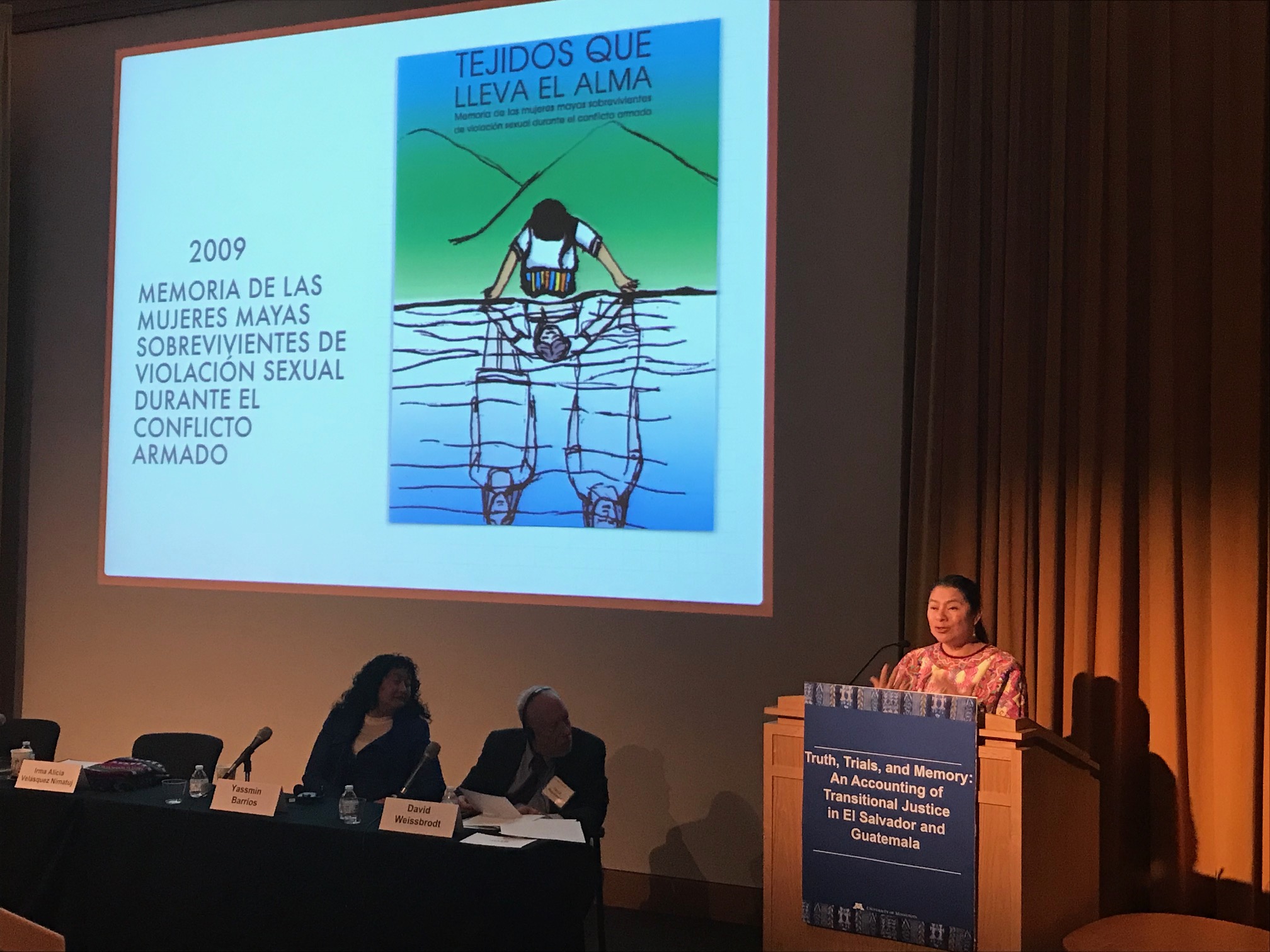
Irma Alicia Velasquez Nimatuj TTM 2017.jpg
Irma Alicia Velásquez Nimatuj presents at the “Truth, Trials, and Memory” conference. Seated are Yassmin Barrios and Dr. David Weissbrodt (PC Hale Konitshek).

Indigenous K’ichee’ anthropologist, activist, author, and journalist – as well as the main protagonist of Pamela Yates’ newest film 500 Years – Irma Alicia Velásquez Nimatuj concluded her presentation with a powerful response to transitional justice researchers and practitioners. After describing the story of a woman who had to flee her own community during the conflict with her husband and four children, only to return alone after the conflict ended, Velásquez Nimatuj declares (orig. Spanish):

“All of this makes me question the methods of social sciences, all of this makes me question the work we do as anthropologists, that we do as social scientists – when we work well in our fields, for economic or academic rewards, but do not work to construct a new world. I deeply believe when I work in these cases that nothing will suffice as reparation. Nothing, for women, for girls, will repair them. Yet here I take it as a fundamental component of transitional justice. Careful revision is part of reparations.


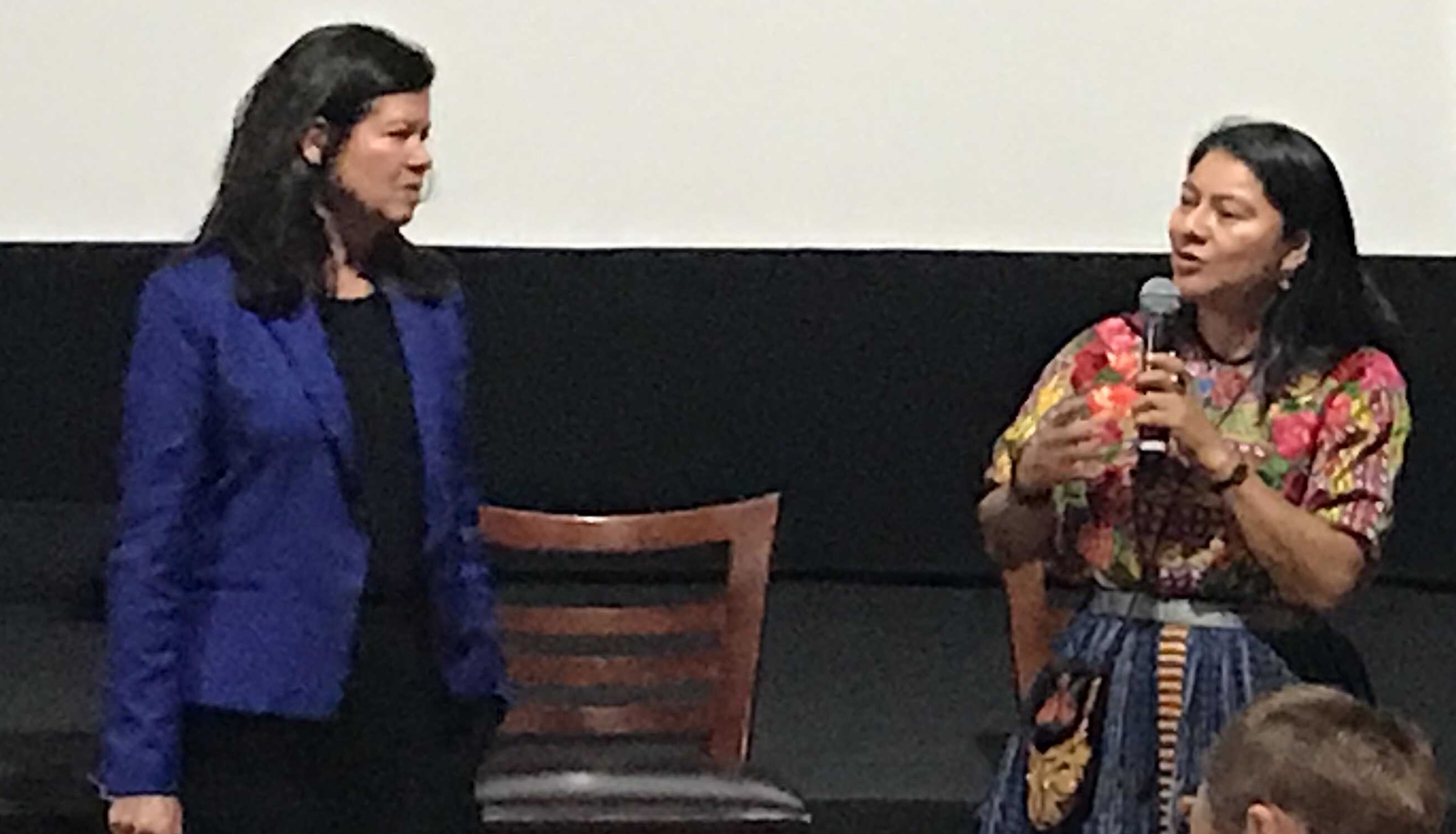
Earlier the previous evening, as Day of the Dead celebrations wrapped up across North and Central America, roughly a cinema house full of conference goers, twin cities community members, U of M students, and humanitarian scholars would shuffle across the Mississippi River into the historic St. Anthony Main Theatre to view a premier screening of 500 days by director and artist Pamela Yates who works closely with Irma Alicia.

Pamela and Irma TTM 2017 St Ant Main.jpg
Pamela Yates, director, and Irma Alicia, protagonist, answer questions post-screening of 500 Years (PC Hale Konitshek).

The film is the third in Guatemala’s human rights #ResistanceSaga trilogy, a series of documentaries by Yates and her subject-affiliates about the thirty-six year armed conflict (1960-1996) and subsequent genocide of indigenous Maya by Guatemalan military, paramilitary, and national police personnel between 1982-83.

The genocide left nearly 150,000 Indigenous Maya murdered and 45,000 artists, community leaders, and activists disappeared. Years after initial clarification reports were released, Maya women survivors came forward with testimonial accounts of mass sexual violence and sexualized torture tactics of state forces during the conflict. In 2005, the discovery of a secret National Police archive in a defunct warehouse in downtown Guatemala City corroborated more than 7,000 Maya testimonies with upwards of 80 million recovered official government documents, including 2 million identity cards of persons registered as disappeared during the war.

When The Mountains Tremble (1983) and Granito: How to Nail a Dictator (2011), the first two films in the trilogy, document and analyze the deepening of existing social and political cleavages, inequalities, and oppressions during the conflict as well as recent tribunal efforts toward state accountability by survivors and justice practitioners, respectively. 500 years builds innovatively on the previous two films, however, insofar as it contextualizes violence against Maya groups within a more expansive Spanish colonial context.

For Indigenous Maya, resistance is both a political act and condition of political life in Guatemala. On the one hand, the years 1982-83 are known as “La Violencia,” the violence, by Guatemalan historians and historians of Guatemala. But indigenous Maya in their articulations of justice and sovereignty recount violences upon their lands, bodies, and cultures as far back as the early European colonial period, with violence peaking especially during trends of Guatemalan nation-state building, institutional and infrastructural development, resource extraction, and territorial expansion – all of which relied on and still enact colonialist mechanisms like forced evictions and displacements, property seizures, resource blockades, and subsequent criminalization and state neglect of evicted groups over the course of 500 years. Recent evictions of and protests by indigenous communities in Izabal and Alta Verapaz are one of countless examples of the technologies of the ‘post-colonial’ Guatemalan state to continue to repress the political life and significance of indigenous communities.

But indigenous political resistance in Guatemala has also been adapting to state violence to become more visible, organized, and effective. As 500 years depicts, mass protests, marches, demonstrations and community education efforts via radio, mobile cellular communications, social media and indigenous news broadcasting and presses are on the rise now more than ever.

As Irma Alicia so eloquently argues, the significance of indigenous women’s cultural production lies not just in the clarification and revision of historical memory, but in indigenous women sharing their stories and articulating justice “en sus propias voces,” in their own voices, “para construir sus propias cosmovisiones” to construct their own worldviews.

One of the most crucial takeaways thus from this conference is that auto-ethnography, personal narrative, testimonies, art practices and solidarity within and across borders, in official and unofficial capacities, are necessary parts of reparation. That there is power in speaking for oneself and one’s community. That there is power in sharing and defending one’s truths. Finally, that social scientists and anthropologists alike must work not just to understand the past and to learn about our world as it is today, but to transform it – to construct new worlds in our wake.

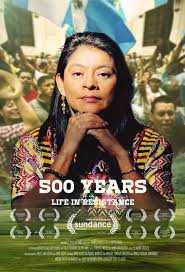
500 years official photo.jpg500 Years concludes with a fitting scene of young Maya girls honoring the dead on All Saints Day, when giant colorful kites are weaved and flown to celebrate ancestors across the skies of Guatemala. The beauty and power of the metaphor speaks for itself, as the girls attempt twice unsuccessfully before their kite ultimately soars – seeming effortlessly, forever majestically – in playful circles that tease the sun.



500 Years is now available for streaming on Amazon Prime. A national television broadcast will air throughout the United States via PBS on January 1, 2018. When The Mountains Tremble (1983) and Granito: How to Nail a Dictator (2011), the first two films in the trilogy, are currently streaming for free on YouTube.

Hale Konitshek is a PhD candidate in Feminist Studies whose dissertation pieces together an ethnography of informal women’s institutions for sexual assault and gender violence protocol throughout Guatemala. Hale also works as a sexual violence counselor and advocate with SOS Sexual Violence Services of Ramsey County, Minnesota.

I have fond memories of spending childhood Thanksgivings with my Slovak grandmother in Eastern Pennsylvania. Never a traditional meal, we ate city chicken and Serviettenknödel (a Bohemian dish not dissimilar to traditional dressing). The stories I heard around the dinner table were of the hardships of my immigrant family coming to the U.S. and, despite facing immense adversity, surviving and thriving due to honest hard work. Despite learning about the myths surrounding Thanksgiving and teaching my high school students about Indigenous genocides, it’s been only recently that I began to connect these stories to the larger narrative of U.S. settler colonialism. Maybe it’s because my holiday traditions seemed so rooted in my family’s immigrant past and stories of hardships and survival, which seemed so removed from the myths of Native and European encounters. Maybe it’s a reluctance to connect my happy childhood memories and traditions to ideas of genocide.

20170703_101419.jpg
Ojibwe Road Sign from Manitoulin Island, Ontario

This past summer, my partner and I traveled from my childhood home in Western New York to Minnesota around the northern shore of Lake Superior, entering Canada on July 1st and reentering the U.S. on July 4th. July 1st marked the 150th anniversary of the Canadian Confederation (dubbed “Canada 150”). Although it was evident that many Canadians were advancing the national celebration through local parades and decorated lawns, the Canadian national radio (CBC) broadcast story after story troubling the events as a “celebration of colonialism.” Passing through several Anishanaabeg (Ojibwe) reserves in Canada, the recent national efforts to financially support Indigenous communities and cultures was evident in language-revitalization efforts (everything from immersion schools to Ojibwemowin-only road signs), museums, and cultural centers. These radio stories and cultural supports seemed to suggest an awareness of the effects of settler colonialism but were often seemingly overwritten by what appeared to be a desire amongst many Euro-Canadians to celebrate the anniversary of the establishment of the nation-state. Canada 150 highlighted a deep and powerful denial of five centuries of colonialism. A denial rooted in Canada’s history and continued existence as a settler-colonial nation.

Growing up near the U.S.-Canadian border, we often received only Canadian television broadcasts. I have clear memories of watching TV shorts on the CBC, “Heritage Minutes” about moments in Canadian national history. One video depicts Jacques Cartier’s misappropriation of the Iroquois word for village. Such narratives of these first encounters echo the myths of peaceful colonization. Myths that, although replete with arrogant clergy and eager frontiersmen, are shown to have been fraught only with friendly misunderstandings, certainly not genocidal intentions. Such mythic narratives mirror what I was taught just south of the border.

Canada has in part grappled with genocide in its national past. The Truth and Reconciliation Commission of Canada (TRC) shed light on the history of forced assimilation and abusive boarding schools for Indigenous children. However, it appears many Canadians saw the TRC and national apology as the end to difficult chapters in Canadian history, allowing the country to look towards the future. Many Indigenous scholars have seen this view as a failure of Canadians to fully reckon with the broader history of settler colonialism. Thus, Canada 150 became a moment of contradiction between seemingly trying to recognize one version of the past while celebrating another.

521869_10151533402407984_57430465_n.jpg
George Dalbo and his wife, Jenna in Wawa, Ontario

Crossing into Minnesota on July 4th, National Public Radio featured predictable stories of backyard barbecues and an annual reading of the Declaration of Independence. Just beyond the border, entering the Grand Portage Ojibwe Reservation in northern Minnesota, one sees signs (written exclusively in English) for Grand Portage State Park and Grand Portage National Monument (a reconstructed trading post mostly celebrating frontier life from a Euro-settler perspective). Quickly, evidence of farming and mining crop up on the horizon, reminding one of the settler-colonial society’s continued occupation and ruin of Native land through industry, farming, and parks. The juxtaposition between the two settler nation-states’ ways of reckoning with their respective (yet similar) histories of cultural genocide was blatant. If Canada still has a long way to go, the U.S. is woefully unaware, unrecognizing, and officially unapologetic of its own history. As in Canada, there is resistance to open discourses about U.S. settler colonialism and genocide.

Perhaps what is at stake here is the fate of “settler futurity” within these settler-colonial nation-states. “Settler futurity” is the sought-after continued existence of the settler state and the dominance of Euro-Canadians and Euro-Americans on the land. Settler colonialism is distinguishable from other instances of imperialism and colonialism in that it requires the continued occupation of the land through a physical or cultural negation of the original inhabitance and the maintenance of socio-politico-economic white supremacy.

My high school students are shocked by Aaron Huey’s “America’s Native Prisoners of War.” Although, juniors and seniors in high school, much of the history Huey recounts – broken treaties, forced deportations, and massacres – is new to them. What is often most disturbing for students is not this brutal history, but the grim statistics of life on the Pine Ridge Reservation today: unemployment rates of 85-90%, the highest rates of infant mortality in North America, and a life expectance for men around 48 years (comparable to Somalia). Disturbed by these statistics, students often ask: “Are we [the U.S. government and dominant Euro-American society] still committing genocide?” Despite the question, Huey’s call to “give back the Black Hills,” and similar demands from Indigenous scholars, seem implausible, impossible to them. Students suggest that they can be aware of the issues facing Native Americans and still have their July 4th celebrations just the same.

Every year my students and I reflect on the deep disconnect in U.S. nation consciousness, yet every year I’m struck by just how deep this disconnect runs in our historical and cultural memories. Although my grandmother passed away several years ago, and I now spend the holiday with my partner’s family enjoying the more-traditional turkey and dressing, I’m still unsettled with how easy it is to put aside my knowledge of one version of the past and celebrate another.


George Dalbo is a Ph.D. student in Social Studies Education at the University of Minnesota with research interests in Holocaust, comparative genocide, and human rights education in secondary schools. Previously, he was a middle and high school social studies teacher, having taught every grade from 5th-12th in public, charter, and independent schools in Minnesota, as well as two years at an international school in Vienna, Austria.

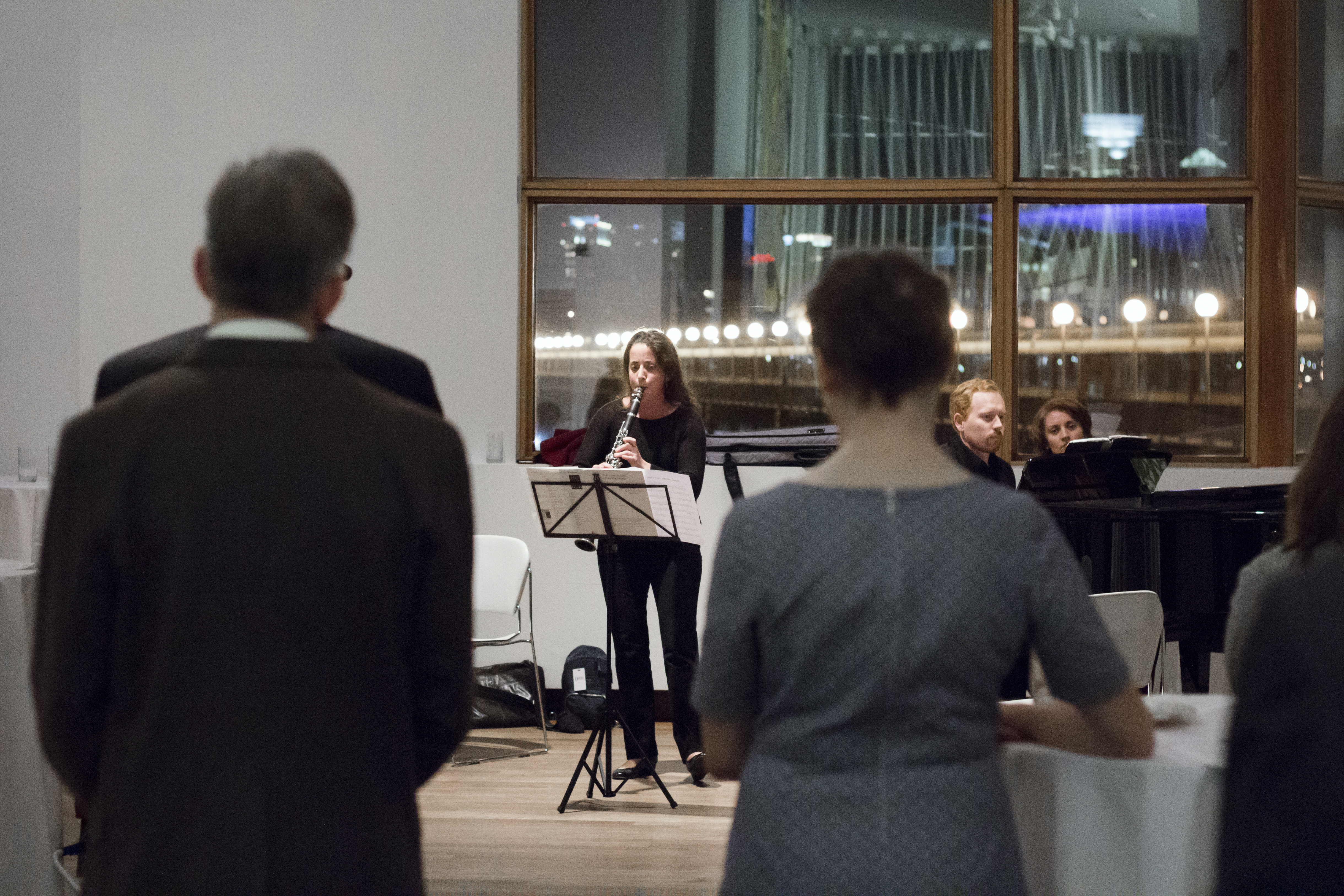
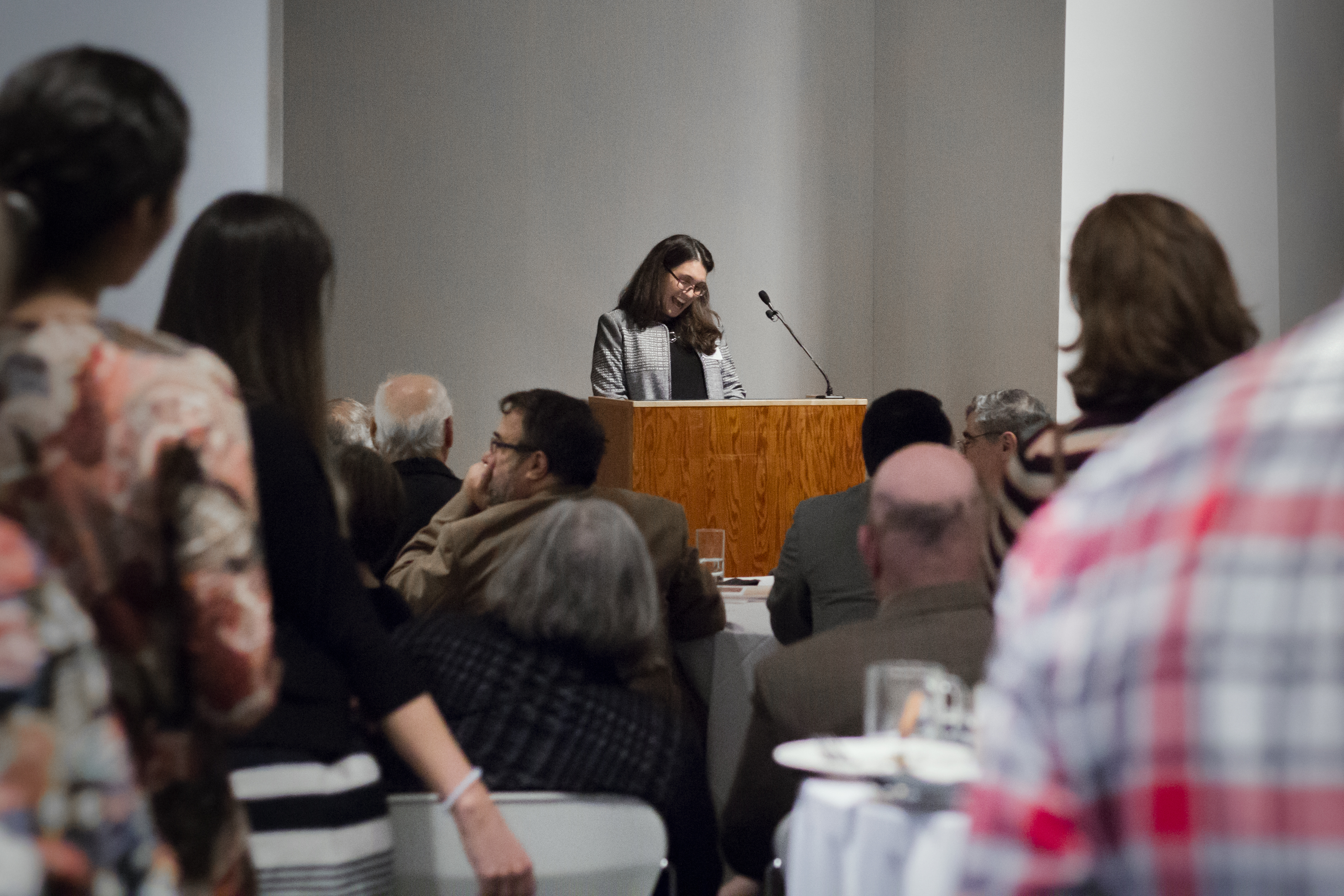
On October 24th, the Center for Holocaust and Genocide Studies (CHGS) hosted a celebration honoring 20 years of serving its mission to promote awareness and encourage collaboration in the study of mass violence. The event brought together faculty, community members, advocates, as well as current student and alumni, to commemorate the legacy of Steven Feinstein, CHGS’s founding director, and to acknowledge the Center’s current initiatives. Guests toured a pop-up exhibition of artwork from the CHGS archives and enjoyed a musical program.

Speakers included Dean Coleman from the College of Liberal Arts, CHGS Director Alejandro Baer, graduate student Wahutu Siguru, Program Coordinator Jennifer Hammer, and Dr. Rebecca Feinstein, daughter of founding director Steven Feinstein. Many spoke of the interdisciplinary strength of CHGS, which works with faculty and students from a number of departments across campus. Others discussed the wide variety of CHGS initiatives, from outreach events to past symposiums, as well as future course offerings.

Guests left with a copy of the annual report, news on upcoming events, and pages from the first-ever CHGS newsletter 20 years ago. Overall, the event provided an opportunity to reflect upon 20 successful years of CHGS, as well as the chance to look ahead at what is to come.

IMG_8540.jpg
Dr. Rebecca Feinstein, daughter of founding director Steven Feinstein
IMG_8580.jpg
Artwork Exhibition from the CHGS Archives
IMG_8767.jpg
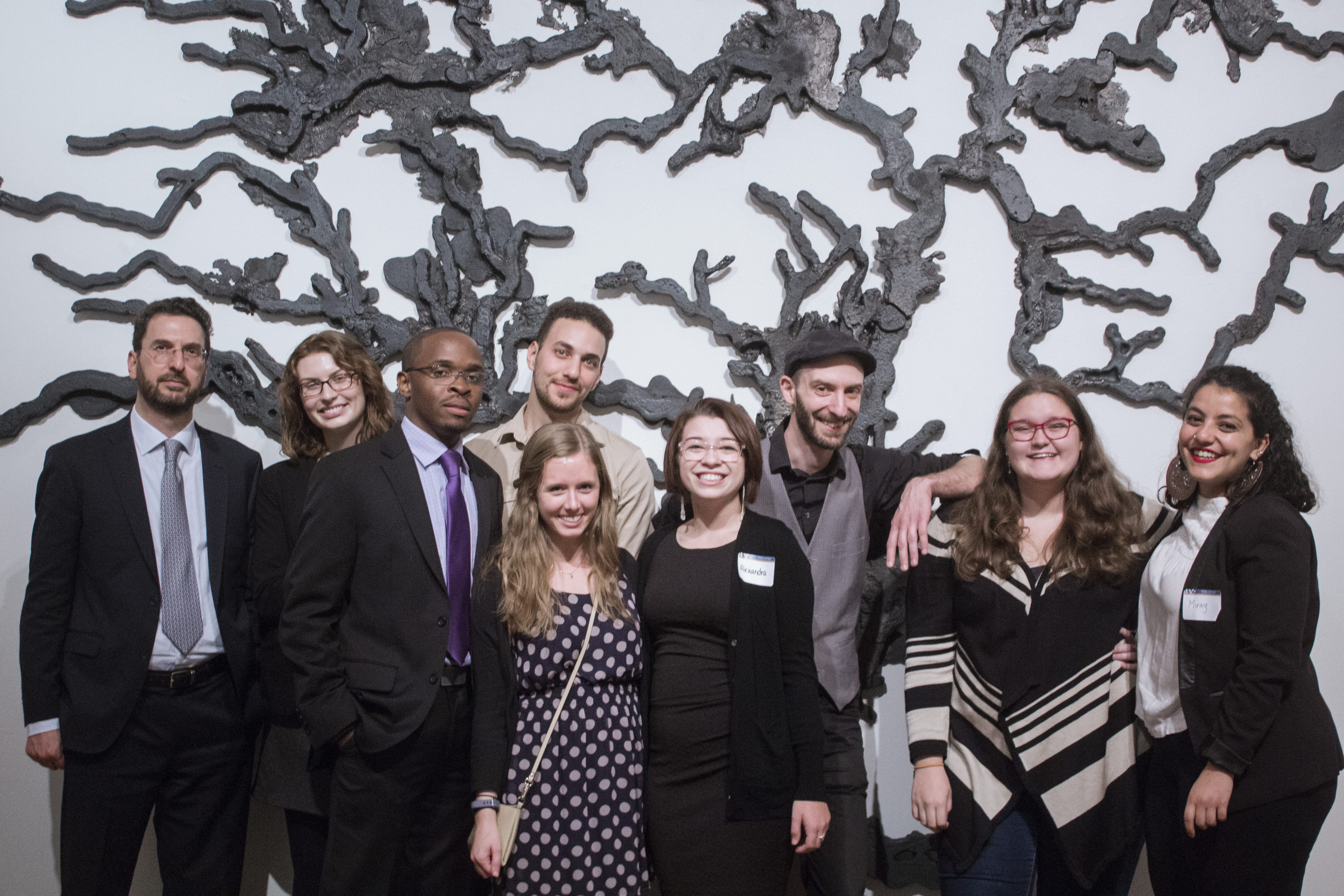
CHGS Team. From left to right: Alejandro Baer, Camille Grey, Wahutu Siguru, Tomas Romano, Brooke Chambers, Alexandra Tiger, Demetrios Vital, Dana Queen, Miray Philips (Missing: Jennifer Hammer)

This month, Jodi Elowitz shares three selections that explore the obsession with Adolf Eichmann in film.

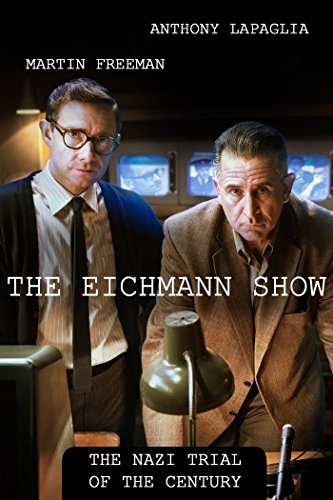
MV5BMjMwNDI5MTM2Ml5BMl5BanBnXkFtZTgwMTc0ODcyNDE@._V1_.jpgAs we watch neo-Nazis and white supremacists on our TV’s and in our news feeds it might be a good time to reacquaint ourselves with the original Nazis and just what happens when we remain silent. On Netflix, we can watch The Eichmann Show (2015), which portrays the decisions made towards filming the 1961 trial of Adolf Eichmann, head of Jewish Affairs, who was responsible for deporting the Jews of Europe to their deaths. In the aftermath of liberation, Eichmann fled Europe and went into hiding in Argentina, until he was kidnapped by Mossad agents and brought to trial in Israel. The Eichmann Show, produced by BBC, stars Martin Freeman as producer, Milton Fruchtman, and Anthony LaPaglia as director, Leo Hurwitz. Both excellent actors have little acting to do since they take a lesser role to the integrated footage from the actual trial. The screen alternates from black and white to color as we move from the actual footage to the representational courtroom. Mainly focused on the arguments between Hurwitz and Fruchtman on the purpose of the filming, we are shown the obsessive nature of both men on a mission. Hurwitz is determined that the camera and the magic of film will compel Eichmann to show us his soul and that we will see a moment of recognition and regret for his crimes. Fruchtman is less concerned with finding Eichmann’s humanity as he is televising the “trial of the century.” He is more focused on the emotional impact of the recounting of the horrors of the Holocaust by the survivors. The trial was important for both playing a role in our understanding of the Holocaust, and because it was the first televised world news event, which would lead to other televised “trials of the century.” The trial is important because it helped us understand that those who died did not go like sheep to the slaughter, and it helped lift the stigma attached to survivors (especially in Israel), as the Nazi crimes were explained in full detail by those who experienced it firsthand.

Eichmann framed within bulletproof glass, could not be moved by the testimony of the survivors or the evidence, and remained stoic throughout. Hurwitz, focuses on using close ups on his face, hoping to show that the crimes he committed were carried out by a human and not a monster, thus lending credibility to Hannah Arendt’s famous banality of evil label. However, what both Hurwitz and the rest of the world would discover is that Eichmann was in no way banal as he went beyond the call of duty in order to get the job done. Eichmann grew in his job and perfected the system that would bring millions to their death, even when the war was lost he did not stop, as he deported 440,000 Hungarian Jews in the summer of 1944. In fact it is Eichmann’s pride in his role, which he told to a reporter in Argentina, that helped establish his whereabouts leading to his capture.

MV5BMjM1MDc1Nzg0NV5BMl5BanBnXkFtZTgwMzU5NzQzOTE@._V1_SY1000_SX692_AL_.jpgAlso on Netflix is, The People vs. Fritz Bauer (2015). Burghardt Klaußner plays German judge and prosecutor, Fritz Bauer, as an embittered and tired man obsessed with finding and bringing Nazis to justice in postwar Germany. The problem is that no one wants him to find the Nazis. This puts him at odds with those who would prefer to forget their complicit or active roles that they played during the Third Reich. Nazis hiding in plain sight were not interested in the possibility of higher ranking officials implicating them upon capture and interrogation. The film opens with Bauer being at the “end of his rope,” as we are introduced to him in the aftermath of what appears to be an attempted suicide, which is used by his colleagues to try and remove him from office. Bauer, who was quietly responsible for the capture of Adolf Eichmann, was also responsible for bringing in many other Nazi’s which led to the Auschwitz trials of 1960’s. The film veers away from the hunt for Eichmann to focus on Bauer’s relation with a fictional member of his staff, Karl Angermann. This character was played by Ronald Zehrfeld who has appeared in two films that also deal with the aftermath of WWII in Germany. Zehrfeld, who has the most expressive eyes, gains our immediate empathy, as the film attempts to navigate Bauer’s and Angermann’s closeted homosexuality. The film tries to draw parallels between the Nazi’s who have found it possible to live in the open after committing their crimes, and homosexuals, who still needed to hide since homosexuality was still considered a crime punishable with long prison sentences.

A third film about Eichmann, The Driver is Red recently premiered at the Twin Cities Film Fest on October 22. The animated short continues the narrative set forth in the two Netflix streaming films, telling the story of the identification and capture of Eichmann known as “Operation Eichmann.” The film takes us through the timeline, with historical references to the rise of Nazism and its leaders, through a series of sketches that appear as if we were watching an artist flesh out scenes in their notebook in real time. The drawings combined with the first person narrative by Zvi Aharoni (voiced by Mark Pinter), the Mossad Agent who led the operation, gives us a unique view into the capture and the overall historic event.

Christopher, an artist, was moved to make the film based on his fear that ordinary American citizens do not know history, and was inspired by a video made a few years ago by Rhonda Fink Whitman. Whitman interviewed college students in Pennsylvania to show how little they knew about the Holocaust in order to show the need for mandatory Holocaust education in the state.

The three films taken together provide a glimpse into the capture and trial of Adolf Eichmann, reminding us of its historic significance and how far Germany has come in dealing with its horrific past. The Eichmann trial is available on Yad Vashem’s YouTube channel, and now would be a good time for many of us to remind ourselves of just how shocking the crimes committed were and how we need to remain vigilant in the face of prejudice and hatred.


Jodi Elowitz is the director of education at the Center for Holocaust and Humanity.

One of the more pressing questions I consistently get asked about genocides and mass atrocity is: What would motivate an individual to kill their neighbor? Understanding the answer holds the key to end genocides and mass atrocity.

In August, former University of Minnesota graduate student, and current Ohio State professor, Hollie Nyseth Brehm’s work was cited in an article in the magazine ScienceNews. In it, Dr. Nyseth-Brehm suggests that the popular belief that your average citizen kills their neighbor because they were ordered to do so often misses the mark. Citing work by Dr. Nyseth Brehm, the author, Bruce Bower, suggests that people who kill during genocide are motivated by patriotism and the need to protect the homeland from perceived enemies. In the case of Rwanda these enemies were Tutsis. Additionally, killings occur sometimes not because of some high ideal of the amorphous notion of nationhood, rather it is motivated by wanting to pilfer property held by the group identified as “Other”Another reason why people kill their neighbors is because their family members or friends have already killed. Thus, people may kill because of peer pressure both within the home and their social circles. Furthermore, Bruce also finds that there are differences in gender when looking at the rate of killing and points out that in Rwanda “Hutu women killed on a much smaller scale that the men did”.

Dr. Nyseth Brehm’s work also highlights the importance of understanding genocide and violence as a micro-level event that is affected and structured by local conditions. One benefit of taking this approach is finding that violence during the Rwandan genocide was often worse in areas where a large number of the population was educated. Here, again, we are confronted with the reality that sometimes education is not the panacea to limiting intensity of violence.


j. Siguru Wahutu is a 2017-2018 visiting fellow at the Berkman Klein Center for Internet and Society at Harvard University and a Ph.D. candidate in the Sociology Department at the University of Minnesota. He  was the 2013-2014 and the 2015 Bernard and Fern Badzin Graduate Fellow in Holocaust and Genocide Studies at the Center for Holocaust and Genocide Studies (University of Minnesota).