George Dalbo was born and raised in Western New York. His first encounters with the Holocaust were as a high school Rotary exchange student in Wels, Austria. After his exchange year, George studied European history and German literature at the University of Buffalo, earning his B.A. Following his degree, George was awarded a joint research-teaching Fulbright grant to Vienna, Austria, where he divided his time studying Austrian and Eastern European history at the University of Vienna and teaching English as a foreign language in a Viennese public school. George moved to Minnesota in 2008, earning his secondary social studies license and M.Ed. from the College of St. Scholastica. George taught middle and high school social studies at several schools within the Twin Cities metro. He developed and continues to teach a comparative genocide studies course for juniors and seniors who attend one of a consortium of private schools from around the country.

Beginning a Ph.D. in Social Studies Education at the University of Minnesota in 2017, George’s research interests center around Holocaust, genocide and human rights education for K-12 students. In addition to his coursework and work supporting social studies licensure candidates through their student teaching earpieces, George works with the Center for Holocaust and Genocide Studies developing curriculum and educational resources. In summer 2018, George will facilitate a weeklong educators workshop, Gender and Genocide: Uncovering Absent Narrative in Mass Violence and Human Rights Education. The workshop will support middle and high school educators in developing and expanding their coverage of absent narratives related to genocide, especially those around gender and sexual orientation.

George with a monkey in Indonesia

“Zooming in” is clearly trending in the field of Holocaust research. Since the onset of the new millennium, scholars have increasingly favored a narrower perspective. The number of sound biographies and prosopographies of “ordinary” men (and women) is growing, as is that of studies on the impact of the Holocaust on local communities. Moreover, the “spatial turn” in Holocaust studies is leading to important new research projects, such as those by Tim Cole, Albert Giordano, and Anne Kelly Knowles, that explore the use of geography for Holocaust studies and further narrow down the scope of research—to a city, a ghetto, a single building block, or a concentration camp.

Many of these recently published studies of applied scale-reduction are not simply examples of traditional local history or traditional biographies. They are “microstudies,” that is, small-scale studies of a specific place, of people in that place, and of their relations and encounters in their everyday lives. More than four decades after Italian historian Carlo Ginzburg published his The Cheese and the Worms (1976, Italian; 1980, English), microhistory has clearly made its entry into the field of Holocaust studies, yet it is remarkable how few of these new microstudies are conceptualized as such. How can microhistory aid in our understanding of the Holocaust? How should we define its methods of research and its rules for data collection and interpretation? How do we deal with the issue of subjective individual experiences? To what extent do our sensibilities as researchers affect the exploration of individuals and their particular stories, rather than the general historical events? Most scholars agree that macroprocesses translate into experiences on the microlevel. There is also general agreement that studying the Holocaust from a grassroots perspective may be beneficial to our knowledge of the Holocaust. Yet reflection on microhistory as a research method or perspective is minimal, and specific questions that microhistory raises for Holocaust research are barely addressed.
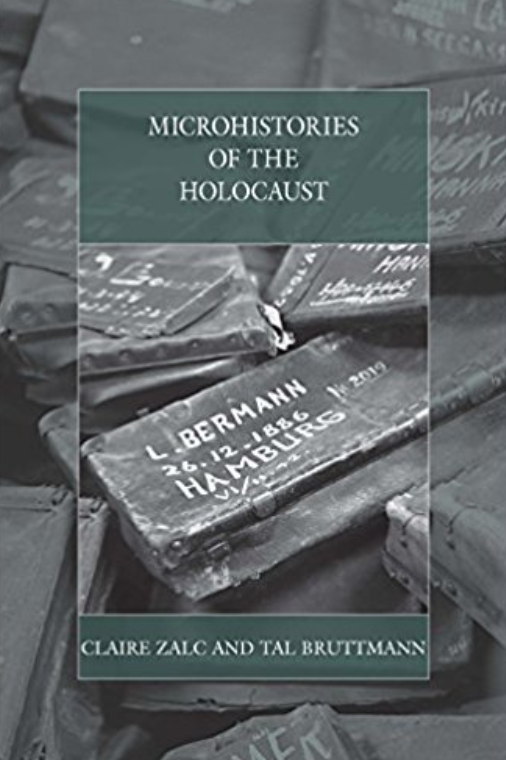
It is the merit of Tal Bruttmann and Claire Zalc to bring these problems to our attention in Microhistories of the Holocaust, a volume that appeared in 2016. Both editors are historians with a long track record in microhistorical research of the Holocaust in France. In their introduction they argue that their volume is meant to show the historiographical implications and relevance of the “microhistorical turn” for the field of Holocaust studies. According to Bruttmann and Zalc, microhistory is about changing the scale of analysis and, by doing so, laying bare the complexity and diversity of the Holocaust. What it all comes down to is “deconstruction” of monolithic explanations and “distortion” of the grand narrative.

This, however, does not always come across in the essays by the contributing authors. Writing on Jewish reactions to the Holocaust in various German cities (and Vienna), Wolf Gruner, for example, asserts that his work should be seen as complementary and enriching (p. 211): in their contribution Tim Cole and Alberto Giordano cautiously state that their study of the ghetto of Budapest challenges the general idea that ghettoization was all about physical segregation (p. 114). These two case studies (and, for that matter, all seventeen case studies collected in this volume) refine our image of the Holocaust: they are more about the condensing and sharpening of the pixels than about deconstructing the larger picture.

The volume is composed of three parts, each organized around one theme: 1) the scales of analysis; 2) victims and perpetrators; and 3) sources between testimonies and archives. A closer look at the individual contributions indicates that this division is far from watertight as nearly all of the contributions touch, more or less explicitly, upon the three themes and the volume could thus easily have been ordered differently. The highly interesting study of Nicolas Mariot and Claire Zalc, on persecution trajectories of Jews from the French city of Lens, for example, is much more about methodology and the integration of quantitative analysis in a microhistorical study—and thus on sources—than on scales of analysis. The same is true for other contributions, such as that by Jan Grabowski on the complicity of Polish gentiles during the Holocaust.

In spite of this, the individual contributions are well worth reading and together they are a clear indication of the broad spectrum and variety of microhistorical approaches. Some of the contributors concentrate on the category of victims and paint intimate portraits of individual Jews (Christoph Kreutzmüller, for example, on the escape of the Jewish German Richard Frank) or Jewish families and their rescue networks (Nicolas Mariot and Claire Zalc, on the French Dawidowicz family, but also Melissa Jane Taylor, on the Austrian Katz family). Others, like Leon Saltiel, Jeffrey Wallen, Tim Cole, and Alberto Giordano, choose a well-defined place in time and space and meticulously analyze how relations between Jews and non-Jews evolved in or around these places (the Jewish cemetery in Thessaloniki, the ghetto of Budapest, the city of Christianstadt). Again others, like Tal Bruttmann, Markus Roth, Jan Grabowski, Thomas Frydel, Vladimir Solonari, and Alexandru Muraru, look at bleaker moments in these relations: their contributions tell the story of local gentiles turning into looters, extorters, and murderers of their Jewish neighbors—in France, Poland, Transnistria, and Romania.

Crisscrossing the map of Nazi Europe, this volume presents a kaleidoscopic view of the Holocaust and, more specifically, of individual reactions to persecution and genocide. The contributions underline the extra value of microhistory, particularly for the study of relations and interactions between Jews and their non-Jewish fellow citizens. More generally, the volume demonstrates that the traditional tripartite division into victims, perpetrators, and bystanders is at least questionable. In most of the presented microstudies bystanders are absent, if not nonexistent.

As a final note, a concluding chapter by the editors would have been welcome: for conclusions and comparisons, but also for dealing with larger, paradigmatic questions related to the genre of microhistory. How do we get from the singular case to the broader picture? In other words, how do we connect a microcase to macrocontext? Answering these and similar questions was not in the purview of this volume, however. The editors’ main aim was to show through their collection of microstudies the complexity and diversity of the Holocaust. In this, they have succeeded admirably.


*This review was originally published on H-Genocide.
Geraldien von Frijtag. Review of Zalc, Claire; Bruttmann, Tal, eds., Microhistories of the Holocaust. H-Genocide, H-Net Reviews. February, 2018. URL: http://www.h-net.org/reviews/showrev.php?id=50222

Geraldien von Frijtag Drabbe Künzel is Associate Professor at the Department of Political History, Utrecht University, the Netherlands. She has published widely on WWII, the Holocaust and Dutch reactions to Nazi occupation policy. She is this year’s senior fellow in residence of the USC Shoah Foundation Center for Advanced Genocide Research, Los Angeles.
Monuments, plaques, statues, names on streets or buildings have become symbolic battlegrounds of different historical interpretations and often also irreconcilable values. There are representations of the past, which help us coming to terms with the legacies of violence, while others deepen divisions further.

These fields of dispute are not restricted to the debates over removal of Confederate monuments in the US South. Minnesota recently reverted Lake Calhoun to its original Dakota name Bde Maka Ska, opting for a name that honors the first inhabitants that settled along its shores instead of the former Vice President infamous for his support of slavery. A story from last Friday’s Star Tribune highlights the important changes taking place at the Minnesota Historical Society. Once deeply rooted in telling the white colonial story, it now embraces a fuller, and thus also more unsettling, picture of the state’s history.

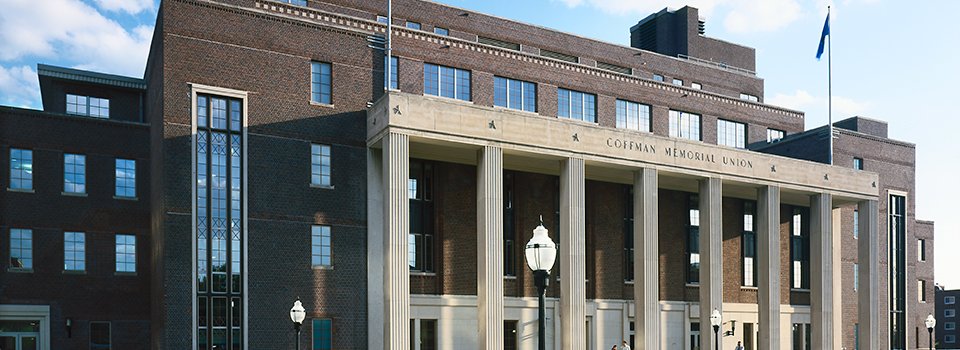
Coffman Memorial Union

Here on campus, the Minnesota Student Association, the official undergraduate student government, is working on a resolution calling for a change to Coffman Memorial Union’s name after it was revealed that Lotus Coffman, a former University President, had supported anti-Semitic and racist segregation policies on campus. This dark side of the University of Minnesota’s history was a focal point of last year’s A Campus Divided exhibit, co-curated by Prof. Riv-Ellen Prell.

The US, the State of Minnesota and our University can no longer look back to their pasts and tell a heroic, one-sided or self-congratulatory story. Its constituents –citizens, students-, include those who were for long invisibilized in such accounts, and they demand representation. As a result, institutions must confront their misdeeds and shameful incidents in order to establish or maintain legitimacy. Dealing with a damaged self-image is not “erasing history,” but it is rather an opportunity to honestly facing and meaningfully engaging with it. Especially, when such revisiting of the past goes beyond purely symbolic gestures and marks the beginning of new negotiations about present conditions. Robert Katz, an employee of the University of Minnesota libraries, stated this clearly in an October 2017 Star Tribune op-ed: “the true value of history is not what it teaches us about the past, but how it informs our judgments in the present.”


Alejandro Baer is Associate Professor of Sociology and Director of the Center for Holocaust and Genocide Studies at the University of Minnesota.

The academic field of genocide took a comparative turn in the 1980s, thus setting the stage for its modern disciplinary character. Contemporary genocide studies is characterized by a growing overlap between scholarly and advocacy efforts, especially seen through a modern emphasis on preventing future genocide by flagging gross violations of human rights as they happen in real-time. As another outgrowth of this comparative turn, the historical record—particularly during the twentieth century—was re-examined. This “second look” has resulted in several previously overlooked cases, including the 1930s Ukrainian Holodomor (“death by hunger”), gaining increased research visibility. Ukrainian independence in 1991 resulted in the de-classification of previously hidden governmental records of this Soviet forced-famine under Joseph Stalin, and slow-but-steady translations of this evidence continues to allow for wider international research accessibility.

The seizure of Ukraine’s Crimean peninsula by the Russian Federation in 2014 and the ensuing outbreak of armed conflict by Russian-backed separatists in eastern Ukraine have added urgency to understanding the Holodomor and its impact on modern Ukrainian-Russian relations. While 20th century Ukrainian history is marred with an almost unimaginable series of tragedies, from Nazi occupation to the Chernobyl nuclear disaster, the Holodomor remains a key catastrophic watershed in the eyes of many Ukrainians. In short, the Holodomor refers to the human-caused famine under Stalin’s forced agricultural policies which claimed millions of lives in a single calendar year. Determining the precise number of casualties is impossible due to poor state-level record-keeping in Soviet Ukraine and other challenges of historical reconstruction; however, most estimates range between 2.5 to 7 million victims. At its essence, the case for the Holodomor as an act of genocide stresses that induced starvation was used as a weapon to specifically target Ukrainians for destruction in response to the political aspirations of the Ukrainian people for an independent nation.

Given that the death toll and displacement flows associated with the contemporary conflict are more likely to be the result of military artillery than famine, why do some modern Ukrainians frequently mention the historical Holodomor tragedy as leading in a direct line to the present violence? While any such answers are complicated, responses to this question frequently highlight commonalities of violence motivations and actors, even as the methods of violence have shifted. Pointing to the Soviet Russification policies that accompanied the Holodomor deaths, some Ukrainians point to the Holodomor as historical confirmation that Russia—past and present—is threatened by an independent, prosperous, and democratic Ukraine. Ukraine’s daily Kyiv Post also reported that leaked diplomatic cables indicate Russian pressure on Ukraine’s neighbors not to officially recognize the Holodomor as genocide.

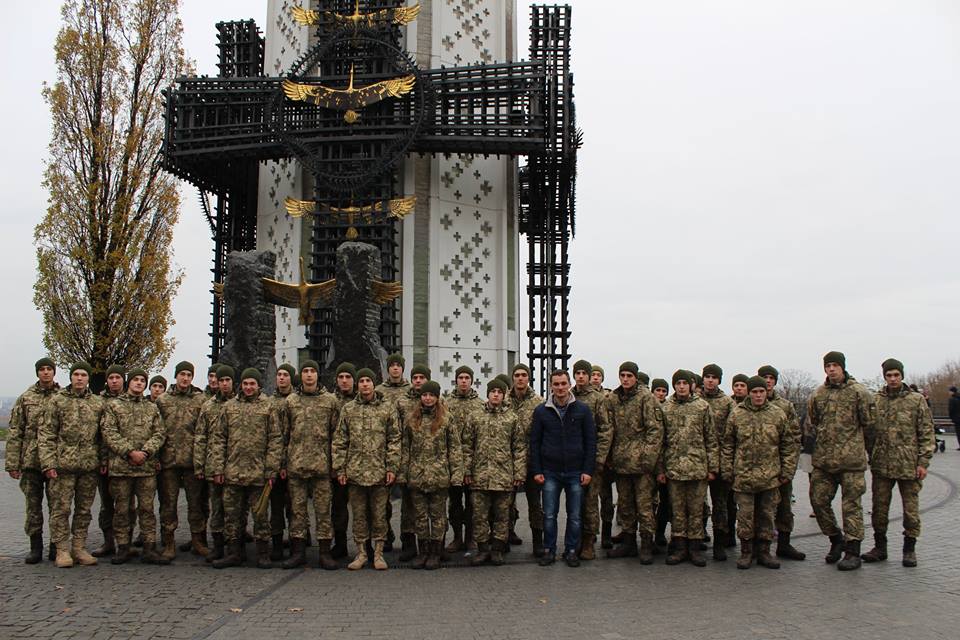
Picture 1: Cadets from the Military Institute of Telecommunications and Information Visit the National Museum “Memorial to Holodomor Victims,” May 2017. (source)

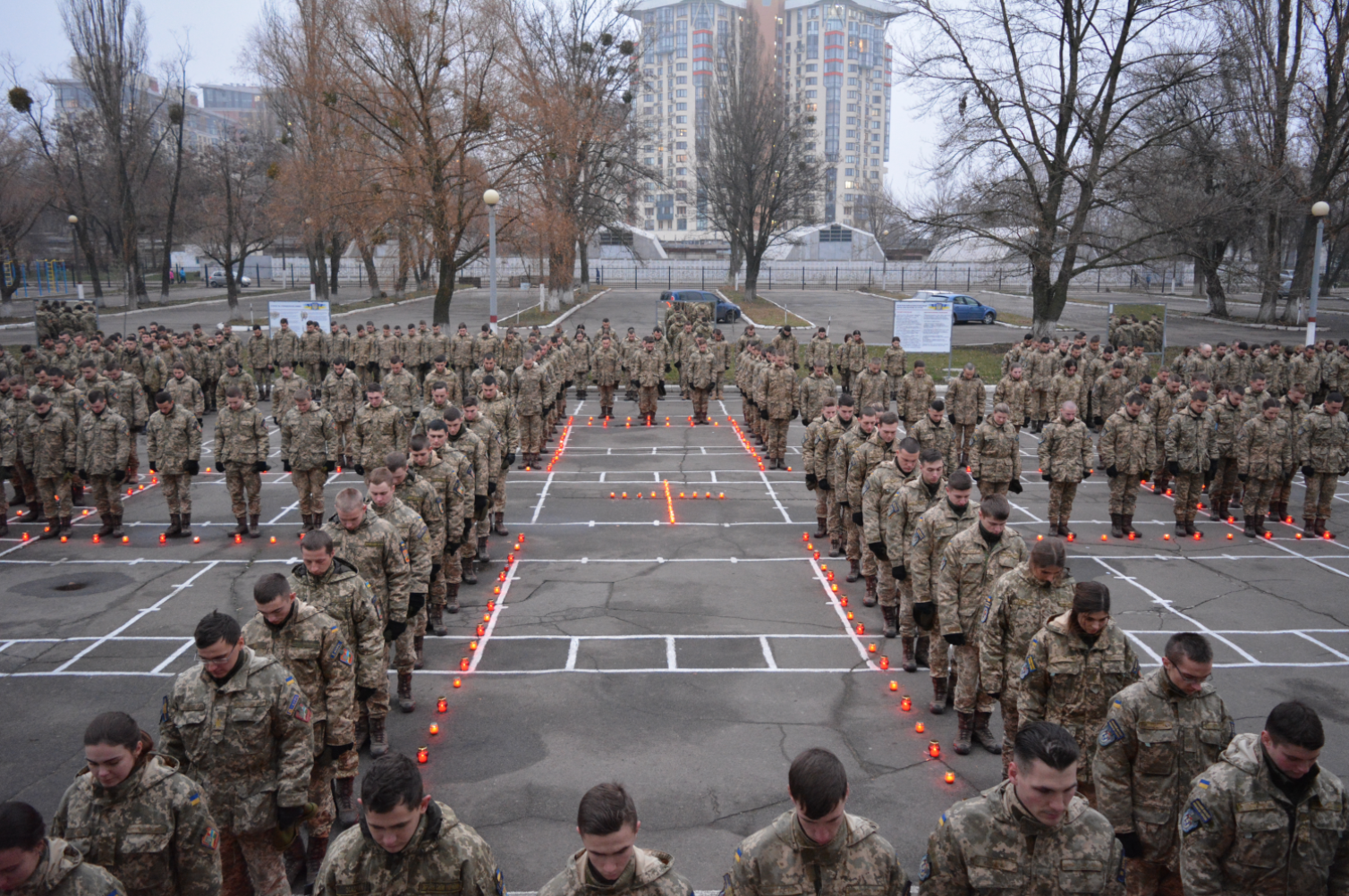
These symbolic battles remind of the colloquialism often attributed to Mark Twain that while the past may not repeat, it can certainly rhyme. A series of visits by uniformed cadets to the National Museum “Memorial to Holodomor Victims,” including the Military Institute of Telecommunications and Information (picture 1), as well as memorialization activities from Ukraine’s military institutes themselves (e.g., picture 2), is but one indication of Ukrainian decision-makers connecting memories of the past to realities of the present. Although some scholars warn that drawing direct historical analogies can be fraught with oversimplifications, the current political moment in Ukraine invites us to consider not only whether the past repeats itself but also how sociopolitical dynamics can be driven in positive or negative ways by the belief that history is repeating itself. A scholarly approach that addresses how perceptions of current national crises and historical legacies of genocide overlap, interact, and influence one another remains needed. Ukraine offers a fascinating analytic case for scholars who seek to understand this overlap, as well as an urgent moral dilemma for all working in mass violence prevention.

Picture 2: Holodomor Memorialization Event at Military Institute of the Taras Shevchenko National University of Kyiv, November 2017. (source)

Kristina Hook is doctoral candidate in anthropology and peace studies at the University of Notre Dame, and she is a Fellow with the National Science Foundation’s Graduate Research Fellowship Program (NSF-GRFP). For her dissertation, Kristina is conducting fieldwork in Ukraine on the violence dynamics of the Soviet-era Holodomor mass atrocities and how this legacy continues to ripple across modern Ukrainian society, funded through a USAID/Notre Dame Global Development Fellowship.

No, I am not talking about Bernie Sanders’ revolution, I am talking about the one and only revolution that ever happened in American history.

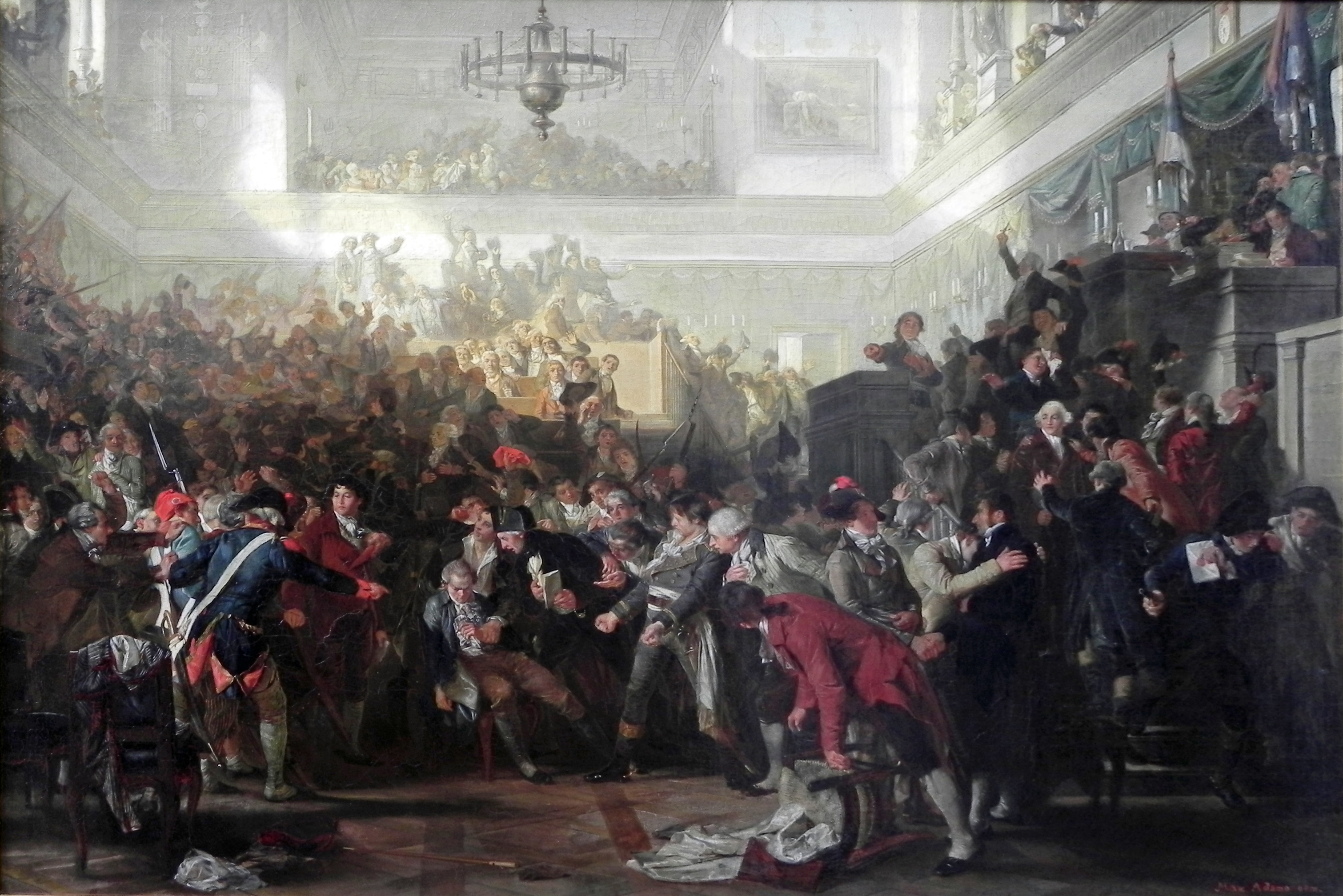
But let me start by taking a step back. I always felt that the most exceptional thing about the United States was the fact that its political institutions have been virtually the same for over 220 years. This appears even more unique when you take into account that throughout this entire time period, democratic voting has been the default mechanism to put people in and out of office. There are some exceptions of course, such as the Civil War and four presidential assassinations. But still, compared with, let’s say, France, which is on its fifth republic since the French revolution and went through two Napoleonic empires and several more revolutions along the way, the United States always looked like the long-standing haven of democratic solidity, pragmatism and reliability. It looked even better from the perspective of my home country, Germany, with its mix of monstrous Reichs and numerous attempts at democracy that failed until finally the United States and its allies helped out after WWII.

There is always room for improvement – tumultuous session of delegates during the first French republic in 1794, which since then has been followed by four more.

I used to remind my fellow Germans of this simple fact when they would blast America for being a country with a lack of culture and history. I think I used words like “mature” and “time-tested” when I came to the defense of the Americans and their political system. Well yes, I did. Now I wonder if I had it all wrong.

I wonder if having the same system over such a long time produces complacency rather than maturity. Maybe occasional system breakdowns and fresh starts are necessary to prevent societies from getting carried away with their national pride. Today, the chest-beating in America about its greatness, glorious history and unbeatable military is more widespread, louder, and frankly more disgusting, than at any time I can remember. On a more subtle level, I was recently struck by question 69 in the US Citizenship test that asks: Who is the “father” of our country? This is the kind of question I would expect if I applied for citizenship in North Korea but not in a western democracy. If you watch the YouTube presentation of the test questions, it’s even more disturbing since you don’t hear the quotation marks that U.S. Citizen and Immigrations Services, to its credit, has put around father of our country in that question.

Assigning father status to 285 year-old George Washington doesn’t have any legal consequences today. Assigning sacred status to a constitution that is not much younger but still in use does. The fuzzy syntax of the 2nd amendment, for example, dating from 1789 has led to wildly different interpretations. Depending on whether you apply the grammar rules of the 18th or the 21st century, its emphasis is on a state’s right to resist the federal government or on an individual’s right to bear arms for any occasion. I can’t help but think that this linguistic dilemma would have been solved long ago had the US gone through as many system changes and constitutional do-overs as other, less exceptional countries. How about leaving out the guns and just say, “All citizens shall have the right to resist any person seeking to abolish this constitutional order, if no other remedy is available.” Nothing exotic, pretty straightforward 20th century grammar and already in use elsewhere. This sentence is actually taken from article 20 of the current German Grundgesetz, the constitution drafted after WWII designed to forever prevent another Führer to come to or stay in power. So far the Grundgesetz has achieved its goal. It should be noted that it was implemented with the sponsorship and strong support of what was then the United States government. Based on the latest State of the Union speech it seems likely that in this country we will be stuck with the ambiguities of 18th century language for a while: “We are appointing judges who will interpret the Constitution as written.” Oh dear God!

Addendum: Only 2 days after this article was posted 17 people were killed during a shooting at a high school in Florida. The semiautomatic rifle used in the shooting was acquired by the 19-year old alleged shooter in accordance with Florida gun laws that were presumably inspired by “interpreting the Constitution as written.”


Henning Schroeder is the former dean and vice provost of graduate education at the University of Minnesota. As a faculty member in the College of Pharmacy his research has focused on antioxidant genes and cardiovascular disease, despite a lifelong passion for history and politics.

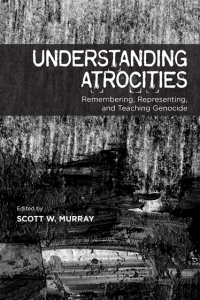
As a middle and high school history and social studies teacher, I have taught about the Holocaust and other genocides for many years. At the beginning of my career, students in my classes would have encountered only the Holocaust, but, recently, I have broadened my curriculum to include many additional examples and aspects of genocide. Despite growing efforts to expand the field of genocide education, there is still a gulf between academic scholarship and curriculum and practice within secondary classrooms. Scholarship, often inaccessible for secondary educators, is slow to make its way into course content. Understanding Atrocities: Remembering, Representing, and Teaching Genocide (2017) is the latest among recent efforts to bridge this gap and recognize the role of educators at all levels and community organizations in conversations about genocide education. This collection expands the conversation to include many voices, especially concerning the teaching of genocides other than, or in addition to, the Holocaust.
Understanding Atrocities is an edited volume that grew out of an interdisciplinary conference featuring academic research in genocide studies alongside the work of secondary educators and community organizations. The work fits within the broad mandate for genocide education summarized by the volume’s editor, Scott Murray, in his introduction: “One challenge we face today, therefore, is to find ways of making this immense, complex, ever-expanding body of scholarship accessible to non-academic audiences.” From chapters on proto-genocide in Sri Lanka (Christopher Powell and Amarnath Amarasingam) to new work examining theatrical representations of mass violence (Donia Mounsef), Understanding Atrocities explores examples and aspects of both the familiar and hidden genocides and atrocities of the twentieth and twenty-first centuries.

Of particular interest for educators, and those scholars working on issues within genocide education, are chapters on the benefits and challenges of such education, specifically one examining the Armenian genocide (Raffi Sarkissian), as well as a chapter on developing an undergraduate course around representations of war and genocide in children’s literature (Sarah Minslow). Both chapters highlight the need and possibilities to expand genocide education beyond its traditional boundaries. Minslow thoughtfully weaves discussions of rationale, content, and pedagogy while describing a course on war and genocide in children’s literature. Although specifically addressing experiences in teaching an undergraduate-level course, Minslow’s chapter provides valuable insights derived from her own experience, which would prove equally applicable to K-12 teachers. The chapter adds to the growing body of work on teaching genocide via young adult literature, charging that children’s literature can and should take up themes of violence and genocide. Sarkissian’s chapter, which begins with some of the tensions that emerged as the Toronto public schools expanded their secondary curriculum to include the Armenian genocide, touches on important discussions of representation and denial, as well as the overall benefits of studying genocides comparatively.

Additional chapters discuss a 1951 petition charging the United States of genocide against African Americans (Steven Lennard Jacobs) and an exploration of the legacy of settler colonialism through an examination of media coverage of the housing crisis among First Nations in northern Ontario (Travis Hay, Kristin Burnett, and Lori Chambers). These chapters offer poignant reminders of the social and structural white supremacy in the United States and Canada, both historically and presently. While both nations have dealt with their similar pasts in increasingly divergent ways, the two case studies highlight the shared difficulties of coming to terms with past atrocities and their legacies. These contributions also trouble the notion of striving for social change without first acknowledging and addressing past and present injustices.

Despite what might at first glance appear to be a disparate collection of topics and approaches, it is precisely the range of topics that make this work a welcome addition to the field. Understanding Atrocities is a highly approachable work, especially for anyone interested in expanding their knowledge of genocide and mass violence. The book is also freely available for download from the publisher’s website, making the work doubly accessible for non-academic audiences.

Understanding Atrocities is available for free download from the publisher’s website.


George Dalbo is a Ph.D. student in Social Studies Education at the University of Minnesota with research interests in Holocaust, comparative genocide, and human rights education in secondary schools. Previously, he was a middle and high school social studies teacher, having taught every grade from 5th-12th in public, charter, and independent schools in Minnesota, as well as two years at an international school in Vienna, Austria.

Imagine a trial rocking a nation: accusations of collusion with a hated enemy, wealthy and influential elites taking sides, an entire country riveted by headlines. The trial would fundamentally alter the country; both changing how citizens viewed each other, the military and other national institutions.

No, this is not related to the current investigation into President Trump’s alleged ties. While the Dreyfus Affair, as it would become known, happened more than a century ago, there are more than a few passing similarities between the events of today and those from the 1890’s.

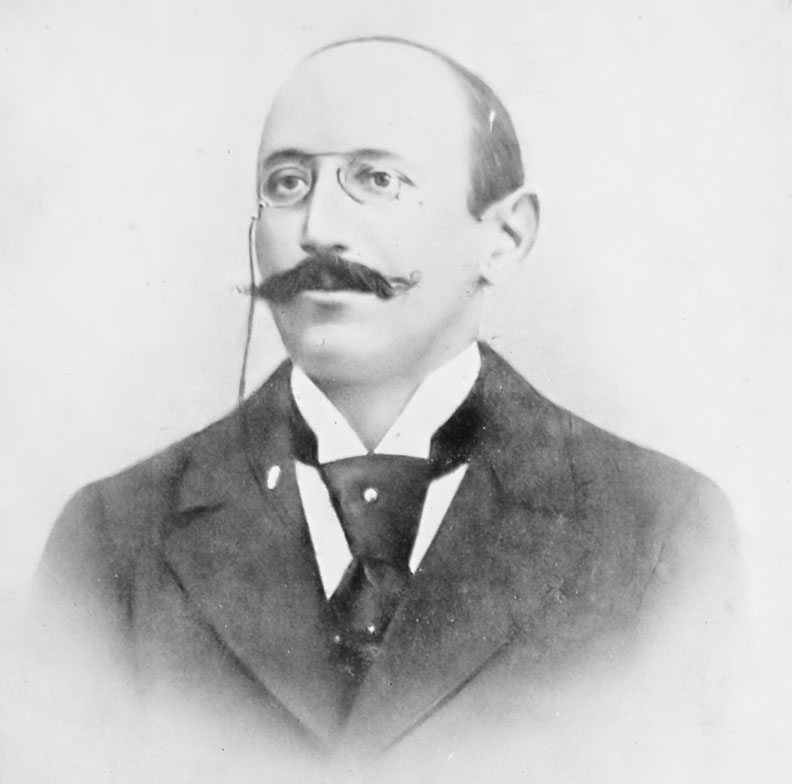
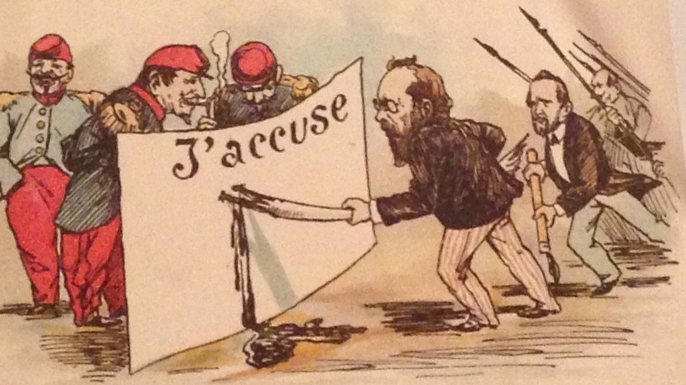
In 1894, a young army officer, Alfred Dreyfus, was accused of selling military plans to France’s mortal enemy, Germany. In a highly publicized trial, Dreyfus was convicted of treason and sentenced to life on Devil’s Island, France’s military prison island in the Caribbean. Soon after Dreyfus’ family began appealing the decision. The case split the country; conservative pro-army factions clashed openly with intellectual pro-republican leaders. In January 1898, Émile Zola published J’accuse…!, a rallying cry of support exonerating Dreyfus. Eventually cleared of his treason conviction, Dreyfus was instead sentenced to a 10 years hard labor, although that too was commuted. It wasn’t until 1906 that Dreyfus was officially cleared of his conviction.

ask-dreyfus-affair-Alfred_Dreyfus-E.jpeg

The events of the Dreyfus Affair were seen as a test for the French Third Republic – freeing Dreyfus was seen as essential for its survival and the continuation of its ideals. It also exposed ugly realities of French society; anti-Semitic rallies were held across the country due to Dreyfus’ Jewish heritage. Anti-Semitism had been growing in France for decades, especially among the military. The Dreyfus Affair would lead Austrian journalist Theodor Herzl, the father of modern Zionism, to abandon the hope for integration of Jews in European societies and call for the establishment of a Jewish homeland in Israel.

The Dreyfus Affair highlighted a disconnect between the ideals of a nation and the beliefs of its citizens. Is it really so different in the United States? The troubling events in Charlottesville over the summer, the rise in anti-Semitic propaganda across our colleges and even the rhetoric of our President harken back to French society of 120 years ago. Coupled with allegations of collusion with the Russian government, the political climate of today should already have us looking back at the forgotten Dreyfus Affairs.

AlfredDreyfus.jpg
Alfred Dreyfus

The similarities between the Dreyfus Affair and today’s political sagas should be apparent: the same divide between liberal and conservative elements exist, the suspicions of foreign corruption and the questions of the state’s survivability are as eerily present today as they were more than a century ago. However, it’s the social impacts of today’s events that should raise the most red flags. The Dreyfus Affair brought long held anti-Semitic public sentiment to the surface, forever altering both French and global history, strengthened by a conservative, nationalist movement. Today, the rise of the Alt Right in the U.S. has made it clear that anti-Semitism, racism and xenophobia are alive and well, empowered by an administration that responds to these groups with the lightest of touches.

While the Dreyfus Affair can be seen as a victory for the French state, the same cannot be said for the idea of assimilation for its Jews. When Herzl launched the Zionist movement, it officially rejected the notion that Jews could live peacefully in Europe next to their non-Jewish neighbors. A century later, can anti-Semitism be overcome? As Adam Gopnik writes, the Dreyfus Affair can be seen as the rejection of a cosmopolitan citizenship, but in a country that prides itself on being a melting pot, can the U.S. learn anything from an obscure French event?


Joe Eggers is a Research Associate with the Center for Holocaust and Genocide Studies. He is a 2016 graduate of the University of Minnesota, with a master’s thesis that explores cultural genocide in indigenous residential schools.

Was Hitler a bully?   Evan Selinger, professor of philosophy at the Rochester Institute of Technology, shared in an essay in Slate how his 5-year-old daughter’s teacher compared the “worst criminal in history to a playground tormentor.” Perhaps an extreme example. Yet to understand this increasingly common trend to educate students about “Bully Hitler,” one must recognize two developments that are currently shaping the way teachers, curriculum writers, and educational institutions in the United States are educating young people about the Holocaust. First, there is a universalization of the Holocaust in an attempt to make its study relevant to students’ lived experiences and to provide them with overt moral and ethical lessons in the form of social-emotional and character education. Second, increasingly, many state legislatures have mandated Holocaust education, often suggesting a study in the form of character education to younger students, some as young as elementary school (5-10 years old). New Jersey’s Commission on Holocaust Education, the entity responsible for ensuring schools meet the state’s Holocaust-education mandate, reminds educators that, “the law indicates that issues of bias, prejudice and bigotry, including bullying through the teaching of the Holocaust and genocide, shall be included for all children from K-12th grade.” Thus, increasingly, students are taught to link the Holocaust with bullying and pushed to contemplate the choices they might have made during the Holocaust, as well as the choices they might make in their school’s cafeterias, hallways, and playgrounds as bullies, bystanders, or upstanders.

With Holocaust educational mandates, like those in New Jersey, the question of whether or not five-year-olds should learn about the Holocaust has become instead, how should we teach five-year-olds about the Holocaust? Following such a shift, bullying becomes a popular, relatable metaphor, serving the dual purpose of meeting mandates and educating students about bullying (also increasingly mandated by state law). Some educators, such as Harriet Sepinwall, a professor of education and Holocaust studies, contend that young students “became more empathetic, more accepting of diversity, and more willing to act when someone was being treated unfairly, as a result of learning about the Holocaust.” Such approaches have been called into question as serving neither the objectives nor imperatives of educating students about the Holocaust. Samuel Totten, a scholar of genocide education, voicing objections to these trends, claims that Holocaust education “when applied to the teaching of very young children […] implies nothing more than an attempt to develop personal qualities like tolerance and respect for difference […] It does not involve teaching the history of the Holocaust per se.” Indeed, critics of such social-emotional approaches often focus on the de-historicization and de-contextualization of Holocaust narratives in American schools.

Barbara Coloroso, an expert in student behavior and issues of bullying, has drawn perhaps the clearest connections between bullying and genocide. In her book, Extraordinary Evil: A Brief History of Genocide, Coloroso writes: “It [genocide] is the most extreme form of bullying – a far too common behavior that is learned in childhood and rooted in contempt for another human being who has been deemed to be, by the bully and his or her accomplices, worthless, inferior, and undeserving of respect. The progression from taunting to hacking a child to death is not a great leap but actually a short walk.” Coloroso’s work has been criticized for constructing an overly simplistic (de-historicized) view of genocide, yet others have praised the work, suggesting it for parents and educators wishing to teach young people about bullying.

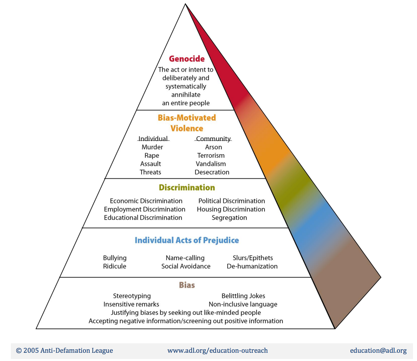
The Anti-Defamation League (ADL) has also drawn connections between bullying and the Holocaust and genocide. The ADL’s Pyramid of Hate places bullying within a tiered framework of escalating behaviors that could, if left unchecked, ultimately lead to genocide. One student, reflecting on their experiences learning about the Holocaust, described their understanding of the connections between bullying and the Holocaust in a college-entrance essay: “The Pyramid of Hate starts on the bottom with non-inclusive phrases and jokes and escalates into more serious acts of hate like violence and can eventually lead to genocide or total annihilation of a kind of people, which is what happened in the Holocaust. Hitler and his followers created a genocide of the Jews and Gypsies in Europe. I never before connected phrases like, “that’s gay” to genocide, but now I can’t forget how one leads to the other.” Such statements, while highlighting the result of trends towards a de-historicization and de-contextualization of the Holocaust, reflect what many parents and educators would express as desirable outcomes of Holocaust education, such as tolerance for difference and awareness of prejudice.

Picture1.png

Critics have also questioned the coupling of the Holocaust and anti-bullying lessons as not effectively addressing schoolyard bullying. School psychologist and bullying expert Izzy Kalman contends that such educational programs often unnecessarily exaggerate bullying for those students being bullied. He writes that the “effect of the comparison is to make children believe that being bullied is the absolutely most horrific experience imaginable.” Kalman’s rather blunt assessment of such curricula is that it catastrophizes bullying and trivializes the Holocaust.

Holocaust education has emerged as a standard in school curricula around the country. Increasingly its study, somewhat removed from the context of history (and the content of history class), has been called upon to provide new generations of students with just enough fodder to contemplate their own individual choices. What is clear, is that little research exists examining the effects of linking the Holocaust to anti-bullying in elementary and secondary curriculum, despite the growing popularity of the “Bully Hitler” metaphor.


George Dalbo is a Ph.D. student in Social Studies Education at the University of Minnesota with research interests in Holocaust, comparative genocide, and human rights education in secondary schools. Previously, he was a middle and high school social studies teacher, having taught every grade from 5th-12th in public, charter, and independent schools in Minnesota, as well as two years at an international school in Vienna, Austria.

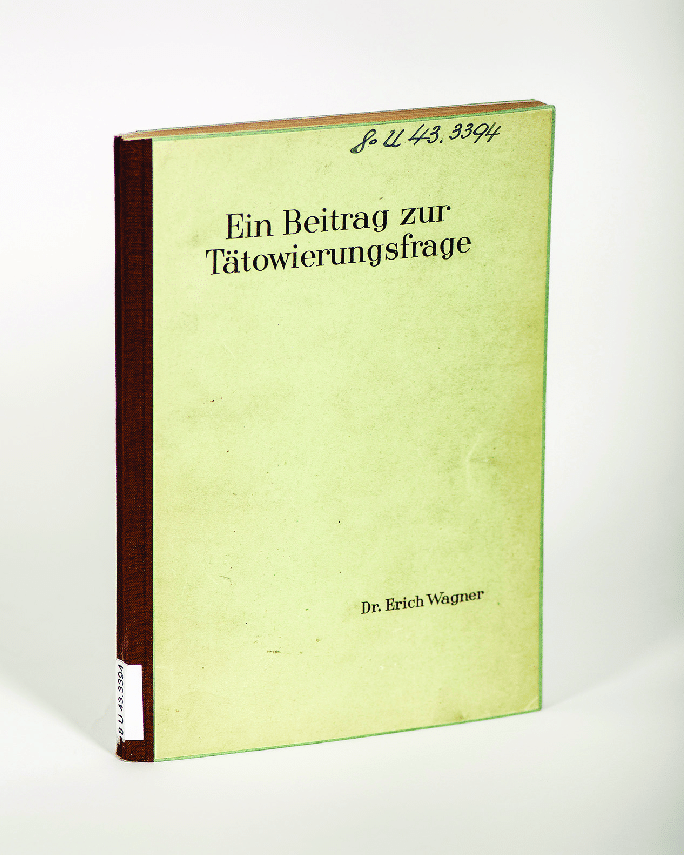
The Spanish daily El País published a shocking story last week about a rare and controversial document from the Buchenwald Nazi Concentration Camp. A PhD Thesis done by a Nazi camp doctor, Erich Wagner, titled On the Subject of Tattoos, that analyzes the tattoos of the camp’s earliest prisoners, many of whom were Jews arrested during Kristallnacht.

Wagner “meticulously catalogued the race, nationality, criminal past and education” of those sent to Buchenwald in an attempt to connect tattoos with criminal tendencies – an approach, needless to say, with no scientific merit.

In all, more than 800 prisoners were questioned by Wagner, and their tattoos photographed and examined. Wagner was infamous among those at Buchenwald. One survivor noted that all the patients the doctor operated on would die, likely so he could “harvest” tattoos of his victims.” Like the more infamous “Witch of Buchenwald,” Ilse Koch, Wagner displayed a disturbing fascination with the skin of his victims, one that went beyond scientific interest.

Wagner was sent to Buchenwald in 1939 as a member of the Waffen-SS.  A dissertation committee at the University of Jena considered Wagner’s scholarly contribution in On the Subject of Tattoos as “very good”. After the war, Wagner escaped prosecution before committing suicide in 1959. In 1957, experts found that his work had not only broken every possible principle of research ethics, but also that most of the interviews and the writing had been done by a Buchenwald prisoner, Paul Grünwald, under Wagner’s orders.

On the Subject of Tattoos has found its way to sale in the US. It is available at USM Books, a Rapid City, SD company that specializes in the sale of rare and controversial material relating to World War II.

The original text recently sold for an undisclosed amount. A translated copy is in the US Holocaust Memorial Museum’s library.


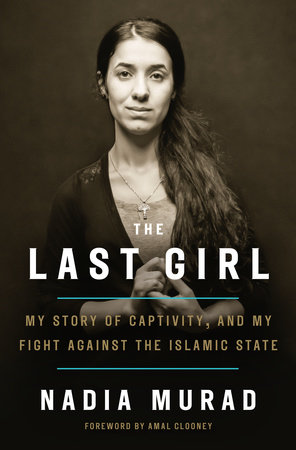
Nadia dreamed of either becoming a history teacher or opening a hair salon in Kocho, Iraq – a small village of farmers and shepherds in southern Sinjar. In her book, The Last Girl: My Story of Captivity, and My Fight Against the Islamic State (2017), Nadia talks about growing up with her many brothers and sisters amidst a tight-knit Yazidi community. Central to Yazidi identity is the history of the seventy-three past firmans (to mean genocide) committed against the community by outside forces. Nadia, along with others Yazidis, learned about this history but never thought she herself would soon survive a genocide against her own religious community. Nadia writes, “…these stories of persecution were so intertwined with who we were that they might as well have been holy stories. I knew that the religion lived in the men and women who had been born to preserve it, and that I was one of them.” To Nadia, however, the previous genocides belonged to a distant past. The ongoing violence in Iraq and neighboring Syria also did not feel like part of the contemporary plight of Yazidis – until one day ISIS began to surround Kocho and the Iraqi Kurdish peshmerga forces fled, leaving them unprotected.

On August 3rd, 2014, ISIS besieged Kocho. Within two weeks, ISIS ordered villagers to congregate in the local schoolyard, giving the local mukhtar (chief) an option to determine whether the community would convert to Islam. Upon his refusal, all the men were driven to a nearby site to be executed. Boys were abducted for indoctrination in ISIS training camps, women and girls were forced into ISIS’ sex slave trade, and elderly women deemed not fit for the trade were executed. Nadia was held in brutal captivity, where she was repeatedly raped and beaten, sold and resold to various militants, and forcibly converted to Islam. The first time Nadia tried to escape, she was gang raped as punishment. The second time she was presented with an opportunity to flee, she fearfully walked out of the unlocked front door into the streets of Mosul and the dark of the night. Realizing she must seek shelter, she knocked on the door of a random house. Luckily, a Sunni family greeted her, agreed to take her in, and even helped smuggle her into Kurdistan. While she feels immense gratitude and recognizes the sacrifices of the family that helped her, she also felt betrayed by the thousands of Sunni families who remained bystanders, and sometimes even joined ISIS in the genocidal campaign against the Yazidis.

Once she escaped, Nadia made her way to a refugee camp and was reunited with the surviving members of her family and community. Soon after, she moved to Germany as part of a refugee program to work with Yazidi survivors of the genocide. Nadia details the pain and difficulty of dealing with trauma and loss amongst a tight-knit religious minority community. In her quest to find some healing, she calls for justice. Nadia has partnered with lawyer Amal Clooney and the Yazda organization to document the massacres against the Yazidis and to bring ISIS militants to justice for war crimes and genocide. Nadia writes, “Sometimes it can feel like all that anyone is interested in when it comes to the genocide is the sexual abuse of Yazidi girls…I want to talk about everything – the murder of my brothers, the disappearance of my mother, the brainwashing of the boys – not just the rape.” The United Nations has officially declared the violence against the Yazidis as genocide, and the UN Security council has created a task force to gather evidence of these atrocities.

“Attacking Kocho and taking girls to use as sex slaves wasn’t a spontaneous decision,” Nadia writes. ISIS considers Yazidis to be kuffar (infidels) and have given them the option of conversion, sex slavery, or death, unlike other religious communities, such as Christians, who could pay jizya (taxes) and remain Christians under ISIS rule. The withdrawal of the peshmerga with no warning and the complicity of some Sunnis exacerbated the distrust between Yazidis and Arabs, as well as some Kurds. Thus, any attempt at reconciliation will be an incredibly difficult task. Nadia concludes the book with a call for action directed to world leaders – particularly Muslim religious leaders – to protect the oppressed, demanding that she be “the last girl in the world with a story like” hers.


Miray Philips is a Ph.D. graduate student in Sociology with a focus on narratives of violence and suffering, collective memory and identity in response to conflict in the Middle East and North Africa. Miray was the 2016-17 Badzin Fellow.