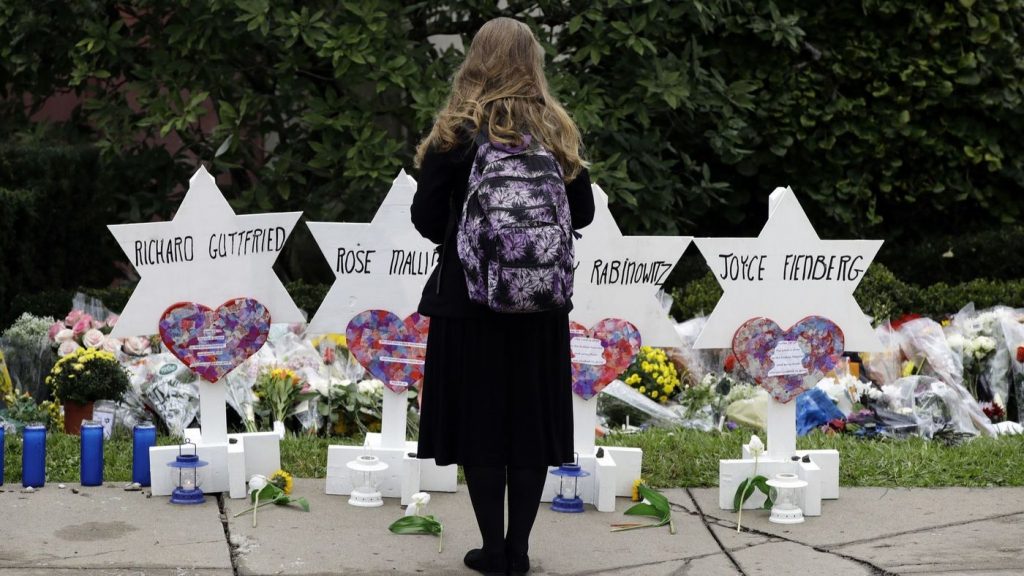
We are saddened beyond words and grieve for the lives lost by the attack on the Etz Chaim (Tree of Life) Synagogue in Pittsburgh last Saturday. We are not surprised, however. You only need to glance at the vast literature on genocide and political violence to understand that in an environment of institutionally backed hate speech, the accumulation of hate crimes and smaller acts of bigotry, a major attack usually follows.

via LA Times

Earlier this year the Anti-Defamation League reported nearly 2,000 anti-Semitic incidents occurred , an increase of almost 60% from the year before and the highest rates in the United States in decades. In 2017, all 50 states reported anti-Semitic hate crimes, the first time since 2010. From Holocaust deniers running for Congress to the dramatic increase in white supremacist language on American campuses, anti-Semitism is becoming normalized. As the ADL Director Johnathan Greenblatt said on last Sunday’s ‘This Week’: “We are seeing an environment in which antisemitism has moved from the margins to the mainstream as political candidates and people in public life literally repeat the rhetoric of white supremacists.” Tragically, this hatred manifested itself again on Saturday in Pittsburgh, resulting in the deadliest act of violence committed against Jews in American history.

The rise of anti-Semitism coincides with the rise of the Trump White House. In our post from two years ago, titled November 9th, Infamous Past, Disturbing Present, published just after the Trump election and the Kristallnacht anniversary, we remembered that the path that leads from verbal incitement to murderous action can be very short.

54% of Americans believe that the Trump presidency has enabled a culture of hatred and anti-Semitism not to only find acceptance, but to grow. With Trump as a catalyst for a resurgent culture of hatred to grow, it clearly comes from quite fertile ground.

Toxic language, like that found on The Gab (a frequent online meeting place of the alt-right) isn’t reserved to the hidden corners of the internet. Hate speech, and antisemitism in particular, is easy to find across social media. Facebook made news earlier this year when it appeared to side with Holocaust deniers when it was unwilling to remove content that questioned the Holocaust. This doesn’t take into account the groups that use Facebook as a tool to spread hatred and conspiracy ideas across the globe. Just yesterday, the New York Times highlighted thousands of posts on Instagram, a company owned by Facebook, that spread antisemitic hate speech in the wake of the Pittsburgh attack. Twitter isn’t immune either; an ADL report from 2017 found that tens of thousands of anti-Semitics tweets are sent out every day, and in some cases account for nearly 9% of tweets at a given time.

This escalation in antisemitism in the United States is extremely troubling. Even more alarming is the fact, that it is often legitimized by people in positions of power that are supposed to condemn and combat it.

We, students, faculty and staff at the Center for Holocaust and Genocide Studies are committed to confront head on, and with all the means at our disposal the toxic dissemination of hate speech that incites political violence. The task is not small, but we are committed to combating it with others. It is time for all to stand up.

Professor Philip Spencer once remarked that genocide robs humanity of diversity. This phrase has stuck with me for several years mainly due to its elegant simplicity. At its core, it suggests that we should care about genocide because denies us a chance to be diverse in the various forms and depths the word entails. Thus, a genocide against the Yazidis or the Rohingya means we lose cultures, religious practices, languages, bright futures etc. This simplicity masks the intense depth that it brings with it as well since it places the impetus on us and challenges us to consider how important a loss of diversity is to us. It is even more memorable because it does not seek to compare genocide and other atrocity events such as war crimes and crimes against humanity for it to sound profound. I am reminded of this conversation because it seems like that time of the year again, when various atrocities in Africa are trotted about and debates about whether they are genocides or not dominate the media discourse. To what extent is then the term genocide, and discussions whether the events fit the UN convention’s definition, inhibiting rather than enabling prevention and response?

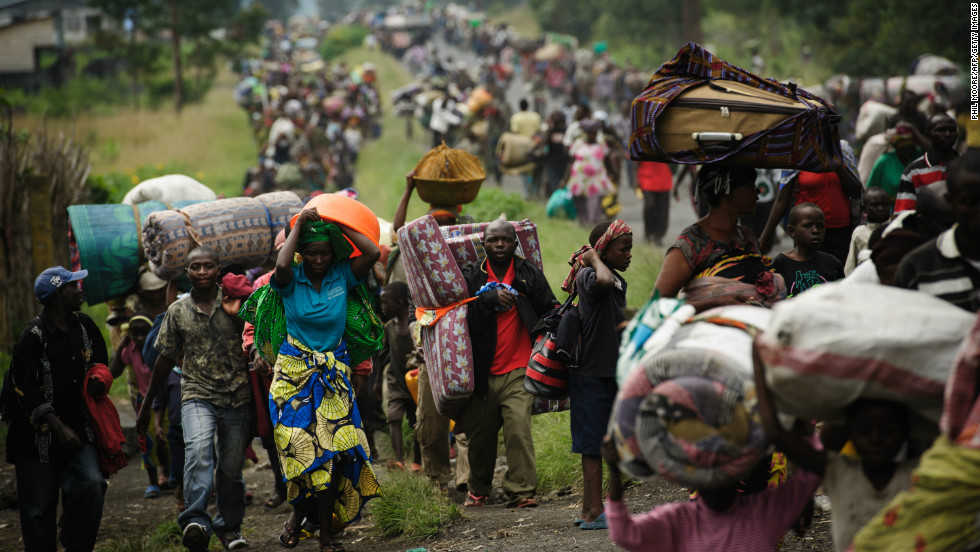
Image via CNN

Three years ago I wrote about my frustration about the insistence of labeling conflicts in Africa genocides to raise awareness. This debate, I argued, often allowed the international community to engage in endless hand-wringing while people were being killed, displaced, raped, and maimed. Early last month, Voice of America published a story saying that UN investigators thought that the atrocities in the Democratic Republic of Congo fell ‘short of Genocide.’ Implicitly, this framing implied the “mass rapes, mutilations, and beheadings” though awful would be even worse when occurring within the context of a genocide. They were, rather, “war crimes and crimes against humanity” and a casual reader would be right in assuming that these were somewhat not as bad as a full-blown genocide. Such terminological disquisitions harken back to the infamous “acts of genocide” statement by US State Dept. spokesperson Christine Shelley about Rwanda in 1994. The other end of this labeling spectrum is captured in an article by the Baptist Press about the Middle Belt in Nigeria. In this article, the author framed conflicts in Nigeria as genocide against Christians.  This particular report appears to push to the side the fact that most of the victims of Boko Haram have been Muslim communities in Northern Eastern Nigeria with targets often being Mosques, IDPs, Villages, Towns, etc.

These two cases illustrate not only the politics of naming conflicts in Africa but also the challenges the international community faces when trying to parse out the goings-on during a conflict and evaluate possible responses. How helpful is the term? Tribunals have wrestled with the issue of determining explicit “intent to destroy” a group years after the events and often with copious evidence gathered (see the ICTY). Needless to say, this is an even more challenging task when the events are still unfolding. It often feels like when it comes to Africa specifically, and the Global South generally, there is a race figure out whether or not an atrocity is genocide (and with this just as bad or worse than Rwanda). This is not to rehash old and on-going debates about the usefulness of the term itself. I ardently believe that genocide is the worst form of crimes that can be perpetrated against a people. However, I am wary of the implicit message in framing atrocities such as those in the Democratic Republic of Congo as ‘falling short.’ This implies that there is a race to the top spot of human suffering and only those that make it are labelled genocide, creating a hierarchy of atrocity and human suffering.

j. Siguru Wahutu, PhD is a fellow at the Berkman Klein Center for Internet and Society atHarvard University. Starting in 2019, he will be an assistant professor in the Department of Media, Culture, and Communication at NYU.

The Center for Holocaust & Genocide Studies recently organized a museum visit through its Human Rights, Genocide & Mass Violence (HGMV) Graduate Group to view and discuss works related to genocide currently on exhibit at the Minneapolis Institute of Art.  In advance of the meet-up, CHGS did an interview with local artist, Rowan Pope.

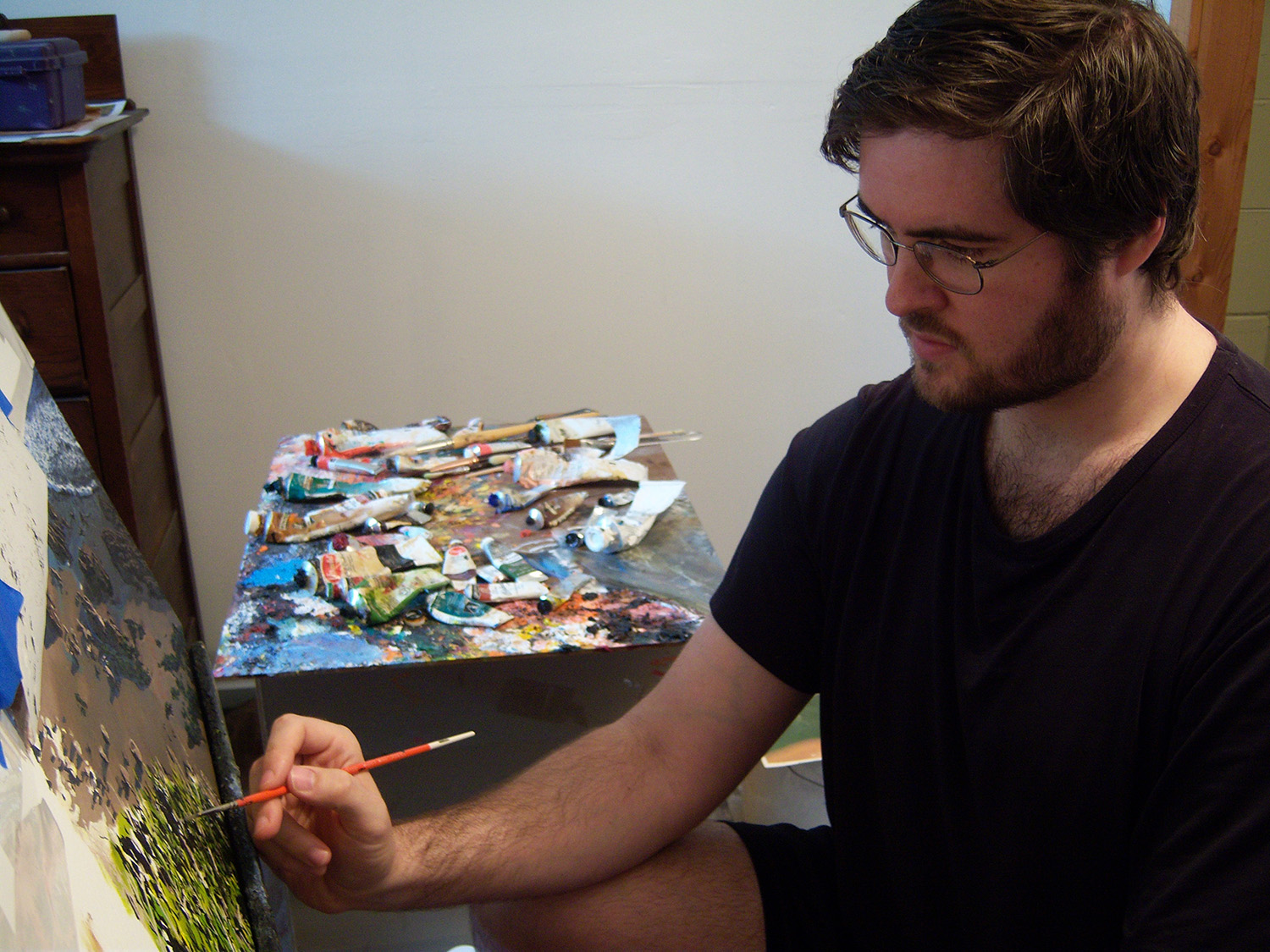
Rowan Pope is a lifelong artist from Minnesota. He and his twin brother, Bly, employ photorealistic techniques as a method of storytelling. Rowan addresses dark subject matter through his work, including portrayals of Franz Kafka’s novels and depictions of the Holocaust and the Cambodian genocide. He seeks to explore broad-ranging human emotions and to commemorate the lives of victims and survivors of violence through his art. “The Liberation of Buchenwald,” among other pieces by both Rowan and Bly, will be on display at the Minneapolis Institute of Art through October 28th, 2018.

You can learn more about the event here.

Emily Mitamura: The meticulous nature of your composite photo realism approach would seem to suggest the central importance of dwelling with images of suffering and those therein interred. Coming from the Center for Holocaust and Genocide Studies at UMN, this imperative to remember and honor histories of mass violence is very important to the academic and public work we do. Could you share a little bit about how and why you came to this work and especially this devoted artistic practice? How does this deep attention to detail (and thus necessarily large quantities of time devoted) play into your artistic ethos and, perhaps, mission?

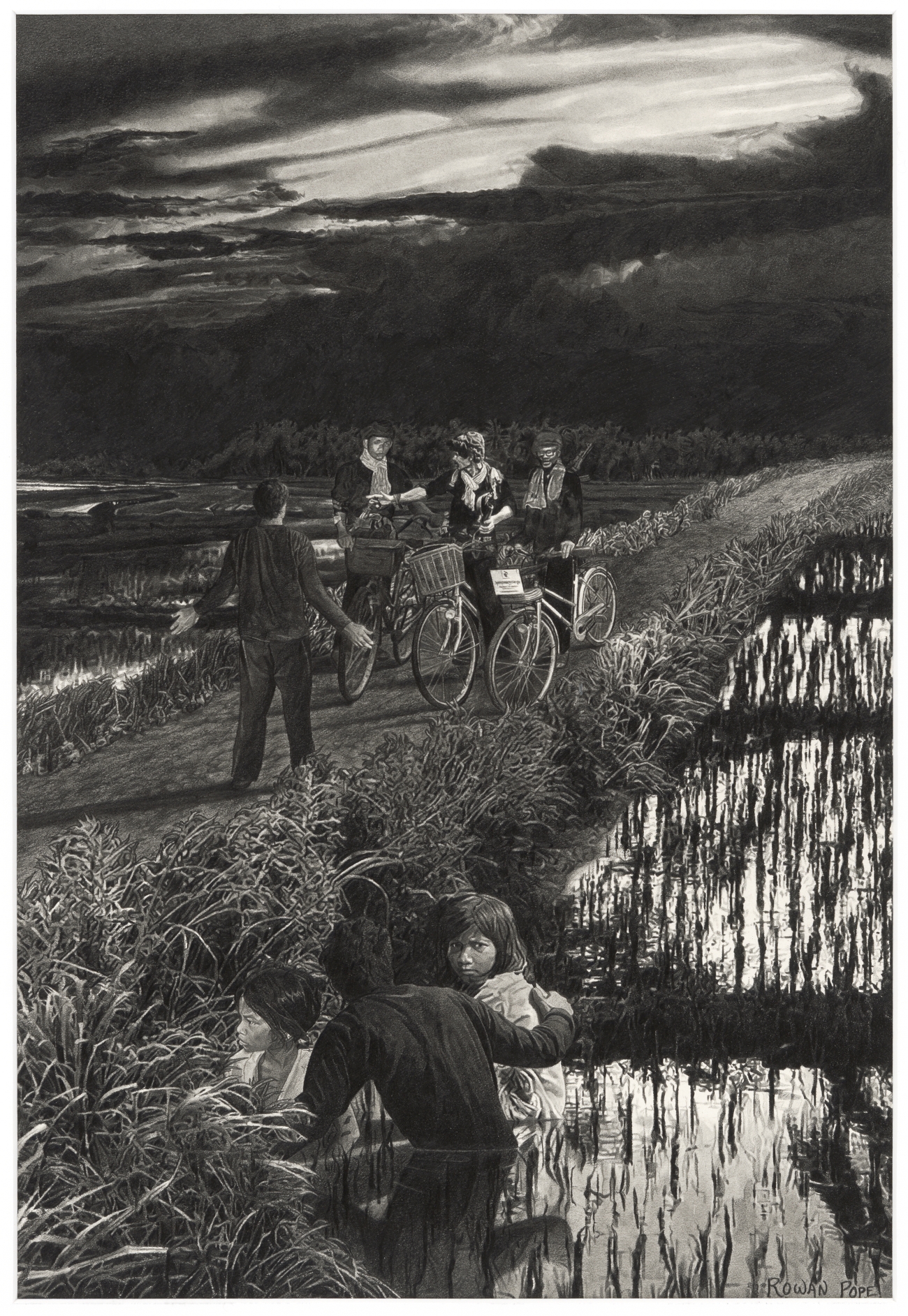
Rowan Pope: I came to this kind of work during my time in grad school at the University of Minnesota, through an anti-genocide art project called Voice to Vision.  The project is directed by David Feinberg, who has been an art professor at the U for over forty years.  Voice to Vision is a collaborative undertaking to help genocide and Holocaust survivors and the children of survivors explore and share their experiences through the process of making art. The survivors meet in David’s studio and they can tell as much or as little of their stories as they like.  As they remember and describe their experiences they collaborate with a team of artists, making sketches and drawings and adding symbols and imagery to the final mixed media painting or sculpture.  Through the project I was introduced to many genocide survivors – survivors from the Holocaust and Rwandan, Armenian, Cambodian and other genocides – and I heard their stories, which are all profound, devastating, enlightening, and moving.  My first drawing through Voice to Vision was “Pink Scarves,” which is at the Mia exhibit now, and is based on a Cambodian genocide survivor’s story. I was inspired by his story – his name is Hong – and felt that it was something that should be put into visual form, so that others might see it.  I was in frequent communication with Hong,  and my goal – and responsibility, I felt – was to record and represent the events as closely as possible to how they actually happened. Through Voice to Vision I also met Joe Grosnacht, a Holocaust survivor who survived the concentration camps Buchenwald and Auschwitz, as well as numerous work camps, and I wrote a book called “Six Chairs,” which covers a great deal of Joe’s life.  I visited often with Joe, recording and transcribing his testimony, and wrote seventeen stories based on his experiences during and after the war.  The book was illustrated by 8th grade students at Breck School because I wanted younger students to be informed about this important subject, to meet an actual survivor in person, and to express their own feelings and ideas artistically.  Making art about anything, as these students did, has a way of making the experience memorable and personal.

I’m a meticulous, detail-minded artist because I want viewers to spend time with a piece, exploring it and its “secrets,” falling into it emotionally, connecting with it in their own way.  I believe that my detailed approach to my subject matter not only compels viewers to explore the image or scene for longer periods of time, but also draws the viewer into the scene itself as if they were witnesses to what’s happening.  Detail also allows viewers to actually see clearly the faces – and therefore the humanity – of the people who have experienced the traumatic events I’m portraying.  I believe that spending time with these images of suffering inspires empathy in viewers, and a connection to other people’s lives, which is my ultimate goal.  I think that the amount of time I spend with a piece demonstrates the love I have not only for creating things, but also for the subjects and people involved in the piece, a love I want to inspire viewers to share with me.

My work is guided by a slow, patient development whereby I completely invest myself for weeks, months or even years in individual pieces – planning, photographing, drafting, and drawing – and making fewer pieces that are high in quality rather than making many pieces lightly or cursorily.  Although much of my rigorous, long-term drafting and preparatory process is invisible to viewers, it is a noteworthy aspect of my work, and allows me the time to develop a closer relationship with my drawing and its themes, and to achieve a deeper understanding of the meaning behind the drawing.

EM: Elsewhere you’ve spoken about how your work aims to tell stories that help us “create a guiding ethos and moral system,” “crucial to our survival.” How does this mission play into choosing your subject matter? As I understand, your work draws directly from photographic images which you knit together into these guiding narrative-scapes. In this process of selection (and thus necessarily exclusion), how do you think about violence and representation in your work? Specifically, how do you negotiate between your artistic responsibilities and the responsibilities you bear to the people and moments of violence you depict?

“Pink Scarves” by Rowan Pope

RP: Many of my drawings are inspired by stories because I believe that stories have a powerful and lasting way of uncovering truths about humanity; truth itself being the thing that helps us learn, grow, and survive as a species. Since I have been surrounded by stories all my life (my parents are both writers and lovers of literature), I have come to understand not only the joy and wisdom they can instill, but also that they are a moral necessity in daily life, helping us become part of a community by creating moral systems for how to live rightly and well.  They deliver messages and timeless themes that help us think relevantly about our lives and learn how to live; and they explain what the experience of being alive truly is.  They reveal truths about all things human, and are therefore crucial to our lives, our souls, and our very survival.  Stories about survivors are extremely important to pass on to younger generations for many reasons, not least of all because the lessons they impart may help to stop similar atrocities from happening again.

I choose the stories I represent in drawing because of their personal, emotional impact on me — the stories that affect me the most or stay with me the longest.  They aren’t always necessarily nonfictional stories; they are often fictional stories, such as those written by the great author Franz Kafka.  I select a variety of photographs from various sources – online images or personally taken photographs — and I collage these photographs together, usually digitally; I then draw from that collage.  To be honest, my opinion of our species is not always a positive, cheerful or happy one; in fact, I believe that history has revealed us to be a species capable of unspeakable horror, violence, and atrocity.  Therefore, in my effort to convey truth about humanity, the imagery I choose is often violent or frightening in nature.  Often the photographs I choose are rife with emotion: this is so that they can have an emotional impact on viewers.  Art that has an emotional impact, I think, stays with viewers for longer periods of time.  My responsibility as an artist – and I think every artist has this responsibility – is to reveal some kind of truth about the world in which we live, and I think it’s important for artists not to shy from revealing people as they are, as they have been, and what they can do to each other.  And so I want to tell the stories of people that will benefit the lives of others.

EM: Finally, who has inspired your work and how do you think this debt/gratitude manifests?

RP: People like Joe, Hong, and other survivors whom I’ve met through Voice to Vision, have inspired my work – their stories are incomparable and deeply emotionally affecting.  David Feinberg has also inspired my work through this project which is so geared toward inspiring empathy and enlightenment in others.  I see it as my responsibility to represent the stories of these survivors accurately and honestly, but also with feeling, and I believe – and hope – that my gratitude to them manifests itself as the art itself.

Emily Mitamura is a PhD student in the Department of Political Science studying the relationship between aesthetics and social death in the wake of the Cambodian Genocide. With an emphasis on the brutalities of the every day, her work proceeds from commitments to postcoloniality, knowledge production, and race, engaging both adjudication and memorialization efforts taken up in response to mass violence as well as knowledge claims conveyed in art, performance, and film.  

Staff, faculty and students affiliated with the Center for Holocaust and Genocide Studies at the University of Minnesota grieve the passing of Fern Badzin.

Fern and her late husband Bernard established the Badzin Fellowship in Holocaust and Genocide Studies, which has supported for the last decade graduate students in the College of Liberal Arts committed to research in the field.  Bernard and Fern also created the Badzin Lecture Series fund, helping to bring renowned experts to campus. More recently Fern generously supported the Genocide Education Outreach (GEO) Program, which sends young scholars into the community to teach about the Holocaust, other genocides, and related issues directly affecting students and communities at large.

Fern had a unique personality and generous soul that has impacted many of us in various ways. She was a warm, upbeat and delightful person and we were fortunate to have Fern as a supporter and participant at events on campus. She leaves us with many fond memories.

CHGS will honor Fern’s legacy by continuing to support the professional development of graduate students, hosting community events and public lectures, growing the GEO program, and reaching ever wider audiences in our firm commitment to educate about the Holocaust and the recurrent problem of genocide.

The 13th Twin Cities Arab Film Festival is upon us. The film festival is organized by Mizna and will run from September 27th to September 30th. This year, the festival commemorates 70 years since the nakba (Catastrophe), when 700,000 Palestinians were expelled from their homes in 1948. The festival features over 30 films from Syria, Iraqi Kurdistan, Egypt, Palestine, Lebanon, Jordan, United Arab Emirates, and the USA. Many of the screenings will be the premiere in either Minnesota or the US, with a special advanced screening of Capharnaum! Capharnaum is directed by award-winning Nadine Labaki, and tells the story of a Lebanese boy who launches a lawsuit against his parents for the crime of giving him life. Despite a profound list of films with award winning actors and directors, federal authorities have denied entrance visas to several actors and directors who were scheduled to visit the film festival.

Below, we have compiled a list of films and events that may interest our readers. See the full schedule of the festival and buy the tickets here.

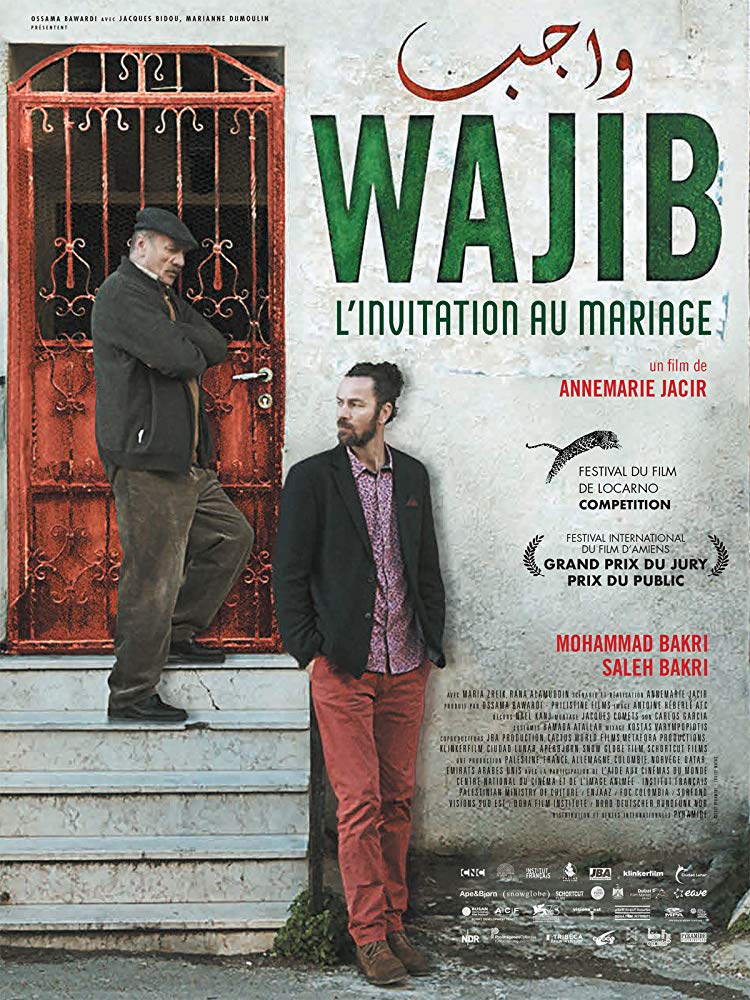
Wajib (Palestine)

Drama | 96 minutes | 2017

Sunday, September 30th, 7:30pm

A father and his estranged son must come together to hand deliver his daughter’s wedding invitations to each guest as per local Palestinian custom. As the duo drives around Nazareth in an old Volvo, differences in generational attitudes and contradictions in outlook between those who leave the Territory and those who remain in Palestine emerge.


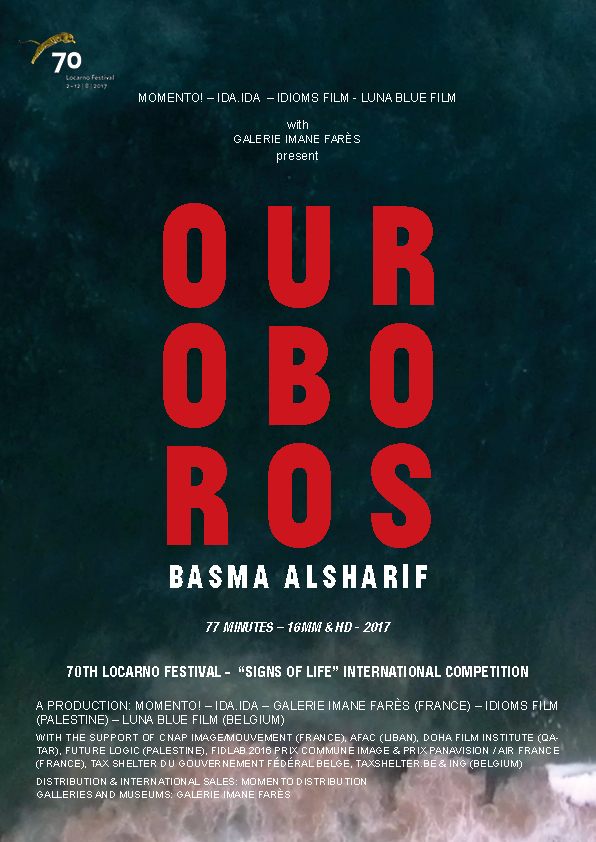
Ouroboros (Palestine, France, Belgium, Qatar)

Experimental Narrative / 77 minutes / 2017

Saturday, September 29th, 12:10pm

An homage to the Gaza Strip, Ouroboros follows a man through five different landscapes, upending mass-mediated representation of trauma. A journey outside of time, marking the end as the beginning, exploring the subject of the eternal return and how we move forward when all is lost.


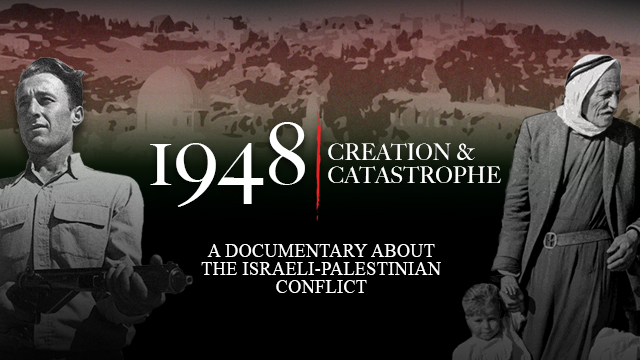
1948: Creation and Catastrophe (US)

Documentary | 85 minutes | 2017

*Free for Students

Friday, September 28th, 11am

Through riveting and moving personal recollections of both Palestinians and Israelis, this informative documentary reveals the shocking events of the most pivotal year in the most controversial conflict in the world through the eyes of the people who lived it, presenting the last opportunity for many of its Israeli and Palestinian characters to narrate the creation of a state and the expulsion of a people and a nation.


Naila and the Uprising (US)

Documentary | 75 minutes | 2018

Friday, September 28th, 1:15pm and Sunday, September 30th, 3:45pm

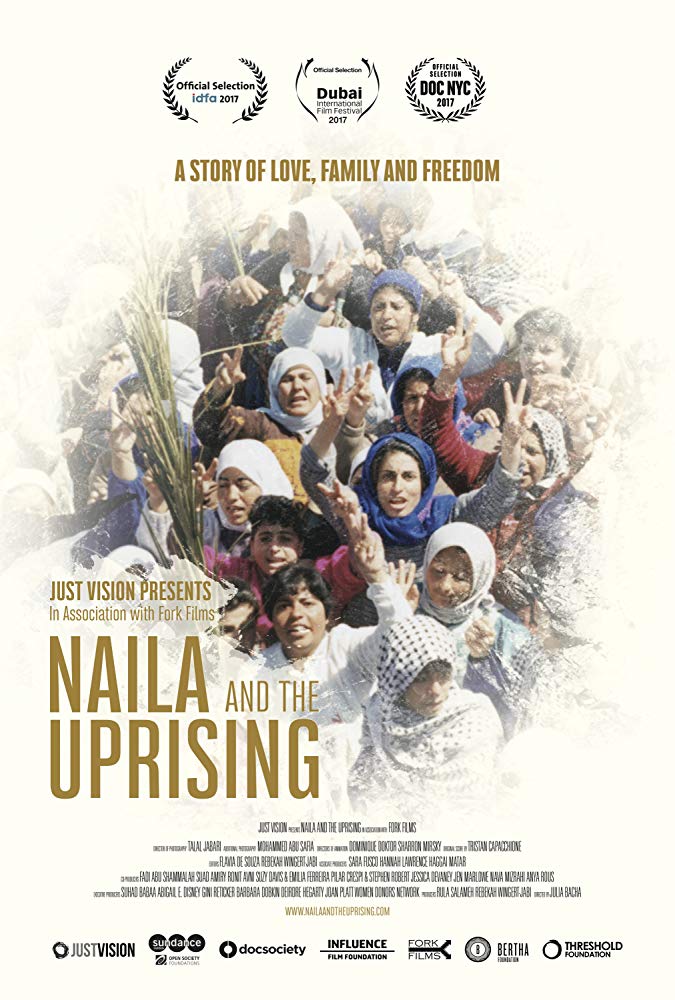
This engaging film revolves around the tragic and remarkable story of Naila Ayesh, an active student organizer who has spent years building the infrastructure for economic independence for women and self-sufficiency for Palestinians under Israeli occupation. Evocative under-camera animation, intimate interviews, and exclusive archival footage bring out of anonymity the courageous women who shook the Israeli occupation and put Palestinians on the map for the first time.


Taste of Cement (Lebanon, Germany, Syria, Qatar, UAE)

Documentary | 85 minutes | 2017

Saturday, September 29th, 5:00pm

Syrian construction workers build new skyscrapers in Beirut on the ruins of buildings destroyed by the Lebanese civil war, while their own homes are bombed and destroyed in neighboring Syria. A local curfew prohibits the workers from leaving the construction site after work, and every night they listen to news about the war in Syria below the scaffolding. This impressionistic and carefully edited documentary tells the story of refugees imprisoned by the modern world’s cement structures and endless wars, as each day’s repetition brings more work, more welding, and the same nightmare.


Foreign Body (Tunisia, France)

Narrative Drama | 92 minutes | 2016

Saturday, September 29th, 9:40pm

After informing on her Islamist brother, Samia (Sarra Hannachi) seeks refuge by illegally immigrating to France just after Tunisia’s Jasmine Revolution. With no friends, no family, and no papers, Samia adapts to life in a foreign land. She meets a young man, Imed (Salim Kechiouche); finds work as an assistant to the elegant but mysterious Leila (Hiam Abbass); and is quickly enmeshed in a web of sexual tension. A timely narrative, Foreign Body transcends the media’s typical reductive narratives of forced migration and desperation through close, handheld camera work and abstract insights into the story of a young woman.


Bonbone (Palestine, Lebanon)

Narrative Short | 15 minutes | 2017

Sunday, September 30th, 7:30pm

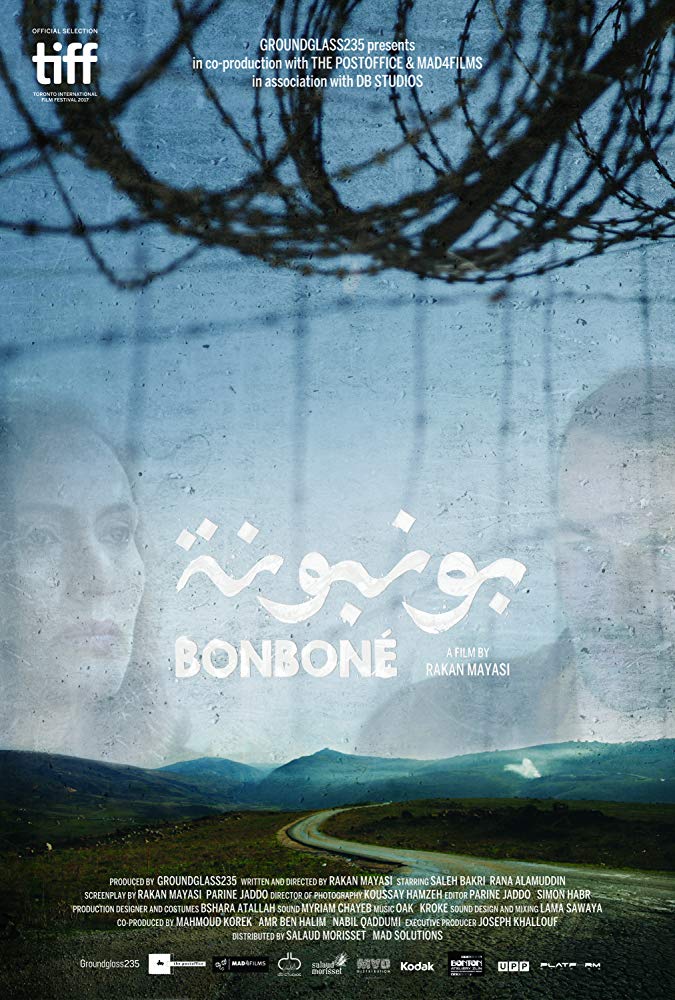
A Palestinian couple wants to conceive a child, but the husband is currently detained in an Israeli jail where visits are restricted. Rather than wait till his release, they resort to unusual methods. With heart and wit, Bonbone addresses a very real-and dangerous-phenomenon through which prisoners and their families defy occupation and secure their legacy.


Writing on Snow (Palestine, Tunisia)

Narrative | 72 minutes | 2017

Sunday, September 30th, 5:45pm

Set almost entirely inside a cramped apartment during the 2014 Israeli war on Gaza, this film takes place over the course of one night. Five Palestinians-a wounded man, an aid worker, an older couple, and a suspicious stranger-become trapped together during an all-night attack. As their political divisions become apparent and intolerances rise to the surface, each questions the others, interrogating their motivations and dismissing their life experiences even in the face of their shared predicament.


My Favorite Fabric (France, Germany, Turkey)

Narrative | 95 minutes | 2018

Friday, September 28th, 9:40pm

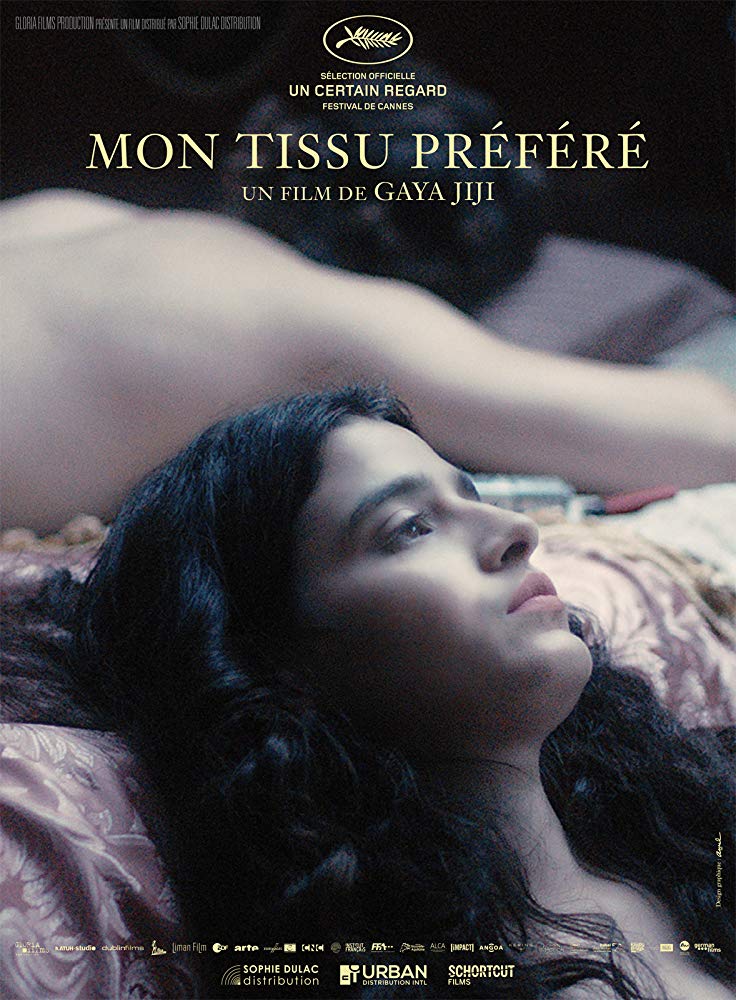
Set in Damascus in the spring of 2011, amidst the rumblings of revolution, this complex narrative takes on issues of sexuality and gender inequality. Nahla (Manal Issa) explores her own sexual desires and navigates the social norms that structure women’s roles in society. Meanwhile, the Syrian revolution gains momentum and the state’s severe response engulfs the country in war. Against this violent backdrop, Nahla focuses on emigration and her arranged marriage to Syrian American Samir (Saad Lostan). But when Samir chooses her younger sister (Mariah Tannoury), Nahla grows closer to her new neighbor, who has just moved into her building and opened a brothel in the apartment upstairs. As Nahla plays out her fantasies in dreams and reality, the film critiques gender stereotypes, providing a unique metaphor for Syria’s increasing instability.


Separation (Havibon) (Iraq)

Documentary | 69 minutes | 2017

Friday, September 28th, 3:30pm

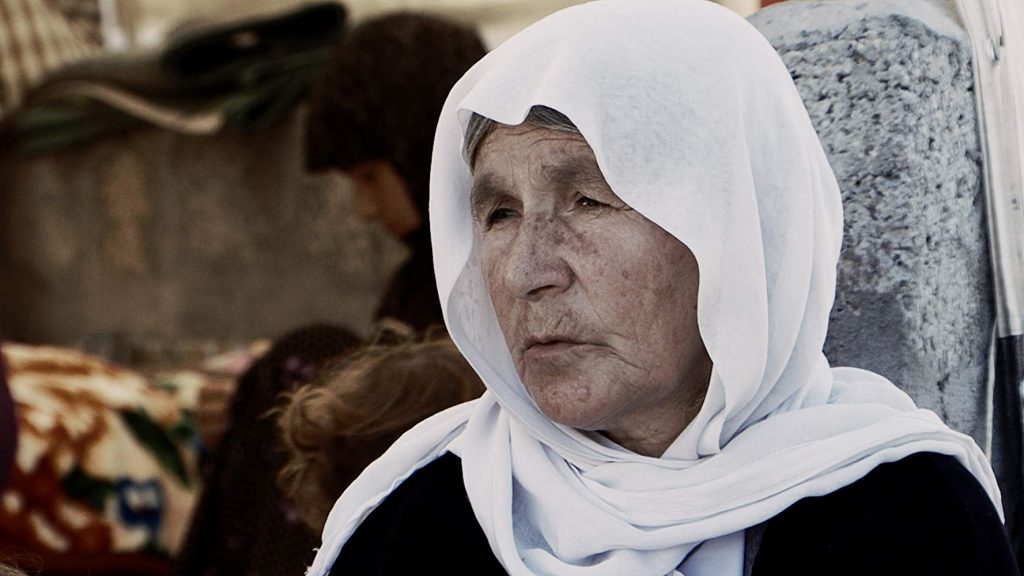
After fleeing besieged Shingal in Iraq, thousands of Yazidi Kurds found themselves trapped at the top of Shingal Mountain without food or water. Faced with no other choice, three men leave the group to seek sustenance for their families, unaware that safe passage to Kurdistan is possible. As the men search for food, water, and refuge, the film focuses on their wives and children-those who are left behind to anxiously wait in a refugee camp for their families to return.

Growing up in Myanmar, the back of every newspaper had a section with big, bold letters that read, “BBC is lying, VOA is lying, RFA is lying; Sky full of lies”. The appearance of those words in newspapers, television, and books was stopped in 2010, when the government launched a series of political reforms. But, here I am in 2017, and I hear the same narrative that “the international media is lying” again. Surprisingly, this time, the narrative is being advanced not only by the military and the government, but also by the vast majority of Myanmar people, including even those who spent their whole lives in prison because they had called for democracy and human rights.

The Rohingya exodus, one of the biggest humanitarian crises in the world, has inspired people to echo the narratives set by the military regime over the past few decades is. Following the attack by Arakan Rohingya Salvation Army (ARSA) on police outposts in August 25 2017, the military conducted a “clearance operation” in the area where the attack happened. As a result, over 700,000 Rohingya population had to flee to the neighboring country of Bangladesh. Rohingya are a marginalized Muslim minority who have lived  in the West of the country for generations. According to the existing citizenship law passed in 1982, the government wiped out the citizenship of the majority Rohingya population, and the government and the public do not recognize them as an ethnic group of Myanmar since then.

While much of the international community has recognized this incident as an organized human rights crime directed towards the Rohingya, the people in Myanmar do not see it as such. Most believe that the international community and the media are exaggerating the scale and intensity of the conflict. Unlike the old days when the state controlled all media channels, Myanmar people can now openly access  all the media channels and the internet. However, the internet in Myanmar means “Facebook.” It is the platform for public engagement and information sharing. Policy makers implement policy based on information from Facebook. Many political commentators, activists, journalists, and the public use their personal Facebook to conduct political debate or to share opinions.

This article is going to present three main narratives happening around the Facebook users in Myanmar related to Rohingya exodus. Though opinions on Facebook cannot represent the view of the whole Myanmar society completely, they can reflect views held by many.

First, many Burmese believe that we need to be stabilized and united with the civilian government for a successful democratic transition. The elite community and the local media are the major producers of this first narrative. Myanmar is in the process of transition, and the military still holds immense power.  The government is divided into the civilian branch and the military branch. The military, headed by the Commander in Chief, controls all the arms divisions and 25% of the seats in the Parliament. The Chief of Justice is the former military personnel. The civilian government, which came into power with a landslide majority vote, is headed by the President, but ruled by the Nobel Laureate Aung San Suu Kyi. As there is no proper democratic institution, Aung San Suu Kyi is an only hope for the transition for the Myanmar people. Therefore, the fact that the international pressure and criticism is rested on her crates huge push back from her supporters on Rohingya crisis.  

Second, many Burmese argue that the Rohingya are “ Islamic terrorists” and they are threatening the sovereignty of the country. The military, government, the nationalist organizations and public are the major producers of the second narrative. The front page of government-run newspapers and the Facebook pages of government officials discussed the Rohingya incident as “extremist terrorist attacks.” In anti-Rohingya protests, protesters used banners and vinyl’s stating, “wipe out the Bengali terrorists” and “We cannot accept the infringement of this union sovereignty and land looting battle of Bengali terrorists, totally rejecting the taking back of those treasonable Bengalis.” One significant example is a quote of Ko Ko Gyi in the New York Times: “We have been human-rights defenders for many years and suffered for a long time, but we are standing together on this issue because we need to support our national security”. He is the third prominent public leader who was jailed for 18 years  for his political leadership under the military regime.

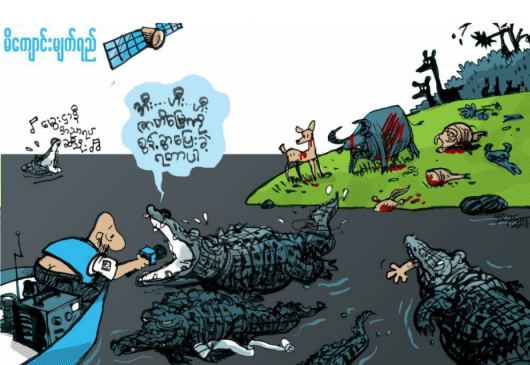
Third, many Myanmar people believe that the Rohingya, the Muslims, are falsely trying to hijack the world’s sympathy. These narratives are wide-spread, but not limited to people inside Myanmar. The nationalist groups and the public are the major producers of the third narrative. Facebook posts, the interviews, and political cartoons convey the message that Islamic terror groups are attempting to invade Myanmar through the cover of Rohingya refugees asserting that the suffering of Rohingya is but fake. To represent this narrative prominent local cartoonists and activist drew a cartoon that titled “The Crocodile Tear.” These three narratives are changing overtime, and they sometimes overlap. It is noteworthy that there are some Burmese  that speak out against the persecution and the assault on Rohingyas. However, their voices are not wide-spread as opposed to the dominant, negative narratives.

For the international policy makers and the human rights advocates to solve Rohingya issue, it is important to understand these narratives of the Myanmar people. The conflict and tension is not only between the State and the Rohingya, but also between the Myanmar population and the Rohingya. The dignified and safe repatriation of Rohingya will be impossible if the general population is hostile towards them.  Therefore, the international community should find a way to address the concerns of Myanmar population as expressed through these narratives.

Eaint Thiri Thu has been working on issues related to human rights, conflict, and the media in her native country of Myanmar/Burma for the past seven years.   As a fixer, research consultant, and producer, Eaint Thiri Thu has built up extensive experience with media organizations (BBC, New York Times) and non-governmental organizations (Human Rights Watch, National Democratic Institute). She is particularly interested in exploring how the concept of human rights is understood and practiced in conflict settings. She was awarded a Fulbright and U of M. Scholarship to pursue a Master of Human Rights.


When governments and citizens instead of being armed with weapons, are equipped with historical perspective they reshape our national and local discussions on the rationale for certain monuments and memorials. And if the end result of this public dialogue culminates in a towering figure being toppled, the sound is resounding. This past week, a Confederate statue fell on a college campus in America, but the Civil War I am writing about here is the one that still haunts Spain.

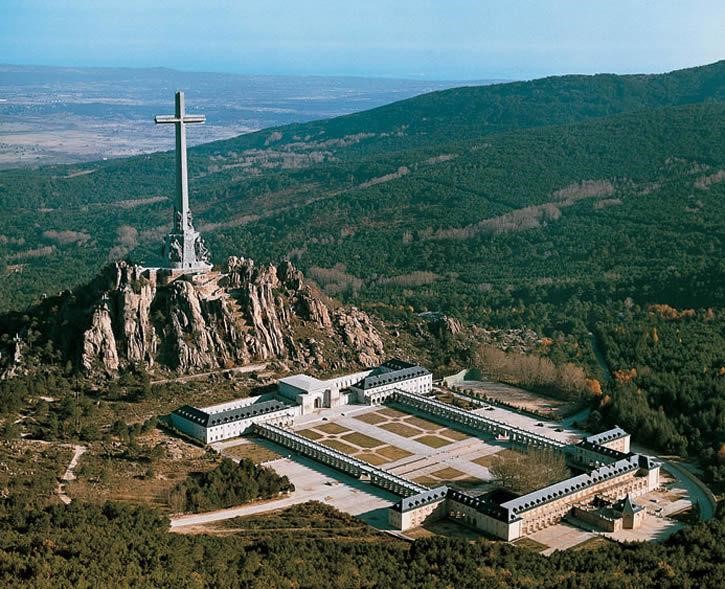
On August 24th the Spanish government of Socialist Prime Minister Pedro Sánchez approved a decree to exhume the preserved corpse of General Francisco Franco from the Valley of the Fallen, a gigantic mausoleum near Madrid that the dictator had designed to eternally enshrine his victory in the Spanish Civil War (1936-1939). The site is also the final resting place of Falangist Party founder Jose Antonio Primo de Rivera and contains the remains of some 35,000 civilians and soldiers, many of them Republicans executed by Franco’s regime, and transferred to the site on his orders.

Why has it taken so long to decide to remove the body of a dictator from a sanctuary that celebrates and in essence beautifies his rule? And why now?

 A Pact of Oblivion

In contrast to the ways we currently understand democratization efforts, the success of Spain’s Transición (the period between the death of Franco in 1975 and the completion of the new Constitution in 1978) was predicated on the assumption that the past is the past and that silence is the key to paving the way to peace. Spain rapidly transitioned from authoritarianism to democracy, integrated into Europe, and achieved unprecedented economic prosperity. All these changes took place with no attention paid to the crimes committed and suffering inflicted by the Franco regime.

As a result of this unwritten “Pact of Oblivion”, the public presence of Francoist symbols remained largely untouched. The city of Madrid in which I grew up during the years of the nascent democracy had numerous visible signs of the dictatorship. The entire country was decorated with monuments, statues of the Dictator in parks and squares, and plaques in memory of the ‘‘Fallen for God and for Spain’’, which honored only those who perished in the war on the Francoist side. The one and five Peseta coins that I received as part of my allowance had Franco’s likeness engraved with the words “Francisco Franco. Leader of Spain by the Grace of God.” This currency was slowly removed from circulation, but continued to be accepted as legal tender until the arrival of the Euro in 2000.

Beyond those immediately scarred by the dictatorship’s terror, the context and meaning of these Francoist symbols and monuments were progressively forgotten, as was the socio-political reality to which they bore witness. But with the turn of the century and the rise of a generation that had come of age in a modern, European, Spain, those old rusty statues and plaques, and the Franco mausoleum itself, started being looked at again with fresh eyes. Many were startled by this spectral anachronism: Fascist monuments in Europe?

 Memoria Histórica

In the 2000s grassroots efforts began to locate and exhume the mass graves of the Republican victims of the Civil War and the Franco regime. The emergence of a strong social movement led by the Association for the Recovery of Historical Memory (ARMH) opened up intense debates about the way Spain had dealt, or rather not dealt, with the dictatorship and its victims. Spaniards started to look at the country’s past as Europeans and global citizens, and this involved playing catch up with Western Europe’s direct engagement and openly public wrestling with the memory of their own compromised or authoritarian regimes.

The Holocaust’s increased centrality to European memory politics contributed significantly to raising awareness in a new generation of scholars, artists, journalists, and social justice activists regarding Spain’s own blood soaked past. Becoming European meant critically revisiting this, so to speak, Spanish Sonderweg, regarding the transition to democracy. Part of this dramatic paradigm shift in thinking about the Spanish past, ultimately reframed the discussion, adopting terms and ideas around transitional justice, victims rights, and memorialization consistent with other nations on the continent.

The exhumation of corpses provided explicit undeniable material evidence of the repressive policies put in place by Franco’s regime and sparked an ongoing and emotional public debate over his government’s concretely identifiable remains, including the Valley of the Fallen.

 From grassroots activism to national politics of memory

In 2007 the Spanish Socialist Party (PSOE) challenged for the first time the status quo with regards to public (non)remembrance of the Civil War and Francoism and proposed a bill for a law commonly known as Ley de Memoria Histórica (Historical Memory). The law was approved by the Parliament and included among its provisions the removal of Francoist symbols from public buildings and spaces. The Memory Law also called for measures to democratize the Valley of the Fallen but recommendations of a commission appointed in 2011 were ignored during the following years of conservative Popular Party rule (2011-2018). The recent switch in governments brought the question concerning Franco´s remains and the mausoleum back on the center stage of the political agenda.

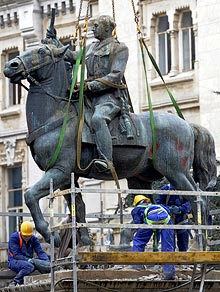
The removal of a Franco statue in Santander.

Social Anthropologist Francisco Ferrándiz, whom we hosted on two occasions at CHGS, was one of the members of the 2011 commission. In a recent interview he stated that “what we advocate for in our report goes beyond the Franco exhumation itself. We underscore the need to resignify the monument (…) the Francoist hierarchy of the site needs to be dismantled”.

While scholars of genocide and transitional justice, and memory activists across the globe will see such recommendations as a matter of dignity and a basic requirement of democratic life, Spanish society seems to be afraid of confronting these ghosts.

At the core of the Spanish memory conflict are two irreconcilable narratives. The center-right –unsurprisingly, given its historical affinity with the pre-democratic regime – stubbornly sticks to the language of the Transición, as if the country was still on the brink of fratricide. For “reconciliation” to happen, they claim, one should not drudge up the pain of the past. The left, however, highlights the unaccounted for atrocities that were committed by the Franco regime both during the war and the forty-year dictatorship that followed.

There is an insurmountable distance between those who advocate for remembrance as a way of reparative justice and democratic education vs. those who see in forgetting a political virtue. An op-ed in the main conservative newspaper ABC, commenting on the governmental decision to dig up Franco from his celebratory resting place, could not characterize the latter position more vividly. The author welcomed the fact that his eleven-year son had not the slightest notion of this dark chapter of Spanish history. When driving past the Valley of the Fallen, and to the question “Daddy, who was Franco?”, he decided not to respond and changed the subject.

The liberal newspaper El País, welcomed the news with en editorial article titled, unambiguously, “Finally”.

The Spanish case invites questions and readings that go beyond its borders, resonating more broadly, and particularly in the US. Why maintain monuments, if their foundations cry out for total reevaluation? What if we always lived with the discomfort of their symbolism, the very idea of why this structure existed in the first place? What if when we walked by them, and instead of welcoming us to remember, it was imperious, imposing, and upholding an ideal that wounds us instead?

It will take still weeks, or months, for the corpse of the dictator to be relocated to a family grave. The exhumation and the challenging process of reclaiming the Valle de los Caídos for all of Spain’s people will undoubtedly be a source of friction. But in the end, even those who oppose Memoria Historica, will have to recognize that demystifying the most divisive symbol of the dictatorship, does not open old wounds but may help to finally close them.

More on this subject can be found in:

“Francoism reframed: the ´disappeared´ of the ´Spanish Holocaust´, Chapter Two of Memory and Forgetting in the Post-Holocaust Era, my book co-authored with Natan Sznaider, Routledge, 2017.

Will Franco Finally Be Exhumed? Anthropologist Francisco Ferrándiz: “This Is As Complex As Ground Zero or Srebrenica.”, The Volunteer, August 23, 2018.

Alejandro Baer is an Associate Professor of Sociology at the University of Minnesota and the Stephen C. Feinstein Chair in Holocaust and Genocide Studies.


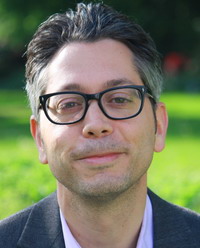
Chad Alan Goldberg is Professor of Sociology at the University of Wisconsin Madison. His interests lie in the sociology of citizenship, including the development of rights and duties over time, changing levels and forms of democratic participation and shifting patterns of civil inclusion and exclusion. He is the author of Citizens and Paupers: Relief, Rights, and Race, from the Freedmen’s Bureau to Workfare. His most recent book, Modernity and the Jews in Western Social Thought examines how Jews became a touchstone for defining modernity and national identity in French, German, and American social thought from the late nineteenth to early twentieth centuries.

Alejandro Baer: Your book highlights how for classical theorists, such as Emile Durkheim, Karl Marx or Robert Park, Jews became reference points for the interpretation of the new modern social order. Why do Jews occupy this singular space in the theorizing of modernity?
Chad Goldberg: To answer to this question, some people have pointed to the Jewish backgrounds of authors like Durkheim, Marx, Simmel, and Wirth. Others have suggested that the answer lies in the distinctive social positions that Jews occupied. There may be some truth to both views. Durkheim’s thinking, for example, was surely directed against the antisemitism of his milieu, and it’s true that German Jews were disproportionately engaged in commerce and more urbanized than the general population. But my book suggests another way to answer this question; I draw on the work of Lévi-Strauss to develop a relational (or, as others might say, structuralist) explanation.

Can you explain?

Lévi-Strauss argued that the choice of animals in a totemic system was neither arbitrary nor based on a “natural stimulus.” Rather, it was how animals contrasted to each other that made them meaningful. These relationships among animals formed a kind of code for signifying kinship relations, but the code rested on resemblances between different relationships, not one-to-one correspondences between the things in those relationships. As Lévi-Strauss put it, it is not that an animal and a kinship group resemble each other; rather, there are “animals which differ from each other,” and there are human beings “who also differ from each other,” and “the resemblance presupposed by so-called totemic representations is between these two systems of difference.” So, there is no reason to expect a direct relation between a bear totem and a bear clan; the clansmen aren’t necessarily ursine or dependent on bears. But when the bear totem is contrasted to the eagle totem of another clan, the relationship between animals might resemble the kinship relation: bear is to eagle as bear clan is to eagle clan. “Natural species are chosen” to be totemic emblems, Lévi-Strauss famously concluded, “not because they are ‘good to eat’ but because they are ‘good to think.’”

So Jews are “good to think,” too?

Yes, they have been good to think in a similar way. When Jews and Christians distinguished themselves from each other in the first centuries of the Common Era, they produced two opposed but related categories. Likewise, when European thinkers began to distinguish their own era as qualitatively different from the past, they produced two opposing terms, the premodern and the modern. It’s not far fetched to think of the relationship between Jews and Christians as a code for signifying the relationship between the premodern and the modern.

In your book, you distinguish between German, French and American traditions in their conceptualization of Jews and modernity. What are the main differences?

I borrowed the idea of national sociological traditions from Donald Levine. He tried to show that French, German, and American scholars developed the theoretical underpinnings of sociology in different ways, rooted in different religious and philosophical heritages. That notion can be overstated, but it’s not untrue, and I was interested in how these national differences might shape thinking about Jews and modernity. I also organized my book in terms of different root metaphors (or more precisely synecdoches) for modernity. Social thinkers have sometimes singled out a master process that they believe captures or explains the central tendencies of modern society. A part of modern society is thereby made to represent the whole. Fred Matthews has suggested that liberal thinkers in the United States tended to ascribe to the city or to immigration the problems and tensions that Europeans blamed on democracy or industrial capitalism. Again, this idea can be easily overstated, but it’s useful for analytical purposes. As an analytical choice, I focused on different metaphors within different national traditions: democracy in the French tradition, capitalism in the German tradition, the city in the American tradition.

These differences were sometimes consequential. It’s striking, for instance, how German ideas were creatively reoriented and transformed through their transposition to the American context and by the influence of American pragmatism. Robert Park and his students explicitly drew on Werner Sombart’s work, but they gave his sinister description of Jews as nomads and disorganizers a potentially positive interpretation, because in their view, it was only out of such activity that a new, freer, more rational, and wider community could arise. What appeared in Sombart’s work as an alienating and destructive figure was recast by Park as emancipating and potentially constructive.

But there are also important continuities across national traditions and metaphors for modernity. Although the authors I examine worked in different national traditions and emphasized different features of modern society, they all invoked Jews as a touchstone for defining modernity and national identity in a context of rapid social change.

Does “antisemitism”, as a term and field of study, illuminate or rather obscure your thesis? You state that to confer symbolic centrality to Jews is not always antisemitic.

Conferring symbolic centrality to Jews is always dangerous, because it renders Jews potential targets in ongoing conflicts in which they may have little real involvement or influence, but I don’t think it’s always antisemitic. After all, religious Jews confer centrality upon themselves when they emphasize their special responsibility for tikkun olam.

I would say that my book draws on the sociology of antisemitism and tries to situate it in a broader analytical framework. When we ask what Jews signified to French, German, and American social thinkers in the late 19th and early 20th centuries, and how they described Jews in relation to their own wider societies, we can locate the possible answers along two major axes: temporal (Jews are advanced or backward) and evaluative (Jews are good or bad). Negative images of Jews as a threatening avant-garde or a stubbornly backward people that refuse to exit the historical stage have been major elements in antisemitism since at least the nineteenth century. But the sociology of antisemitism deals primarily with the evaluative axis that I described, and it tends to neglect positive depictions of Jews. What I am suggesting, then, is that the sociology of antisemitism, while necessary and valuable, needs to be situated within a broader sociology of collective representations that encompasses both negative and positive representations of Jews, and the temporal as well as evaluative axis of representation.

You claim that post-colonial theory has shown a very limited understanding of antisemitism, basically seeing only the reactionary aspect of it, as another form of racism and ignoring that Jews were also identified as ultra-modern and cosmopolitan. How do you explain this conceptual blind spot?

Perhaps part of the reason for this blind spot is the ambition of post-colonialist theory to illuminate all forms of cultural domination through the experience of colonial subjects. Post-colonial theory illuminates a lot, but it doesn’t illuminate everything fully or equally well. Zygmunt Bauman suggested that attitudes toward Jews are not so much heterophobic (resentful of the different) as proteophobic, which is to say, apprehensive about whatever “does not fit the structure of the orderly world, does not fall easily into any of the established categories.” If he’s right—and I think he is—then antisemitism is not merely another kind of racism or colonialism; it has specific and distinctive features that need to be grasped.

One could consider this misunderstanding of the nature of antisemitism as being at the root of the debates between Holocaust Studies and Genocide Studies, the latter seeing often Nazism as a colonial project or Jews as “colonized populations.”

Yes, it seems to me that the post-colonial perspective on antisemitism is another instance of a more general phenomenon, namely, recurring efforts to squeeze Jews, in a Procrustean fashion, into categories that do not easily fit. Similar dynamics may be discernible in the debates between Holocaust Studies and Genocide Studies.

How does radical anti-Zionism fit in your model? Would this resemble the classical radical critique of Jewish particularism, i.e. Jews threatening liberating advances of society?

Contemporary anti-Zionism signifies to me the demonization of Israel in a selective, one-sided, essentialist, or paranoid fashion, or the demand for its outright elimination. I think it’s necessary to distinguish anti-Zionism in this sense from criticism of Israel, its human rights violations, or the policies of its successive governments, just as one can distinguish anti-Americanism from criticism of the United States or political opposition to U.S. policies. I think it’s also necessary to distinguish anti-Zionism analytically from antisemitism, though they overlap in practice, and there are important analogies between the two ideological formations.

My book concludes that the history it covers extends into the present with the Jews—and now the Jewish state—continuing to serve as a touchstone for defining the meaning of European or American modernity in the twenty-first century. In fact, that continuity was one of the things that inspired me to write the book. It seemed to me that longstanding habits of thought continued to reappear in contemporary discussions about Jews and Israel, often without much historical awareness on the part of the people who articulated them, and that troubled me.

So we are still hearing Clermont‑Tonnerre, who claimed that one had to refuse everything to the Jews as a nation and accord them everything as individuals?

Yes, insofar as Jewish nationalism is seen as retrograde. The last chapter of my book describes how the old opposition between “backward” Jewish particularism and “progressive” Christian universalism is pressed into service by contemporary social thinkers for new political projects. You see this in the work of prominent intellectuals like Alain Badiou and Enzo Traverso, for whom the Jews, “Zionists,” or the Jewish state appear as an obstacle to modern progress.

In that chapter, you also challenge a frequently invoked claim that Muslim immigrants have become “the new Jews” and that the Jewish question in Europe has largely been solved. Where do you see the shortcomings of those analogies?
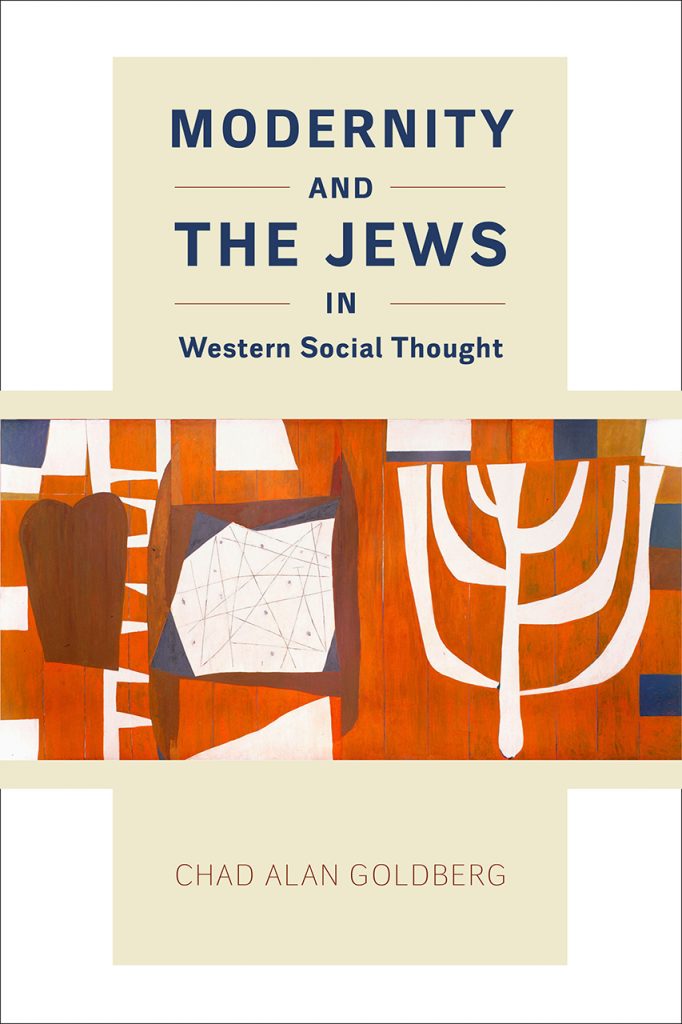
At a high enough level of abstraction, the experiences of Jews and Muslims in the West can be seen as variations on a common process of civil incorporation. When viewed in those terms, the historical experiences of Jews and the contemporary experiences of Muslims in Western Europe are analogous. But it’s important to remember that analogies, properly used, allow us to identify differences as well as similarities between cases. When the analogy between Jews and Muslims is examined at a more concrete level, we find three important differences. First, comparisons of Jews and Muslims tend to overlook significant differences in the socio-historical contexts of their incorporation. These differences include the relative size, type of “strangeness,” and socioeconomic status of each out-group, as well as the presence or absence of religiously inspired political violence. Second, analogies between Muslims and Jews neglect important differences in the discursive representation of the two out-groups. Both groups have been portrayed as personifications of a backward Orient, but only Jews have also and in addition figured prominently in modern social thought as agents of Western modernity. Third, while Muslims have surely emerged as an important touchstone in their own right for defining the meaning of European or American modernity, they have not displaced Jews in this respect. As we’ve discussed already, the Jews—and now the Jewish state—continue to serve as an important reference point. While some contemporary intellectuals suggest that the previously outcast Jews have now become privileged insiders of a dominant Judeo-Christian, European, or Western order at the expense of Muslims, those claims fail to recognize how the positive image of a modern, postnational Europe is constructed in opposition not only to the Muslim other but also to the Jewish state.

Do you think that your own discipline of sociology sufficiently comprehends the centrality of Jews and Judaism as reference points for thinking modernity?

No. Classical sociology devoted considerable attention to Jews and Judaism—in that sense, Jews were highly visible—but there is little reflection among contemporary sociologists about the meaning or significance of those references. There is little understanding of the significance of the Jewish question to the origins and development of the discipline. And there is little or no understanding that the theoretical dualisms which are so central to sociology are based in part on the historical opposition between Jews and gentiles. I hope my book will deepen and improve comprehension of these things among sociologists and others.

Alejandro Baer is an Associate Professor of Sociology at the University of Minnesota and the Stephen C. Feinstein Chair in Holocaust and Genocide Studies. 
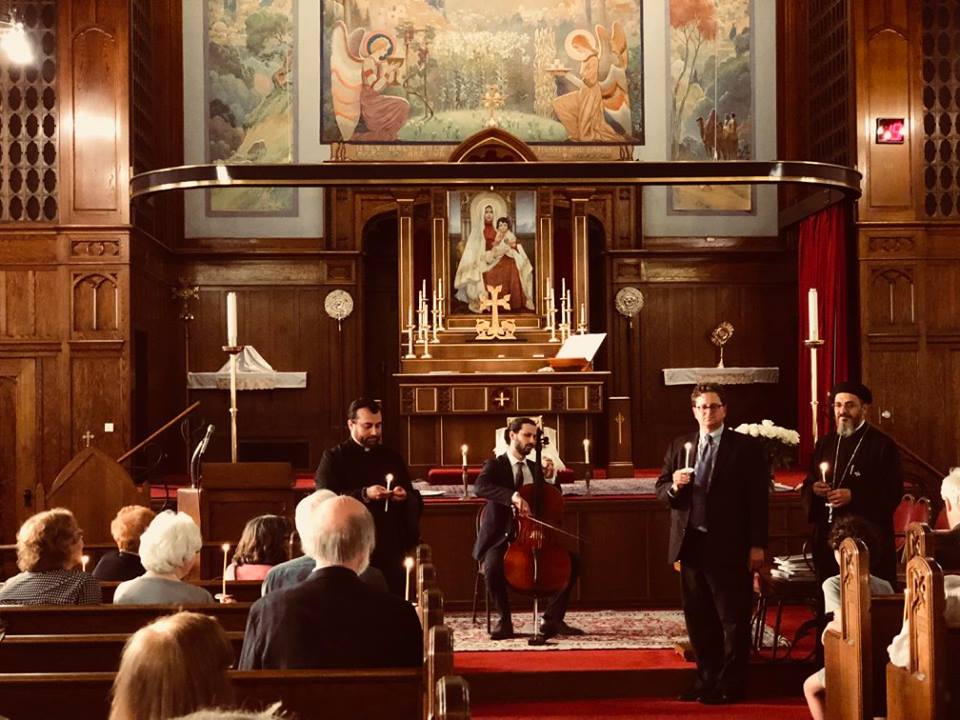
In May, the Armenian Church, the Coptic Orthodox Church, and members of the Jewish community, gathered in the St. Sahag Armenian Church in St. Pail to commemorate victims of genocide and mass violence from their communities. This gathering appears to be the first time that these three communities have come together to remember their pasts. The event came to fruition over friendship and food, as well as a recognition that supporting one another, especially over similarly tragic pasts, is important for the survival of minority communities.

Speakers from each community emphasized a commonality between all three religions, whether a shared history of victimization or a shared theology. Each community has a tragic history, histories that Fr. Tadeos, the priest of the Armenian Church, wished would remain in the past. However, he emphasized that the Coptic Church continues to experience these tragedies today.

Fr. Youannes, the Coptic Orthodox priest, reminded attendees of the 2015 beheading of 20 Copts and a Ghanaian by ISIS on a Libyan beach, the Botrossiya bombing of 2016, and the 2017 massacre of Christians on their way to the monastery of St. Samuel the Confessor. To Fr. Youannes and the Coptic Church, these events are understood as merely a continuation of the persecution faced by Christians over the course of many centuries. “This will continue,” he said.

While the identity of the Armenian, Jewish, and Coptic communities are influenced by the memory of persecution, Coptic identity is additionally informed by unrelenting victimization. The Jewish and Armenian communities talked about their genocides in “never again” terms, demanding justice, recognition, and an end to continued discrimination, but the Coptic Church perceives ongoing violence and martyrdom to be a core part of their identity, and one that is predicted to never ease.

Alejandro Baer, director of the Center for Holocaust and Genocide Studies at the University of Minnesota, and Daniel Wildeson, director of the Center for Holocaust and Genocide Education at St. Cloud State University both spoke about the various different ways humans can respond to past genocides and a contemporary global crisis of hate. Wildeson shared some recommendations he had received about making individual personal choices: Turn inward (separate yourself from the internet; build an underground bunker) or turn outward (build bridges, be friendly). Though difficult, he believes in the power of community, courage and hope to deepen understanding. Baer spoke of the necessity for academics to study the causes and conditions of mass violence, with the goal of using such information to prevent future atrocities. He also emphasized the importance of remembrance: “remembering victims will be more meaningful and effective if we do this together, across group and communal boundaries; if we move beyond this happened to us to this happened to so many, and continues to happen today.”

Steve Hunegs, from the Jewish Community Relations Council, also urged the three communities to recognize that although the Holocaust, genocide, and terrorism are central to each of their experiences, they should not let these events define them. Instead, he urged each community to focus on moving forward in strength and in solidarity. This sentiment was echoed by all the speakers as they considered the importance of community in the wake of violence, while pointing to this event as a symbol of continued hope and solidarity.

Miray Philips is a Ph.D. student in Sociology where she studies narratives of violence and suffering, collective memory, and knowledge production on conflict in the Middle East and North Africa. Miray was the 2016-17 Badzin Fellow.

Flowers in a Khmer Rouge jail cell by alex.ch.

In the twentieth century, 40 to 60 million defenseless people were massacred in episodes of genocide. The 21st century is not faring much better, with mass murder ongoing e.g. in Myanmar and Syria. Many of these cases have been studied well, both in detailed case studies and in comparative perspectives, but studying mass murder is no picnic. Scholars have also examined how conducting research, including ethnographic fieldwork, archival investigation, and oral history interviews, can affect the researcher in profound ways. Among a broader set of difficulties that obstruct research on this wretched subject, two stand out in particular: political constraints and psychological attrition.

Political constraints

All social research operates in a dense political field. Of all the political actors constraining research on mass murder, states stand out. They often have a vested interest in misrepresenting the truth, because for many, the memory of a genocide (or its denial), is part and parcel of their collective identity. States that consider themselves heirs to perpetrator regimes, such as Turkey, Russia, Indonesia, China, or Serbia, make great effort to influence the scholarship on episodes of mass violence. They deny access to archival collections and libraries, intimidate and prohibit them from conducting field work. (The opposite is also possible: governments may try to foster or manipulate research by funding politically useful research, by pushing for the establishment of academic chairs at home or abroad, or by offering scholarships.)

Having to contend with the taboos, restrictions, prescriptions, and outright threats of authoritarian regimes keeps scholars working on these topics under permanent threat. Researchers bold enough to travel into these societies to visit sites, uncover evidence, interview witnesses, and have got to fear the security services and intelligence agencies of these states. One consequence of this discouraging atmosphere is that, in general, less research is carried out on those instances and episodes of mass murder, an undesirable blind spot due to the importance of the events. (Some researchers ingratiate themselves with the authorities for privileged access.) A second consequence poses a methodological dilemma: due to such constraints, does one launch a sting operation, like undercover journalism? Or does one use informants, fixers, and mediators on the ground? Does one pay the possible interviewees for taking the risks?

Psychological consequences

There are significant emotional consequences of studying mass murder. All social research also operates in a dense emotional and moral field. As a general problem in the academy, involvement and detachment has been dealt with at some length, but the study of mass violence is particularly relevant from this perspective. Though a certain amount of passion and involvement can facilitate one’s commitment to the topic, it requires a great deal of detachment to sift through documents and memoirs containing very intimate details of killing. Detachment is even more challenging in ethnographic fieldwork and oral history interviews, as empathy can transmit to scholars the interviewees’ powerful negative emotions.

Since the beginning of the Syrian crisis, I began interviewing Syrians about their experiences with violence, as part of a large-scale oral history project we are launching in the Netherlands. Having interviewed about 80 survivors and eye witnesses so far, their emotions of anger, sadness, fear, survivor guilt, and anxiety has affected me irreversibly. These types of interviews can be an alienating and isolating experience: the more one is absorbed into the stories of the eye witnesses, the more one is also drawn into their emotions. As a general rule of thumb, I felt compassion when interviewing victims, and indignation when interviewing perpetrators. But the interviews left a mark long after I stopped recording. When one young woman from Aleppo told me that she was raped in an ambush and witnessed a beheading up close, I was aghast at that moment. Ever since, I have not mustered my courage to go over those particular interview transcripts and notes.

All in all, the risks of political threats and psychological attrition need to be taken seriously by academic institutions, journals, and colleagues. These constraints can produce setbacks and potentially lower productivity, even with appropriate self-care. We may not be willing or able to change our research topics, but we do need our colleagues and audience to be aware of these challenges.


* This post was originally featured on OUPblog.

Uğur Ümit Üngör is Associate Professor at the Department of History at Utrecht University and Research Fellow at the Institute for War, Holocaust, and Genocide Studies in Amsterdam. His main areas of interest are state formation and nation formation, with a particular focus on mass violence. He is the author of The Making of Modern Turkey: Nation and State in Eastern Anatolia, 1913-1950.