Search results for The

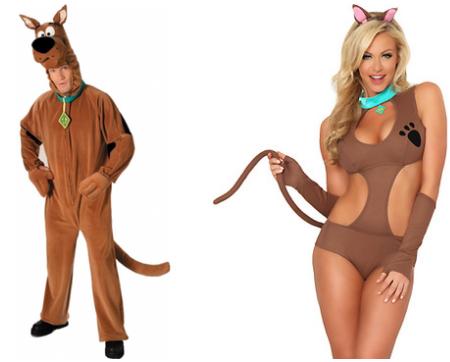
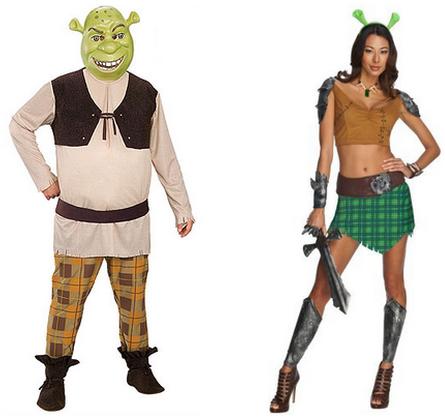
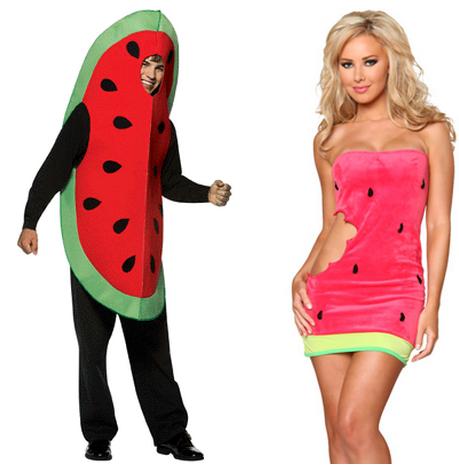
Fuck No Sexist Halloween Costumes has started a collection of paired costumes that illustrate an enforcement of the gender binary by the holiday industrial complex (yeah I just made that up).  Pairing matched costumes, she shows how dressing up becomes an opportunity to “do” gender difference.
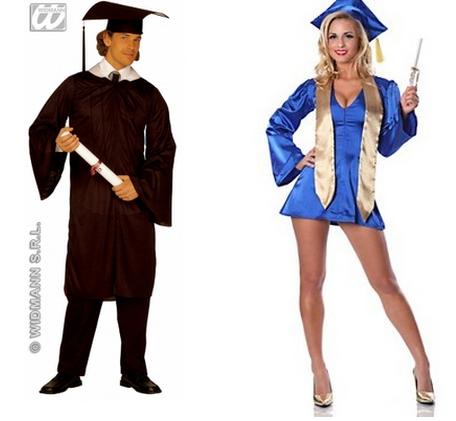
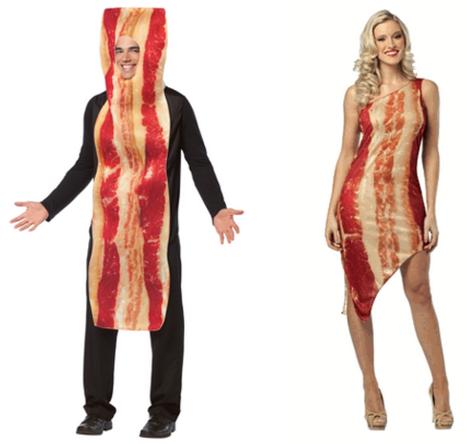
Lots more at the site.

Ghostbusters costumes sent in by @broshenko.  Thanks!

BZROrRVIcAIVANC

Lisa Wade, PhD is an Associate Professor at Tulane University. She is the author of American Hookup, a book about college sexual culture; a textbook about gender; and a forthcoming introductory text: Terrible Magnificent Sociology. You can follow her on Twitter and Instagram.
We’re in the home stretch of the presidential election here in the U.S. Many of us now live in states that allow early voting or mail-in absentee voting, but Tuesday, November 6th, is officially Election Day.

But why Tuesday? It doesn’t seem like the most obvious or convenient day to go to the polls; Saturday might seem like a better candidate.

In this short talk, Jacob Soboroff explains the history of why we vote on Tuesdays: in 1845, Congress passed a law setting an official voting day, and didn’t want people to have to travel on Sundays or miss Wednesday market days and so on and so forth, and eventually they settled on Tuesday as the best day to accommodate the travel times required to get places in horse-drawn buggies so people could vote with the minimum disruption to their lives.

And so we still vote on Tuesdays more than a century and a half later, even though, as Selena Simmons-Duffin of NPR pointed out in a story this morning, a lot of critics argue that it reduces voter turnout due to the difficulty of getting off of work to go vote in states that don’t allow any type of early voting.

Gwen Sharp is an associate professor of sociology at Nevada State College. You can follow her on Twitter at @gwensharpnv.

New neurological research, reported by Robert Wright at The Atlantic, suggests that racism is learned.  Earlier studies had shown that the amygdala, “a brain structure associated with emotion and, specifically, with the detection of threats,” is active, on average, when White people see Black faces.

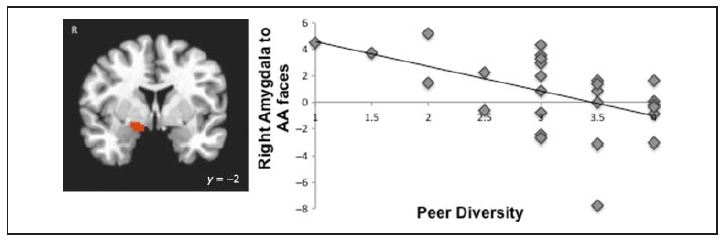
A new paper, however, led by Eva Telzer, shows that we don’t see this reaction until about age 14. Moreover,  how powerfully it is after the age of 14 depends on the racial composition of your peer group.  White people who grow up in more diverse environments show a much weaker reaction than those in homogeneous ones.

This figure illustrates the difference.  As peer diversity increases, reaction of the amygdala retreats to zero.

This is what it means, Wright explains, to say that race is a social construct:

It’s not a category that’s inherently correlated with our patterns of fear or mistrust or hatred, though, obviously, it can become one. So it’s within our power to construct a society in which race isn’t a meaningful construct.

For lots of examples of why race is socially constructed, see our Pinterest board on the topic.

And, for other super cool stories about biology, see language, culture, and color; a story of human echolocation; human brain synchronicity; and men with higher voices have higher sperm counts.

Originally posted in 2012. Re-posted in solidarity with the African American community; regardless of the truth of the Martin/Zimmerman confrontation, it’s hard not to interpret the finding of not-guilty as anything but a continuance of the criminal justice system’s failure to ensure justice for young Black men.

Lisa Wade, PhD is an Associate Professor at Tulane University. She is the author of American Hookup, a book about college sexual culture; a textbook about gender; and a forthcoming introductory text: Terrible Magnificent Sociology. You can follow her on Twitter and Instagram.
The Russell Sage Foundation and the Stanford Center on Poverty and Inequality have put together Recession Trends, an interactive website that lets you create graphs about issues related to the recession. It takes a couple of steps to get to the database (you have to agree to the terms before entering), but once you’re there, you can choose data about a variety of topics — crime, housing, immigration, income, political attitudes, family life, and a lot more. It’s a great way to quickly get an overview of many aspects of life in the U.S.

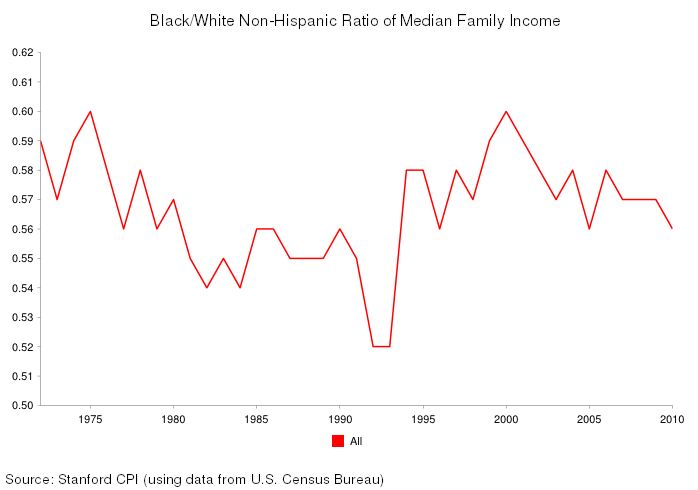
I looked at the ratio of median family income between African American and White families. Between the early 1970s and 2010, we’ve seen a consistent gap in earnings, with Black median household income hovering between about 52 and 60% that of Whites:

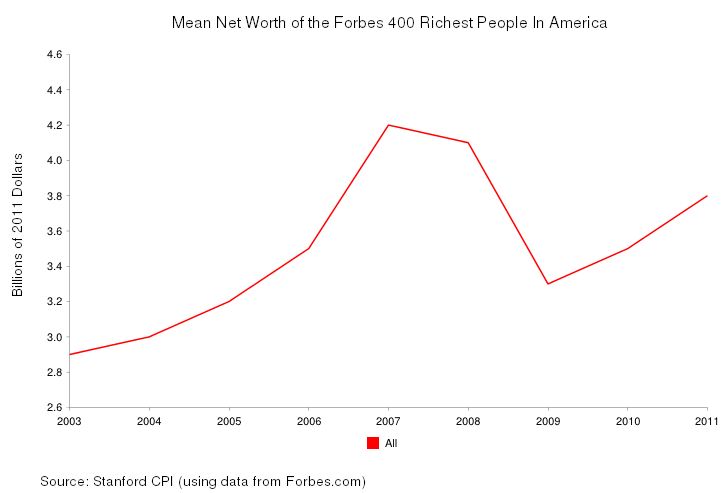
The graph of the mean net worth of the individuals on Forbes’s list of the 400 richest people in the U.S. shows that while they certainly saw their wealth take a tumble during the recession — it fell to a mere $3.3 billion or so — they’re recovering well:

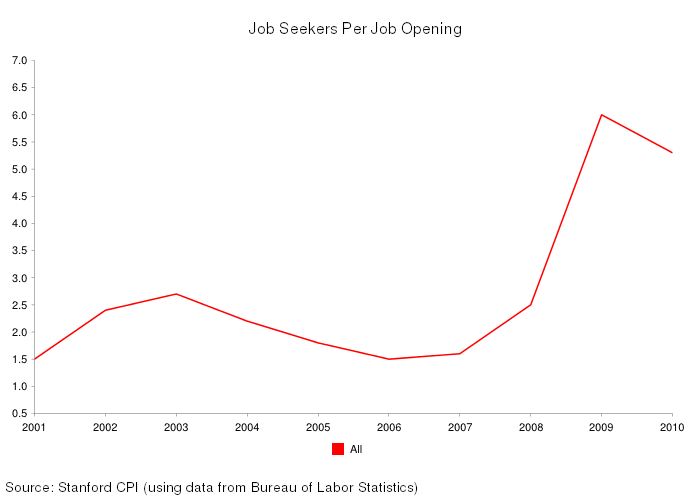
Unsurprisingly, the number of job seekers per job opening went up sharply after 2007; it’s finally starting to drop off slightly, though we still have about 5 people looking for every 1 job that’s available:

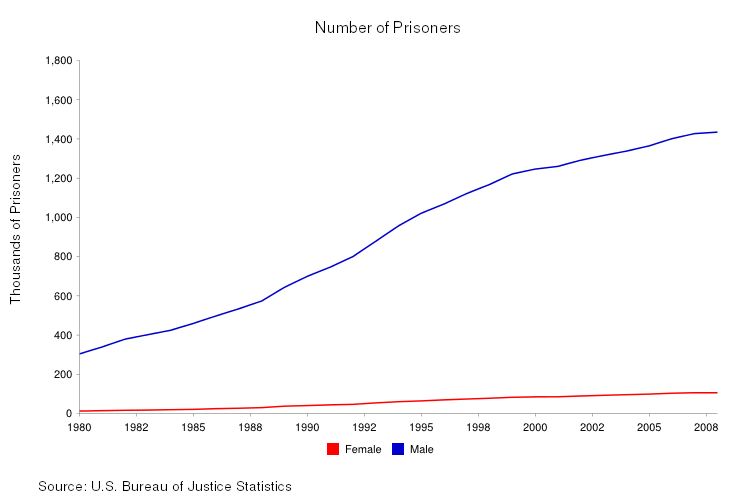
You can add more than one dataset for many topics. Here’s the growth in the prison population since 1980, by gender:

There’s lots, lots more. Whatever topic you’re particularly interested in, there’s a good chance there’s something there that’ll grab your attention for a bit.

Gwen Sharp is an associate professor of sociology at Nevada State College. You can follow her on Twitter at @gwensharpnv.

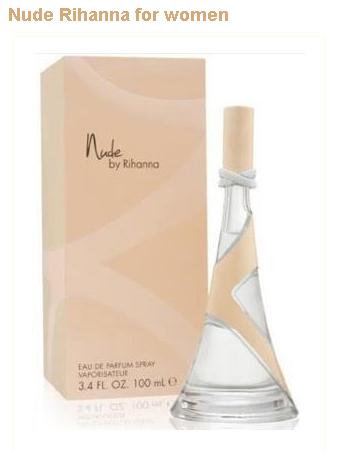
Oops they did it again.  What color do you think graces the bottle and packaging for Rihanna’s new fragrance, named “Nude”?  You guessed it.


The deep and abiding centrality of whiteness is made especially clear when words like “nude”  are used to describe light tan even in the context of a darker-skinned woman. It happened to Michelle Obama too.  Thanks to @GenderPolitics on Twitter for sending us the tip!

We’ve many examples of this phenomenon.  All can be found on our Pinterest page, titled “What Color is Flesh?

Lisa Wade, PhD is an Associate Professor at Tulane University. She is the author of American Hookup, a book about college sexual culture; a textbook about gender; and a forthcoming introductory text: Terrible Magnificent Sociology. You can follow her on Twitter and Instagram.
Dolores R. and Kelly S. alerted us to Ellen Degeneres’ ridiculing of the new Bic product, “Bic for Her” (yes, a real product, if you hadn’t heard).   Gentle but straight up, it’s worth four minutes of your time:

Lisa Wade, PhD is an Associate Professor at Tulane University. She is the author of American Hookup, a book about college sexual culture; a textbook about gender; and a forthcoming introductory text: Terrible Magnificent Sociology. You can follow her on Twitter and Instagram.
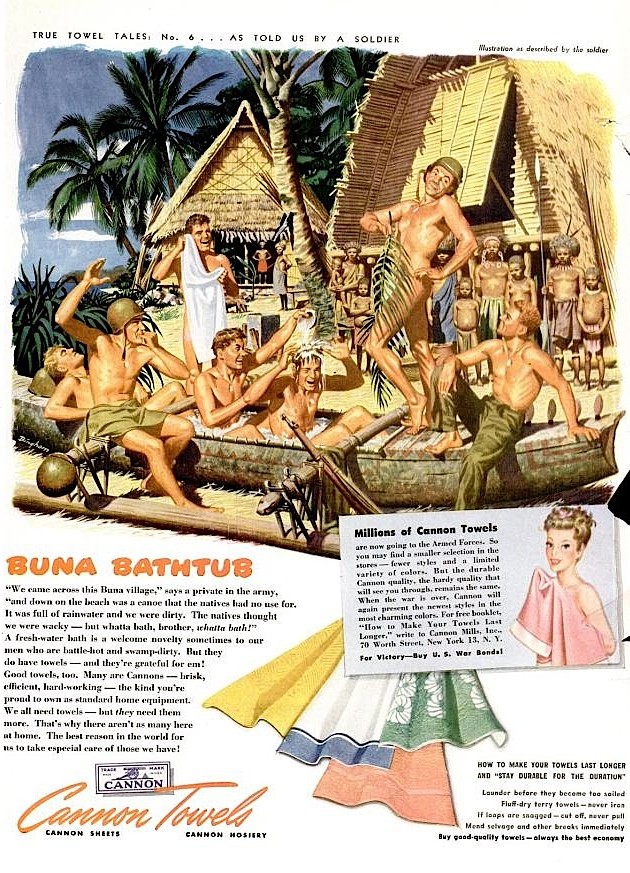
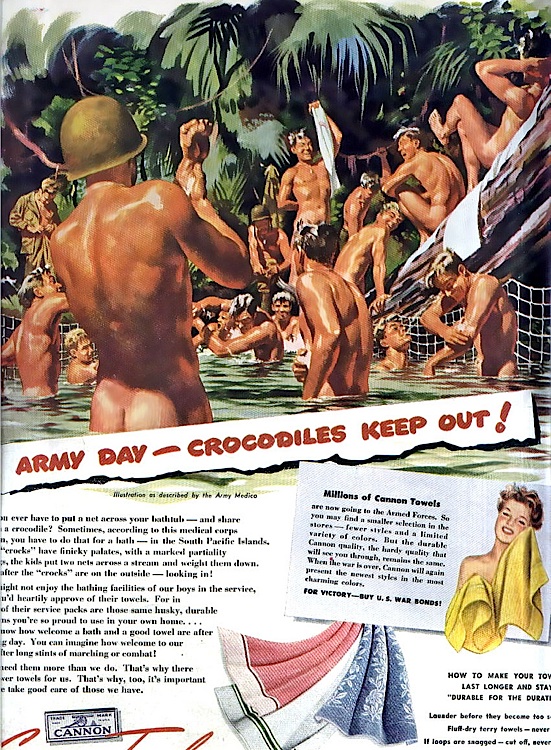
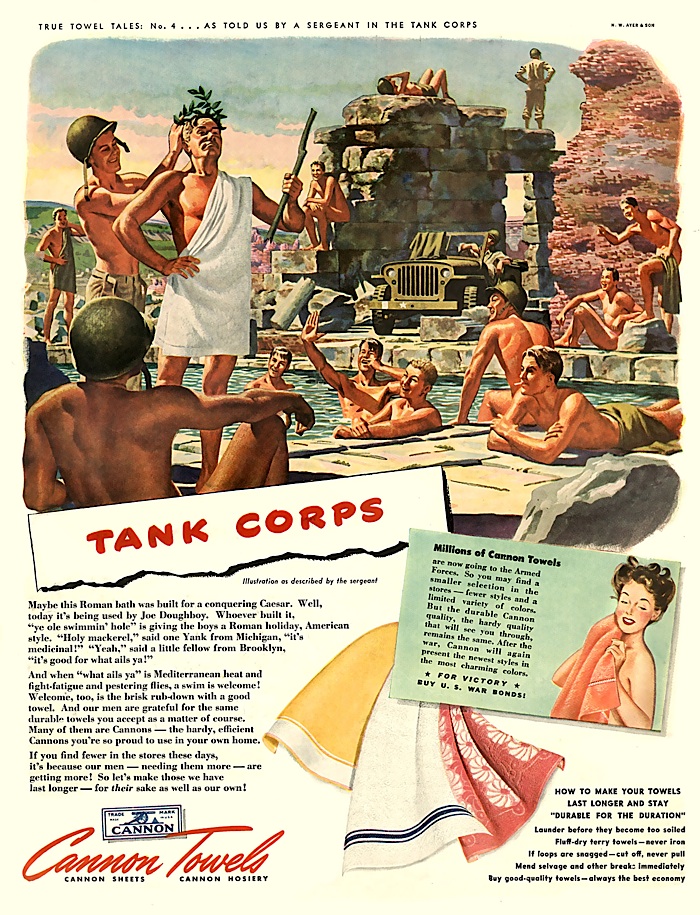
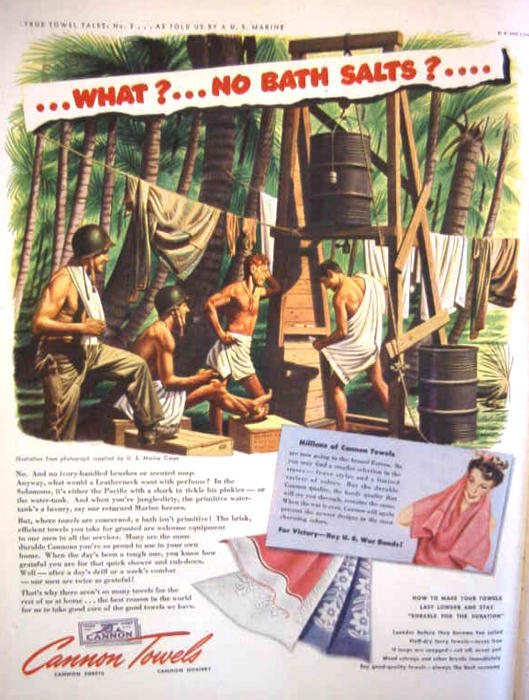
We’ve posted before about how our changing collective awareness of homosexuality in the U.S. over the last several decades often leads us to see implicit(or even explicit) gay themes in vintage ads and photos that likely wouldn’t have carried those connotations at the time. My colleague Gregory R. sent in a set of ads from the 1940s for Cannon Towels that perfectly illustrate this. The ads, part of their True Towel Tales campaign, focus on the experiences of U.S. soldiers fighting in various parts of the world during World War II. They seem intensely homoerotic by today’s standards:


Found at Retronaut.

Editor’s Note: This post inspired me to put together a “Before Homosexuality” Pinterest Board.  You can see our whole collection there.

The Hall of Fame

Disability
Body Types
Gender
Race/Ethnicity/Color

The Hall of Shame

Body Types
Hair
Transsexuality
Heightism
Disability