
race

Photo Of Ramadan Light On Top Of Table by Ahmed Aqtai is licensed under CC BY 2.0 in pexels.

In the United States, Islamophobia is at an all-time high. Muslim people have experienced increased discrimination including being singled out by airport security and other law enforcement individuals, being called offensive names, and experiencing physical threats of violence or attacks. Given that the Muslim population is continuing to grow, it is crucial to consider the experiences of Muslim people in the U.S. and the challenges they face.

Trends in Islamophobia

Muslim people do not make up a large population of the United States, comprising around 3 million people (or about 1.1% of the total US population) in 2017 and is projected to be 1.7% in 2030. And over the last decade, public perception of Muslim people has since trended towards unfavorable.

The Impact of Media on Islamophobia

The media has played a critical role in shaping how the public perceives Muslim people in the U.S., including depicting discriminatory stereotypes of Muslim people as terrorists, violent, and backwards. For some, these representations have been used to justify violence and discrimination against Islamic people and institutions.

The Racialization of Muslim and Islamic Identity

The development of Islamophobia has been driven as well by the ways in which Muslim identity has become racialized in the U.S. and other parts of the world, an example of how “religion can be raced”. In particular, people “assign Muslim-ness” onto markers of Islam (such as wearing a hijab, having a beard, or wearing traditional clothing like a thobe or abaya) that are informed by cultural ideas and appearances. It is important to keep this racialization in mind when considering how Islamophobia manifests.

Muslim is not a Monolith

It is  important to resist the ”one-size-fits-all” stigmatized representations and stereotypes  of an extremely diverse group of people. While public perceptions have conflated Arab and Middle Eastern identity solely with a singular Muslim category, Muslim people actually come from different ethnic groups that vary widely along beliefs, values, and more.

Studio Setting by Brett Sayles is licensed under CC BY 2.0 in pexels.

What does it mean to be authentic? Authenticity is frequently used to describe people or things that are believed to be genuine, sincere, consistent, or original. We evaluate both things (like music, television, or food) and people (ourselves and others) on their authenticity, often assuming that some are inherently real or beyond artifice, while others are more artificial or contrived. However, sociologists and social scientists recognize the notion of authenticity itself as a powerful social construct: we collectively decide that people and things are (or are not) authentic. We evaluate people in terms of their personal and social authenticity.

Personal Authenticity

Personal authenticity involves being “true” to one’s self. But…what is the true self? Sociologists and scholars have challenged the idea that we have a true self, arguing that we all play a variety of social roles (student, friend, employee, etc.) in different situations. As we take on these roles, some individuals believe their actions are real and genuine and others feel that they are just putting on an act. It is this subjective understanding of the true self that matters for personal authenticity, even if it is socially constructed or conditioned. When people feel that they are being true to themselves, they experience authenticity as an emotional response.

A desire to feel authenticity is a powerful motive for behavior. Sometimes we act with the specific goal of expressing our true self.  For example, some get tattoos and body art to express their authentic selves.

However, societal pressures, from social norms to economic needs, may influence us to embrace behaviors that feel inauthentic. In the context of economic exchange, many roles require emotional labor (or, the management of feelings to create a certain emotional display). For example, flight attendants are expected to be friendly and helpful to the travelers–even if the travelers are rude or unruly. For workers, engaging in emotional labor can feel like acting or maintaining an illusion, leading to feelings of inauthenticity and a sense of emotional numbness.

Social Authenticity

Individuals are a part of many different groups (unions, trivia teams, fandoms, religious groups, etc.) and social categories (age, race, class, and gender/sexuality) and social authenticity is the idea of truly belonging to that group or category. Group members define certain characteristics as authentic and evaluate the authenticity of others based on those criteria. Authenticity can serve as a way to draw boundaries around groups, establishing who is in and who is out. For example, members of local punk scenes may display their authenticity through personal appearance, knowledge of punk music, and extensive vinyl collections—setting them apart from “posers.” Outsiders–or, individuals who fail to meet the authenticity criteria established by a group–may be viewed as appropriating the culture of a group to which they don’t belong.

Of course, group members may disagree on what it means to be an authentic member. When the authenticity of a group member is questioned, they may respond by challenging the validity of the authenticity standards used to judge them.

The Role of Race, Class, and Gender

Being perceived as an authentic member of a social group can yield rewards, from the tangible reward of admission to a university to simply achieving group belonging. However, marginalized groups often face bias or unattainable expectations of what an authentic member of their group should be like. These expectations can be produced within groups or perpetuated externally, through institutions like schools or the media. For instance, socially constructed notions of an authentic Asian American student or Black woman can exclude those who may not conform to these expectations, while also reaffirming sweeping generalizations about these groups.

The relationship between perceived authenticity and social acceptance is especially vital in professional life. For instance, people of color in White-dominated professions face unique pressure to prove themselves as “authentic” because whiteness is an implicit expectation of a good leader. Similarly, evaluations of people’s merit based on class and gender are embedded with assumptions about who can be authentic in their position. People with marginalized identities in certain professions or organizations are not only expected to fulfill their duties- but must also juggle personal and social authenticity based on ambiguous standards. 

We see the side of a person, a police radio and handcuffs lopped onto a belt. They are wearing a blue shirt and blue pants. Image used via CC0.

Complaint Process
In recent years, many initiatives have worked to systematically track and analyze data on police complaints in jurisdictions such as Chicago. However, obtaining accurate data on police is notoriously difficult, because the primary mechanism for oversight is often “internal affairs” – the police themselves.  In other words, if someone wanted to voice their grievance they are often required to make the complaint to the very organization that harmed them – an obvious conflict of interest.

When complaints are made, very few are “sustained” or deemed valid by colleagues of the police officer. Social scientists have found that between 2% – 28% of complaints are actually sustained, which might well be an overestimate. Moreover, complaints by Black citizens are even less likely to be sustained.

Bad Apples?

Is the solution as simple as removing “bad apples” with numerous police complaints from the police force? As is common when society faces a difficult problem, we tend to gravitate towards easy solutions – such as scapegoating. Research suggests that a small portion of officers (4% – 12%) were responsible for a relatively large share (20% – 41%) of filed complaints. Yet the majority of complaints are spread throughout the department. In other words, there are not just a few bad apples spoiling the bunch – but the tree itself may be bearing rotten fruit

Systemic Change

In recent decades, police departments have adopted initiatives, such as civilian review boards, which foster greater inclusion of the community into addressing complaints. However, these initiatives have mixed results and have been criticized for their exclusion of racially marginalized community members.

Beyond civilian review boards, cities such as Baltimore, Los Angeles, New Orleans, New York, and Denver have taken action to hold spaces for direct, face-to-face dialogue between complainants and police. Both traditional and restorative justice models of mediation have led to greater satisfaction, in-tune with the spirit of “community-policing” and fostering healing. 

As is the case with controlling crime more generally, this research shows that the problem is not as simple as identifying and tossing out a few bad apples – and that police, policy makers, and the community must look to system-level change rather than placing the entirety of blame on individual scapegoats.

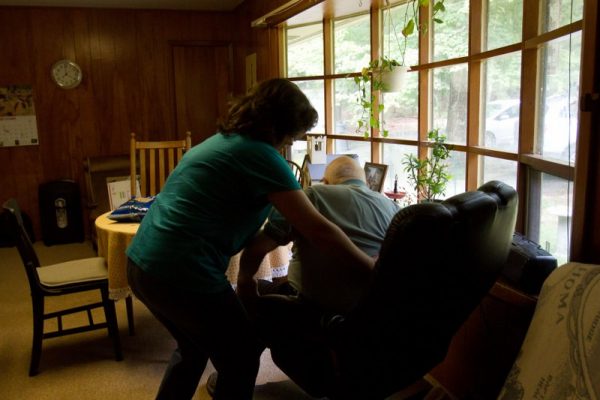
A woman helps an elderly man get up from his chair
Photo by Brian Walker, Flickr CC

Originally published May 4, 2020

When we talk about work, we often miss a type of work that is crucial to keeping the economy going and arguably more challenging and difficult than ever under conditions of quarantine and social distancing: care work. Care work includes both paid and unpaid services caring for children, the elderly, and those who are sick and disabled, including bathing, cooking, getting groceries, and cleaning.

Sociologists have found that caregiving that happens within families is not always viewed as work, yet it is a critical part of keeping the paid work sector running. Children need to eat and be bathed and clothed. Families need groceries. Houses need to be cleaned. As many schools in the United States are closed and employees are working from home, parents are having to navigate extended caring duties. Globally, women do most of this caring labor, even when they also work outside of the home. 
Photo of a woman cooking
Photo by spablab, Flickr CC
Globally, women do most of this caring labor, even when they also work outside of the home. Historically, wealthy white women were able to escape these caring duties by employing women of color to care for their children and households, from enslaved African Americans to domestic servants. Today people of color, immigrants, and those with little education are overrepresented in care work with the worst job conditions. 
In the past decade, the care work sector has grown substantially in the United States. However, care workers are still paid low wages and receive little to no benefits. In fact, care work wages are stagnant or declining, despite an overall rise in education levels for workers. Thus, many care workers — women especially — find themselves living in poverty.  

Caring is important for a society to function, yet care work — paid or unpaid — is still undervalued. In this time of COVID-19 where people are renegotiating how to live and work, attention to caring and appreciation for care work is more necessary than ever.

Although Covid-19 has made dating more difficult, people are still finding ways to make connections and initiate more intimate relationships. Like a lot of life right now, people are using the internet to meet and date potential partners. But, unlike zoom birthday parties or virtual weddings, online dating is nothing new. Even before the pandemic, 3 in 10 Americans reported having ever used a dating website or app. Sociological research shows us both the promises of online dating and its potential to entrench existing inequalities.

The internet has expanded the dating pool, potentially displacing “traditional” ways of meeting partners in school or through family connections. This is particularly impactful for people who might have “thin” dating markets where they live and in their community including LGBTQ people and middle-aged heterosexual people. Online dating provides a way for people to seek connection, love, or monogamy with a broader social network, one that is connected to geography and place in both new and familiar ways.
The “online” in online dating introduces concerns about authenticity that are not necessarily present in face-to-face interactions. Users worry that their online dates are not who they say they are, and carefully analyze date’s online profiles to try to determine “the truth.” Individuals with stigmatized identities, such as disabled people, worry about how to “disclose” this identity in cyberspace, a concern that is not necessarily present in the embodied offline world.
Although it is tempting to view online dating as transformative, it can also entrench existing inequalities. “Assortive mating” in which people seek partners similar to them in terms of race, educational experience, and class happens online, too. For instance, users set their preferences and search profiles in ways that reinforce racial segregation and hierarchy. The inequalities of the “real world” are also present online, with the added barrier that only those who can access computers and the internet can participate.
A woman helps an elderly man get up from his chair
Photo by Brian Walker, Flickr CC

When we talk about work, we often miss a type of work that is crucial to keeping the economy going and arguably more challenging and difficult than ever under conditions of quarantine and social distancing: care work. Care work includes both paid and unpaid services caring for children, the elderly, and those who are sick and disabled, including bathing, cooking, getting groceries, and cleaning.

Sociologists have found that caregiving that happens within families is not always viewed as work, yet it is a critical part of keeping the paid work sector running. Children need to eat and be bathed and clothed. Families need groceries. Houses need to be cleaned. As many schools in the United States are closed and employees are working from home, parents are having to navigate extended caring duties. Globally, women do most of this caring labor, even when they also work outside of the home. 
Photo of a woman cooking
Photo by spablab, Flickr CC
Globally, women do most of this caring labor, even when they also work outside of the home. Historically, wealthy white women were able to escape these caring duties by employing women of color to care for their children and households, from enslaved African Americans to domestic servants. Today people of color, immigrants, and those with little education are overrepresented in care work with the worst job conditions. 
In the past decade, the care work sector has grown substantially in the United States. However, care workers are still paid low wages and receive little to no benefits. In fact, care work wages are stagnant or declining, despite an overall rise in education levels for workers. Thus, many care workers — women especially — find themselves living in poverty.  

Caring is important for a society to function, yet care work — paid or unpaid — is still undervalued. In this time of COVID-19 where people are renegotiating how to live and work, attention to caring and appreciation for care work is more necessary than ever.

2020 is a census year in the United States, meaning that this year represents the major moment of a constitutionally-mandated survey about the American population.

Since it was first introduced in the 18th century, the U.S. Census has always provided important data for guiding public policy and served as a crucial source of evidence for social science research. Considering we only get this chance once a decade, here at The Society Pages we took a quick census of our own content to bring you our favorites #TSPClassics about the Census. This collection covers a variety of topics, ranging from the nuts and bolts of conducting the Census itself, to how the history of the Census reflects and impacts changing racial and ethnic boundaries in the United States, and the variety of ways social scientists have used census data in conducting research and building theory. Read on!

The Census and Social Science: Lessons for and from Conducting Research

Advances in social science methodology and research have contributed to developments in the Census. Though it is a rare and large research endeavor unlike any other, the Census is a great example of theoretical and methodological considerations that social scientists grapple with every day. Not only does the Census give us a chance to put sociological theory and methodology into action, but Census data has been important in social science literature and research across a variety of fields.

As one of the largest endeavors in data collection, the Census has many complicated issues to consider as part of the practical processes involved with research and the interpretation of data.
  • In this #TSPClassic episode of Office Hours, we hear from Robert M Groves, a sociologist who was then Director of the Census Bureau, about how the Census manages and works through such complications.
  • In this Clipping, Robin Autry speaks with The Atlantic about how researchers clean census data to deal with ambiguous, fluid concepts such as race and ethnicity.
  • Then, read this #TSPClassic from The Color Line about the preparation and planning behind the 2010 Census; how does such thinking relate to the 2020 Census?
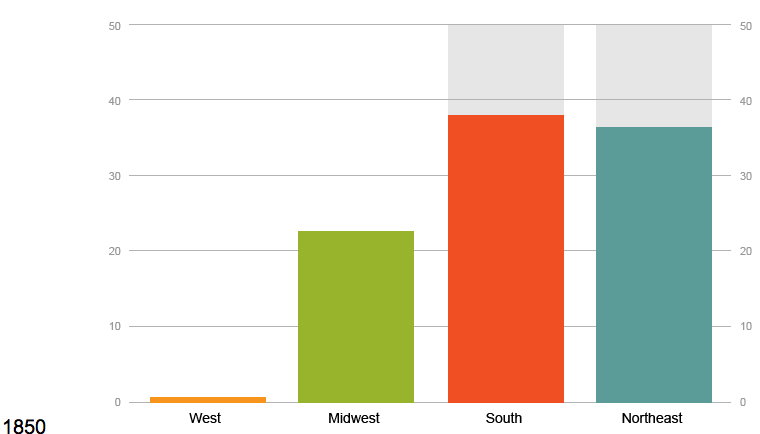
Bar graph with different colored lines shows U.S. regional distribution based on 1850 census. The northeast and south have the highest lines and are about the same. The west line is barely visible and the midwest line is in between.
Click to enlarge. Graph shows U.S. regional distribution based on the 1850 census, SocImages
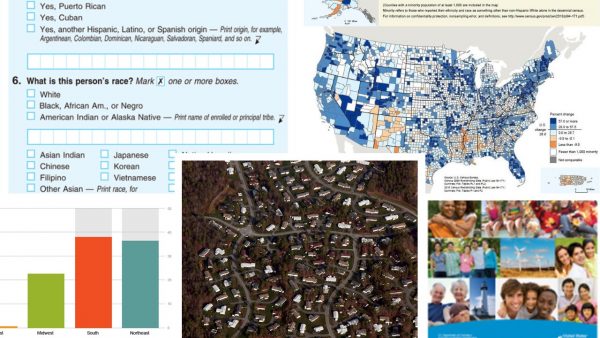
Census data and related research can tell us a lot about our lives, particularly when it comes to where we live and how we work.
  • Scholars have used such data to understand the history of urbanization and suburbanization in the United States; this Sociological Images post draws on census data to visualize the development of the modern American metropolis and contemporary communities.
  • Read this Sociological Images post about inequalities in Americans’ commutes to work and access to transportation.
  • Finally, see how Graphic Sociology uses on census data to discuss how unemployment and poverty relates to age, gender, and much more. 
Photo shows a collage of pictures featuring people in groups. At the top, it says American Community Survey.
Photo via CCF
The Census can tell us a lot about the big picture, but what can it tell you about yourself?
  • In this article from Contexts, Leah Sabo reflects on how thinking about the Census can teach us about the individual and make us think about our own lives. Read on to spark your sociological imagination about privilege, neighborhoods, diversity, and much more.
The Census, and subsidiary projects it manages such as the American Community Survey (ACS), provide incredibly important data for social science research. Though the ACS reaches fewer people than the one-a-decade Census, it gathers information about ancestry, neighborhoods, and communities in more detail and with more regularity.
  • In this #TSPClassic from Council on Contemporary Families, Philip Cohen challenges proposed budget cuts to the ACS and explains why it is important to fund this survey and social science in general.
  • Furthermore, such research processes are important around the world; read a Sociological Images piece about what other censuses around the world look like, based on resources from the American Anthropological Association.

The Census and Race: The Social Construction of Race and Diversity in the USA

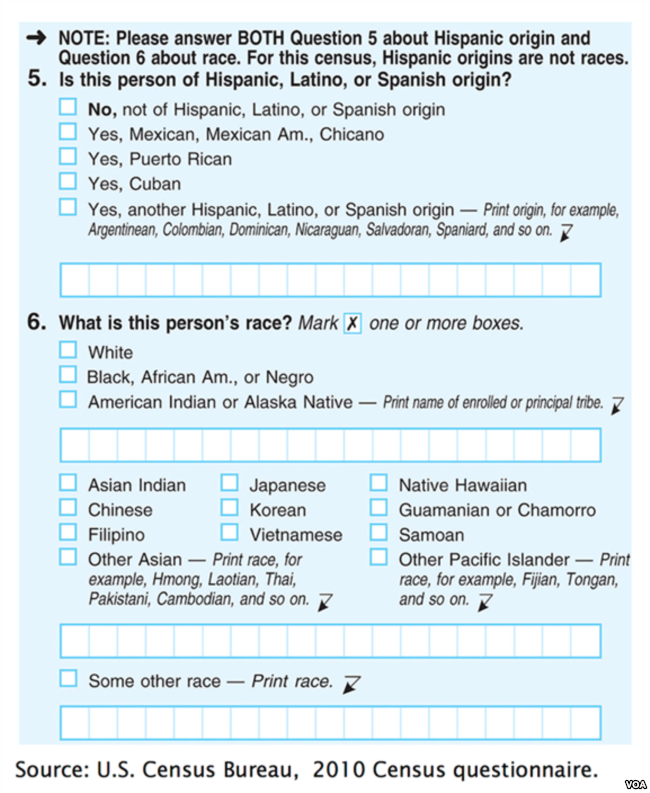
Photo shows a copy of the 2010 census questionnaire. The form is blue with check boxes and grids for the answers.
Click to enlarge. Photo via SocImages

“Race” is a social construction. Social forces shape how physical characteristics and groups become seen in racialized ways, and this happens through a variety of cultural and material processes. The ways the Census approaches race, ethnicity, and identity have changed drastically over its centuries-long history; much of this reflects shifting norms about racial categories and racism itself in the United States. Census data thus shows us how race and racial landscapes change, and the complexities of race in the United States.

Racial identification on the Census has changed and evolved.
  • This Sociological Images post describes how the Census’ racial categories have changed over the years
  • This Sociological Images post describes shifts in Census practices regarding the measurement of race through appearance versus identity. 
  • Be sure to read this summary of research on how the fluidity of racial identification on the Census can itself be a fluid process.
  • These next two Clippings consider how the Census relates to the intersections of race, ethnicity, nationality, and citizenship: the first describes how the Census affects the historical development of “Hispanic” as an ethnic category, and the second points to complexities in measuring American-Indian identities in census data. 
Census research has been used to study racial inequality both past and present.
  • This post from Sociological Images uses census data to illustrate discuss historical quantification of slavery.
  • And this #TSPClassic via Council on Contemporary Families draws on census data to discuss how, despite the passage of fifty years since the Civil Rights Act, racial inequality and disadvantage persist in a variety of outcomes.
  • Finally, read this Sociological Images post to learn more about racial residential segregation in several American metropolises.
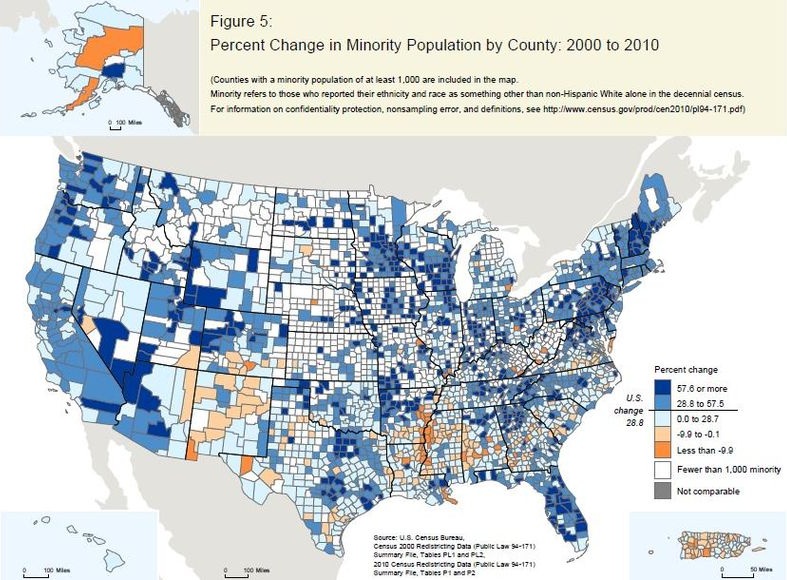
Image shows a color-coded map of the United States divided into counties. Each county's color is determined by the percent change in minority population by county from 2000 to 2010. The coasts look darker blue meaning there is more change.
Click to enlarge. Photo via SocImages
The twenty-first century has witnessed the rise of unprecedented racial and ethnic diversity in the United States.
  • This post from Council on Contemporary Families uses census data to capture how America’s children are growing up in a new era of everyday diversity
  • And this #TSPClassic from Sociological Images shows racial and ethnic diversity within American families.
  • This Sociological Images post considers potential contrasts between the demographics of the mid-20th and the mid-21st century.
  • Along these lines, read this post from Color Lines about the rise of interracial marriage and families, particularly for Asian-Americans. 
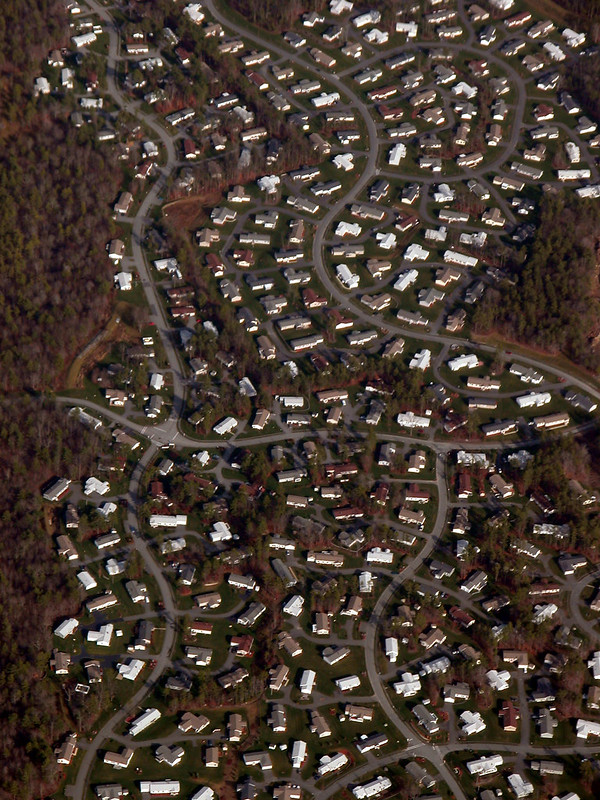
Image shows an aerial  view of a suburban community.
Photo by Art01852, Flickr CC
The rise of difference and diversity has drawn discomfort, racial tensions, and backlash, and much of this comes from the ways that everyday people react to census data and population projects.
  • This Clipping describes such reactions
  • And this Clipping describes how census data can be used to stoke fears about immigration.
  • Finally, be sure to read this #TSPClassic, a special feature about the “whitelash” against diversity.
As American diversity continues to rise, push back and resentment will surely continue to be relevant to how people use and react to census data. What will we see once the 2020 numbers come out?
Finally, it is important to recognize that rising racial diversity does not necessarily mean that racial inequality will disappear; in fact, sociologists often find the opposite. One such area of research is related to segregation and concentrated disadvantage, wherein non-white communities often have less cultural, political, and economic power.
  • Be sure to read this Discoveries post about historical and contemporary racial segregation between the North and the South,
  • And read this Clippings piece about how segregation persists despite an increasingly racially diverse population. 
As we move into a future of greater difference, such ideas are important to keep in mind; what will the 2020 Census tell us about race, diversity, and inequality?

We hope you enjoy these #TSPClassics as much as we do, and we look forward to working with the 2020 Census data!

Flyers at Hartsfield-Jackson Atlanta International Airport wearing facemasks. Photo by Chad Davis, Flickr CC

During times of crisis, existing prejudices often become heightened. Fears about the current coronavirus, or COVID-19, have revealed rampant racism and xenophobia against Asians. Anti-Asian discrimination ranges from avoiding Chinese businesses to direct bullying and assaults of people perceived to be Asian. This discriminatory behavior is nothing new. The United States has a long history of blaming marginalized groups when it comes to infectious disease, from Irish immigrants blamed for carrying typhus to “promiscuous women” for spreading sexually transmitted infections. 

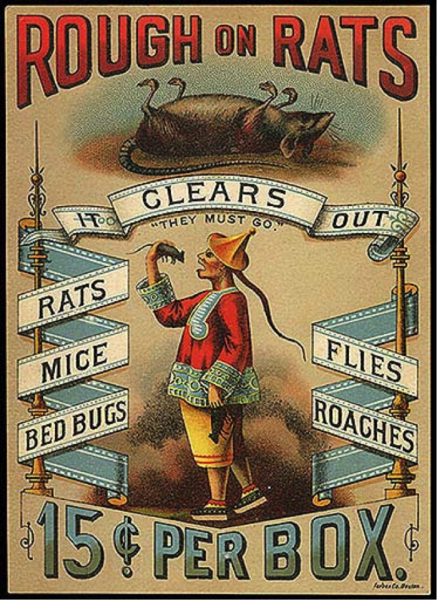
Historically, the Chinese faced blame time and again. In the 19th century, public health officials depicted Chinese immigrants as “filthy,” carriers of disease. These views influenced Anti-Chinese policies and practices, including humiliating medical examinations at Angel Island — the entry port for many Chinese immigrants coming to America — and the violent quarantine and disinfection of San Francisco’s Chinatown in the early 20th century when a case of the Bubonic plague was confirmed there. 
An advertisement for "Rough on Rats" rat poison. On the flyer there is an image of a stereotypically drawn "china man" eating a rat.
Late 19th century racist advertisement for rat poison

Discrimination against the Chinese is one example among many. Such discrimination had nothing to do with their actual hygiene and health, and everything to do with their social position relative to other racial groups. It’s easy to look back on the xenophobic U.S. policies and behavior in earlier times. Let’s not fall into the same patterns today.

For more on xenophobia and coronavirus, listen to Erika Lee on a recent episode of NPR’s podcast, Code Switch.

Many stacks of textbooks. Photo via Pixabay.

Textbooks are more prevalent in American history courses than in any other subject, and a recent article from The New York Times revealed how geography has influenced what U.S. students learn. Despite having the same publisher, textbooks in California and Texas (the two largest markets for textbooks in the U.S.) vary wildly in educational content. Researchers have also found numerous inconsistencies and inaccuracies in American history textbooks, resulting in the glorification of national figures and spread of national myths.

Depictions of violence in textbooks are also highly politicized. Episodes of violence are often muted or emphasized, based on a country’s role in the conflict. For example, conflicts with foreign groups or countries are more likely than internal conflicts to appear in textbooks. Additionally, American textbooks consistently fail to acknowledge non-American casualties in their depictions of war, citing American soldiers as victims, rather than perpetrators of the horrors of war. Depictions of conflicts also vary over time, and as time passes, textbooks move away from nationalistic narratives to focus instead on individualistic narratives.
Public figures, like Hellen Keller and Abraham Lincoln, tend to be “heroified” in American textbooks. Rather than treating these public figures as flawed individuals who have accomplished great things, American textbooks whitewash their personal histories. For example, textbooks overlook Keller’s fight for socialism and support of the USSR and Lincoln’s racist beliefs. The heroification of these figures is meant to inspire the myth of the American Dream — that if you work hard, you can achieve anything, despite humble beginnings.
Symbolic representation of the past is important in stratified societies because it affects how individuals think about their society. Emphasizing the achievements of individuals with humble beginnings promotes the belief among American students that if they work hard they can achieve their goals, despite overwhelming structural inequalities. Furthermore, as historical knowledge is passed down from one generation to the next, this knowledge becomes institutionalized and reified–making it more difficult to challenge or question.

It’s Black History Month, and we at TSP have rounded up some of our favorite, timeless posts about the history, meaning, and importance of celebrating black history. These #TSPClassics include articles about Black History Month itself, as well as articles about research related to racial identity, racism, and anti-racism. Read about Black scholars’ early contributions to social sciences, recent innovations in scholarship about race, ongoing issues of racism and inequality, new strategies and actions in advocacy, and much more below; happy Black History Month!

From Our Main Page

Did you know W.E.B DuBois was a pioneering sociologist? Read more at “What Would W.E.B DuBois Do?
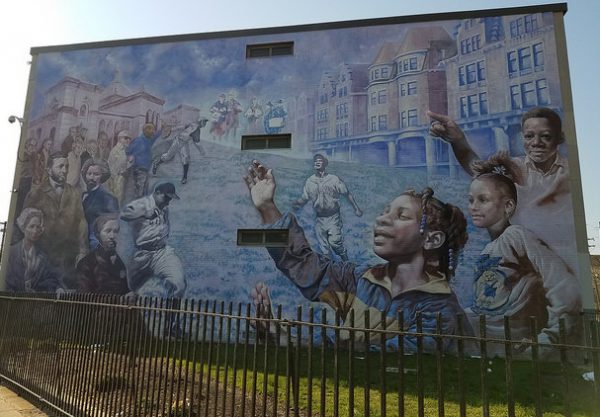
Photo of a mural honoring black history in Philadelphia. Photo by 7beachbum, Flickr CC.
Read about black women’s advanced sociology and social science at “Unearthing Black Women’s Early Contributions to Sociology.”
Read about why the idea of a “white history month” ignores the history of race and racism at “Why We Don’t Need a White History Month.”
“Black Panther,” one of the most successful movies in the Marvel universe, was a momentous film for black representation and imagery in Hollywood. Read more at “Black Panther as a Defining Moment for Black America.”
The word “racism” can mean a lot of different things in different contexts; read about different definitions, forms, and research traditions regarding “racism” in the USA at “Different Dimensions of Racism.” 
Even in the 21st century, Black Americans have to navigate racist stereotypes, imagery, and perceptions, and many learn such strategies at a young age. Read about related parenting strategies and challenges at “How Black Mothers Struggle to Navigate ‘Thug’ Imagery.”
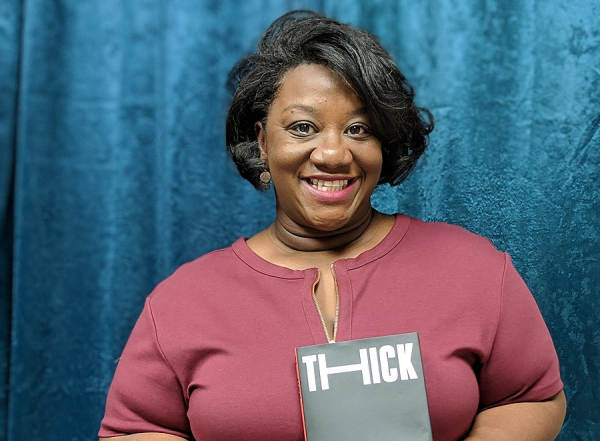
Recent research about black identities, experiences, and community analyzes how themes studied by early sociologists of race relate to twenty-first century technology, such as social media platforms and digital communication. Read more about these and other new research directions at “A Thick Year For Tressie McMillan Cottom.” 
Tressie Mc Millan Cottom displays her essay collection Thick, which was nominated as a National Book Award Finalist. Photo via Wikimedia Commons.
Black athletes represent a new generation of leaders and anti-racist advocates; read more at “A New Era of Athlete Awareness and Advocacy.” 
Should educators promote colorblind rhetoric in the classroom? Read about problems with colorblind teaching practices at “Color-Blind Classrooms Socialize Students to Disregard History.”
Research shows that skin color intersects with race and racial identity in ways which perpetuate racial inequality. Read more at “Skin Color, Self-Identity, and Perceptions of Race.” 
Social norms, rules, and laws about mixed-race relationships have changed drastically across history, but many issues of inequality and identity remain for contemporary multiracial families. Read more at “Navigating Multiracial Identities.” 
Photo of a multiracial family by taylormackenzie, Flickr CC.

From Our Partners and Community Pages

Soc Images

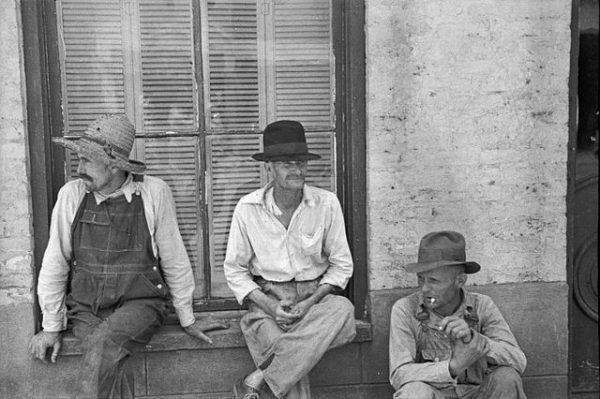
Rural Appalachia is often discussed as a mainly-white region, but did you know about the richness of black history in the mountains? Read more at “Hidden Black History in Appalachia.”
Rural sharecroppers in Appalachia. Source: Wikimedia Commons
Sometimes, businesses, corporations, and groups try to celebrate Black History Month in ways which are tone-deaf, ignorant, and just plain racist. SocImages archives several cringeworthy incidents over the years at “From Our Archives: Black History Month.”

Contexts

The field of sociology studies racism, but we’re not above criticism; read about why social science must divest from whiteness and white-centric logic at “Yes, Sociology is Racist Too.”
Why don’t we make WEB DuBois’ birthday a holiday? Read more at “A New Black Holiday, or Why W.E.B. DuBois’s 150th birthday matters.”
Well into the 21st century, discrepancies in the justice system are still a major site of racial inequality; read about racial inequality and policing at “Black and Blue.”