Search results for The

Cross-posted at PolicyMic and The Huffington Post.

2We all-too-often take for granted that photographs like this one, revealing the impact of an oil pipeline leak on Mayflower, Arkansas, will be able to inform us about the state of the world. In fact, such images are taken by actual human photojournalists whose rights of access are protected by the First Amendment establishing the freedom of the press.

This is a real thorn in the side of both corporations and governments that might prefer to control media’s access to embarrassing or illegal activities.  So, often they try to strong arm journalists, co-opt local officials, or pass (likely illegal) legislation designed to protect them from the free press’ gaze.  Here are two current examples.

First, Mother Jones reports that Exxon officials are making efforts to limit reporter access to the oil pipeline leak in Mayflower, Arkansas.  This is happening in at least two ways.  First, Exxon representatives and local law enforcement are blocking journalists from accessing the spill site, threatening  “arrest for criminal trespass.”  Second, BoingBoing reports that the Federal Aviation Administration (FAA) has instituted a temporary “no-fly zone” in the area of the spill.  Here’s a screenshot from the FAA’s website:

1

Second, in the last two years Americans have shuddered in response to the release of undercover video revealing the abuse of animals on industrial farms and the torture of Tennessee Walking horses.  These have resulted in convictions, but they’ve also raised the hackles of the agricultural industry.  The New York Times reports that, in an effort to limit their risk, they’ve sponsored bills (proposed or enacted in about a dozen state legislatures) making it illegal to videotape animals on their property without their permission and requiring all prospective employees to reveal associations with animal rights groups.

These examples remind us how important it is that journalists have the freedom to do their job.  They also remind us that we must vigilantly protect that freedom.  Corporations, and governments too, have an incentive to limit the freedom of the press.  These are powerful entities, often in cahoots, that can and will ignore the First Amendment when they can get away with it.

Lisa Wade, PhD is an Associate Professor at Tulane University. She is the author of American Hookup, a book about college sexual culture; a textbook about gender; and a forthcoming introductory text: Terrible Magnificent Sociology. You can follow her on Twitter and Instagram.
“You just have to be cheerful about it and not get upset when you get insulted,” said rocket scientist Yvonne Brill.

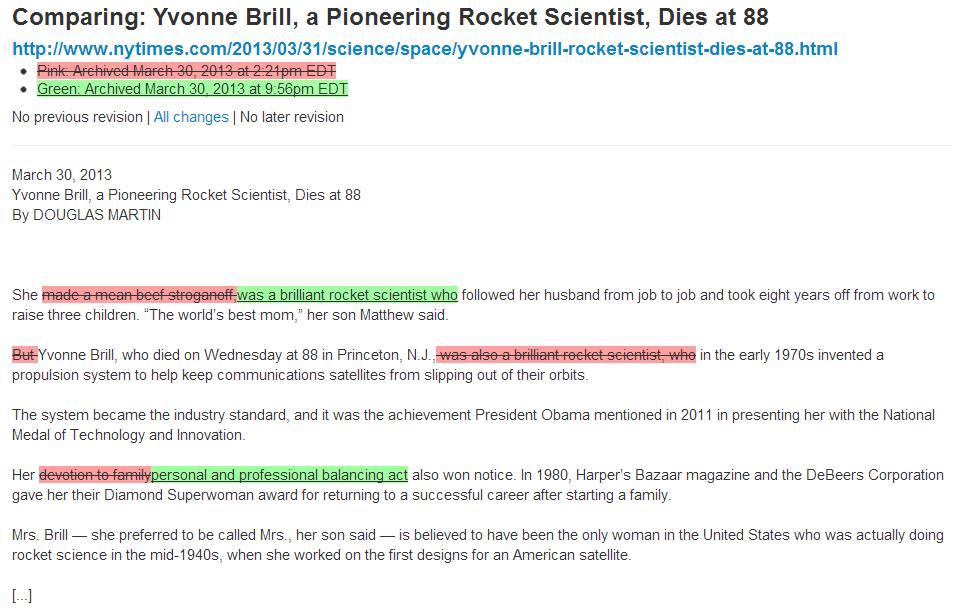
She must be chuckling in heaven, because her obituary at the New York Times made the common mistake of making her femaleness and femininity a central part of their retrospective.  After objections, NYT corrected the obit.  Here are the tracked changes, courtesy of NewsDiffs:

1

At Feministe, Caperton offers a nice discussion of this phenomenon and draws our attention to the Finkbeiner Test, named after journalist Ann Finkbeiner.  Inspired by the Bechdel Test for movies, the Finkbeiner Test is used to judge whether stories about women focus excessively on the fact that they are women.  To pass the test, the story cannot mention:

  • The fact that she’s a woman
  • Her husband’s job
  • Her child care arrangements
  • How she nurtures her underlings
  • How she was taken aback by the competitiveness in her field
  • How she’s such a role model for other women
  • How she’s the “first woman to…”

Awesome.

We’ve documented lots of instances of the men-are-people and women-are-women phenomenon.  It’s no wonder it shows up in obituaries too.  I’m glad that we’re becoming sensitive enough to the issue to notice it and that institutions like the NYT are responsive enough to change the most egregious examples of it.  Next step: prevention.

Lisa Wade, PhD is an Associate Professor at Tulane University. She is the author of American Hookup, a book about college sexual culture; a textbook about gender; and a forthcoming introductory text: Terrible Magnificent Sociology. You can follow her on Twitter and Instagram.

Cross-posted at Asian-Nation and Racialicious.

1
Photo by Lulu Vision (Flickr/Creative Commons)

As an undergraduate majoring in linguistics, I was fascinated with the concept of endangered languages. Colonization, genocide, globalization, and nation-building projects have killed off untold numbers of languages. As linguist K. David Harrison (my undergrad advisor) tells NPR, speakers of stigmatized or otherwise less-favored languages are pressured to abandon their native tongue for the dominant language of the nation and the market (emphasis mine):

The decision to give up one language or to abandon a language is not usually a free decision. It’s often coerced by politics, by market forces, by the educational system in a country, by a larger, more dominant group telling them that their language is backwards and obsolete and worthless.

These same pressures are at work in immigrant-receiving countries like the United States, where young immigrants and children of immigrants are quickly abandoning their parents’ language in favor of English.

Immigrant languages in the United States generally do not survive beyond the second generation. In his study of European immigrants, Fishman (1965) found that the first generation uses the heritage language fluently and in all domains, while the second generation only speaks it with the first generation at home and in limited outside contexts. As English is now the language with which they are most comfortable, members of the second generation tend to speak English to their children, and their children have extremely limited abilities in their heritage language, if any. Later studies (López 1996 and Portes and Schauffler 1996 among them) have shown this three-generation trend in children of Latin American and Asian immigrants, as well.

The languages that most immigrants to the U.S. speak are hardly endangered. A second-generation Korean American might not speak Korean well, and will not be speaking that language to her children, but Korean is not going to disappear anytime soon — there are 66.3 million speakers (Ethnologue)! Compare that with the Chulym language of Siberia, which has less than 25.

Even if they’re not endangered per se, I would argue that they are in danger. While attitudes towards non-English languages in the U.S. seem to be improving, at least among wealthier and better educated people in some more diverse cities and suburbs, the stigma of speaking a non-English language still exists.

How many of you have:

  • been embarrassed to speak your heritage language in front of English speakers?
  • been reprimanded for speaking your heritage language in school?
  • been told to “go back to [country X]” when someone overhears you speak your heritage language?

I’ve heard innumerable stories about parents refusing to speak their native language to their children. Usually, the purported rationale is that they do not want the child to have language or learning difficulties, a claim that has been debunked over and over again by psychologists, linguists, and education scholars.

I’m sure that these parents truly believe that speaking only English to their children will give them an edge, though the reverse is true. What I wonder is how much this decision had to do with an unfounded belief about cognition and child development, and how much it had to do with avoiding the stigma of speaking a language that marks you as foreign, and as “backwards and obsolete and worthless”?

Calvin N. Ho is a graduate student in sociology at the University of California, Los Angeles studying immigration, race/ethnicity/nationalism, and Asian diasporas.  You can follow him at The Plaid Bag Connection and on Twitter.

While some austerity advocates really fear (although incorrectly) the consequences of deficit spending, the strongest proponents are actually only concerned with slashing government programs or the use of public employees to provide them.  In other words their aim is to weaken public programs and/or convert them into opportunities for private profit. One measure of their success has been the steady decline in public employment.  Floyd Norris, writing in the New York Times notes:

For jobs, the past four years have been a wash.

The December jobs figures out today indicate that there were 725,000 more jobs in the private sector than at the end of 2008 — and 697,000 fewer government jobs. That works into a private-sector gain of 0.6 percent, and a government sector decline of 3.1 percent.

In total, the number of people with jobs is up by 28,000, or 0.02 percent.

How does that compare? It is by far the largest four-year decline in government employment since the 1944-48 term. That decline was caused by the end of World War II; this one was caused largely by budget limitations.

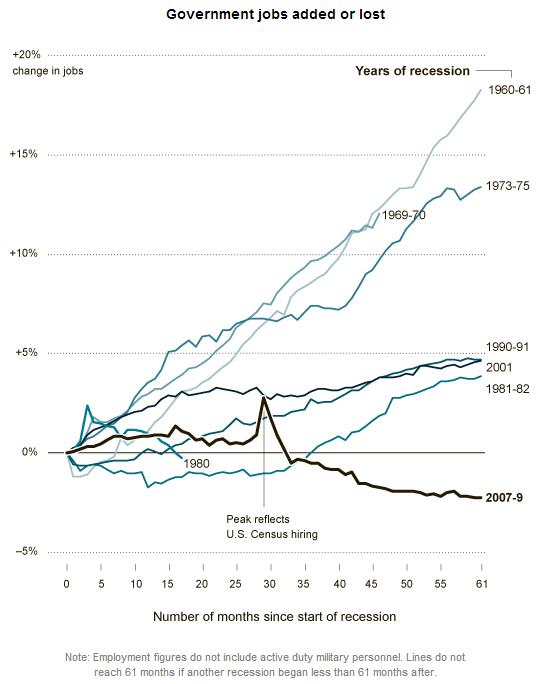
The chart below, taken from the same post, also reveals just how weak private sector job creation has been over the past 12 years (compare the top three rows — the presidencies of Obama and Bush — w job changes This graphic from the New York Times highlights just how significant the decline in public employment has been in this business cycle compared with past ones.  Each line shows the percentage change in public sector employment for specified months after the start of a recession.  Our recent recession began December 2007 and ended June 2009.   As you can see, what is happening now is far from usual.

1

It is also worth noting that despite claims that most Americans want to see cuts in major federal government programs, the survey data show the opposite.  For example, see the following graphic from Catherine Rampell’s blog post. economix-22pewwhattocut-blog480 As Rampell explains:

In every category except for “aid to world’s needy,” more than half of the respondents wanted either to keep spending levels the same or to increase them. In the “aid to world’s needy” category, less than half wanted to cut spending.

Not surprisingly, this assault on government spending and employment will have real consequences for the economy and job creation. All of this takes us back to the starting point — we are talking policy here.  Whose interests are served by these trends?

Martin Hart-Landsberg is a professor of economics at Lewis and Clark College. You can follow him at Reports from the Economic Front.

Cross-posted at Montclair SocioBlog.

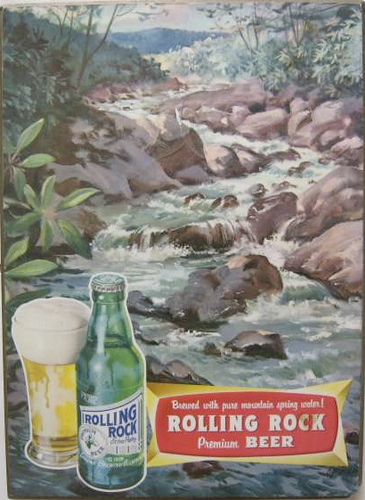
In the Pittsburgh of my youth many decades ago, Rolling Rock was an ordinary, low-priced local beer – like Duquesne (“Duke”) or Iron City. (“Gimme a bottle of Iron,” was what you’d say to the bartender.  And if you were a true Pittsburgher, you pronounced it “Ahrn.”).  The Rolling Rock brewery was in Latrobe, PA, a town about forty miles east whose other claim to fame was Arnold Palmer. The print ads showed the pure sparking mountain stream flowing over rocks.

1

That was then.  In the late 1980s, Rolling Rock started expanding – geographically outward and socially upward.  Typically, when ideas and fashions diffuse through the social class structure they flow downward. Less frequently, the educated classes embrace an artifact of working-class culture. But why?  Their conspicuous consumption (or “signalling,” as we now say) is saying something, but what ideas about themselves and the social landscape are they expressing with their choice of beer?

I had an e-mail exchange about that question with Keith Humphreys, who blogs at The Reality-Based Community.  He too grew up in western Pennsylvania, and we both recalled being surprised years later to see Rolling Rock as a beer of choice among young stock traders and other decidedly non-working-class people.  But we had different ideas as to what these cosmopolitans thought they were doing.  Keith saw it as their way of identifying with the working class.

Those of us who grew up near Latrobe, Pennsylvania are agog when upscale hipsters who could afford something better drink Rolling Rock beer as a sign of their solidarity with us.*

I was more skeptical.  I saw it as the hipsters (or before them, the yuppies) trying to be even more hip – so discerning that they could discover an excellent product in places everyone else had overlooked.  Rolling Rock was a diamond in the rough, a Jackson Pollock for $5 at a yard sale.  The cognoscenti were not identifying with the working-class. They were magnifying the distance.  They were saying in effect, “Those people don’t know what a prize they have.  But I do.”

I had no real data to support that idea, so I asked Gerry Khermouch, who knows more about beverage marketing than do most people.  His Beverage Business Insights puts out industry newsletters, and he writes for Adweek and Brandweek.  He’s also beverage buddies with the guys who changed Rolling Rock marketing.  Here’s what he said,

[F]ar from expressing solidarity with the working class, urban drinkers far afield regarded it as an upscale icon in much the way that Stella Artois has claimed today — a triumph of pure marketing.

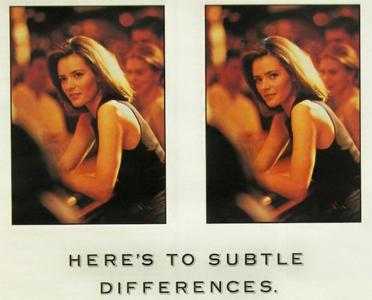
One ad campaign in the 90s, “Subtle Differences,” aimed directly at the drinker’s connoisseur fantasies.  Here are two examples:

2

3
It’s the little nuances that make life more interesting. Rolling Rock uses slightly more malt than other domestic golden lagers for a refreshing taste that’s got a little more body, a little more bite. If you’ve noticed, we salute you.

Words like nuance were hardly an appeal to solidarity with the working-class.  Neither was the strategy of raising the price rather than lowering it.

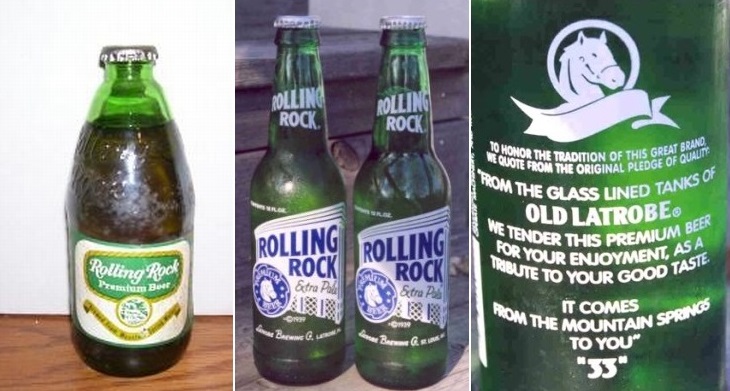
To the marketers, the nuance, the malt, bite, and body didn’t count for much.  Their big investment was in packaging.  Instead of stubby bottles with paper labels, they returned to the long-necked, painted-label bottles with the mysterious “33” on the back. Apparently, the original packaging, the  “Old Latrobe” reference, and the rest added notes of working-class authenticity.

4

As for the actual beer inside those bottles, it may have once been what the ad copy said.  The brewers had tried to overcome the “watery” image from the beer’s early water-over-the-rocks imagery.  But when Anheuser-Busch bought the company in 2006, they closed the Latrobe brewery, and Rolling Rock became a watery, biteless product indistinguishable from the other innocuous lagers that dominate the US market.

* This was an aside in a post about the future of the marijuana market.  See also our post about the resurgence of Pabst Blue Ribbon.

Jay Livingston is the chair of the Sociology Department at Montclair State University. You can follow him at Montclair SocioBlog or on Twitter.

Originally posted in 2010. Re-posted in honor of Women’s History Month.

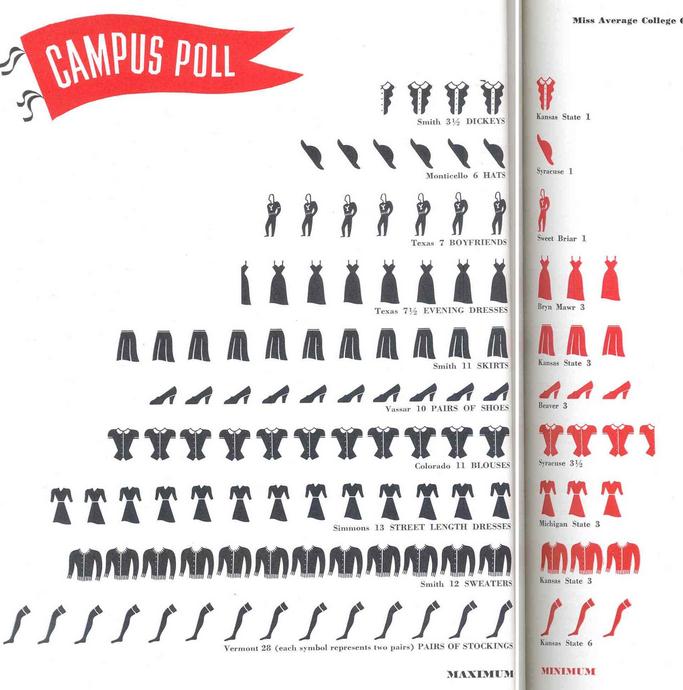
The New York Public Library posted a page from the first issue (September 1941) of Design for Living: The Magazine for Young Moderns that I thought was sorta neat for bringing some perspective to the increase in the amount and variety of clothing we take as normal today–but also, to my relief, the acceptance of a more casual style of dress. The magazine conducted a poll of women at a number of colleges throughout the U.S. about how many of various articles of clothing they owned. Here’s a visual showing the school where women reported the highest and lowest averages (the top item is a dickey, not a shirt):

1

Overall the women reported spending an average of $240.33 per year on clothing.

Hats for women were apparently well on their way out of fashion:

Can you imagine a magazine aimed at college women today implying that you might be able to get away with only three or four pairs of shoes, even if that’s what women reported?

At the end of the article they bring readers’ attention to the fact that they used a sample:

I can’t help but find it rather charming that a popular magazine would even bother to clarify anything about their polling methods. So…earnest!

Gwen Sharp is an associate professor of sociology at Nevada State College. You can follow her on Twitter at @gwensharpnv.

Dylan Matthews, blogging in the Washington Post, discusses a very interesting paper that provides evidence showing that politicians seriously underestimate the progressivity of their constituents.

David Broockman and Christopher Skovron, the authors of the paper, “surveyed every candidate for state legislative office in the United States in 2012 [shortly before the November election] and probed candidates’ own positions and their perceptions of their constituents’ positions on universal health care, same-sex marriage, and federal welfare programs, three of the most publicly salient issues in both national-level and state-level American politics during the past several years.”  They then matched the results with estimates of the actual district- and issue-specific opinions of those residing in the candidates’ districts using a data set of almost 100,000 Americans.

Here is what they found:

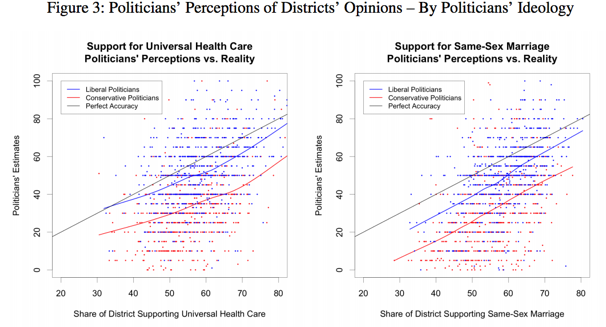
Politicians consistently and substantially overestimate support for conservative positions among their constituents on these issues. The differences we discover in this regard are exceptionally large among conservative politicians: across both issues we examine, conservative politicians appear to overestimate support for conservative policy views among their constituents by over 20 percentage points on average… Comparable figures for liberal politicians also show a slight conservative bias: in fact, about 70% of liberal office holders typically underestimate support for liberal positions on these issues among their constituents.

The following two charts illustrate this bias when it comes to universal health care and same sex marriage.

1

As Matthews explain:

The X axis is the district’s actual views, and the Y axis their legislators’ estimates of their views. The thin black line is perfect accuracy, the response you’d get from a legislator totally in tune with his constituents. Lines above it would signify the politicians think the district more liberal than it actually is; if they’re below it, that means the legislators are overestimating their constituents’ conservatism. Liberal legislators consistently overestimate opposition to same-sex marriage and universal health care, but only mildly. Conservative politicians are not even in the right ballpark.

The authors found a similar bias regarding support for welfare programs.  Perhaps even more unsettling, the authors found no correlation between the amount of time candidates spent meeting and talking to people in their districts while campaigning for office and the accuracy of their perceptions of the political positions of those living in their districts.

One consequence of this disconnect is that office holders, even those with progressive views, are reluctant to take progressive positions.  More generally, these results speak to a real breakdown in “the ability of constituencies to control the laws that their representatives make on their behalf.”

Martin Hart-Landsberg is a professor of economics at Lewis and Clark College. You can follow him at Reports from the Economic Front.

Originally posted in 2008. Re-posted in honor of Women’s History MonthCross-posted at Racialicious.

The marketing for beach-related vacation destinations often capitalizes on the association of foreign beaches with (partly) naked bathing beauties. This intersection of race, gender, and sexuality that positions the “ethnic” woman as particularly sexually accessible have deep roots in our colonial past in which foreign lands “open” to conquest by the Western world were conflated with foreign women “open” to conquest by Western men.

The “Hula Girl” is a case in point.

Hawaii was colonized by the U.S. and, when the islands became a tourism destination, Polynesian women were transformed into Hawaiian babes ready and waiting to please tourists from the mainland.

One transformation was the hula. Widely understood to be an “authentic” Polynesian tradition, the hula was actually originally mostly a man’s dance. It was religious. It involved chanting and no music. There were no hip movements, just gestures. Basically, it was story-telling.

Today, the men take a back seat to women, who are scantily clad in grass skirts (not authentic, by the way), and perform exaggerated hip movements to music. So the hula is an invention, designed by colonizers and capitalists, to highlight the appeal of “foreign” women.

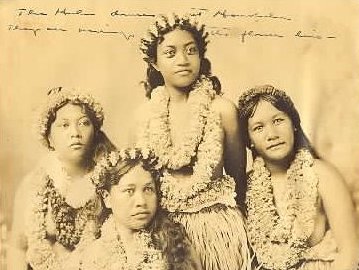
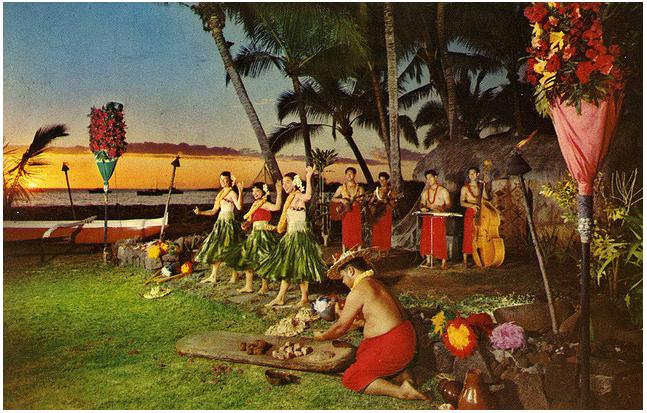
Despite the constructed nature of the hula girl, she’s been used to market Hawaii for over 100 years.  Here is an image of hula girls sent back to the mainland way back in 1890:

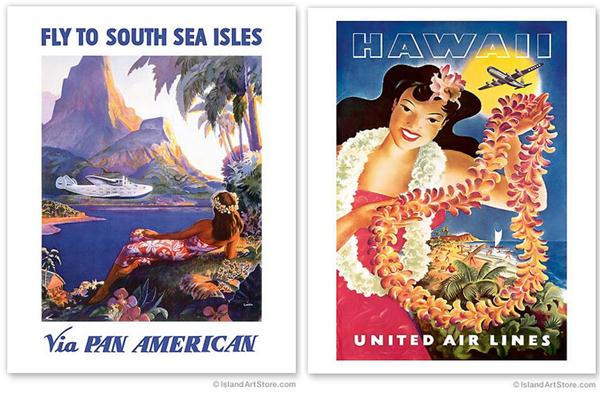
And from the 1940s (from IslandArtCards):

1

1965, via Jassy-50:

1

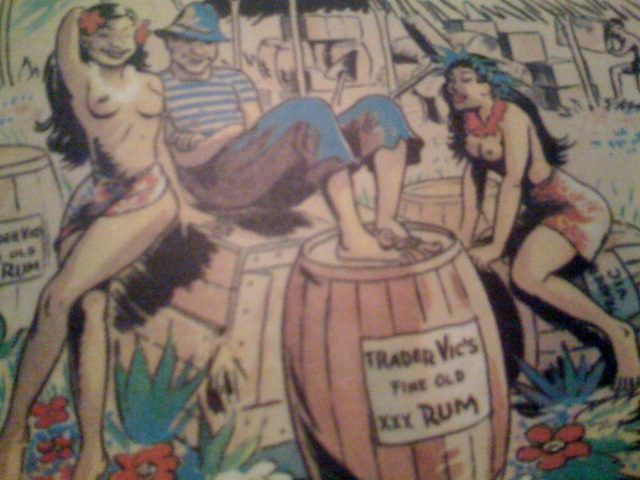
This picture was snapped by my friend Jason at a Trader Vic’s restaurant in 2008:

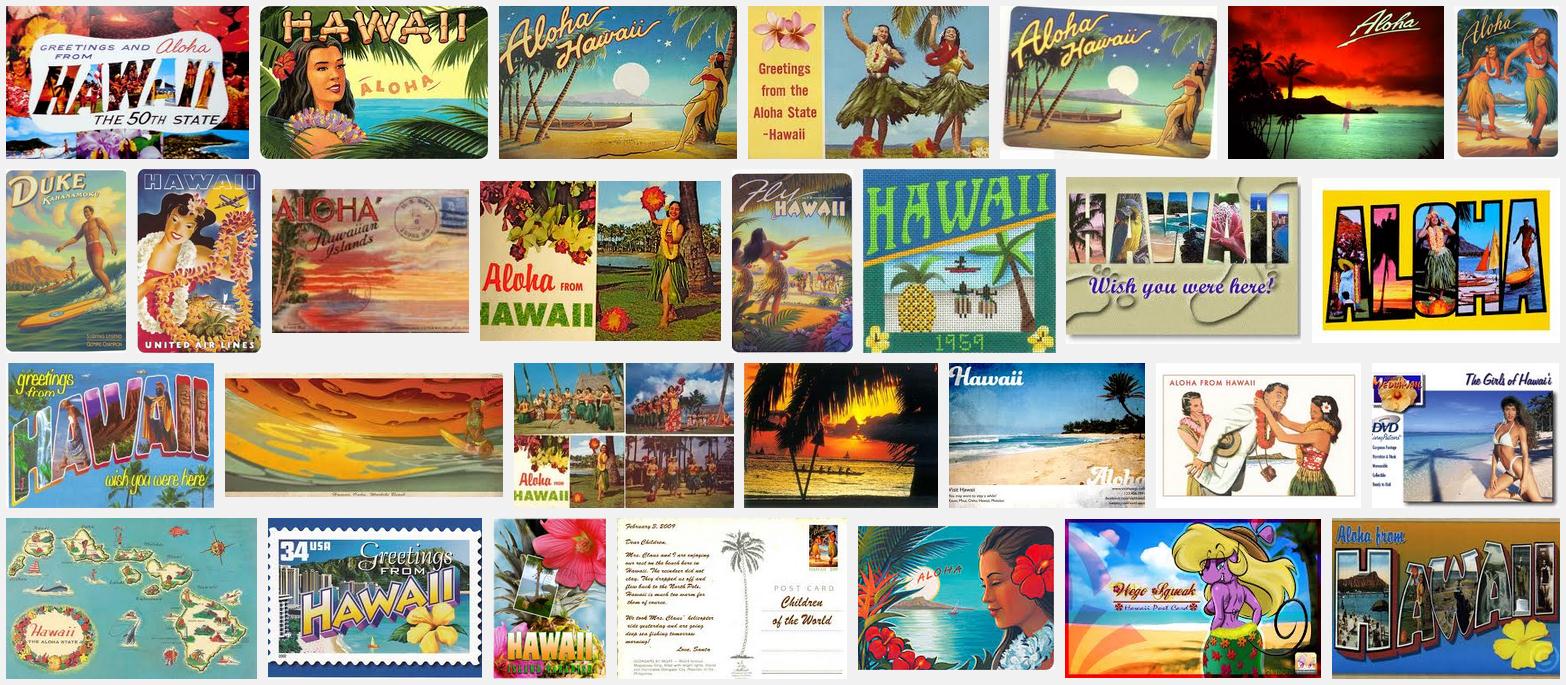
A Google Image search for “Hawaii postcard” in 2013 reveals that about half include the figure of a woman:

1

The phenomenon is a common one: women are treated as objects of beauty and aesthetic pleasure — exotified, in the case of “foreign” or darker-skinned women — and used to embellish a place or experience.  While lots of things have changed for women since the beginning of this particular example in the late 1800s, their role as decoration resists retirement.

Lisa Wade, PhD is an Associate Professor at Tulane University. She is the author of American Hookup, a book about college sexual culture; a textbook about gender; and a forthcoming introductory text: Terrible Magnificent Sociology. You can follow her on Twitter and Instagram.