2 (1)It seems certain that the political economy textbooks of the future will include a chapter on the experience of Greece in 2015.

On July 5, 2015, the people of Greece overwhelmingly voted “NO” to the austerity ultimatum demanded by what is colloquially being called the Troika, the three institutions that have the power to shape Greece’s future: the European Commission, the International Monetary Fund, and the European Central Bank.

The people of Greece have stood up for the rights of working people everywhere.

Background

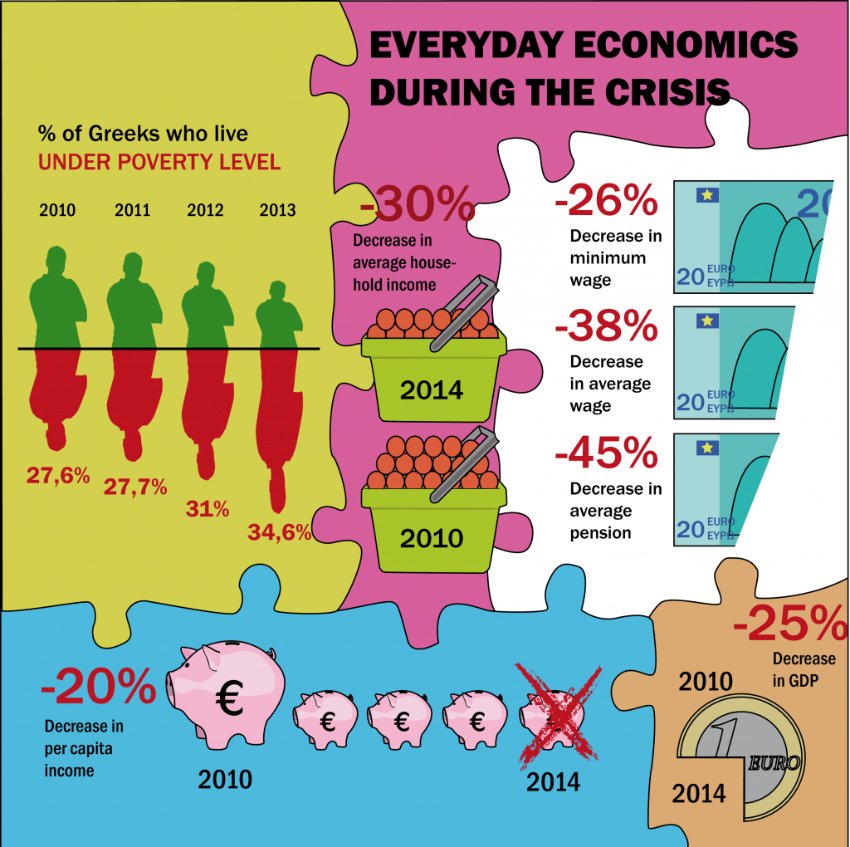
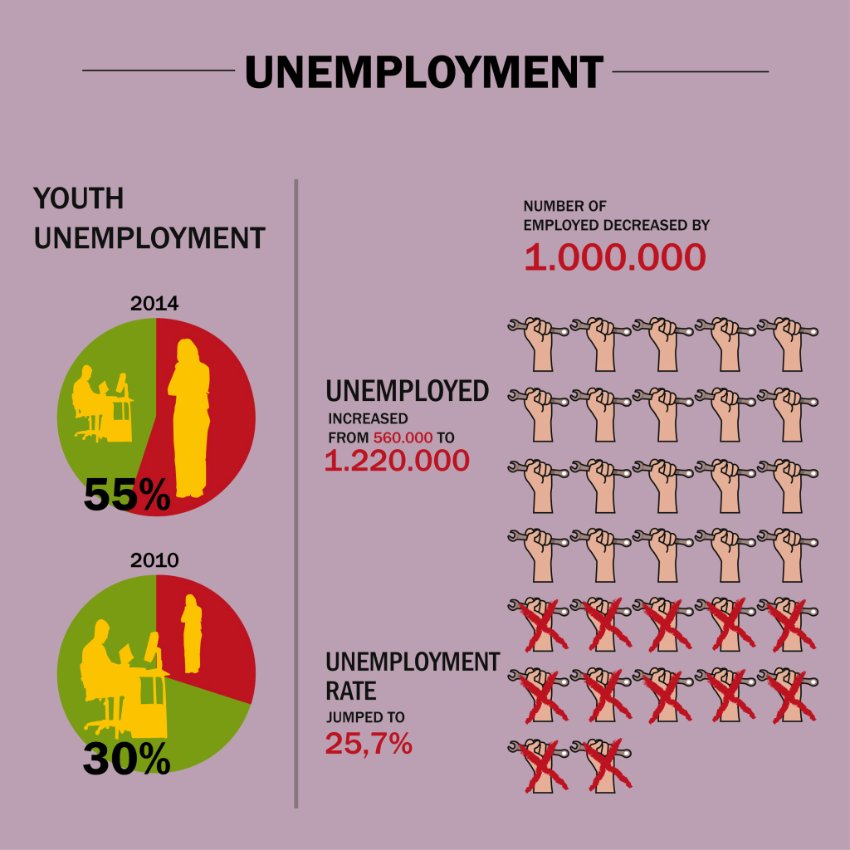
Greece has experienced six consecutive years of recession and the social costs have been enormous.  The following charts provide only the barest glimpse into the human suffering:
Infographics / Unemployment
Infographics / Social Impact
Infographics / Poverty

While the Troika has been eager to blame this outcome on the bungling and dishonesty of successive Greek governments and even the Greek people, the fact is that it is Troika policies that are primarily responsible. In broad brush, Greece grew rapidly over the 2000s in large part thanks to government borrowing, especially from French and German banks.  When the global financial crisis hit in late 2008, Greece was quickly thrown into recession and the Greek government found its revenue in steep decline and its ability to borrow sharply limited. By 2010, without its own national currency, it faced bankruptcy.

Enter the Troika. In 2010, they penned the first bailout agreement with the Greek government. The Greek government received new loans in exchange for its acceptance of austerity policies and monitoring by the IMF. Most of the new money went back out of the country, largely to its bank creditors. And the massive cuts in public spending deepened the country’s recession.

By 2011 it had become clear that the Troika’s policies were self-defeating. The deeper recession further reduced tax revenues, making it harder for the Greek government to pay its debts. Thus in 2012 the Troika again extended loans to the Greek government as part of a second bailout which included . . . wait for it . . . yet new austerity measures.

Not surprisingly, the outcome was more of the same. By then, French and German banks were off the hook. It was now the European governments and the International Monetary Fund that worried about repayment. And the Greek economy continued its downward ascent.

Significantly, in 2012, IMF staff acknowledged that the its support for austerity in 2010 was a mistake. Simply put, if you ask a government to cut spending during a period of recession you will only worsen the recession. And a country in recession will not be able to pay its debts. It was a pretty clear and obvious conclusion.

But, significantly, this acknowledgement did little to change Troika policies toward Greece.

By the end of 2014, the Greek people were fed up. Their government had done most of what was demanded of it and yet the economy continued to worsen and the country was deeper in debt than it had been at the start of the bailouts. And, once again, the Greek government was unable to make its debt payments without access to new loans. So, in January 2015 they elected a left wing, radical party known as Syriza because of the party’s commitment to negotiate a new understanding with the Troika, one that would enable the country to return to growth, which meant an end to austerity and debt relief.

Syriza entered the negotiations hopeful that the lessons of the past had been learned. But no, the Troika refused all additional financial support unless Greece agreed to implement yet another round of austerity. What started out as negotiations quickly turned into a one way scolding. The Troika continued to demand significant cuts in public spending to boost Greek government revenue for debt repayment. Greece eventually won a compromise that limited the size of the primary surplus required, but when they proposed achieving it by tax increases on corporations and the wealthy rather than spending cuts, they were rebuffed, principally by the IMF.

The Troika demanded cuts in pensions, again to reduce government spending. When Greece countered with an offer to boost contributions rather than slash the benefits going to those at the bottom of the income distribution, they were again rebuffed. On and on it went. Even the previous head of the IMF penned an intervention warning that the IMF was in danger of repeating its past mistakes, but to no avail.

Finally on June 25, the Troika made its final offer. It would provide additional funds to Greece, enough to enable it to make its debt payments over the next five months in exchange for more austerity.  However, as the Greek government recognized, this would just be “kicking the can down the road.” In five months the country would again be forced to ask for more money and accept more austerity. No wonder the Greek Prime Minister announced he was done, that he would take this offer to the Greek people with a recommendation of a “NO” vote.

The Referendum

Almost immediately after the Greek government announced its plans for a referendum, the leaders of the Troika intervened in the Greek debate. For example, as the New York Times reported:

By long-established diplomatic tradition, leaders and international institutions do not meddle in the domestic politics of other countries. But under cover of a referendum in which the rest of Europe has a clear stake, European leaders who have found [Greece Prime Minister] Tsipras difficult to deal with have been clear about the outcome they prefer.

Many are openly opposing him on the referendum, which could very possibly make way for a new government and a new approach to finding a compromise. The situation in Greece, analysts said, is not the first time that European politics have crossed borders, but it is the most open instance and the one with the greatest potential effect so far on European unity…

Martin Schulz, a German who is president of the European Parliament, offered at one point to travel to Greece to campaign for the “yes” forces, those in favor of taking a deal along the lines offered by the
creditors.

On Thursday, Mr. Schulz was on television making clear that he had little regard for Mr. Tsipras and his government. “We will help the Greek people but most certainly not the government,” he said.

European leaders actively worked to distort the terms of the referendum. Greeks were voting on whether to accept or reject Troika austerity policies yet the Troika leaders falsely claimed the vote was on whether Greece should remain in the Eurozone. In fact, there is no mechanism for kicking a country out of the Eurozone and the Greek government was always clear that it was not seeking to leave the zone.

Having whipped up popular fears of an end to the euro, some Greeks began talking their money out of the banks. On June 28, the European Central Bank then took the aggressive step of limiting its support to the Greek financial system.

This was a very significant and highly political step. Eurozone governments do not print their own money or control their own monetary systems. The European Central Bank is in charge of regional monetary policy and is duty bound to support the stability of the region’s financial system. By limiting its support for Greek banks it forced the Greek government to limit withdrawals which only worsened economic conditions and heightened fears about an economic collapse. This was, as reported by the New York Times, a clear attempt to influence the vote, one might even say an act of economic terrorism:    

Some experts say the timing of the European Central Bank action in capping emergency funding to Greek banks this week appeared to be part of a campaign to influence voters.

“I don’t see how anybody can believe that the timing of this was coincidence,” said Mark Weisbrot, an economist and a co-director of the Center for Economic and Policy Research in Washington. “When you restrict the flow of cash enough to close the banks during the week of a referendum, this is a very deliberate move to scare people.”

Then on July 2, three days before the referendum, an IMF staff report on Greece was made public. Echos of 2010, the report made clear that Troika austerity demands were counterproductive. Greece needed massive new loans and debt forgiveness. The Bruegel Institute, a European think tank, offered a summary and analysis of the report, concluding that “the creditors negotiated with Greece in bad faith” and used “indefensible economic logic.”

The leaders of the Troika were insisting on policies that the IMF’s own staff viewed as misguided.  Moreover, as noted above, European leaders desperately but unsuccessfully tried to kill the report. Only one conclusion is possible: the negotiations were a sham.

The Troika’s goals were political: they wanted to destroy the leftist, radical Syriza because it represented a threat to a status quo in which working people suffer to generate profits for the region’s leading corporations. It apparently didn’t matter to them that what they were demanding was disastrous for the people of Greece. In fact, quite the opposite was likely true: punishing Greece was part of their plan to ensure that voters would reject insurgent movements in other countries, especially Spain.

The Vote

And despite, or perhaps because of all of the interventions and threats highlighted above, the Greek people stood firm. As the headlines of a Bloomberg news story proclaimed: “Varoufakis: Greeks Said ‘No’ to Five Years of Hypocrisy.”

The Greek vote was a huge victory for working people everywhere.

Now, we need to learn the lessons of this experience. Among the most important are: those who speak for dominant capitalist interests are not to be trusted. Our strength is in organization and collective action. Our efforts can shape alternatives.

Cross-posted at Reports from the Economic Front.

Martin Hart-Landsberg is a professor of economics at Lewis and Clark College. You can follow him at Reports from the Economic Front.
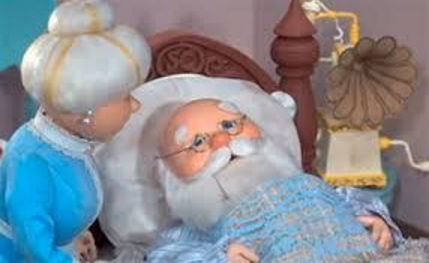
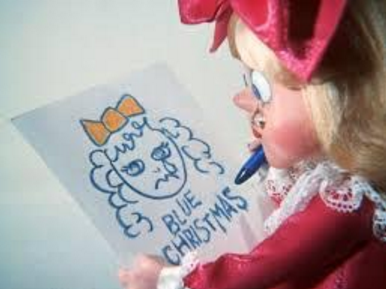
While I am fairly certain A Year Without a Santa Claus will not be receiving an Oscar this year, I do believe it will be a future cult Christmas classic particularly for your radical feminist friends. In fact, I expect this movie to have most people redder than a Starbucks Satan Sipper for its cautionary tale of the indispensability of women’s emotional labor and uncelebrated ingenuity.

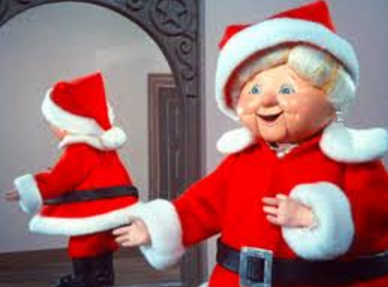
The story begins in the North Pole with Santa getting a man cold and feeling underappreciated.  So much so that he decides to just call off Christmas altogether. Ms. Claus to the rescue. As the true socio-emotional leader of all things Christmas, Ms. Claus sets forth a plan to get Santa out of bed. Recognizing that masculinity is so fragile, she sends two elves and Vixen to find evidence that Christmas won’t be Christmas without Santa.

3

The trick is to inspire the Christmas spirit by making it snow in Southtown, a town where, like my home region of Central Texas (I am in shorts and a tank as I type), it never snows. Southtown is controlled by Snow Miser, brother of Heat Miser. The brothers have divided up the country and fight over of where it can be warm and mild or cold and snowy.  They illustrate to the audience the pettiness of male-typical competitiveness.

This time the emotion work is done by their mother, Mother Nature, who steps in to get her sons to stop the feud for just one day. It begins to snow in Southtown and, inspired, the children break their piggy banks to send gifts and cards to Santa saying “Let’s give Santa a Merry Christmas.” The movie takes an artistic twist to a wonderful cover of Elvis’ “Blue Christmas” by a child and spends a great bit of time on one mindful little girl and the construction of her Christmas card for Santa. Likely, the focus on the emotional intelligence of even girl children is meant to invoke women’s emotional  superiority as derived from an identification with the mother-nurturer.

4

It works. Christmas is on! He is missed and loved.

While there is no surprise how much women contribute to our holiday traditions and men’s careers, I thought the story took a gutsy twist in showing that Santa is merely a figurehead. In fact, my favorite scene is the one in which Ms. Claus dresses up in Santa’s suit and proclaims, “I could. I couldn’t, but I could!” Here she knows she could be Santa on this day, but realizes the importance of men feeling needed. She decides, instead, to be the wind beneath his sleigh. The end result is that “the squeaky wheel,” aka Santa, gets to be the hero, showing how men’s bad behavior all too often gets rewarded and even celebrated.

2

The director is smart to lure even non-feminists into watching A Year Without a Santa Claus by carefully obscuring its true message in its advertising. No women even appear on the movie poster (with the exception of Rudolph, who doesn’t even appear in the movie). Yet, in the movie, the women do all of the work and are portrayed as the true leaders. From Ms. Claus, to Mother Nature, to Vixen, and the little girl in blue, not one problem is resolved by a male character. Nor do any move the story forward. The male characters are mere set pieces and characters in place to highlight the capabilities and thoughtfulness of women.

2

The message of the movie is that women are taken for granted like air — invisible, unacknowledged, yet essential for life. Because #masculinitysofragile, they could lean in, but don’t. So they find what solace they can in the power of enabling.

D’Lane R. Compton, PhD is a lover of all things antler, feather, and fur. An associate professor of sociology at the University of New Orleans with a background in social psychology, methodology, and a little bit of demography, they are usually thinking about food, country roads, stigma, queer nooks and places, sneakers, and hipster subcultures. You can follow them on twitter.

Previous reviews include: Rudolph the Red-Nosed Reindeer.

Would Santa give you cancer? Not according to R. J. Reynolds, British American Tobacco, Philip and Morris, and other tobacco companies. They regularly used the jolly cultural icon to advertise cigarettes and other products during the early to mid-20th century.

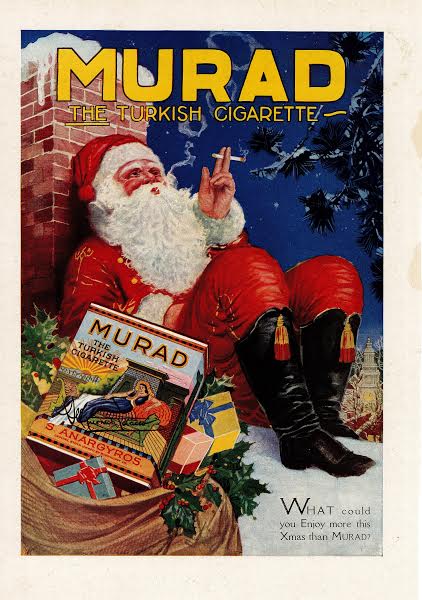
Print advertisements of the time often featured Santa savoring a smoke, presumably after a long night of delivering gifts. Such imagery suggests that he had earned the indulgence, and that consumers had too. For example, a 1920 advertisement for Murad Cigarettes shows Santa leaning against a chimney smoking, with the caption, “What could you Enjoy more this Xmas than MURAD?”

2

The tobacco industry also encouraged customers to purchase and give cigarettes as Christmas gifts. R. J. Reynolds provided some retailers with store displays to market products, including cardboard cutouts of Santa holding cartons of holiday wrapped Camels cigarettes.  Likewise, British American Tobacco supplied retailers with Christmas-themed packages, such as cartons of Pall Malls picturing Santa smoking and wishing customers a Merry Christmas.

3

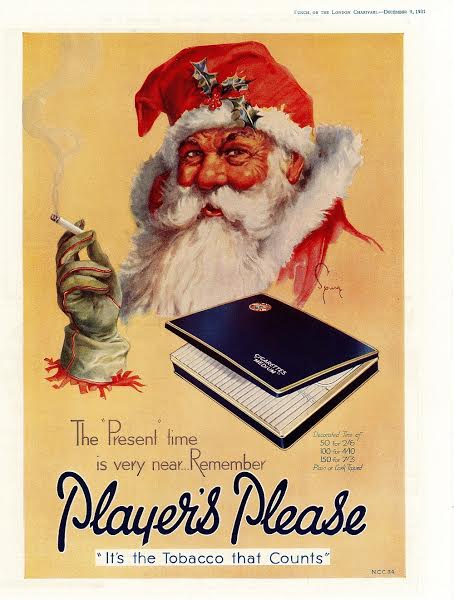
Print advertisements conveyed similar messages.  In a 1931 Player’s Please advertisement (manufactured by Imperial Tobacco Group), Santa reminded shoppers that “The ‘Present’ time is very near.” R. J. Reynolds advertisements from the 1950s showed Santa declaring that Camel, Cavalier, Winston, and Prince Albert were “4 Of The Grandest Gifts You Can Give.”

5

Pairing images of cigarettes with a benevolent figure like Santa Claus reinforced the notion that the products were safe.  However, researchers had started to formally document the connection between smoking and lung cancer as early as the 1930s.  And the tobacco industry itself (internally) documented links between the two in the early 1950s. By 1964, the causal connection was clear. In his “Smoking and Health” report, Surgeon General Luther Terry concluded that smoking caused lung cancer, and suggested that a causal link between smoking and heart disease also existed. That same year, almost one-half of Americans reported being smokers.

Advertising certainly contributed (and continues to contribute) to the behavior, as research reported by the World Health Organization indicates. Then, as today, the tobacco industry lured customers to its addictive and harmful products in enticing and jolly ways.

Jacqueline Clark, PhD is an Associate Professor of Sociology and Chair of the Department at Ripon College. Her research focuses on inequalities, the sociology of health and illness, and the sociology of jobs, work, and organizations.

Bentham and Foucault might have been interested in the panopticon but every December we get a view of  true social control in the form of an overweight man at the North Pole. Santa Claus (or Sandy Claws, as he is sometimes called) is just the latest in a long line of beings whose sole purpose is to control children through fear (Krampus is another example, as is the Belsnickel, as Dwight demonstrated on The Office). Recently, though, Santa has been doing his spying by proxy (giving him more time to bully young reindeer).

In Santa’s place are his elves on the shelves, a team of small elves who began taking up residence in people’s homes in 2005. These elves observe the behavior of children and then fly back to the North Pole to report their observations to Santa each night. The magical ability to do so begins when the elves are named (before this point they are apparently in some sort of coma during which they can be sealed in boxes and sent to stores around the country) but the elves are in danger of losing their magic if touched. Upon returning each night, the elves hide in a new place and children delight in finding them each morning. Apparently, some of the elves also like to get into mischief, making them both spies and hypocrites.

Warning: Spoilers Ahead

If you have continued reading, prepare yourself for a shock. The elves are actually inanimate objects with neither magic nor the ability to report to Santa Claus each night. Instead, adults in each household are responsible for moving the elves around (thus touching them and ruining any magical potential that they may have had). As you can imagine, this creates quite a bit of work for these adults, to the point that there are posts dedicated to dealing with the fact that they forgot to move the elves. The elves have also been copied in various ways. Telling children that Santa can see them when they’re sleeping and knows when they’re awake and knows if they’ve been bad or good seems much easier, especially since adults are likely to run out of creative places to hide the elf after about the third day.

Assuming that the intention of Santa, Krampus, the Belsnickel, and the elves on the shelves is social control, it seems that the elves would be both the least effective and the biggest pain in the ass. Imagine if the prison designed by Bentham made it possible that prisoners could be observed at any time unless they touched the prison wall, in which case a door came down that cut off the potential view of the guards. There might be no escaping Santa’s creepy spying or the Belsnickel’s judgment, but if I was a kid and I wanted to get away with bad behavior you can bet that the first thing I would do is touch the damn elf.

John is a pseudonymous assistant professor at a small liberal arts college (SLAC).  He finished his Ph.D. at a top-25 sociology program in the summer of 2009. He blogs at Memoirs of a SLACer, where this post originally appeared.

National Ugly Christmas Sweater Day has come and gone, falling this year on Friday, December 18th. Perhaps you’ve noticed the recent ascent of the Ugly Christmas Sweater or even been invited to an Ugly Christmas Sweater Party. How do we account for this trend and its call to “don we now our tacky apparel”?

Total search of term “ugly Christmas sweater” relative to other searches over time (c/o Google Trends):

Ugly Christmas Sweater parties purportedly originated in Vancouver, Canada, in 2001. Their appeal might seem to stem from their role as a vehicle for ironic nostalgia, an opportunity to revel in all that is festively cheesy. It also might provide an opportunity to express the collective effervescence of the well-intentioned (but hopelessly tacky) holiday apparel from moms and grandmas.

However, The Atlantic points to a more complex reason why we might enjoy the cheesy simplicity offered by Ugly Christmas Sweaters: “If there is a war on Christmas, then the Ugly Christmas Sweater, awesome in its terribleness, is a blissfully demilitarized zone.” This observation pokes fun at the Fox News-style hysterics regarding the “War on Christmas”; despite being commonly called Ugly Christmas Sweaters, the notion seems to persist that their celebration is an inclusive and “safe” one.

We might also consider the generally fraught nature of the holidays (which are financially and emotionally taxing for many), suggesting that the Ugly Sweater could offer an escape from individual holiday stress. There is no shortage of sociologists who can speak to the strain of family, consumerism, and mental health issues that plague the holidays, to say nothing of the particular gendered burdens they produce. Perhaps these parties represent an opportunity to shelve those tensions.

But how do we explain the fervent communal desire for simultaneous festive celebration and escape? Fred Davis notes that nostalgia is invoked during periods of discontinuity. This can occur at the individual level when we use nostalgia to “reassure ourselves of past happiness.” It may also function as a collective response – a “nostalgia orgy”- whereby we collaboratively reassure ourselves of shared past happiness through cultural symbols. The Ugly Christmas Sweater becomes a freighted symbol of past misguided, but genuine, familial affection and unselfconscious enthusiasm for the holidays – it doesn’t matter that we have not all really had the actual experience of receiving such a garment.

Jean Baudrillard might call the process of mythologizing the Ugly Christmas Sweater a simulation, a collapsing between reality and representation. And, as George Ritzer points out, simulation can become a ripe target for corporatization as it can be made more spectacular than its authentic counterparts. We need only look at the shift from the “authentic” prerogative to root through one’s closet for an ugly sweater bestowed by grandma (or even to retrieve from the thrift store a sweater imparted by someone else’s grandma) to the cottage-industry that has sprung up to provide ugly sweaters to the masses. There appears to be a need for collective nostalgia that is outstripped by the supply of “actual” Ugly Christmas Sweaters that we have at our disposal.

Colin Campbell states that consumption involves not just purchasing or using a good or service, but also selecting and enhancing it. Accordingly, our consumptive obligation to the Ugly Christmas Sweater becomes more demanding, individualized and, as Ritzer predicts, spectacular. For examples, we can view this intensive guide for DIY ugly sweaters. If DIY isn’t your style, you can indulge your individual (but mass-produced) tastes in NBA-inspired or cultural mash-up Ugly Christmas Sweaters, or these Ugly Christmas Sweaters that aren’t even sweaters at all.

The ironic appeal of the Ugly Christmas Sweater Party is that one can be deemed festive for partaking, while simultaneously ensuring that one is participating in a”safe” celebration – or even a gentle mockery – of holiday saturation and demands. The ascent of the Ugly Christmas Sweater has involved a transition from ironic nostalgia vehicle to a corporatized form of escapism, one that we are induced to participate in as a “safe” form of  festive simulation that becomes increasingly individualized and demanding in expression.

Re-posted at Pacific Standard.

Kerri Scheer is a PhD Student working in law and regulation in the Department of Sociology at the University of Toronto. She thanks her colleague Allison Meads for insights and edits on this post. You can follow Kerri on Twitter.

3Movie Reviews

The History of Christmas

Christmas Across Cultures

The Economics of Christmas

Racializing Christmas

Christmas and Gender

Gift Guides and the Social Construction of Gender

Sexifiying Christmas

Christmas Marketing

Just for Fun

Americans have a low opinion of Congress. Less than 10% of the voters think that Congress is doing a good job. But their own Representative . . . not so bad. A third of us think that our own rep deserves re-election (Rasmussen). Even that is low. Until recently, a majority of people approved of their own representative while disapproving of Congress in general. It’s been the same with crime. People feel safer in their own neighborhoods than elsewhere, even when those other neighborhoods have less crime.

Race relations too are bad . . . elsewhere. In the last year, the percent of Americans saying that race relations in the country are “bad” doubled (roughly from 30% to 60%). That’s understandable given the media coverage of Ferguson and other conflicts centered on race. But people take a far more sanguine view of things in their own community.  Eighty percent rate local race relations as “good,” and that number has remained unchanged throughout this century. (See this post  from last summer.)

Not surprising then that the problem with marriage in the US turns out to be about other people’s marriages. A recent survey asked people about the direction of their own marriage and marriage in the US generally.3
Only a handful of people (5%) see marriage generally as getting stronger. More than eight times that say that their own marriages have strengthened. The results for “weaker” are just the reverse. Only 6% say that their own marriage has weakened, but 43% see marriage in the US as losing ground.

Why the “elsewhere effect”? One suspect is the media bias towards trouble. Good news is no news.  News editors don’t give us many stories about good race relations, or about the 25-year drop in crime, or about the decrease in divorce.  Instead, we get crime and conflict and a variety of  other problems. Add to this the perpetual political campaign with opposition candidates tirelessly telling us what’s wrong.  Given this balance of information, we can easily picture the larger society as a world in decline, a perilous world so different from the one we walk through every day.

At first glance, people seeing their own relationships as good, others’ relationships as more strained seems like the opposite of the pluralistic ignorance on college campuses. There, students often believe that things are better elsewhere, or at least better for other students. They think that most other students are having more sex, partying more heartily, and generally having a better time than they are themselves. But whether we see others as having fun or more problems, the cause of the discrepancy is the same – the information we have. We know our own lives first hand. We know about those generalized others mostly from the stories we hear. And the people – whether news editors or students on campus – select the stories that are interesting, not those that are typical.

Originally posted at Montclair SocioBlog.

Jay Livingston is the chair of the Sociology Department at Montclair State University. You can follow him at Montclair SocioBlog or on Twitter.

Flashback Friday.

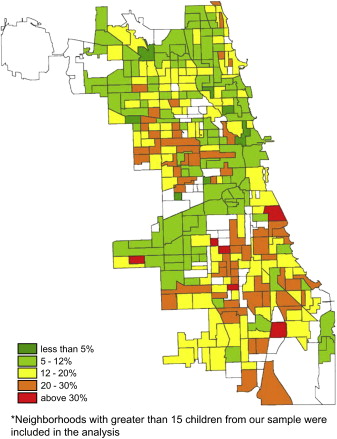
A study by doctor Ruchi Gupta and colleagues mapped rates of asthma among children in Chicago, revealing that they are closely correlated with race and income. The overall U.S. rate of childhood asthma is about 10%, but evidence indicates that asthma is very unevenly distributed. Their visuals show that there are huge variations in the rates of childhood asthma among different neighborhoods:

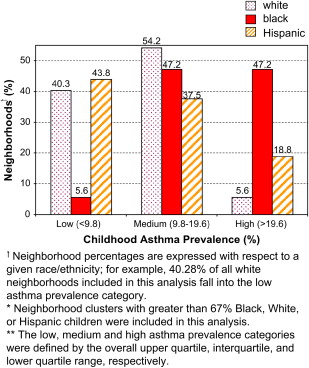
The researchers looked at how the racial/ethnic composition of neighborhoods is associated with childhood asthma. They defined a neighborhood’s racial make-up by looking at those that were over 67% White, Black, or Hispanic. This graph shows the percent of such neighborhoods that fall into three categories of rates of asthma: low (less than 10% of children have asthma), medium (10-20% of children have it), and high (over 20% of kids are affected). While 95% of White neighborhoods have low or medium rates, 56% of Hispanic neighborhoods have medium or high rates. However, the really striking finding is for Black neighborhoods; 94% have medium or high prevalence. And the racial clustering is even more pronounced if we look only at the high category, where only a tiny proportion (6%) of White neighborhoods fall but nearly half of Black ones do…a nearly mirror image of what we see for the low category:

It’s hard to know exactly what causes higher rates of asthma in Black and Hispanic neighborhoods than in White ones. It could be differences in access to medical care. The researchers found that asthma rates are also higher in neighborhoods that have high rates of violence. Perhaps stress from living in neighborhoods with a lot of violence is leading to more asthma. The authors of the study suggest that parents might keep their children inside more to protect them from violence, leading to more exposure to second-hand smoke and other indoor pollutants (off-gassing from certain types of paints or construction materials, for instance).

Other studies suggest that poorer neighborhoods have worse outdoor environmental conditions, particularly exposure to industries that release toxic air pollutants or store toxic waste, which increase the risk of asthma. Having a parent with asthma increases the chances of having it as well, though the connection there is equally unsure–is there a genetic factor, or does it simply indicate that parents and children are likely to grow up in neighborhoods with similar conditions?

Regardless, it’s clear that some communities — often those with the fewest resources to deal with it — are bearing the brunt of whatever conditions cause childhood asthma.

Originally posted in 2010.

Gwen Sharp is an associate professor of sociology at Nevada State College. You can follow her on Twitter at @gwensharpnv.