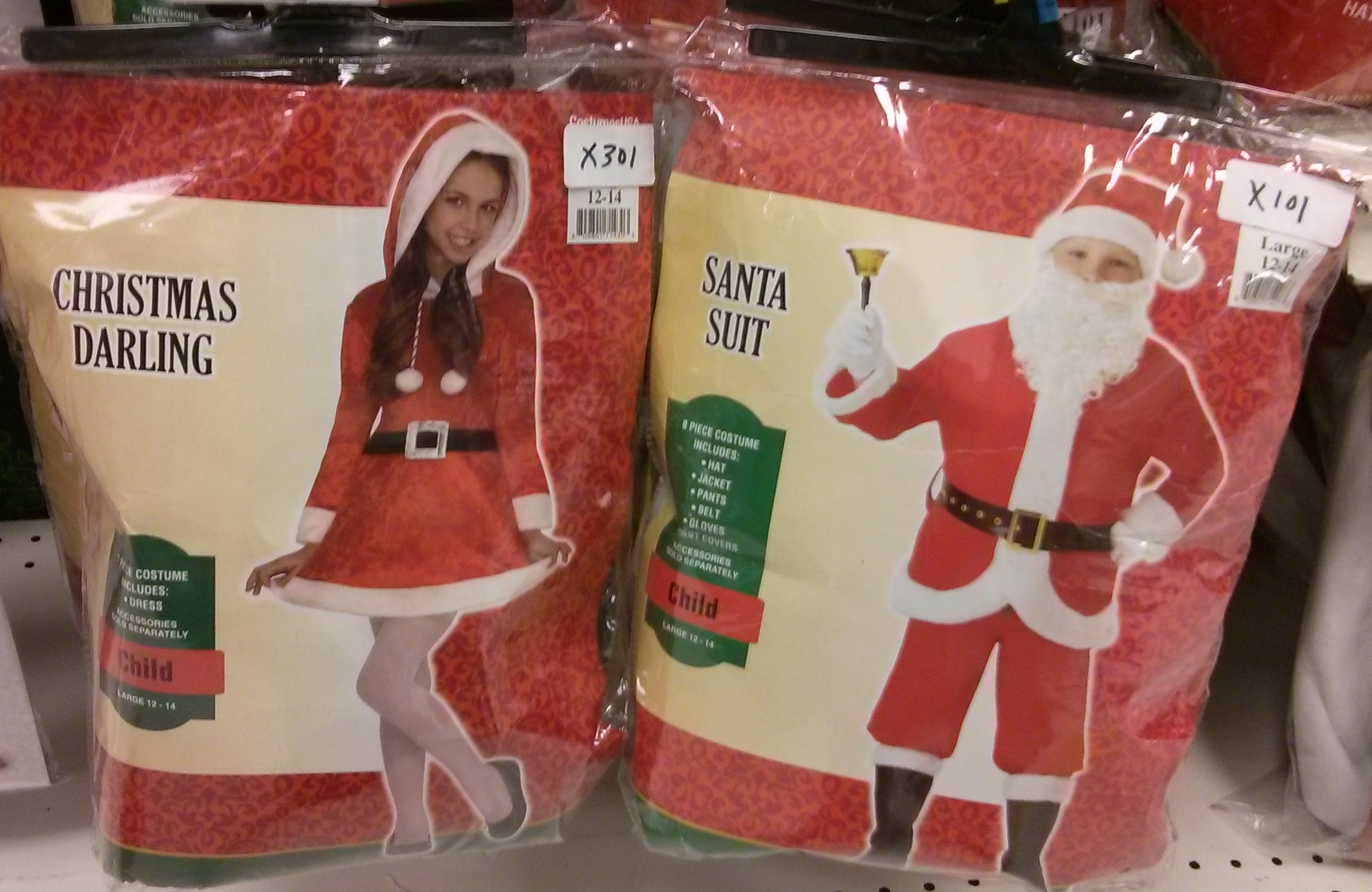
‘Tis the season to remind us that men and women are different and one of women’s jobs is to pander to a hypothetical heterosexual male gaze.  The University of Akron’s Will LeSuer photographed the Christmas-themed costumes for sale at a local store, noting the not-so-implicit gendered expectations.

Surprise, the main theme of the women’s costumes was cute and flirty:

2

The men’s themes are, let’s see, comfortable and… superhero?

1

And, yes, it starts when they’re kids.IMG_20131209_172436

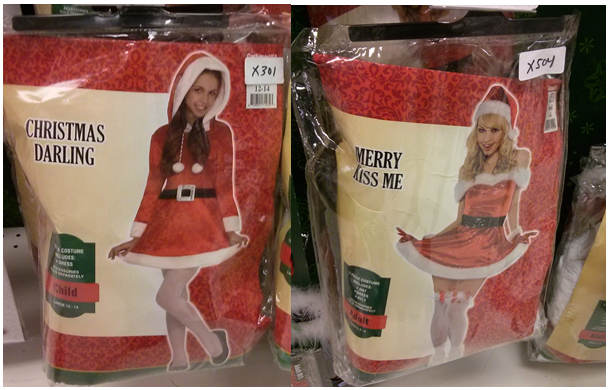
Here’s a fun compare-and-contrast for maximum icky feeling.  The sexualization of girls and the infantilization of women, in one holiday-themed shot (“child” costume on left, “adult” on right):

3

Lisa Wade, PhD is an Associate Professor at Tulane University. She is the author of American Hookup, a book about college sexual culture; a textbook about gender; and a forthcoming introductory text: Terrible Magnificent Sociology. You can follow her on Twitter and Instagram.

1Last year a drug store chain in Canada, Shoppers Drug Mart, started playing Christmas music more than a month before the holiday.  Customers complained, perhaps, Tom Megginson suggested, because it is customary in Canada to wait until after  Remembrance Day on November 11 (a holiday honoring those who’ve died in wars) to start celebrating Christmas.

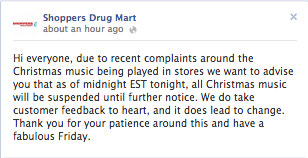
In response to complaints, Shoppers pulled the Christmas music and announced their decision on Facebook:

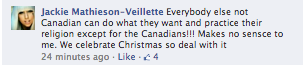
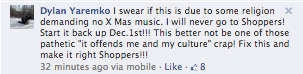
How might people interpret this decision?   Here’s a sampling of one type of response, collected by Megginson:

Notice that not wanting to hear Christmas in early November is conflated with not celebrating Christmas and that is conflated with a whole host of identities: not being a “real” Canadian and being non-Christian, non-white, an immigrant, and of a different “culture.”

For these commenters, the so-called War on Christmas is about much more than a competition between religious and secular forces, it’s also about the centrality of whiteness and a defense of “true” Canadianness against an influx of foreign cultures.  It is worth considering whether, in general, this debate is really code for racism and anti-immigrant sentiment more generally.

Photo by Petr Kratochvil. Cross-posted at Pacific Standard.

Lisa Wade, PhD is an Associate Professor at Tulane University. She is the author of American Hookup, a book about college sexual culture; a textbook about gender; and a forthcoming introductory text: Terrible Magnificent Sociology. You can follow her on Twitter and Instagram.

Posted last year, but I love it, so here it is again!

In this fun four minute history of Santa Claus, CGP Gray explains how the character evolved, the role of Coca Cola, his conquest of the globe (i.e., Santa’s cultural imperialism), and the ongoing debates about where, exactly, he lives.

Also from CGP Gray:

Via Blame It On The Voices.

Lisa Wade, PhD is an Associate Professor at Tulane University. She is the author of American Hookup, a book about college sexual culture; a textbook about gender; and a forthcoming introductory text: Terrible Magnificent Sociology. You can follow her on Twitter and Instagram.

2Highlights!

Christmas Across Cultures

The Economics of Christmas

Racializing Christmas

Christmas and Gender

Gift Guides and the Social Construction of Gender

Sexifiying Christmas

Christmas Marketing

Lisa Wade, PhD is an Associate Professor at Tulane University. She is the author of American Hookup, a book about college sexual culture; a textbook about gender; and a forthcoming introductory text: Terrible Magnificent Sociology. You can follow her on Twitter and Instagram.

I’m in Salon today responding to the “men’s rights activists” who spammed Occidental College’s anonymous sexual assault reporting form this week.  I, um, compare them to myself as a child:

I thought I failed fourth grade.  It’s funny now that I’m a tenured professor at an elite college, but it wasn’t funny then.  I lived a 45 minute walk from school and I ran home that day, tears in my eyes, clutching my unopened report card in my fist.  I don’t remember much from my childhood, but I remember sitting on my front stoop and opening that horrible envelope.  All Es for “excellent.”  Huh.

Looking back I realize that my sense that I’d failed was based on how my teacher treated me.  She was the first adult who didn’t talk to me in a baby voice like I was the most specialest little girl in the whole world.  She treated me like a small adult instead of kissing my ass.  But it was terrifying because my ass had been kissed by everyone around me my whole life and, when I was demoted to “regular person” without any special privileges, it felt terrible and unfair.  I was being persecuted.

See how special I was? I’m the one with the inflated sense of self.

1

The men attacking Occidental’s survivors are feeling something similar to me in fourth grade.  They’re angry that “women are being listened to… They’re mad because they’re not the only ones that matter anymore.”  They’re no longer being treated like they’re the most specialest little girl in the whole world.

It hurts when privileges are taken away, no matter how unearned.  But that doesn’t make it okay to be an asshole.  Just sayin’.

PS – Thanks Ms. Singh!

Lisa Wade, PhD is an Associate Professor at Tulane University. She is the author of American Hookup, a book about college sexual culture; a textbook about gender; and a forthcoming introductory text: Terrible Magnificent Sociology. You can follow her on Twitter and Instagram.

The federal minimum wage is $7.25 an hour.  Several states mandate a higher minimum wage; the state of Washington has the highest, at $9.19.

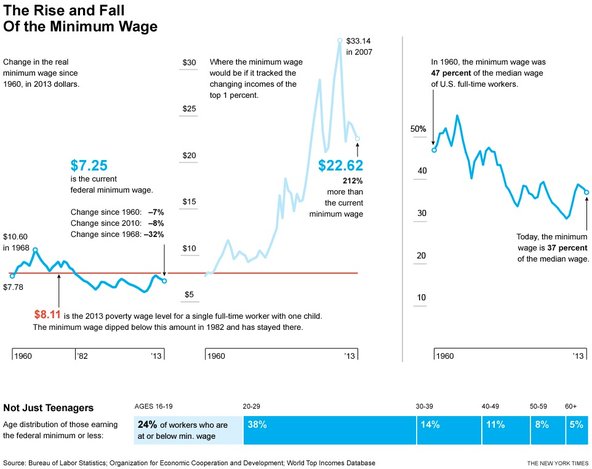
President Obama recently voiced his support for efforts to increase the minimum wage to $10.10.  The federal minimum wage was last raised in 2009 and certainly needs to be increased again.  The fact is that the federal minimum wage has not kept up with inflation.  As the New York Times graphic below shows, the current minimum wage is, when adjusted for inflation, 32% below what it was in 1968.  It is 8% below what it was in 2010.  In other words, those earning the minimum wage are suffering a real decline in income.

1

As for the appropriate value, why not $22.62?  That, as the graphic illustrates, is what the minimum wage would be if it grew at the same rate as the income of the top 1%. Alan Pyke explains:

[Such a large increase] may seem outlandish, but previous research indicates American workers have just about earned it. Worker productivity has more than doubled since 1968, and if the minimum wage had kept pace with productivity gains it would have been $21.72 last year. From 2000 to 2012 alone workers boosted their productivity by 25 percent yet saw their earnings fall rather than rise, leading some economists to label the early 21st century a lost decade for American workers.

Looked at from that perspective the current movement for a $15 hourly wage at fast food restaurants sounds reasonable.  

Martin Hart-Landsberg is a professor of economics at Lewis and Clark College. You can follow him at Reports from the Economic Front.

“I feel ashamed of myself because my grade is not what an Asian should get,” reads a PostSecret confession.  The quote reflects the popular perception among Asians and non-Asians, alike, that if you are Asian, you should receive a top grade; anything less than an A is an “Asian F.”

1

The idea highlights two points. First, academic achievement is racialized, with Asian Americans as the reference group for academic excellence. Second, the expectations and the perceived norm for achievement are higher for Asian Americans than for other groups.

The association between Asian Americans and achievement is relatively recent. Less than a century ago, Asians were described as illiterate, undesirable, and unassimilable immigrants, full of “filth and disease.” As “marginal members of the human race,” they were denied the right to naturalize, denied the right to intermarry, and were segregated in crowded ethnic enclaves.

So what changed? The answer: the skills and educational profiles of post-1965 Asian immigration. According to the Pew Research Center, among recent Asian immigrants between the ages of 25 and 64, 61% have at least a bachelor’s degree — more than double the U.S. average of 28%. This is salient because children of highly-educated, middle-class parents — regardless of race/ethnicity — have a competitive edge over their poor and working-class counterparts.

That a higher proportion of Asian immigrant parents hail from educated backgrounds explains, in part, why they insist on supplementing their children’s education with tutors, after-school classes, and summer school. Their investment in supplementary education helps to insure that their children will stay ahead of their peers. In addition, because tutoring services and supplementary education classes are available in Asian ethnic communities, poor and working-class Asians have access to them, which, in turn, helps them academically achieve, in spite of their disadvantaged class status.

That the status of racial/ethnic groups have changed (and may likely change again) underscores that there is nothing obvious or natural about the link between race/ethnicity and achievement.  But, without understanding the high-selectivity of Asian immigrants and their means of supplementing their children’s education, one could make the specious argument that there must be something natural or essential about Asian Americans that result in high expectations and exceptional academic outcomes.

Jennifer Lee, PhD, is a sociologist at the University of California, Irvine. Her book, The Diversity Paradox, examines patterns of intermarriage and multiracial identification among Asians, Latinos, and African Americans.

I can’t offer much in the crowded field of Disney gender criticism. But I do want to update my running series on the company’s animated gender dimorphism. The latest installment is Frozen.

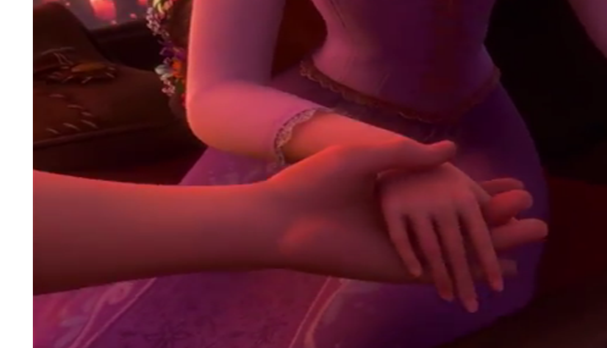
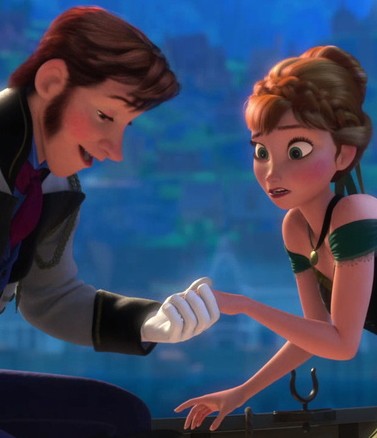
Just when I was wondering what the body dimensions of the supposedly-human characters were, the script conveniently supplied the dimorphism money-shot: hand-in-hand romantic leads, with perfect composition for both eye-size and hand-size comparisons:
1

With the gloves you can’t compare the hands exactly, but you get the idea. And the eyes? Yes, her eyeball actually has a wider diameter than her wrist:

2

Giant eyes and tiny hands symbolize femininity in Disneyland.

While I’m at at, I may as well include Brave in the series. Unless I have repressed it, there is no romance story for the female lead in that movie, but there are some nice comparison shots of her parents:
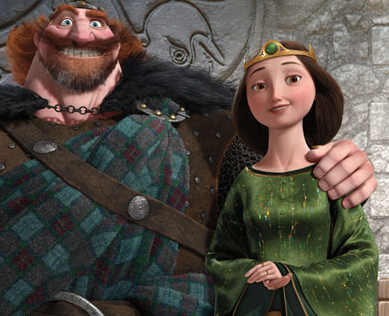
3Go ahead, give me some explanation about the different gene pools of the rival clans from which Merida’s parents came.

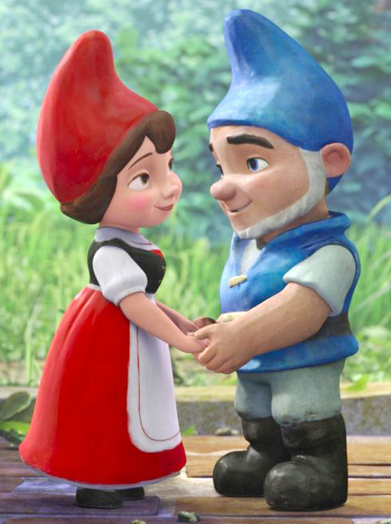
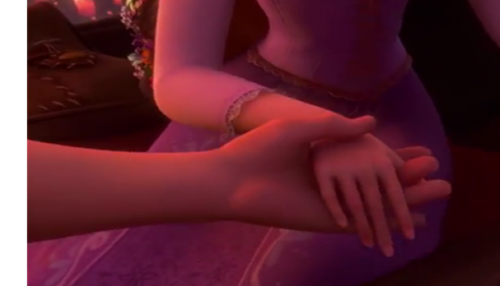
Since I first complained about this regarding Tangled, I have updated the story to include Gnomeo and Juliet. You can check those posts for more links to research (and see also this essay on human versus animal dimorphism by Lisa Wade). To just refresh the image file, though, here are the key images. From Tangled:
3.5

From Gnomeo:

4

At this point I think the evidence suggests that Disney favors compositions in which women’s hands are tiny compared to men’s, especially when they are in romantic relationships.

REAL WRIST-SIZE ADDENDUM

How do real men’s and women’s wrist sizes differ? I looked at 7 studies on topics ranging from carpal tunnel syndrome to judo mastery, and found a range of averages for women of 15.4 cm to 16.3 cm, and for men of 17.5 to 18.1 cm (in both cases the judo team had the thickest wrists).

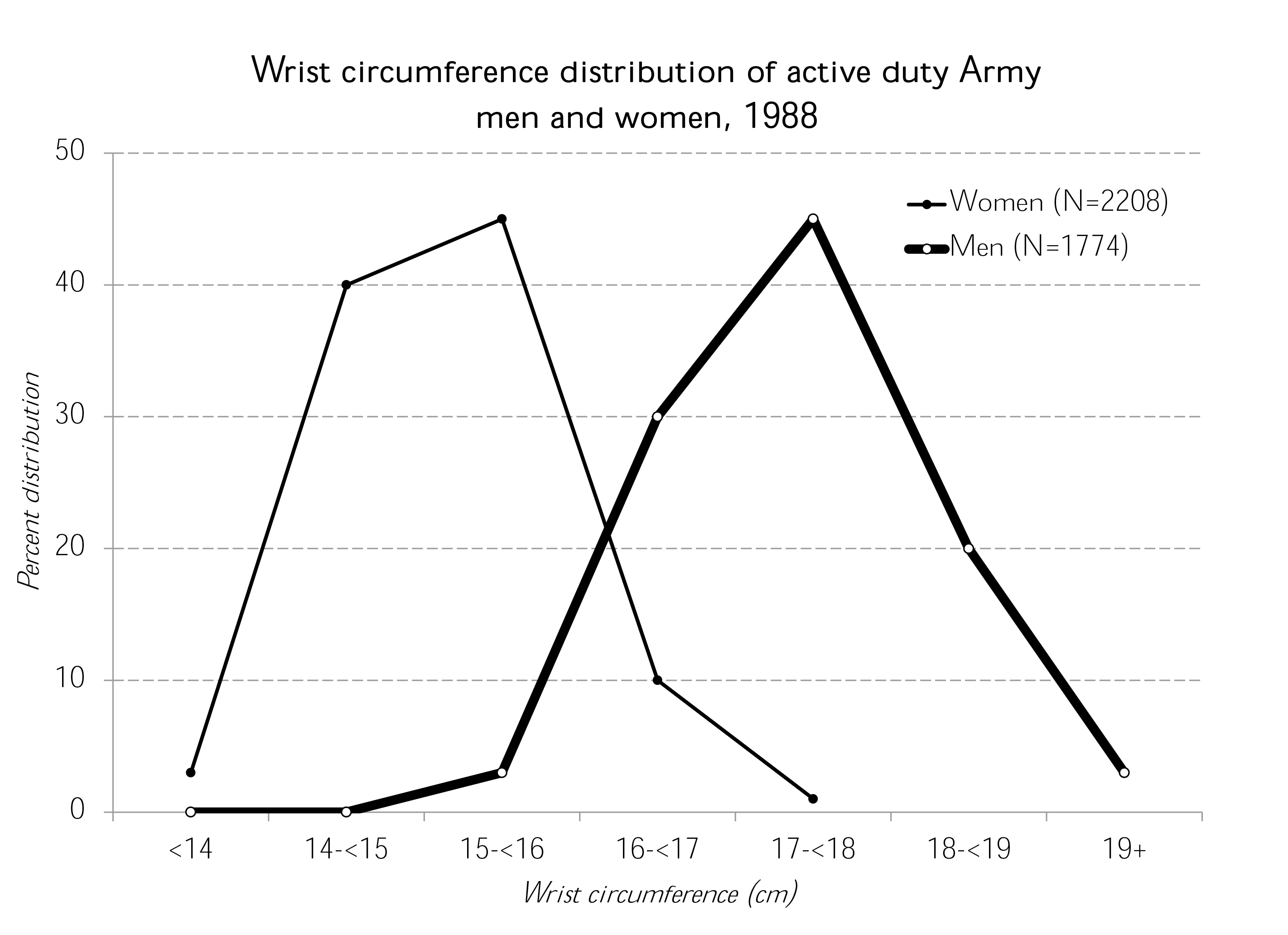
‘Then I found this awesome anthropometric survey of U.S. Army personnel from 1988. In that sample (almost 4,000, chosen to match the age, gender, and race/ethnic composition of the Army), the averages were 15.1 for women and 17.4 for men. Based on the detailed percentiles listed, I made this chart of the distributions:
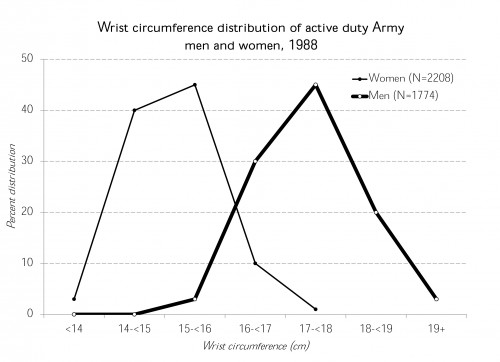
5

The average difference between men’s and women’s wrists in this Army sample is 2.3 cm, or a ratio of 1.15-to-1. However, if you took the smallest-wristed woman (12.9 cm) and the largest-wristed man (20.4), you could get a difference of 7.5 cm, or a ratio of 1.6-to-1. Without being able to hack into the Disney animation servers with a tape measure I can’t compare them directly, but from the pictures it looks like these couples have differences greater than the most extreme differences found in the U.S. Army.

Cross-posted at Family Inequality and the Huffington Post.

Philip N. Cohen is a professor of sociology at the University of Maryland, College Park, and writes the blog Family Inequality. You can follow him on Twitter or Facebook.