race/ethnicity/nationality

A collage of 12 TikTok video thumbnails featuring women's basketball players, with view counts displayed on each. The thumbnails show players from various teams including the Las Vegas Aces, LSU, and UConn in action or during interviews. Some frames feature players celebrating or interacting with media. View counts range from 43.1K to 21.5M views. The visuals highlight a mix of gameplay intensity, candid moments, and off-court fashion.
TikTok “edits” are short-form videos that compile multiple quick clips of a player set to music and include sports highlights and off-court footage (image by Julia Macey).

Historically, mainstream media have portrayed athletes differently based on intersections of race, gender, and sexuality. Black athletes’ athleticism tends to be elevated, while white athletes are praised for intellectual attributes. Female athletes’ athletic contributions have been minimized, as they are often displayed in passive poses and sexualized, especially when they identify as heterosexual and appear stereotypically feminine.

Click here to read the full article...

A single Palestinian flag flies in front of the Celtic FC stadium.
Supporters of Celtic FC in Scotland frequently display Palestinian flags at soccer matches (photo by Eugene Bradley)

Elite sport, especially on display at large-scale televised events, can provide a site for social and political messaging, including in the form of support, dissent, or opposition. One of the most iconic examples of dissent occurred at the 1968 Mexico City Olympics when successful US athletes John Carlos and Tommie Smith, supported by Australian silver medal winner Peter Norman, took a symbolic stand against the deep and pervasive oppression of African Americans.  In more recent times, and in the wake of the Russian military invasion of Ukraine in early 2022, around Europe some sports stadiums witnessed fans flying Ukrainian flags: representing condemnation of Russia and support for Ukraine.

Click here to read the full article...

An ice hockey coach, dressed in black, leans over on the ice, holding her stick across her legs, talking to a young participant with a long pony tail and wearing a white jersey, with other participants standing in the background.
The Indigenous Girls Hockey Program and Indigenous Girls Hockey Jamboree serve as powerful examples of “doing hockey different.” In this photo, an ice hockey coach, dressed in black, leans over on the ice, holding her stick across her legs, talking to a young participant with a long ponytail and wearing a white jersey, with other participants standing in the background (photo courtesy of Ryan Francis).

——

“…you begin to see how it’s all connected and the importance that we give these opportunities for Indigenous youth and Indigenous girls to be our future” ~Ryan Francis

On lands claimed by Canada, the ongoing project of settler colonialism targets Indigenous lives, languages, ways of knowing, connections to territory, and more. Settler colonialism is the claiming of lands already occupied by Indigenous peoples for the purposes of building wealth. It involves destroying Indigenous institutions and ways of knowing, while building what Daniel Heath Justice calls a “new social order” that is geared toward eliminating Indigenous peoples as Indigenous peoples. The violences of settler colonialism in the Canadian context include, for example, the epidemic of Missing and Murdered Indigenous Women and Girls and how anti-Indigenous racism is embedded in institutions such as child welfare, the justice system, and higher education. As Tuck and Yang highlight, the violence of settler colonial invasion “is not temporally contained in the arrival of the settler but is reasserted each day of occupation.

Click here to read the full article...

Deion Sanders, a Black man who coaches the Jackson State University football team, is pictured on the sideline using a knee scooter due to an injury.
Coach Deion Sanders on the Jackson State sideline at the 2021 SWAC Championship (photo via 2C2K Photography licensed under CC BY 2.0)

For many people across the U.S., the summer of 2020 felt as if racial tension reached a fever pitch. The murder of George Floyd was met with anger, outrage, and a great deal of political banter among elected officials. Following the summer of 2020, there was a wave of discussion about diversity, equity, and inclusion (DEI) across the sporting/corporate world, along with a related “resurgence” of attention to historically Black colleges and universities (HBCUs), with a particular focus on athletics. But please don’t call it a comeback, ‘cause HBCUs have been here for years. It is only now that the national sports media has shone a spotlight on decades of systemic financial and racial inequalities that have led to top Black students and athletes being lured away from HBCUs to predominantly white institutions (PWIs).

Click here to read the full article...

Hockey player Nazem Kadri, wearing his Colorado Avelanche jersey, lifts the Stanley Cup above his head in celebration.
Nazem Kadri celebrates after his team, the Colorado Avalanche, defeated the Tampa Bay Lightning to win the 2021-22 NHL Stanley Cup. Earlier in the playoffs, Kadri, who is Muslim and of Lebanese descent, received a series of online racist attacks following a controversial on-ice play. Image courtesy of The Sporting News.

It can be argued that no sport is more identified with Canada than hockey, which makes it an interesting mirror through which to examine how race is defined and constructed. And yet, for a nation that prides itself as a “cultural mosaic,” there is little to suggest that hockey players reflect that self-image. Look no further than the overwhelmingly white National Hockey League. With the excitement of the Stanley Cup playoffs still fresh on our minds, it is worth reflecting on the question, “why are there so few racialized players in the NHL?”

Click here to read the full article...

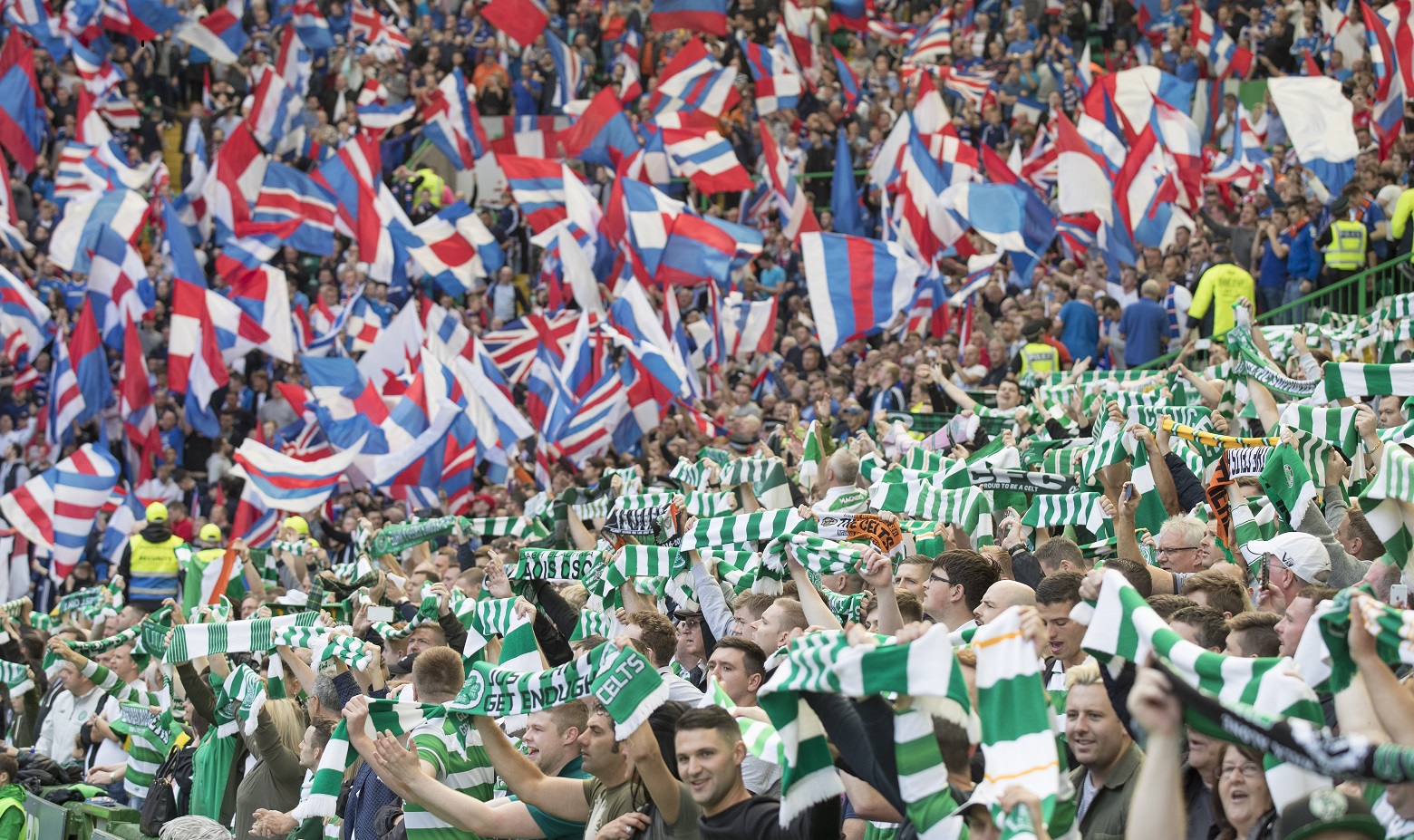
In the stands of a soccer stadium, fans of the rival clubs Rangers and Celtic can be seen displaying their respective team colors, white and green for Celtic, red, white, and blue for Rangers.
The rivalry between Scottish soccer clubs Rangers and Celtic is infused with political meanings related to religion, ethnicity, and nationalism (photo via International Business Times).

Elite soccer in Scotland operates within a relatively small financial domain compared to wealthier soccer countries like Italy, England, Spain, and Germany. Nevertheless, soccer remains the country’s dominant team sport, with attendances in Scotland’s top league the highest in Europe when population size is considered. Soccer in Scotland is largely dominated by two famous institutions: Rangers, a club and fanbase with a definitive anti-Catholic history and tradition, and Celtic, a club founded by Irish Catholic immigrants. Approximately 70% of fans in Scottish soccer devote allegiance to either of these two clubs. The histories of Rangers and Celtic, and the rivalry between them, also means they have millions of supporters around the globe, especially, though not solely, where Irish Catholic and Scottish Protestant immigrants have settled during the latter 20th and early 21st centuries.

From a sociological standpoint, it’s important to understand how communal memory contributes to this great and storied rivalry. For many supporters of Rangers and Celtic, such memory is infused with politics, religion, history, ethno-religious discrimination, colonialism, and anti-colonialism.

Click here to read the full article...

A collage of six group images featuring Black women in running gear before or after going for runs.
Black Girls RUN! has more than 70 local community chapters across the United States (photo via Black Girls RUN!)

The COVID-19 pandemic necessitated fundamental changes in people’s everyday lives. For example, social distancing measures drove changes to individuals’ fitness routines, leading to the popularization of home workout equipment such as the Peloton spin bike and treadmill. Part of Peloton’s growing ubiquity  is likely due to the social aspect of its platform and the sense of community many users feel through the use of hashtags and Facebook groups based on shared interests and identities. As a sociologist, I am interested in how fitness not only improves health, but also provides spaces for belonging. For example, a study published in 2016 about women who participate in Zumba reported that it had a range of benefits, including serving as a means of socialization and camaraderie. Social circles focused on physical activity can nurture fitness engagement and help people stay motivated to achieve their health goals.

Click here to read the full article...

Naomi Osaka, wearing a white visor and colorful shirt, stands reads to hit a tennis ball
Naomi Osaka withdrew from the 2021 French Open after she was fined $15,000 for not appearing at a press conference following her first round match (photo by Carine06 CC BY-SA 2.0)

Professional Black athletes navigate a fine line between being autonomous, independent, wealthy elites and undervalued, replaceable workers in a larger sports industry governed by logics of racial capitalism. The late Cedrick Robinson’s Racial Capitalism theory sees the systems of capitalism and racism as interconnected and inextricably linked. Robinson, a political scientist, argued that economic and social values are ascribed to individuals differently according to race. With this in mind, Black celebrity athletes occupy a seemingly powerful, yet precarious status. Journalist William Rhoden used the term “40 Million Dollar Slaves to highlight the ways in which Black athletes’ accumulation of wealth does not fully alleviate their oppressed status in an anti-Black American society.

Click here to read the full article...

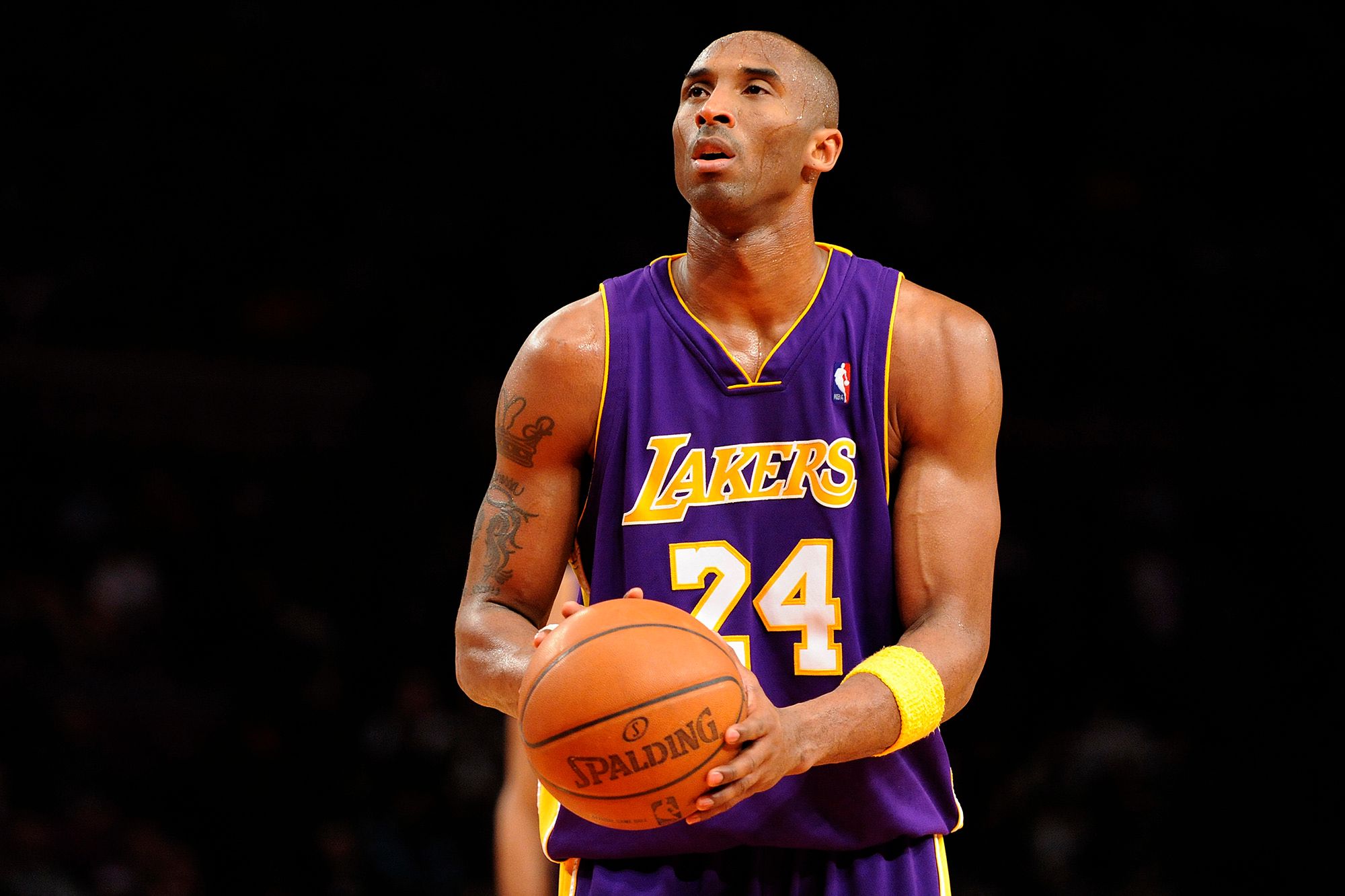
Basketball player Kobe Bryant holds a basketball at waist level while preparing to shoot a free throw.
Kobe Bryant, along with his 13-year-old daughter Gianna “Gigi” Bryant and seven others, died in a helicopter crash on Jan. 26, 2020 (photo via Nu Origins)

While basketball fans rejoice at the start of the 2020-21 playoffs, I am eerily reminded that it will mark the culmination of the first full NBA season since the untimely death of one of the league’s greatest stars—Kobe Bryant. On the foggy morning of January 26, 2020 in Calabasas, California, a tragic helicopter crash claimed the lives of Bryant, along with his 13-year-old daughter Gianna “Gigi” Bryant, and seven others. The stunning news consumed the sporting world and left many people reeling for solace, mourning in disbelief. Many fans like me, who grew up watching Kobe, still experience trouble accepting his sudden ascension.

Click here to read the full article...

A group of women and men, members of the Washington Mystics, stand on a basketball court wearing white t-shirts that spell out the name Jacob Blake
Members of the WNBA’s Washington Mystics protest the police shooting of Jacob Blake, a Black man shot in the back seven times by an officer in Kenosha, WI. (photo from CNN)

Sport sociologists like Harry Edwards have long fought against the notion that sports and politics can be kept separate, battling back against assaults by people like Fox News’ Laura Ingraham, who in February 2018 told NBA star LeBron James to “shut up and dribble.” In the midst of the NBA and WNBA finals, and at a time of intense political polarization, basketball fans ought to be aware of the stakes that exist for Black athletes and listen to their voices. How else can you as a fan ethically focus on the games if many of your favorite players say that they themselves cannot? In this brief essay, we offer some considerations for basketball fans today, building upon the work of many sports sociologists who have come before us.

Click here to read the full article...