race/ethnicity/nationality

A group of football players, predominately composed of Black men, march on the Clemson University campus. One holds a sign that reads "matter is the minimum." Two other men hold signs that read "I can't breathe."
Members of the Clemson University football team lead a “March for Change” protest in June 2020. (photo by John Bazemore, AP)

A TIME magazine article recently discussed college athletes realizing their power to create meaningful change. While college athletes as a collective have great power, it is Black athletes in particular who are leading this charge by placing emphasis on their racial identity. Recent atrocities, such as the unjust shooting of Jacob Blake, as well as the murders of Ahmaud Arbery, Breonna Taylor, and George Floyd, have placed increased attention on racism. Injustice has caused college athletes to speak out, when in the past, they have remained mostly silent.

Click here to read the full article...

A male soccer player in a blue jersey kneels in a soccer stadium.
Mason Holgate of Everton kneels before a Premier League match against Liverpool on June 21, 2020. (Photo by Everton FC/Everton FC via Getty Images)

On a sunny Sunday afternoon in June 2020, Black Lives Matter protesters in Bristol, England pulled down a statue of Edward Colston from its pedestal, dragged it through the city’s streets and dumped it into the harbour. Colston, who some revered for his philanthropic donations to schools and hospitals, was a 17th century slave trader. He made his fortune through his involvement in the Royal African Company, a mercantile corporation that oversaw the forced removal, transportation and annihilation of hundreds of thousands of Black Africans. The dismantling of his statue – which had stood for 125 years – was an iconic event in the demonstrations across the United Kingdom, adding new momentum to campaigns to remove or replace public monuments, and to rename buildings that have racist, colonial connections.

Click here to read the full article...

A baseball game takes place at night in an empty stadium
Thanks to successful efforts at mitigating the spread of COVID-19, Taiwan’s professional baseball league began its season on April 11 (photo by Gene Wang/Getty Images)

Since COVID-19 has shut down sporting events in North America and many parts of the world, sports fans are desperately trying to find anything to watch. In North America, the National Basketball Association and National Hockey League had to suspend their seasons indefinitely, NCAA March Madness was cancelled, and Major League Baseball, which was set to start the season at the end of March, has not yet decided on a potential date to open the 2020 season despite creative contingent plans being floated around by league officials. With no baseball games on the schedule in North America, baseball enthusiasts can turn to Taiwan, where its professional baseball league started the season on April 11. To abide by social distancing policies of Taiwan, no fans are allowed in stadiums, but robot spectators fill the bleachers in lieu of actual people.

Click here to read the full article...

Celtic FC players in green and white striped jerseys raise their arms in celebration on a soccer field
Celtic FC players celebrate their 2-1 victory over Inter Milan in the 1967 European Cup (AP/Press Association Images via Celtic Quick News)

While St. Patrick’s Day gives people of Irish descent around the world an opportunity to celebrate their heritage, soccer serves a key role with regard to Irish ethnicity in Scotland—and on a much more frequent basis than once a year. To help understand this we need to go back to May 25, 1967, when Celtic Football Club of Scotland defeated Inter Milan, 2-1, to become the first club from outside of Spain, Portugal, or Italy to win the European Cup (now the UEFA Champions League). Recognised as the most prestigious soccer trophy in Europe, only 22 clubs have managed to win it since its initiation in 1956.

Click here to read the full article...

US President Donald Trump, first lady Melania Trump and Indian Prime Minister Narendra Modi at a cricket stadium, in Ahmedabad, India, in front of a large crowd of people.
U.S. President Donald Trump, first lady Melania Trump, and Indian Prime Minister Narendra Modi arrive for a “Namaste Trump,” event in Ahmedabad, India. (AP Photo/Alex Brandon)

After emphasizing that “America loves India” during the “Namaste Trump” event, President Donald Trump opened his address with several references to India’s most popular sport, cricket. A crowd of more than 100,000 responded with cheers.

“Five months ago, the United States welcomed your great prime minister at a giant football stadium in Texas,” Trump noted on Feb. 24. “And today India welcomes us at the world’s largest cricket stadium in Ahmedabad.” Next, Trump mentioned Indian cricket stars Sachin Tendulkar and Virat Kohli, although he mispronounced the names and was called out by social media users, including the sport’s governing body, the International Cricket Council.

Click here to read the full article...

Photo of Judith Kasiama, a woman of colour, with long black hair, wearing sunglasses and an orange jacket, against the backdrop of snow-filled mountains.
Figure 1: Judith Kasiama, an Adventure Ambassador with Mountain Equipment Co-op, has criticized the company for perpetuating the myth that only white people frequent the “outdoors.” (Photo from MEC)

In November 2018, Canadian outdoor recreation giant Mountain Equipment Co-op (MEC) sent ripples through the community of “outdoorsy” folks in Canada with a statement framed around the following provocative question: “Do White People Dominate the Outdoors?” The statement was a response to an Instagram callout from Judith Kasiama (see Figure 1), in which Kasiama pointed out “a narrative that [Black and Indigenous peoples and people of colour] don’t enjoy the outdoor[s] compare[d] to their white friends.” In its statement, MEC took responsibility for its role “in underrepresenting people of colour in the outdoors,” and promised “that moving forward, [MEC] will make sure [they’re] inspiring and representing the diverse community that already exists in the outdoors” (see Figures 2 & 3 below).

Click here to read the full article...

Student Athletes from the Sierra College Football team play in the pre-season football scrimmage at Sierra College in Rocklin, Calif. on August 20, 2016. A quarterback with the football attempts to break away from the grasp of a defensive player. The first game of the season will be at the Rocklin stadium on September 3rd against Fresno City College at 2:00 PM.
A substantial body of research has documented racial stacking–the tendency of athletes from certain racial groups to be disproportionately represented in particular positions and roles on a team (photo by davidmoore326, licensed under CC BY-NC-ND 2.0)

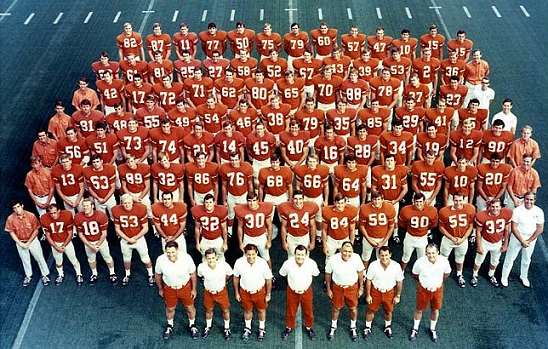
Racial stacking – the tendency of certain racial groups to be overrepresented in particular positions on sports teams – is a longstanding issue in numerous sports, including college football. Even though the last of the segregated college football programs disappeared in the early 1970s, racial disparities still exist on the field today. Even someone observing American football for the first time might notice that white and black players tend to occupy different roles and positions on the field. To explore these issues, I conducted a study – recently published in Sociology of Sport Journal (unpaywalled version) – to provide a contemporary picture of if and how stacking persists in college football. I also looked beyond race and examined the social class origins of college football players at different schools and playing positions. Social class reflects economic forces that affect the development of talent, as well as athletic outcomes. I learned that race and class intersect in both high school and college to provide different playing opportunities and outcomes for black and while players.

Click here to read the full article...

Former NFL player Ricky Williams on the sideline during a game
After retiring in the prime of his carrer after a third positive marijuana test, former NFL running back Ricky Williams explained that he had lost interest in fame and celebrity status. (photo by Robert B. Stanton/NFLPhotoLibrary)

In August 2019, former National Football League (NFL) player Chris Long declared that he smoked marijuana and “is a good person”. Long is not the first professional athlete to discuss marijuana use, and his comments situate him in a conversation many former players are having about the benefits of marijuana compared to traditional pain killers. Long’s comments are also part of larger marijuana reform movements happening in places such as Canada, Mexico, New Zealand, Uruguay, and the U.S. In the U.S., however, it is white marijuana users like Chris Long who tend to get the benefit of the doubt with respect to being a “good person”.

Click here to read the full article...

An offseason trade has united sisters Nneka (left) and Chiney Ogwumike as teammates for the Los Angeles Sparks
A trade prior to the 2019 WNBA season has reunited sisters Nneka (left) and Chiney Ogwumike as teammates for the Los Angeles Sparks. (photo via Irfan Kahn / Los Angeles Times)

With the Women’s National Basketball Association (WNBA) season underway, one storyline that made waves this offseason was the controversial trade of Chiney Ogwumike to the Los Angeles Sparks. The trade re-united Chiney with her sister, Nneka, in one of the biggest media markets in the United States. Through their success in sport, the sisters have built their social profiles in different ways, with Nneka finding more success on the court (WNBA MVP and champion in 2016) and Chiney in media working for ESPN.

As successful athletes and burgeoning media personalities, the Ogwumikes present themselves as figures of sociological interest, primarily because they exist at the intersection of an increasingly diverse Black America as second generation Nigerian immigrants.

Click here to read the full article...

Fan with a sign that reads, "we hated Kaepernick before it was cool (fot football reasons, not because we're racists)"
Many fans who object to protests by NFL players during the US National Anthem insist their opposition has nothing to do with race (photo from Idaho Statesman)

In 2016, Colin Kaepernick continued a tradition in US sports by staging a protest against racial injustice during the playing of the US national anthem. Following his initial protest, Kaepernick said:

“I am not going to stand up to show pride in a flag for a country that oppresses black people and people of color. To me, this is bigger than football and it would be selfish on my part to look the other way. There are bodies in the street and people getting paid leave and getting away with murder.”

Kaepernick’s comments were in reference to a series of deaths of unarmed Black American men, such as Trayvon Martin, Michael Brown, Eric Garner, and Tamir Rice. Reactions to Kaepernick’s protest were split. Within the NFL and beyond, many Black athletes, performers, fans, and even some coaches and officials joined in the protest against state violence in Black communities. At the same time, many others vociferously objected while claiming to not be racist. The image above illustrates the color-blind racism of the objectors; an anti-black statement of on-going hatred (“We hated Kaepernick before…”) is modified by a racially neutral phrase (“For football reasons”). The denial of racism when protesting an anti-racist protest obscures the ongoing operation of racism as a multifaceted construct that disproportionality targets Black Americans. Moreover, it prevents understanding of the US’s failure to provide equal protections for all citizens when state violence and poverty disproportionately affects Black communities.

Click here to read the full article...