Search results for The

I have seen lots of graphs showing rates of immigration to the U.S. over time, but I just found this graph showing the rates of emigration from Mexico from 2006 to early summer of 2008 (from the Migration Information Source website; this is all emigrants, regardless of destination, though of course the vast majority will be to the U.S.):

A quick note on the data: Since it required someone from a family to be left in Mexico to be asked about family emigration patters, it doesn’t include those situations where an entire family left all at once; however, my understanding of immigration patterns is that this type of immigration is a minority of all movements, since most families prefer to send one or two family members to get a foothold in the host country.

As we see, there’s a general overall downward trend during that time period, which isn’t surprising given the downturn in the U.S. economy, especially the construction industry. The Mexican government reports that remittances sent back to Mexico are down this year as well.

 There is also a seasonal pattern, with the period from August to February of each year being the lowpoint and then picking up again in the spring. My first thought, since I study agriculture, was that this might have something to do with the growing season and when agricultural workers are needed in the U.S., but of course it’s a stereotype that most Mexican immigrants are field workers, so that’s probably not it.

Any thoughts on what might explain that pattern?
In this series I have offered five explanations of why people of color are included in advertising. Start with the first in the series and follow the links to the remaining four here.

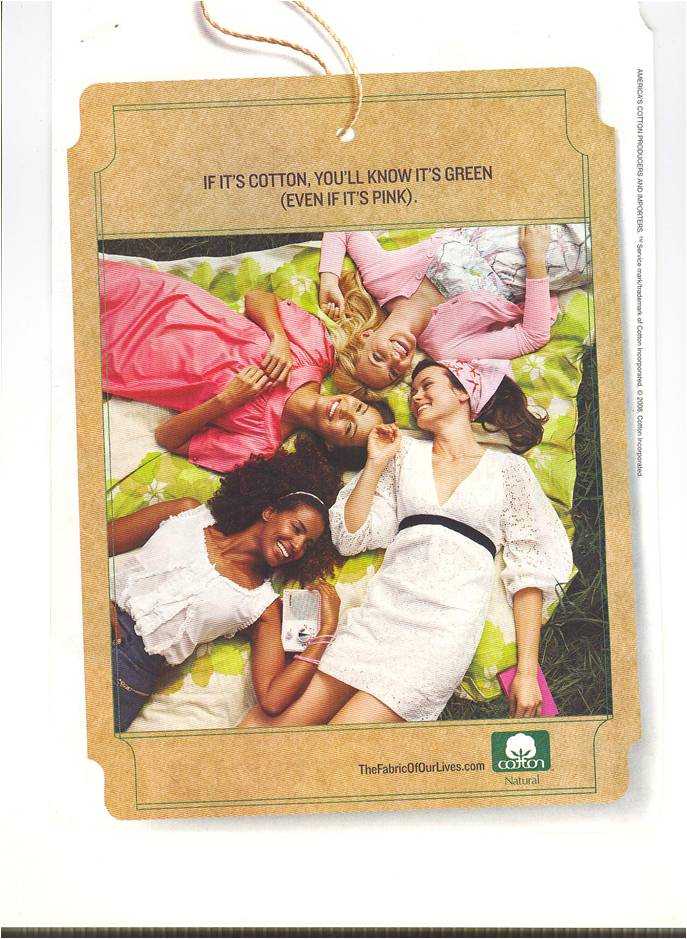
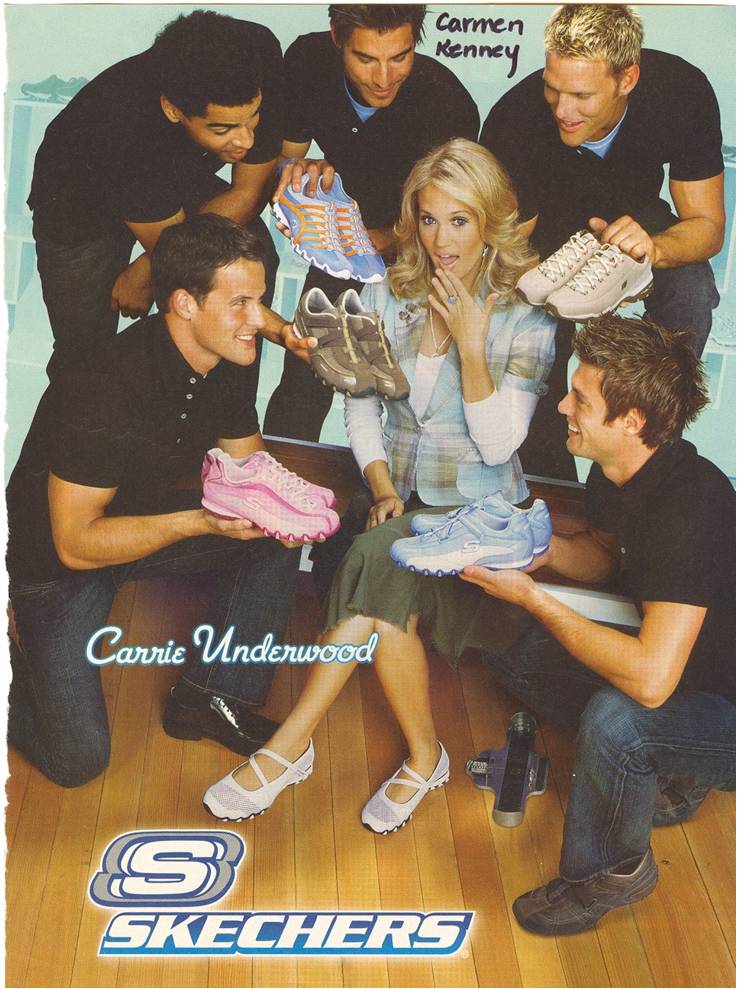
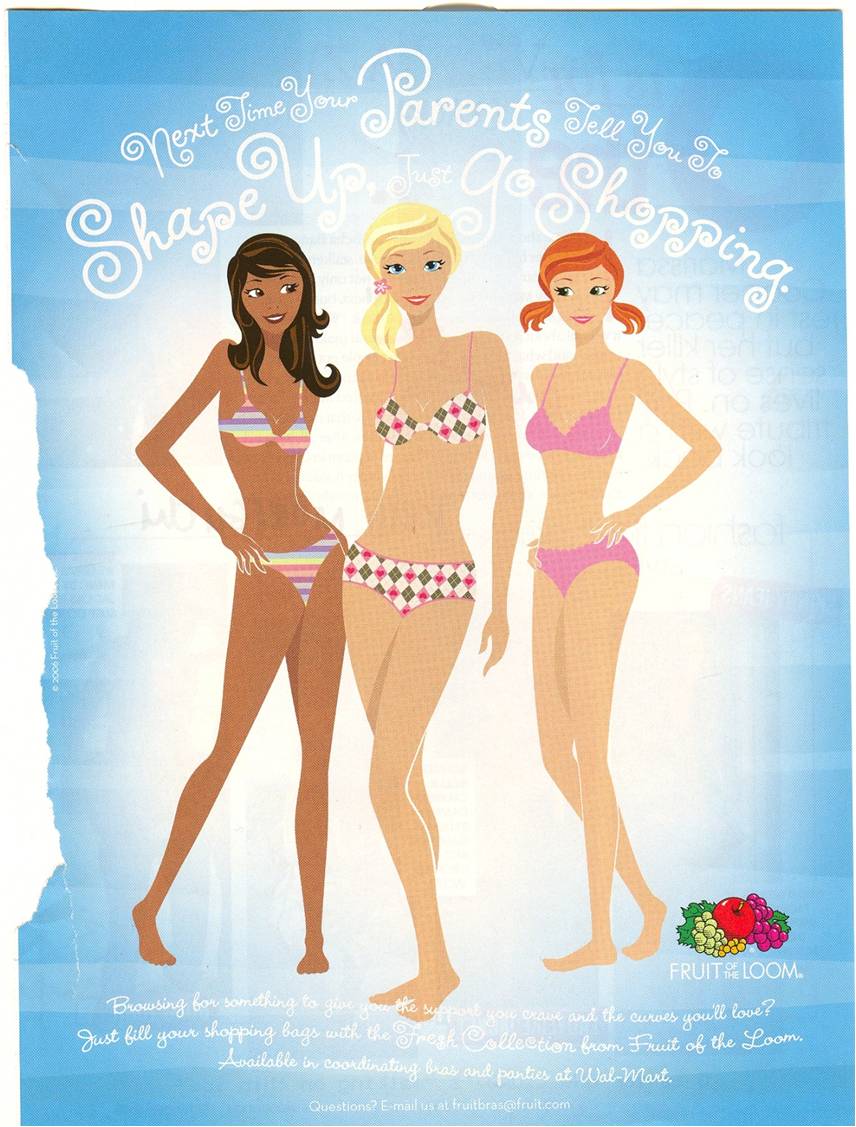
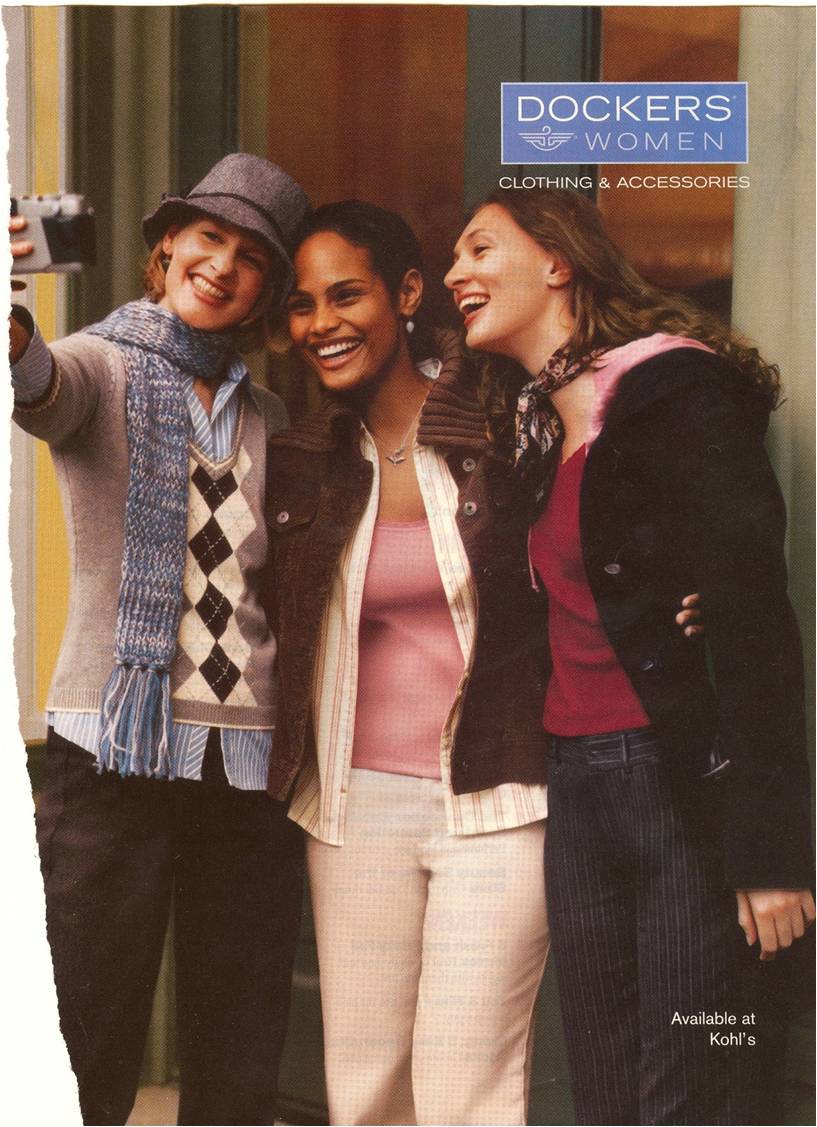
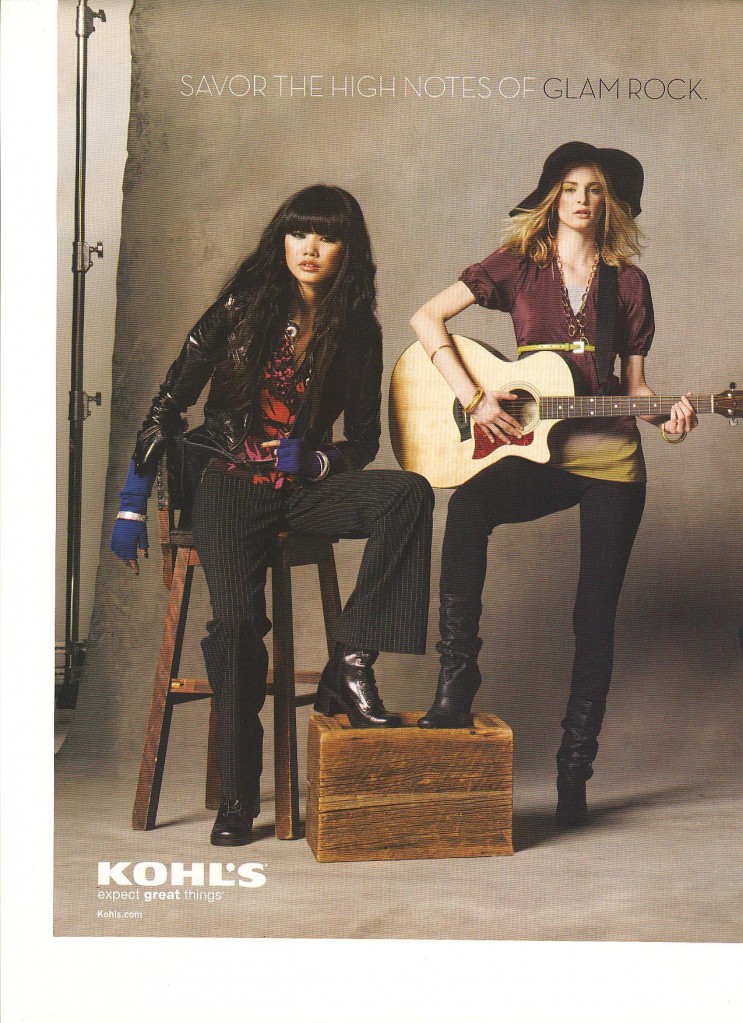
I am now discussing how they are included.  Already I have shown how people of color are whitewashed. Here I show that, when people of color are included, they are often chaperoned. That is, people of color are usually outnumbered by white people. Here are some examples:


NEW!  This is a two-page ad for Kohls:

03-02103-022

I speculate that, if there are more white people than people of color in an advertisement, the inclusion of a non-white person does not threaten the status quo (that whiteness is mainstream and normative) and the product is still clearly marked as mainstream and normative (i.e, white).

Next up: Subordination.

Also in this series:
(1) Including people of color so as to associate the product with the racial stereotype.
(2) Including people of color to invoke (literally) the idea of “color” or “flavor.”
(3) To suggest ideas like “hipness,” “modernity,” and “progress.”
(4) To trigger the idea of human diversity.
(5) To suggest that the company cares about diversity.

How are they included?
(6) They are “white-washed.”

Lisa Wade, PhD is an Associate Professor at Tulane University. She is the author of American Hookup, a book about college sexual culture; a textbook about gender; and a forthcoming introductory text: Terrible Magnificent Sociology. You can follow her on Twitter and Instagram.

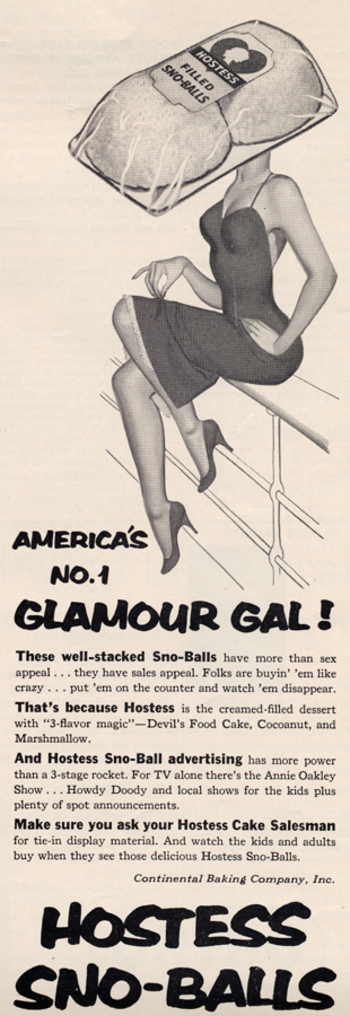
Select text: “These well-stacked Sno-Balls have more than sex appeal… they have sales appeal!”

The 1960s via Found in Mom’s Basement.

More sexualization of food here, herehere, herehere, here, and especially here.

Tessa G.S. sent in a link to the online game Miss Bimbo. Here are some images from the game:

Tessa says,

In this case, you build a “bimbo” by placing your character on diets, getting plastic surgery, shopping for clothes, attending a-list parties, dating handsome men— all with the aim of becoming the most popular bimbo in the game…[According to the website] MissBimbo is an educational tool, a social meeting place and a hot pot of bimboism. It is free to enjoy bimboland.

An educational tool? Really?

According to CNN, parents have expressed concern that pre-teen girls are playing a game that encourages them to have their characters get breast implants and facelifts, as well as go on diets.

The game also reinforces the idea that girls are always rivals, whether competing for popularity or men (or the perfect wedding, as the movie “Bride Wars” shows).

While we’re on the topic of video games (sort of), Burk M. told me about Sexy Beach 3. In the game, you get to pick a female character, what she’s wearing, which of several beach-related activities she’s involved in (playing tag, “playful floating,” limbo, etc.), the location (beach, reef, waterfall, and so on) and the time of day. And then you can take the role of a disembodied hand that rubs various parts of her body while her nipples get hard and she moans in delight and eventually appears to orgasm. Here’s an example (Not Safe for Work):

more...

Michael Kimmel argues that, for contemporary Americans, science is a superstition.  Scientific explanations are comforting and often accepted without critical thought.  The word “natural” rolls off our tongue and frequently gets conflated with “good.”  We are obsessed with finding the biological origins of sexual orientation, gender difference, political proclivities, happiness… everything.  Once a biological basis is found, it is considered the whole explanation.  It is as if biology is more fundamental and more true than things like culture or society. 

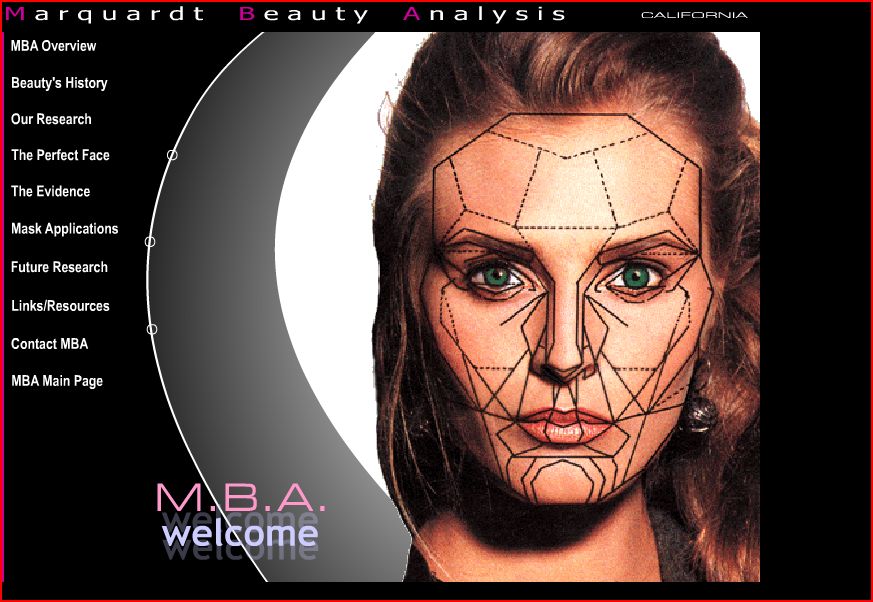
Our “faith” in science, then, is useful to marketers insofar as they can claim that their product is objectively tested, engineered, or otherwise scientifically sound.  This brings me to this Marquardt Beauty Analysis website, sent in by Kiran D.  The website explains the science behind beauty.  The main page includes a woman’s face overlaid with complex geometric shapes:


Here is part of the mission statement (emphasis mine):

MBA is dedicated to proactively researching human visual aesthetics, including its biological and mathematical bases, and to utilizing the results of that research to develop and provide information and technology with which to analyze and positively modify (i.e. improve) human visual attractiveness.

MBA further is dedicated to tailoring and formatting this technology to specific uses for direct applications in the fields where human attractivenss is a factor or parameter (i.e. those fields interested in human visual attractiveness) including medicine, dentistry, psychology, anthropology, biology, anthropometry, the arts, cosmetic makeup, and fashion, as well as for direct use by the individual consumer.

Notice how they use scientific buzzwords like “bases,” “formatting,” “applications,” and “parameter.”

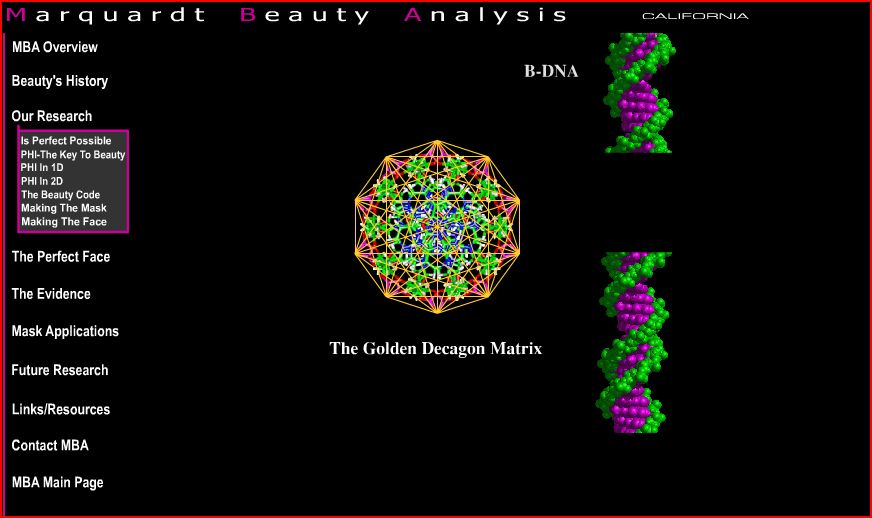
Here is a screenshot showing how they have tried to “scientize” beauty and make their endeavor look like legitimate science:


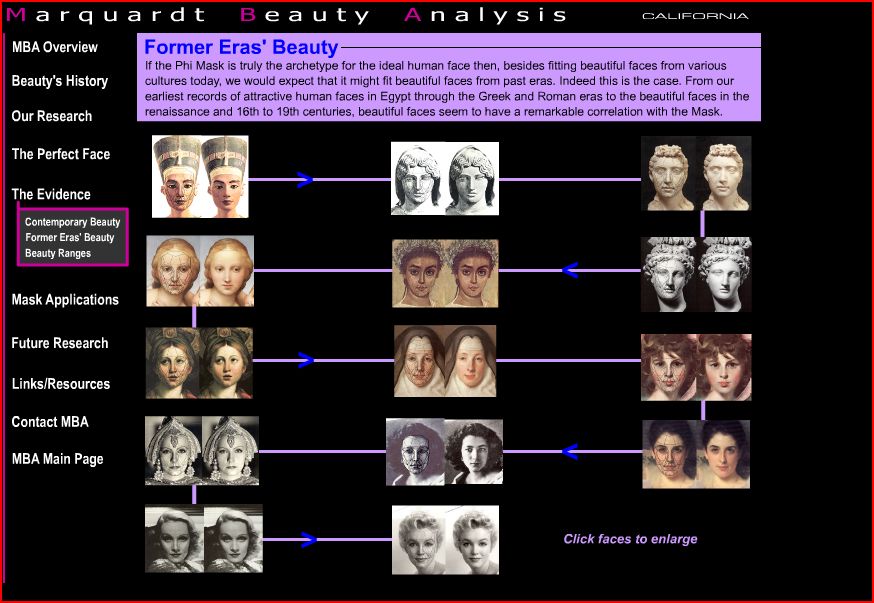
On the page below they claim that their formula works across history (elsewhere they also claim it works across race), so they argue that their science is objective and not culturally or historically contingent:

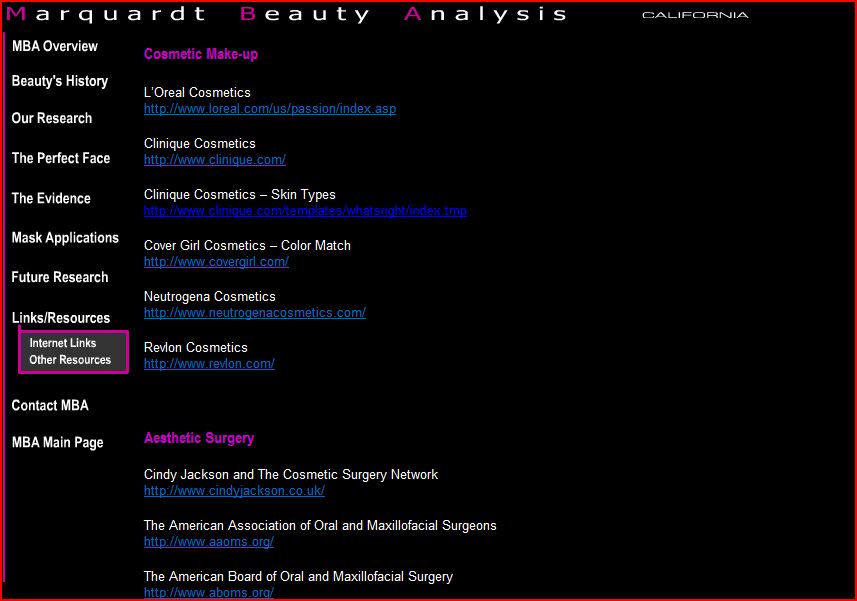
The website, of course, is not really about research on beauty; it’s a mechanism with which to sell make-up, cosmetic surgery, and other products.  Here is a screenshot of the first part of the links page:

The page includes links to L’Oreal, Clinique, Cover Girl, Neutrogena, and Revlon; five “aesthetic surgery” links; three “aesthetic dentistry” links; and a handful of academic-y sounding links.

Thanks Kiran!

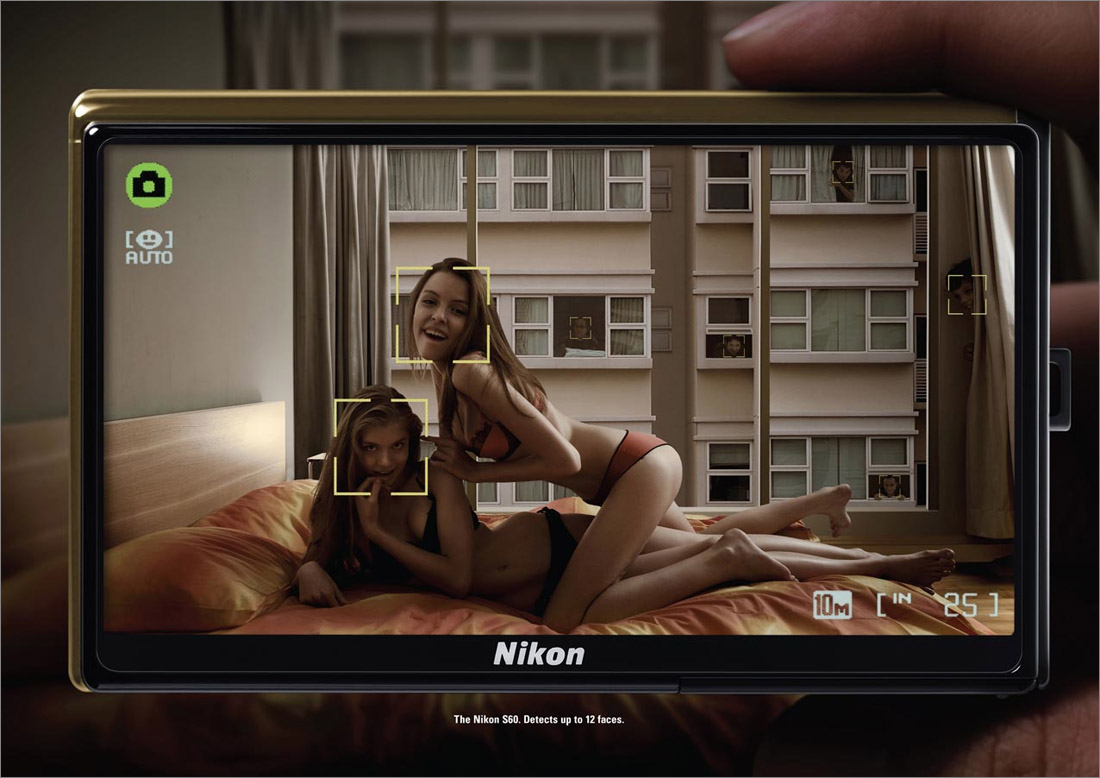
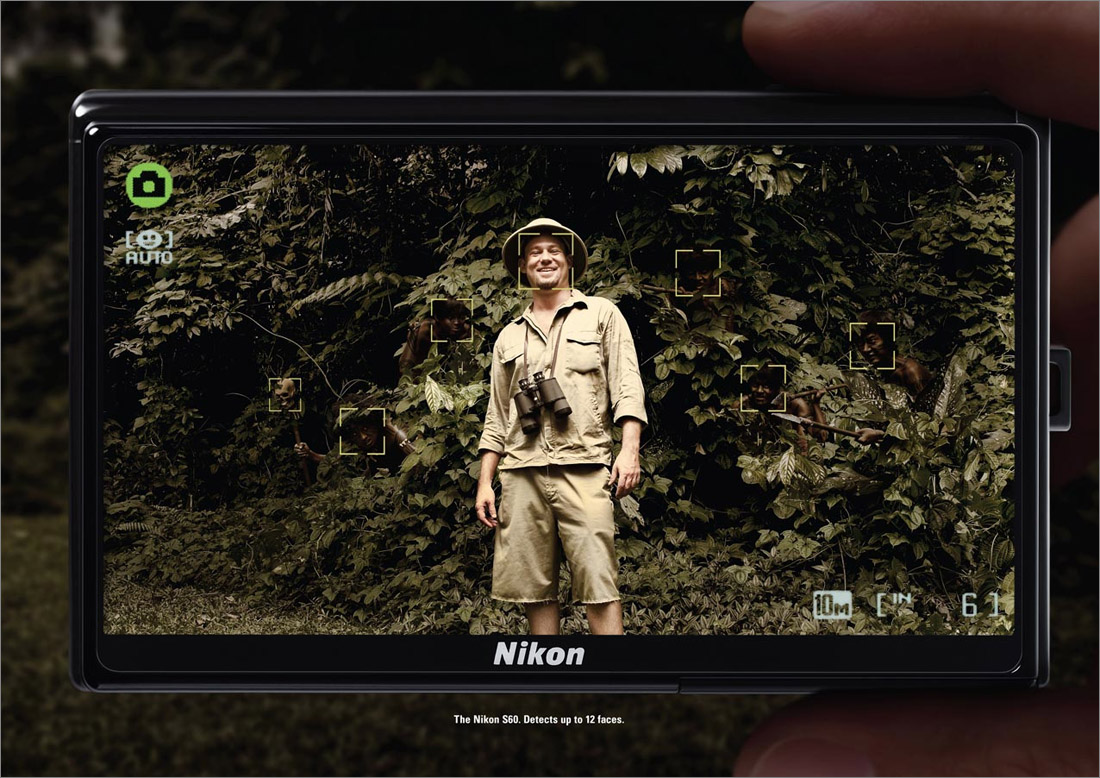
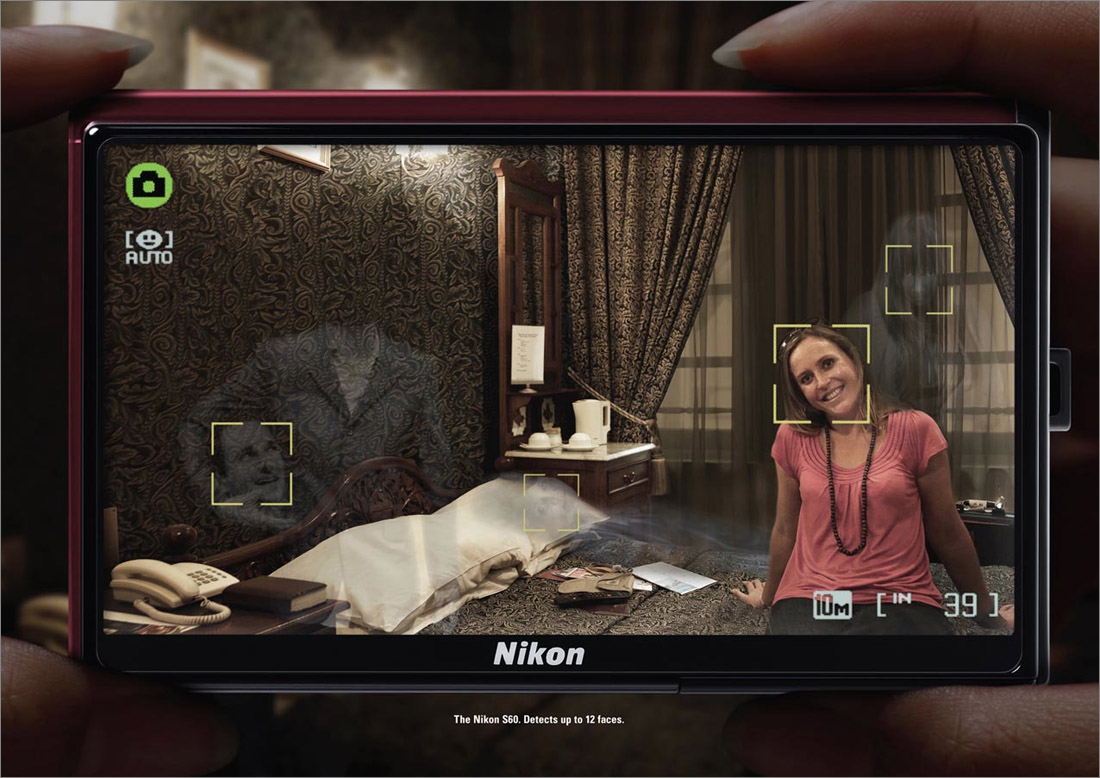
From AdGoodness come these three print ads for a new digital camera, the Nikon S60, which apparently has a feature that allows it to auto-detect and focus on faces. The three examples include a bunch of people rubber-necking at two young “porn lesbians” [the top one of which has a horribly Photoshopped head!], a bunch of people of color sneaking up on a white safari dude, and a bunch of ghosts looking at a woman in a hotel room.  Of all the possible examples that could be used to highlight this face-finding feature, who thought it was a good idea to use some hackneyed stereotypes about sexual orientation and race?

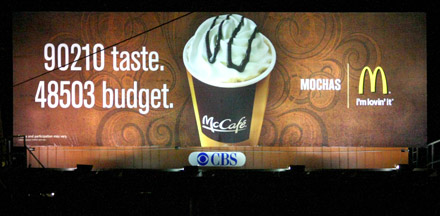
Chelsea C. brought our attention to this billboard for McDonald’s coffee or McCafe:

90210 is the zip code for Beverly Hills, a notoriously rich neighborhood in California. And, Chelsea explains, 48503 is a zip code in Flint, Michigan.

The ad is interesting to me because of the double meaning of taste (hello Bourdieu!). Taste refers to how things taste on your tongue (literally the taste of the coffee), but it also refers to who has good versus bad taste (people with good taste are “high class” and they like things like classical music and caviar). The idea that this ad is capitalizing (pun intended!) on both meanings of the word taste is supported by the use of the term “cafe” in “McCafe” and the portrayal of a fancy coffee drink (“Mochas”).

So the ad is saying that, even if you live in Flint and don’t have the economic resources of someone who lives in Beverly Hills, you can have the taste of expensive coffee because, of course, expensive coffee is to your taste.

There is something interesting here that ties into our consumer culture and wide range of advertising, television programming, and Paris Hilton-watching that encourages us to aspire to be just like the rich. This means buying expensive things that you can’t really afford and/or valuing things that mark you as a high class person with good taste (such as Mochas from McCafe, if that’s the best you can do). There is no questioning as to whether it’s a good idea for everyone to aspire to such heights, whether there is something problematic in the disparity between 90210 and 48503, or even whether it’s true that the rich have better “taste.” So, ultimately, the hierarchy goes unchallenged while we all just jocky for position.

This reminds me of the moment in the Sex and the City movie when Carrie realizes that her assistant, Louise, rents super-expensive purses even though she is too poor to buy them.  Carrie is impressed by Louise’s “taste” and her dedication to having “the best” things even if they are completely inessential and renting them only exacerbates the fact that she doesn’t have oodles of cash.

So, yeah, I think this billboard plays into that.