Cristoph B. sent in this image (found here) of a woman who was supposedly paid by Kodak to “assvertise” at a trade show by wearing Kodak panties and… (well, it’s not safe for work):
Search results for The
Kona Grill specializes in “imaginative meals.” In their ad campaign (discovered here), they sexualize their mixing of usually segregated culinary traditions (“East meets West”). Here they put a fork and chopsticks in bed together:
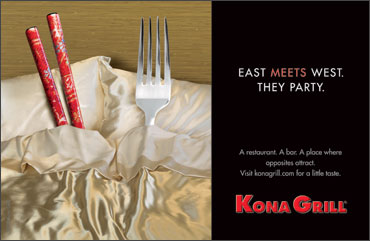
Their food, apparently, is like interracial sex. This is interesting in itself, but the copy goes further. It reads:
A restuarant. A bar. A place where opposites attract. Visit konagrill.com for a little taste.
So not only are East and West (or Asians and Americans) different, they’re “opposites.” Such advertising not only fetishizes interracial relationships, but it reinforces the idea that race and culture are such powerful and defining characteristics that people from the East and the West could not possibly have anything in common (except sex, of course).
Hello Readers! We enriched some posts this month. Enjoy!
Ed L. sent us another good example of the way that a cultural understanding that marriage as about love, a relatively new idea in human history, can be used to normalize gay marriage by pointing out that men and men and women and women can love each other deeply. Click here and scroll down for the commercial.
What is racist? We added a second confession to one we posted earlier.
Our post on anachronistic portrayals of American Indians was cross-posted at Racialicious. One of the commenters pointed us to some additional material that we’ve used to update the post on anachronism and an older post on American Indian mascots. Scroll down.
We found another vintage ad using the “savage” to sell. Check it out here.
We added a vintage Union-Castle cruise ad to this post of a colonial-era travel poster for Hong Kong. The Castle ad portrays Africans and their houses as a tourist attraction for Whites to enjoy.
We added two Swiffer ads and a link to Swiffer’s “break-up channel” to this post about cleaning products being portrayed as women’s “special friends.”
You may remember a recent post about how the new Risk boardgame has been re-fashioned to be, well, blatantly for guys only. Well, Julie C. went to the website and played the online game which is not about world domination, but in fact about banging hot chicks and other ways to prove you’re a manly man. It’s pretty remarkable. Enjoy! (Scroll down past the original post.)
There was a time in American history when women agonized about being too skinny. Check out the two ads for products that will help women put on weight that we added to two others in a previous post.
We came across another example of an ad, this one from 1934, urging women to start shaving their armpits. We added it to another, along with our discussion of the marketing effort that made armpit shaving a norm for women and a money-making endeavor for some. Relatedly, we added some more vintage ads for douche and feminine deodorant, sent in by Ben O., to this post about douche ads.
In a comments thread, Tim pointed us to another product shaped by a boob. We added it to our extensive post on products shaped like boobs.
This ad — found at the height of the foreclosure crisis in a magazine for the obscenely rich — points out that, for obscenely rich people, the crisis is a bonus. What struck me most was the double meaning in the headline. “Above It All” has both descriptive and moral meaning.
It is also a good example of how the rich see the economic struggle of the masses as an “opportunity” to get richer.
Text below.
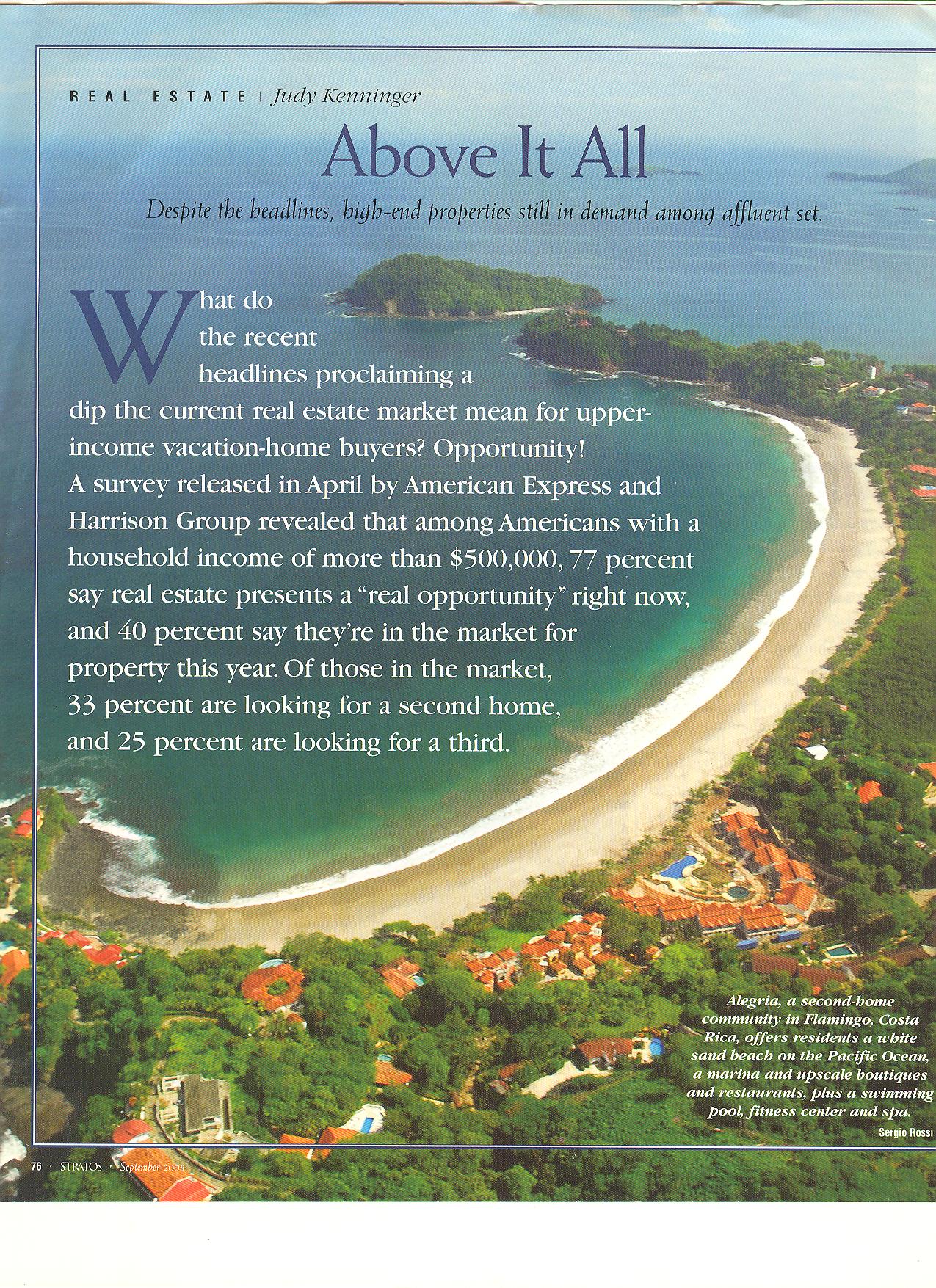
Text:
Above It All.
Despite the headlines, high-end properties still in demand among affluent set.
What do recent headlines proclaiming a dip the [sic.] current real estate market mean for upper-income vacation-home buyers? Opportunity! A survey released in April by American Express and Harrison Group revealed that among Americans with a household income of more than $500,000, 77 percent say real estate presents a ‘real opportunity’ right now, and 40 percent say they’re in the market for property this year. Of those in the market, 33 percent are looking for a second home, and 25 percent are looking for a third.
Corey O. sent in a link to the Hard Rock Cafe’s Goth Punk Barbie:
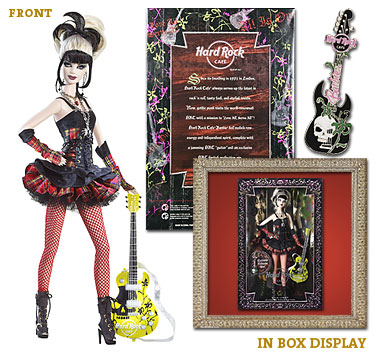
It’s a good example of the appropriation of subcultures. Barbie represents mainstream ideals of American feminine beauty–ideals that are safe and predictable and therefore, at least in theory, incongruent with the goth punk subculture. But here that subculture is stripped of any real content; it’s just a fashion statement, not a challenge to the mainstream world Barbie represents.
For other examples of the commodification of punk or alternative subcultures, see here and here.
Thanks, Corey O.!
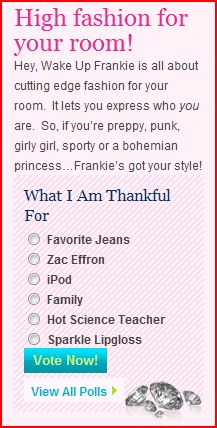
Heather O. sent us a link to product sold at a website featuring items for girls’ rooms. It’s a “piggy” bank for saving money for a boob job.

In case there is any question as to whether the products are aimed at girls, this is from the front page:
Thanks Heather!
Lisa Wade, PhD is an Associate Professor at Tulane University. She is the author of American Hookup, a book about college sexual culture; a textbook about gender; and a forthcoming introductory text: Terrible Magnificent Sociology. You can follow her on Twitter and Instagram.
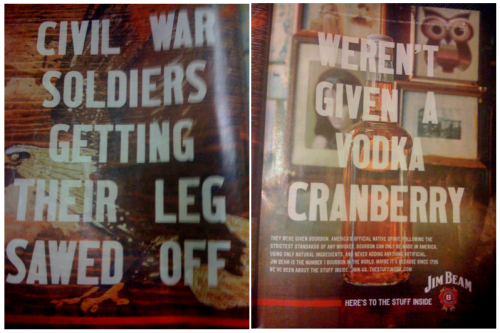
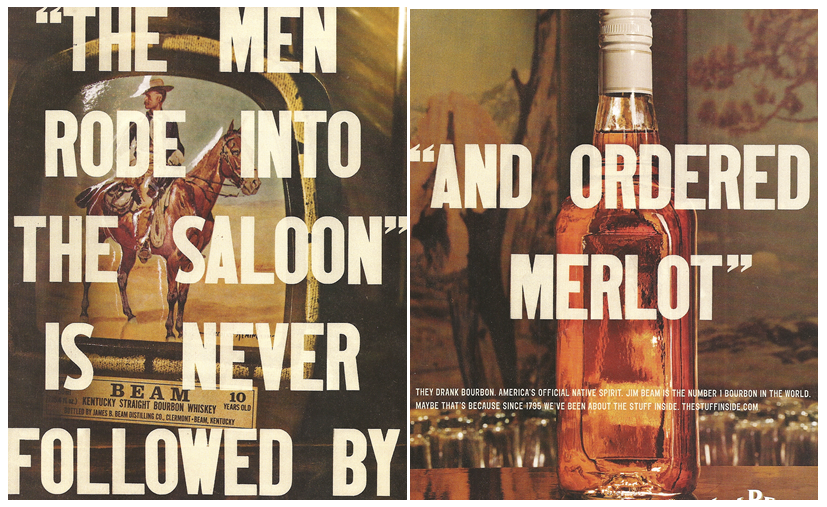
I used to like whiskey, but after seeing this two-page ad, I feel like I may no longer be manly enough to drink it. My personal high-water mark is somewhere around a sprained ankle or *maybe* a broken finger– nowhere near a sawed-off leg. Besides, the last thing I need is the Man-Police arresting me at my favorite bar for “Drinking-Whiskey-While-Having-A-Low-Pain-Tolerance”…I think the penalty is a stiff fine and 200 hours of Steven Segal movies.
Oh well, I guess it’s vodka cranberries from now on…
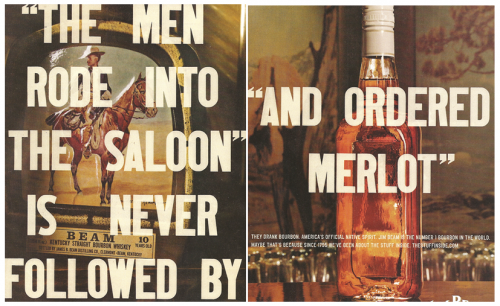
NEW: Here’s another 2-page Jim Beam ad, in which the message is clearly that wine is a sissy drink:
Kona Grill specializes in “imaginative meals.” In their ad campaign (discovered here), they sexualize their mixing of usually segregated culinary traditions (“East meets West”). Here they put a fork and chopsticks in bed together:
Their food, apparently, is like interracial sex. This is interesting in itself, but the copy goes further. It reads:
A restuarant. A bar. A place where opposites attract. Visit konagrill.com for a little taste.
So not only are East and West (or Asians and Americans) different, they’re “opposites.” Such advertising not only fetishizes interracial relationships, but it reinforces the idea that race and culture are such powerful and defining characteristics that people from the East and the West could not possibly have anything in common (except sex, of course).
Hello Readers! We enriched some posts this month. Enjoy!
Ed L. sent us another good example of the way that a cultural understanding that marriage as about love, a relatively new idea in human history, can be used to normalize gay marriage by pointing out that men and men and women and women can love each other deeply. Click here and scroll down for the commercial.
What is racist? We added a second confession to one we posted earlier.
Our post on anachronistic portrayals of American Indians was cross-posted at Racialicious. One of the commenters pointed us to some additional material that we’ve used to update the post on anachronism and an older post on American Indian mascots. Scroll down.
We found another vintage ad using the “savage” to sell. Check it out here.
We added a vintage Union-Castle cruise ad to this post of a colonial-era travel poster for Hong Kong. The Castle ad portrays Africans and their houses as a tourist attraction for Whites to enjoy.
We added two Swiffer ads and a link to Swiffer’s “break-up channel” to this post about cleaning products being portrayed as women’s “special friends.”
You may remember a recent post about how the new Risk boardgame has been re-fashioned to be, well, blatantly for guys only. Well, Julie C. went to the website and played the online game which is not about world domination, but in fact about banging hot chicks and other ways to prove you’re a manly man. It’s pretty remarkable. Enjoy! (Scroll down past the original post.)
There was a time in American history when women agonized about being too skinny. Check out the two ads for products that will help women put on weight that we added to two others in a previous post.
We came across another example of an ad, this one from 1934, urging women to start shaving their armpits. We added it to another, along with our discussion of the marketing effort that made armpit shaving a norm for women and a money-making endeavor for some. Relatedly, we added some more vintage ads for douche and feminine deodorant, sent in by Ben O., to this post about douche ads.
In a comments thread, Tim pointed us to another product shaped by a boob. We added it to our extensive post on products shaped like boobs.
This ad — found at the height of the foreclosure crisis in a magazine for the obscenely rich — points out that, for obscenely rich people, the crisis is a bonus. What struck me most was the double meaning in the headline. “Above It All” has both descriptive and moral meaning.
It is also a good example of how the rich see the economic struggle of the masses as an “opportunity” to get richer.
Text below.
Text:
Above It All.
Despite the headlines, high-end properties still in demand among affluent set.
What do recent headlines proclaiming a dip the [sic.] current real estate market mean for upper-income vacation-home buyers? Opportunity! A survey released in April by American Express and Harrison Group revealed that among Americans with a household income of more than $500,000, 77 percent say real estate presents a ‘real opportunity’ right now, and 40 percent say they’re in the market for property this year. Of those in the market, 33 percent are looking for a second home, and 25 percent are looking for a third.
Corey O. sent in a link to the Hard Rock Cafe’s Goth Punk Barbie:
It’s a good example of the appropriation of subcultures. Barbie represents mainstream ideals of American feminine beauty–ideals that are safe and predictable and therefore, at least in theory, incongruent with the goth punk subculture. But here that subculture is stripped of any real content; it’s just a fashion statement, not a challenge to the mainstream world Barbie represents.
For other examples of the commodification of punk or alternative subcultures, see here and here.
Thanks, Corey O.!
Heather O. sent us a link to product sold at a website featuring items for girls’ rooms. It’s a “piggy” bank for saving money for a boob job.
In case there is any question as to whether the products are aimed at girls, this is from the front page:
Thanks Heather!
Lisa Wade, PhD is an Associate Professor at Tulane University. She is the author of American Hookup, a book about college sexual culture; a textbook about gender; and a forthcoming introductory text: Terrible Magnificent Sociology. You can follow her on Twitter and Instagram.
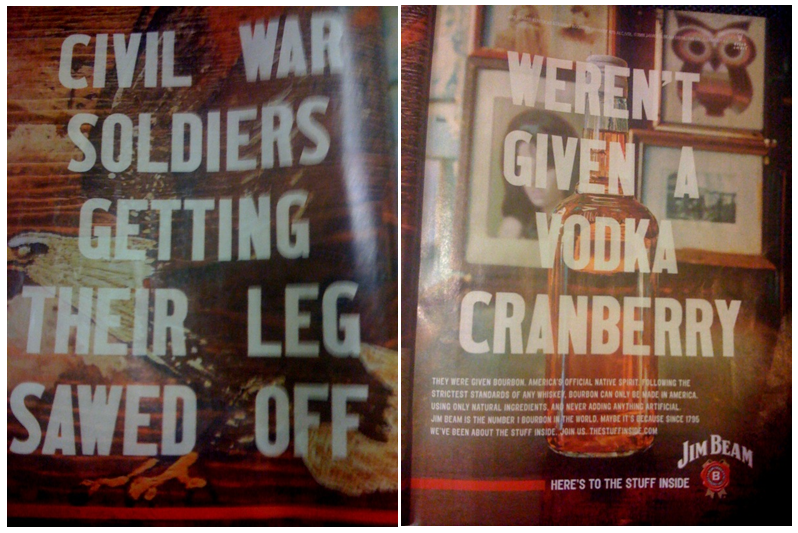
I used to like whiskey, but after seeing this two-page ad, I feel like I may no longer be manly enough to drink it. My personal high-water mark is somewhere around a sprained ankle or *maybe* a broken finger– nowhere near a sawed-off leg. Besides, the last thing I need is the Man-Police arresting me at my favorite bar for “Drinking-Whiskey-While-Having-A-Low-Pain-Tolerance”…I think the penalty is a stiff fine and 200 hours of Steven Segal movies.
Oh well, I guess it’s vodka cranberries from now on…
NEW: Here’s another 2-page Jim Beam ad, in which the message is clearly that wine is a sissy drink: