
While whiteness is the neutral category (for example, see here and see here for the same phenomenon related to gender) and most, but not all, advertising is aimed at white people first, we all know that people of color DO appear in advertising, even when it’s obvious that the intended audience is mostly white. In this series, I’m going to offer some examples of how people of color are used in ads and some of the conditions under which they are included.
In this first post of the series, I offer you examples of ads that include people of color in order to associate the collectively-held meaning of the racial minority group (i.e., stereotypical traits, the social construction of the group) with the product.
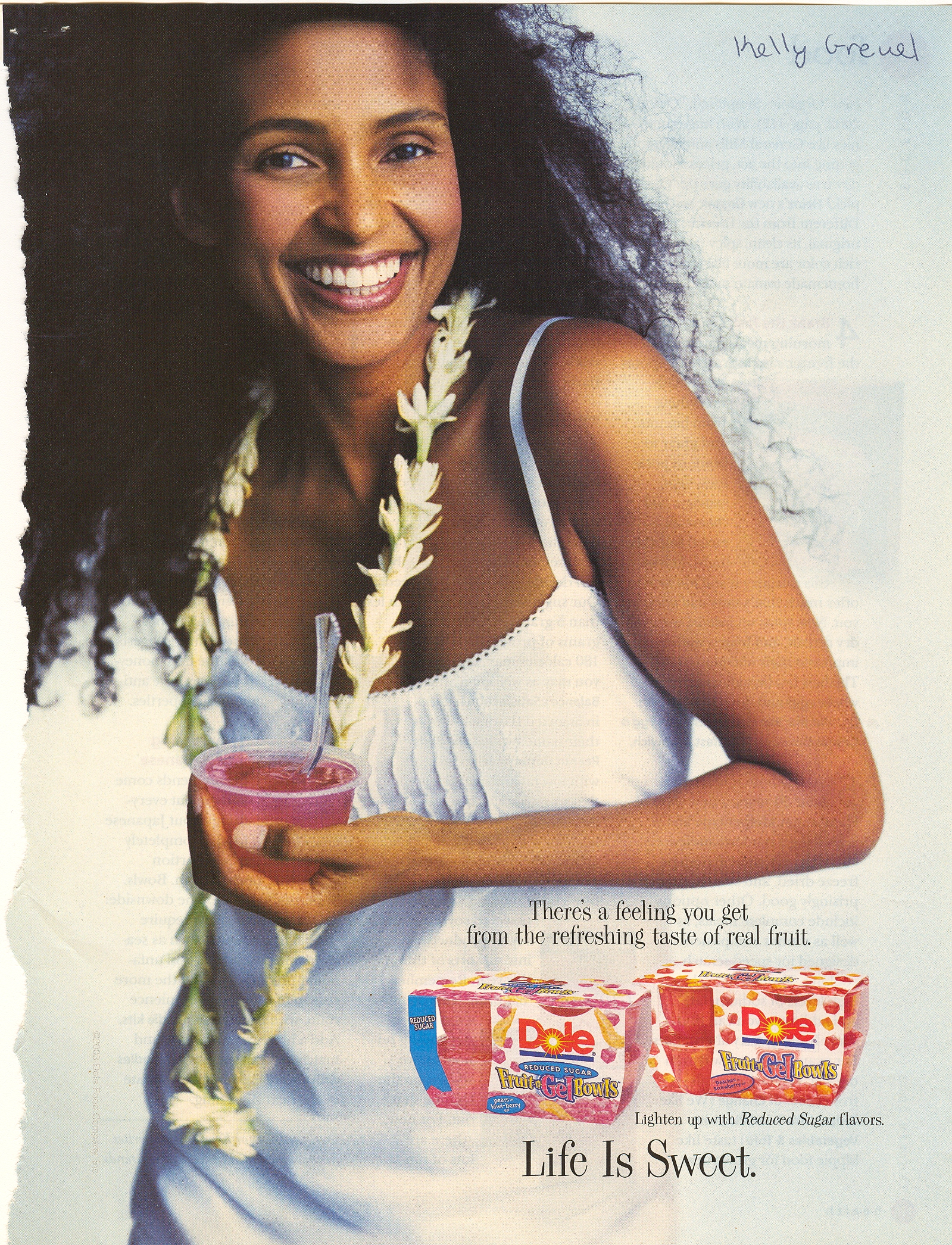
This first one is my favorite (thanks to my student Kelly for submitting it). The product is Dole Fruit Gel Bowls. The text is: “There’s a feeling you get from the refreshing taste of real fruit. Lighten up with Reduced Sugar flavors. Life Is Sweet.” So how do they convince us that “Fruit Gel” is “real fruit”? By putting a “native” appearing woman with a “natural” hairstyle in a white cotton frock with flowers around her neck.
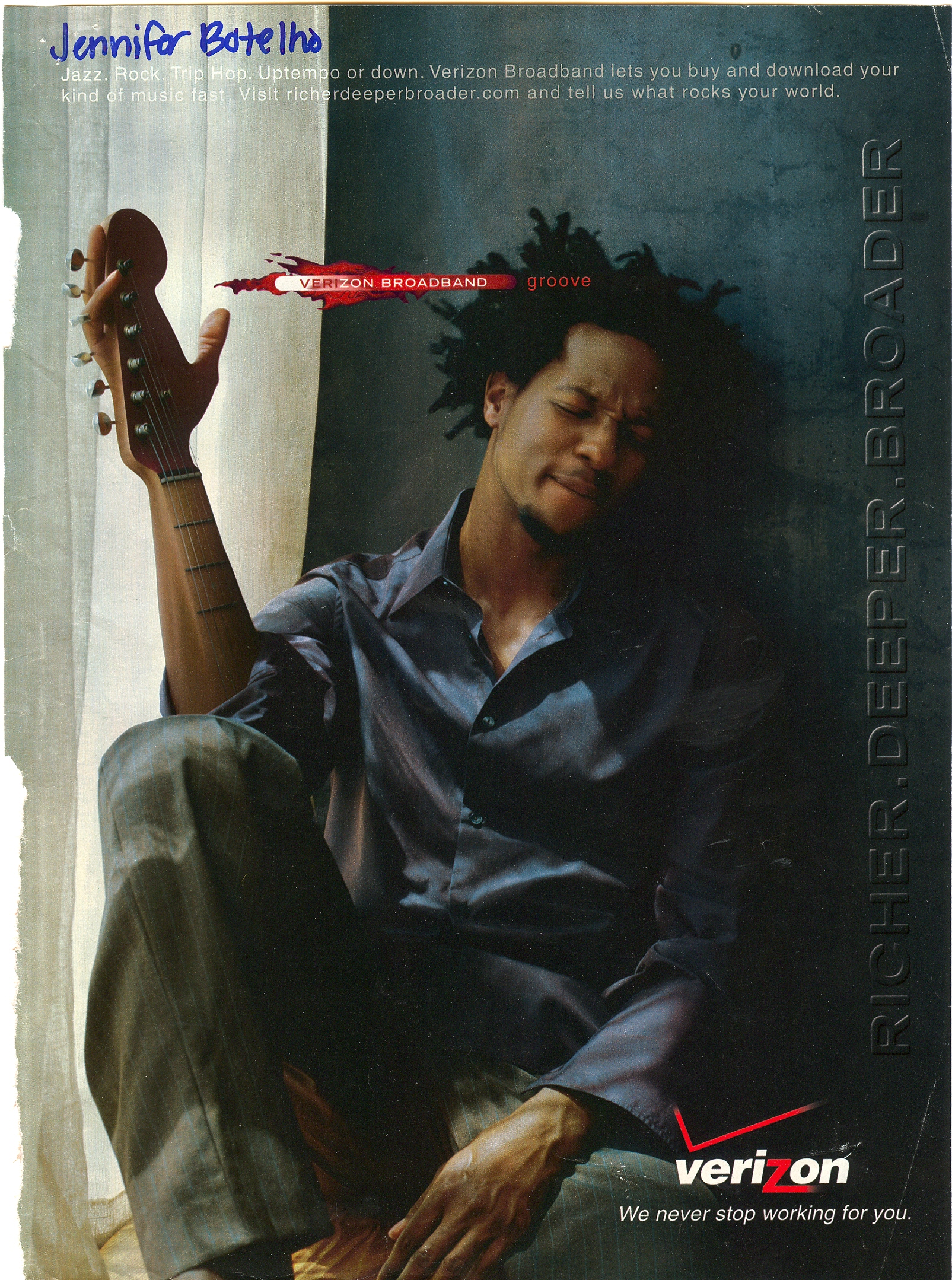
In this ad (thanks to my student, Jennifer, for submitting it) Verizon Broadband is telling us that we can download music fast. What kind of music? The kind associated with black folks, of course. The text along the top reads: “Jazz. Rock. Trip Hop. Uptempo or down.”
Compare that version of the ad with this one (thanks to my student, Laura). In this ad, the person is now an Asian woman and the type of music mentioned is “Classical. Soul. Hip Hop.”

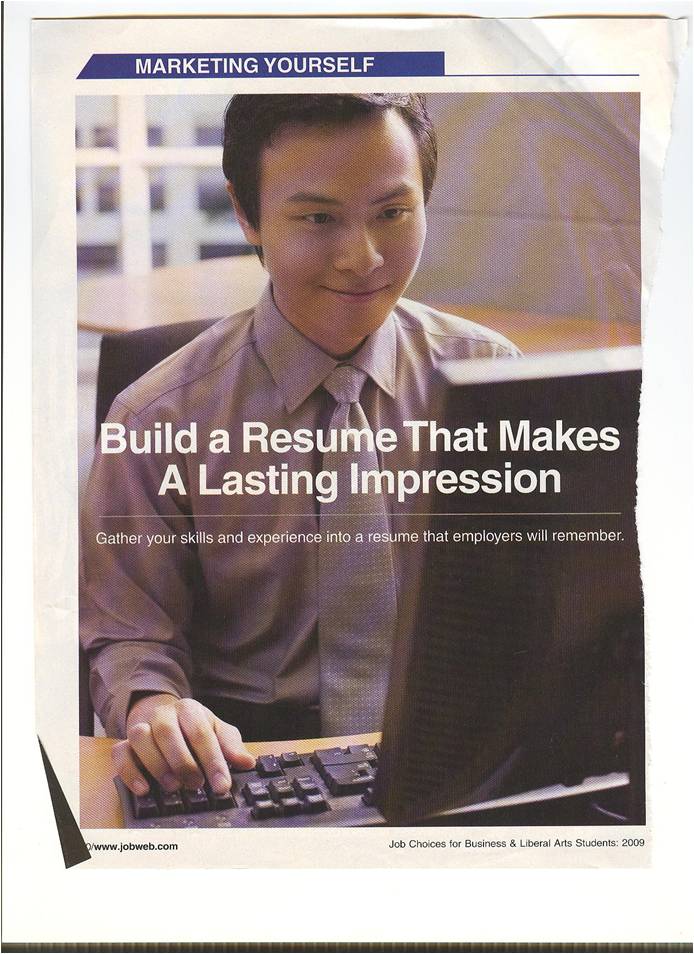
This ad for IBM products features a middle aged Asian man, a type of person associated with high technology.

NEW: This ad uses an Asian man to invoke the idea of a good worker.
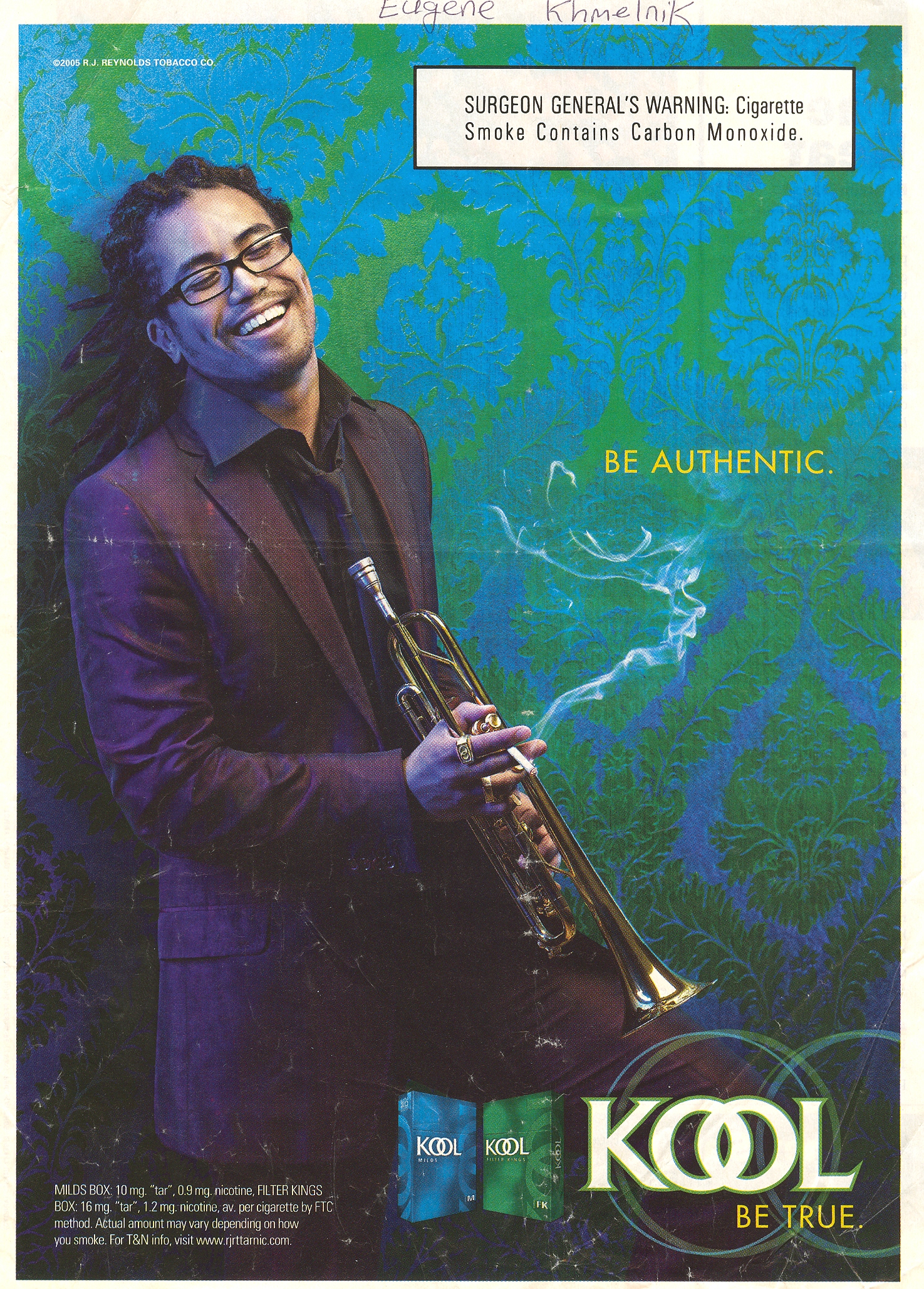
These two ads for Kool cigarettes (thanks to my student, Eugene, for the first one, and this blog for the second) use Black men doing stereotypically Black things (playing the trumpet and djing) in order to try to transfer some of the cool associated with Black men to Kool cigarettes. (Alternatively, these ads may be targeted directly at a Black audience.)

This one too:
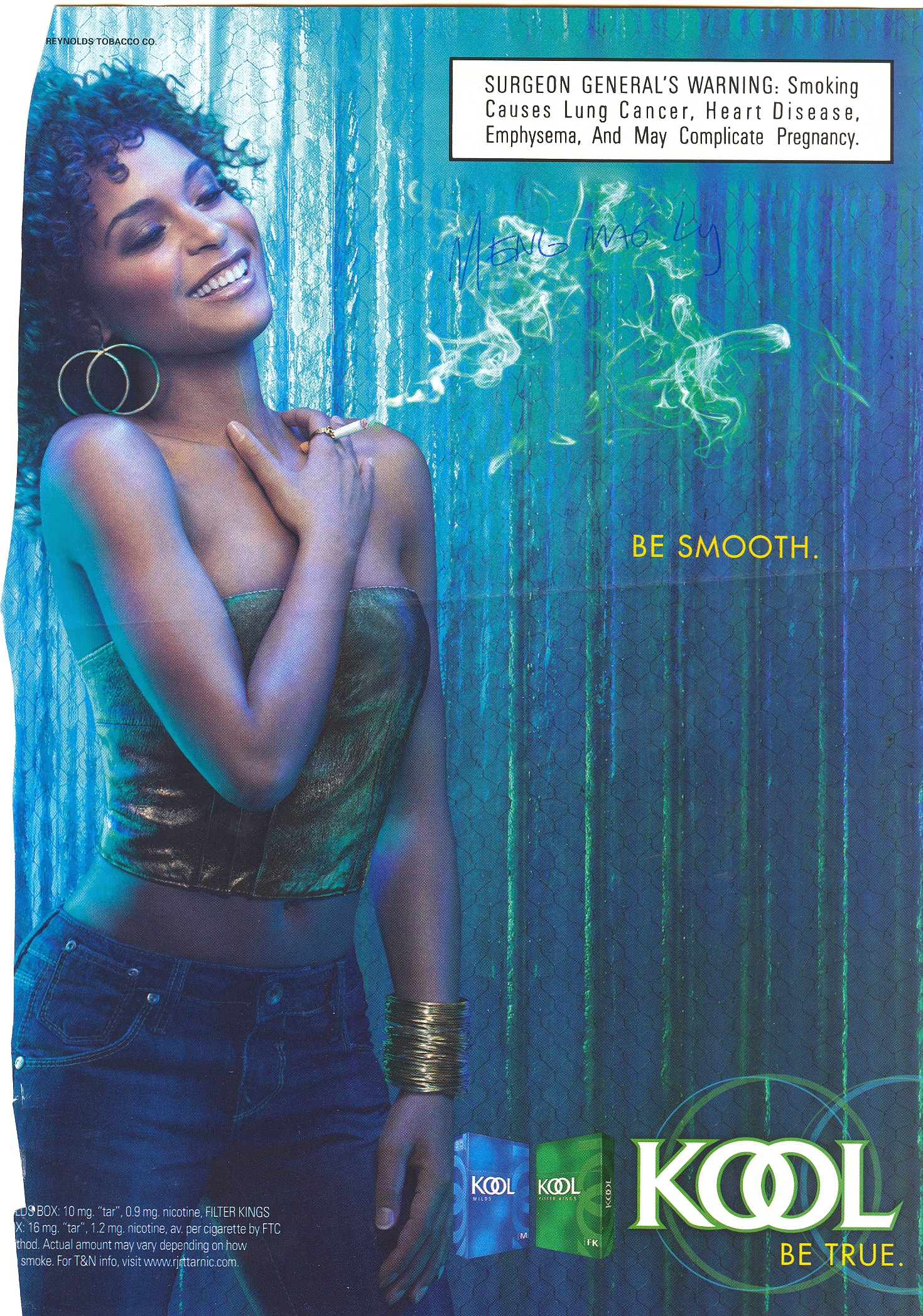
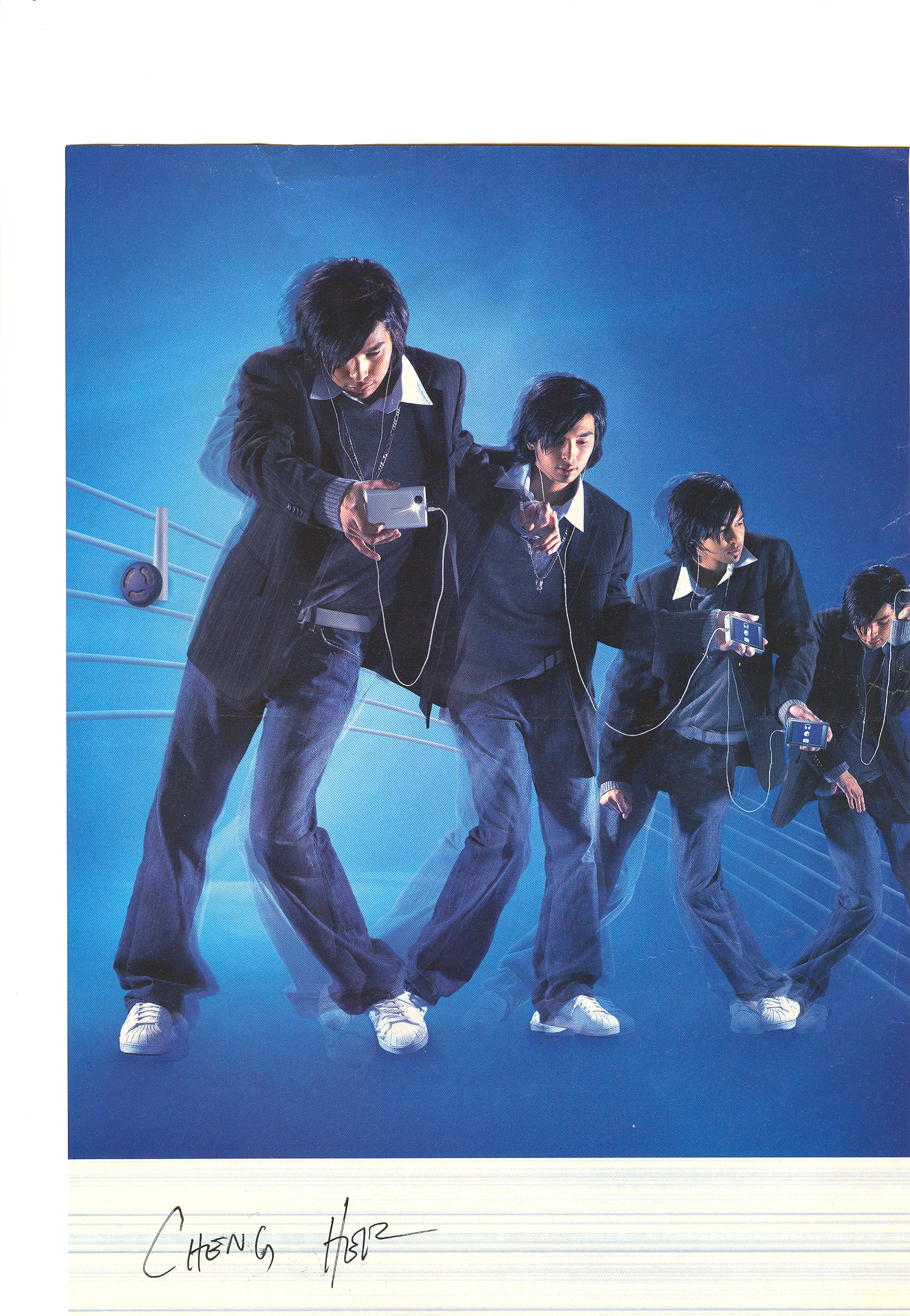
Finally, this ad for the Ipod ipod-type thing (submitted by my student, Cheng) uses a young Asian man dancing. We all know that white men can’t dance.
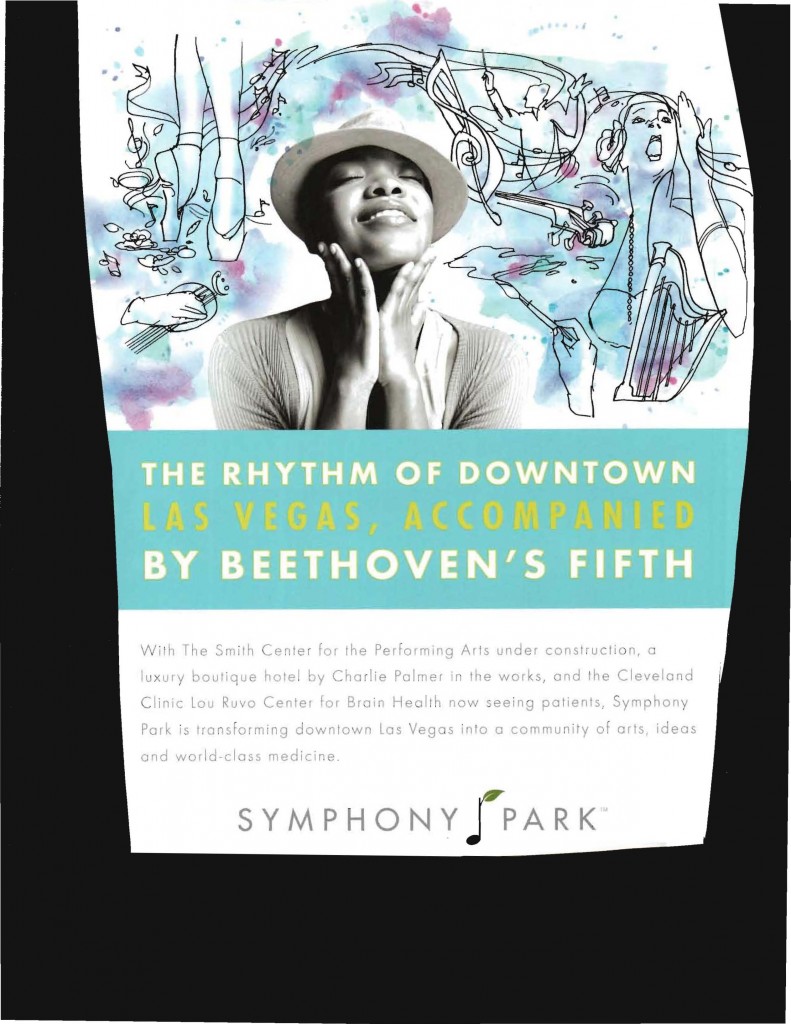
NEW! In this ad, rhythm is represented by a black woman:
If anyone has more examples, I’d love to see them!
Next up: using people of color to signify, literally, color, or even spice or flavor.
Comments 52
Marcel M. — May 18, 2008
The last one, I don't know what it is, but it is not an ipod.
Lisa Wade, PhD — May 18, 2008
Thanks! Fixed!
OP Minded — May 19, 2008
Kool is definitely an African-American brand, so the use of AAs to market it seem normal. Further, segmentation studies done by advertisers probably identify trends in music listening practices quite easily between racial groups. To use those statistics to inform advertising copy choices only makes sense.
I don't see anything "native" or "natural hairstyle" about the first image. I see the flowers around the neck as saying "fresh" and "natural" (not jungle native) ...
73man — May 19, 2008
"the use of AAs..."
There are no batteries in that ad. I'm confused?
OP Minded — May 20, 2008
AAs = African Americans
MissCegenation — May 22, 2008
THANK YOU!! for finally posting the "Be Authentic" ad for Kool cigarettes.
There is still a huge (conscious and unconscious) push in the black community to constantly take inventory of our own--and others'--blackness. Many of us are not comfortable with the notion that there are an infinite number of ways to "be black".
It makes me SICK to see Kool cigarettes using the idea that their product is a marker of authentic blackness to sell more cigarettes.
And the worst thing is that people actually believe it.
Breck C — May 23, 2008
How exactly is Kool "definitely an African-American brand"? I'd be fascinated to hear an explanation for this, OP Minded.
Remember: spelling, punctuation, and gross generalizations of stereotypes reinforced (and perhaps invented) by tobacco marketing count!
OP Minded — May 29, 2008
Read any of the tobacco company documents and you quickly learn that African Americans have always been heavy users of Kool and menthol cigarettes. The majority of Kool (and menthol) smokers are AA and the majority of AAs choose menthol.
Kool has been an AA associated brand forever.. like Eve is a woman's cigarette.
This is well known...
Nick Papalia — August 5, 2008
Not all of those music styles are associated closely with African American culture. Although rock stemmed from blues music it is a genre that is largely dominated by white males. And Trip Hop actually formed in Britain, largely popularized by Massive attack (a band featuring 2 black males and 1 white male) and Portishead (a band featuring 1 white female and 1 white male.)
White man — August 11, 2009
To the author: If you're so hurt by all the stereotypes, then why did u use the one about white men can't dance? Can u say hypocrite?????
Jake — August 12, 2009
@ White Man.
That just flew right over your head didn't it?
lilian — October 29, 2009
I just have to say that the one with the asian guy, advertising the music player, is probably an asian ad in an asian country. Of course they are going to use an asian model. Plus, when have asians been stereotyped as the kings and queens of dance outside of ddr and few hip hop styles?
naomi — December 15, 2009
I agree with lilian, although I have no idea what region of the world the ad is from, in my experience despite the "white people can't dance" association, the defaultness of white in advertising is enough to override that. Asians are stereotypically unathletic and rarely attributed to any physical talents, so I thought that that ad in particular wasn't necessarily a good example of PoC being objectified as marketing tactics.
DirtyBoard2 — December 27, 2009
phentermine [url="http://www.phentermine-tablets.com/"]phentermine[/url] http://www.phentermine-tablets.com/ crjn
Dan — February 20, 2010
so any time anyone other than white people are included in in ad it's stereotyping them? If they were eating watermelon and doing drivebys while smoking Kools I could see that, but the guy Djing or playing the trumpet could have easily been white - they are just trying to show cool people smoking Kools. Stop being racist.
Rosh — July 2, 2010
If a white woman had been used in the Dole advertisement you would have chastised it for invoking the stereotype that white women are 'pure' and 'unspoiled'. I enjoy many of the topics that are brought up on this site, but sometimes it seems more like you're out to criticize everyone--if anything that could be defined as socially progressive is evidenced, you only comment that it is surprising, or, as above, you find something else objective about it. There's just no way to win, is there?
Tyler Young — December 9, 2010
Individuals make their own musical choices. Those music ads connected music to people racially, that's true. They focused on consumer trends to sell a product to consumers. Why would you try selling classical music to black people? They do not consume classical music as much as white and asian consumers. That's just how the market works, you advertise to those you actually might buy your product. Why would a company spend money to advertise towards a demographic in a way that doesn't appeal to them? That's just throwing away money.
Tyler Young — December 9, 2010
People put themselves into their own niches. Once black consumers as a whole start buy a large amount of classical music they will be advertised to in the same way.
Friday Foster — October 28, 2011
This article is about how whites are seen as universal and the normal standard for everything. You could put a white person in any of these commercials, but companies do not treat people of color the same way. These commercials utilize narrow representations based on ideas created by whites. POC's in advertising are a collection of stereotypes while whites can represent anything. Whites can be individuals with distinct traits or they can represent humanity in it's entirety POC's are never framed that way So stop whining and making defensive remarks and actually read the thesis of the article.
Sum Bum — May 19, 2016
The only "generalizations" happening here are occurring outside of the advertisement in your head. These ads are based off of market research, not some kind of racial prejudice. When a marketing team gets data that their main demographic is [insert racial, gender, age groups here] then they are going to use an image of that kind of person in order to have consumers notice and identify with the product.
Every single one of your analyses are literally just "A race other than whites is depicted in this ad, therefore it is a stereotype." Your middle-aged Asian man who is supposedly a "stereotype" for technology is literally a member of their company, clearly labeled on the ad. Your analysis discredits his worth as an actual person by claiming he is just a tool to play on people's racial associations. This ad is showing a man who has worked hard to bring a company to where it is and you're choosing to dehumanize him.
Your association of that black man with the music only relating to his race is doing the same thing: discrediting the years of inspiration and practice that it took him (or his character) to become a musician. In all of these scenarios, you are looking at every person only for their race instead of what the individual person or character truly represents.
You are choosing to associate individual human beings with stereotypes, and it frightens me that you have "students" that are supposed to learn things from you.
twenty20 — January 30, 2017
Some of you are nuts about color. You must wake up every morning slapping yourselves. One day the inter-rationals are going to dilute whites and blacks so much we are going to need a new reason to blame stuff on others.
Alex Rivera — July 20, 2026
Coming back to this series almost twenty years later is striking, because the mechanism it describes has not gone away - it has just been automated. Casting decisions a creative team once argued over are now defaults inside generation tools: you give a product and a market, and the system returns the faces it predicts will convert there. I build in that space (Ravvi AI ad generator), and the uncomfortable part is that the training data is the same archive of ads this post analyses, so these patterns of inclusion get reproduced at a scale no 2008 agency could manage. Worth asking who audits that now.