race/ethnicity: Whites/Europeans

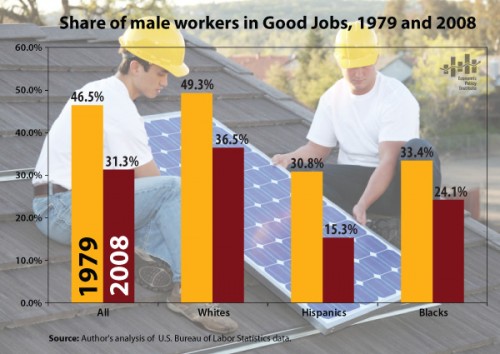
The Economic Policy Institute defines a “good” job as “one that pays at least 60% of the median household income and also provides health care and retirement benefits.” Based on that definition, here is a breakdown of men holding good jobs in 1979 and 2008, broken down by race/ethnicity (with Native Americans and Asians unfortunately absent):
good jobs

Notice the clear decrease in the % of men in each group in good jobs between 1979 to 2008. The racial pattern is also striking, if not surprising, with Black and Hispanic men being significantly less likely to have a good job than White men in both 1979 and 2008. Notice the particularly large gap between White and Hispanic men in 2008–over 20 percentage points.
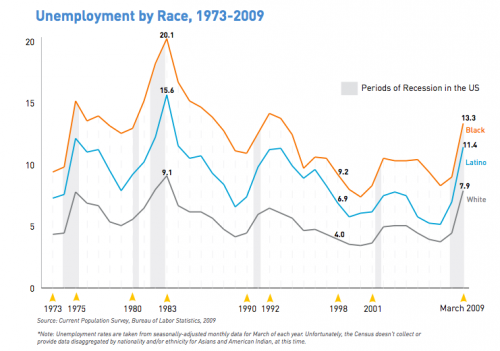
Yvonne Liu, at the Applied Research Center, told us about their report, Race and Recession, which includes a lot of useful information about the disparate effects of the economic crisis for different groups of Americans.

While an overall unemployment rate of just under 10% is bad regardless, that statistics hides the fact that Latinos and African Americans are experiencing even higher levels (note: the government agencies that the information comes from didn’t provide breakdowns for Asians or Native Americans, so the report was unable to show comparisons for those groups):

arc1

In a comment, thoughtcounts Z points out,

My immediate reaction…: the worst points (highest unemployment) on the “White” curve are generally around or below the best points (lowest unemployment) on the “Black” curve.

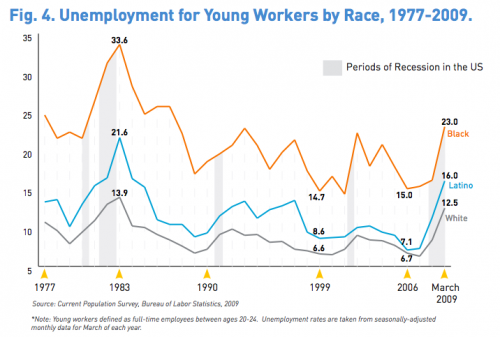
Unemployment rates for those aged 20-24:

unemployment young race

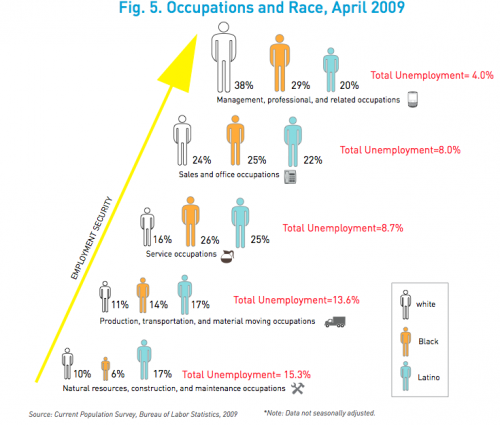
This figure indicates what % of each racial group falls into each occupational category (the median indicates that half fall above and half fall below that level):

occupations race

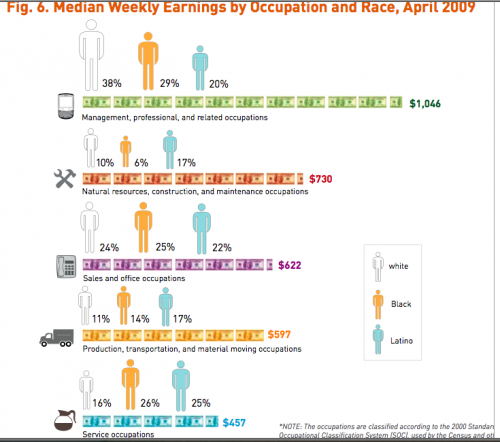
Median earnings for each occupational category (again, the figures represent the % of each race that have jobs in that category):

earnings race

So as we see, Whites are disproportionately employed in management and professional occupations, while relatively few are employed in the service industry, whereas both African Americans and Latinos are significantly more likely to be employed in services.  And while there’s a big gap between the % of Whites and Blacks in management/professional occupations, I was somewhat surprised that it wasn’t larger than it is.

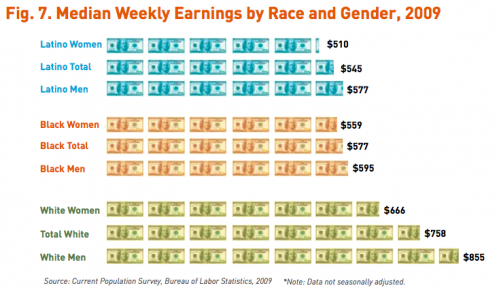
Earnings broken down by both race and gender:

earnings race gender

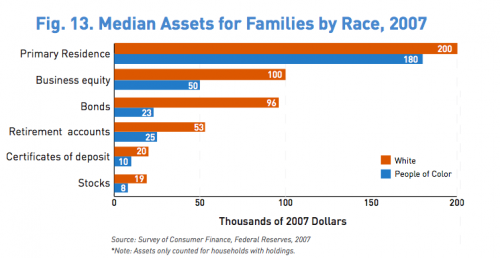
Assets by race:

assets race 2

See also: images of the downturn, job loss by region, unemployment by education level, another map of job loss by region, the dilemma of the duplex, not everyone knows there’s a recession, Detroit’s decline, job losses, gender and recession, and tips to the rich on how to be discreet during a recession.

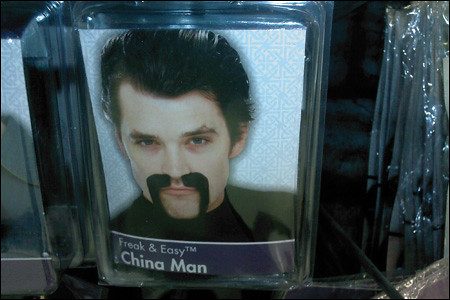
Well, it’s October, and that means Halloween is coming. It also means we can expect to see the unending variety of typically racist Halloween costumes that pop up every year. You too can be Oriental, just for one night. Here a few ridiculous ones, with a hair-centric theme…

The above costume item was recently spotted at a Party City. Want to be a “China Man” this Halloween? Apparently, all it takes is a crappy-looking moustache. It’s easy. Just affix this nasty piece of hair on your upper lip, and there you go, instant China Man! Adding some fu to your manchu. (Thanks, Brandon.)

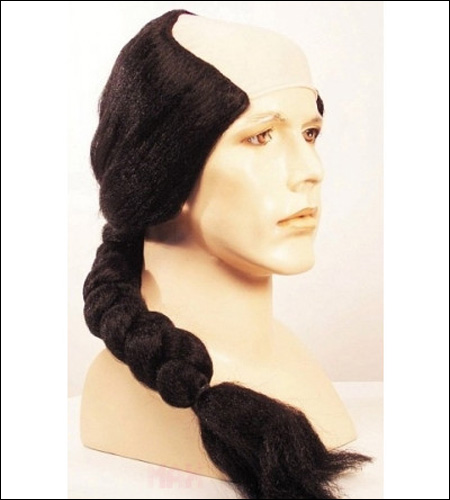
But hey, why stop there? There are other fun and easy ways to be Chinese. Just try on the Chinese Man wig, “an ancient style with bald front and long pigtail in the back.” But even at the low sale price of $41.48, the Chinese Man wig might just be a little outside your budget. That’s okay, because the Bargain Chinese Man wig is also available for just $22.05. Because nobody should miss out on the racist mockery.

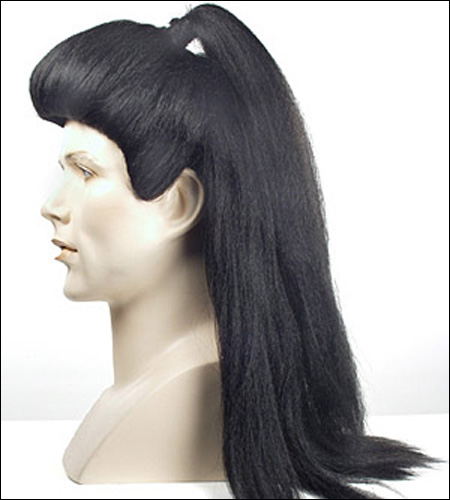
Speaking of bargains, how about this kickass Oriental Guy wig? The attention to detail is just tremendous. I swear, every Oriental Guy I know wears his hair just like this! That’s amazing. Wearing this crappy piece of mess on your head, you will be the coolest Oriental Guy at the office Halloween party.

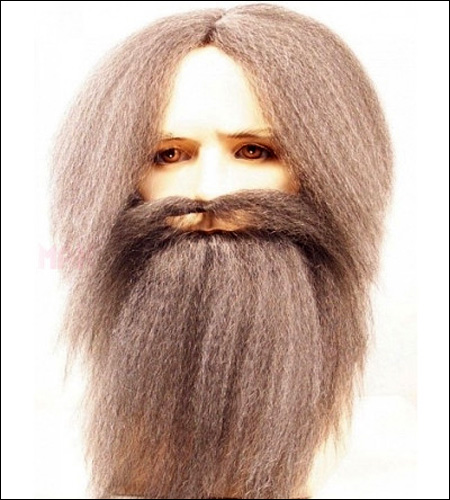
Finally, my favorite one. The Old Chinese Man wig! I have no idea what exactly makes this monstrosity “Chinese.” But it apparently comes in white, gray, brown and black. And according to the website, this wig also works for “eccentric recluse” and “prospector.” Yes, I’m scratching my head too. But the fun doesn’t end there. There are just so many ways to get your Oriental Mystique on! It’s going to be another great Halloween. That’s racist!

—————————-

Angry Asian Man blogs at Angry Asian Man.  And he’s not as angry as you might think.

If you would like to write a post for Sociological Images, please see our Guidelines for Guest Bloggers.

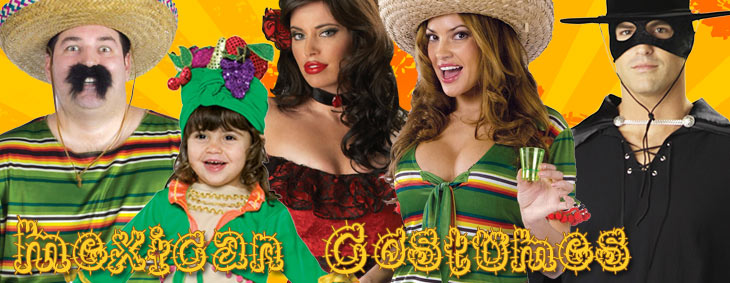
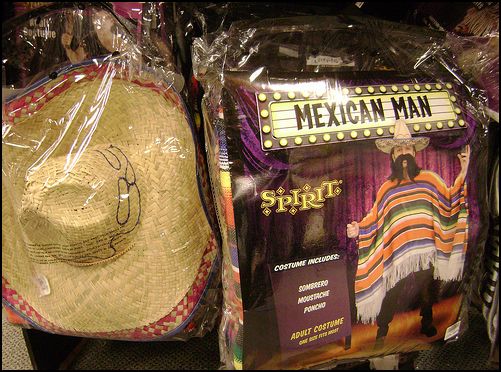
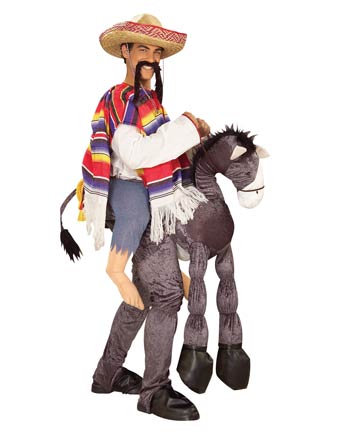
As far as I can figure it, Halloween costumes come in three categories: scary, funny, or fantastical.  This is why dressing up like another “race” or “culture” for Halloween is racist.  A “Mexican Man,” for example (see below), should not be presented as scary, funny, or fantastical.

Brooke, at Whebr’s Hotub’s Blog, expresses her frustration for people who dress us like an “Indian”:

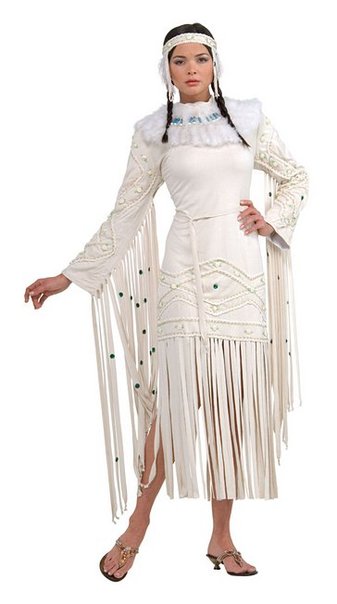
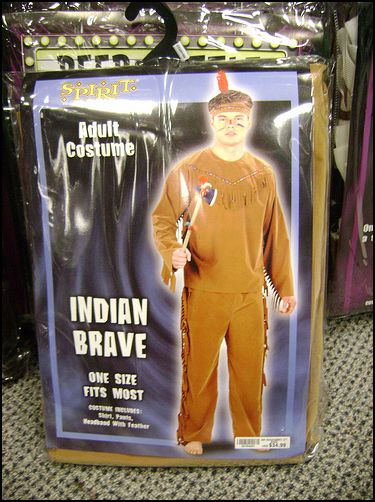
Why is it socially acceptable to dress like the stereotypical Indian: “Brave”,”Chief”, “Princess”, “Squaw”, “Maiden”? Pardon Moi, but when did the Native American enter the realm of Wizards, Fairies, Super-heroes, Goblins, or Ghouls? When did it become ok to reduce the diversity, language, and culture of nearly 500 different Indigenous tribes into a tacky “costume” of cheap suede, colored feathers, plastic beads, and fringe? Who decided that the history, identity, and lineage of Native Americans could be easily put on and taken off like greasy Halloween face paint?

Brooke features a whole host of “Indian” costumes at her site, including this one:

8726_1231349471188_1452664350_667584_64266_n

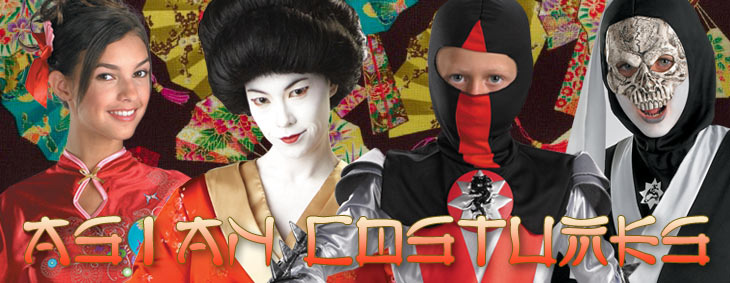
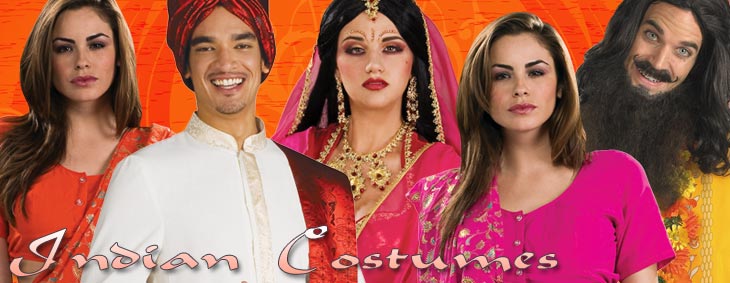
Illustrating the way in which these costumes tend to collapse culturally distinct groups into a cheap stereotype, Costume Craze has a whole section of the website devoted to “History and World Culture Costumes.”

Here’s a sample of the “Asian costumes” (don’t miss the fantastic font):

Splash_Page_Asian

“Indian costumes”:

Splash_Page_India

“Mexican costumes”:

Splash_Page_Mexican

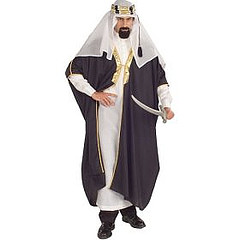
Fatemeh Fakhraie, at Racialicious, points out how “Middle Eastern” costumes reinforce both ignorance and negative stereotypes.  Regarding the “Sheik of Persia Arabian Costume” costume shown below, she says:

History lesson: Persia didn’t have sheikhs, they had shahs. And Persia and Arabia were two different places! AKH!

of course he has a knife! All Middle Eastern men are dangerous, didn’t you know? You can even tell by his face: he’s pissed, and he’s going to take it out on some infidels!

1801529770_5ae485abb9_m

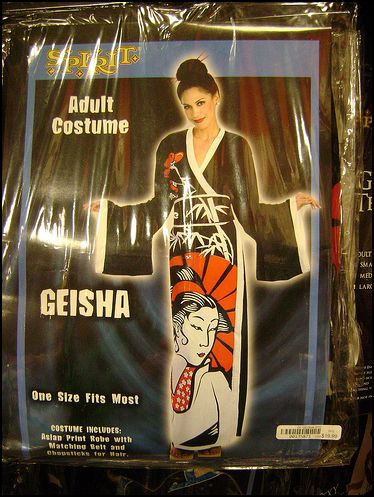
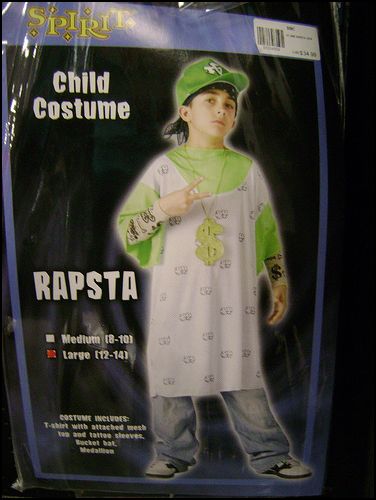
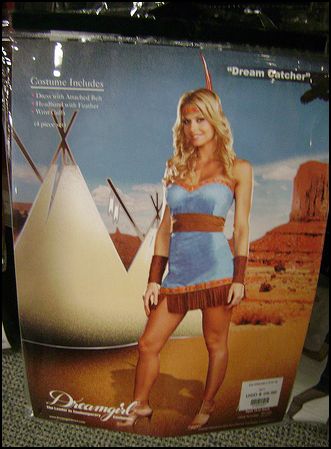
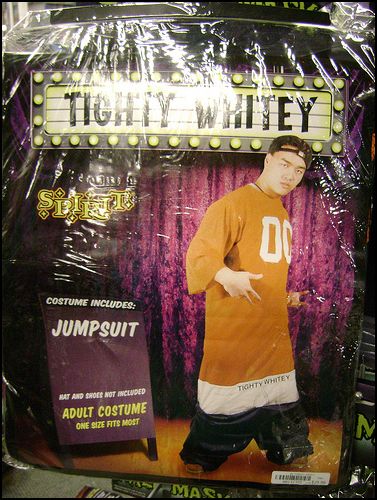
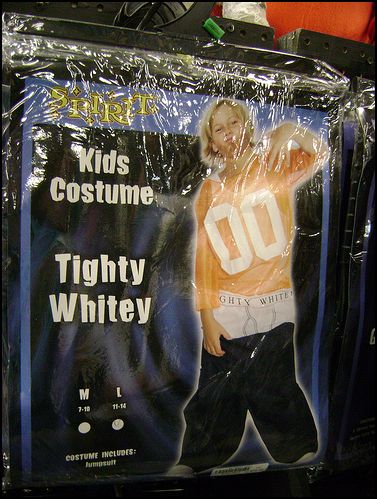
For good measure, Cindy at Lotería Chicana has collected a set of racist Halloween costumes that she photographed at a store called Spirit in San Francisco.  A selection:

3

UPDATE!  Awesome tidbit from Rosemary in the comments thread:

The geisha one in particular makes me wince, partly because the “kimono” is tied the wrong way (the only time you ever tie it that way is when a person is dead)…

Of course, that’s actually perfect for Halloween!  But somehow I don’t think that’s what SPIRIT is going for.

More…

5

7

13

And my favorite, the “Dream Catcher”:

Capture12

Does making fun of white people (“tighty whiteys”) make it all equal?

Capture

8

The thing that amazes me most about these costumes is that they’re everywhere.  You can’t escape them.  And no one seems to notice or care.  For example, this “Hey Amigo” costume can be purchased at the Linens N Things website:

1405

—————————

Lisa Wade is a professor of sociology at Occidental College. You can follow her on Twitter and Facebook.

I recently wrote a quite popular post, titled “What Do Women Want?”, based on data collected by the dating site OK Cupid (short story: women like it when men engage with their personality, not just their looks).  Mary S. sent in a link to some of their data on race and response rate, with some fascinating findings.

First, OK Cupid measured the compatibility of people of different races. They found that, by and large, race doesn’t impact compatibility scores:

Match-By-Race

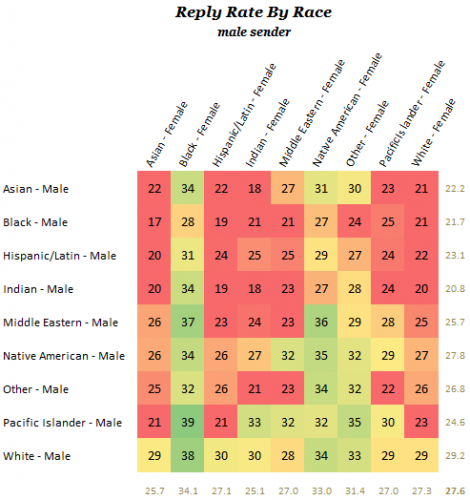
Then they looked at response rates. When a man writes an inquiry email to a woman, what is the chance that that woman will write back?  Here is the data:

Reply-By-Race-Male

What this table shows is that race matters.  OK Cupid breaks it down:

Black women… are by far the most likely to reply to your first message. In many cases, their response rate is one and a half times the average, and overall black women reply about a quarter more often.

white males just get more replies from almost every group.

White women prefer white men to the exclusion of everyone else—and Asian and Hispanic women prefer them even more exclusively. These three types of women only respond well to white men. More significantly, these groups’ reply rates to non-whites is terrible. Asian women write back non-white males at 21.9%, Hispanic women at 22.9%, and white women at 23.0%. It’s here where things get interesting, for white women in particular. If you look at the match-by-race table before this one, the “should-look-like” one, you see that white women have an above-average compatibility with almost every group. Yet they only reply well to guys who look like them.

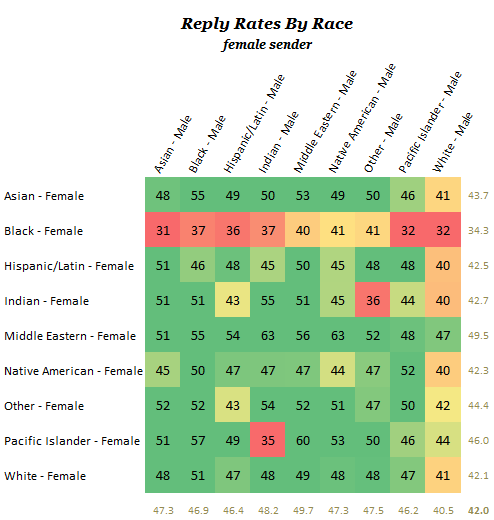
And how do men respond to women?

Reply-By-Race-Female

OK Cupid again:

Men don’t write black women back. Or rather, they write them back far less often than they should. Black women reply the most, yet get by far the fewest replies. Essentially every race—including other blacks—singles them out for the cold shoulder.

White guys are shitty, but fairly even-handed about it. The average reply rate of non-white males is 48.1%, while white guys’ is only 40.5%. Basically, they write back about 20% less often.

To sum, white men appear to have the most dating capital in the online dating world, while black women seem to have the least.  This means that white men can sit back and enjoy the adulation, while black women are required to do more outreach to men to get the same results.
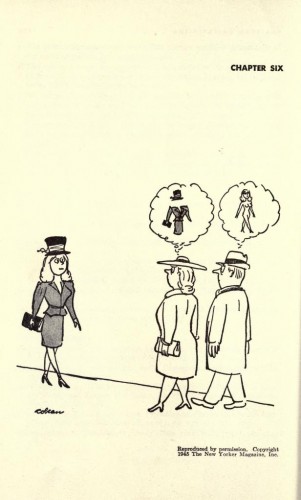
This makes sense give the way in which race is gendered.

For more, read Restaurant Refugee’s experiment comparing  responses on OK Cupid to an identical profile with pictures of a white person and a person of color.

UPDATE: Duran2, Dave, and Assaf critiqued my comment about white men sitting back and enjoying the adulation as both inaccurate and unfair. Point taken. I apologize.

For more, see our posts on asymmetry in interracial marriage and how Asian women are marketed to white men.

—————————

Lisa Wade is a professor of sociology at Occidental College. You can follow her on Twitter and Facebook.

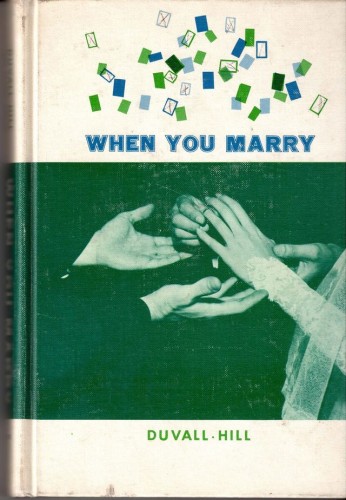
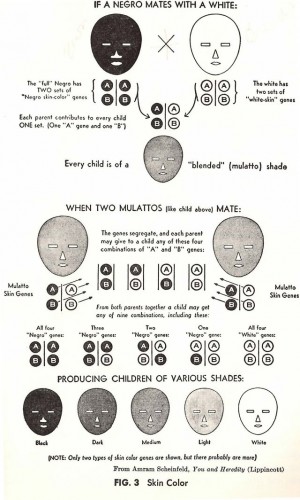
Mary M. of Cooking with the Junior League sent me a link to amalah.com, where you will find images from a 1962 textbook titled When You Marry (you can find the full text of the 1953 edition without photos here, and Larry found a full pdf of the 1962 edition here):

book 1

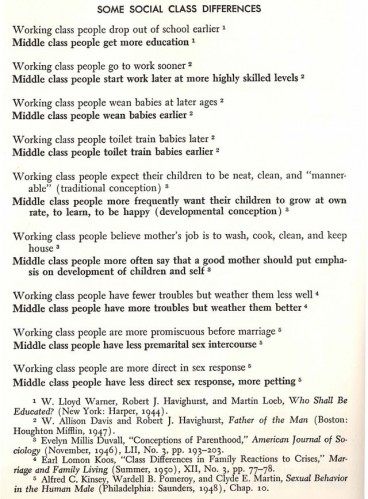
The book covers many aspects of dating and marriage and provides some fascinating insights into gender roles and social assumptions of the time. Here are some useful facts about social classes and families that you might like to know:

book 2

Working class people go to work sooner? Wow. Weird. But at least they have fewer troubles than the middle class. There are so many irritations you have to face when you aren’t poor, but at least you “weather” them well.

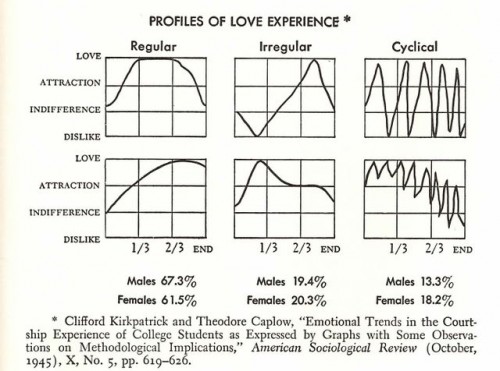
I may use this as an example of pointless graphs:

book 3

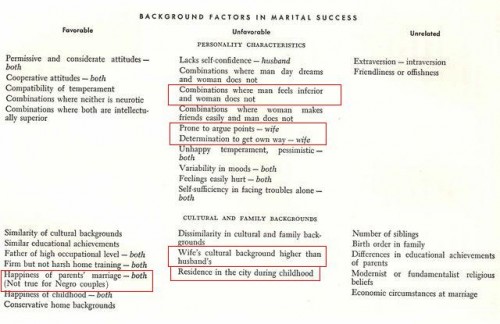
Here we have a list of some factors that are favorable, unfavorable, or unimportant for marital success; I’ve circled some of the more noteworthy items in red:

book 5

Text I highlighted:

[favorable]

Happiness of parents’ marriage —both (Not true for Negro couples)

[unfavorable]

Combinations where man feels inferior and woman does not

Prone to argue points–wife

Determination to get own way–wife

Wife’s cultural background higher than husband’s

Residence in the city during childhood

So you’re sure to have marital problems if the wife won’t give in on things and instead keeps being all argumentative and wanting her own way. I’m not sure what defines a cultural background as “higher” than others, but we see here the same pattern as we do with social class (which I presume is related to cultural background): it’s ok for men to “marry down,” but women aren’t supposed to.

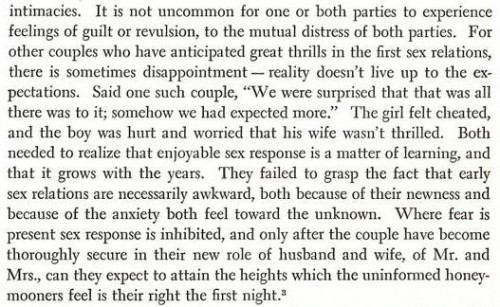
The textbook provides a pretty grim depiction of sex for a newly-married couple:

sex

I found this little gem in on a page from the section on how ideals of marital life often don’t fit with reality:

ads

It’s so widespread to think of marketing and advertising as manipulative today (even among those who like at least some ads or don’t see a real problem with them) that it’s striking to see such a sincerely  positive portrayal of it as a helpful, even “kind” industry.

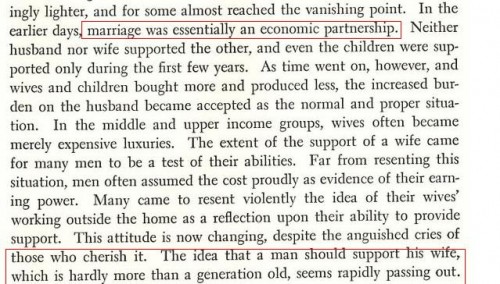
It is noteworthy that the textbook, used during the height of the “Leave it to Beaver” “traditional” family era, depicts the male-breadwinner/female-homemaker family form as a recent creation, as wives became “expensive luxuries”:

money

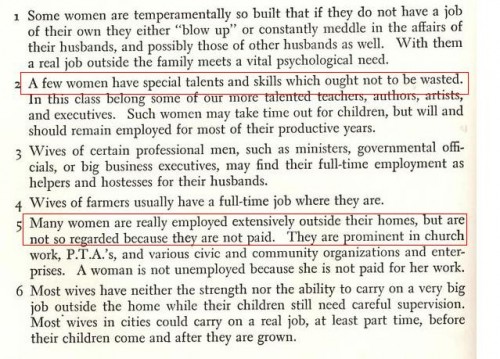
This section describing which women should work doesn’t seem to speak highly of women overall, since just a “few” of us have “special talents and skills.” However, it does make the point (in #5) that “a woman is not unemployed because she is not paid for her work,” an effort to bring attention to the value of women’s unpaid labor (in this instance, community/volunteer work):

skills

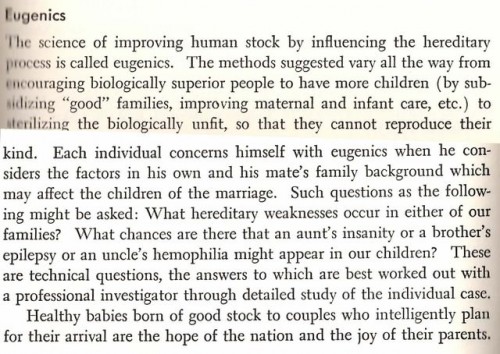
And then there is a helpful discussion of eugenics and good breeding :

book 10

book 11

There’s a lot to ponder there. I think it’s fascinating the way that it illustrates some of our stereotypes about the 1950s/60s (women are supposed to be mothers, sex outside of marriage is bad, etc.) but contradicts others (the male-breadwinner family isn’t a long-standing “traditional” family but rather one they can clearly trace to the recent past, and which even then seemed like it might not last).

UDPATE: Larry looked through the pdf version of the whole book and found this nice cartoon:

when_to_marry_cartoon

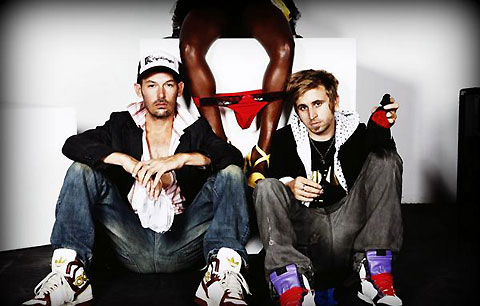
Jessica G. drew our attention to the promotional material of Panty Raid.  Panty Raid is two guys, Josh Mayer and Marty Folb, who produce dance music.  As you might guess from their name, their materials include a dismissal of women as fans and an endorsement of men’s entitlement to sexual access to women.  Their slogan for their album, Marine Parade, is: “Audio fondling your girlfriend.”

Capture

So, “you” are a straight guy.  And, like it or not, these guys are such hegemons that they are makin’ it with your girl, whether she likes it or not.

There is more of this typical misogyny at their website (you can google it), but it was the promo shot below that Jessica felt compelled to send in.

Picture1

This is a great illustration of what it looks like to embrace both white and male privilege.  We see the bottom half of a black woman sitting with her legs apart and her underwear at her ankles.  Were it not dark between her legs,  you could see her vulva.  Mayer and Folb, both white men, sit in front of her and look at the camera.  Their expression and posture suggest utter disinterest.

This is where I think the privilege is revealed, and embraced, loud and clear.  She is not a human being, she is a vagina and, even as a vagina, she is uninteresting.  She is nothing, really.  Like their sneakers, their trucker hats, and their hoodies, she is only a prop.  What does a sexually available black woman signify?  Urban cred?  Masculine domination of women?  High status in a hierarchy of men?  All of the above?  Congratulations dudes: racist and sexist message sent and received.

—————————

Lisa Wade is a professor of sociology at Occidental College. You can follow her on Twitter and Facebook.

Citizen Parables and Dmitriy T.M. alerted us to this month’s French Vogue.  According to Jezebel, it features exactly zero black models.  It does, however, contain several images of Dutch model Lara Stone painted so as to look black.

The photos are being condemned as contemporary blackface.  I’d like to open it up to discussion:

1.  Is painting a white model so as to look black the same thing (in some important and significant way) as the derogatory minstrelsy with which blackface (with white mouths and red lips) is associated?  Is the intent (dehumanization) the same?  Is the effect the same?   Why or why not?  If not, could it be that we are as inured to racism now as they were then?

2.  Is the real (or part of the) problem the lack of actual black models?  That is, if there were black models in the magazine, would we read these images differently?

3.  If we saw models of different races being painted various colors, would the white model painted black cease to be significant?  Or, because of history, should this always (for the foreseeable future) be off limits?

4.  Is this “edgy” (and, therefore, fashion forward) exactly because it references historical blackface?  In that case, should fashion play with such topics?  Can people in the fashion industry do so responsibly?  And, if so, what would that look like?

More examples and discussion of contemporary “blackface” here, here, here, here, and here.  Also, Bugs Bunny.

—————————

Lisa Wade is a professor of sociology at Occidental College. You can follow her on Twitter and Facebook.

Lisa Wade, PhD is an Associate Professor at Tulane University. She is the author of American Hookup, a book about college sexual culture; a textbook about gender; and a forthcoming introductory text: Terrible Magnificent Sociology. You can follow her on Twitter and Instagram.