Search results for embed

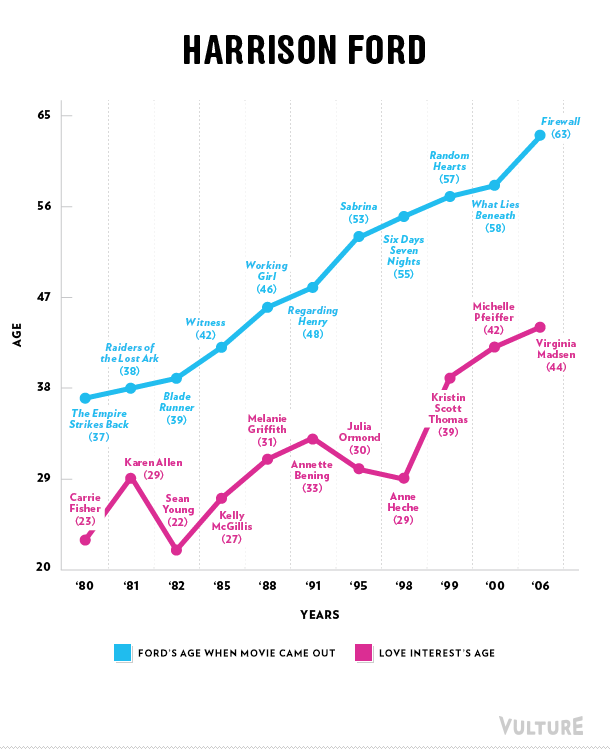
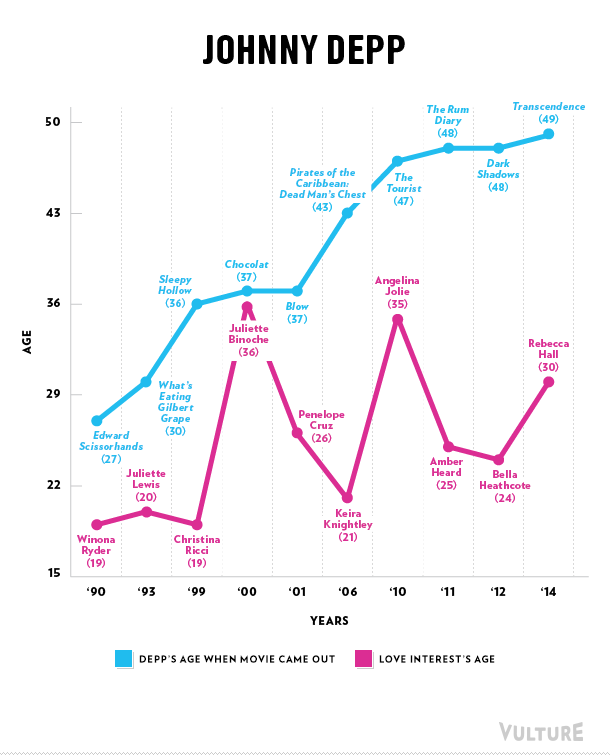
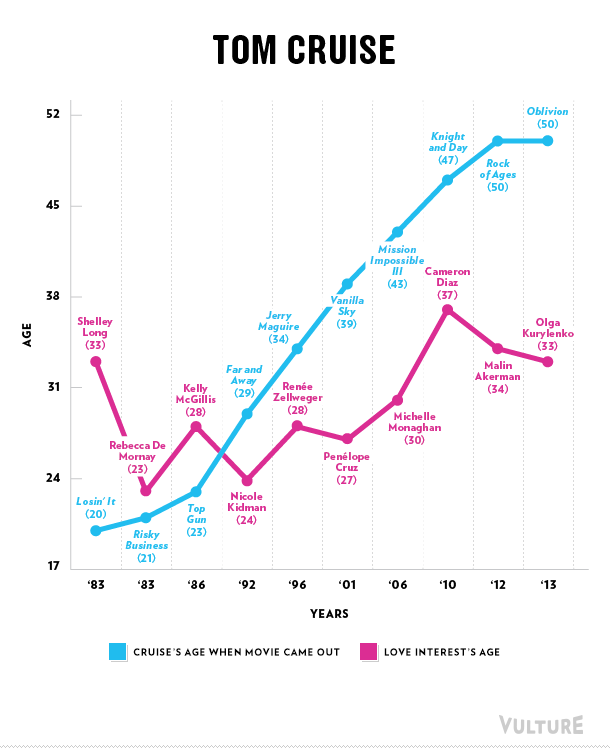
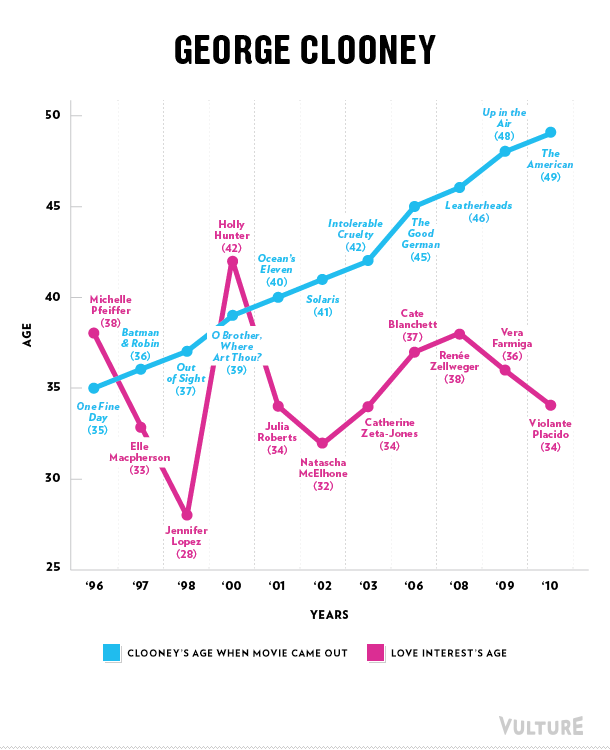
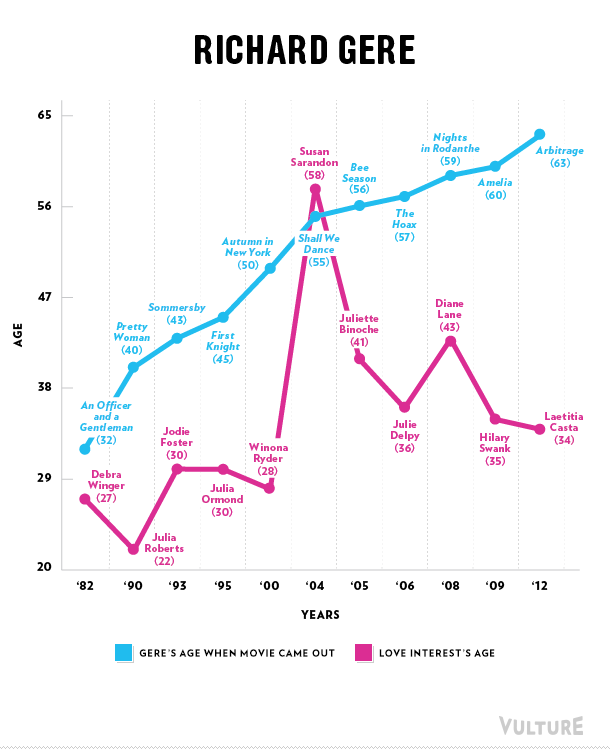
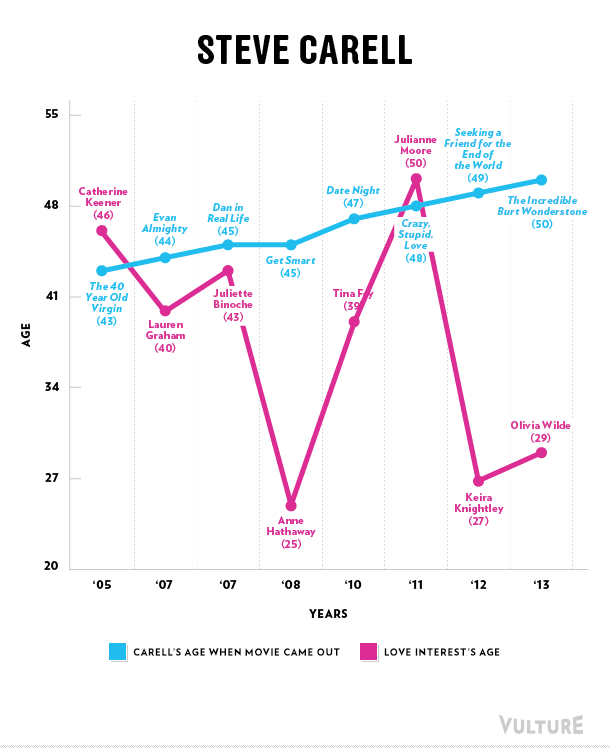
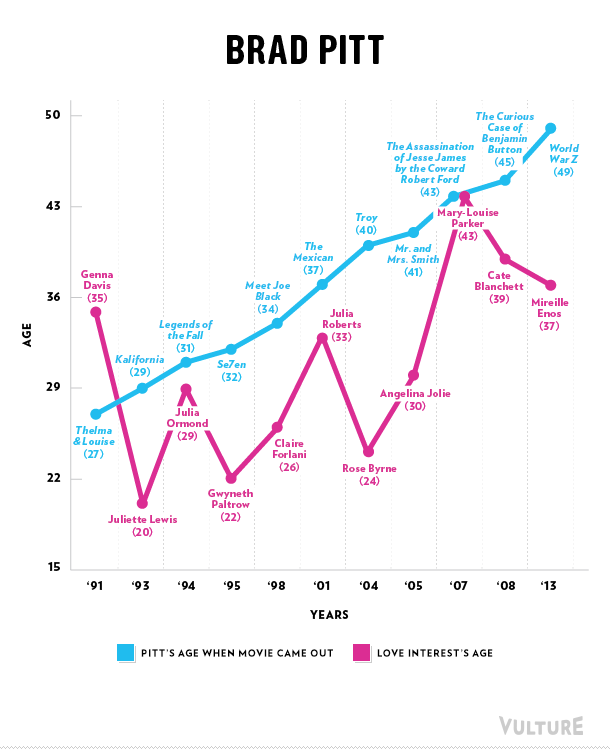
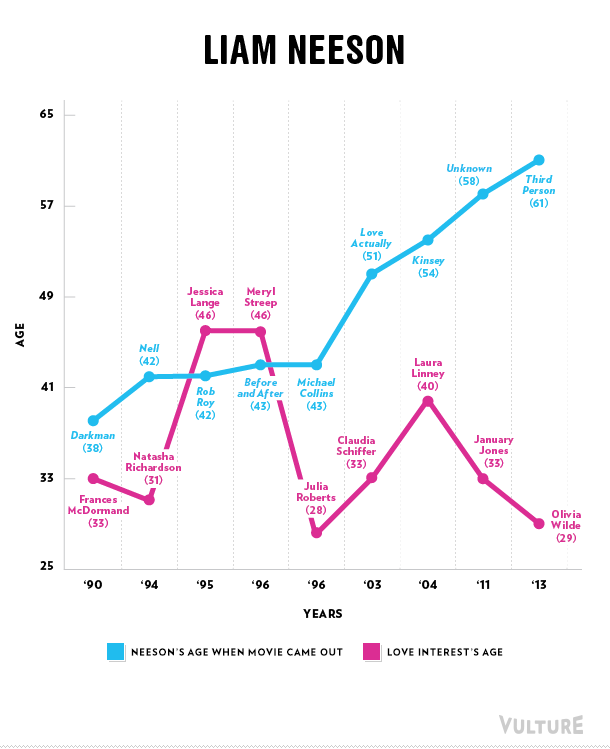
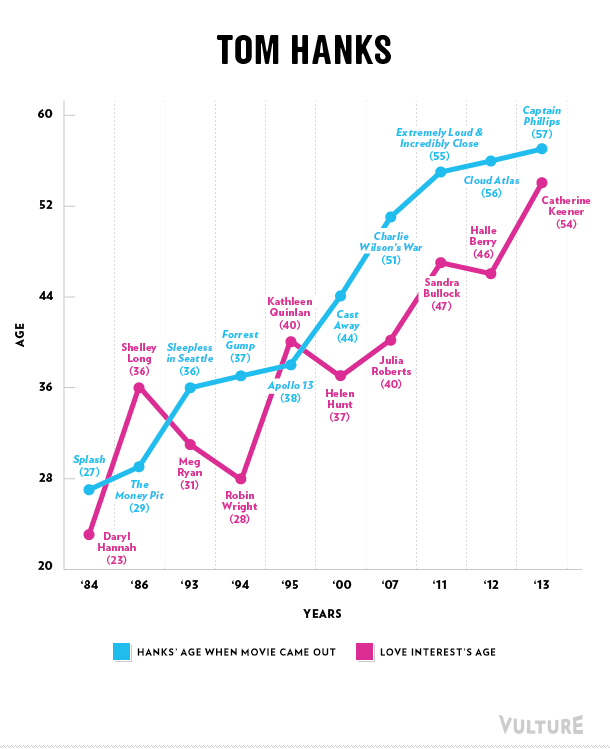
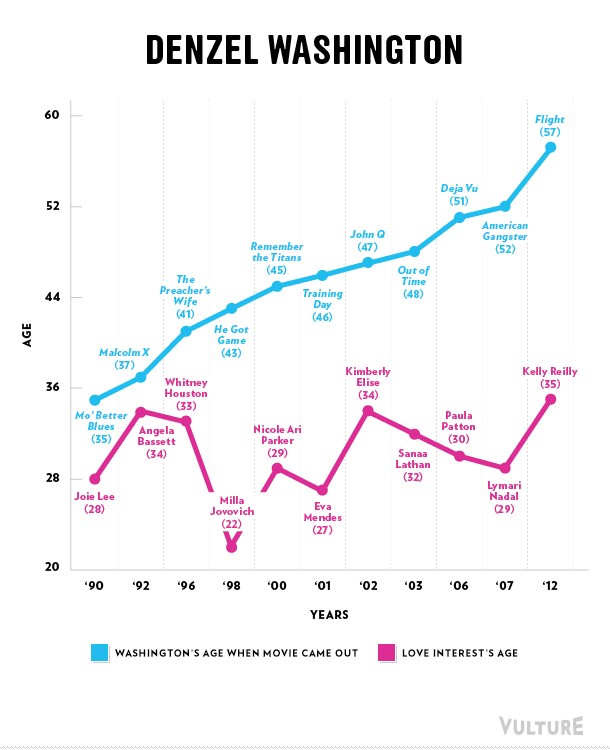
Robb S. sent along a great set of images from Vulture.  Using case studies of individual leading men in Hollywood, they show that the love interests cast in their films don’t age alongside them over the course of their careers.  Not convinced?  Here’s nine examples and one exception.  For fun, try to guess which leading man bucks the trend?  I’ll embed it last.
1 2 3 4 5 6 7 8 9
And the exception is!
10

Lisa Wade, PhD is an Associate Professor at Tulane University. She is the author of American Hookup, a book about college sexual culture; a textbook about gender; and a forthcoming introductory text: Terrible Magnificent Sociology. You can follow her on Twitter and Instagram.

Screenshot_2As our society becomes increasingly technological, I love stories that remind us of the value of simpler ways to solve problems, like a faux bus stop to catch escapee nursing home residents or dogs that are trained to sniff out cancer (both stories here).

This weekend we were treated to another such story, this time by Google. The company has announced a plan to bring internet to the whole world… with balloons.  The very first launch of a gas balloon was in 1783.  Two hundred and thirty years later, the company aims to deliver what is arguably the defining feature of our age — the internet — with helium-filled balloons.  That technology will then bring almost countless other technologies, such as medical advances and agricultural information, to people who are largely excluded from them now.  A fantastical plan.

Here’s how it’ll work:

Lisa Wade, PhD is an Associate Professor at Tulane University. She is the author of American Hookup, a book about college sexual culture; a textbook about gender; and a forthcoming introductory text: Terrible Magnificent Sociology. You can follow her on Twitter and Instagram.

Screenshot_1Earlier on SocImages, Lisa Wade drew attention to the tourism industry’s commodification of Polynesian women and their dancing. She mentioned, briefly, how the hula was made more tourist-friendly (what most tourists see when they attend one of the many hotel-based luaus throughout the islands is not traditional hula).  In this post, I want to offer more details on the history and the differences between the tourist and the traditional hula.

First, Wade states that, while female dancers take center stage for tourists, the traditional hula was “mostly” a men’s dance.  While it has not been determined for certain if women were ever proscribed from performing the hula during the time of the Ali’i (chiefs), it seems unlikely that women would have been prevented from performing the hula when the deity associated with the hula is Pele, a goddess. Furthermore, there is evidence that women were performing the dance at the time of Captain James Cook’s arrival in Hawai’i.

Second, while the traditional dances were not necessarily sexualized, they were very sensual.  The movement of hips and legs that are seen as sexual by some visitors, and showcased as such by the tourism industry, certainly existed in early practices.

In fact, the supposedly lascivious and blasphemous nature of the hula prompted missionaries to censure the public practice of hula, and in 1830 Queen Ka’ahumanu enacted a law prohibiting the public performance of the hula. This law was highly ineffective, however, and when King Kalakaua ascended the throne he actively encouraged public hula performances and other expressions of Native Hawaiian culture, earning him the moniker “Merrie Monarch.”

Eventually, a modernized dance emerged that did not incorporate much religiosity and employed modern music rather than chants. This is closer to what you would find at a hotel luau, but differs drastically in costuming and lacks the uncomfortable cloud of objectification associated with hotel-style hula (that is, the focus is on the dance rather than the dancers).  Below are some examples of the evolution.

Hula (men’s dance, traditional):

Hula (contemporary):

These examples of hula, and other Polynesian dances, are vastly different from what one finds in a hotel’s “Polynesian Revue” luau.

Hula (hotel):

In conclusion, it is true that the hula dances, and other dances of Polynesia, have been usurped by the tourism industry and commodified.  The culturally authentic forms, however, still thrive. Native dances are impressive enough without the ridiculous costuming and disrespectful bending of the islands’ histories seen at hotel luaus; unfortunately, it is difficult to find any culturally sensitive displays of Polynesian culture due to the huge influence of tourism over these locations.

*The information in this post was gleaned from various courses I’ve taken at the University of Hawai’i at Manoa. For more information on hula and the commodification of the Hawaiian culture, see Haunani-Kay Trask’s From A Native Daughter.

Sarah Neal is currently working on obtaining her M.A. in English at North Carolina State University.

1The phrase “social construction” refers to the fact that things, symbols, places, sounds — basically everything — is devoid of meaning until we, collectively, agree as to what something means.  Once that happens, it has been “socially constructed” and we can refer to it as a “social construct.”

The fact that gestures have any meaning at all, and that they can have different meanings in different places, is a simple example of this basic sociological concept.  Enjoy this one minute compilation of examples!

Via Blame It On The Voices.

Lisa Wade, PhD is an Associate Professor at Tulane University. She is the author of American Hookup, a book about college sexual culture; a textbook about gender; and a forthcoming introductory text: Terrible Magnificent Sociology. You can follow her on Twitter and Instagram.

Originally posted in 2012; re-posted because tomorrow is the 145th Belmont Stakes, the 3rd and final leg of the Triple Crown in thoroughbred horse racing. This is the dark side of the sport.

In humans you never see someone snap their leg off running in the Olympics. But you see it in horse racing.

These words, spoken by the equine medical director for the California Racing Board, summarize the truly terrifying absurdity that is horse racing today.  A team of investigative reporters at the New York Times has found that over 1,200 horses die at race tracks every year in the U.S.  Many of them die immediately after a race, euthanized after their bodies literally crumble underneath them.  Their legs break, unable to withstand the forces that the horses exert upon their bodies.  People in the industry call it, euphemistically, a “break down.” It occurs 1 out of every 200 times a horse starts a race.

All of these horses are being ridden by a jockey who is pitched off when the horse falls.  Moving at upwards of 50 miles an hour, and in the midst of many other horses running at top speed, jockeys are often seriously injured and sometimes killed. Currently there are over 50 permanently disabled jockeys receiving financial assistance from their professional trade association. Jacky Johnson, for example, was paralyzed from the neck down after his horse, Phire Power, broke its leg during a race. He will need a respirator for the rest of his life; Phire Power was euthanized on the track.

Why is this happening? Because we are making it so.

First, race horses are bred in order to run as fast as possible.  Short legs and thick bones slow a horse down, while longer, more delicate legs give them longer strides.  Breeders, then, have an incentive to build horses who are both faster and more fragile.

Second, owners may be putting these horses on the track too young.  Horses typically start getting raced at 2 to 3 years old, very young for an animal with a lifespan of 30 years.  Some argue that the bodies of young horses are not ready to handle the physical demands of racing.  For instance, the 2-year-old horse Teller All Gone broke its leg during a race; it had to be euthanized.

The owners dumped his body at a junkyard.

Third, there is the drug problem.  Many trainers illegally give their horses performance-enhancing drugs.  Many of them are experimental and are not yet or cannot be tested for.  These include “chemicals that bulk up pigs and cattle before slaughter, cobra venom, Viagra, blood doping agents, stimulants and cancer drugs.”

Built for speed and not safety, on the track too young, and amped up on steroids and other performance-enhancers, these horses are pushed to their limits.  Just this week Doug O’Neill, the trainer of I’ll Have Another, the horse set to win this year’s Triple Crown, was fined after his horse tested positive for performance enhancing drugs.

Even more problematic than the doping is the legal practice of giving horses pain-relieving drugs, including cocaine.  These mask the pain signals that would otherwise tell a horse to slow down or be careful on the track and also increase that chances that the track veterinarian will miss an injury when clearing the horse to race. The NYT reports that “[a]s many as 90 percent of horses that break down had pre-existing injuries” and they argue pain-masking drugs “pose the greatest risk to horse and rider.” The Louisiana Racing Commission call it “a recipe for disaster.”

The drugs detailed below are what were given to Coronado Heights in the week before he collapsed and was euthanized on the track:

Horse racing is subject to regulation, but these vary by state and are typically very poorly enforced, bringing us to the fourth reason why we see so much tragedy on race tracks. The punishment for violations is insignificant, sometimes only a warning:

Trainers in New Mexico who overmedicate horses with Flunixin get a free pass on their first violation, a $200 fine on the second and a $400 fine on the third, records show… [the state also] wipes away Flunixin violations every 12 months… To varying degrees, the picture is similar nationwide. Trainers often face little punishment for drug violations, and on the rare occasions when they are suspended, they are allowed to turn their stables over to an assistant.

When it comes down to it, many owners and trainers are willing to risk a horse’s life for the chance at the prize money and the less likely a horse is to win, the less they’re worth to the owner, so the harder they’re willing to push it.

The economic incentive to run horses till they die may seem to apply to the highest stakes racing but, in fact, it’s at the lowest end that we see the most disregard for the safety of horses and their jockeys. In the backyards of those casinos where racetracks are now part of the attraction (often referred to as “racinos”), horses and jockeys are a dime a dozen, and the money gives people a reason to break the rules. Meanwhile, the casino tracks are low profile, so they receive even less regulatory attention.

The use of the phrase “break down” to describe a horse who has snapped its own bones in the process of entertaining and enriching human beings is an indication of how nonchalantly industry figures approach this problem.  It suggests that these animals, and perhaps their jockeys as well, have been thoroughly objectified: cars break down, air conditioners break down, we break down boxes.  The language entirely fails to capture what is happening to these horses.  It may very well, however, describe what has happened to the industry and to the basic humanity of its most culpable beneficiaries.

Death at the Track:

Visit the New York Times to watch “The Rise of the Racinos” and “A Jockey’s Story.”

Lisa Wade and Gwen Sharp are professors of sociology. You can follow Gwen on Twitter and Lisa on Twitter and Facebook.  They have also written about the abuse of Tennessee Walking Horses.

Cross-posted at Inequality by (Interior) Design.

The problem:

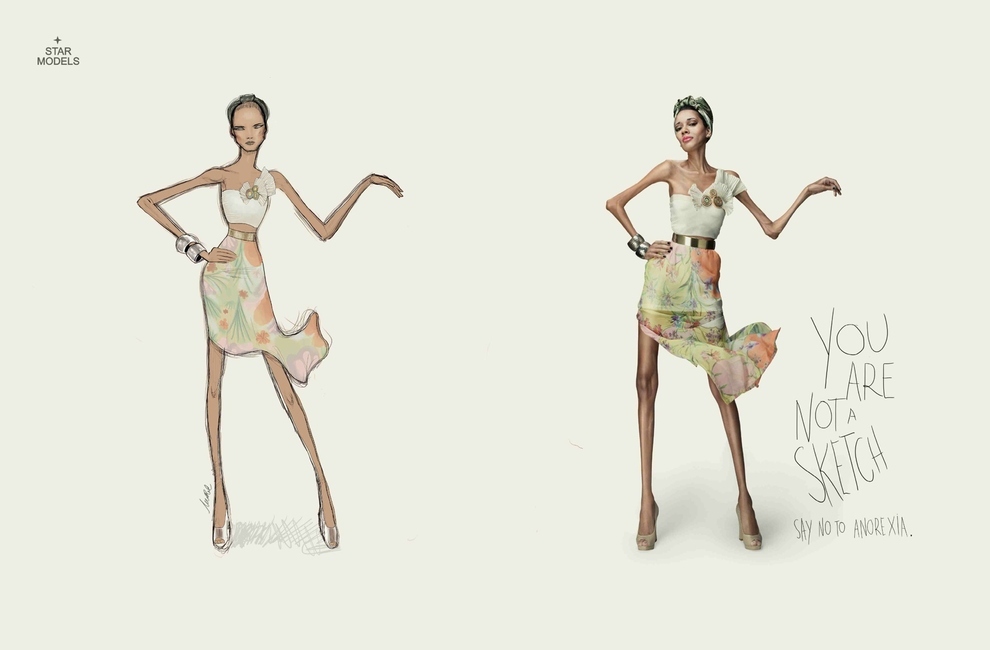
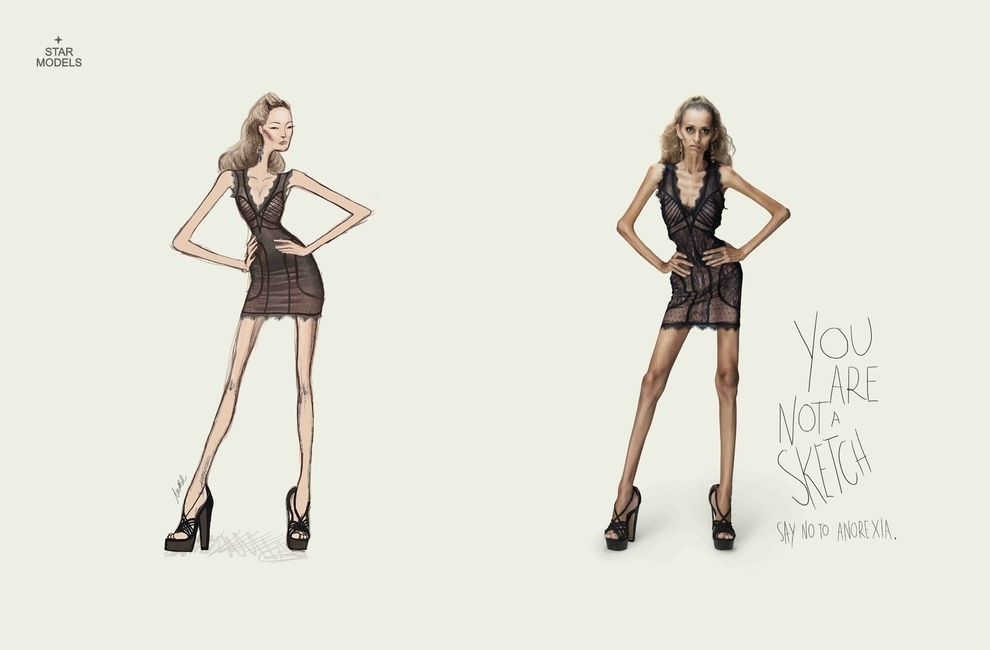
A Brazilian modeling agency, Star Models, recently released a new series of anti-anorexia PSA advertisements. They illustrate one of the ways ultra-thin body ideals characterizing women’s bodies in the fashion industry today are institutionalized, or made part of the way we “do” fashion. Fashion sketches — the way that people communicate designs to one another — idealize these bodies, with their exaggerated proportions, long slender limbs, and expressionless faces. The PSAs place real women alongside the sketches, graphically altered to similar proportions, in order to problematize the ideal.

1 2 3

Sociology professors are constantly asking students to analyze what they might be taking for granted. One issue we take for granted is that the images on the left are what “fashion” looks like and ought to look like. That they are culturally recognizable as fashion sketches speaks to the ways in which hyper-thin feminine bodies are institutionalized at a fundamental level in the fashion industry today.

The Dove Evolution video — as a part of their “Campaign for Real Beauty” — vividly illustrates the work that goes into the production of advertisements. Using a time-lapse video depicting the diverse labor that goes into the production of an ad was a simple illustration of the impossibility of contemporary beauty ideals. Viewers are left thinking, “Of course we can’t look like that. She doesn’t even look like that.”

Star Models’ anti-anorexia ads promote a similar message, but also call our attention to the more dangerous aspects of adherence to industry ideals. Similar to depictions of what Barbie might look like as a real woman, altered images of dangerously thin models aside these sketches have a very different feel from the sketches they imitate.

What is being done about it?

In 2007, the Council of Fashion Designers of America (CFDA) passed a Health Initiative in recognition of an increasingly global concern with the unhealthily thin bodies of models and whether/how to promote change in the industry. The CFDA is working to better educate those inside the industry to identify individuals at risk, to require models with eating disorders to seek help and acquire professional approval to continue working, to develop workshops promoting dialog on these issues, and more.

The CFDA’s Health Initiative, however, treats eating disorders as an individual rather than social problem. This allows the CFDA to obscure the role it might play in perpetuating cultural desires for the very bodies it purports to “help” with the Health Initiative.

Susan Bordo famously wrote about anorexia as what she termed “the crystallization of culture.” We like to draw firm boundaries between normality and pathology. But Bordo suggests that anorexia is more profitably analyzed as culturally normative than as abnormal. Similarly, Star Models’ PSAs play a role in framing the fashion industry as (at least partially) responsible for ultra-thin feminine body ideals. Yet, they arguably fall short of providing institutional-level solutions as the tagline — ”You are not a sketch. Say no to anorexia.” — concentrates on individuals.

The CFDA’s focus on health initiatives and support for individuals suffering from anorexia, bulimia and other eating disorders are critical aspects of recognizing issues that seem to plague the fashion industry. While this surely helps some individual women, the initiatives simultaneously avoid the cultural pressures (in which the fashion industry arguably plays a critical role) that work to systematically conflate feminine beauty with ultra-thin ideals. Similar to problems associated with focusing attention only on the survivors of sexual assaults (failing to recognize the ways that sexual violence is both institutionalized and embedded in our culture), these images simply illustrate that individual-level solutions are unlikely to produce change precisely because they fail to locate “the problem” and ignore the diverse social institutions and ideals that assist in its reproduction.

Thanks to a student in my Sociology of Gender course, Sandra Little, for bringing this campaign to my attention.

Tristan Bridges is a sociologist of gender and sexuality at the College at Brockport (SUNY).  Dr. Bridges blogs about some of this research and more at Inequality by (Interior) Design.  You can follow him on twitter @tristanbphd.

In the 3-minute video below, sociologist Jennifer Lee explains her research on “stereotype promise,” the idea that being viewed through the lens of a positive stereotype can act as a performance booster and enhance outcome. You can imagine how it might be applied to African Americans and certain sports like track or basketball, or how it might facilitate men’s acquisition of math ability.

Lee’s research is on Asian Americans and academic performance. Asians, she explains, are stereotyped as “smart, high achieving, and disciplined” and this might help explain why they are so academically successful.

1

It can also, however, have harmful effects.  She discusses the way that some young Asian Americans will say that an A- counts as an “Asian fail,” an example of how much pressure stereotype promise can bring.  She also notes that Asian Americans are often disadvantaged in college admissions because of an assumption that a school can have “too many” Asians and, accordingly, accept only students with the most extraordinary academic credentials.

Lisa Wade, PhD is an Associate Professor at Tulane University. She is the author of American Hookup, a book about college sexual culture; a textbook about gender; and a forthcoming introductory text: Terrible Magnificent Sociology. You can follow her on Twitter and Instagram.

Screenshot_1In a wonderfully provocative article titled “Compulsory Heterosexuality and Lesbian Existence” (full text), writer and poet Adrienne Rich argues, among other things, that the assumption of heterosexuality in the context of patriarchy alternatively erases and stigmatizes woman-to-woman bonds.

Though the title specifies lesbianism, she means intense and meaningful relationships between women more generally.  In other words, an overbearing heterosexuality orients women towards men not just as sexual and romantic partners, but as the arbiters of all that is good and right. Accordingly, women don’t turn to other women to validate their ideas, their value, their beauty, or anything else about them.  This post, analyzing the reality show Battle of the Bods, is a stark example.

If only men can validate women’s worth, then other women exist only as competition for their approval.  This is good for patriarchy; it divides and conquers women, keeping them constantly looking to please the men around them and making them feel invisible and worthless if they can’t get attention from or endorsement from men.

There are various strategies for getting men’s stamp of approval: being the busy and useful mother of a man’s children is one way, while being a childless so-called “trophy wife” is another.  You can imagine, right away, that these two kinds of women might see themselves as in competition.  One may be more harried, with less time to tend to her physical fitness and keep her hair shiny and her make-up and clothes just right.  The other may have plenty of time to keep herself fit and beautiful, but knows that her connection to her husband may feel less permanent without children to tie her to him.  Moreover, the childless wife is often a second wife.  So all sexy, single, childless women are, theoretically, a threat to the wife and mother.  And all husband/dads are, theoretically, a target for wanna-be second wives.

Pop culture constantly re-affirms these narratives.  It frequently naturalizes the idea that women should turn to men, and not women, to reinforce their value. Portraying women as in competition is part of that.  The “trophy wife” vs. the “busy mom” is one of those match-ups. Enter this Volvo ad, sent in by Dolores R.:

The ad encourages us to think mean-spirited thoughts about the married but (presumably) childless woman with the puckered lips.  She clearly sees herself as in competition with the redhead, looking over to check that she is, in fact, more beautiful, and looking satisfied that she is.  The redhead, though, has (supposedly) more important things to do than check herself out in the mirror.  She’s got kids.  How shallow the blond, we’re told to think, how fake.  “Designed for real people,” the narrator explains, “designed around you.”

These battles — between childless women and mothers, one kind of mother and another, old women and young, thin women and fat, ugly women and beautifulpopular and less popular, mother-in-laws and daughter-in-laws, between strangers and between best friends — this is patriarchy in action.  It weakens women as as group and makes it more difficult to fight oppression.

As my good friend Caroline Heldman says, when we see women that excel in some way — whether they be accomplished in their career, impressive fashionistas, incredible parents, truly loved partners, inspired artists, or what-have-you —  we are taught to find something about them to dismiss because they make us feel insecure. Instead, we should think “How fabulous is she! I want to tell her how great she is and be her friend!”

Lisa Wade is a professor of sociology at Occidental College.  She elaborates on these themes in her talk, A Feminist Defense of FriendshipYou can follow her on Twitter and Facebook.