Search results for embed

If I have one thing to say about Holly Grigg-Spall’s new book, Sweetening the Pill: How We Got Hooked On Hormonal Birth Control, it’s that it brings together ideas in creative ways and comes out with conclusions that are new to me.

The book is an interrogation of the popularity of hormonal birth control in the U.S.  In one argument, Grigg-Spall begins with the fact that women’s bodies are a fraught topic. For hundreds of years, the female body has been offered as proof of women’s inferiority to men.  Feminists have had two options: (1) embrace biological difference and claim equality based on essential femaleness or (2) reject difference and claim equality based on sameness.

Largely, Grigg-Spall argues, the latter has won out as the dominant feminist strategy. Accordingly, all things uniquely female become suspect; they are possible traitors to the cause.  This includes ovulation, menstruation, and the mild mood swings that tend to accompany them (men have equivalent mood swings, by the way, they’re just daily and seasonal instead of monthly-ish).

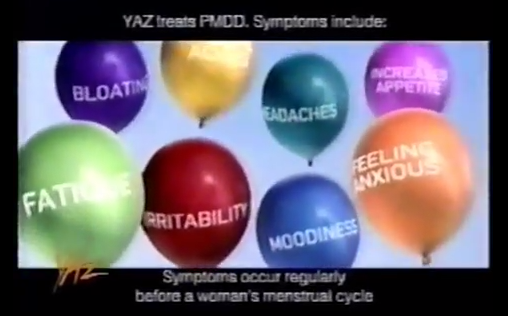
Hormonal birth control, then, can be seen as a way to eliminate some of the things about us that make us distinctly “female.”  “Science is making us better,” the message goes.  By getting rid of our supposedly feminine frailties, “we are [supposedly] becoming better humans…”  A quick look at birth control pill advertising reveals that this goes far beyond preventing pregnancy.  Commercials frequently claim other benefits that conform to socio-cultural expectations for women: reduced PMS, clearer skin, and bigger breasts.  This Yaz commercial, for example, claims that the pill also cures acne, irritability, moodiness, anxiety, appetite, headaches, fatigue, and bloating.
Screenshot_4

To add insult to injury, Grigg-Spall notes, advertising then frames consumption of the pill as liberation.  In this commercial for Seasonique, the pharmaceutical company positions itself as women’s answer to a mysterious oppressor.  “Who says?” is repeated a full eight times.

Others have criticized Grigg-Spall for, among other things, essentializing femaleness: utilizing  that strategy for equality that embraces women’s difference from men and asks others to do so as well.

I’m coming down on the side of “huh!?”  The Pill made an immeasurable difference for women when it was introduced as the first effective, female-controlled birth control method.  There’s no doubt about that.  Her book asks us whether our designation of The Pill as a holy pillar of women’s equality still applies today.  I think it’s worth thinking about.

Cross-posted at Pacific Standard.

Lisa Wade, PhD is an Associate Professor at Tulane University. She is the author of American Hookup, a book about college sexual culture; a textbook about gender; and a forthcoming introductory text: Terrible Magnificent Sociology. You can follow her on Twitter and Instagram.
Screenshot_1Last month I had the pleasure of writing a really fun essay about sexual dimorphism for Salon.  The phrase refers to the degree to which males and females of a species are different.  I offered a bunch of fun examples of strong dimorphism and imagined what humans would be like if we were like those animals.

Men would be 11 feet tall, for example, if we were as dimorphic as the elephant seal; they’d be the size of a walnut if we were like the blanket octopus.  And don’t we all think that glistening iridescent skin, like the feathers on male birds, would make men more fabulously attractive?  It’s a no-brainer.

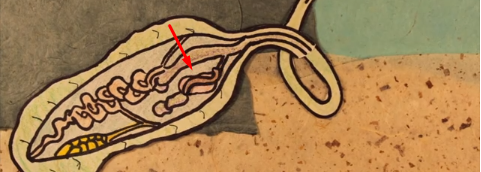
In any case, coincidentally the New York Times put together an animated video about one of my favorite examples: the green spoonworm.  The male spoonworm is very small compared to the female, equivalent to a human male being about the size of a breath mint.  And he lives his entire life inside of the female’s digestive tract.  Now that’s sexual dimorphism!  Enjoy:

Lisa Wade, PhD is an Associate Professor at Tulane University. She is the author of American Hookup, a book about college sexual culture; a textbook about gender; and a forthcoming introductory text: Terrible Magnificent Sociology. You can follow her on Twitter and Instagram.

I recently across two examples of cross-species education.  Both illustrate that what we often consider instinctual must also often be learned, revealing that nature and nurture are not competitive forces, but deeply interconnected.  The first is adorable to the point of making me cry from laughter, the second is so sad I can hardly stand it.

Here’s the first.  A sheep tries to teach a young bull how to head butt.  Words don’t do justice to the care and patience shown by this teacher.

Perhaps the bull just isn’t ever going to understand, but the fact that the sheep seems to understand that the bull doesn’t understand, and then thinks of an idea of how to fix that, is amazing to me.  Presumably, he would take as much care with a young sheep who would be predispositioned for head-butting, but might still benefit from some instruction.

Here’s the second.  Remember the movie Free Willy, where the captive killer whale is freed by a little boy?  Well, in true Hollywood irony, the whale that played Willy, Keiko, wasn’t freed at the end of the movie, of course.

Screenshot_1

After the movie was released in 1993, however, people joined in a movement to free him.  After 22 years in captivity, humans — who count as animals in this story — spent a decade and 20 million dollars trying to rehabilitate him to the wild, attempting to teach him how to feed himself and bond with wild whales.  He continued to seek out humans, even after he was left to fend for himself, and died in 2003 from pneumonia.

There are lots of lessons to take from this story.  One is the importance of nurture in making us what nature intended us to be.  Keiko was a social individual who learned how to be a captive killer whale.  Given the opportunity, he never could be the wild killer whale he once had the potential to be.  Or, at least, we’ll never know if he could.

Whenever we talk about human biological imperatives, we should remember the patient sheep and the friendly killer whale.  We need each other to become human, and we can become human in many different ways, depending on what is demanded of us.  Nature never works alone. Without each other, we simply don’t become recognizably human at all — as one of the worst cases of child neglect taught us only too well — regardless of our biological potential.

Lisa Wade, PhD is an Associate Professor at Tulane University. She is the author of American Hookup, a book about college sexual culture; a textbook about gender; and a forthcoming introductory text: Terrible Magnificent Sociology. You can follow her on Twitter and Instagram.
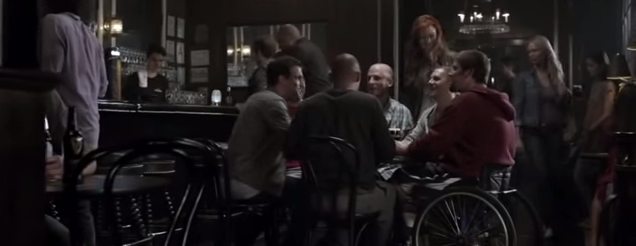
A recent Guinness ad has been getting a lot of kudos and I want to join in the praise.  It involves a set of guys who get together to play a pick-up game of wheelchair basketball and then join each other at a bar to celebrate the game.  Lots of people have mentioned that it’s nice to see (1) a lack of objectification of women as a form of male bonding  and (2) a nice representation of people with disabilities.  Both of those things are great in my book.

But here’s another thing I really liked: their retreat to the bar and their formation once they got there.  They sat in a circle.

Screenshot_1

Why is this neat?  Because scholars have found that male and female friendships tend to be different.  Male friendships tend to be more “shoulder-to-shoulder” than “face-to-face.”  Men are more likely to get together and do stuff: they watch football together, go out and play pool, have poker nights, etc.  Women are more likely to spend time just talking, confessing, disclosing, and being supportive of each other’s feelings.

The benefits of friendship are strongly related to self-disclosure.  And so men’s friendships — if they don’t involve actual intimacy — often don’t offer the same boost to physical and well-being as women’s friendships.  The fact that these guys sit down together at a bar, in a circle, in order to engage in some face-to-face time after their shoulder-to-shoulder time… well, that’s really nice to me.

Thanks to Rebecca H. for submitting the commercial!

Lisa Wade, PhD is an Associate Professor at Tulane University. She is the author of American Hookup, a book about college sexual culture; a textbook about gender; and a forthcoming introductory text: Terrible Magnificent Sociology. You can follow her on Twitter and Instagram.
Screen Shot 2013-09-19 at 8.08.15 AM

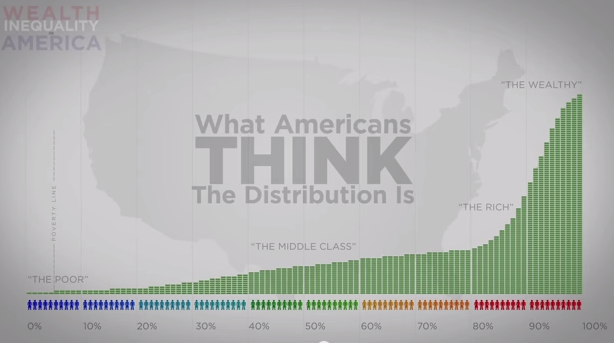
Earlier this week, Marty posted about the increasingly huge share of income going to the richest Americans. And as we’ve seen in the past, Americans tend to way — way — underestimate how unequal the U.S. is.

This video (via Upworthy) does a great job illustrating the distribution of wealth, and how it compares to Americans’ perceptions of both the real and ideal distribution. Even if you know all this stuff, and can recite the statistics, the visual representation of exactly what that means is still jarring.

Gwen Sharp is an associate professor of sociology at Nevada State College. You can follow her on Twitter at @gwensharpnv.

Trigger warning: Graphic descriptions of sexual assault.  Note: The opinions expressed in this post belong to Sezin Koehler alone and should not be attributed to anyone involved with Project Unbreakable.

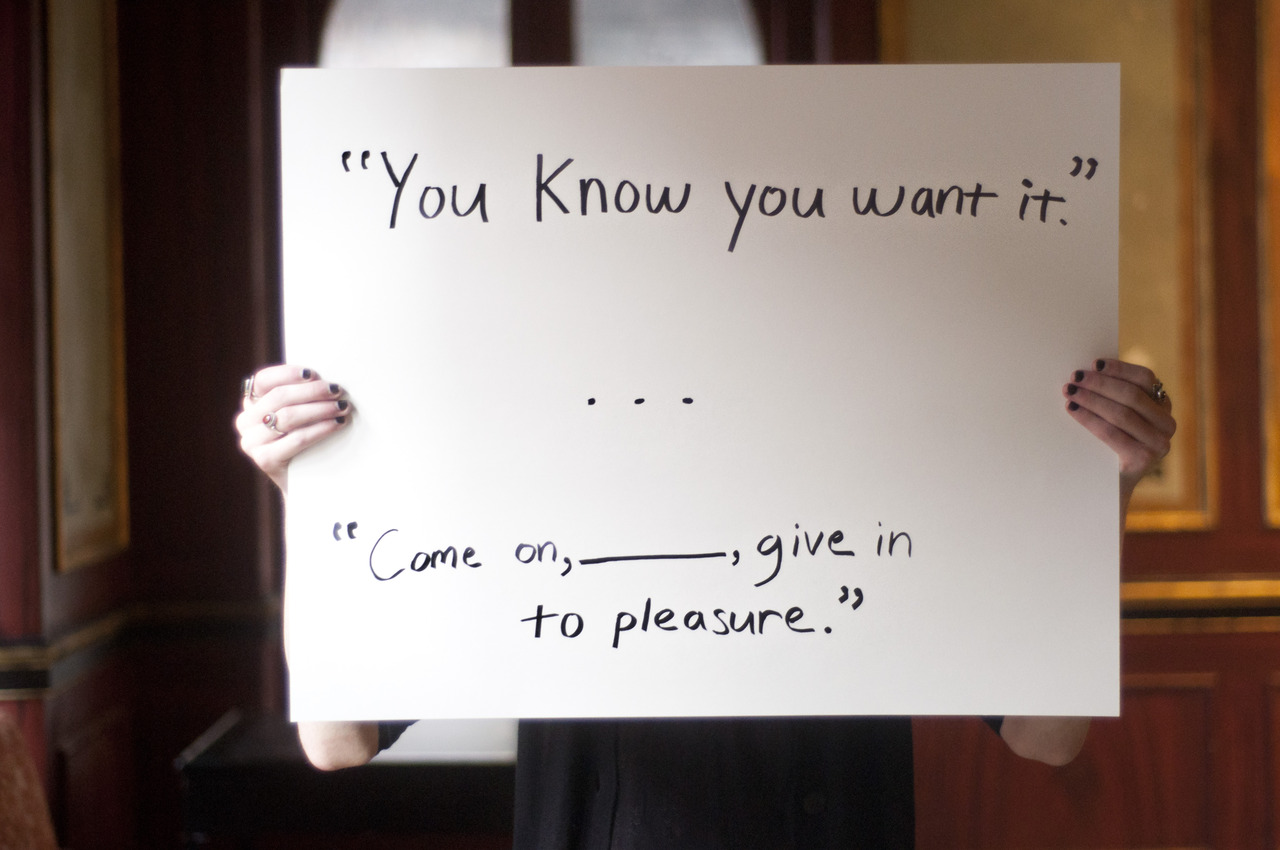
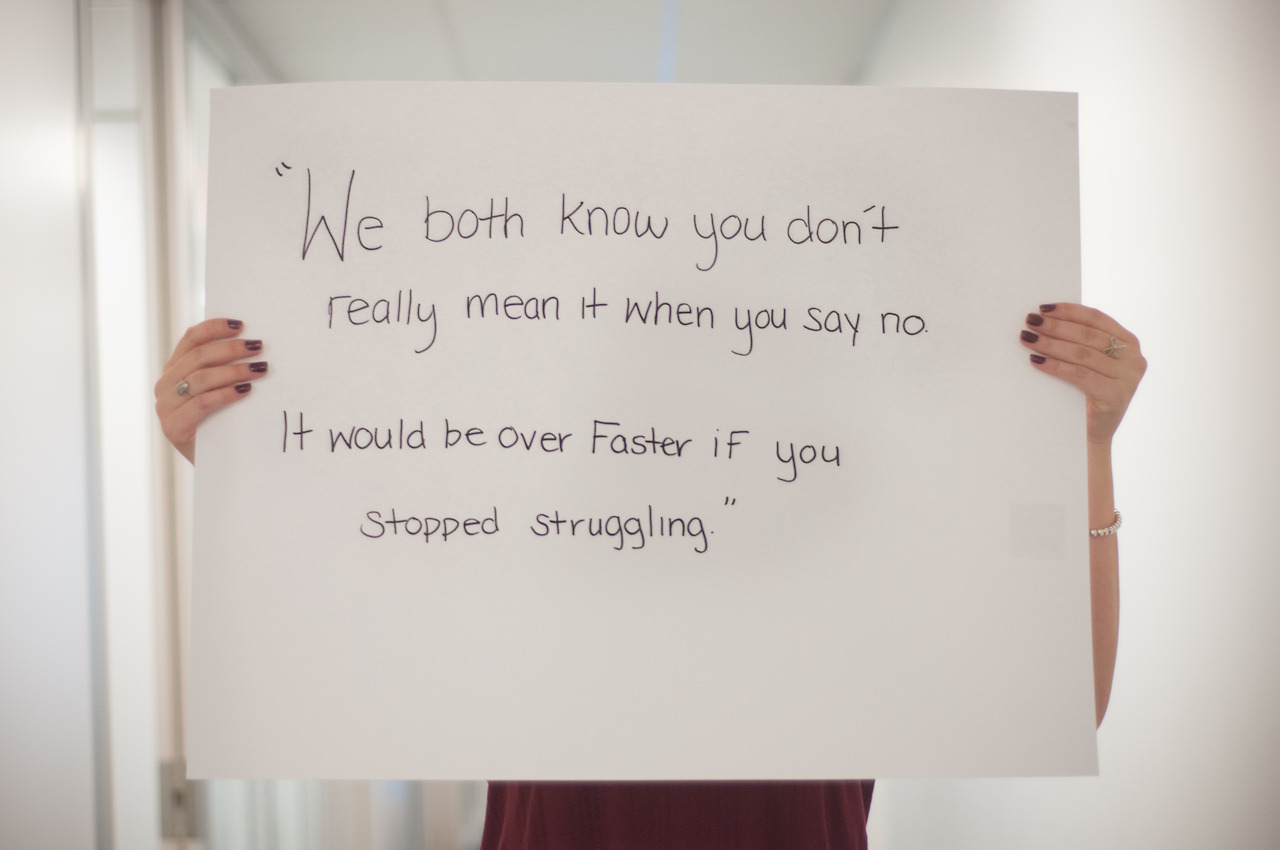
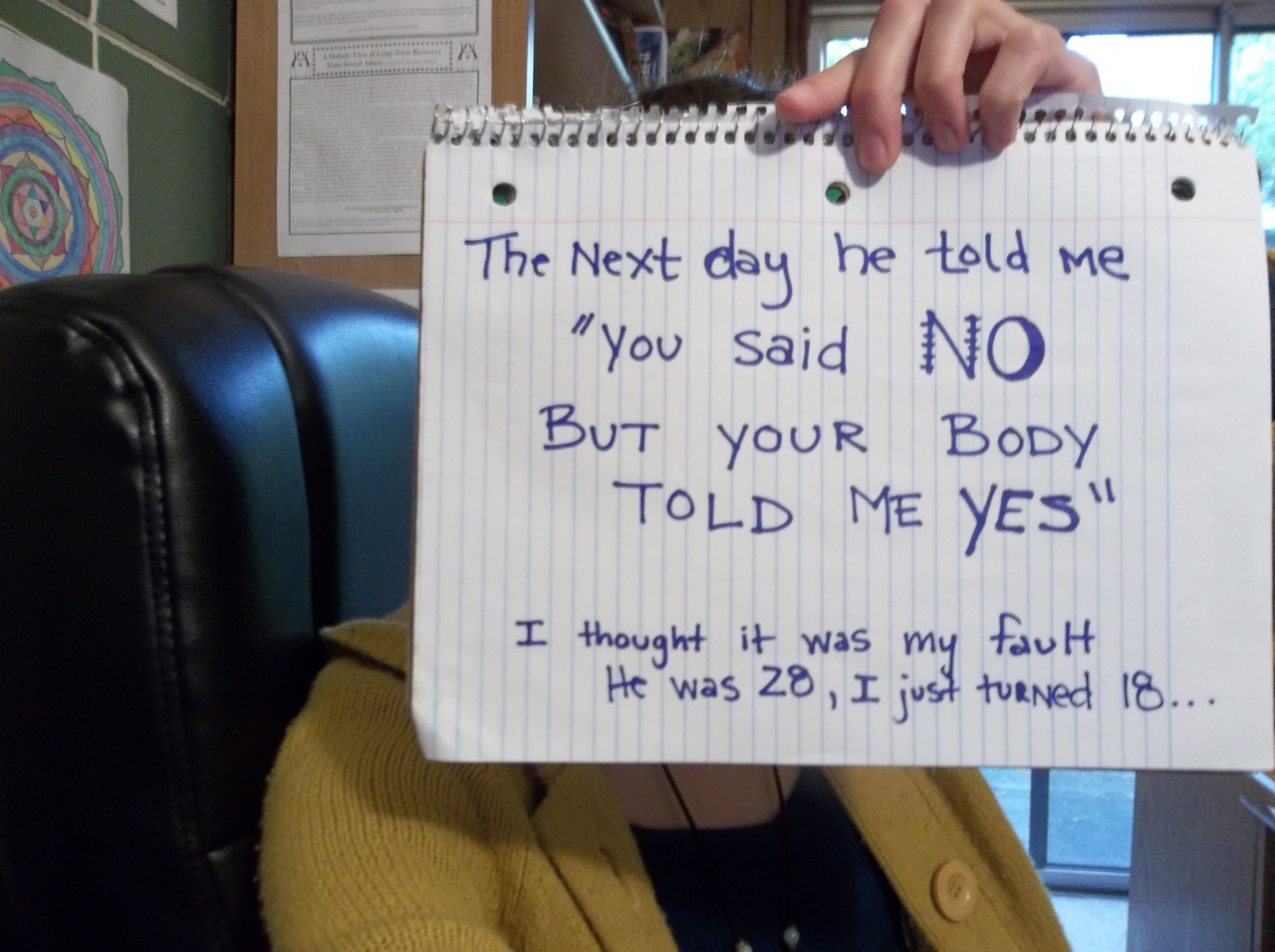
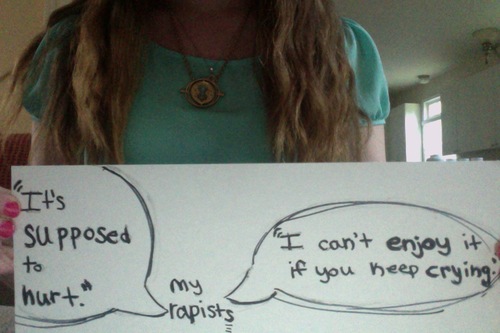
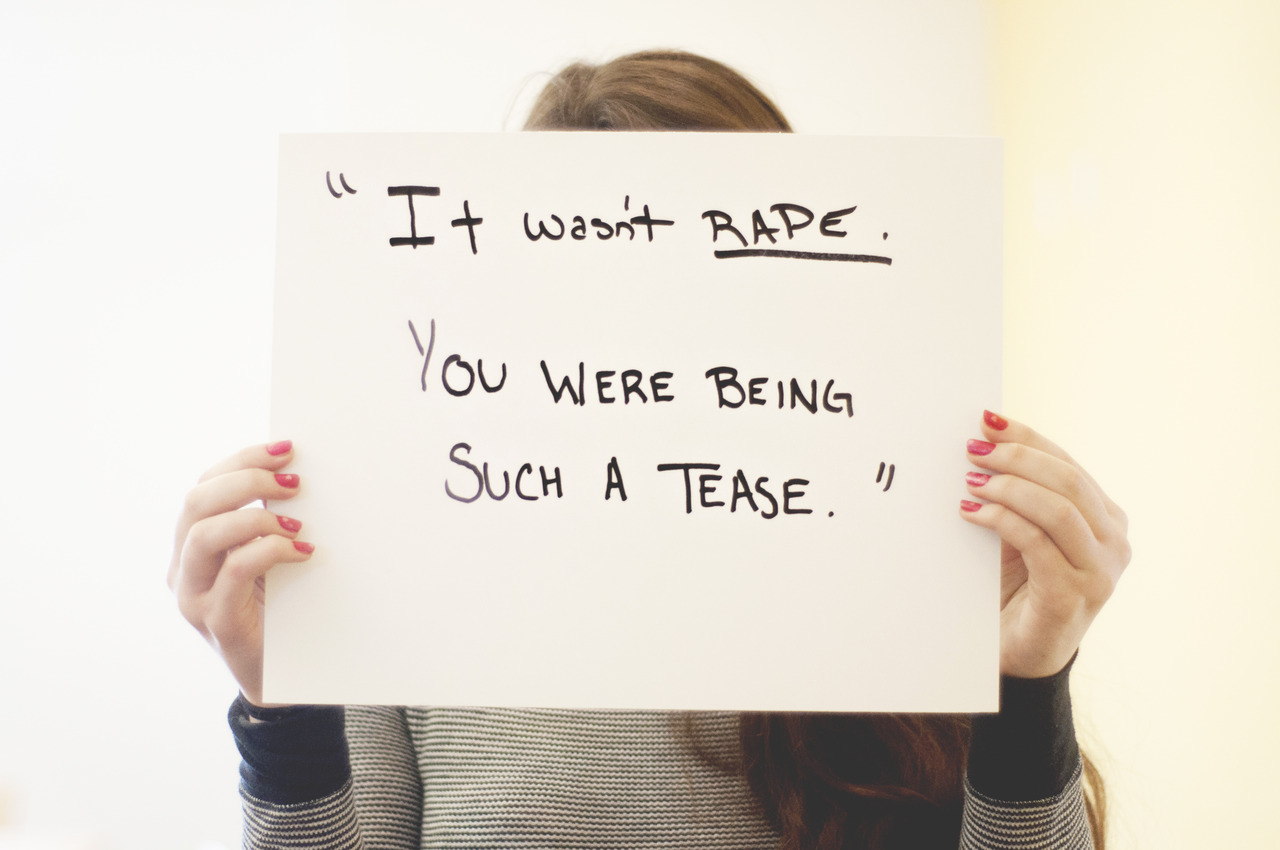
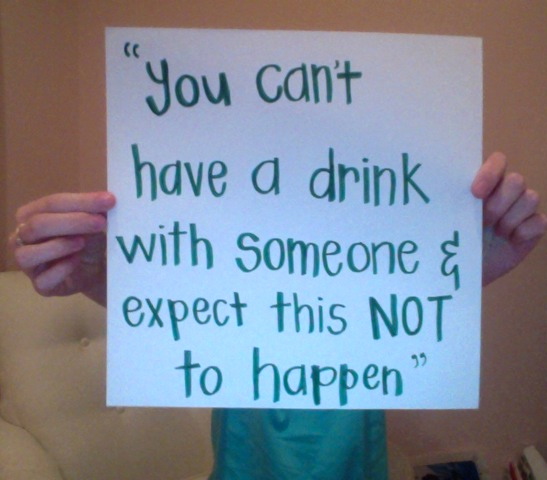
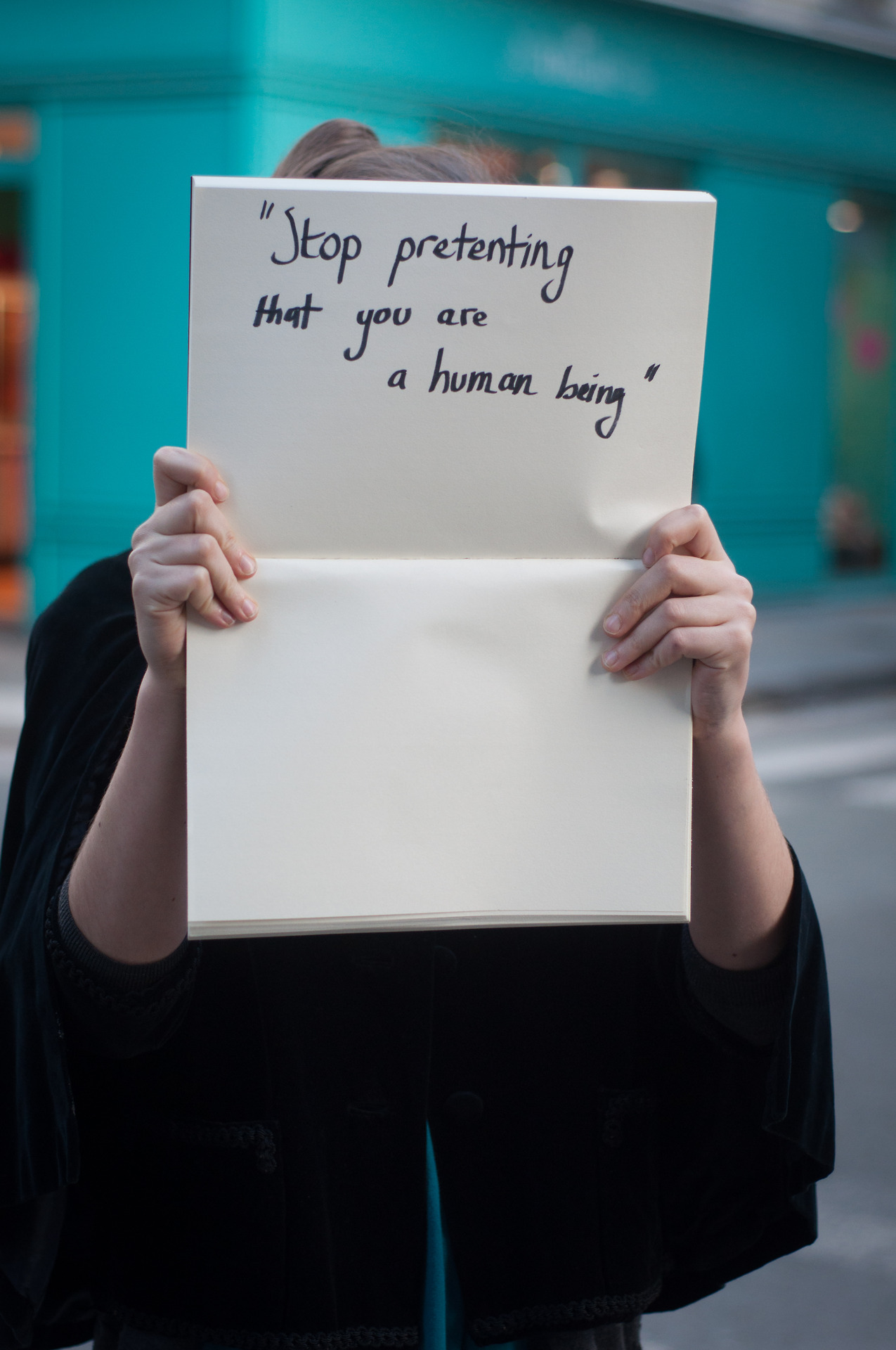
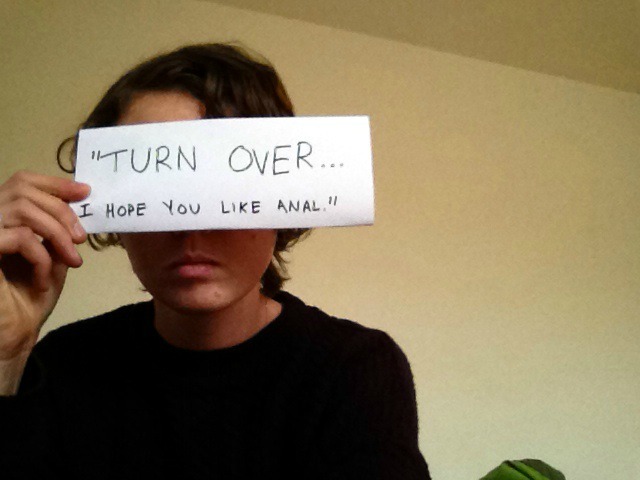
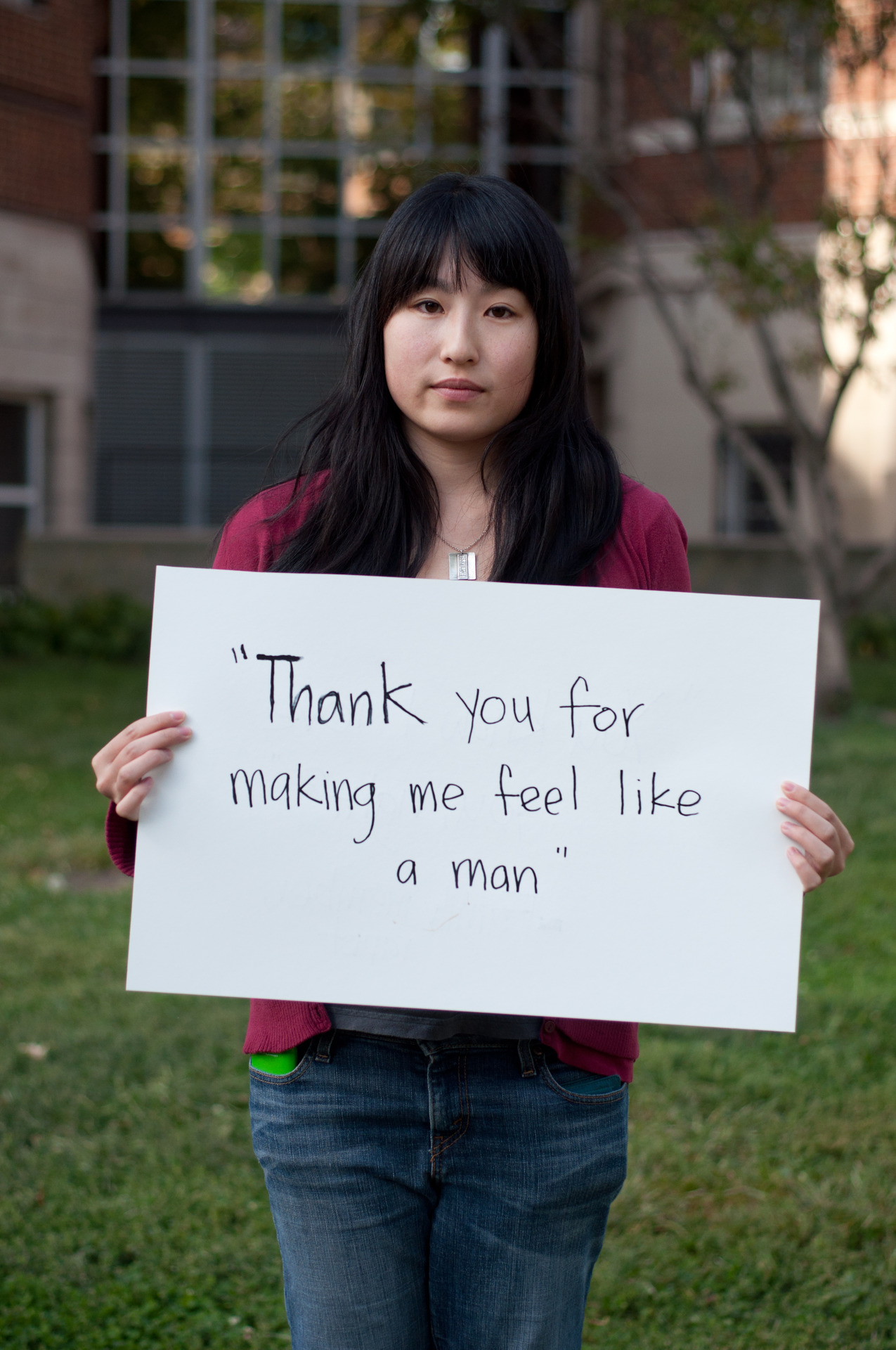
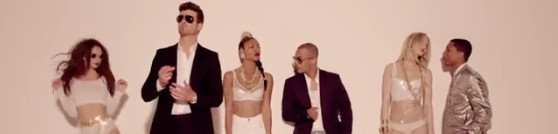
Robin Thicke’s summer hit Blurred Lines addresses what he considers to be sounds like a grey area between consensual sex and assault. The images in this post place the song into a real-life context.  They are from Project Unbreakable, an online photo essay exhibit, and feature images of women and men holding signs with sentences that their rapist said before, during, or after their assault.   Let’s begin.

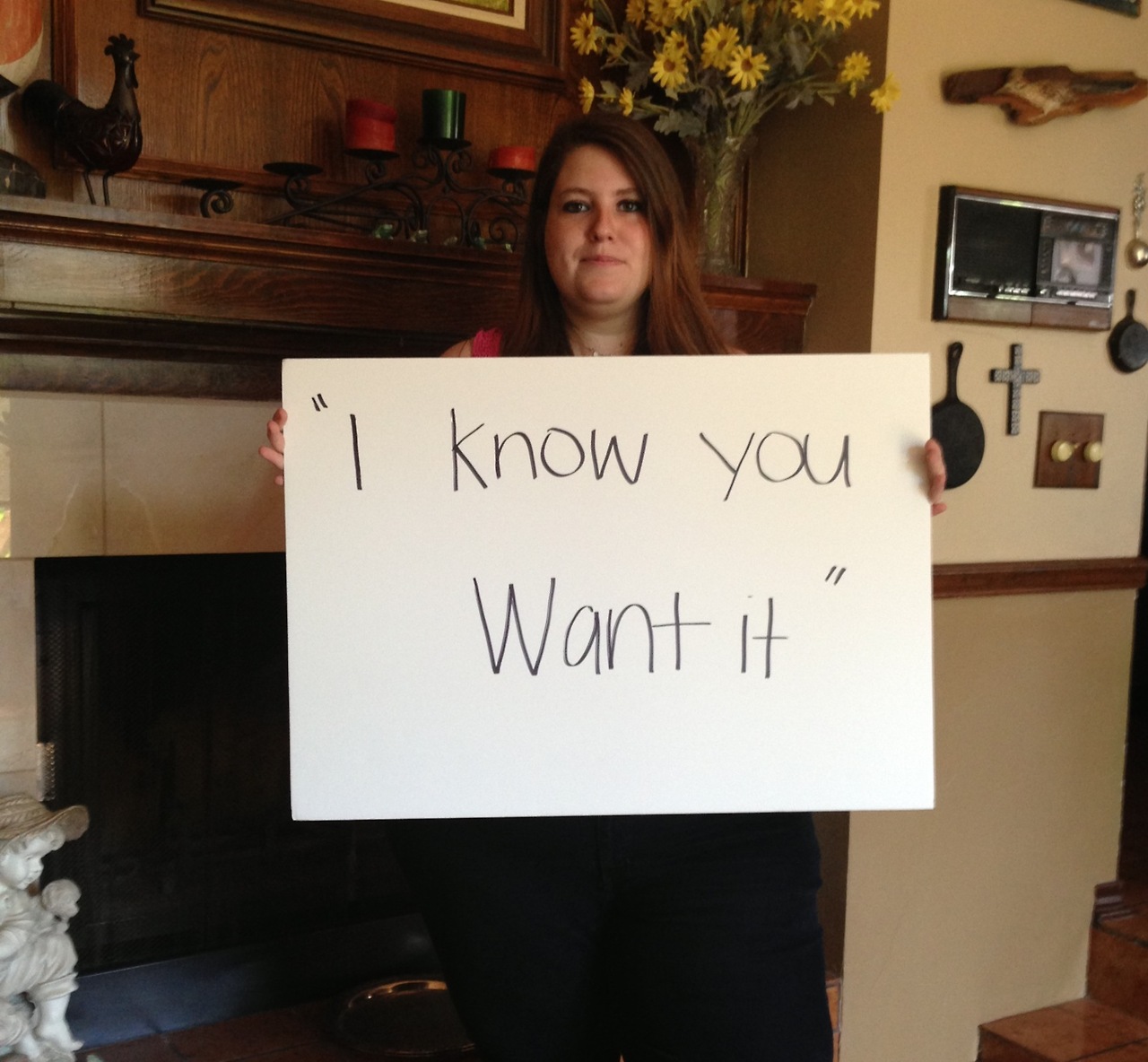
I know you want it.

Thicke sings “I know you want it,” a phrase that many sexual assault survivors report their rapists saying to justify their actions, as demonstrated over and over in the Project Unbreakable testimonials.

1

2

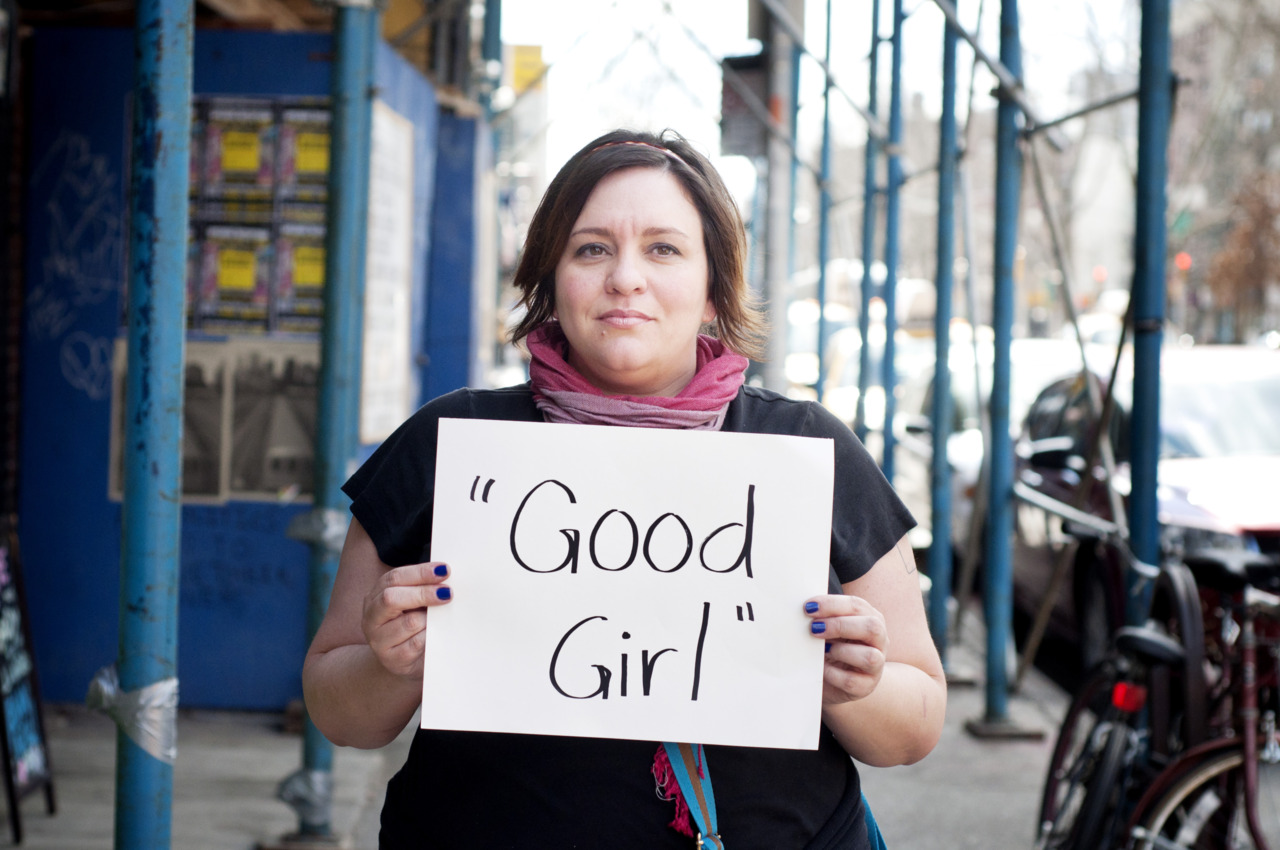
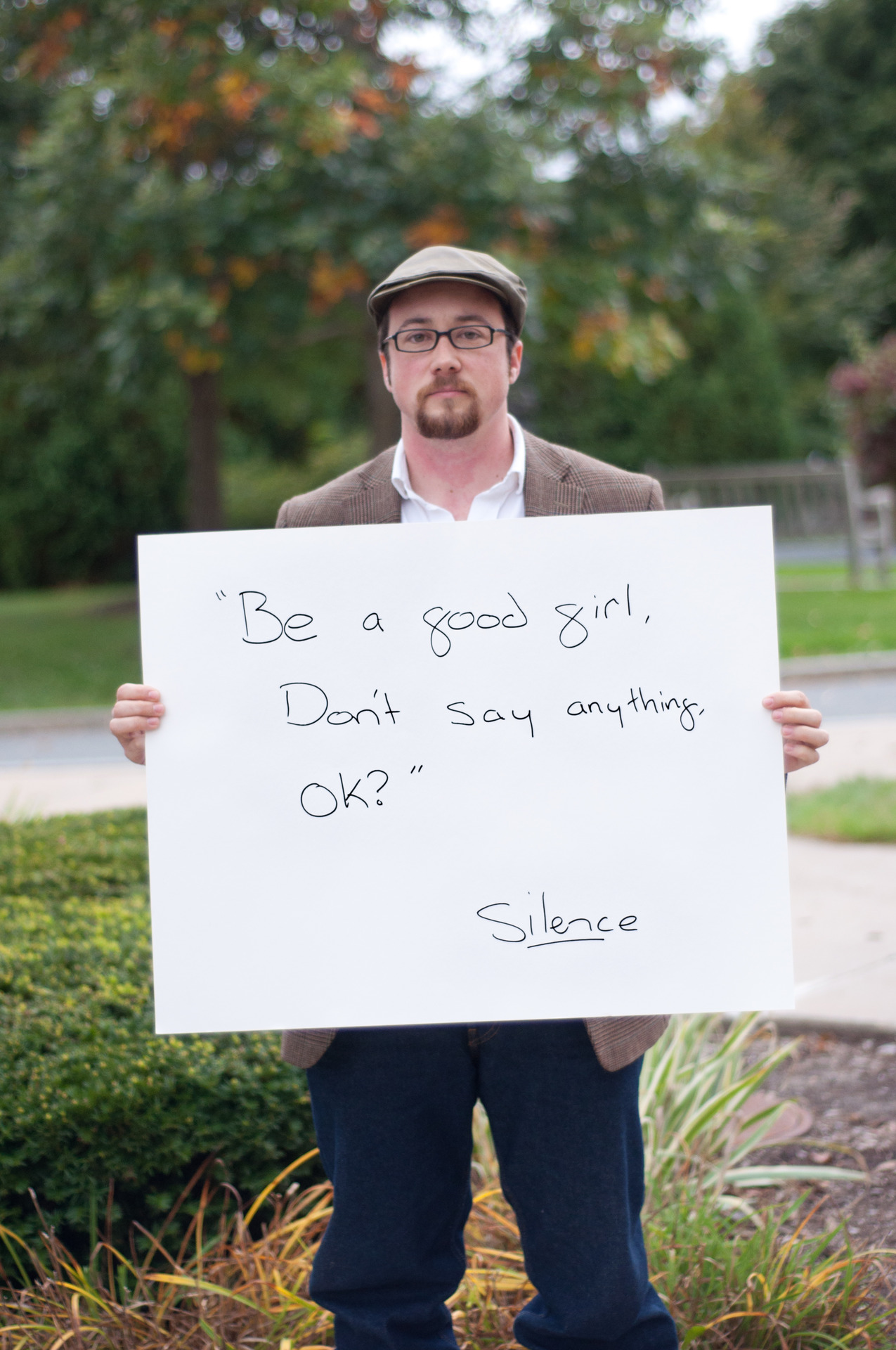
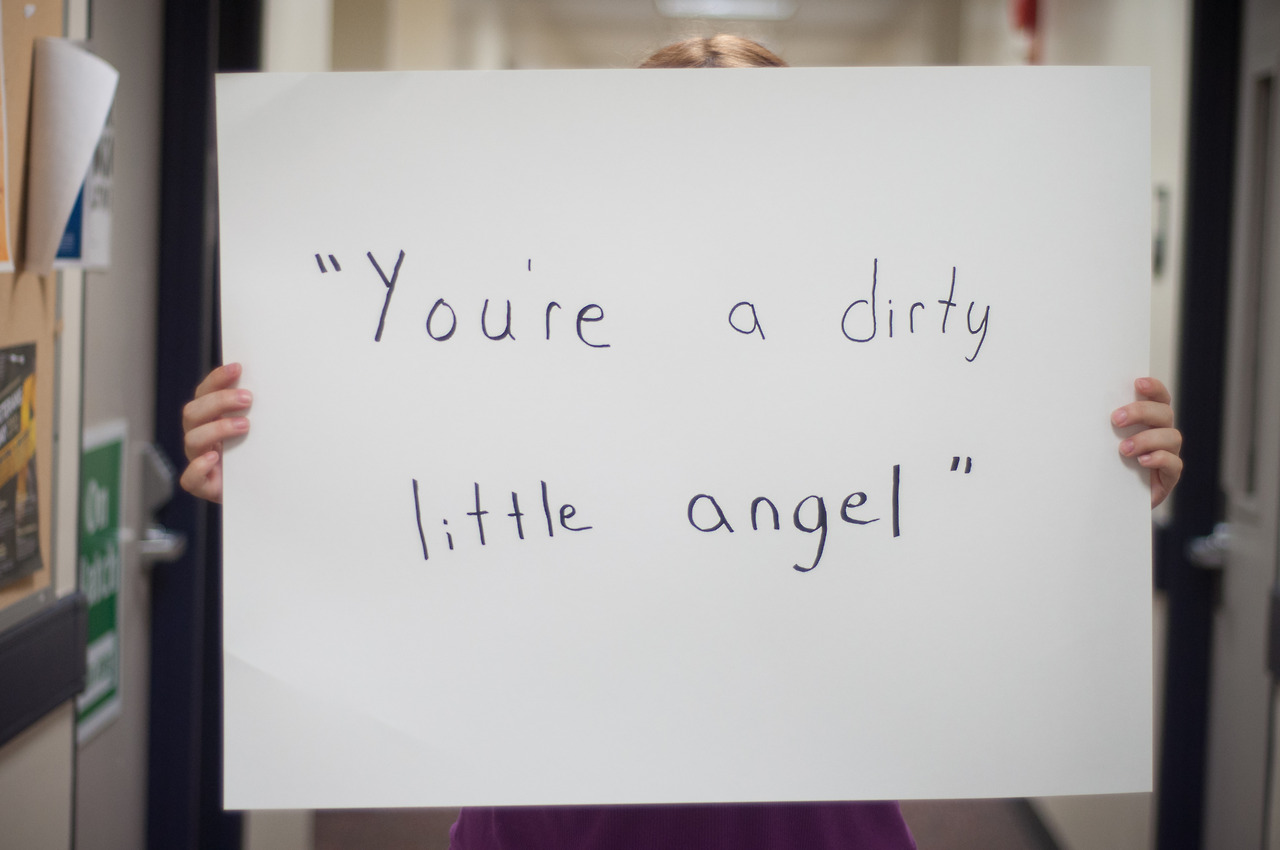
You’re a good girl.

Thicke further sings “You’re a good girl,” suggesting that a good girl won’t show her reciprocal desire (if it exists). This becomes further proof in his mind that she wants sex: for good girls, silence is consent and “no” really means “yes.”

3

4

Calling an adult a “good girl” in this context resonates with the the virgin/whore dichotomy. The implication in Blurred Lines is that because the woman is not responding to a man’s sexual advances, which of course are irresistible, she’s hiding her true sexual desire under a facade of disinterest. Thicke is singing about forcing a woman to perform both the good girl and bad girl roles in order to satisfy the man’s desires.

16

Thicke and company, as all-knowing patriarchs, will give her what he knows she wants (sex), even though she’s not actively consenting, and she may well be rejecting the man outright.

5

6

Do it like it hurt, do it like it hurt, what you don’t like work?

This lyric suggests that women are supposed to enjoy pain during sex or that pain is part of sex:

7

The woman’s desires play no part in this scenario – except insofar as he projects whatever he pleases onto her — another parallel to the act of rape: sexual assault is generally not about sex, but rather about a physical and emotional demonstration of power.

The way you grab me.
Must wanna get nasty.

This is victim-blaming.  Everybody knows that if a woman dances with a man it means she wants to sleep with him, right? And if she wears a short skirt or tight dress she’s asking for it, right? And if she even smiles at him it means she wants it, right?  Wrong.  A dance, an outfit, a smile — sexy or not — does not indicate consent.  This idea, though, is pervasive and believed by rapists.

10

15

And women, according to Blurred Lines, want to be treated badly.

Nothing like your last guy, he too square for you.
He don’t smack your ass and pull your hair like that.

In this misogynistic fantasy, a woman doesn’t want a “square” who’ll treat her like a human being and with respect. She would rather be degraded and abused for a man’s gratification and amusement, like the women who dance around half naked humping dead animals in the music video.

11

The pièce de résistance of the non-censored version of Blurred Lines is this lyric:

I’ll give you something to tear your ass in two.

What better way to show a woman who’s in charge than violent, non-consensual sodomy?

12

Ultimately, Robin Thicke’s rape anthem is about male desire and male dominance over a woman’s personal sexual agency. The rigid definition of masculinity makes the man unable to accept the idea that sometimes his advances are not welcome. Thus, instead of treating a woman like a human being and respecting her subjectivity, she’s relegated to the role of living sex doll whose existence is naught but for the pleasure of a man.

14

In Melinda Hugh’s Lame Lines parody of Thicke’s song she sings, “You think I want it/ I really don’t want it/ Please get off it.”  The Law Revue Girls “Defined Lines” response to Blurred Lines notes, “Yeah we don’t want it/ It’s chauvinistic/ You’re such a bigot.”  Rosalind Peters says in her one-woman retort, “Let’s clear up something mate/ I’m here to have fun/ I’m not here to get raped.”

There are no “blurred lines.” There is only one line: consent.

And the absence of consent is a crime.

Sezin Koehler is an informal ethnographer and novelist living in Florida. You can find her on Twitter and Facebook.  

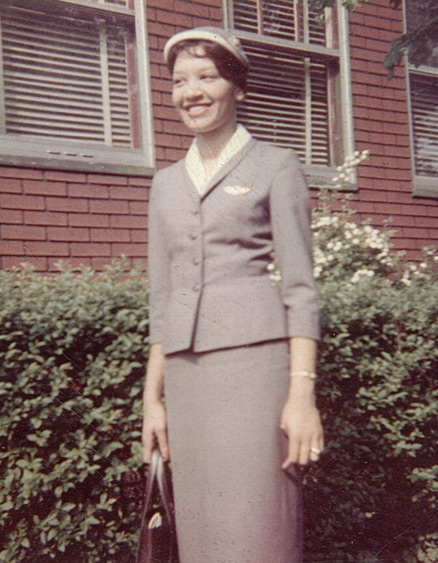
“Next to being a Hollywood movie star, nothing was more glamorous.” This breathless statement, quoted in Femininity in Flight, was uttered by a flight attendant in 1945.  At the time being a stewardess was quite glamorous.  Like motion pictures do today, airlines trafficked in “the business of female spectacle.”  They hired only women who they believed to represent ideal femininity. Chosen for their beauty and poise, and only from among the educated, and slender, they were as much of an icon as Miss America.  And they were almost all White.

Victoria Vantoch tells the story of the first African American flight attendants in a chapter of her new book, The Jet Sex.  Patricia Banks was one of the first Black women to sue an airline for racial discrimination.  She graduated from flight attendant training school at the top of her class and applied to several airlines.  But it was 1956 and the U.S. airlines had never hired a Black woman.  After 10 months of trying, an airline recruiter pulled her aside and admitted that it was because of her race.  Which, of course, it was; airlines disqualified any applicants that had broad noses, full lips, coarse hair, or a “hook nose” (to weed out Jews).

Banks sued. After four years of litigation, Capital Airlines was forced to hire her.  She postponed her marriage and took the job (airlines only hired single women as flight attendants). When she put on her uniform for the first time, she said:

After all I had gone through, I couldn’t believe I was finally wearing the uniform. I had made it. I was going to fly. It was such an accomplishment.

patriciabanks

Individual women weren’t the only ones pushing to integrate the flight attendants corps.   International surveys showed that citizens of other countries knew that America had a “race problem” and this was a problem for then-President John F. Kennedy and Vice President Lyndon Johnson.  They needed to do something flashy and they turned to flight attendants to do it.  If they could make Black women the face of such an iconic and high-profile occupation, they thought, it would help restore America’s reputation.  According to Vantoch, Johnson “made stewardess integration his personal cause.”

That was 1961; in 1964 Johnson signed the Civil Rights Act mandating equal treatment in the workplace.  The following year, in response to even more lawsuits, approximately 50 Black women were hired by airlines.  This would make them 0.33% of the workforce.

Patricia  Banks and her fellow first African American flight attendants, including Mary Tiller and Marlene White, would continue to face racism, now from co-workers, passengers, and supervisors.  Banks would quit after one year, citing exhaustion in the face of emotionally draining feminine work and a constant onslaught of racism.  She was a great flight attendant, though, and proud to show the world that a Black woman could shine in the occupation.

Here’s Patricia Banks, telling the story in her own words at Black History in Aviation. It’s worth a watch; she’s amazing:

Cross-posted at VitaminW and Pacific Standard.

Lisa Wade, PhD is an Associate Professor at Tulane University. She is the author of American Hookup, a book about college sexual culture; a textbook about gender; and a forthcoming introductory text: Terrible Magnificent Sociology. You can follow her on Twitter and Instagram.
Screenshot_2If you haven’t watched Robin Thicke’s disaster of a music video for Blurred Lines, you absolutely must.  But first, feast your eyes on this quote by Virginia Woolf:

Women have served all these centuries as looking glasses… reflecting the figure of man at twice its natural size.

It’s women’s work to prop up male egos the idea of male superiority.  To me, that’s exactly what’s going on in this video.  It’s actually quite funny when you look at it that way; it makes the men look so desperate.

Anyhow, I’m glad smart, feminist, fearless women and men are fighting back:

An exercise in gender bending helps expose the ridiculousness as well. Why does it seem silly when men do it, but not when women do?  Because it’s women’s job to be fans of men.

Also, because I can’t help but add a little more snark, how does someone with ZERO charisma end up a pop star?  There’s got to be a story here about money and connections.

Thanks to Marie N., Bronwyn L., and Natalie S. for sending in the videos!

Lisa Wade, PhD is an Associate Professor at Tulane University. She is the author of American Hookup, a book about college sexual culture; a textbook about gender; and a forthcoming introductory text: Terrible Magnificent Sociology. You can follow her on Twitter and Instagram.