Search results for embed

In this short video, Mitchell Moffit and Gregory Brown of AsapSCIENCE discuss the neurological processes behind porn addiction. High levels of porn consumption, they argue, can create a feedback loop that molds sexual desires and behaviors.

Looking at porn, then, doesn’t just reflect a person’s existing desires and preferences; it’s a mechanism for creating new ones or channeling them in particular directions. This is the problem critics such as Cindy Gallop see with the narrow, unrealistic (and often violently misogynistic) set of messages about sexuality that porn offers us.

Gwen Sharp is an associate professor of sociology at Nevada State College. You can follow her on Twitter at @gwensharpnv.

Re-posted to add to the discussion about sexual assault in the aftermath of the Steubenville rape trial, the Senate hearing on rape and harassment in the military, and the controversy at Occidental College.

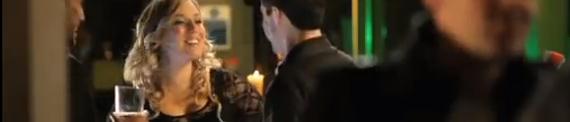
1On the heels of our recent post about an anti-rape ad that did the unusual — target men and tell then not to rape — comes this Scottish ad, sent along by Sociologist Michael Kimmel, that does a fantastic job of mocking the idea that some women are “asking for it”:

Lisa Wade, PhD is an Associate Professor at Tulane University. She is the author of American Hookup, a book about college sexual culture; a textbook about gender; and a forthcoming introductory text: Terrible Magnificent Sociology. You can follow her on Twitter and Instagram.

Re-posted to add to the discussion about sexual assault in the aftermath of the Steubenville rape trial, the Senate hearing on rape and harassment in the military, and the controversy at Occidental College.
1The other day I came upon a post by Margaret Lyons at Vulture pointing out the frequent use of rape jokes in sitcoms this season. A number of sitcoms, especially Two Broke Girls, Whitney, and Work It included scenes where rape served as a punchline. Lyons explains what particularly bothers her about this is that references to rape are being used simply as a “shorthand for outrageousness,” a way to cue the audience that they’re watching a show that is bold and daring, that will say anything!

The post includes a video of clips of a lot of these rape-joke scenes from this season, showing how frequently and casually they’re included. Clearly, these could be particularly upsetting for some readers:

I’ve been thinking about posting the video for a couple of days, but then Jeremiah J. sent in a link to a post that captures what I find problematic about how rape is used in TV and movies so much better than I ever could. Film critic and screenwriter Drew McWeeny posted a lengthy article at HitFix about reaching the breaking point in his ability to watch gratuitous rape scenes in movies. McWeeny explains,

It seems to me that somewhere along the way, it was decided that the easiest way to make an audience uncomfortable was to have someone rape a character onscreen.  I must see 30 films a year where somebody needs to have “something bad” happen, and the go-to impulse in almost every case is rape. It is guaranteed to cause a visceral reaction, even when the scenes are badly staged and lazy, which most of them are.

…the point has been more than made on film that rape is a terrible thing, and at this point, if you’re not contributing some new idea to the conversation, then you are literally just using it as a button, something you push to get a response, and that unnerves me.

I think McWeeny’s points are relevant to a discussion of sitcoms’ use of rape jokes as well, because in both cases rape is often being used as a “button,” a lazy, predictable way to get a reaction from an audience and mark the show or movie as one that’s audacious and pushes boundaries. You really must read McWeeny’s full original post, as he eloquently explains why this matters.

Gwen Sharp is an associate professor of sociology at Nevada State College. You can follow her on Twitter at @gwensharpnv.

Re-posted to add to the discussion about sexual assault in the aftermath of the Steubenville rape trial, the Senate hearing on rape and harassment in the military, and the controversy at Occidental College.

Nizam A. sent in a rather stunning two-minute, 15-second clip put together by Media Matters.  It is a montage of the use of rape as a metaphor by right wing pundits (trigger warning).  To be fair, I don’t know if a similar video could be made using left wing pundits, so it may be best in comments to stick to a conversation about the metaphor itself.

Why it this such a popular way of talking about the world?

How does it work?  Does the metaphor, given that we think of rape as a crime that men do to women, feminize and masculinize?   Or is it about a gendering of the very notion of violation and vulnerability?  So are these pundits trying to transfer listener’s beliefs about protecting women and girls to other categories (e.g., the rich and the people of New York)?

Does using it as a metaphor give more power to, or trivialize and make invisible, actual rape?

Is there not some irony in how frequently we use it to describe something horribly violating, given the high rates of rape in the U.S., the frequency of non-reporting, our dismal treatment of victims, and the wildly low incidence of trials and convictions?

See also our post on violent metaphors, including rape.

Lisa Wade, PhD is an Associate Professor at Tulane University. She is the author of American Hookup, a book about college sexual culture; a textbook about gender; and a forthcoming introductory text: Terrible Magnificent Sociology. You can follow her on Twitter and Instagram.

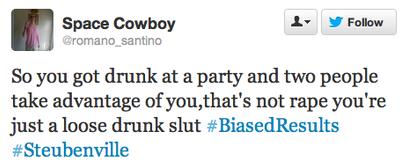
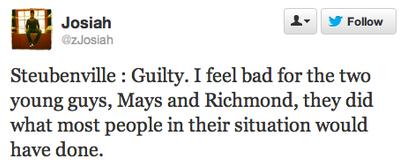
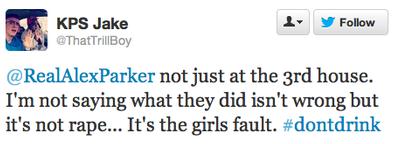
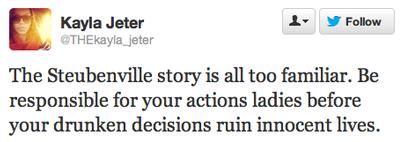
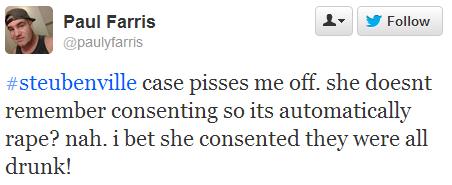
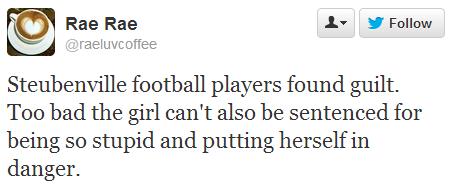
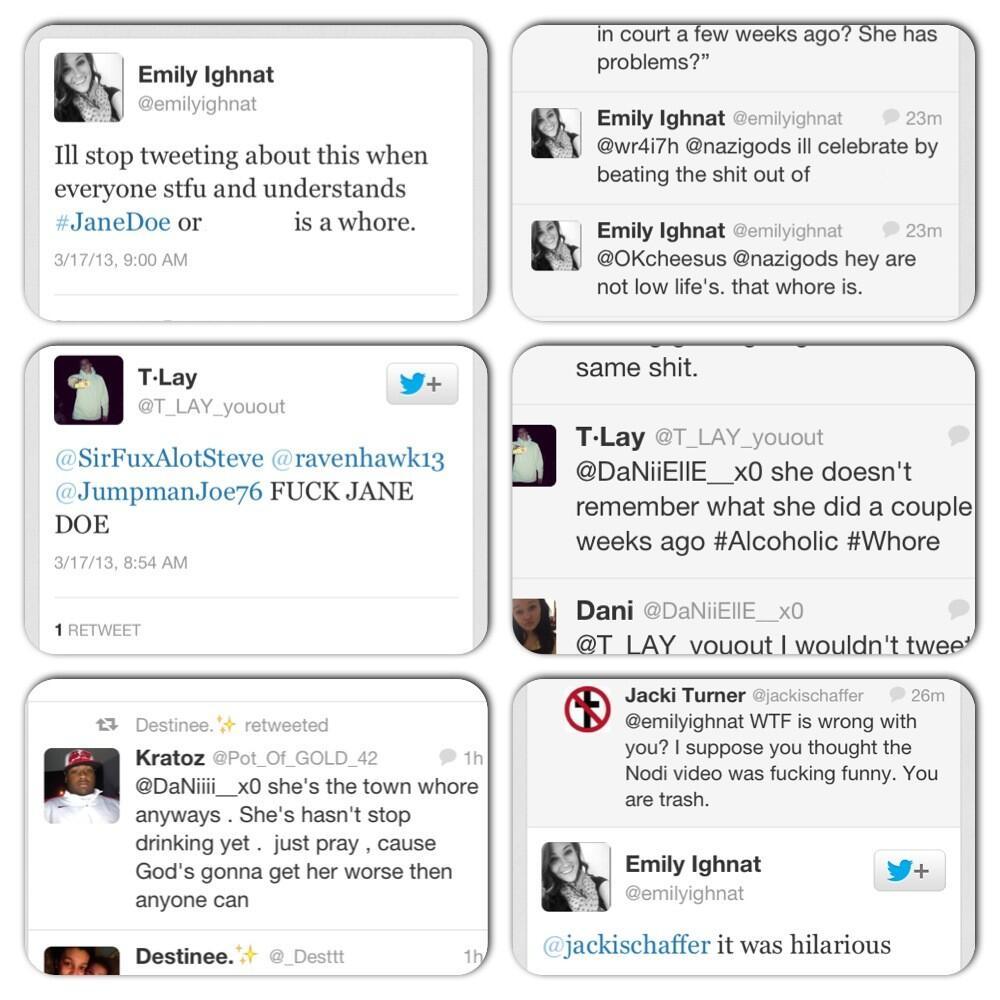
Yesterday two juvenile men were convicted of rape, one was convicted of distributing a nude photo of a minor (NPR). The response by a segment of society reflects rape culture: “an environment in which rape is prevalent and in which sexual violence against women is normalized and excused in the media and popular culture” (source).  Below are a series of concrete examples. Trigger warning for rape apologists and victim blaming.

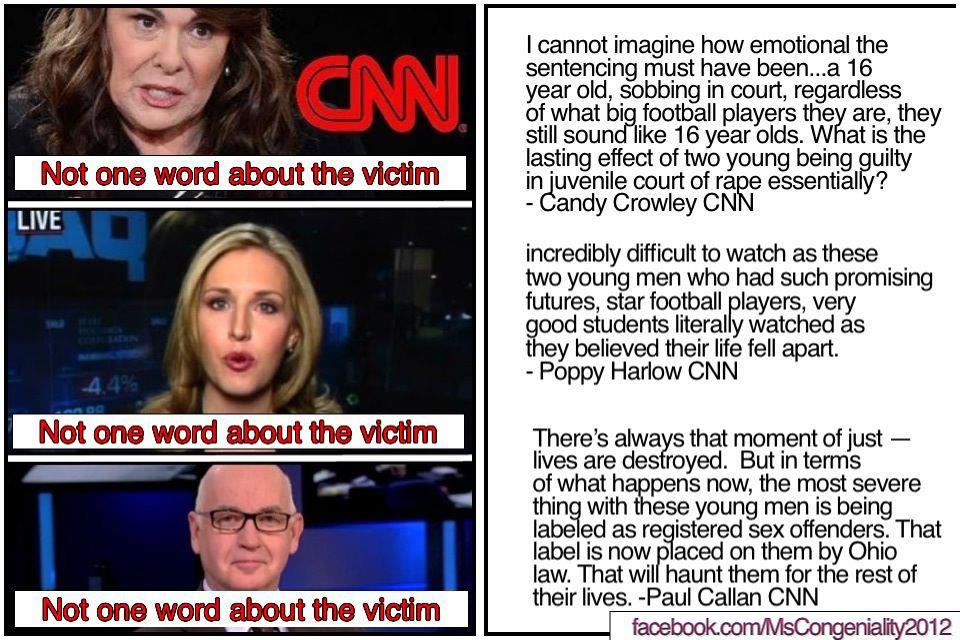
CNN coverage of the verdict spends six minutes on how sad the conviction is for the rapists:

It was incredibly emotional… to watch what happened as these two young men that had such promising futures, star football players, very good students, literally watched as, as they believed their life fell apart.

MsCongeniality:

11

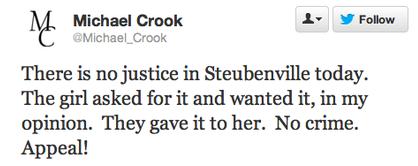
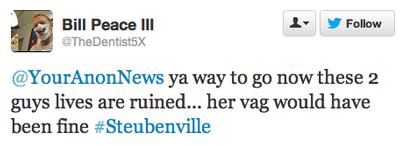
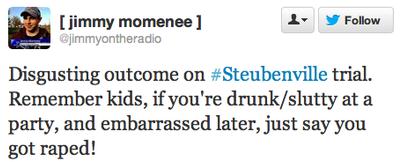
A selection of tweets collected by Public Shaming:

1 2 3 4 5 6 7

A selection of tweets collected by Mommyish:

20 21 22 23

A selection of tweets collected by Persephone Magazine:

8 9

Tweets collected by The Inquisitr:10

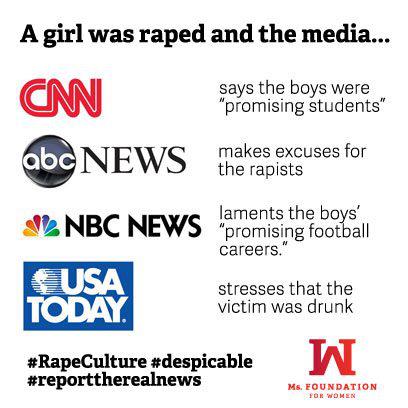
Ms. Foundation for Women:

10

Great coverage from around the web:

Finally, a satire from The Onion, from two years agoCollege Basketball Star Heroically Overcomes Tragic Rape He Committed

Lisa Wade, PhD is an Associate Professor at Tulane University. She is the author of American Hookup, a book about college sexual culture; a textbook about gender; and a forthcoming introductory text: Terrible Magnificent Sociology. You can follow her on Twitter and Instagram.

Cross-posted at Racialicious.1The Harlem Shake is a syncopated dance form that first appeared on the New York hip-hop scene in the early 1980s. In 2012 music producer Baueer created an electronic dance tune, unfortunately calling it The Harlem Shake. Baueer’s song inspired an Internet meme in which people rhythmlessly shake their upper bodies and grind their hips in a tasteless perversion of the original dance.

This fake Harlem Shake meme has become so ubiquitous that it has been “performed” by the English National Ballet, and gone further globally with a video from the Norwegian army, and in Tunisia and Egypt, where the song and imitation dance has become a protest anthem.

The irony of an African-American cultural relic being white-washed to the point where other people of color perform its bastardized version is not lost, and this takes on a whole new level as teams with majority African-American members such as the Miami Heat and Denver Nuggets add to the fake Shake canon.

A major problematic of this meme is that it takes an already marginalized group in America, one whose history and culture has often been appropriated and co-opted in fetishistic ways by the white majority, and makes a mockery of not just them, but an entire dance tradition.  This is not lost on residents of Harlem, many of whom recognize cultural appropriation and malrepresentation when they see it:

In spite of a number of calls online from African-American writers, artists, scholars and supporters like myself to bring attention to the real Harlem Shake, every day there is instead a new group adding to the misappropriated dance. When you Google “The Harlem Shake” you must scroll through pages before you reach any posts about the actual hip-hop tradition.

This literal erasure of black culture and its replacement with an absurdist movement and meme needs to be considered in light of African-American oppression and institutionalized racism in the United States. Supplanting the sinuous artistry of the Harlem Shake with frenetic styleless arm flailing and hip thrusting is yet another brick in a grand wall of symbolic and structural violence that further relegates an entire culture to the margins, both on and offline.

As the Harlem residents said in response to the meme: “Stop that shit.”

P.S. Here’s how to actually do the Harlem Shake. 

Sezin Koehler is a half-American half-Sri Lankan informal ethnographer and novelist living in Lighthouse Point, Florida.

Chilling video taken at a high school party in Steubenville, Ohio in which attendees laugh and joke about an unconscious 16-year-old allegedly raped and sodomized by members of the football team, propelled the case into the national spotlight earlier this winter.

The deeply disturbing video focuses on Steubenville High School alum Michael Nodianos as he holds court with a grim comedy show, cracking up to quips such as, “They raped her quicker than Mike Tyson!” and “They raped her more than the Duke lacrosse team!” Those with the stomach to endure the entire 12-minute video hear the victim repeatedly referred to as “dead,” offering ugly details including, “They peed on her! That’s how you know she’s dead because someone pissed on her.” The death motif is so amusing to those involved that it leads to a litany of references to her being “deader than” everyone from Caylee Anthony to Trayvon Martin.

Trigger warning:

The video combined with other digital remains of the attack mined from Twitter and Instagram stirred public outrage at the accused perpetrators, at the bystanders who failed to intervene, and at adults — coaches, police, prosecutor, and parents — perceived as having been complicit in covering up the assault, preferring to sweep the violence under the rug to protect the football team and the young men on it. Protests sprouted around the courthouse and are expected to resume on Wednesday as the trial begins.

This video and other digital souvenirs of violence, such as the photos taken and circulated of Savannah Deitrich while she was sexually assaulted, may or may not have significant legal consequences. Yet their cultural legacy — the opportunity they have to undermine our most resilient rape myths — has the potential to be even weightier.

Read the rest of this article at WBUR’s Cognoscenti.

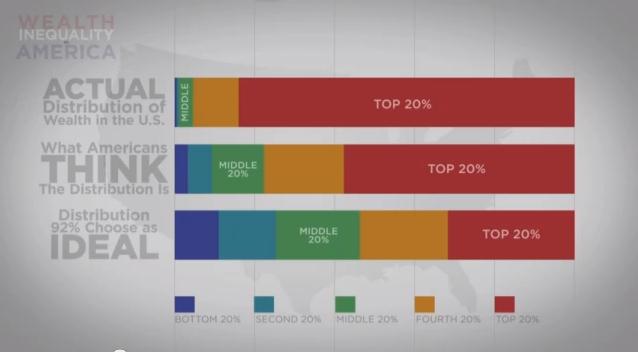
Emma K. submitted a sobering illustration of wealth inequality in the U.S.  It compares American ideal distributions of wealth, with what they think it is and what it really is. Suffice to say, Americans wish for more equal distributions, but the reality far outpaces their worst nightmare.

Here’s a snapshot:

1

A worthwhile 6 minutes:

Lisa Wade, PhD is an Associate Professor at Tulane University. She is the author of American Hookup, a book about college sexual culture; a textbook about gender; and a forthcoming introductory text: Terrible Magnificent Sociology. You can follow her on Twitter and Instagram.