Search results for embed

To many Americans, globalization may mean Americanization but, in China, globalization is Koreanization. This is the impact of Hallyu (the Korean word for “Korean wave”), which began in 1997. Hallyu began with Korean television dramas and today extends throughout Chinese life: k-drama, k-pop, movies, fashion, food, and beauty.  It is argued to be the only example of a cultural power “that threatens the dominance of American culture.”

Its influence is impressive. For example, when a star on a Korean soap opera ordered chicken and beer for dinner — Korea’s chi-mek (or chi-meak) – and claimed it as her favorite food, Chinese audiences went crazy for the combination. Korean beer exports rose by over 200%:

Even the standard of beauty in China has been altered due to Hallyu. During this year’s National Day holiday (10/1-10/7), about 166,000 Chinese visited Korea. They flocked to top shopping districts to purchase a wide range of Korean products like cosmetics, each spending an average of $2,500.  Some of these Chinese tourists visited the Gangnam district (Apgujeng-dong), the capital of plastic surgery in Korea. They want to look like k-drama stars. They want to have Korean actresses’ nose or eyes.

The obsession with Korea has caused Chinese leaders a great deal of angst. It was a major issue at the country’s National People’s Congress where, according to the Washington Post, one committee spent a whole morning pondering why China’s soap operas weren’t as good as those made by Korea. “It is more than just a Korean soap opera. It hurts our culture dignity,” one member of the committee said.

Their concern isn’t trivial; it’s about soft power. This is the kind of power states can exert simply by being popular and well-liked. This enables a country to inflluence transnational politics without force or coercion.

Indeed, the Korean government nurtured Hallyu. The President pushed to develop and export films, pop music, and video games. As The Economist reports:

Tax incentives and government funding for start-ups pepped up the video-game industry. It now accounts for 12 times the national revenue of Korean pop (K-pop). But music too has benefited from state help. In 2005 the government launched a $1 billion investment fund to support the pop industry. Record labels recruit teens who undergo years of grueling [sic] training before their public unveiling.

It’s working. According to the Korea Times, China has made a trade agreement with Korea allowing it an unprecedented degree of access to the Chinese people and its companies, an impressive win for soft power.

Sangyoub Park, PhD is a professor of sociology at Washburn University, where he teaches Social Demography, Generations in the U.S. and Sociology of East Asia. His research interests include social capital, demographic trends, and post-Generation Y.  Lisa Wade, PhD is a professor of sociology at Occidental College and the co-author of Gender: Ideas, Interactions, Institutions. You can follow her on Twitter and Facebook.

Cross-posted at Pacific Standard.
SocImages News:

As we entered December, I collected a set of SocImages posts relevant to the deaths of black Americans at the hands of police. It includes sections on race and police work, the link between black men and criminals in our minds, proof that we have less empathy for black people, and evidence of the way that racism is deeply institutionalized throughout American society. I hope it’s a useful resource.

Meanwhile, at SocofGender…

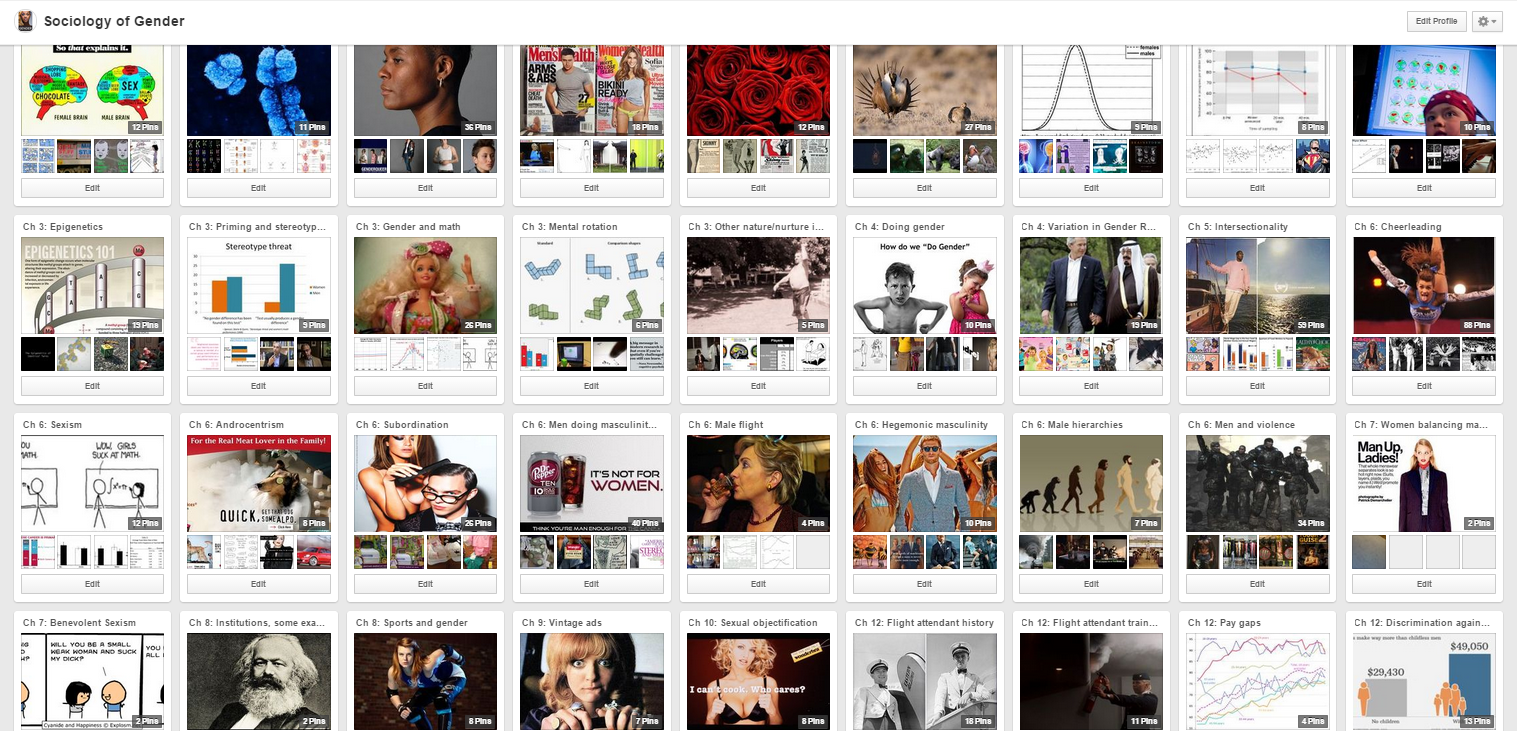
I have made a lot of progress toward building a Soc of Gender Pinterest page to accompany my textbook, organized by chapter and concept. Please feel free to visit and use it even if you don’t adopt the book. I’ve built 48 boards so far. Here are some of my favorites:

Look at how numerous and pretty!3

Best of December!

Christmas favorites:

Readers’ picks:

Women in apocalyptic fiction shaving was also the month’s winner on Tumblr, with over 78,000 likes and shares!

Editor’s pick:

Elsewhere on the Net:

SocImages’ Pointlessly Gendered Products was featured at i100: Nine Products that Have Been Pointlessly Gendered. They apparently especially liked one of our newest examples, bagpipes, and also went for one of my favorites, pickles.

And I had the pleasure of being quoted in a couple articles:

Social Media ‘n’ Stuff:

Finally, this is your monthly reminder that SocImages is on TwitterFacebookTumblrGoogle+, and Pinterest.  I’m on Facebook and most of the team is on Twitter: @lisawade@gwensharpnv@familyunequal, and @jaylivingston.

Finally…

In honor of the special place the anglerfish has in my heart — being so ugly and strange — here’s some rare footage of the fish in action. Want to learn more? Here’s the most humorous way.

Lisa Wade, PhD is an Associate Professor at Tulane University. She is the author of American Hookup, a book about college sexual culture; a textbook about gender; and a forthcoming introductory text: Terrible Magnificent Sociology. You can follow her on Twitter and Instagram.

2Perusing my Facebook feed, I came across a photo proudly posted by a former student — now a hair and makeup artist — of two brides at a wedding.  It was beautiful and the young, conventionally attractive brides were leaning in for a kiss.  Or engagement celebrations, like this:

Embed from Getty Images

When I saw the image, my mind immediately pulled up similar images it has in storage — frequently described as girl-on-girl action — and I was struck by the similarity of the images and their powerfully different messages.

Until recently, “hot girl-on-girl action” was the primary visual that involved women kissing.  In mainstream culture, genuine and open female same-sex attraction was almost entirely invisible, hidden and denied.  Today, the proliferation of same-sex marriages offer a new visual landscape for framing what it means for two women to kiss each other.

The meaning, moreover, could not be more different.  Though often women with same-sex desire use this assumption to explore real attraction, girl-on-girl action shots are ostensibly between two heterosexually-oriented women who are kissing for male attention.  These brides are presumably doing the opposite of that.  They are displaying love and commitment to one another. The kiss is for them and no one else and they are, implicitly if not actually, openly committing to making themselves sexually unavailable to anyone else, male or female.  This is far from the notion that they are just kissing a girl to get guys to think they’re sexy.

I wonder how these images — ones that depict sexual intimacy between women who love one another and do not seek male attention — will ultimately change how we think about “girl-on-girl” action in the U.S.  As they proliferate, will they push back against the male-centrism and heterocentrism of our society?  I think they very well might.

Lisa Wade, PhD is an Associate Professor at Tulane University. She is the author of American Hookup, a book about college sexual culture; a textbook about gender; and a forthcoming introductory text: Terrible Magnificent Sociology. You can follow her on Twitter and Instagram.

2Sociologists often say that gender is partly a performance. How we talk and laugh and what we say; how we stand, sit, and move; how we dress, wear our hair, and adorn our faces and bodies with make up and accessories — all these things are gendered. Insofar as we follow the rule that we perform in ways that match our genitalia, male-bodied and female-bodied people will seem more different, more “opposite,” than they really are.

Today I stumbled across another really striking example of gender performance. This one involves model Erika Linder doing both masculinity and femininity in a commercial for JC Jeans Company. What is striking to me is how she does gender with her face. It reveals that the “sexy model face” isn’t built into our DNA, bone structure, or psychology, but projected. Here are two stills, both Erika Linder; the whole commercial is embedded below.

11 12

H/t Ms. Magazine.

Lisa Wade, PhD is an Associate Professor at Tulane University. She is the author of American Hookup, a book about college sexual culture; a textbook about gender; and a forthcoming introductory text: Terrible Magnificent Sociology. You can follow her on Twitter and Instagram.

Thansk to Meia G. for sending in these “tool set” ornaments for sale at Home Depot. Notice that they don’t just group these tools into ones associated with women (gardening) and men (building), they actually label them as women’s and men’s on the price sticker. This is a great example of how gender isn’t just something we encounter in objects because we know enough to read gender into them, it’s actually prescribed to us.

20141010_090920

Christmas gift advertising tends to be highly gendered in part because buying gifts can be difficult and time-consuming. Gender helps us narrow down options or find something that seems suitable for someone we don’t know very well. Marketers exploit this imperative and its uncertainty for all its worth.

And perhaps all this was just an excuse to re-post Sarah Haskins on holiday jewelry advertising. You’re welcome.

I added the tools sets to our constantly expanding collection of pointlessly gendered products. It’s our most popular Pinterest board and we can see why! Recent additions include gendered pickles“Junior Park Ranger” and “Park Princess” vests for sale at a Yellowstone gift shop; scissors, q-tips, and dryer sheets for men only; and globes and glue just for girls.

Lisa Wade, PhD is an Associate Professor at Tulane University. She is the author of American Hookup, a book about college sexual culture; a textbook about gender; and a forthcoming introductory text: Terrible Magnificent Sociology. You can follow her on Twitter and Instagram.

Flashback Friday.

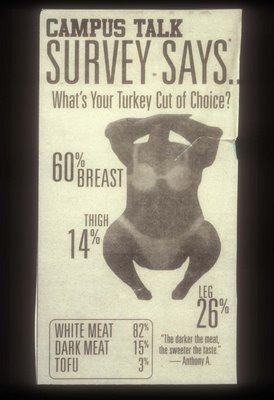
In her now-classic books The Sexual Politics of Meat and The Pornography of Meat, Carol Adams analyzes similarities in the presentation of meat products (or the animals they come from) and women’s bodies.

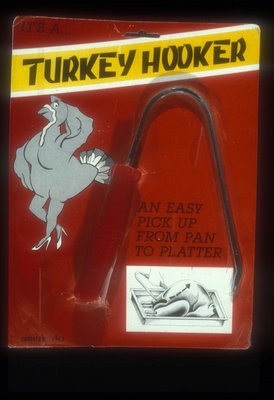
She particularly draws attention to sexualized fragmentation — the presentation of body parts of animals in ways similar to sexualized poses of women — and what she terms “anthropornography,” or connecting the eating of animals to the sex industry. For an example of anthropornography, Adams presents this “turkey hooker” cooking utensil:

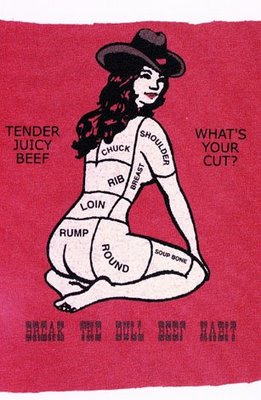
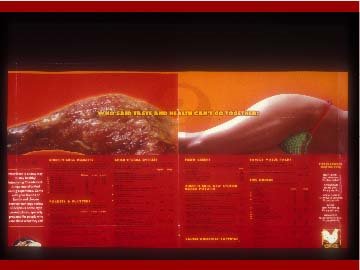
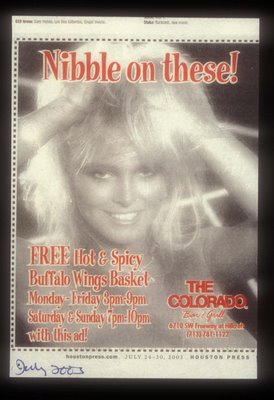
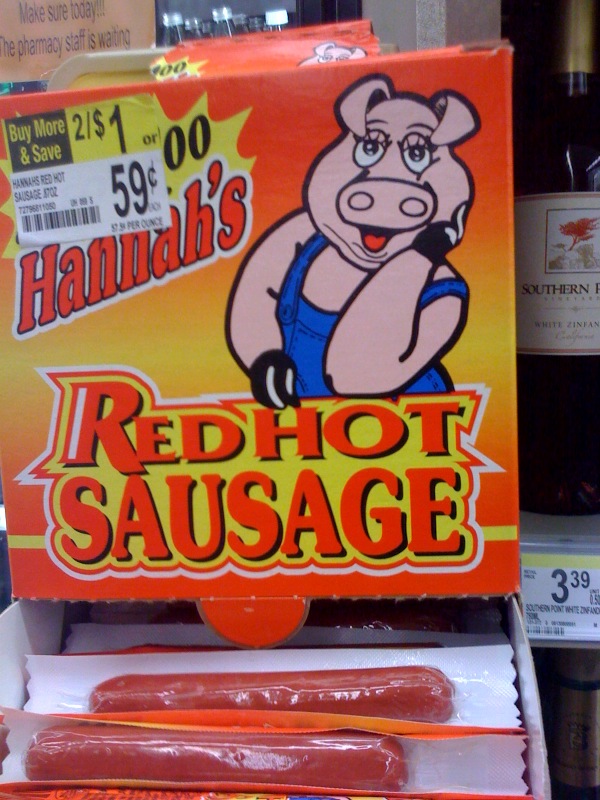
Adams also discusses the conflation of meat/animals and women–while women are often treated as “pieces of meat,” meat products are often posed in sexualized ways or in clothing associated with women. The next eleven images come from Adams’s website:

For a more in-depth, theoretical discussion of the connections between patriarchy, gender inequality, and literal consumption of meat and symbolic consumption of women, we highly encourage you to check out Adams’s website.

This type of imagery has by no means disappeared, so we’ve amassed quite a collection of our own here at Sociological Images.

Blanca pointed us to Skinny Cow ice cream, which uses this sexualized image of a cow (who also has a measuring tape around her waist to emphasize that she’s skinny):

For reasons I cannot comprehend, there are Skinny Cow scrapbooking events.

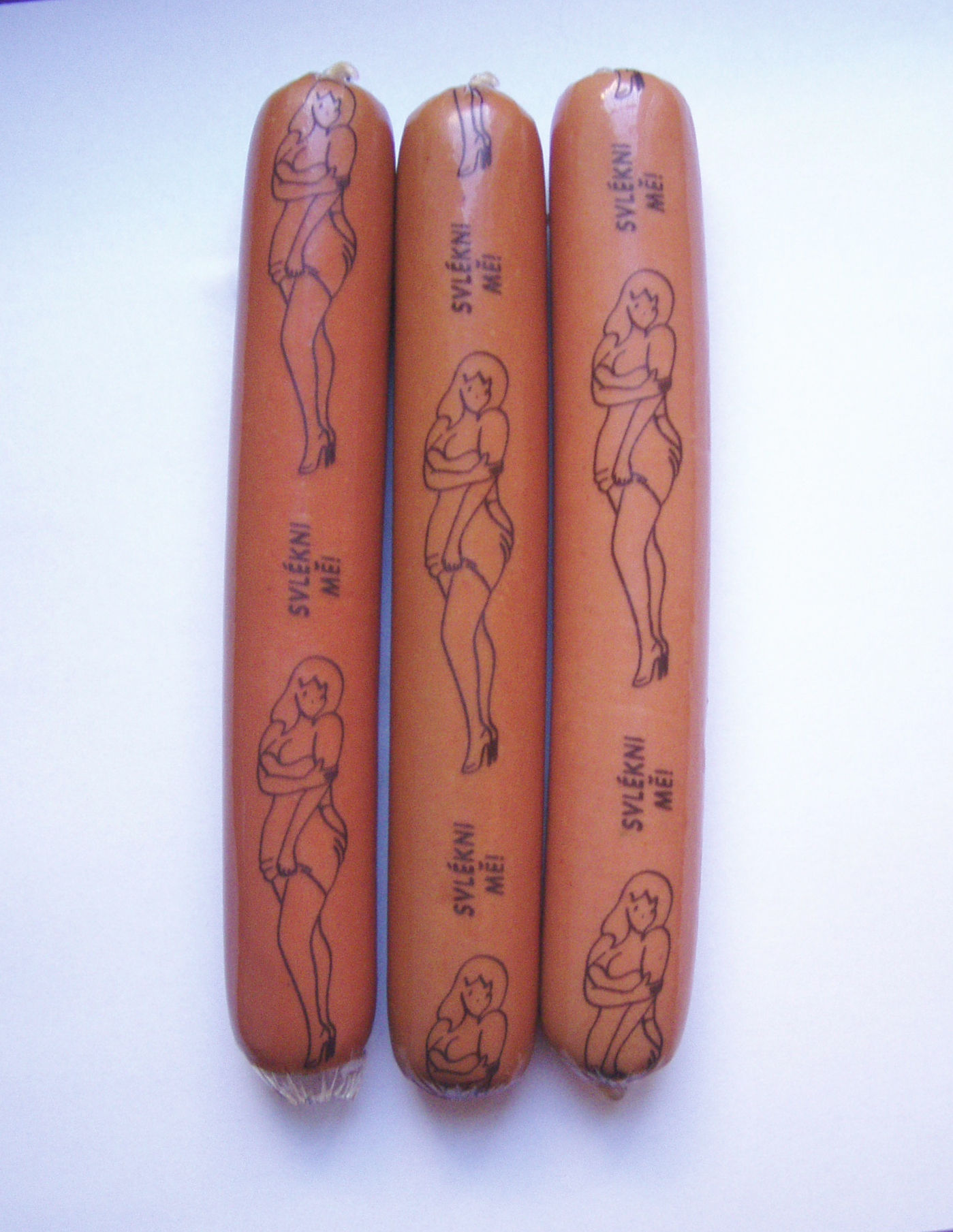
Denia sent in this image of “Frankfurters” with sexy ladies on them. The text says “Undress me!” in Czech.

Finally, Teresa C. of Moment of Choice brought our attention to Lavazza coffee company’s 2009 calendar, shot by Annie Liebowitz (originally found in the Telegraph).

Spanish-language ads for Doritos (here, via Copyranter):

capture

panel_bikini

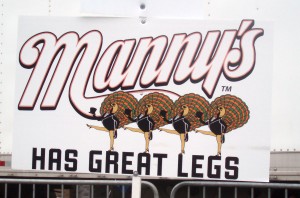
Amanda C. sent in this sign seen at Taste of Chicago:

mannys

Dmitiriy T.M. sent us this perplexing Hardee’s French Dip “commercial.”  It’s basically three minutes of models pretending like dressing up as French maids for Hardees and pouting at the camera while holding a sandwich is a good gig:

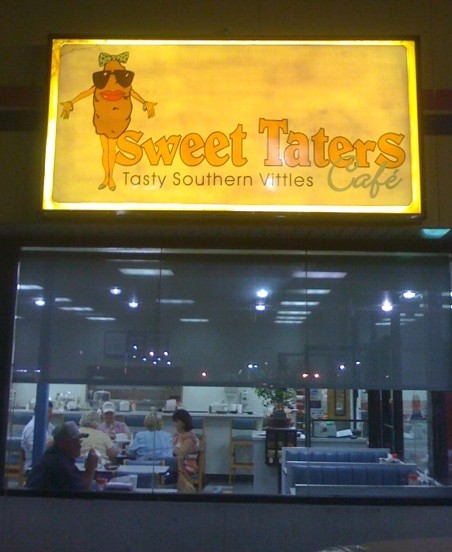
Dmitriy also sent us this photo of Sweet Taters in New Orleans:

photo

Jacqueline R. sent in this commercial for Birds Eye salmon fish sticks:

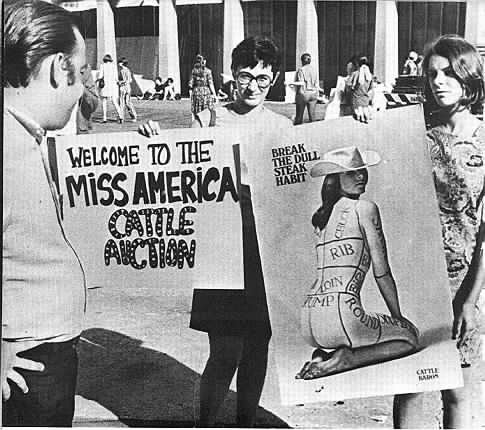
Crystal J. pointed out that a Vegas restaurant is using these images from the 1968 No More Miss America protest in advertisements currently running in the UNLV campus newspaper, the Rebel Yell. Here’s a photo from the protest:

-1

Edward S. drew our attention to this doozy:

Dmitriy T.M. sent us this example from Louisiana:

Haven’t had enough?  See this post, this post, and this post, too.

Originally posted in 2008.

Gwen Sharp is an associate professor of sociology at Nevada State College. You can follow her on Twitter at @gwensharpnv.

It is only 50 years ago that the state of Florida was hounding lesbians and gays from their jobs in schools and universities. Their persecution is distressing on many levels, the most far-reaching of which is the power that the state can hold when it is allowed to harass its citizens for no other reason than their choice of lovers.

In this case, this power could be exerted because an unrepresentative group, The Pork Chop Gang, was able to form a state-within-a-state, known as the Johns Committee in 1956 (after Charley Johns, a state senator). They collaborated with police forces and sympathetic university administrators. University of Florida President J. Wayne Reitz’s dubious career, or example, included “purges of gay and leftist employees, students,” and at least 85 African-American students.

Lisa Mills and Robert Cassanello have produced a documentary on the Johns Committee, a trailer for which can be seen here:

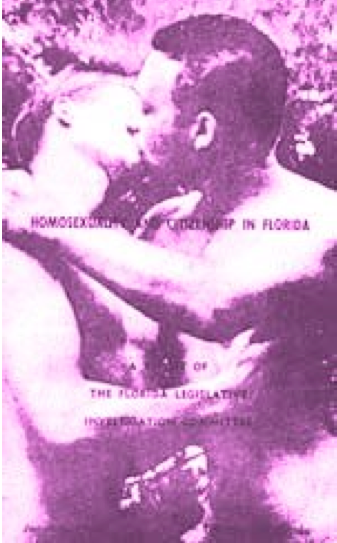
In 1964, the Committee published a hateful screed that became known as The Purple Pamphlet (full text). The section “What to do about homosexuality?” reveals that 64 Florida teachers had had their certificates revoked between 1959 and 1964, and that legislation had been strengthened to ensure more such revocations. Convicted teachers could meanwhile look forward to compulsory psychiatric treatment of the kind that killed Alan Turing in the U.K.

3

The lessons of this period remain potent in 2014, at a time when Texas Republicans are advocating “reparative therapy” for gay men. Such therapies could be a Trojan Horse for state power over gay peoples’ lives. They give hope to the politicians of today who would like to emulate the notorious feats of the Johns Committee which haunt our recent past.

Jonathan Harrison, PhD, is an adjunct Professor in Sociology at Florida Gulf Coast University and Hodges University whose PhD was in the field of racism and antisemitism. He writes for the History News Network, where this post originally appeared.

Stokely Carmichael, later Kwame Ture, was an activist and Civil Rights leader, rising to prominence in the Student Nonviolent Coordinating Committee, the Black Panther Party, and the All-African Peoples Revolutionary Party.

He popularized the phrase “black power,” which he defined simply as “black people coming together to form a political force and either electing representatives or forcing their representatives to speak their needs.” 

Ture believed in the value of nonviolence as a tactic, but did not identify as a pacifist. Violence was a tactic he believed in, too, when it was necessary. And it has, in fact, been a successful tool in the activist toolkit. As Ta-Nehisi Coates writes at The Atlantic:

“Property damage and looting” — perhaps more than nonviolence — has also been a significant tool in black “social progress.” … [It’s] a fairly accurate description of the emancipation of black people in 1865, who only five years earlier constituted some $4 billion in property. The Civil Rights Bill of 1964 is inseparable from the threat of riots. The housing bill of 1968 — the most proactive civil-rights legislation on the books — is a direct response to the riots that swept American cities after King was killed. Violence, lingering on the outside, often backed nonviolence during the civil-rights movement.

What cannot be said is that America does not really believe in nonviolence… so much as it believes in order.

Black people may have to disrupt that order and return violence with violence, yet again. As Stokely Carmichael explains in the video below:

Existentialist philosophers talk about the executioner-victim relationship… The victims begin to fight and agitate for their liberation. They use all types of means to get their liberation… fighting for a position of equality.

After [the victim] tries a number of means and they do not work, he then begins to imitate the means by which his executioner has kept him down. That is usually through force and violence… breaking the one taboo that they’ve never been able to break: hitting back against the executioners.

So that you ought not to be upset if we are violent. The Unites States taught us very well how to be violent.

Watch him here: