Search results for The

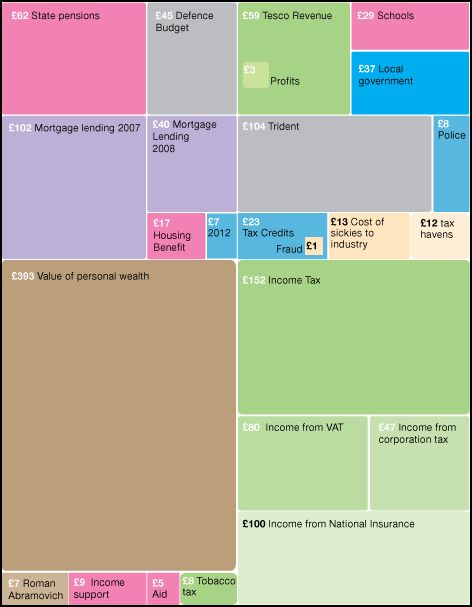
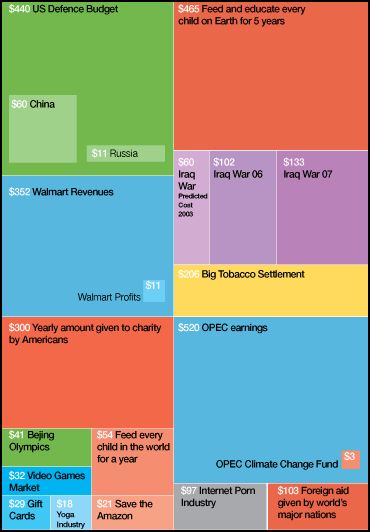
Katrin sent along links to visual portrayals of how much money goes, or could go, to various causes.  While sometimes it’s hard to comprehend what a billion, or 300 billion, dollars amounts to, these images give us perspective on just where our priorities lie.  The segments below are clipped from the visuals for the U.K. and the U.S. at Information is Beautiful.

The British example nicely illustrates how little social services like education, police, and welfare cost in the big scheme of things.

It also reveals how easy it would be to wave all of the African countries’ debt to Western countries. Just £128 spread out over the West.  Shoot, that’s the money for just a couple of corporate bailouts.

The U.S. example reveals how costly (just) the Iraq war has been.  All of our spending pales in comparison to that expenditure., with the exception of what we have spent bailing out the U.S. economy.

It also reveals that the U.S.’s regular defense budget is almot enough to feed and educate every child on earth for five years, and/or about the same as the revenues of Walmart and Nintendo combined.

If we diverted the money spent on porn, we could save the Amazon… almost five times over.  For that matter, if we gave our yoga money to the Amazon, that would just about do it.

Bill Gates could have paid for the Beijing Olympics and had money left over.

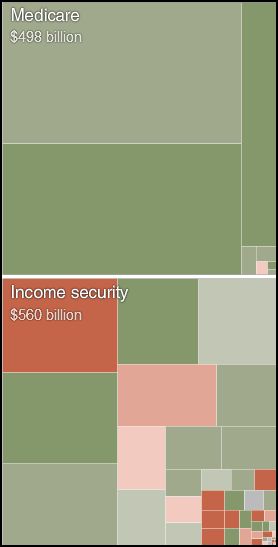
Dmitriy T.M. sent in an interactive breakdown of the US Budget for 2011.  In the figures below, the sizes of the squares represent the proportion of the budget, but the colors refer to changes from 2010 (dark and light pink = less funding, dark and light green = more).  These figures will give you an idea, but the graphic is interactive and there’s lots more to learn at the site.

See also our posts on how many starving children could be fed by celebrity’s engagement rings and where U.S. tax dollars go.

Lisa Wade, PhD is an Associate Professor at Tulane University. She is the author of American Hookup, a book about college sexual culture; a textbook about gender; and a forthcoming introductory text: Terrible Magnificent Sociology. You can follow her on Twitter and Instagram.
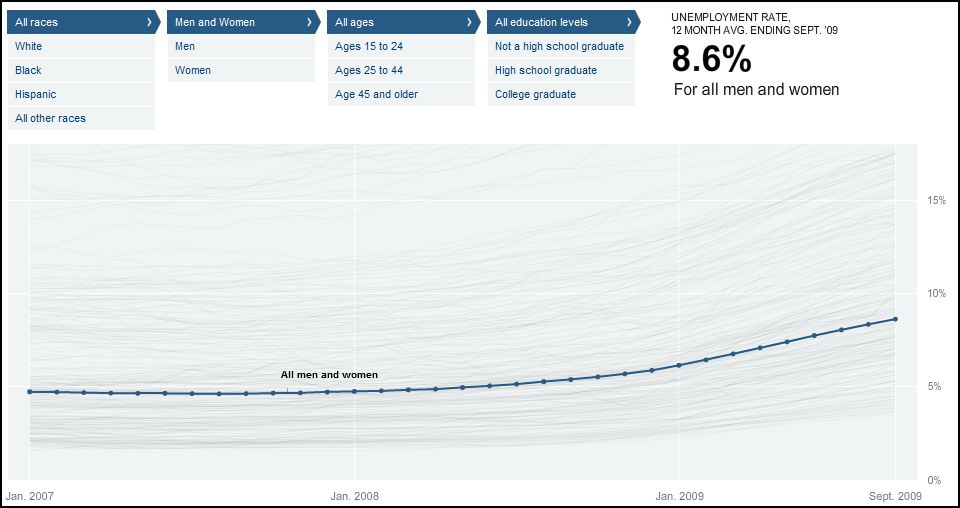
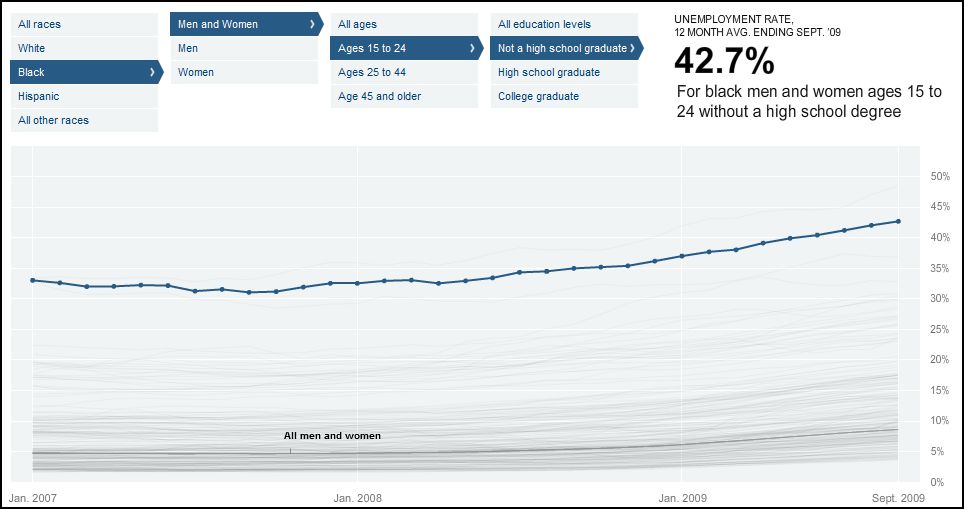
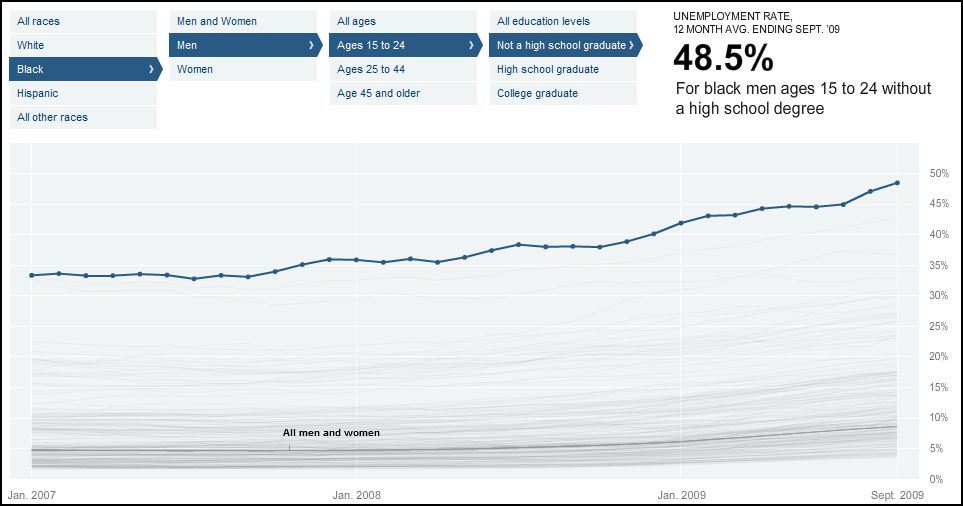
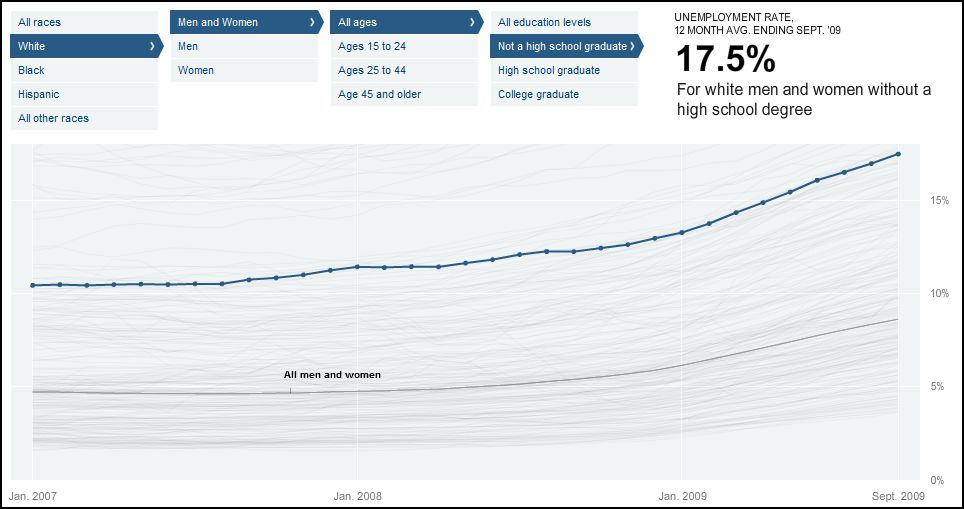
As a white woman between 25 and 44 with a college degree, I am the least likely category of person to be unemployed according to an interactive graphic detailing the joblessness rate for people according to their race, education level, age, and sex (since Jan. ’07).  It is a rather devastating look at social inequality.  I recommend visiting the site to see for yourself, but below are some screen shots with some comparisons.

For comparison, the overall joblessness rate which, as of Sept., was at 8.6 percent:

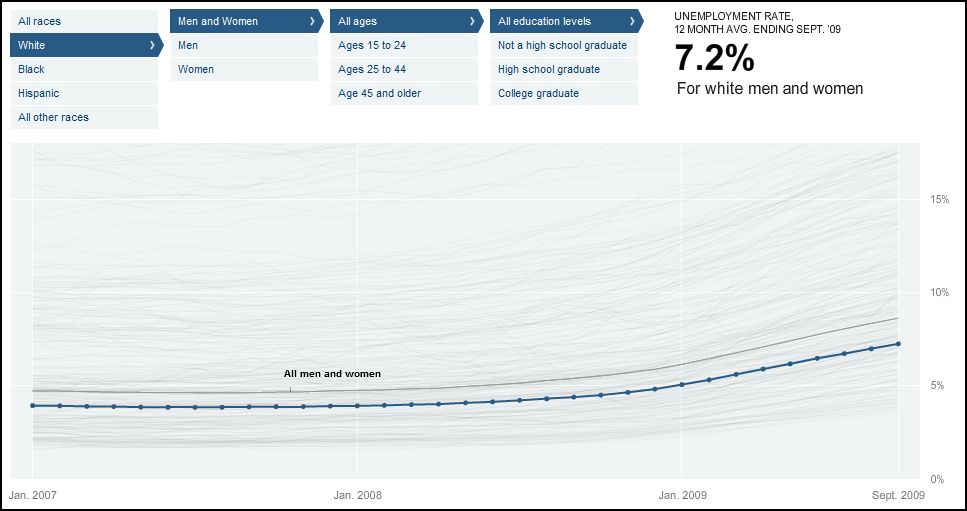
The joblessness rate for white people (notice it is lower by 1.4 percent):

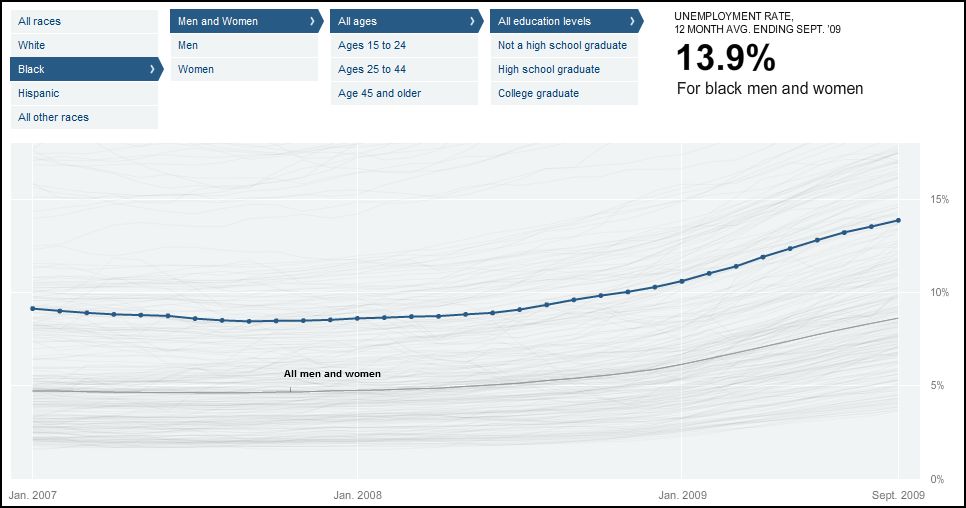
The joblessness rate for black people is almost twice that of whites:

Let’s add education level.

The joblessness for whites who have not yet graduated from high school is 17.5 percent:

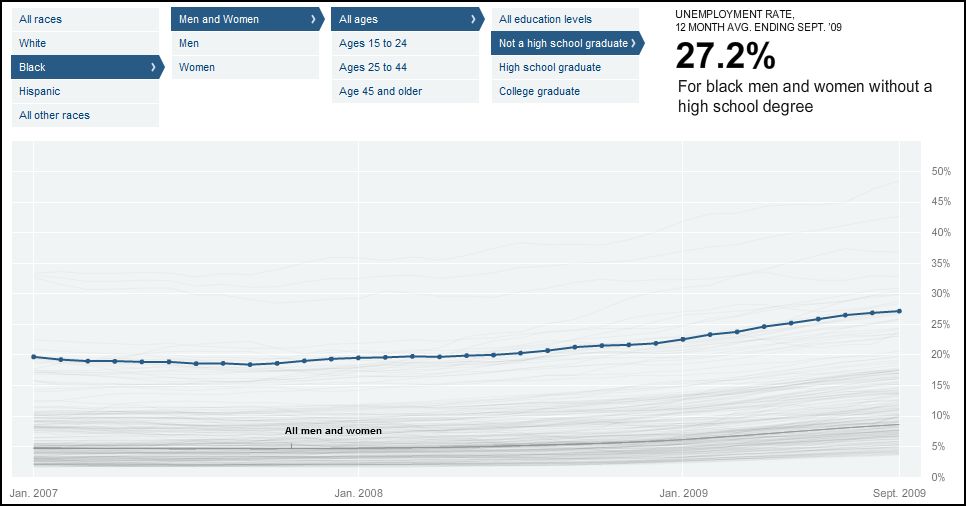
The joblessness for comparative blacks is 10 percentage points higher.  Notice that the scale on the right hand side has changed from 0-20 percent (above) to 0-50 percent:

If we look at young blacks (15-24 years old) who haven’t been able to complete a high school degree, the joblessness rate is 42.7 percent:

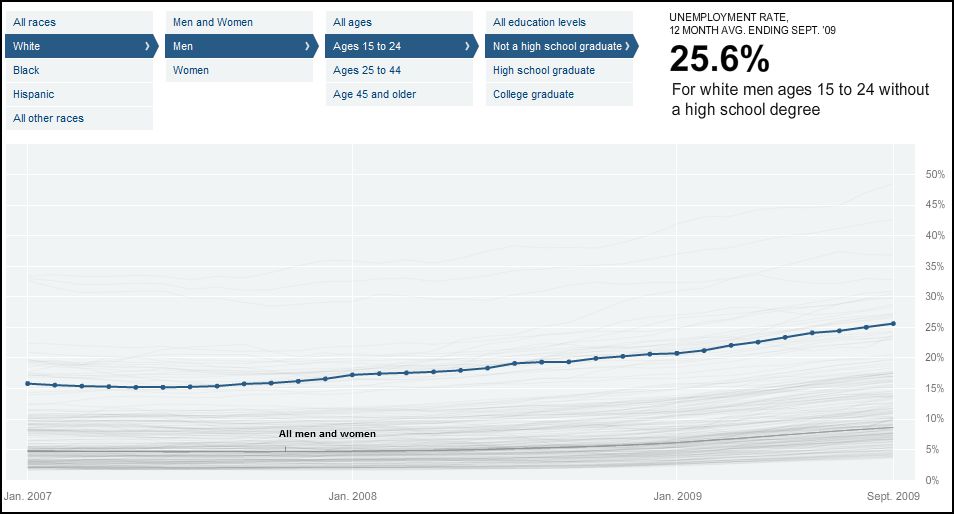
If we restrict the numbers to young black men without a diploma, we see a whopping joblessness rate of 48.5 percent.

For comparison, here is the same kid, but white (the joblessness rate is cut in half, but is still huge, even by recession standards):

Ever wonder why young men turn to the underground economy?  Well, this is why.  Somewhere between 25 and 50 percent of them can’t get a job in the “above ground” economy.  What’s a kid to do?  Add in the rational choice of choosing work that pays more than minimum wage, and you’ve got a whole group of young people who participate in illegal activities.

Then, of course, we police black neighborhoods more aggressively than white neighborhoods, convict black people more frequently than white people, and send them to prison more often and with longer sentences (see also this post).

And, too add insult to injury, after all is said and done, a black person without a criminal record is less likely to get a job interview than a white person with one.  A black person with a criminal record: his chance of getting a call back after dropping off a resume (even at a place like McDonalds) is something like five percent.  No I’m not joking.

<sarcasm>Oh, but if they just had a good attitude and learned to talk right, they too could be successful in this life.</sarcasm>

It’s almost too much to bear.

Via Matthew Yglesias.

Lisa Wade, PhD is an Associate Professor at Tulane University. She is the author of American Hookup, a book about college sexual culture; a textbook about gender; and a forthcoming introductory text: Terrible Magnificent Sociology. You can follow her on Twitter and Instagram.
Laura A., Brenly R., and Maurine C. all let us know about a shirt for sale at Urban Outfitters. The shirt came in two color combos: White/Charcoal and Obama/Black. Here’s an image of the Obama/Black option, via Jezebel:

There are a couple of things going on here. First, there’s the reference to Obama as a marketing ploy, which we’ve seen before, of course. But it also shows how ridiculous our racial color coding is; we continue to use colonial-era categorizations that there is a clear dividing line between groups based on color. Black and white are usually depicted as opposite colors, after all (and, of course, there’s the historic association of white with purity and black with evil). Most people don’t literally think of Black people as black or believe White people are white; people are, as far as I can tell, pretty much some shade along the off-white/tan/brown spectrum. But we continue to socially construct racial categories as though there is some meaningful, stark difference based on skin color.

So given that, if Obama’s half Black and half White, he’s gray, right? I mean, I’ve seen him on TV a lot and I’ve never noticed that, but maybe it’s the makeup.

I’m sure you will be sad to know that the Urban Outfitters website says the shirt is no longer available.

UPDATE: Reader applebrownbettywhite says,

Just wanted to let you know – I think both Jezebel and you guys interpreted UO’s color naming scheme incorrectly. “Obama” as a color refers to brown, which is the color of the buttons. You can check this assertion against the other shirt, white/charcoal, which is a lighter colored shirt with white buttons.

I’m not sure…the buttons look black to me. It doesn’t look like it has brown on it, but maybe it’s a bad photo.

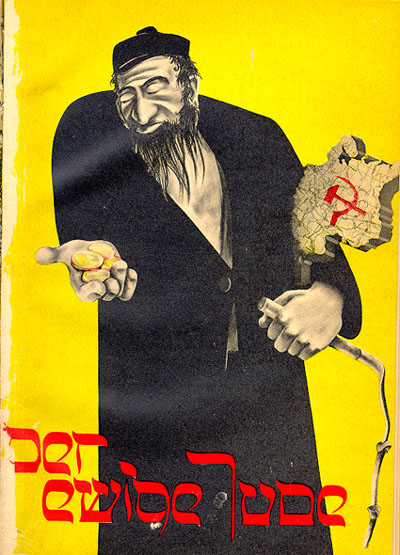
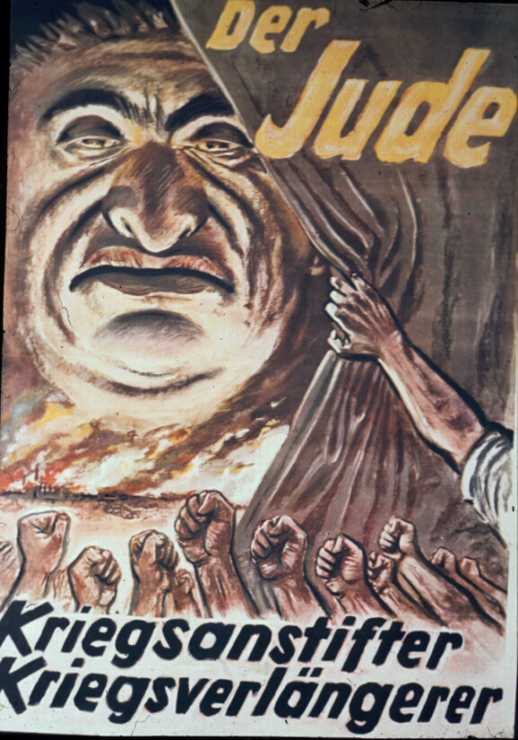
Below are three examples of the caricature of Jews promoted by Nazi Germany.  I borrowed them from this collection, where you can find many more if you scroll to the bottom (thanks to Kat, monosonic, and Lisa for the translations!).

“The Eternal Jew”:

Jew-Nazi-Der_Sturmer_antisemitism-juutalaisvainot-Hitler_satan-bloodlibel-propaganda_2

“The Eternal Jew”:

Nazi_poster_Jew_Der_Sturmer_antisemitism_juutalaisvainot-bloodlibel_Wandering_Jew_propaganda_60

Jews- make wars longer, start wars:

Nazi_poster_Jew_Der_Sturmer_antisemitism_juutalaisvainot-bloodlibel_Wandering_Jew_propaganda_61

See our other posts on Nazi Germany: comparing German remembrance of the Holocaust and U.S. remembrance of slavery, Nazi symbolism, Nazi celebration of motherhood, the racialization of the Jews, Jim Crow-like segregation during the Nazi regime, and this sympathetic memorabilia website.

Lisa Wade, PhD is an Associate Professor at Tulane University. She is the author of American Hookup, a book about college sexual culture; a textbook about gender; and a forthcoming introductory text: Terrible Magnificent Sociology. You can follow her on Twitter and Instagram.
I thought Samatha Critchell’s description of Michelle Obama’s light tan or “champagne” dress as “flesh colored” might get her fired.  If nothing else, I figured it’d be warning to all other journalists out there to, for gawd’s sake!, watch your racist language.

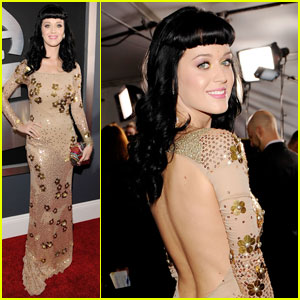
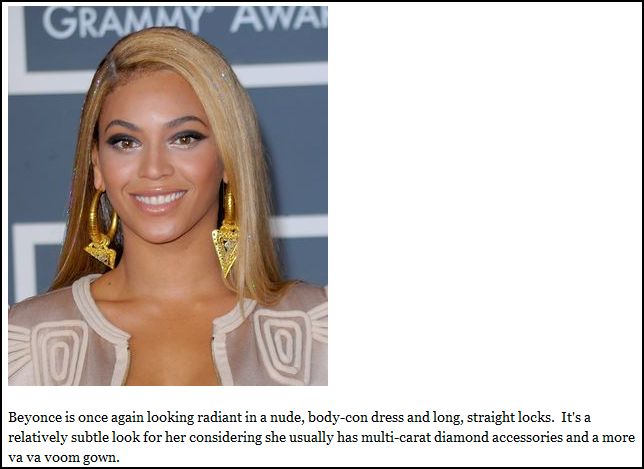
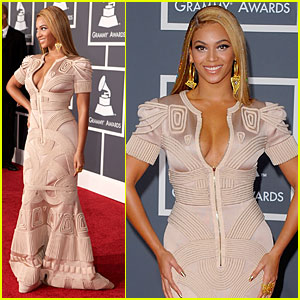
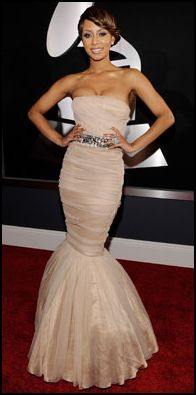
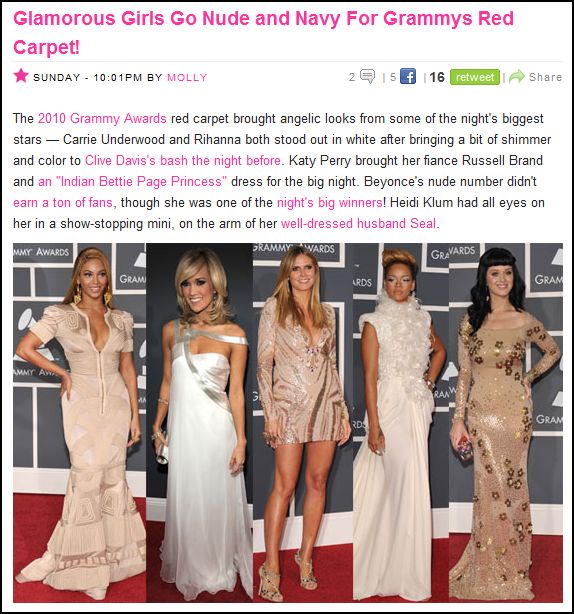
But, alas, the parade of “champagne”-colored gowns at this year’s Grammy’s had led a flood of fashion writers talking about the color “nude.”  Here are just a handful of examples from the first three pages of my google search

Los Angeles Times:

Katy Perry and her dress:

Elsewhere in the Los Angeles Times:

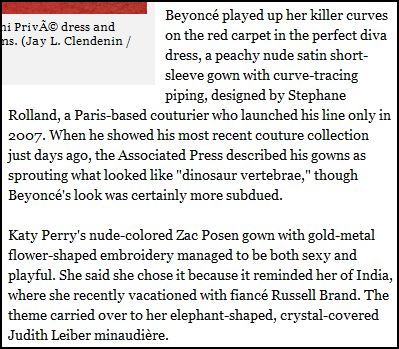
Beyonce and her dress:

VH1:

Keri Hilson and her dress:

Associated Content:

msnbc:

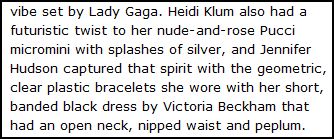
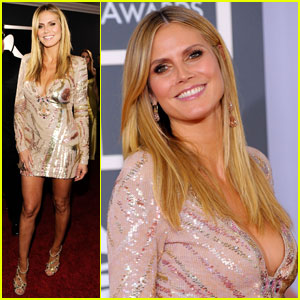
Heidi Klum and her dress:

Popsugar:

Of course (almost) no one is actually “nude”-colored, but the term still manages to naturalize whiteness insofar as white people’s skin color tends to match colors described as “nude” moreso than the skin color of non-white people (though there are always exceptions).  I’m really surprised that journalists are still managing to get this language past their editors.

Lisa Wade, PhD is an Associate Professor at Tulane University. She is the author of American Hookup, a book about college sexual culture; a textbook about gender; and a forthcoming introductory text: Terrible Magnificent Sociology. You can follow her on Twitter and Instagram.
NEWS:

Lisa will be in New Orleans in February!  If anyone is interested in coming to a SocImages cocktail hour, email her at socimages@thesocietypages.org.

Also, this is your monthly reminder, you can always follow us on Twitter or friend us on Facebook, where we update with a featured post everyday!

FROM THE ARCHIVES:

In January of 2008 we featured a set of posters made by the National Campaign to Prevent Teen Pregnancy that labeled teens who found themselves parents as “pricks,” “cheap,” “nobodies,” “dirty,” and “rejects.” Nice.

And one year ago, in January 2009, I put up a series of photographs exposing the amazing convenience and luxuriousness of private plane travel.  It’s a classic “how the top 1% lives” kind of post.

NEWLY ENRICHED POSTS (Look for what’s NEW! Jan ’10):

Food

Dudes.  I added an ad with a recipe for jello with tuna to our post on vintage recipes for savory gelatin.  I am not kidding.

We added a new commercial to our previous post on Orangina; this one includes interspecies S&M.

Edward S. alerted us to a commercial where a pig does the Flashdance.  We added it to our post on gendered and sexualized food (scroll all the way down).

We’ve previously posted on the historical association of men (and masculinity) with meat. Jon S. sent us an example, a Weight Watchers ad that promises men they don’t have to eat “like a rabbit,” accompanied by an image of a hunk of beef. ‘Cause men need steak and potatoes, even when they’re dieting!

Media and Marketing

Gwen and I were like: “We’re so NOT adding any more content to the evolution of Evony ads post unless someone sends in something that truly takes it a step further… and that’s impossible.” Right? Wrong. Chris M., Tinpantithesis, Chris M., and Ryan sent in the next step in the Evony ads. Believe it.

CNN asked us if Jon and Kate Gosselin were getting too much coverage while advertising CNN’s coverage of them. We added another example of media hypocrisy–Dr. Drew of “Celebrity Rehab” telling us we shouldn’t be so interested in celebrities.

What can we appropriate the feminist movement to sell in addition to bras? How about shoes?

We posted about the September 2009 issue of Glamour including a picture of a naked “plus-size” model (that is, a size 12). We updated the post with a similar photo of a group of women with less-than-model-thin bodies that is in the Glamour calendar.

Marc C. sent us a link to a slide show featuring 185 pictures of cheerleaders.  We added it to our post titled “What Warrants a Slide Show?”

Race

We added a photo from the liner notes of a Lady Gaga CD in which she and Kanye West are in a pose reminiscent of King Kong to an older post on the King Kong motif.  Thanks to Ruth D’R. and an anonymous tipster!

Sara L. sent us another example to add to our post about housecleaning services that present house cleaners as non-white and those having their houses cleaned as white.

Sex

Another month, another addition to our ejaculation imagery post.  Can you say “splooge halo”?  I did.  Thanks to Helene V. for the submission.

Someone-who-prefers-to-remain-anonymous sent us another example of a t-shirt that equates sexual penetration with domination in the sports arena, which we added to our original post on the topic.

Julia U. sent in some Calvin Klein ads that centrally feature the naked body of a black man.  We added them to our post on the sexual objectification of men.

We updated one of our posts about the sexualization of little girls with photos of baby bibs that say “flirt” and “single.”

Gender

We found a vintage ad for Plymouth Barracuda marketed specifically to women and we added it to our post on the awesome Dodge La Femme.

Liscadifretta sent in a photo of a clothes hanger meant to look like a woman’s legs and crotch.  We added it to our post featuring furniture shaped like (naked) women.

Joel P. sent us a link to the updated Diamonds or the Doghouse campaign by JC Penney.  Like last year, the message is that you can be a total dick to your wife, so long as you are willing to buy her diamonds, because diamonds make her incredibly stupid.

As always, we had more to add to our post about pointlessly gendered products, this time boys’ and girls’ organic body wash and Nivea chapstick.

And we updated our post on marketing beauty products to men to include On the Job, a line of lotions–or, if you prefer, polymer gloves–for men.

Anna K.-B. sent us another example of health-related activism aimed specifically, and unnecessarily, at women.

Jessica H. sent us another example of a business marketing its services with gender: The Occasional Wife, and The Handy Husband and, Jessica’s find, Boyfriend for Hire.

Remember when we posted about the gendering (and Whitening) of online degree programs? Ryan  sent us another example so we added it.

And we added another added to post on socializing kids with gendered toys.

More Stuff!

Ashleigh V. sent along another Twingo commercial. This one equates modernity with sexual permissiveness.

We added another batch of dolls with disabilities to our post on reactions to dolls with Down’s Syndrome.

We added another DDT product to our vintage post with ads advocating the household use of DDT, a pesticide that later turned out to be wholly toxic.

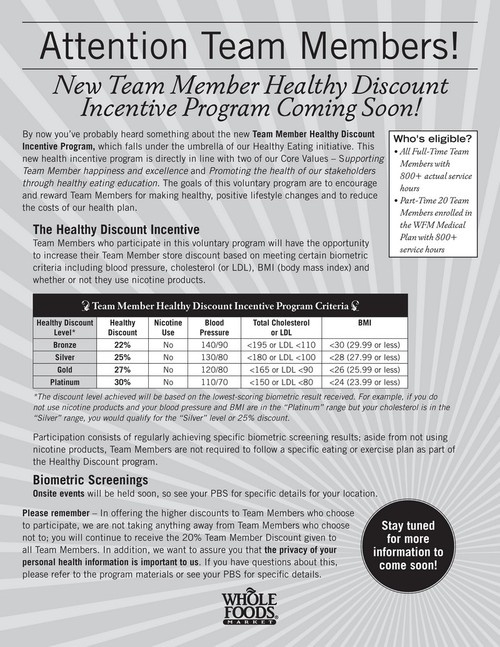
Nicolé L.-G. sent along a story on Jezebel about a new policy that Whole Foods is offering to its employees.  Whole Foods has heretofore offered a 20% discount to all employees but, from now on, employees who are willing to undergo surveillance of a selection of body measures (blood pressure, cholesterol tests, and BMI calculations) and refrain from nicotine use, can try to qualify for better discounts:


Whole Foods specifies that you are only allowed the discount that correlates with your “worst” measure.  So, even if you’re a non-smoker with 110/70 blood pressure and <150 or LDL <80 cholesterol, if you have a BMI of 30 or higher, you’re stuck at the “Bronze” level.

As has been discussed on this blog, and excellently at Shapely Prose, BMI does not translate directly into “health.”  But Nicolé did a great job offering some additional analysis of this policy.  She wrote:

…according to the popular media’s perception of weight management, eating healthy (whole) foods is one of the best ways to achieve health, so why make it easier (cheaper) for already “healthy” people to continue eating healthy and make it harder (more expensive) for “unhealthy” people to eat better quality food? I wonder how the employees with a healthy (thin) appearance would have felt if the increased discount was given to those with bad cholesterol, higher BMI’s and high blood pressure?!

Then there’s the idea that your employer will now be keeping track of your health information! It supports the idea that our bodies and weight (across genders) are being relegated to the role of either a commodity or liability for a company; useful for aiding or damaging the bottom-line. The way [CEO John] Mackay speaks of the collection of the “bio-marker” data as being cheap or expensive denotes a sense of ownership that the company then has over our physical autonomy that no company has a right to.

Lisa Wade, PhD is an Associate Professor at Tulane University. She is the author of American Hookup, a book about college sexual culture; a textbook about gender; and a forthcoming introductory text: Terrible Magnificent Sociology. You can follow her on Twitter and Instagram.
Carl G. alerted us to a controversy starring photographer, Umida Akhmedova.  Akhmedova’s pictures of her native Uzbekistan have incited the country to try her for defamation.  If found guilty, she could be sentenced to six months in prison or three years of forced labor.  Here are some of her photographs.


The state argues that Akhmedova has defamed and slandered Uzbekistan, making it seem as if the country is impoverished and backward. Photographers are defending Akhmedova, arguing that if anything makes Uzbekistan look backward, it’s their desire to censor artists. Frankly, I can see both points.

First, I do think that Akhmedova should be able to capture what she likes and disseminate her images.  The problem is not her representation.  The problem is that Akhmedova’s photographs may be the only representations of Uzbekistan that some people ever see.  That is, the problem isn’t Akhmedova’s pictures, it’s that there aren’t more photographs, of varying parts of Uzbek life, by more photographers noticed outside of the state.

Whenever there is a limited number of representations (or when those that are available converge), those that are disseminated tend to overdetermine perceptions of that place or those peoples.  That is, that one representation comes to stand for the whole.  We in the U.S. would likely not image a similar controversy over one photographers images of say, celebrities (to take an extreme example), because there are thousands of counter-representations.  Uzbekistan, however, does not have the luxury of not caring how the state is represented in Akhmedova’s photos.

So, to conclude, I don’t think Akhmedova should be in trouble, but I do understand why Uzbekistan might be so sensitive.

We’ve seen the same phenomenon with photos of the Middle East, AppalachiaAmerican Indian art, Africa (see both here and here) and, I’ve argued, the TV show Jersey Shore.  We could make the same argument about the preponderance of images of just one type of beauty.

Lisa Wade, PhD is an Associate Professor at Tulane University. She is the author of American Hookup, a book about college sexual culture; a textbook about gender; and a forthcoming introductory text: Terrible Magnificent Sociology. You can follow her on Twitter and Instagram.