Search results for The

Mickey C. sent in this ad for the convenience store, Racetrac.  It’s fascinating in how overtly they take the good girl/bad girl dichotomy and apply it to food.   You are a good girl if you eat fruit, white meat sandwiches, and spinach wraps; you are a bad girl if you drink soda and eat cookies and hot dogs.

This is a narrative that we largely take-for-granted.  We are bad when we “indulge” in “sinfully” delicious treats and good when we do not.  Parallel is the narrative: you are a good girl if you resist your desires, a bad girl if you do not.

It reminds me of an NPR audio slide show about teenagers trying to lose weightwho confess, with guilt and glee, one night of indulgence at Taco Bell.  It’s not sinful to have a cookie, for goodness sake, or to eat at Taco Bell now and again.  And women cannot be separated into heaven-bound angels and hell-bound broads.

Lisa Wade, PhD is an Associate Professor at Tulane University. She is the author of American Hookup, a book about college sexual culture; a textbook about gender; and a forthcoming introductory text: Terrible Magnificent Sociology. You can follow her on Twitter and Instagram.
NEWS:

We’re super excited that the print magazine of the American Sociological Association, Contexts, has decided to feature an illustrated essay written by Gwen and I me in each issue.  The first debuted in the Winter 2010 issue!

Also, this is your monthly reminder, you can always follow us on Twitter or friend us on Facebook, where we update with a featured post everyday.

FROM THE ARCHIVES:

Last February I posted a rant about the idea that a person was either a “dog person” or a “cat person.” Oh how I hate that ridiculous idea!  In an effort to forever cleanse the earth of this ridiculous binary, I beg to you to go back and read it!

Two Februarys ago, we posted some data on how IQ correlates with income and wealth.  The pictures aren’t very pretty, but the data is are really interesting.

NEWLY ENRICHED POSTS (Look for what’s NEW! Feb ’10):

Софи А. sent us an ad that gives us an excuse to link to our collection of ads making sexual body parts out of sexually-suggestive fruit.  Enjoy!

Jessica S. sent us a link to a Saturday Night Live skit making fun of the idea of wigs for baby boys.  We added it to our post on wigs for baby girls which is not a joke.

Laura McD. sent us another bizarre, sex-soaked, cringe-worthy Orangina ad.  We added it to the collection.

Megan D. sent us an image of a wall stencil that encourages girls to think of themselves as “just a Bella, waiting for my Edward.” We added it to our earlier post where we discuss whether Edward’s behavior in the Twilight series is romantic or creepy stalkerish.

Wanna show you love her but not have to actually make much of an effort at being romantic? Buy her diamonds!

Andrea let us know about dznuts, a product cyclers use to prevent saddle sores in their sensitive areas. We added it to our post on selling beauty-related products to men.

Remember our post on vintage products containing opium and cocaine? Louise sent us a photo of a hand-written recipe from her great-grandmother’s cookbook that called for “tincture of opium.”

We never like to let a month go by without updating our post on products shaped like boobs, so this time we added a citrus juicer and a lighter.

Previously Axe let guys know that their body scrubber Detailer would help guys sleep with both a woman and her daughter. Now they have some hot chicks illustrating at length how to get your balls clean.

We updated our post on light-colored items described as “nude” or “flesh” toned with a set of colored pencils in “people colors.”

As organizations have figured out, if you can’t actually show racial diversity at your institution, you can photoshop some in. We added an example from an American Petroleum Institute brochure.

We recently posted several commercials that illustrate a stunningly thorough round-up of stereotypes of masculinity. We added a FloTV and Daily Show clip that highlight just how awful men have it these days, what with their controlling wives and lack of power and all.

We also added some of the images of disembodied women’s legs used by the band Chromeo to our post on furniture and other items shaped like women’s bodies.

And we updated one of our posts about retouching with two examples of a photoshopped Demi Moore.

Lisa Wade, PhD is an Associate Professor at Tulane University. She is the author of American Hookup, a book about college sexual culture; a textbook about gender; and a forthcoming introductory text: Terrible Magnificent Sociology. You can follow her on Twitter and Instagram.
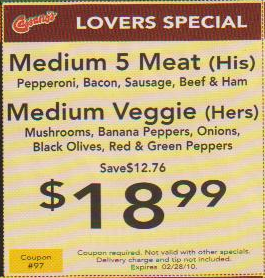
Lynne S. clipped this coupon for a “lovers special” at Cassano’s Pizza.  Notice it both presumes heterosexuality and genders meat as masculine and veggies as feminine.

We saw the same gendering of food in the Brick House Tavern Menu, TV dinner categories, and a vintage Campbell’s soup ad.

Lisa Wade, PhD is an Associate Professor at Tulane University. She is the author of American Hookup, a book about college sexual culture; a textbook about gender; and a forthcoming introductory text: Terrible Magnificent Sociology. You can follow her on Twitter and Instagram.
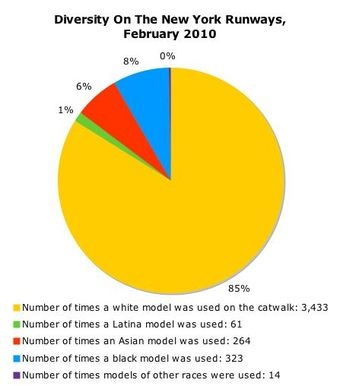
Dmitriy T.M. sent us a link to Jezebel’s analysis of the inclusion of models of color at New York fashion weeks.  The post author, Jenna, begins:

…in the fall of 2007 that fully one-third of shows in New York had 100% white casts. Two years later, we calculated that 18% of spots in show lineups were booked by models of color — a real improvement in the representation of black, Latina, and Asian faces in the crucible where the beauty standard is forged.

This season, fashion took a step back.

Of 4,095 turns on the runway, only 662 went to models who weren’t white. That’s barely 16%.

More:

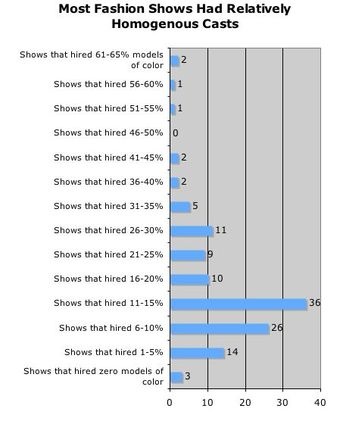
Most of the shows that took place used some models of color — just three designers, A Détacher, Alice + Olivia (full disclosure: an old client of mine), and Preen, chose exclusively white casts — but many used very few. Well over 60% of the shows, in fact, used casts that were 85% white, or more.

Most of the shows that took place used some models of color — just three designers, A Détacher, Alice + Olivia (full disclosure: an old client of mine), and Preen, chose exclusively white casts — but many used very few. Well over 60% of the shows, in fact, used casts that were 85% white, or more.

More details on the data, and the models, at Jezebel.

Lisa Wade, PhD is an Associate Professor at Tulane University. She is the author of American Hookup, a book about college sexual culture; a textbook about gender; and a forthcoming introductory text: Terrible Magnificent Sociology. You can follow her on Twitter and Instagram.
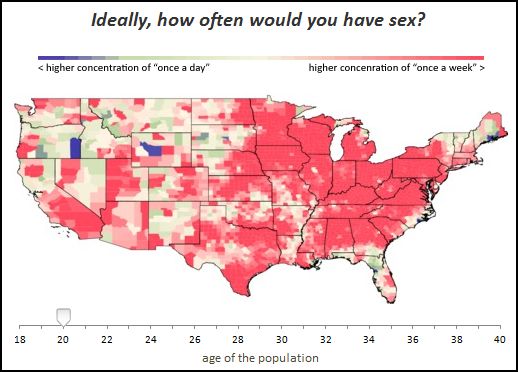
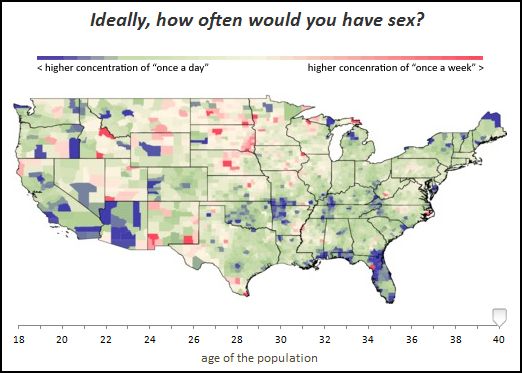
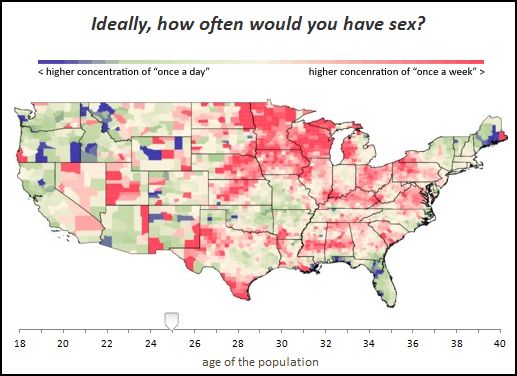
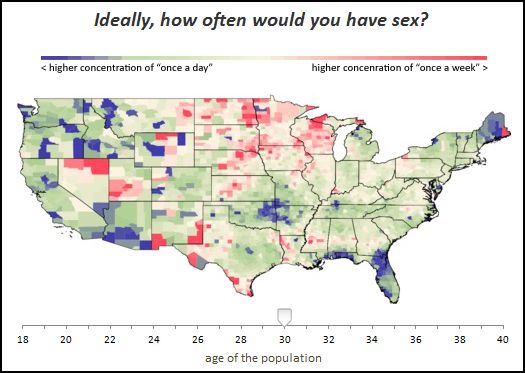
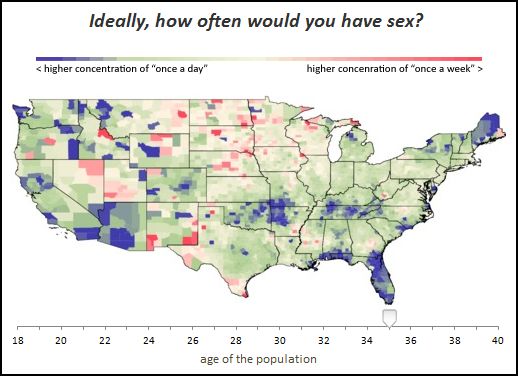
Claire P. and Jessica Sherwood, of the Sociologists for Women in Society, sent in a link to some data, from OK Cupid, on women’s preferences for frequency of sex by county.  The uptake: Women’s preferences for the incidence of sex goes up as they age.  You can check out the interactive map, or just check out my screen shots below.

Preferences at age 20 (red = higher preference for once a week; blue = higher preference for once a day; white = in the middle):

Preferences at age 25:

Preferences at age 30:

Preferences at age 35:

Preferences at age 40:

Also from OK Cupid: the racial politics of dating, what women want, and men’s preference for younger women.

Lisa Wade, PhD is an Associate Professor at Tulane University. She is the author of American Hookup, a book about college sexual culture; a textbook about gender; and a forthcoming introductory text: Terrible Magnificent Sociology. You can follow her on Twitter and Instagram.
Dmitriy T.M. reminded me of this classic performance of the song “America” from a classic American musical, West Side Story (1961; it won 10 Academy Awards, including Best Picture).  The song features white New Yorkers and Puerto Rican immigrants debating about the benefits of living in America.  The “streets paved with gold” mythology is articulated by the women at the same time that the white men remind them that they face racism and poverty.

Also, Rita Moreno is awesome:

UPDATE: Commenter Jesse W. says,

…as a theater nerd, I wanted to point out it’s not a debate between white New Yorkers and Puerto Ricans, I think you just get that impression from the bad casting. They’re all supposed to be Puerto Rican; it’s more of a battle of the sexes between the men who wanted to stay in the old country and the women who wanted to come to America.

And Laura says,

…the women are arguing with the men that America is great, and they prefer it to Puerto Rico, and the men are arguing that America is racist and oppressive.

Lisa Wade, PhD is an Associate Professor at Tulane University. She is the author of American Hookup, a book about college sexual culture; a textbook about gender; and a forthcoming introductory text: Terrible Magnificent Sociology. You can follow her on Twitter and Instagram.
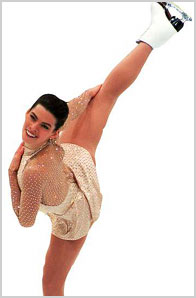
Fun Fact #1: Female figure skaters are required to wear skirts and men must wear “full-length trousers: no tights.”

Note: This isn’t true anymore; “this rule was repealed in 2004, allowing women to wear tights, trousers, or unitards” (http://www.frogsonice.com/skateweb/faq/rules.shtml)

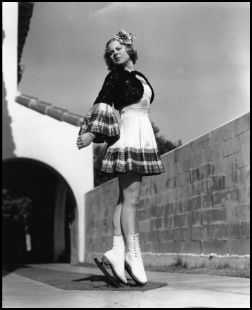
Sonja Henie, of Norway, is credited with introducing the short skirt to women’s figure skating.  She won gold medals in 1928, ’32, and ’36:

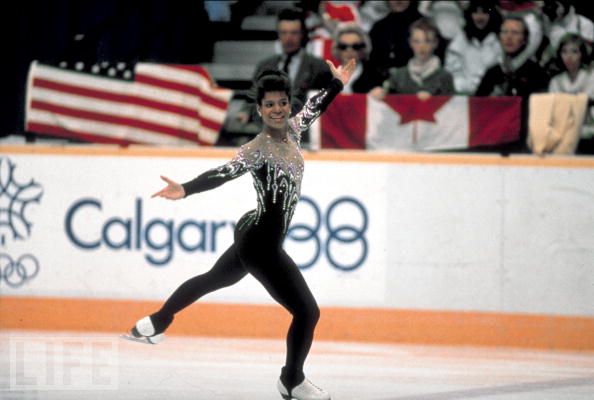
According to Abigail Feder, in her article ” ‘A Radiant Smile from the Lovely Lady’: Overdetermined Femininity in ‘Ladies’ Figure Skating”, the International Skating Union (ISU) introduced a rule requiring that women wear skirts after they were scandalized by Debi Thomas’ unitard at the 1988 Olympics:

(source)

An NPR slide show explains:

Today, according to the ISU, figure skating’s governing body, “Ladies must wear a skirt. The Ladies dress must not give the effect of excessive nudity inappropriate for an athletic sport. Men must wear full-length trousers: no tights are allowed and the man’s costume may not be sleeveless.”

So, just to be clear, the performance of femininity and masculinity, as defined by the ISU, is required if one is to be a competitive figure skater… all skills aside.

—————————–

Fun Fact #2: People used to make their costumes by hand; today they are high fashion.

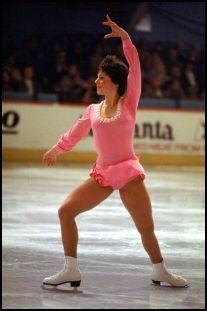
The 1976 Olympics were the last in which figure skating costumes were mostly handmade.  Here Dorothy Hamill competes in a costume her mother made for $75:

Today, costumes frequently cost thousands of dollars.    Michelle Kwan and Nancy Kerrigan both competed in Vera Wang (who, in 2009, was inducted in the U.S. Figure Skating Hall of Fame for her designs).  Kerrigan:

Lisa Wade, PhD is an Associate Professor at Tulane University. She is the author of American Hookup, a book about college sexual culture; a textbook about gender; and a forthcoming introductory text: Terrible Magnificent Sociology. You can follow her on Twitter and Instagram.
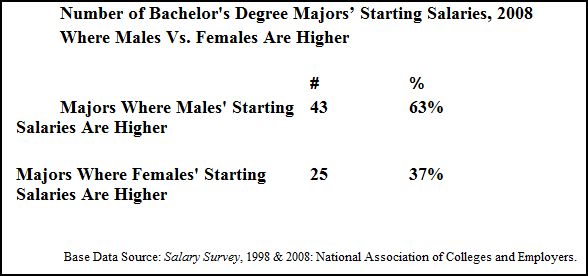
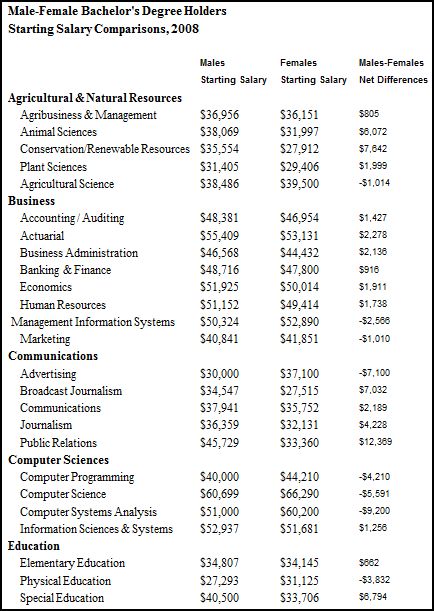
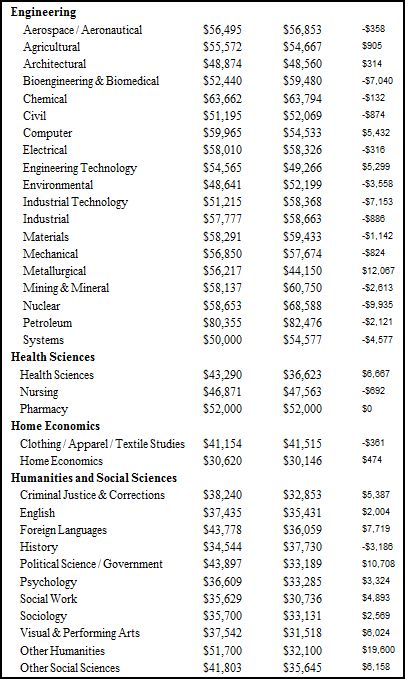
Stan S. sent us a recent research report by Economist Kent Gilbreath.  He presents data illustrating gender differences in the starting salaries of college graduates with different majors, as well as data on the way in which gender differences have changed between 1998 and 2008.  The findings are in the direction you might expect, but with quite a bit of variation!

First, Gilbreath summarizes the data.  Of all of the majors he surveyed, males have higher starting salaries 63% of the time; women have higher starting salaries in the remaining 37%:

Here are the details by major; net differences (far right column), when positive, reflect how much more money men are making than woman and, when negative, reflect how much more money women are making than men (the variation is quite amazing!):

And here’s the data for the sciences, though the format is off:

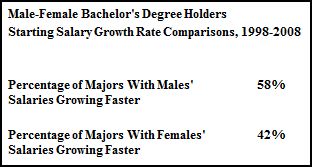
Gilbreath then looks at change in the gender difference between 1998 and 2008.  Again, a summary shows that, in 58% of the cases, men’s advantage over women is growing and, in the remaining 42%, women’s advantage is growing:

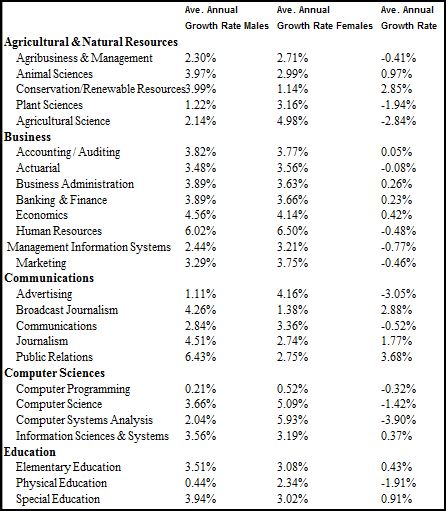
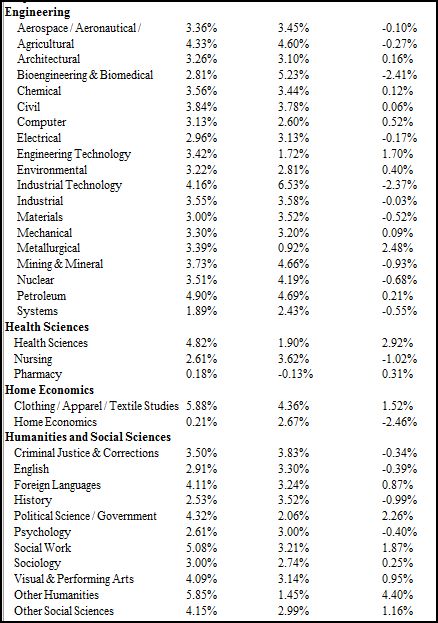
The details show which majors have shown a better growth rate for men or women.  A positive average annual growth rate (far right column) is a gain for men over women and a negative one is a gain for women over men.

This is great data because it shows that, overall, men receive higher starting salaries than women, and their advantage is growing, but the advantage that accrues to men is not even.  It depends, very much, on what their major is.

Anyone see any interesting trends or have any stories from the field?

Lisa Wade, PhD is an Associate Professor at Tulane University. She is the author of American Hookup, a book about college sexual culture; a textbook about gender; and a forthcoming introductory text: Terrible Magnificent Sociology. You can follow her on Twitter and Instagram.