Search results for The

Here’s another collection of images about gender and marketing of various techy things, particularly video games. You can see my other jumbled post of such images here (check out the links at the bottom of that post–I’m not going to reproduce them here).

Danielle F. found a post at bitmob that includes this old ad for Game Boy:
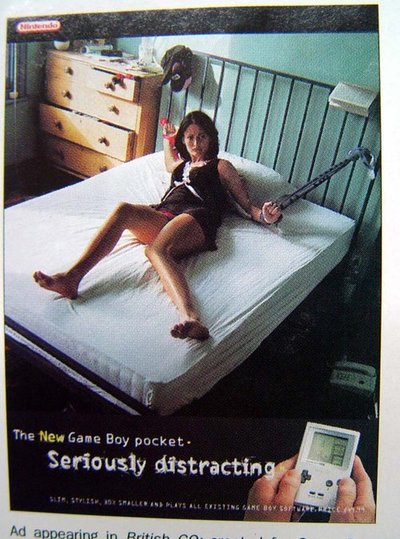
gameboyad

Notice that the presumed user is either a heterosexual male (or, I suppose, a lesbian…but I doubt it). And as we see, the Game Boy is so awesome it’s better than having sex with a woman tied up waiting for you. I hope the unhappy look on her face is because her partner is distracted and not because she doesn’t really want to be tied up.

NEW! Nov ’09 Another vintage example (well, 1987):

0_251da_94932fcf_XL

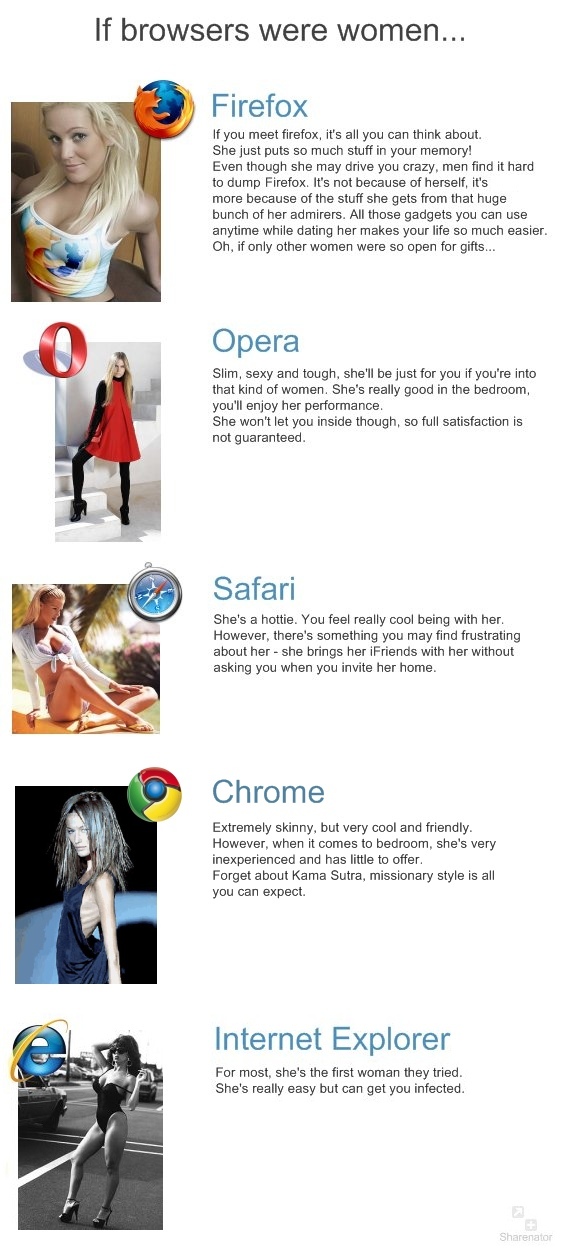
A reader who prefers to remain anonymous sent in this image he was forwarded that someone created equating different browsers with women. Again we see that the assumed user is male:
-1

The reader says,

…notice how all the women are described primarily or entirely in terms of sexual attributes, and criticized for whatever ways they fail to be ideal sex partners…Unquestioned assumptions here…that “women” means “people whose purpose in life is to provide you with sex”.  Male gaze much?

I find the Chrome image particularly icky. The equating of IE with “easy” women, who are of course the “first woman [users] tried” (because she’s not relationship material, just for getting started), and the connection to STDs is also classy.

The sender-inner continues,

Like most software companies, mine has an extremely imbalanced male-to-female ratio, maybe something around 90% male, and most of the women are in the marketing and HR departments so the balance is even further skewed among the people who engineer the software.  (Full disclosure: I’m a man.)  I have no way of knowing how prevalent e-mail forwards like this one are among engineers in the software industry, since most of them get passed around under the table.  It makes me wonder what role they might play in perpetuating or reinforcing a “boys-only-club” kind of culture that makes women feel unwelcome, or whether that has an influence on the extreme gender imbalance of my industry.

We got several more submissions of gendered marketing of techy items. Stephanie G. sent us a link to her post at Mother Jones about Sony Ericsson’s attempt to market cell phones to women by making them “diamond” shaped:

MotherJonesJalouLadyphone.300wide.282high

The company claims that “structured forms, intricate corners, hidden depths” are trendy. Stephanie points out,

…”depth” refers to a “variety of different shine and matt [sic] finishes,” not tech specs.

The phone has some features that clearly illustrate stereotypes about what women (should) care about:

“The two inch screen’s clever design means that at the touch of a button the screen becomes a mirror, offering a discreet way to make sure you look as good as your mobile phone. It is also the first Sony Ericsson to feature Walk Mate step counter, to help you stay in shape wherever you go. It also has an exclusive fashion interface which automatically updates with zodiac signs and special events throughout the year.”

Liz noted the following about Ubisoft’s series of Nintendo games aimed at girls:

…includes stuff like ‘Imagine Makeup Artist’ and ‘Imagine Wedding Planner.’ Without exception every game is about physical appearance, performance for the purpose of looking pretty, or nurturing/childrearing.

If you haven’t gotten enough yet, Kate M. sent in these examples of “time management games” (what?!?) at Shockwave:


cakemania3_large

delicioustasteoffame_large

virtualfamilies_large

I don’t know what to make of this one:

virtualvillagers3_large

UPDATE: Reader Shodan says, about Virtual Families and Virtual Villagers,

…in those games, male and female characters can take on dozens of roles, with males able to take on tasks that have been often portrayed as the role of women traditionally (house cleaning, child rearing) and women taking on tasks that are often portrayed as masculine masculine (research, construction).

On the other hand, I found this tip (here):

Stay at Home Moms- Nursing mothers focus all their attention on the baby for two years of game time. They won’t do any other tasks while caring for the baby.

Also this at Codeblower:

Job: Breeder
If you want (once things are progressing and you’ve got a steady food-supply, a hut or two built, and you’re working on unplugging the lagoon) you can task a couple villagers to be “Breeders”. Be advised that this is only a good idea for females. This was another accidental-discovery. I had everybody but “The Runner” set to Breeder (to get the population moving) and shut the game down for a while. I came back to discover that one of the males had decided that Runner would be a good mate — food-production had halted. Needless to say, the two men in the village were immediately tasked with Runner’s duties while the females nursed the infants.

So maybe I’m totally offbase on those two. Or maybe not.

You can also play Create a Mall, Posh Boutique 2, Diaper Dash, or a variety of games about diners, salons, and boutiques. Kate says,

Even the ones that involve you having a successful career (and saving the community!  What a hero!  Nurturing all of us!) don’t start off with you wanting a career – you fall into it by accident, on account of your love for your family/community/cooking/fashion.

Also see: the Sony OMG Lilac Play Station Portable, mom/daughter domesticity in a Nintendo ad, targeting the new Risk to men, and Miss Bimbo.

NEW! (July ’10): Bri A. sent in another example of gendering technology. This is an image from TeamViewer, a program that lets people remotely access your computer. Notice what it says under Info: “This number identifies you. Tell your partner so he can connect to you.” Because only guys would be using this, obviously.

Gwen Sharp is an associate professor of sociology at Nevada State College. You can follow her on Twitter at @gwensharpnv.


Dmitriy T.M. sent us a link to an AdWeek post reporting that Miller Beer began advertising in Vietnam last week with this commercial:

[youtube]http://www.youtube.com/watch?v=KG9H5_oKVd0[/youtube]

Some sociologists who study international relations apply the idea of the brand to nations.  Nations, they argue, can be seen as a product in a global marketplace. Australia, for example, is marketed as a rough and tumble place where we can get back to nature and find our true selves. Insofar as they can can control their brand, countries can draw tourism and increase demand for their exports (see here and here for Australian examples).

The ad above is an excellent example of Miller capitalizing on the American brand: “It’s American Time. It’s Miller Time.” Notice also that the ad is in English and doesn’t feature anyone that looks Vietnamese. The whiteness of the ad is purposeful. Miller is selling a specific version of “America” characterized by white people, urban life, sex-mixed socializing and, also, really bad music.

UPDATE!  In the comments, Adam linked to this ad which ran in the Phillipines:

PiwinstonfootballLarge

You can also think of the California happy cows commercials as a form of state branding.

See herehere, and herefor posts showing the social construction of America as white.

Lisa Wade, PhD is an Associate Professor at Tulane University. She is the author of American Hookup, a book about college sexual culture; a textbook about gender; and a forthcoming introductory text: Terrible Magnificent Sociology. You can follow her on Twitter and Instagram.

Chrissy Y., Stacey S., and a former student of mine, Kenjus Watson, have all suggested that we post about the controversy over Olympic athlete Caster Semenya’s sex.

_46245340_certificate2226
A lot of people are talking about whether or not it’s appropriate to be asking about her sex and why we would be so obsessed with knowing the answer. Those are fine questions (and I address them secondarily).  But first I would like to suggest that, even if we were to decide that it is appropriate to want to determine her sex (that we are obsessed with it for a good reason), it would be impossible to actually determine her sex definitively. Let me explain:

If you were to try to decide what qualifies a person as male or female, what quality would you choose?

I can think of eight candidates:

1. Identity (whatever the person says they are, they are)
2. Sexual orientation (boys dig girls, vice versa)
3. Secondary sex characteristics (e.g., boobs/no boobs, pubic hair patterns, distribution of fat on the body)
4. External genitalia (e.g., clitoris, labia, vaginal opening/penis and scrotum)
5. Internal genitalia (e.g., vagina, uterus, and fallopian tubes/epididymis, vas deferens, seminal vesicles, prostate, etc)
6. Hormones (preponderance of estrogens/androgens)
7. Gonads (ovaries/testes)
8. Chromosomes (XX/XY, the SRY gene)

Most of us assume that these criteria all line up. That is, that people with XY chromosomes have testes that make androgens which creates a penis, epididymis, vas deferens etc… all the way up to a male-identified person who wants to have sex with women.  We also assume that these things are binary (e.g., boobs/no boobs), when in reality most of them are on a spectrum (e.g., hormones, also boobs, likely sexual orientation).

But these criteria don’t always line up and sex-linked charactertics aren’t binary.  Examples of “syndromes” that disrupt these trajectories abound (e.g., Klinefelter’s syndrome).  And all kinds of practices, including surgeries, are sometimes used to force a binary when there isn’t one (e.g., intersex surgery to fix the “micropenis” and “obtrustive” clitoris and breast reduction surgery for men).

If these criteria don’t always line up, then we have to pick one as THE determinant of sex.  But any choice would ultimately be arbitrary.  The truth is that none of these criteria could ever actually definitively qualify a person as male or female.

The alternative would be to require that a person qualify as male or female according to ALL of the criteria.  And you might be surprised, then, how many people are neither male or female.

I think the debate over whether we should test Semenya’s sex is getting ahead of itself, given that there is no such test.

———————————————–

Yet, while we won’t be learning anything definitive about Semenya’s sex, the controversy does teach us something about our obsession with sex difference.  On MSNBC, Dave Zirin explains what the controversy over is really about:

[youtube]http://www.youtube.com/watch?v=eK-w6lDOZ5Q[/youtube]

To me, one of the most interesting things that Zirin says is that sex isn’t actually a good indicator of athletic ability.  He may be a guy, he says, but having a penis doesn’t translate into outrunning anyone.

He is implying that sex segregation in athletics, as a rule, is more about an obsession with sex categories and their affirmation than it is about sports. Remember, Semenya’s sex is being questioned not just because she appears masculine to some (she always has), but because she kicked major ass on the track.

Kenjus, my former student, writes:

…why didn’t they test Usain Bolt?  He did amazingly well… Yet, his otherworldly accomplishments are considered the result of his never-before-seen body structure… Usain, however, is a big, strong, fast Black man. The fact that his times are just as mind-boggling as Caster’s gets lost in the widely accepted narrative that big, strong, fast Black men accomplish amazing athletic feats. It’s what they’re built for.

But this woman has apparently baffled the athletic and scientific experts because her body is not doing what a woman’s body is supposed to do. More specifically, her shape is too muscular, her voice is too deep, and her time is too fast. Essentially, “Semenya-the-woman” CANNOT exist in an exclusively two-gendered (i.e. men and women) society in which men are innately bigger, stronger, more deeply-voiced, and particularly FASTER than women…

article-0-061D19E9000005DC-924_306x423

Semenya is getting far more media attention than the recent cheating scandals of higher profile athletes. This is precisely because there’s something that separates Caster from an A-Rod, a Marion, a Sosa… The world is captivated by Caster because something that should be certain; unquestionable; medical; pre-ordained, is in flux.  It is regrettable that some athletes take illegal drugs to gain an edge over the competition. It’s entirely unethical, unnatural, and ungodly for an athlete to not fit into our narrow specifications of what constitutes gender or sex.

Indeed.  Our obsession with Semenya’s sex, in addition to being hurtful and invasive, says a great deal more about us, than it does about her.  And perhaps the reason we are so obsessed with proving Semenya’s sex, to bring this post back to its beginnings, is because binary sex doesn’t actually exist.  Me thinks we protest too much.

(Thanks to Mimi Schippers, via the Sociologists for Women in Society listserve, for alerting me to the video. Images found here and here.)

—————————

Lisa Wade is a professor of sociology at Occidental College. You can follow her on Twitter and Facebook.

Lisa Wade, PhD is an Associate Professor at Tulane University. She is the author of American Hookup, a book about college sexual culture; a textbook about gender; and a forthcoming introductory text: Terrible Magnificent Sociology. You can follow her on Twitter and Instagram.

Sociologists who study social movements note that the tactics available to activists are shaped by the activism that has proceeded them. We call this a “repertoire of contention,” or a set of tools available to any activist that most people in a society would recognize as “protest.” In most industrialized countries today, this repertoire includes things such as sit-ins, boycotts, strikes, and marches.

Repertoires of contention are shared and they pass from one social movement to another.   The sit-in, for example, was invented by civil rights U.S. labor activists, but all types of activists use sit-ins today (perhaps most memorably by the civil rights movement). Sidney Tarrow calls this kind of tactic “modular.” It can be borrowed from one kind of activism and applied to many different causes.  Similarly, protest tactics can in one country can be borrowed and applied in another, so long as the conditions for activism are similar.

I was reminded of this theory of modular protest tactics when fds and Mordicai K. sent us this link to photographs from a protest by the Alliance for Animal Rights in Russia. Like the protests PETA in the U.S. and Animals Awake in the Netherlands, this Russian protest personifies animals as (mostly) women and then displays them brutally murdered.  I think the trio (Russia, the Netherlands, and the U.S.), together, is an interesting example of the way that a social movement tactic can travel transnationally.

Lisa Wade, PhD is an Associate Professor at Tulane University. She is the author of American Hookup, a book about college sexual culture; a textbook about gender; and a forthcoming introductory text: Terrible Magnificent Sociology. You can follow her on Twitter and Instagram.

Men and women are often pitted against each other, as if they are naturally and inevitably in opposition. This creates the conditions for a “battle of the sexes.” The implication is, of course, that it’s a zero sum game. When women win, men lose.

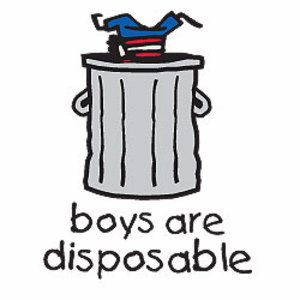
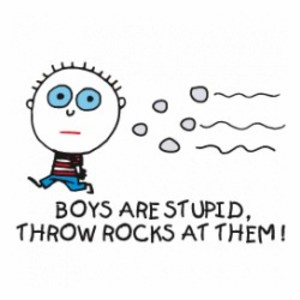
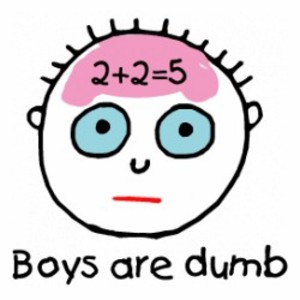
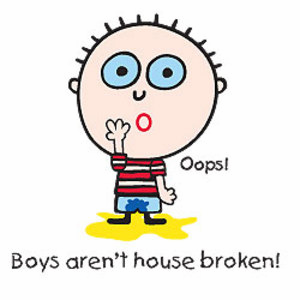
We socialize young children into thinking with gender (it’s always, somehow, boys vs. girls) and seeing the other sex as an enemy or competitor. Illustrating this, izhero sent us links to a set of t-shirts for young girls sold at David & Goliath Tees. The message for girls is, essentially, “boys drool, girls rule,” situating women and men in opposition, and setting girls up for a lifetime of battling the “opposite” sex.

Picture3Picture4Picture5Picture6

Picture7Picture8

—————————

Lisa Wade is a professor of sociology at Occidental College. You can follow her on Twitter and Facebook.

The income gap between the rich and the poor is larger in the U.S. than in most other industrialized countries.  Last year we posted data about the percent of total U.S. income that went to the top 1% of earners (23% as of 2006).

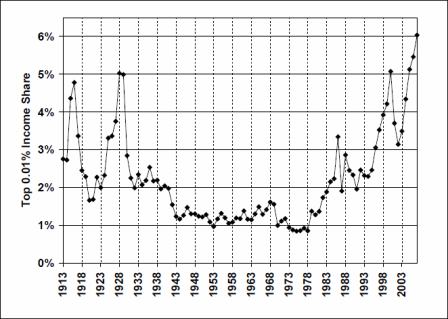
The graph below, recently updated to 2007, shows the percent of total U.S. income that went to the top 0.01%, that is 1/100th of one percent, of earners:

Picture1

As you can see, in 2007,  the top 1/100th of 1% of earners in the U.S. brings home 6% of the total income earned in the U.S.  This represents the largest proportion of total income since at least 1913, and is the endpoint in a trajectory of rising inequality that began in the early 1980s.

Also see our posts breaking down CEO compensation, on the disproportionate tax burden by social class, and on class inequality across U.S. states.

Data borrowed from economist Emmanuel Saez, via Matthew Yglesias.

—————————

Lisa Wade is a professor of sociology at Occidental College. You can follow her on Twitter and Facebook.

Cross-posted at Anglofille.

20301811_640x480

The Reclusive Leftist wonders why George Sodini’s mass murder of women in an aerobics class in Pennsylvania last week is not receiving more news coverage.  And also, why is the crime not being referred to as a hate crime?

If I want to read about the Pennsylvania shooting, I have to search for it. This evening I typed “George Sodini” (the murderer’s name) into the Google News search box. The stories that came up told me that Sodini was lonely; that he felt rejected by women; that he led a sad, bitter life; that he hadn’t had sex in years; that he longed for women to notice him. Well, isn’t that special.

I looked for the words “hate crime,” but only Ms. Magazine is referring to it that way. Good for them…But Ms. Magazine appears to be alone in its assessment. I can’t find any other media outlets calling the massacre a hate crime. If spraying bullets into a group of female strangers because you hate women isn’t a hate crime, what is?

Her conclusion, which I agree with, is that hatred of women is considered “natural and universal” and so we don’t even give it a thought.

In his NYT column, Bob Herbert nails it.  He refers to another mass murder of females in Pennsylvania, when in the autumn of 2006 a man went into an Amish school, separated the girls from the boys, then shot all the girls.  Herbert writes:

I wrote, at the time, that there would have been thunderous outrage if someone had separated potential victims by race or religion and then shot, say, only the blacks, or only the whites, or only the Jews. But if you shoot only the girls or only the women — not so much of an uproar…We have become so accustomed to living in a society saturated with misogyny that the barbaric treatment of women and girls has come to be more or less expected. We profess to being shocked at one or another of these outlandish crimes, but the shock wears off quickly in an environment in which the rape, murder and humiliation of females is not only a staple of the news, but an important cornerstone of the nation’s entertainment. The mainstream culture is filled with the most gruesome forms of misogyny, and pornography is now a multibillion-dollar industry — much of it controlled by mainstream U.S. corporations.

Sadly, Bob Herbert is in the extreme minority with his coverage of the Sodini story.  Instead, for most of the media, Sodini himself is the real victim – a victim of women.  This Boston Globe editorial is a perfect example.  According to the Globe, Sodini fits the “typical profile of an American psychopath: He was a loner who lamented his failure with women. His online diary was filled with fury over his sexual frustrations – claiming at one point to have been rejected by ‘30 million’ women. There are, of course, millions of frustrated men who don’t open fire on innocent civilians, so there’s a danger in making too much of his loser profile.”

Sodini is first described as a “psychopath” by the Globe but then by the end of the passage he’s just one of “millions of frustrated men” who are rejected by women.  What is implied here is that while most rejected men don’t commit mass murder, it’s understandable why George Sodini – or any man – could snap.  He was lonely!  Them bitches rejected him! Sodini, a psychopathic multiple murderer, is merely a victim of selfish, shallow females.


Imagine that instead of hating women, George Sodini hated and murdered Jews.  Imagine the Boston Globe writing this: “George Sodini tried to befriend many of the Jews in his town, but they rejected him.  Last week, he went down to the local synagogue and sprayed bullets everywhere.  There are, of course, millions of people around the world who are frustrated by Jews, but most of them don’t actually go out and kill, so there’s a danger of making too much of the fact that Jewish people had rejected Sodini in the past.”

This would be outrageous, of course.  Any attempt to rationalize murderous behavior and hatred like this is indefensible.  Yet female victims, when targeted because of their femaleness, aren’t accorded this kind of dignity and respect.  Instead, women are blamed.

I should point out that the main focus of the Globe’s editorial on Sodini is his racist blog posts against Obama.  A lot of other media have also made this the focus of the story, making racist blog posts against Obama equal in significance to mass murder of females. Because, you know, the Obama angle is more interesting and, let’s face it, more important.

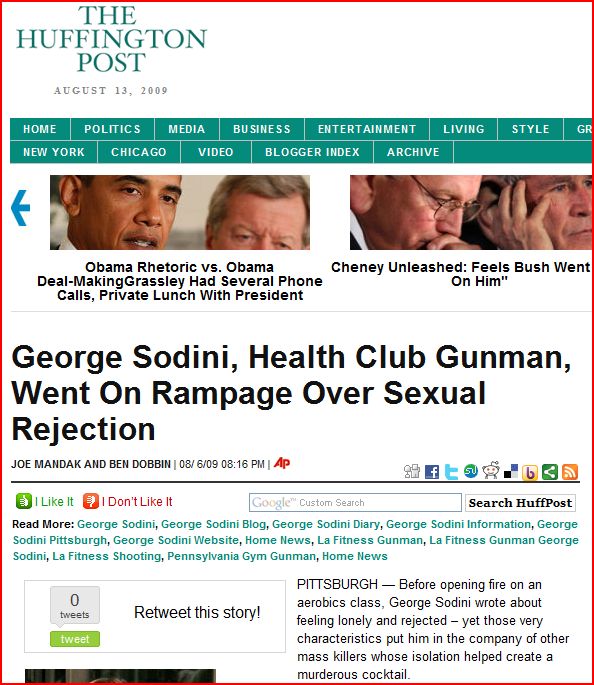
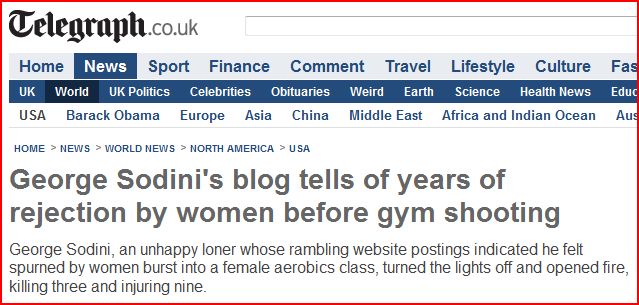
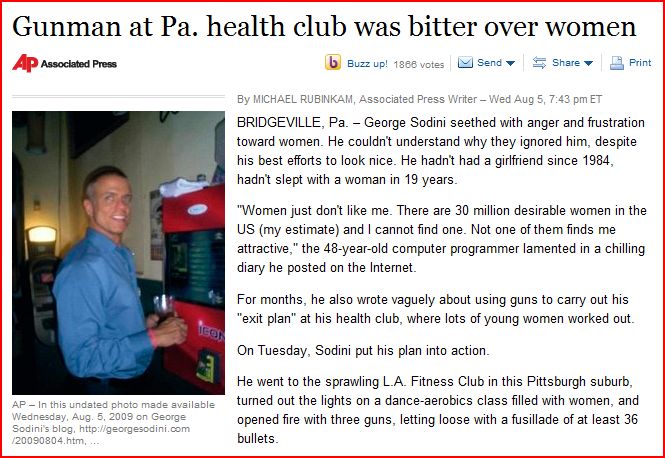
The coverage of this case is, across the board, sickening.  Here are a few headlines:

The Huffington Post
Capture

The Telegraph U.K.
times

Associated Press (via Yahoo News)
ap

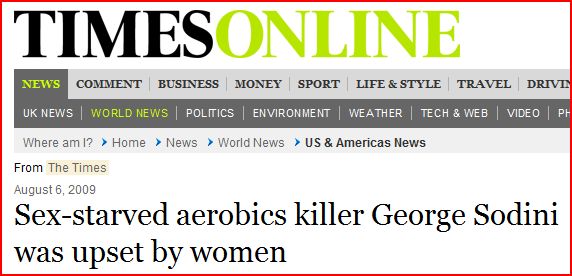
The Times
Capture1

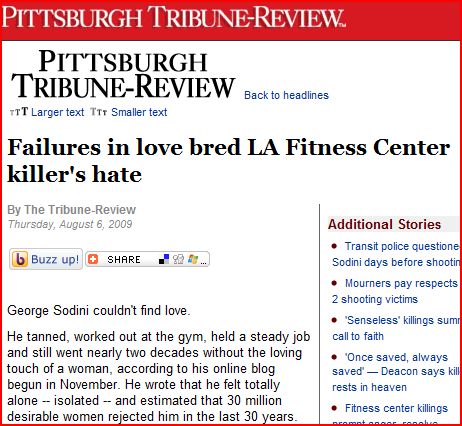
Pittsburgh Tribune-Review
Capture2

And the list goes on.  In each case, we see that Sodini is the victim.  Nowhere do we see a headline like this: Misogynist Commits Mass Murder or Three Women Murdered in Hate Crime. The articles are clear that Sodini hated women, which of course he did, but for the media, if Sodini hated women, then there must be a reason for it.  A good reason. If George Sodini, a proven racist, had murdered African-Americans simply because of their race, would we be asking why George Sodini hated African-Americans?  No, because what possible legitimate reason could he have?  There isn’t one.  He’s a racist asshole and that’s the end of it.  But apparently, there are legitimate reasons to hate all women.  The articles try to explain, in rational terms, why Sodini hated women, thus making his rampage seem like the next logical step given his mental instability.  If women hadn’t deprived him of sex, none of this would have happened.

Here’s the opening of the story from the last headline above, from the Pittsburgh Tribune-Review:

“George Sodini couldn’t find love. He tanned, worked out at the gym, held a steady job and still went nearly two decades without the loving touch of a woman, according to his online blog begun in November. He wrote that he felt totally alone — isolated — and estimated that 30 million desirable women rejected him in the last 30 years. Enraged, he hatched a heinous plan to make some of those pretty young women pay for his misery. The price would be their lives.”

This is just sick.  It’s beyond sick.  It reaches new levels of vileness.  You’ll notice that this, like a lot of the other coverage, is not written as a news report, but almost as entertainment.  Whoever wrote this seems to be taking some vicarious pleasure in the actions of Sodini.

Sodini worked out “and still went nearly two decades without the loving touch of a woman” [italics mine].  Poor George.  He did everything right, yet these cruel women rejected him.  What’s wrong with women?   When confronted with a vicious, hate-filled psychopath, they just ran in the other direction, without even considering his good qualities at all.  Typical!

For a moment, just imagine if George Sodini had had a girlfriend.  There can be virtually no doubt that she would have been physically and emotionally abused during the relationship, because George Sodini hated women.  If the woman had tried to escape from him, she would have been stalked and likely murdered.  And after he killed her, he would have probably committed a mass murder of women anyway.  The headline: Heartbroken Man Goes on Rampage After Being Dumped.

The real story here is not lonely men (there are plenty of lonely women as well), but instead, the real story is male violence against women and girls, which occurs every second of every day in the form of domestic abuse, molestation, harassment, rape and murder. There is no rational, legitimate reason for this hatred of women, yet it is widespread in our culture and everyday, women die as a result. Writes Herbert:

Life in the United States is mind-bogglingly violent. But we should take particular notice of the staggering amounts of violence brought down on the nation’s women and girls each and every day for no other reason than who they are. They are attacked because they are female. A girl or woman somewhere in the U.S. is sexually assaulted every couple of minutes or so. The number of seriously battered wives and girlfriends is far beyond the ability of any agency to count. There were so many sexual attacks against women in the armed forces that the Defense Department had to revise its entire approach to the problem. We would become much more sane, much healthier, as a society if we could bring ourselves to acknowledge that misogyny is a serious and pervasive problem, and that the twisted way so many men feel about women, combined with the absurdly easy availability of guns, is a toxic mix of the most tragic proportions.

This is the conversation we should be having.  Instead, the media is legitimizing Sodini’s misogyny and giving him the exact platform he craved – he’s gone out in a blaze of glory, with everyone dissecting his blog posts and commenting on his mistreatment and loneliness.

—————————

Anglofille is the nom de blog of an American ex-pat living in London.  She is finishing up a PhD in English and writing a novel with feminist themes.   She has previously written for Our Bodies, Ourselves, as well as numerous consumer magazines.

The idea that work and home are in different places was institutionalized only recently in human history (and is still not reality everywhere).  In early American history, most people were farmers.  Both men and women worked at home.  The technological advances that brought industrialization removed work from home.  The factory was invented to house large machinery and many workers.  Enter: wage work, the commute, and wives that “just” stayed home.

Today, the idea that work and home are separate places is largely taken for granted (though this may be reversing a bit) and is, in fact, institutionalized with zoning laws that specify whether space is to be used for work (and what kind), living, or both.

Dmitriy T.M. sent us a link to the images below.  They compare the population of New York City and its boroughs the bottom two-thirds of Manhattan and parts of New Jersey, Brooklyn, and Queens during the day and night.  It reveals nicely how we are organized so as to use different spaces differently.

8GFwg

—————————

Lisa Wade is a professor of sociology at Occidental College. You can follow her on Twitter and Facebook.