Search results for The

A few months ago Lisa wrote about bulletin boards posted in New York City that racialize the abortion debate by presenting it as a particular danger to African American children. The new anti-abortion film Gates of Hell takes this racialization a step further, presenting a future world in which the Black Power movement has begun a domestic terrorist movement against providers of abortion services for what they see as genocide against African Americans. Here’s the trailer, sent in by Dolores R.:

Partial transcript available at Feministing.

The official description, from the film’s website:

Black power. Abortion. Terrorism. “Prophetic fiction”. Three years in the making, “Gates of Hell” is a documentary from the year 2016 that chronicles the crimes of a band of domestic terrorists known as the Zulu 9. Finnish filmmaker Ani Juva travels to the United States to better understand the mysterious black power assassins, the bizarre eugenics conspiracy theory that drove them to commit extreme acts of violence and how America’s political landscape was transformed forever. Blending real history and real public figures with a fictitious (yet plausible) future, it is safe to say that you have never seen a film like “Gates of Hell”.

As yet, the film doesn’t have a distributor; they have an online call for funding to help screen the film. The production company behind it, Illuminati Pictures, is headed by Molotov Mitchell, a contributor to popular conservative website World Net Daily, which posted a promotional video about the movie.

In her earlier post, Lisa questions the apparent concern for African Americans expressed in this framing of the abortion debate, pointing out that in some cases they seem to blame Black women for having abortions and totally ignore the structural factors at play. In a similar vein, this anti-abortion film, while ostensibly sympathetic to the idea of African Americans fighting what they see as genocide, draws on the stereotype of African American men as particularly violent and willing to kill, even while presenting them as possibly justified in this case.

And over at Feministing, Vanessa pointed out that we might question Molotov Mitchell’s genuine concern for oppressed groups given a video he appeared in back in 2009 supported Uganda’s anti-gay bill, which allowed the death penalty for repeat offenders:

As Lisa pointed out, there are very good reasons to be concerned about African American women’s reproductive freedom and the structural inequalities that might push them into making decisions about whether or not to end a pregnancy regardless of their personal preferences. But some of these anti-abortion messages presenting abortion as genocide seem to use racialization as a convenient tool that has little to do with more widespread concern about racial (or other forms of) inequality, discrimination, and even violence more broadly.

What makes top news today: a Southwest pilot’s homophobic, sexist, and vulgar commentary; it was kept quiet for some three months.  This happened on March 25th, 2011, broadcast accidentally over the air route traffic control frequency during the flight.  It’s now almost July.  The FAA, the pilot community and Southwest Airlines kept this under wraps for eighty-nine days.  Amazing.

Here’s the transcript of exactly what was said (trigger warning):

Southwest Pilot: “Well, I had Tucson to Indy all four weeks and, uh, Chicago crews…11 out of 12 …there’s 12 flight attendants, individual, never the same flight attendant twice.

“Eleven fucking over the top fucking, ass-fucking homosexuals and a granny.” (silence)

“Eleven. I mean, think of the odds of that. I thought I was in Chicago, which was party-land.”

“After that, it was just a continuous stream of gays and grannies and grandes…”

“Well I don’t give a fuck. I hate 100 percent of their asses.”

“So, six months, I went to the bar three times. In six months, three times.”

“Once with the granny and the fag, and I wish I hadn’t gone.”

“At the very end with two girls, one of them that was part do-able, but we ended up going to the bar and then to the crew at St. Louis, and all these two women wanted to do was, one wanted to berate her sister and the other wanted to bitch about her husband.”

“Literally, for three hours, me and the F.O. (First officer). When that was done, got back to my room, I’m like why the fuck did I stay up?”

ATC: “OK, whoever is, uh, transmitting, better watch what you’re saying.”

Southwest Pilot continues: “They’re still both (inaudible), you know what I mean? I still wouldn’t want anyone to know if I had banged them.”

“So, I mean it was a complete disaster for six months.”

“Now I’m back in Houston, which is easily where the ugliest bases. I mean it’s all these fucking old dudes and grannies and there’s like maybe a handful of cute chicks.”

In interview with Tom Costello on the NBC Today Show this morning, Aviation Analyst, John Cox defended the airline industry, saying the pilot’s comments are a throw-back to a different age in the cockpit: “It was more common in the past, but in today’s environment you see a lot more focus on the professionalism and you don’t hear these kinds of things very often anymore.”

Really?  Mr. Cox, you don’t hear these kinds of things often, anymore?  Spend one moment to Google “Southwest stuck mic”; you will find pilot aviation forums yucking it up already in defense of the pilot saying, “Well, at least he was honest!”

Is it any wonder only six percent of all commercial pilots are women?  The cockpit is not a place of equal opportunity.  Never was.  Isn’t today.  What’s more, there’s a cover-up.  Outside of what airlines now call a “flight deck”, the pilot fraternity defends itself saying, “yeah it used to be like that, we’re more professional now.”

Try to find the pilot’s name.  You can’t.  Southwest will not identify the pilot.  He was initially suspended without pay, but is now back in the cockpit under the good-‘ol-boy protection program and after involuntary “diversity” training.

Aviation market studies indicate women make up 26% of the prospective pilot population.  Only 7% of all pilots are female.  Unless serious action is taken, I doubt anything will change soon.

Audio:

More on the subject here: Sexism in Aviation, Then and Now.

Stephen Wilson is an aircraft salesperson, flight instructor, and former air safety investigator who takes interest in his profession from a sociological viewpoint.  He posts aviation and personal commentary on his blog, from where we borrowed this post.


In Fair and Foul: Beyond the Myths and Paradoxes of Sport, Stanley Eitzen discusses a number of contradictions in modern sports. One of the most prominent is the way that sports is both unifying and divisive in ways that can be extremely strong. Fans often feel a sense of solidarity simply because they like the same team — whether the local football team or a specific nation’s representative athletes at the Olympics. Individuals who might have little else in common, and might in other aspects of their lives be in conflict, can form a sense of affiliation and friendship through sports fandom.

This is true because fans identify with their teams, talking about “our” team, “our” win, and so on (though, oddly, when the team loses, it’s often “their” loss), often despite the lack of any direct connection to a team (I have relatives involved in constant low-level battles with their spouses about the placement of University of Oklahoma vs. Oklahoma State University memorabilia in their houses, cars, yards, and even pets and children, thought neither spouse attended either school).

Jay Smooth at Ill Doctrine recently put up a video about fan reactions to the NBA finals that awesomely addresses the joy fans take in their love of sports, the social constructedness of these affiliations, and how comments by LeBron James bring this all into view:

(view the slideshow)

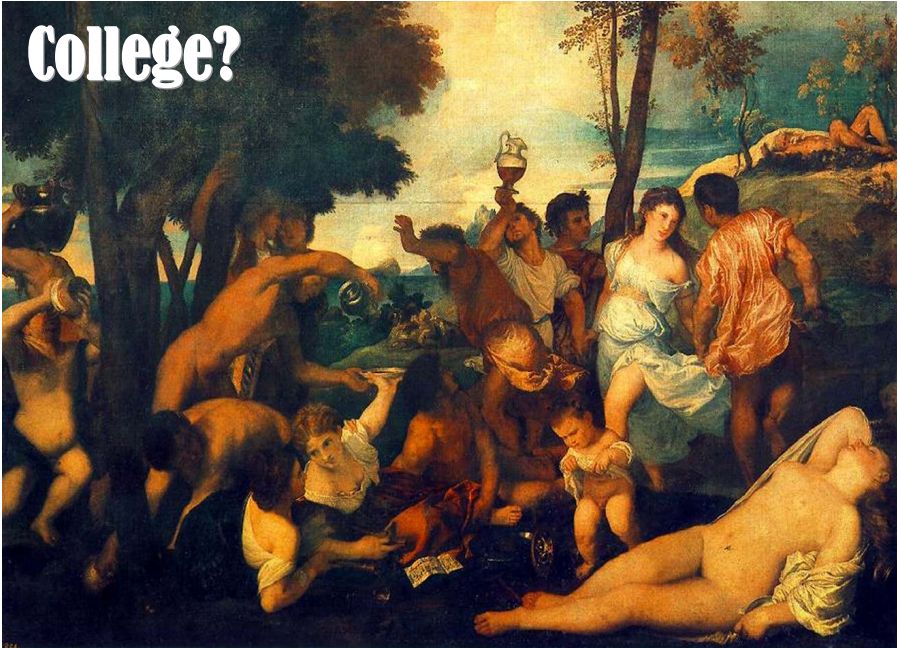
Back in the spring, Lisa gave a talk at Franklin and Marshall College about data about the newness, prevalence, and content of “hook ups” on American campuses. Surprise, today’s college students didn’t invent casual sex and there’s no need for their parents to worry about a “bacchanalian orgy” in one dorm after another.  Concluding that the problem isn’t “too much” sex, she argues that the problem is too much bad sex.

In her own research, Lisa has found that students want sex to be pleasurable, empowering, or meaningful.  But, alas, they seem to have difficulty achieving any one of those things in great measure.  The culprit, she concludes, isn’t hooking up, it’s hook up culture.  When a hook up culture dominates, all other ways of being sexual are repressed, and that leaves many students involuntarily celibate or having sex they don’t really want. The solution: an opening up of sexual options that allow students to truly, genuinely explore their own sexualities safely.

Franklin and Marshall College arranged to have the lecture filmed, but Lisa was too shy to post it on Soc Images. But she sent me the link to the talk, and I have no such misgivings. Unfortunately, the camera was set up at an angle where you can’t see the PowerPoint presentation that went along with the lecture, so you’ll have to look through it separately if you’re interested (slideshow and transcript if you’d rather read).  Lisa’s got other talks too, if you’re interested, and I know she loves giving them.

Common Hour: The Promise and Perils of Hook-Up Culture from Franklin & Marshall College on Vimeo.

Common Hour: The Promise and Perils of Hook-Up Culture from Franklin & Marshall College on Vimeo.

Today the U.S. Supreme Court has announced that the female employees of  Walmart will not be allowed to bring a class action lawsuit against the company, arguing that it has not been shown that they are a class.  It would have been the largest employment discrimination suit in history.

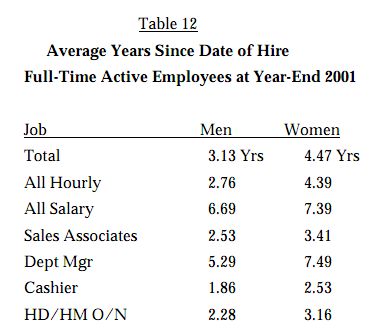
It seems timely, then, to re-post our summary of some of the evidence against Walmart.  Women are, on average, paid less, are less likely to be salaried, and hold lower-ranked positions than men.  This is true even though there is less turnover among women, meaning that the average female employee has been working at Walmart significantly longer than the average male employee.

——————————

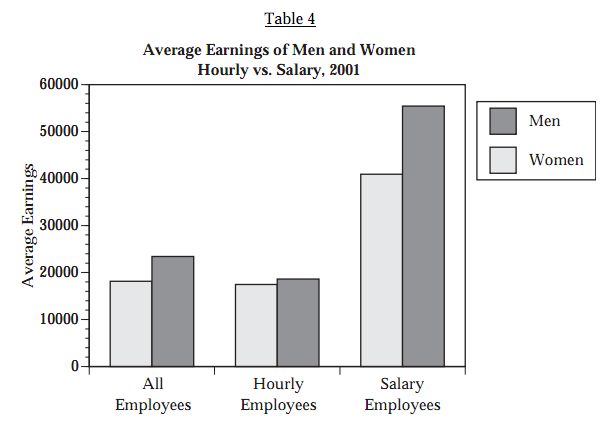
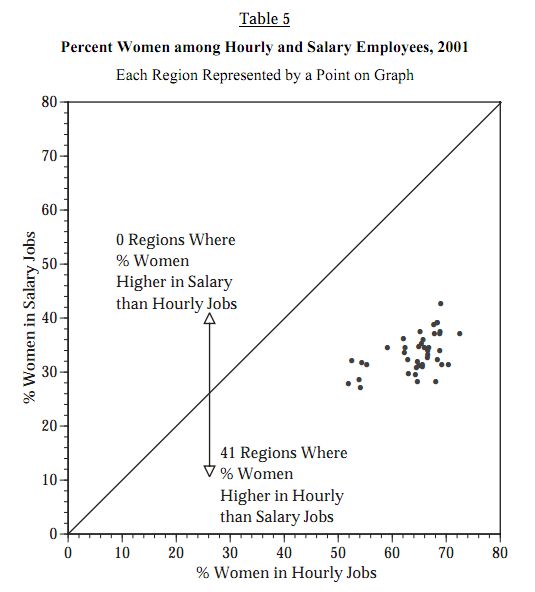
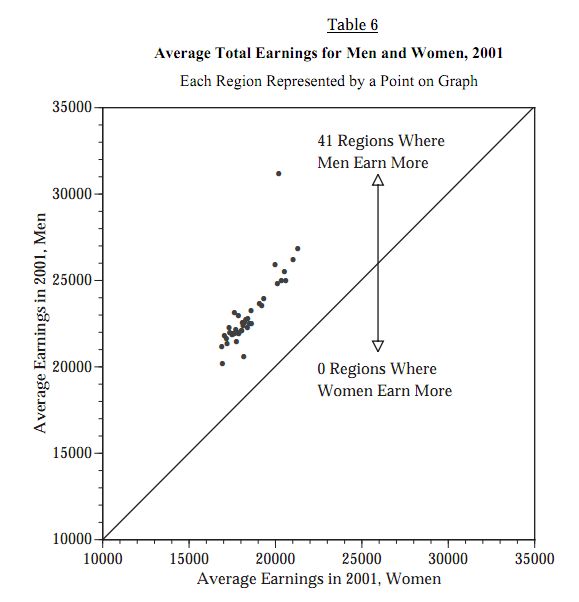
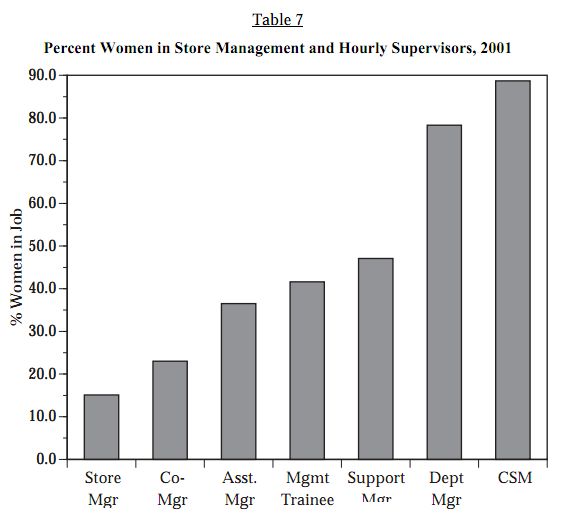
The U.S. Supreme Court is hearing arguments in the Dukes v. Wal-Mart suit. Wal-Mart is accused of egregious and systematic discrimination against the 1.5 million women who have worked there since 1998.  The case isn’t based on anecdotal accounts; instead, it’s backed up by reams of data.  Here is some of it.

Women in hourly and especially salaried jobs make less money than men:

Women are disproportionately in hourly jobs (instead of salaried jobs) in every district examined:

Women make less than men in every district examined:

Women dominate the lowest paying, lowest ranked jobs at Walmart, and are a smaller and smaller percentages of the workforce as you go up the pay/rank hierarchy (from right to left):

And this is true despite the fact that women have lower turnover and have, on average, been working at Walmart significantly longer:

Walmart isn’t fighting the data. They’re not claiming non-discrimination. Instead, they’re arguing that compensation should be restricted to the women directly named in the suit instead of the 1.5 million women who’ve worked there. In other words, they’re hoping that the judge will not grant “class action” status to the case. If he does, it will be the largest class action lawsuit in history.

Lisa Wade, PhD is an Associate Professor at Tulane University. She is the author of American Hookup, a book about college sexual culture; a textbook about gender; and a forthcoming introductory text: Terrible Magnificent Sociology. You can follow her on Twitter and Instagram.

Google often creatively alters its logo to honor important days on the calendar.  Today the logo references Father’s Day by turning the “l” in Google into a tie.  John McMahon did a fine job of discussing how Father’s Day cards tap into stereotypes about masculinity, but I thought this was interesting in its reference of a particular kind of work.  The tie isn’t a generic masculine symbol, but a class-specific one.

More, it ties fatherhood into the idea of being a breadwinner.  What is significant about a Dad?  The fact that he works so hard for the family.  Can you imagine a Mother’s Day symbol emphasizing her workplace instead of her time at home?

Lisa Wade, PhD is an Associate Professor at Tulane University. She is the author of American Hookup, a book about college sexual culture; a textbook about gender; and a forthcoming introductory text: Terrible Magnificent Sociology. You can follow her on Twitter and Instagram.

It’s almost Father’s Day, which means it is time for the greeting card business to make tons of money. It also means it’s time for us to visually see the standard narrative about gender, masculinity, and fatherhood. Looking at mass commercial products like greeting cards is an especially useful venue: the greeting card companies, wanting to make money like good capitalists, will sell products that have the greatest widespread appeal. Thus, they will sell the most popular representations of gender, masculinity, and fatherhood.

From a brief perusal of a NYC chain store greeting card aisle, I found plenty of cards that shed light on these representations. I want to focus, though, on two: middle-aged masculinity and the different representations of daughters and sons.

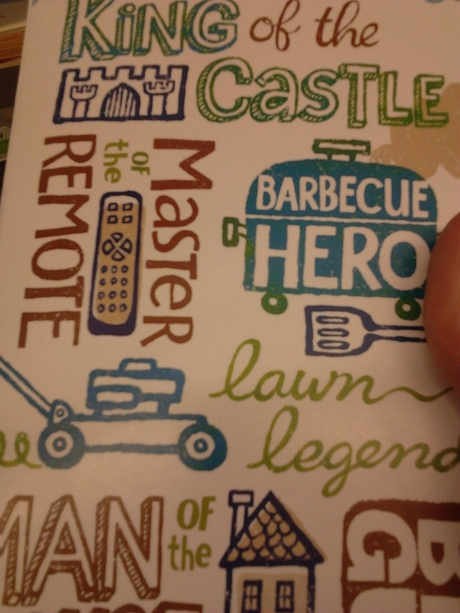
There were plenty of cards like this one, that capture many of the stereotypical narratives about fatherhood, and middle-aged masculinity more broadly:

(Apologies for the poor picture quality, a nearby employee didn’t seem thrilled with my picture-taking).

Here, we see man/father as: head of the household (twice, and once as dictator – king): cooks, but only on the grill; lawn mowing expert; controller of the remote/TV watcher; and “big guy.” What’s not on there? Anything about love for children, caring, affection, equitable distribution of household duties (if part of a couple), etc.

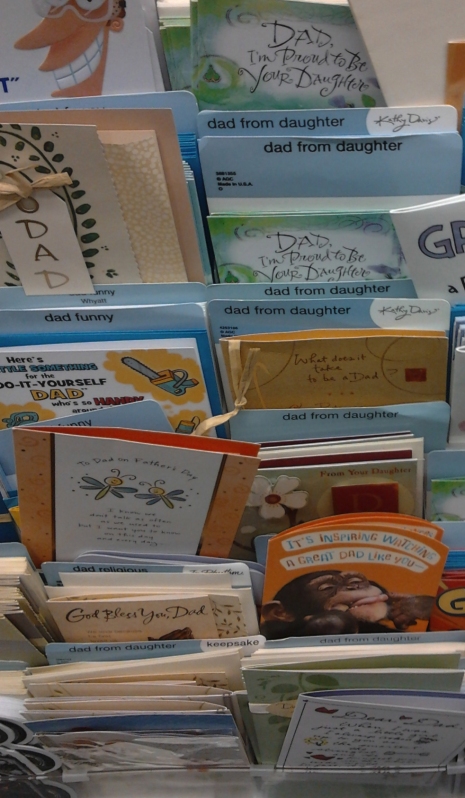
Almost all of the love and affection, though, was saved for cards specifically marketed as ‘Dad from daughter.” Most of the cards in this picture were love-centric and labeled as such:

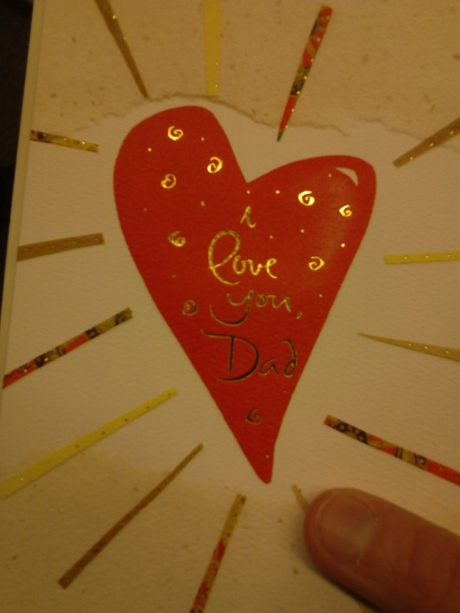
There were a few rare cards simply marked as ‘Dad’ that include themes of love and/or affection, such as this one:

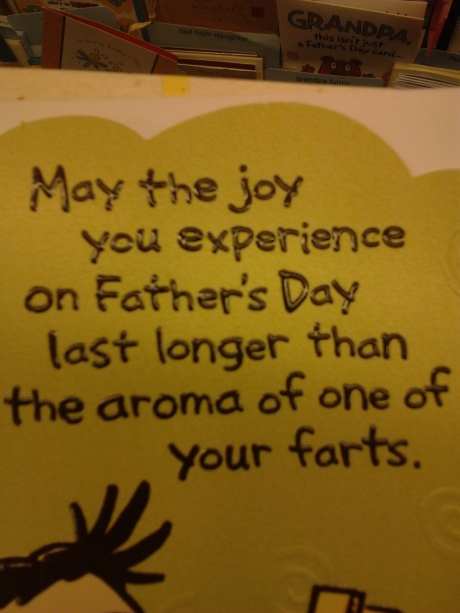
The cards marked ‘Dad from son,’ however, mostly consisted of attempts at humor involving sports (especially golf), building things (or the lack of ability to do so), and, well, farts:

Obviously, we can’t draw too much from the greeting cards in one store, but in this store, at least, there was only one card explicitly marked for sons that primarily communicated feelings of love and affection; all of these were either marked for daughters to give or did not specify what gender should give them. Pairing this with the kinds of fatherly masculinity represented by the cards, Father’s Day cards are sold through the use of traditional gender representations.

Note: all photos licensed under a Creative Commons Attribution-NonCommercial-ShareAlike 3.0 Unported License.

———————-

John McMahon is a Ph.D. student in Political Science at the City University of New York Graduate Center, where he also participates in the Women’s Studies Certificate Program. He is interested in post-structuralism, issues relating to men and feminism, gendered practices in international relations, gender and political theory, and questions of American state identity. John blogs at Facile Gestures, where this post originally appeared.

If you would like to write a post for Sociological Images, please see our Guidelines for Guest Bloggers.

Please enjoy these posts from Father’s Days past:

Stereotyping Men on Dad’s Day

Also…

Lisa Wade, PhD is an Associate Professor at Tulane University. She is the author of American Hookup, a book about college sexual culture; a textbook about gender; and a forthcoming introductory text: Terrible Magnificent Sociology. You can follow her on Twitter and Instagram.