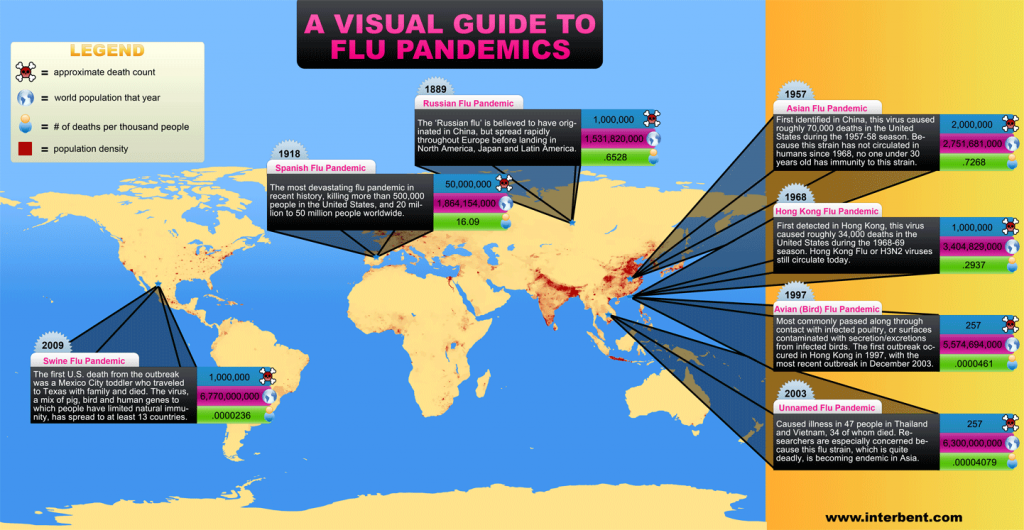
An interesting representation of flu pandemics (full size found here) throughout history.

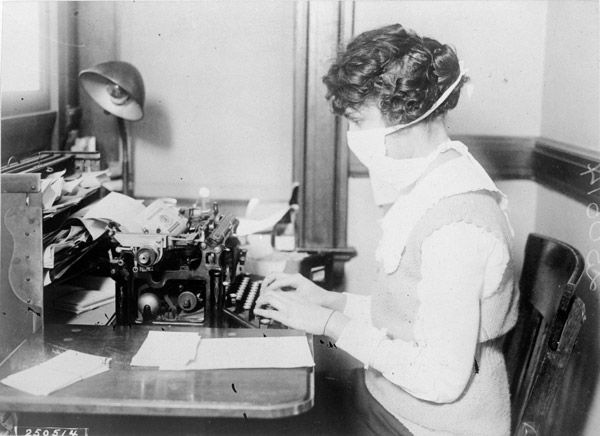
The US National Archives has a wonderful set of images (like the one below) related to The Influenza Epidemic of 1918.
An interesting representation of flu pandemics (full size found here) throughout history.
The US National Archives has a wonderful set of images (like the one below) related to The Influenza Epidemic of 1918.
Eric S. drew our attention to an ad campaign for Jawbone, a noise cancelling headset. Eric was disturbed by the way the women were used in the advertising. Take a look:
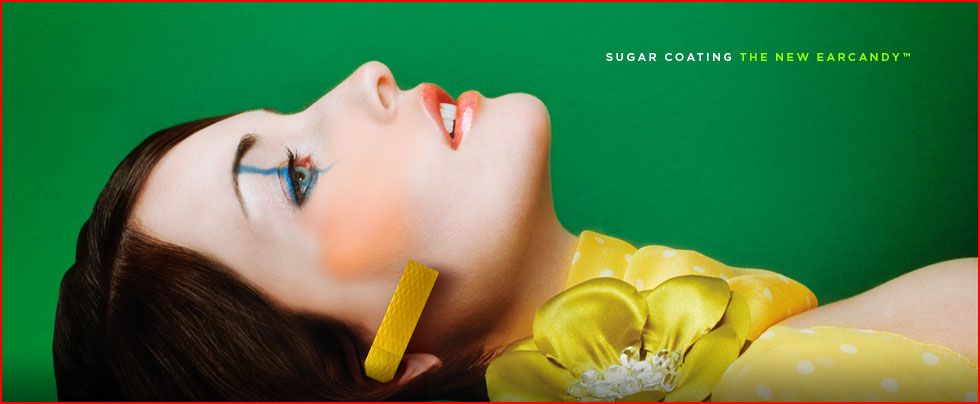
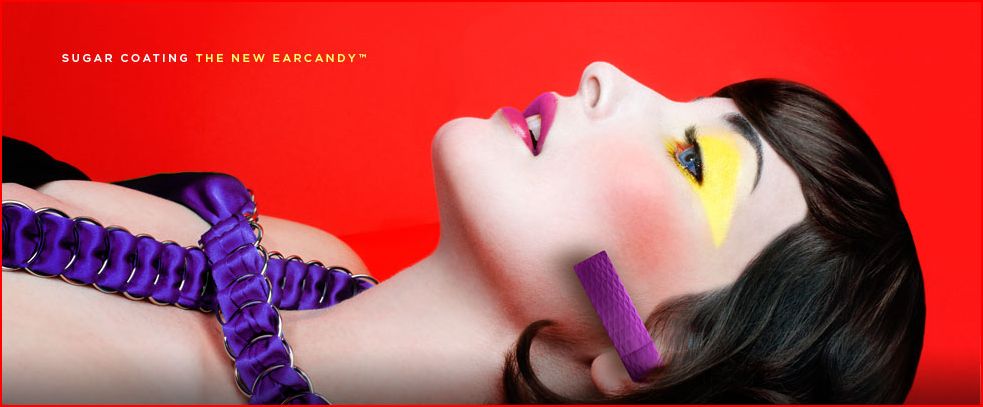
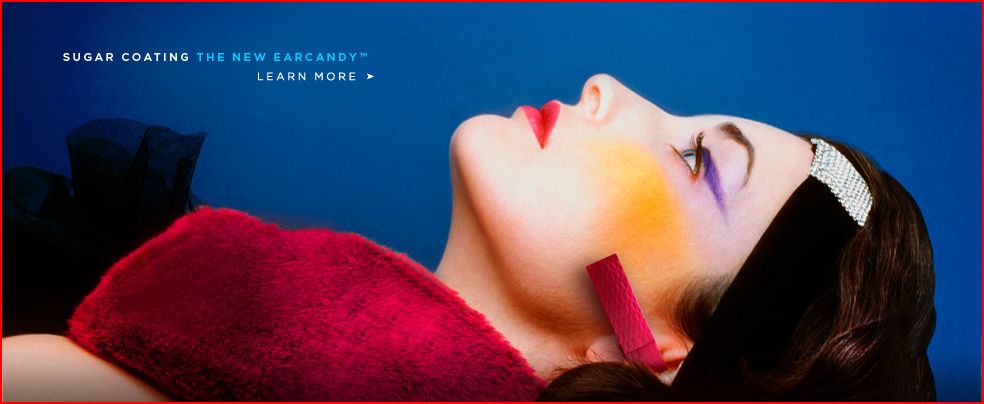
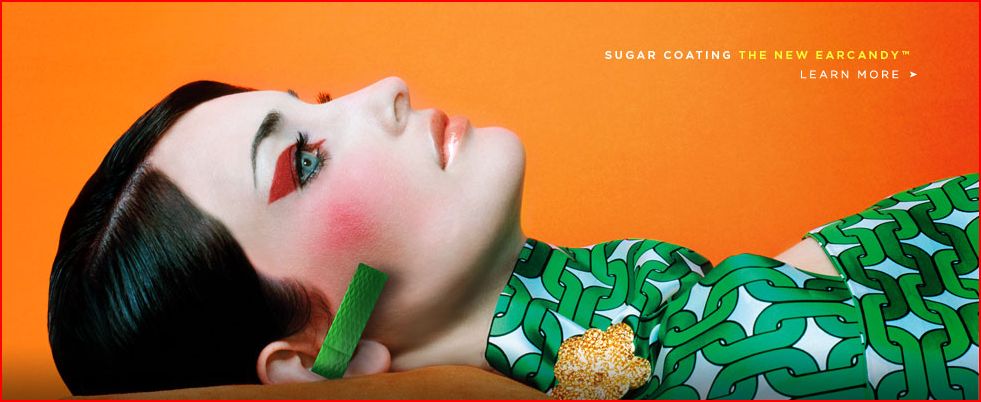
It is interesting that a product that must be actively used (it’s for talking) is advertised with such passive women.
Some scholars, Jean Kilbourne among them, have noted that ads often include women who appear to be dead (see here, here, here, and here). If these women do not appear to be dead, they at least appear doll-like. Their eyes are blank, staring at nothing. It seems to me that one or both of these are going on here… in either case, the strategy dehumanizes the women, making them into objects.
Also in women as racks on which to place product: men’s shoes and accessories.
We recently critiqued Facebook’s “neutral” avatar for appearing both white and male. Both Abby J. and Noah Brier pointed us to the fact that Rob Walker at Murketing has been collecting default avatars. His collection is really interesting. First, it demonstrates that the avatars don’t need to be gendered at all.
Flikr:

Hotmail:

Google:

Vimeo:

My space:

Friendfeed:

Yahoo:

Youtube:

Second, it demonstrates that the avatars don’t have to human at all:
Twitter:

Posterous:

Third, his collection also suggests that, when the avatar is human and discernibly gendered, it usually appears to be male. There’s the Facebook avatar, as well as…
EBay:

Car Domain:

Topix:

Yammer:

The avatar tends to be male, unless the company produces a default male and a default female.
Blip FM:

Goodreads:


This collection reveals that the appearance of a company’s default avatar is by no means inevitable or accidental. Companies must make choices and they are, indeed, making choices about what kind of person is the default person.
Check out his whole collection. It is growing.
Jamie R. sent in a link to a video that presents a lot of attention-grabbing statistics (which may or may not be accurate). At first it appears that the avatar could be unisex, but then at about 1:18, we see the “female” avatar:
Did You Know? from Amybeth on Vimeo.
At no other place in the video do we see the female avatar except when the “neutral” one is presented as married…indicating, from the context of the video, that it is not unisex or neutral, but male.
MORE! You may have noticed that our revamping of the site involved putting our names up. Lo and behold, these male avatars popped up next to our names.

So we went into the admin page to see if we had some other option, like maybe something non-human or a female avatar if necessary. These were our options:
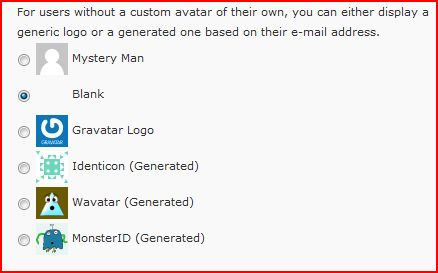
First, blank is really the avatar you see in the first screenshot, it’s neutral which, in reality, is male. So there is no way to opt out of having an avatar (our tech guy, Jon, is still working on it).
Second, there is no female avatar option.
Third, though there is no female avatar, there is a Monster and a Wavatar option, whatever the hell that is. So WordPress is allowing you to represent yourself as a Wavatar, but you’re not allowed to be a chick.
Amazing.
NEW (Apr. ’10)! Keri sent a screenshot of her WordPress menu which, she noted, represents the users with two different skin colors. It’s a nice counterpoint to much of what we see above:

For more on how certain kinds of people get imagined as just people, while others get imagined as certain kinds of people, visit our posts on the Body Worlds exhibit, “flesh” colored products, Pixar films, gender and clothes, and Plan and Playmobile toys.
Birdseed sent in this photo he took at a grocery store in Stockholm (which he posted at his blog as well):
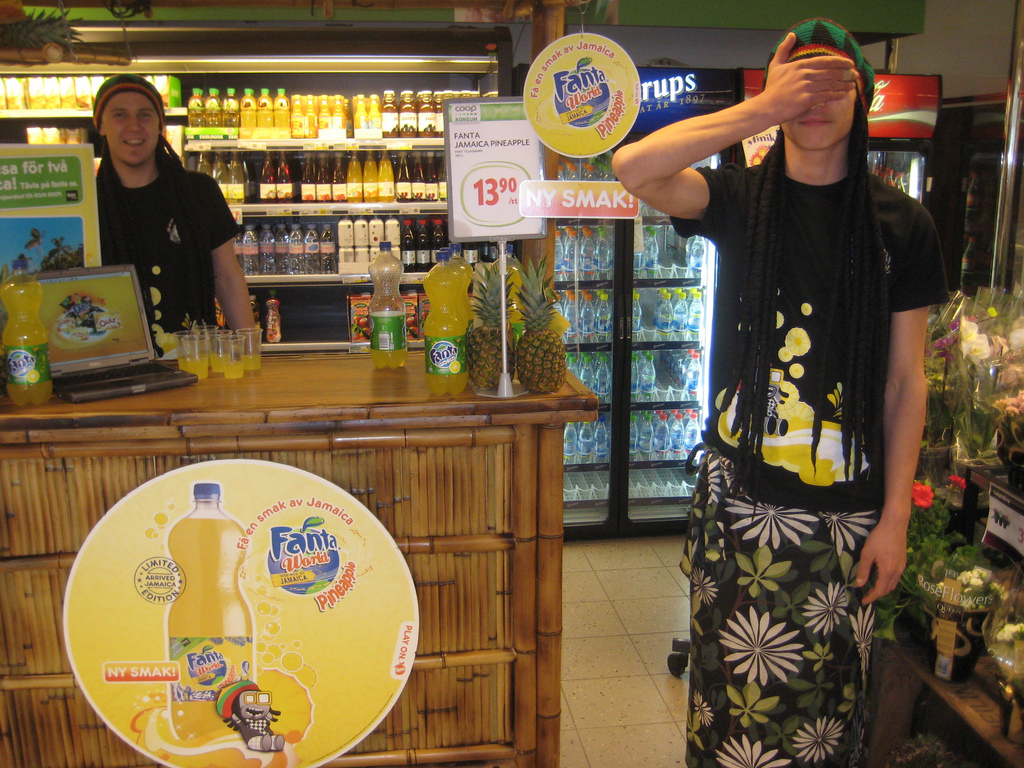
The product is a new beverage, Fanta World Pineapple: Inspired by Jamaica. The two guys in the photo were hired to promote it at the little tiki-style counter. Johan says,
A couple of things leap out at me straight away:
* The continued (post-)colonial association of Jamaica with its plantation produce. The “inspiration” seems limited to the fact that pineapples are grown there for the consumption of the global North. (Canned goods like pineapples still have the charming moniker “kolonialvaror” (colonial merchandise) in Swedish retail jargon.)
* The ridiculous (verging on blackface) stereotypical representation of “Jamaicans” that the kids are suppsed to portray. It seems to have been done with extreme sloppiness – for instance, the Polynesian lava lava (a type of sarong) that they wear has absolutely nothing to do with Jamaica at all, but rather acts to represent an identity-less generalised tropics, dehumanised exotica.
The music was, of course, bad reggae.
I think Johan hits on an important issue here–how often the cultures of non-Westernized countries are mixed together into an undifferentiated image of exoticness–for instance, “tribal” fashion and “traditional” handicrafts often supposedly represent “Africa,” which is a meaningless category given the enormous diversity of cultures, languages, clothing styles, artistic motifs, and so on. But if you put some geometric designs and maybe an elephant on some cloth, it evokes “Africa.”
it’s also interesting that a certain hat shape and dreads have become such easily-identifiable shorthand symbols of Jamaica, and that Fanta is commodifying the idea of Jamaica to sell a product that has no reason to be more “inspired” by Jamaica than anywhere else pineapple is grown–Hawaii, Mexico, Costa Rica, etc. etc. etc.
Gwen Sharp is an associate professor of sociology at Nevada State College. You can follow her on Twitter at @gwensharpnv.
Objections to a BuzzFreeProm ad has led the organization to pull it and apologize. The ad reads: “Go from prom king to queen in three shots or less.”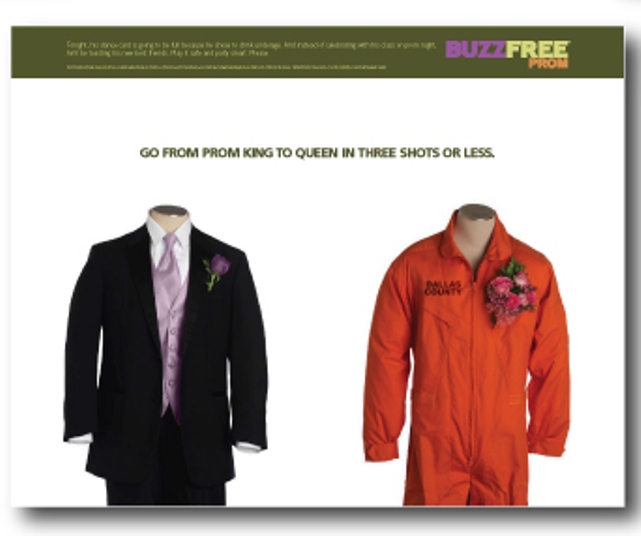
Lisa Derrick at La Figa had the following exchange with the talent behind the ad:
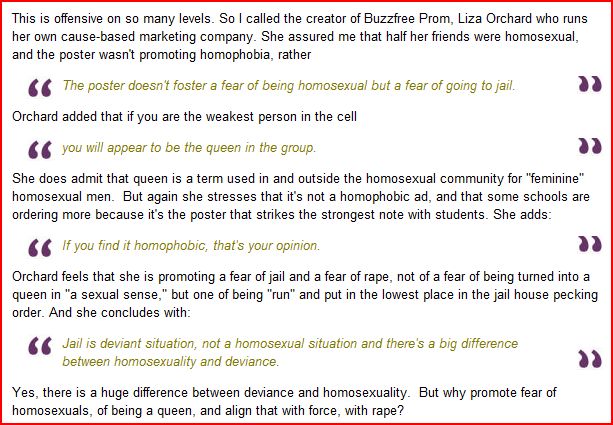
I will go further. I think that being a “queen,” in the jail sense, is about being, both literally and figuratively, on the bottom. The imprisoned, gay men and, for that matter, women, are all on the bottom in this sense. (The corsage on the prison uniform is a hint that it’s not just about being gay, but about being female.) The problem with this ad, for me, is that it conflates sex and power. That the conflation can span so many different categories suggests that it resonates strongly. And that is what is disappointing to me. I would prefer to live in a world in which sex and power could be disentangled, as opposed to one that affirmed their entanglement. Let’s try to keep kids safe some other way, eh?
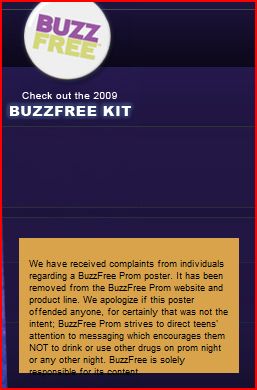
BuzzFreeProm has since put up an apology:
Other anti-drug and anti-drinking ads: an anti-meth campaign reminiscent of reefer madness, a vintage hanna-barbara anti-drug commercial, bizarre anti-drinking and driving messages, and threatening women with unattractiveness.
In this cartoon, titled “Plane Dumb” (1932), Van Beuren’s Tom and Jerry put on black face in order to disguise themselves in Africa. Putting on black face affects their intelligence as they go from being smart to dumb. Idoicy ensues. The “natives” come out at the very end:
Thanks to Steve W. for the link!
For more vintage racist cartoons, see these clips from Fantasia, these Bugs Bunny stills, this racist reinterpretation of Snow White, and this Bugs Bunny cartoon that caricatures the Japanese.
And this one’s just for fun.
A month or two ago I commented on the New York Times Upfront magazine for high school kids. I recently came across their latest, which features a cover story titled “What We Eat.” The story is really just an interesting collection of photographs of families from nations all over the world, but with each family sitting with all the food in their house.
However, although the title of the article inside the magazine is “What We Eat,” the title listed on the cover of the magazine is “What They Eat.” The picture selected for the cover is not one of the family photos, but is, instead, a photo apparently selected to elicit the maximum negative visceral response possible from American kids:
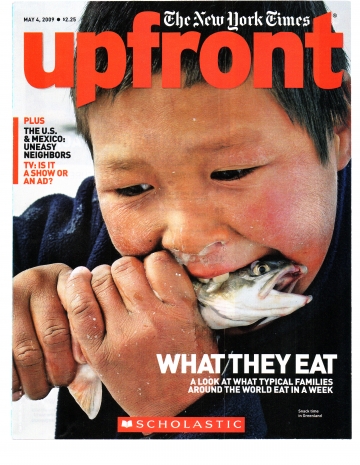
So the cover separates an “us” and a “them,” and shows the American high school students how gross and weird “they” are.
Check out the issue that preceded this one by just two or three weeks:

Here American high school students learn that people around the world with dark skin are violent, dirty, and poorly dressed.
No wonder American kids grow up to be American adults whose voting habits reflect the view that American foreign policy should be paternalistic.
——————–
Missives from Marx is an Assistant Professor of Religious Studies.
If you would like to write a post for Sociological Images, please see our Guidelines for Guest Bloggers.
Gwen Sharp is an associate professor of sociology at Nevada State College. You can follow her on Twitter at @gwensharpnv.
NEWS!
In addition to friending us on Facebook, you can now follow us on Twitter!
FROM THE ARCHIVES:
April last year: This fascinating Italian anti-immigrant poster suggests that, if immigration to Italy is allowed, immigrants will persecute the native Italians like U.S. colonizers did American Indians. It’s a pretty amazing tactic.
NEWLY ENRICHED POSTS (bottom of post may not be safe for work!):
Total Drek revised an xkcd cartoon on the difference between causation and correlation. So we added it to our original post.
Sex sells ‘n stuff:
Sarah Haskins makes fun of euphemistic references to female genitalia. We added her video to our post on our efforts to avoid using the real terms.
Related to discomfort with women’s genitalia, Taylor D. sent in a link to even more vintage ads for Lysol as a douche, which we added to this post.
We added a vintage ad to our sex sells post. This one tells men that if they don’t buy Firestone tires, they won’t get laid. Women? Well I guess they don’t drive.
Also in sex sells, we updated our post on the sexualization of food, this time with a Max Factor ad and a not-to-be-missed Hardee’s commercial featuring Padma Lakshmi having quite the sensual experience with a bacon burger (scroll all the way to the bottom).
We also added another image to our post with examples of sex as “scoring.”
Now to sperm: We added three more images affirming the idea that we were all once a mighty sperm (eggs, apparently, just add nutrition, if that) to this post on the weird ways in which sperm are socially constructed. In one of them, a condom ad suggests that one condom could have prevented the holocaust by dressing a sperm up as Hitler. Another example dates back to the beginning of the idea in 1694.
On race and ethnicity:
We added material to two posts in our series on how and why people of color are included in ads aimed at white people. First, we added a set of photographs taken by Joshua B. at Office Max to our post showing how people of color are often portrayed as being more, eh em, colorful. Second, we added an image to our post on how people of color are literally background or arranged so that the focal point (visually or through action) is the white person or people in the ad.
We added images of sculptures that comically/stereotypically (depending on your point of view) represent European countries to this post about stereotyping nationalities. The installation was supposedly by 27 different artists, but it turns out to be a hoax; all of them were created by a single Czech artist.
Also in ethnic stereotypes, we added a cartoon from Life magazine suggesting that monkeys are insulted by being given Irish names. We added it to our collection of anti-Irish sentiment from the 1800s.
And visit this post to see our newest example of using the notion of the “savage” to sell in the 1950s.
Miguel sent us an image of a “White” Obama, which we added to our post that asks “What do Black and White look like, anyway?”
Philip D. sent us a set of Crown Royal ads that reportedly target a “general” and a specifically African American audience, respectively, which we added to our post about marketing products to different groups.
On gender:
Elizabeth M. sent us a link to fashion designer Nina Ricci’s new line of shoes. They’re high high HIGH heels! We added it to some other real hobblers here.
Women cannot be counted on to hold it together in the face of low calorie sweets… or at least that’s what another commercial tells us.
Ben O. sent us a link to a company that makes pink protective gear for female construction workers. We added it to our post featuring pink handcuffs for cops.
There’s now another image up from the Evan Williams bourbon “The Longer You Wait” ad campaign.
Keely W. sent in a link to the new Fling candy bar, just for girls. We added it to our post on gendered candy marketing.
The Daily Show spoofed the obsession with Michelle Obama’s clothes. Andrea G. sent in the link and we added it to our collection of examples of this obsession. We also added a picture of the cover of a new book: Michelle Style: Celebrating the First Lady of Fashion.
We added a picture of a sink that looks like a woman’s lower half to our post about urinals shaped like women’s bodies.
And, finally, does a month go by where we don’t update our BOOBS! post? Rarely. This time, though, we’ve got something special: Jezebel offered us a photo essay of a boob shaped milk cartoon, from fridge to trashcan. Visit our updated post here (scroll to the bottom) and enjoy this teaser: