The always-awesome Miguel, of El Forastero, sent in an interesting image and post from Puente Aéreo about an article in El Correo ridiculing a Peruvian congressional representative , Hilaria Supa, for her language skills. Supa represents the district of Cusco, an area where the majority of residents speak Quechua as a native language, not Spanish. The magazine ran an image on the cover that shows notes she was taking during a legislative session.

Just a disclaimer, the translations below are mine, not Miguel’s, so if they’re incorrect it’s my fault, not his; I read Spanish decently well and I gave it my best shot, but if you think I misinterpreted the meaning of something, by all means let me know. Nicely.

The caption under the photo on the El Correo website says, “Según la hoja de vida de Hilaria Supa, en 1991 impulsó la alfabetización de mujeres campesinas a través de la Federación de Mujeres de Anta (FEMCA),” which translates as, more or less, “According to the bio of Hilaria Supa, in 1991 she began a literacy campaign for rural women as part of the Women’s Federation of Anta”). Clearly the idea is to ridicule her–this woman claims to have worked on literacy issues for rural woman?

Some quotes from the online article:

… lo que descubrió una reveladora foto de Correo, sus limitaciones en cuanto a ortografía y sintaxis dejan mucho que desear. [“As shown in a revelatory photo by Correo, her orthography and syntax leave much to be desired.”]

Muchos años antes de ser elegida congresista, Hilaria Supa se desempeñó como empleada del hogar en el Cusco, Arequipa y Lima. [“Many years before her election to congress, Hilaria Supa  was a house servant in Cusco, Arequipa, and Lima.”]

…su colega Martha Hildebrandt se quejó de sus destempladas protestas sobre un proyecto para declarar oficiales las lenguas aborígenes. “Miren los modales de estas niñas quechuahablantes”, comentó. [“Her colleague Martha Hildebrandta complained about her acrimonious (inharmonious?) protests about a project to declare indigenous languages official*. ‘Look at the manners of these childish Quechua-speakers,’ she said.”] *Apparently this refers to the fact that Supa and another indigenous representative spoke their swearing-in oath in Quechua instead of Spanish, the first officials in Peru ever to do so. Apparently this pissed people off even though Quechua is one of Peru’s two official languagues, along with Spanish.

The article also clearly implies that she doesn’t deserve to be in Congress, interviewing people about how political parties are supposed to serve as a filter to be sure that not just “anyone” can be elected.

Miguel says,

This picture is a clear statement of the white, Spanish-speaking (and male) [establishment] that opposes the participation of indigenous people (and women) in the government.

Indeed. Although Quechua is an official language of Peru, and even though large segments of the population do not speak Spanish as their native language and there is no requirement that they do so, the message here is clear: attempts to redefine the political establishment in Peru so that indigenous communities can participate more fully on their own terms (as opposed to being forced to completely assimilate to non-indigenous, Spanish-speaking Peruvian culture as a requirement for respect) do not deserve a place in public life.

NOTE: Sigh. After reading everything in Spanish and translating the above sections into English, both of which made my brain hurt, it finally occurred to me to see if any English-language blogs or media outlets have discussed the article and provided translations. Yes, they have. Google “Hilaria Supa Peru” and several items will come up. Then I just felt dumb, but since I have papers to grade and no time to redo it, I’m just leaving my translations and hoping for the best. You might want to check out some other English-language sites for more discussion.

Gwen Sharp is an associate professor of sociology at Nevada State College. You can follow her on Twitter at @gwensharpnv.

Jay Smooth speaks to the Asher Roth tweet about “nappy headed hos” and offers some great insights as to how to maintain proper boundaries when blacks and whites form mixed-race communities.

NEW! More with Don Charnas (found here):

Several readers sent in this charming Nikon ad (found, among other places, at What a Crazy Happenstance), where we learn that women with bigger boobs are the equivalent of a higher-quality camera:

1

Sigh. It’s apparently quite highly rated on diggit–it’s the Best Camera Ad Ever!

Thanks to Taylor, Connie J., Jeff G., and Emma B.!

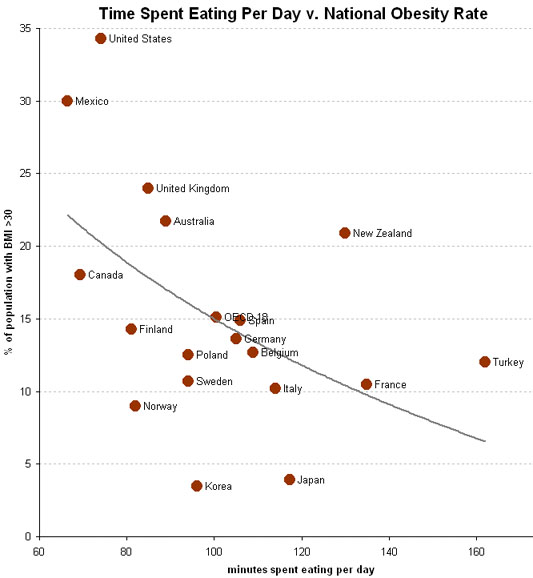
In a NYT blog, Catherine Rampell “plotted out the relationship between time the average person in a given country spends eating and that country’s obesity rate (as measured by the percentage of the national population with a body mass index higher than 30).”

foodfatWhile the blog post is light on details and the statistics are far from conclusive, the chart holds and invites a discussion about food and culture.
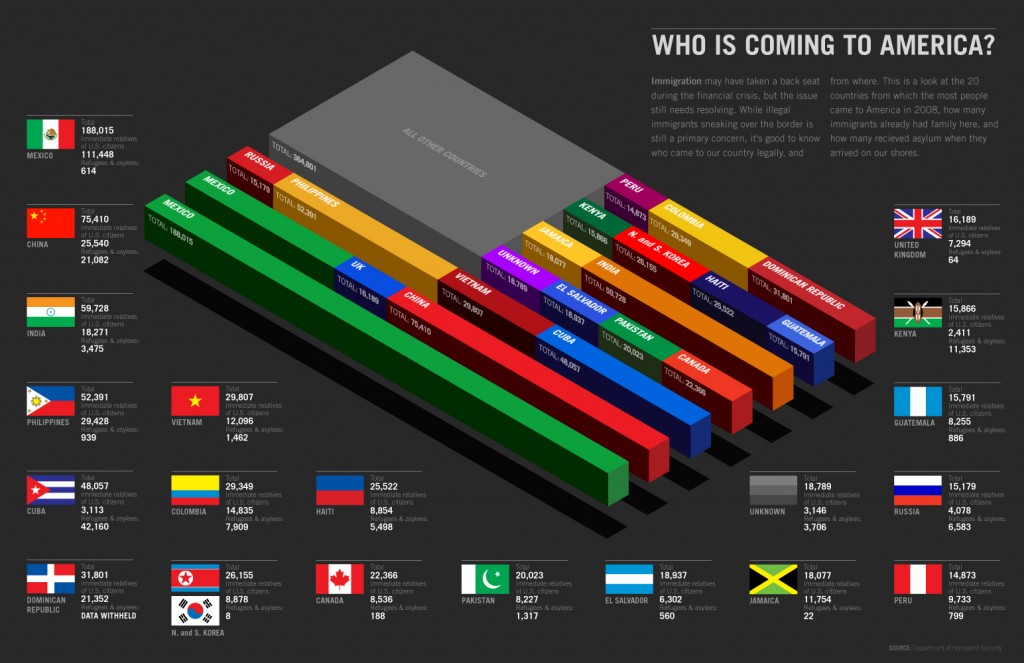
From the folks at Good Magazine, a “look at the 20 countries from which the most people came to America in 2008,” including how many were immediate relatives of US citizens, and how many received asylum, based on data from the Department of Homeland Security.

trans0509whoiscomingtoamerica

Does anyone know why data from North Korea and South Korea is combined? How can country be “unknown” for so many?

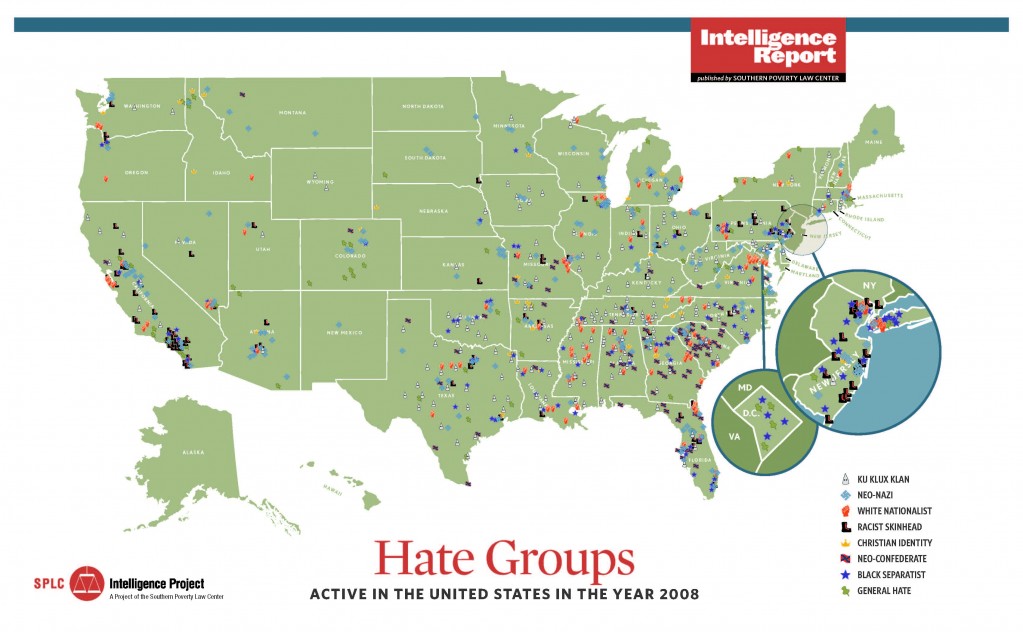
Emily K. sent in a link to the Southern Poverty Law Center’s 2009 report on hate groups in the U.S. Here’s a map (larger, not-stretched-out version available as a pdf here):

splc_hategroups208

The site also has an interactive map where you can select individual states and get more info on the hate groups that are active there, and another where “hate incidents” are marked.

Sorry for the sporadic posting lately–it’s the last week of the semester and I’m grading constantly.

UPDATE: One of my best friends just informed me that when investigating the SPLC hate incidents map, he realized he knew one of the people listed as a perpetrator in an incident in a certain Southern state; I promised to give no more details than that. This led to a discussion of the weirdness of some of the folks we grew up with, including a guy I went to school with who washed his head in gasoline to try to kill lice and ended up setting his entire head on fire. And no, I don’t know why a person would decide to use gasoline to kill lice. I also don’t know how one of my uncles managed to shoot himself in the foot while elk hunting, why that didn’t deter another uncle from going, falling down a mountain slope, and cracking his ribs, or why my mom married an evangelical Christian who didn’t like women to wear pants eight weeks after she met him on the internet. These are some of the many mysteries of life.

ANOTHER UPDATE: Commenter OP Minded says,

Kind of outrageous that the SPLC has “Concerned Citizens and Friends of Illegal Immigration Law Enforcement” in Framingham, MA listed as a hate group. There is no doubt that they are in favor of enforcing immigration law (after all, it is the law) but they don’t fall anywhere near a “hate group”. Calls into question this entire list.

Another commenter says,

To follow up on opminded@2: It’s too bad the Southern Poverty Law Center also uses these trumped-up threats to pad its already-deep coffers. Less than 70 percent of its expenses go toward its programs; the rest is for administration and fundraising.  Any human rights organization with almost $220 million in net assets isn’t doing its job.

The anonymous commenter suggests going to Charity Navigator to get more information.

I did not know about these criticisms (a problem in general about charities is not knowing for sure how the money is spent). My experience with the SPLC relates to their work with African American farmers in the South, a group that has experienced major land loss due to various factors largely involving racism and unscrupulous land developers. Their work on that particular issue was considered pretty solid. But of course there aren’t all that many organizations working on that problem, so any efforts were greatly appreciated.

Thanks for the additional info!

ANOTHER UPDATE: Commenter CLL says,

Over the years, SPLC has done terrific work helping people with little access to power receive the justice they deserve. Groups the SPLC has identified as “hate” groups have gone beyond simply disagreeing with policy (or lack of enforcement), and have instead encouraged their adherents to express discontent in more direct attacks on the object(s) of their scorn — thus qualifying as “hate” groups.

Spending 69.6% of income on programs remains a pretty normal ratio for not-for-profits that rely heavily on professional staff. Some organizations play fast and loose with their Fundraising allocations to cook the percentages down to numbers that look better on sites like Charity Navigator — but the proof of effectiveness is in accomplishment of mission.

An interesting representation of  flu pandemics (full size found here) throughout history.

flu-pandemics2

The US National Archives has a wonderful set of images (like the one below) related to The Influenza Epidemic of 1918.

flu-typist

Eric S. drew our attention to an ad campaign for Jawbone, a noise cancelling headset.  Eric was disturbed by the way the women were used in the advertising.  Take a look:

capture1

capture3

capture4

capture2

It is interesting that a product that must be actively used (it’s for talking) is advertised with such passive women.

Some scholars, Jean Kilbourne among them, have noted that ads often include women who appear to be dead (see here, here, here, and here).  If these women do not appear to be dead, they at least appear doll-like.  Their eyes are blank, staring at nothing.   It seems to me that one or both of these are going on here… in either case, the strategy dehumanizes the women, making them into objects.

Also in women as racks on which to place product: men’s shoes and accessories.