Last week marked the 154th anniversary of a conflict that would reverberate across the United States. Its history has been clouded by the American Civil War, leaving it often as a mere footnote in larger conflicts. Fighting in the Dakota Conflict unfolded over only six weeks, during which hundreds of Minnesota settlers were killed or displaced. However, it is the conflicts impact on the Dakota that has left the longest legacy. After the war, more than eight hundred Dakota men were sentenced to death and thirty-eight would be hung in Mankato in 1862 – still the largest mass execution in American history. More than 1,600 women, children and the elderly spent a winter interred on Pike Island on the Mississippi before being shipped to reservations in Nebraska. Disease and starvation was rampant. In another act of indignity, Congress passed legislation banning the Dakota from returning to Minnesota – a law that remains on the books more than a century and a half later.
Natan Sznaider, Academic College of Tel-Aviv-Yaffo
This is the second half of Natan Sznaider’s critique of Bauman’s Modernity and the Holocaust. You can find the first half here.
Multiple Modernities and the Memory of the Holocaust
We do need to talk about modernity (the concept as such makes sociologically no sense), but about multiple modernities and multiple Enlightenments. One of the clues is Arendt’s book “On Revolution” where she compares and contrasts the French and the Anglo-Saxon traditions of Enlightenment
When we look at the Scottish Enlightenment, for instance, it is grounded on the sentiments or a moral or common sense as a kind of intuitive judgment. Capacity to distinguish between right and wrong, good and evil, exercising power of judgment, anchored in religion and balancing between morality and utility in the basis of a liberty seen as granted to all. Look at Adam Smith’s exploration of virtues like compassion and benevolence. Arendt was working in this tradition when she in her “On Revolution” takes side with the legacy of the American Revolution and the Scottish Enlightenment against its French contender. Thus, in the French tradition (and we are talking caricatures) there is a strong opposition between reason and religion, while the Scots tried to reconcile reason and faith. I think these distinctions are important even though they do not play much or a role in Bauman’s text.
Natan Sznaider, Academic College of Tel-Aviv-Yaffo
Many of us were deeply impressed when Zygmunt Bauman published his “Modernity and the Holocaust” almost a quarter century ago. When I studied sociology in the 1970s there was not much sociological thinking going around about the Holocaust.
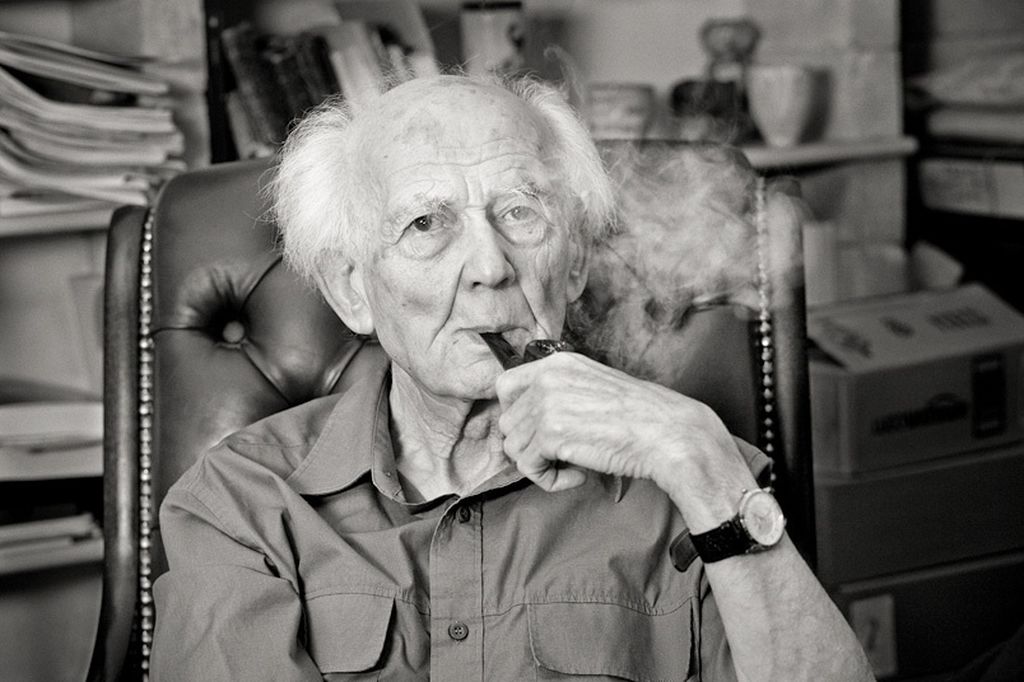
When the book came out we weren’t very aware of the consequences. The book came out when the Berlin Wall fell and one year later, Germany was reunified and I would argue that these things are connected. Bauman himself was much more aware of the context. In his Amalfi Prize lecture Bauman was very clear about the context of his book and I quote him: “The ideas that went into the book knew of no divide; they knew only of our common European experience, of our shared history whose unity may be belied, even temporarily suppressed, but not broken. It is our joint, all European, fate that my book is addressing“ (p.208 of the second edition of Modernity and the Holocaust).
This month, Jodi Elowitz shares five selections that explore recent Holocaust fiction and documentaries from a variety of perspectives.
Now Streaming on Netflix
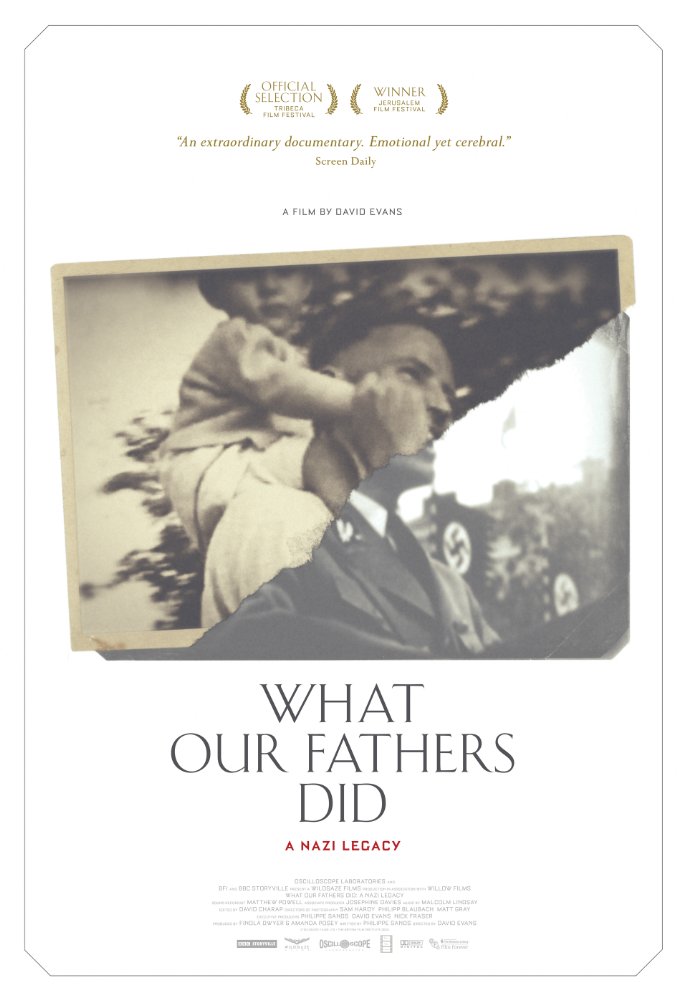 What Our Fathers Did: A Nazi Legacy (2015) is a documentary based on the article My Father, the Good Nazi (2013) written by British Lawyer, Phillipe Sands in the Financial Times Magazine. The article discusses the relation of Niklas Frank, son of Hans Frank, Governor General of occupied Poland (General government) and Horst von Wächter, son of Otto von Wächter, District Governor of Krakow, Poland and later District Governor of Galicia during World War II. Both men were responsible for overseeing the extermination of Jews and charged with war crimes. Frank stood trial at Nuremberg and was found guilty on counts three and four (war crimes and crimes against humanity), sentenced to death, and executed on October 16, 1946. Wächter escaped prosecution and died while hiding in Rome in 1949.
In early March, 10-year-old Ariana Mangolamara committed suicide in the Aboriginal community of Looma in Western Australia. Her death wasn’t unique: she wasn’t the first in her community or even her family to commit suicide. However, her story gripped international headlines and prompted a soul-searching analysis of why the plight of Australia’s indigenous peoples is worse than ever, despite formal political recognition and efforts to help. Many of these efforts seem designed to destabilize Aboriginal communities through systematic neglect, the breaking of families through child removal and a callous disregard for culturally viable strategies.
On July 13, 2016, after more than 23 years of its enactment, the “General Amnesty Act for the Consolidation of Peace” was declared unconstitutional by the Constitutional Chamber of the Supreme Court of Justice of El Salvador. In what has become a landmark ruling for the victims of the armed conflict, the highest court of justice has opened up the possibility to try those people from both warring parties who perpetrated the most egregious international crimes during one of the bloodiest wars that took place in Latin America in the twentieth century.
The Center for Holocaust and Genocide Studies Director, Dr. Alejandro authored this article in response to the recent passing of Elie Wiesel. It appeared in the July 6th issue of the Minneapolis Star Tribune.
With the passing of Elie Wiesel, genocide education has lost its most important advocate. I write “genocide” and not Holocaust, in order to make a point.
 There are many that contend today that the Holocaust’s global presence and iconic status obscures other forms of mass violence, and even the acknowledgment of other genocides. Elie Wiesel’s seminal role in Holocaust memorialization worldwide demonstrates exactly the opposite. The proliferation of Holocaust remembrance, education and research efforts has been extraordinarily influential in the moral and political debates about atrocities, and in raising the level of attention to past violence and responsiveness to present genocide and other forms of gross human rights violations.
Continue reading on the Star Tribune website.
 Elie Wiesel had a profound effect on my life. In 1997 I embarked on a journey to earn my Master’s degree from the University of Minnesota. At the time that I began my classes I had no thoughts of studying the Holocaust, but through a series of small events, I found myself thinking of nothing else. I do not remember when I read Night, nor do I recall what led me to return to Wiesel’s work while in graduate school. For some reason I turned to a little known collection of his short stories titled One Generation After, published in 1970. How the book found its way from my mother’s bookshelf to mine is not clear, but for some reason, I picked it up and read it. The story that changed my life was “The Watch.” Over the course of six pages, Wiesel tells of his return to his home of Sighet, Romania and the clandestine mission he undertakes to recover the watch given to him by his parents on the eve of his Bar Mitzvah. It is the last gift he received prior to being transported with his family to Auschwitz. Like many Jewish families, fearing the unknown and hoping for an eventual return, he buried it in the backyard of their home. Miraculously, he finds it, and quickly begins to dream of bringing it back to life. However, in the end he decides to put it back in its resting place. He hopes that some future child will dig it up and realize that once Jewish children had lived and sadly been robbed of their lives there. For Wiesel the town is no longer another town, it is the face of that watch.
In her research as part of Alejandro Baer’s course, SOC 4315 “Never Again! Memory & Politics after Genocide,” Alana Erickson reviewed media coverage of violence against Yazidi women in territory controlled by the Islamic State (IS). Below is a reflection of her work.
Looking at the repeated recounting of women’s traumatic experiences in the gory detailed articles across my news log, I find the descriptions of the crimes often gratuitous. I am critical of the use of descriptive stories and recounts of sexual violence perpetrated against Yazidi women by Daesh / the Islamic State (IS). Why are the writers choosing to use these descriptions or leaving them out completely? I am aware that these are real atrocities which happened, and part of reporting on them may include telling things that horrify any sensible reader. However I found myself avoiding logging the more horrible articles in my research, and instead writing them off as pointlessly evocative. I believe that there is something very powerful at play under the surface of these representations of the trafficking and sexual violence of Yazidi women in the news.
This is the first in a series of articles highlighting the work of University of Minnesota students associated with the Center. Our first student Miray Philips, was recently awarded Bernard and Fern Badzin Fellow in Genocide and Holocaust Studies for the 2016-2017 Academic Year.
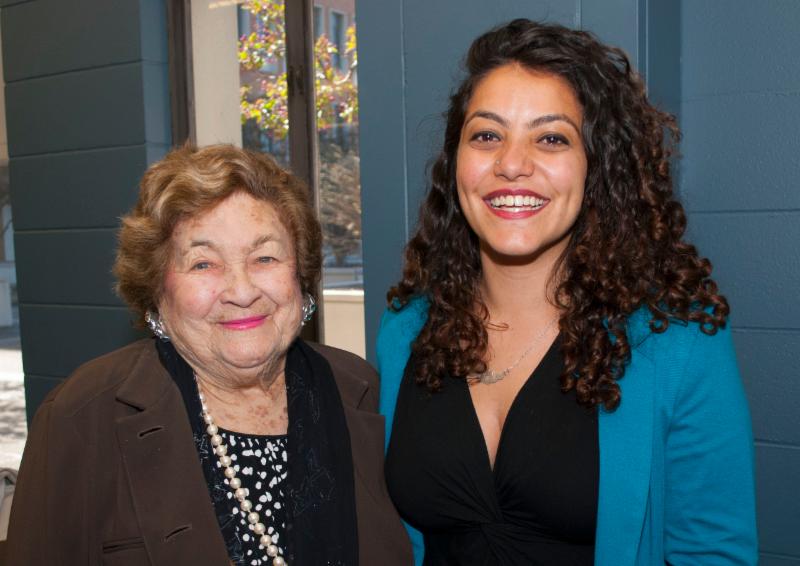
Miray was born in Egypt, raised in Kuwait, and moved to Michigan to pursue a college education. She graduated from the University of Michigan, Ann Arbor with a BS in Psychology and Sociology. She then moved to Minnesota to begin her PhD in Sociology, with a focus on violence, collective memory, and the Middle East and North Africa. She is broadly interested in the experiences of ethnic and religious minority groups within the Middle East and North Africa, specifically as it pertains to persecution, discrimination and violence.
Miray Philips’s current research is focused on understanding how the Coptic Christian community in Egypt and the diaspora makes sense of their present day experiences in light of a long history of suffering and persecution, and in turn how that history informs their present-day experiences. While Copts in Egypt face persecution and discrimination at the hands of the state and civil society, Copts in Kuwait are at the difficult intersection of being a religious minority and also expats. Copts in the US, however, experience relative privilege in a predominantly Christian country. During the fellowship year she will be completing course work and interviewing Copts in Egypt, Kuwait and the US.