culture

It’s Black History Month, and we at TSP have rounded up some of our favorite, timeless posts about the history, meaning, and importance of celebrating black history. These #TSPClassics include articles about Black History Month itself, as well as articles about research related to racial identity, racism, and anti-racism. Read about Black scholars’ early contributions to social sciences, recent innovations in scholarship about race, ongoing issues of racism and inequality, new strategies and actions in advocacy, and much more below; happy Black History Month!

From Our Main Page

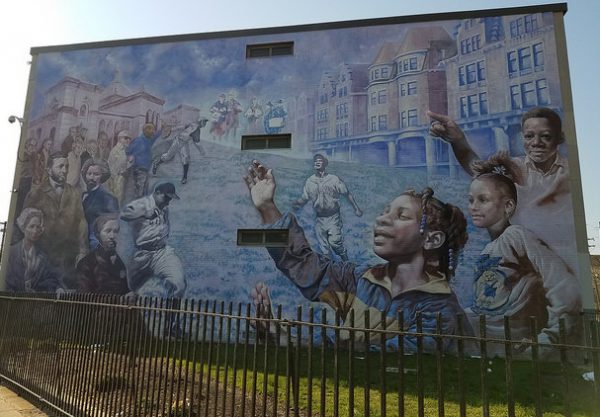
Did you know W.E.B DuBois was a pioneering sociologist? Read more at “What Would W.E.B DuBois Do?
Photo of a mural honoring black history in Philadelphia. Photo by 7beachbum, Flickr CC.
Read about black women’s advanced sociology and social science at “Unearthing Black Women’s Early Contributions to Sociology.”
Read about why the idea of a “white history month” ignores the history of race and racism at “Why We Don’t Need a White History Month.”
“Black Panther,” one of the most successful movies in the Marvel universe, was a momentous film for black representation and imagery in Hollywood. Read more at “Black Panther as a Defining Moment for Black America.”
The word “racism” can mean a lot of different things in different contexts; read about different definitions, forms, and research traditions regarding “racism” in the USA at “Different Dimensions of Racism.” 
Even in the 21st century, Black Americans have to navigate racist stereotypes, imagery, and perceptions, and many learn such strategies at a young age. Read about related parenting strategies and challenges at “How Black Mothers Struggle to Navigate ‘Thug’ Imagery.”
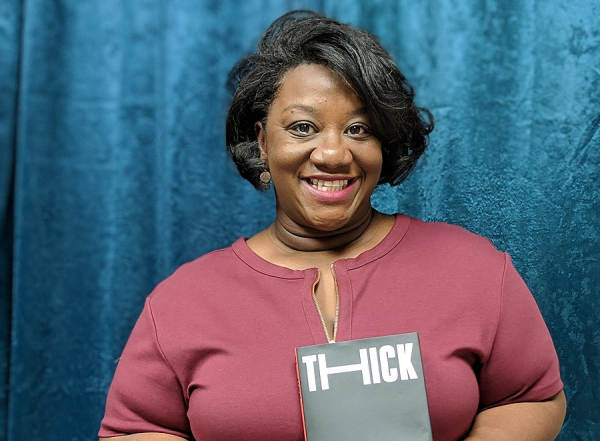
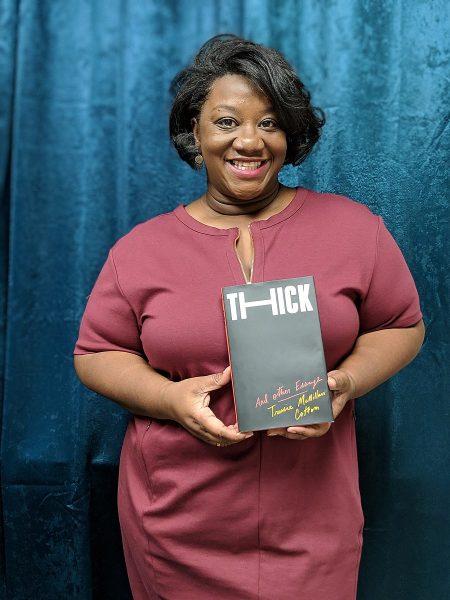
Recent research about black identities, experiences, and community analyzes how themes studied by early sociologists of race relate to twenty-first century technology, such as social media platforms and digital communication. Read more about these and other new research directions at “A Thick Year For Tressie McMillan Cottom.” 
Tressie Mc Millan Cottom displays her essay collection Thick, which was nominated as a National Book Award Finalist. Photo via Wikimedia Commons.
Black athletes represent a new generation of leaders and anti-racist advocates; read more at “A New Era of Athlete Awareness and Advocacy.” 
Should educators promote colorblind rhetoric in the classroom? Read about problems with colorblind teaching practices at “Color-Blind Classrooms Socialize Students to Disregard History.”
Research shows that skin color intersects with race and racial identity in ways which perpetuate racial inequality. Read more at “Skin Color, Self-Identity, and Perceptions of Race.” 
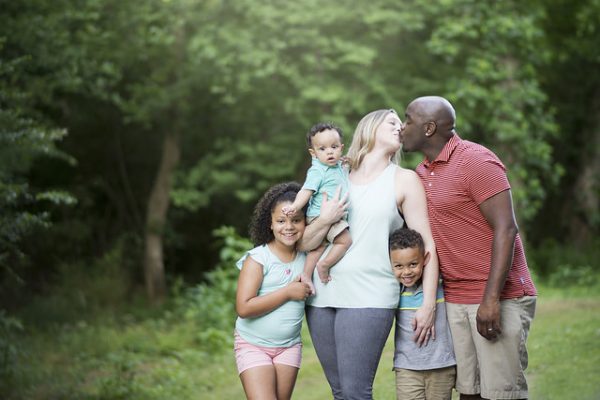
Social norms, rules, and laws about mixed-race relationships have changed drastically across history, but many issues of inequality and identity remain for contemporary multiracial families. Read more at “Navigating Multiracial Identities.” 
Photo of a multiracial family by taylormackenzie, Flickr CC.

From Our Partners and Community Pages

Soc Images

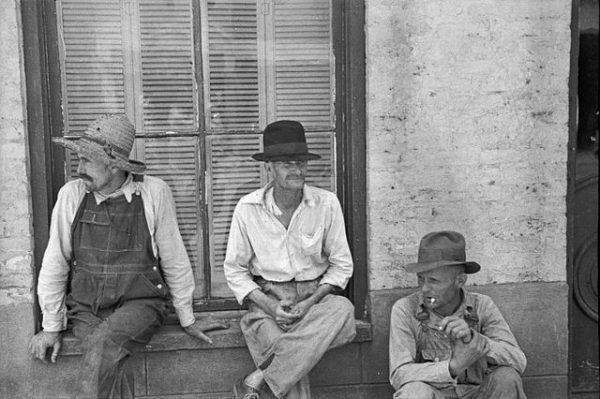
Rural Appalachia is often discussed as a mainly-white region, but did you know about the richness of black history in the mountains? Read more at “Hidden Black History in Appalachia.”
Rural sharecroppers in Appalachia. Source: Wikimedia Commons
Sometimes, businesses, corporations, and groups try to celebrate Black History Month in ways which are tone-deaf, ignorant, and just plain racist. SocImages archives several cringeworthy incidents over the years at “From Our Archives: Black History Month.”

Contexts

The field of sociology studies racism, but we’re not above criticism; read about why social science must divest from whiteness and white-centric logic at “Yes, Sociology is Racist Too.”
Why don’t we make WEB DuBois’ birthday a holiday? Read more at “A New Black Holiday, or Why W.E.B. DuBois’s 150th birthday matters.”
Well into the 21st century, discrepancies in the justice system are still a major site of racial inequality; read about racial inequality and policing at “Black and Blue.”
Hand holding a diamond. Photo via pxfuel.

Over one million people will get engaged on Valentine’s Day, and as a result, diamond sales usually uptick around this time. Diamonds are both historical and cultural objects; they carry meaning for many — symbolizing love, commitment, and prestige. Diamonds are highly coveted objects, and scholars have found about 90 percent of American women own at least one diamond. In the 1990s, war spread throughout West Africa over these precious pieces of carbon, as armed political groups vied for control over diamond mines and their profits.

Given their role in financing brutal West African civil wars, diamonds became associated with violence and international refugee crises, rather than financial prosperity and love. Diamonds became pejoratively known as blood diamonds, or conflict diamonds, and consumers became more likely to perceive diamonds as the result of large scale violence and rape.  As a result, major diamond producers have attempted to reconstruct the symbolic meaning of diamonds, turning them into symbols of international development and hope.
As the diamond trade became immoral and socially unjust, new global norms emerged around corporate and consumer responsibility. Non-governmental organizations (NGOs) lobbied for the diamond industry to change their behaviors and support of conflict mines while simultaneously creating new global norms and expectations. In the early 2000s, international NGOs, governments and the diamond industry came together to develop the Kimberley Process — to stop the trade of conflict diamonds. Today, 75 countries participate, accounting for 99% of the global diamond trade. 
Bieri & Boli argue that when NGOs urge companies to employ social responsibility in their commercial practice, they are mobilizing a global moral order. Diamonds provide an example of how symbols, products, and meaning are socially and historically constructed and how this meaning can change over time. The case of blood diamonds also illustrates how changing global norms about what is and is not acceptable can redefine the expectations of how industries conduct business.
A student takes notes by hand. Photo via Wikimedia Commons.

If you believe that taking notes longhand is better than typing (especially that typing leads to verbatim transcription but writing helps with processing ideas), you have probably seen a reference to Mueller and Oppenheimer (2014). We even featured it in a TROT last fall. The Pen is Mightier Than the Keyboard has over 900 citations on Google Scholar, but is also a staple on Twitter, blogs, and news articles. According to Altmetric, it has been cited in 224 stories in 137 news outlets the past two years (two years after it was published), and linked to on Twitter almost 3,000 times. 

But new research suggests that its fame was premature. How Much Mightier Is the Pen than the Keyboard for Note-Taking? A Replication and Extension of Mueller and Oppenheimer argues that research has not yet determined whether writing or typing is categorically better for class achievement. The new study (a direct replication of the original study) did find a slight advantage for those taking notes by hand, but unlike in the original study, the differences were not statistically significant. 
The new study also expanded the original by including a group with eWriters, an electronic form of notetaking that allows students to write on a screen. As our original blog noted, much of the research on laptops in the classroom revolves around their potential to be distractions, and research on notetaking needs to take into account advances in technology that could lead to better notetaking environments as well as assisting students with disabilities. Morehead, Dunlosky, and Rawson find that eWriters, although not in common use, could be a bridge between paper and the distraction-laden environment of laptops. 
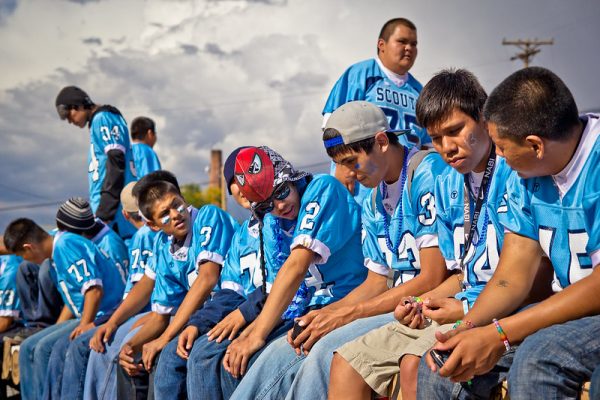
Photo of ten boys sitting together all wearing matching blue football jerseys. Some have blue face paint under their eyes.
Photo by Donovan Shortey, Flickr CC

After writing several bestsellers on girls and sexuality, journalist Peggy Orenstein has turned her attention to boys. Her new book, Boys & Sex, draws from hundreds of conversations with boys and young men about how they understand and participate in sex. Many of these boys struggle with ideas about what it means to be a man and how to live up to these ideals (or not). 

A desire for sex with women is a key component of “hegemonic masculinity” — the idealized, dominant form of masculinity. From a very early age, boys learn they should desire girls. For instance, preschool teachers regularly encourage “crushes” between boys and girls in their classrooms. 
Part of the way boys can demonstrate or prove their masculinity is by talking about their sexual experiences with their peers. Another way is through putting other boys down and undermining other boys’ heterosexuality with homophobic name-calling. 
As boys enter adolescence, they face even greater pressure to have sex with girls to demonstrate their masculinity. However, many boys do not actually buy into these expectations  — some openly reject the idea that they should be having sex with girls; others simply try to avoid the subject or deflect questions about their own sexual prowess when their friends bring it up. Those who do accept that sex with girls is part of showing their manhood often struggle with feelings of inadequacy if they do not live up to these expectations. 

Both social scientists and popular authors like Peggy Orenstein are contributing to public conversations around youth sex and sexuality. Their work shows the importance of understanding and addressing the sexual expectations that come with masculinity.  

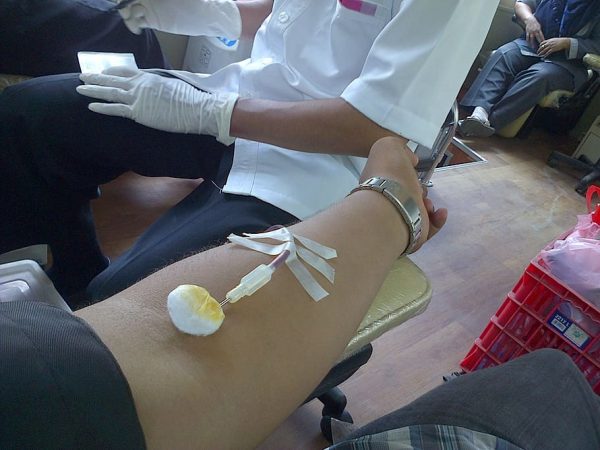
A volunteer donates blood. Photo via pxfuel.

In the past year, the American Red Cross issued several statements regarding critical blood shortages in various locations throughout the United States. Blood shortages are not unique to the United States; a recent study by the World Health Organization found 107 out of 180 countries have insufficient amounts of blood. While organizations like the American Red Cross try to remedy blood shortages, sociologists have found that blood shortages are closely related to donors’ feelings of altruism and the existing structures of donor organizations. 

Social psychologists have explained the decision to give blood in terms of altruism, acting in the interest of others, while sociologists tend to explain blood donation in terms of organizations and institutions. Voluntary donations have historically been portrayed as more desirable or as a civic duty, but scholars note that the most common reason for not giving blood is simply not being asked. They also find that personal motivations (such as a general desire to help, sense of duty, and empathy) are more likely to be strengthened with each donation, while external motivations (emergencies, peer pressure, etc.) are likely to decrease over time.
As a result, donation centers have been encouraged not to pay donors due to a fear that this would discourage altruistic givers. Paying donors also raised other concerns, such as the belief that paying donors would encourage exploitative relationships between economically unstable individuals and donation centers. Additionally, there were also fears that paid blood was unsafe blood, as it would motivate high-risk groups to lie about their status for money. 
Altruism is not random or individual, it is driven by institutions. For example, in places where the Red Cross is prevalent, people involved in religious or volunteer organizations donate the most blood. Alternatively, in countries where independent blood banks operate, this is not true. In fact, state systems, according to Healy, tend to have larger donor bases. Thus, the organizational, rather than individual desire to give, largely drives blood donations.
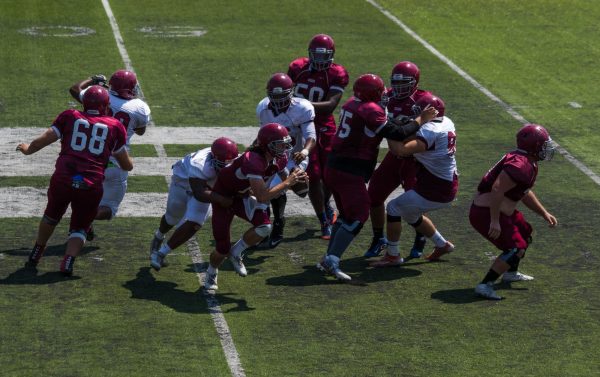
Student Athletes from the Sierra College Football team play in the pre-season football scrimmage at Sierra College in Rocklin, Calif. on August 20, 2016. (Photo by davidmoore326, licensed under CC BY-NC-ND 2.0)

Thanksgiving has NFL games, Christmas has the NBA, and New Year’s has college football. This season as you sit down to watch bowl games or the college football playoff, check out some of the sociological college football research from our partner Engaging Sports

Football can be a path toward economic opportunity, but scholars find race and class patterns in who takes this risky path. For example, Black players are generally from more disadvantaged areas while white players come from more advantaged areas, perhaps indicating that white players benefit from more resources in training while financial necessity drives black players. 
Fans may not have a say in recruiting college athletes, but they certainly have strong opinions about the young athletes at their favored schools. Fans stay away from overtly racist language on message boards, but a criminal record did affect fan support of prospective athletes. 
Finally, both American football and the NCAA seem to constantly be dealing with scandal. Read the articles below for some context on current scandals within the NCAA and how the concussion crisis is affecting a number of sports. 
A woman walks alone in a dark alley. Photo by renee_mcgurk via Flickr.
While opinions of particular environments, situations, or objects may appear to be objectively dangerous or safe, sociologists argue otherwise. Instead, they find that opinions about safety are subjective. While there is a physical reality of harm and fear, beliefs about safety and danger spread through socialization, rather than direct observation. For example, Simpson notes that snakes and turtles can both cause illness and death through the transmission of venom or bacteria, yet snakes are seen as dangerous and turtles as benign. In other words, danger and safety do not exist on their own; they are contextual.
Socialized beliefs about safety and danger are also raced, classed, and gendered. While statistics indicate that men are predominantly the victims of violent crime, women express greater fear of crime. This fear often acts as a form of social control by limiting women’s daily activities, like when they leave the house and what they wear. Furthermore, the construction of fear and crime is often tied to racist legacies. In the United States, white women express prejudicial fear about areas marked as “dangerous” or “sketchy,” due to the occupation of this space by men of color.
Safety and danger are also constructed at the international level, as national security is politicized. For example, instances of large-scale political violence, such as genocide, war, and acts of terrorism revolve around the social construction of an enemy. More generally, national enemies are constructed as dangerous and a threat to the safety of a nation’s people. This construction of the enemy and perception of fear can move people to join terrorist organizations, participate in genocidal regimes, and enlist in state militaries.
Tressie Mc Millan Cottom displays her essay collection Thick, which was nominated as a National Book Award Finalist. Photo via Wikimedia Commons.

In addition to being a formidable sociologist of technology and education, Tressie McMillan Cottom is an upender extraordinaire of class, race, and gender hierarchies throughout academia and the broader social world. Her book, Thick, was recently nominated as a National Book Award Finalist. With over 100 thousand followers, she is the center of gravity of an ever-expanding Twitter community, and also writes an extremely influential blog. Moreover, she has created a new program of study–Digital Sociology–at Virginia Commonwealth University, where she teaches as an Associate Professor in the Sociology Department.

Even before making her mark in the sociology of higher education with her book, Lower ed: The troubling rise of for-profit colleges in the new economy, McMillan Cottom had become an expert at using social media to assert and establish her legitimacy among scholars. As a graduate student she posted a critical analysis of arguments made by a more senior scholar on her blog, and this earned her the support of a wide and diverse readership. She carries on this tradition of bringing voice and legitimacy to Black women in Thick. Through her essays, McMillan Cottom centers the Black women’s intellectual tradition and their experiences while asking readers to get comfortable with some of the most uncomfortable topics: misogynoir, child loss, sexual violence, to name a few. Her powerful blend of sociology and poignant, personal stories give voice and representation to so many, in a space where such stories so often go unheard.
On Twitter, McMillan Cottom has also created a conversation space where thousands of followers feel supported as they navigate intersecting identities which are oftentimes complicated offline. This virtual space has also become a novel topic for scholarly research. Known as Black Cyberfeminism, this research explores how identities are created and interpreted in virtual places. It also critically examines the intersectional oppressions faced by Black women in virtual institutions. As Cottom argues, Black Cyberfeminist Theory provides a new lens for understanding and engaging in conversations around sociological phenomena.
Working with the Virginia Commonwealth University Sociology Department, Tressie McMillan Cottom has developed undergraduate and graduate Programs in Digital Sociology. Digital Sociology focuses on the use of social media as part of everyday life and the ways it contributes to patterns of human behavior, social relationships, and concepts of the self. Her curriculum encourages students to apply sociological theory to analyze data produced by online human activity, including endless timelines and trends offered from various digital technologies and platforms.

Infographic by snipergirl via Flickr CC.

Originally posted March 12, 2016.

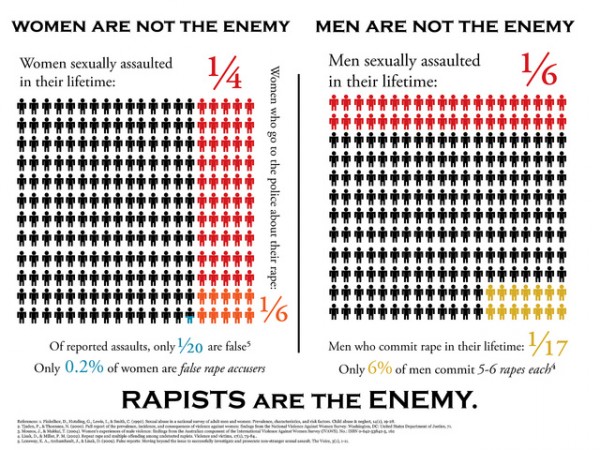
Last week, a civil judge ruled that singer Kesha must fulfill her music contract despite allegations that her producer sexually assaulted her. While Kesha received an outpouring of support from fellow artists and fans creating the hashtag #FreeKesha, entertainment show host Wendy Williams critiqued the singer for not disclosing the “alleged” rape earlier. The media frequently questions the credibility of women like Kesha and the accusers of famous men like Mike Tyson and Bill Cosby because their stories deviate from what are perceived as “real rape” experiences (those committed by strangers and with a deadly weapon). Social science research helps us sort out how and why institutions risk “revictimizing” survivors as they navigate the criminal justice process.

The majority of victims do not report assaults to police, often because they don’t think they’ll be believed. Unsurprisingly, the cases most reported to police are those perpetrated by strangers and/or involving a weapon—what victims (and police) believe best constitute criminal, “authentic rapes.” Further, police treat victims perceived as “professional” as more credible than prostitutes.
Victims can also be revictimized if they opt to undergo a physical examination. Forensic nurse examiners often prioritize the preservation of forensic evidence while unintentionally neglecting the emotional care of the victim in service to the criminal investigation.
The court process is distinctly difficult for victims, too. They must attempt to satisfy the expectations of prosecutors and withstand cross-examination by defense attorneys. Prosecutors may prepare victims for testimony by encouraging them to use certain vocabulary, dress in a way that suggests they did not “ask for it,” and show emotion to convey the specific feelings expected of a rape survivor. Despite rape shield laws that prohibit attorneys from disclosing a victim’s sexual history, defense attorneys may still question the victim’s morality, interrupt victims, ask confusing questions, and limit their responses in an effort to transform sexual violence into mutual consent in the eyes of a judge and jury.
A gig economy worker checks the Uber app for an update about the next passenger. Photo by freestocks.org via Flickr.

Earlier this month, workers at the grocery delivery service Instacart organized a three-day strike over changes in the company’s tipping policy. Instacart has also been in the news this year for a controversial policy that included delivery tips as part of guaranteed worker pay, which they later said they would change. After the strike, Instacart eliminated a bonus for successful deliveries through the app. 

Instacart is just one example of worker resistance in the modern gig economy. Company platforms such as Instacart, Uber, and the transcription service rev.com ostensibly provide greater flexibility to workers, yet all are facing a wave of worker discontent over employment conditions and compensation. Work is changing, and becoming more “precarious.” Sociologists identify precarious work as “uncertain, unstable, and insecure.” Additionally, workers have little legal protection and bear much of the risk that employers previously bore.
Computer applications or apps organize and host a lot of gig work. But workers are finding that “algorithmic control” reproduces the same power dynamics as having an in-person supervisor. In particular, workers often do not know how they will be judged and rules and compensation policies may be rewritten with little or no notice. Rather than allowing workers to choose when and how they work, apps control the actions they must take to get jobs, such as maintaining minimum hours. 
For the most recent work on the gig economy see this 2018 book by Alexandrea Ravenelle. Ravenelle interviewed 80 participants of the gig economy, including those who have found success in the gig economy, those struggling to make ends meet, and those using the gig economy to supplement other income.