culture

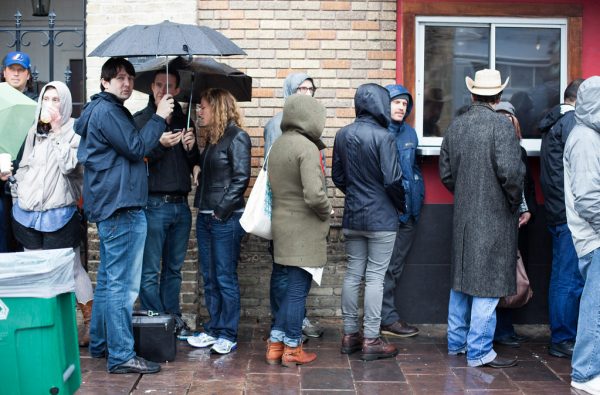
Image: A group of people wait in line, it’s raining. Image via Lars Plougmann, CC BY-SA 2.0.

At this very moment, as you read this, you are waiting on something. We all are waiting on something, always. As anthropologist Ghassan Hage wrote, we wait for “an ice cream and for final judgment.” The coronavirus pandemic has illuminated waiting. We waited to hear guidelines from government and health officials. We waited for our stimulus checks. And, now, we wait for our turn to get a vaccination.

A difficult part of waiting is that we often do not know how long we will wait. For example, how long will we wait for a coronavirus vaccine? Research has found the importance of temporal specificity, meaning the presence or absence of a deadline as an assurance of action. A specific timeframe, telling a person when the waiting will end, gives “some degree of control over the situation, through knowledge” (Rotter, 2016).
Time is an irreplaceable and finite resource. Waiting can feel like a waste of time. Researchers have observed that, thanks to technology, waiting can be “more than empty time” (Sebald, 2020). Digital media and “speed of connectivity is the antipode to waiting” (Wexler, 2015). Digital connection makes waiting more tolerable.
While waiting is universal, the experience of waiting is not the same for everyone–and, in fact, waiting is rife with inequalities. Sociologist Barry Schwartz perhaps has done the most to illustrate these inequalities, writing “the distribution of waiting time coincides with the distribution of power” (1974). Pierre Bourdieu (2000) writes that “making people wait” – or “delaying without destroying hope” and “adjourning without totally disappointing” – are primary elements of domination. Ultimately, those who have the power to make others wait demonstrate that their time is more valuable than someone else’s time.
Image: An American Flag flies in the foreground. In the background lies Pearl Harbor. Image courtesy of Ms_Spinwax, CC BY-NC-ND 2.0.

On the 7th day of each December, Americans are reminded of Pearl Harbor — the 1941 attack on an American naval base that killed 2,400 Americans. This event has become an icon in American memory. The events of that day have been told and retold by the media and amongst families. It has been featured in history books and the focal point of Hollywood movies, museums, and memorials. In fact, sociologists suggest that iconic events like Pearl Harbor have come to define the nation.

Sociologists also insist that memories are socially constructed. To say that a memory is socially constructed means that our recollections of events such as Pearl Harbor are not natural or unfiltered history but in fact mediated and filtered through social institutions like the media and politics. Some sociologists argue that this construction of memory is motivated by contemporary  interests. For example, at the time, media reports on Pearl Harbor highlighted national security and portrayed Japan as America’s enemy. These accounts were used to invoke American anger and pride. Both political actors and the media created moral depictions of the event, emphasizing American victimhood and the need for immediate action.
Yet over time, our collective recollection and interpretation of events may change, and sometimes, we use past events to understand current events. For instance, in the aftermath of 9/11, memories of Pearl Harbor were invoked to both give meaning to and to make sense of the surprise attacks on American soil. The use of a past event, Pearl Harbor, to understand a contemporary event like 9/11 is what has been called a bridging metaphor. And politicians often use bridging metaphors to inspire new emotional responses by connecting current events to memories and sentiments of past events.

Sociologists think of history, memories, and the commemoration of iconic events such as Pearl Harbor as interrelated. History is not an unbiased and fixed account of past events and people, but rather, something that is actively, collectively remembered and reconstructed. History, in this sense, does not simply exist, but has to be made and remade. This process is inevitably shaped by the conditions and concerns of both the past and the present, and the narratives that emerge are key in creating a collective, American identity. What other iconic historical events can you think of that shape how Americans understand themselves and current events today? How do you think they may shift and change in the coming years?

Although Covid-19 has made dating more difficult, people are still finding ways to make connections and initiate more intimate relationships. Like a lot of life right now, people are using the internet to meet and date potential partners. But, unlike zoom birthday parties or virtual weddings, online dating is nothing new. Even before the pandemic, 3 in 10 Americans reported having ever used a dating website or app. Sociological research shows us both the promises of online dating and its potential to entrench existing inequalities.

The internet has expanded the dating pool, potentially displacing “traditional” ways of meeting partners in school or through family connections. This is particularly impactful for people who might have “thin” dating markets where they live and in their community including LGBTQ people and middle-aged heterosexual people. Online dating provides a way for people to seek connection, love, or monogamy with a broader social network, one that is connected to geography and place in both new and familiar ways.
The “online” in online dating introduces concerns about authenticity that are not necessarily present in face-to-face interactions. Users worry that their online dates are not who they say they are, and carefully analyze date’s online profiles to try to determine “the truth.” Individuals with stigmatized identities, such as disabled people, worry about how to “disclose” this identity in cyberspace, a concern that is not necessarily present in the embodied offline world.
Although it is tempting to view online dating as transformative, it can also entrench existing inequalities. “Assortive mating” in which people seek partners similar to them in terms of race, educational experience, and class happens online, too. For instance, users set their preferences and search profiles in ways that reinforce racial segregation and hierarchy. The inequalities of the “real world” are also present online, with the added barrier that only those who can access computers and the internet can participate.
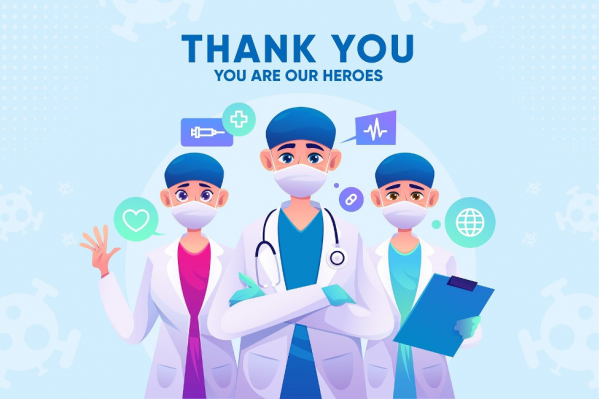
Image: Three white-appearing healthcare workers, “Thank you – You are our heroes” courtesy of 18371568 via pixabay CC0.  This imagery suggests our heroes are white, even though around 25% of nurses in the U.S. are people of color. Furthermore, signage that says we “thank our heroes” does not match up with how frontline workers have been unsupported by leadership. Images like this mask structural inequality (pun intended) under the guise of all being “in this together.”

We have seen many things described as “unprecedented” as the year 2020 has steamrolled over many of us. Among them, the pandemic has given the world an unprecedented illustration of U.S. racial inequalities. For example, Black people are more likely to die from COVID-19 infections than are people in any other racial group, and this is true even after controlling for income, housing conditions, and underlying health conditions. Yet not all Americans are able to see the racial inequalities that have been unmasked.

Sociologist and race scholar Eduardo Bonilla-Silva insists that the key to understanding race and racism in the United States is understanding how colorblind ideals shape Americans’ thinking and public discourse. Examples of what Bonillia-Silva calls color-blind racism are phrases such as “We are all in this together” or “Covid is the great equalizer” because they serve to draw attention away from the racial disparities that are otherwise so persistent and pronounced.

Color-blind racism is named after the hypothetical White observer who says they “do not see color” while they, simultaneously, fail to see existing racial inequalities. In other words, colorblind framings mask deep, structural inequalities. People may feel like they are saying unifying things with these tropes, but this sort of “all in this together” messaging serves to hide the structural nature of racism.

Even more, colorblind racism tends to minimize racism itself and, when confronted with racial injustices, constructs and accepts elaborate race-based explanations for racial inequality. For example, within a color-blind racism frame, Latinx workers might be said to be paid less than White workers because they do not work as hard, are unreliable as workers, or are less qualified. And White workers are said to get more raises because they are smarter and work harder. With racial blinders on, anything that results from structural causes is explained by deficiency in the minoritized party, and coincidental superiority in the privileged party. This negates the structural origins of inequality and allows the status quo to continue.
In terms of the COVID-19 mortality rate, the sometimes spoken explanation (i.e. 1, 2, 3) is that Black people must be weak, prone to illness, or make unhealthy choices in general. That shift in focus, from talking about racial inequality in the mortality rate associated with a virus to, somehow, talking about Black people as deficient, weak, sick, and making poor choices, illustrates how color-blind racism is alive and well amidst this pandemic. Colorblind racism serves as a mask, preventing the public from seeing the structural causes of health disparities experienced by Black people and other people of color.
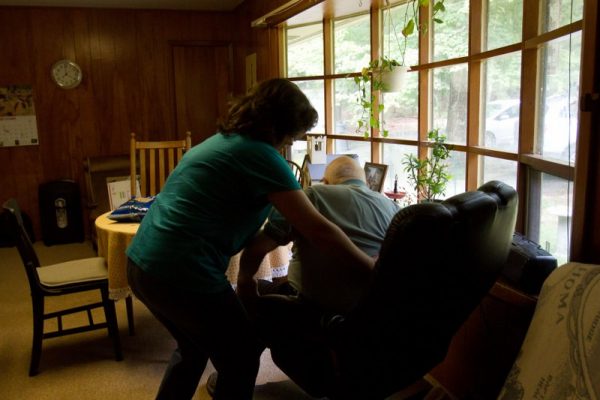
A woman helps an elderly man get up from his chair
Photo by Brian Walker, Flickr CC

When we talk about work, we often miss a type of work that is crucial to keeping the economy going and arguably more challenging and difficult than ever under conditions of quarantine and social distancing: care work. Care work includes both paid and unpaid services caring for children, the elderly, and those who are sick and disabled, including bathing, cooking, getting groceries, and cleaning.

Sociologists have found that caregiving that happens within families is not always viewed as work, yet it is a critical part of keeping the paid work sector running. Children need to eat and be bathed and clothed. Families need groceries. Houses need to be cleaned. As many schools in the United States are closed and employees are working from home, parents are having to navigate extended caring duties. Globally, women do most of this caring labor, even when they also work outside of the home. 
Photo of a woman cooking
Photo by spablab, Flickr CC
Globally, women do most of this caring labor, even when they also work outside of the home. Historically, wealthy white women were able to escape these caring duties by employing women of color to care for their children and households, from enslaved African Americans to domestic servants. Today people of color, immigrants, and those with little education are overrepresented in care work with the worst job conditions. 
In the past decade, the care work sector has grown substantially in the United States. However, care workers are still paid low wages and receive little to no benefits. In fact, care work wages are stagnant or declining, despite an overall rise in education levels for workers. Thus, many care workers — women especially — find themselves living in poverty.  

Caring is important for a society to function, yet care work — paid or unpaid — is still undervalued. In this time of COVID-19 where people are renegotiating how to live and work, attention to caring and appreciation for care work is more necessary than ever.

Astrological signs from alchemical text entitled “Opus medico-chymicum” published in 1618 by Johann Daniel Mylius, via Wikimedia Commons.

Astrology is on the rise, and a recent New Yorker article argues that 30% of Americans now believe in astrology. This spike in belief has been tied to astrology’s popularity on the internet and social media. Astrological apps like Co-star and Align have gained traction, achieving millions of downloads a year, and mystical services more generally are generating 2.2 billion annually. But why is astrology on the rise? And what does sociology have to say about its practice? 

During the 1970s, astrology was marginalized and socially stigmatized — considered part of the American counter-culture. The rise of religious nones and the “spiritual but not religious” category have led scholars to consider how belief systems once considered to be alternative may be becoming more mainstream. Scholars have found that even spiritual beliefs that are not part of organized religion may be highly organized in generating meaning and community, particularly in unsettled times. Given stressors like global warming, economic instability, and the recent COVID-19 pandemic, millennials may be turning to belief-structures once considered to be alternative to find community and to grapple with uncertainty.
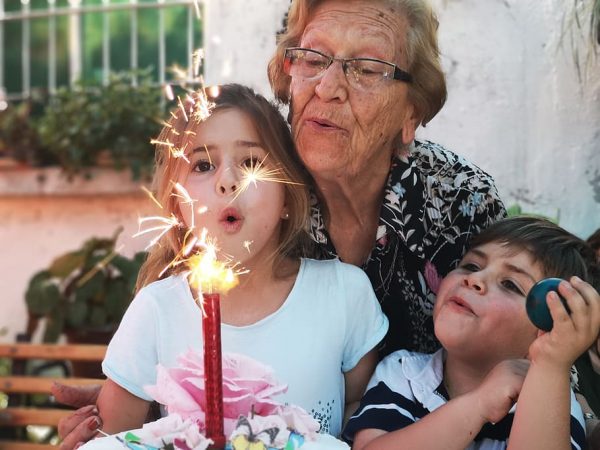
A young girl blows out a birthday candle with help from her grandmother and brother. In times of economic recession, many individuals experiencing hardship receive help from extended family members. Photo via Wallpaper Flare.

A few weeks ago, the Dow Jones fell 20% from its high. To many this is an indicator of great uncertainty about the future of the market and could be an indication of a coming recession. And this was even before the crisis of COVID-19. In these uncertain economic times, we look back to how the Great Recession of 2008 impacted families’ decision-making including whether or not to have children, where to live, and how much to rely on family members for financial support. Perhaps this recent history can help us imagine what might lie ahead.

Demographers and other social scientists are interested in the fertility rate, or the number of live births over the lifetime of a child-bearing woman. After the Great Recession, the fertility rate fell to below replacement rate (or 2 children per every one woman) for the first time since 1987. Scholars attribute this change in fertility to increased economic uncertainty; people do not feel confident about having a child if they are not sure what will come next. In fact, the fertility rate fell lowest in states with the most uncertainty, those hit hardest by the recession and “red states” concerned about the economic future under Obama.
  • Schneider, Daniel. 2015. “The Great Recession, Fertility, and Uncertainty: Evidence From the United States.” Journal of Marriage and Family 77(5):1144–56.
  • Guzzo, Karen Benjamin, and Sarah R. Hayford. 2020. “Pathways to Parenthood in Social and Family Contexts: Decade in Review, 2020.” Journal of Marriage and Family 82(1):117–44.
  • Sobotka, Tomáš, Vegard Skirbekk, and Dimiter Philipov. 2011. “Economic Recession and Fertility in the Developed World.” Population and Development Review 37(2):267–306.
During the Great Recession there was also an increase in the number of young adults, both single and married, living with their parents. Rates of both young married adults living with their parents increased in 2006 to reach 1900 levels which is surprising considering that the century between 1900 and 2000 is considered the “age of independence,” when many more young people moved out and established households of their own. This effect was particularly strong for young adults with less education and those who had fewer resources to weather the storm of the recession on their own.
The economic challenges of the late 2000s also may have led to an increase in interpersonal conflict within families. In part, this may stem from the pressure family members feel to serve as a safety net for relatives who are struggling financially. For instance, Jennifer Sherman found that some individuals who were experiencing financial hardship withdrew from their extended family during the Great Recession rather than asking for support. This, along with findings that giving money to family members during the recession increased an individual’s chance of experiencing their own financial stress, raises questions about whether or not family networks can offer support in times of economic turmoil.
  • Sherman, Jennifer. 2013. “Surviving the Great Recession: Growing Need and the Stigmatized Safety Net.” Social Problems 60(4):409–32.
  • Pilkauskas, Natasha V., Colin Campbell, and Christopher Wimer. 2017. “Giving Unto Others: Private Financial Transfers and Hardship Among Families With Children.” Journal of Marriage and Family 79(3):705–22.
As the economic effects of covid-19 are felt across the country, many Americans are preparing for another severe economic downturn. Understanding how the Great Recession influenced family structure and life is an important lens for considering how large economic events shape people’s everyday lived experiences.
Many stacks of textbooks. Photo via Pixabay.

Textbooks are more prevalent in American history courses than in any other subject, and a recent article from The New York Times revealed how geography has influenced what U.S. students learn. Despite having the same publisher, textbooks in California and Texas (the two largest markets for textbooks in the U.S.) vary wildly in educational content. Researchers have also found numerous inconsistencies and inaccuracies in American history textbooks, resulting in the glorification of national figures and spread of national myths.

Depictions of violence in textbooks are also highly politicized. Episodes of violence are often muted or emphasized, based on a country’s role in the conflict. For example, conflicts with foreign groups or countries are more likely than internal conflicts to appear in textbooks. Additionally, American textbooks consistently fail to acknowledge non-American casualties in their depictions of war, citing American soldiers as victims, rather than perpetrators of the horrors of war. Depictions of conflicts also vary over time, and as time passes, textbooks move away from nationalistic narratives to focus instead on individualistic narratives.
Public figures, like Hellen Keller and Abraham Lincoln, tend to be “heroified” in American textbooks. Rather than treating these public figures as flawed individuals who have accomplished great things, American textbooks whitewash their personal histories. For example, textbooks overlook Keller’s fight for socialism and support of the USSR and Lincoln’s racist beliefs. The heroification of these figures is meant to inspire the myth of the American Dream — that if you work hard, you can achieve anything, despite humble beginnings.
Symbolic representation of the past is important in stratified societies because it affects how individuals think about their society. Emphasizing the achievements of individuals with humble beginnings promotes the belief among American students that if they work hard they can achieve their goals, despite overwhelming structural inequalities. Furthermore, as historical knowledge is passed down from one generation to the next, this knowledge becomes institutionalized and reified–making it more difficult to challenge or question.
Photo by photologic, Flickr CC

This post was created in collaboration with the Minnesota Journalism Center

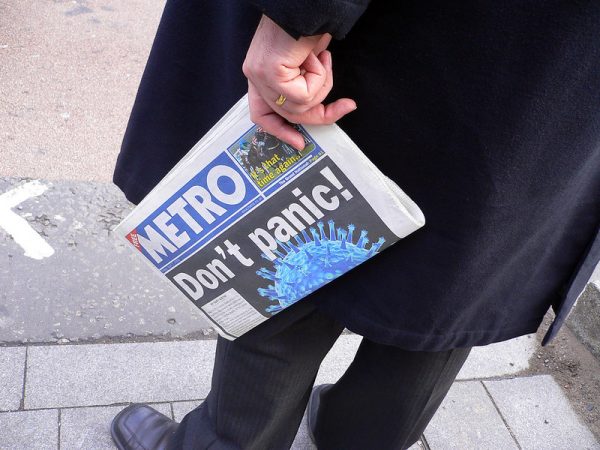
Coronavirus — also known as COVID-19 — has taken the global media world by storm. Over 2,000 have died and more than 79,000 are infected globally. The World Health Organization has been criticized for not declaring a public health emergency earlier than they did, but doctors including Dr. Emily Landon at the University of Chicago are saying that “people shouldn’t panic.” 

In cases of public health epidemics, whether people panic depends in part on how journalists cover the issue and which experts they cite. Journalists tend to quote official sources like government officials and public health officials to inform the public about outbreaks of illness including influenza, swine flu, Zika, Ebola, and more recently, coronavirus. Being quoted in news articles gives public health officials the opportunity to share their expertise on said topics to help inform readers about how to protect themselves and avoid infection. From a sociological perspective, focusing on the spread of information about pandemics and infectious diseases provides opportunities for scholars to comment on evolving social structures and processes in a way that will influence the biomedical sciences’ public and policy agenda.

As epidemiologist Adam Kucharski wrote in The Guardian, “stories sparking fear seem to have overtaken the outbreak in real life” and misinformation (a topic The Society Pages has written about here) seems to be more contagious than the virus itself. The “need for speed” in publishing journalistic updates about the virus as well as scholarly work has resulted in several retractions, including the retraction of a preprint of a scholarly paper after its analysis was found to be faulty. 

Further, the spread of information — and misinformation, including conspiracy theories — about health crises often occurs on social media platforms including Twitter and Instagram. Scholars found that false information spread especially quickly during Ebola outbreaks in West Africa and in the Zika outbreak in Brazil, which led to the formation of counterproductive policies passed by public health officials who struggled to combat false claims. In recent years, Instagram was found to be the most effective platform for health organizations including Centers for Disease Control, the World Health Organization, and Doctors without Borders to engage followers during global health crises.
Scholars, including Dr. Anita Varma, recently published five tips for journalists on covering coronavirus. These include paying attention to the frames used and including quotes from official sources like government officials as well as the people directly affected by the health concern. Dr. Karin Wahl-Jorgensen published an article on the role that fear plays in narratives about public health crises. The bottom line is: The way stories are told matters and affects the management of pandemics and policy responses.
Cartoon. Six blind men touch different parts of an elephant and each has a different idea of what the elephant is based on what they've touched

This post was created in collaboration with the Minnesota Journalism Center

Objectivity and neutrality have been cornerstone norms of journalistic practice in democracies in the Western world for over a century. However, in recent years ideals of fairness, accuracy, and balance have come under increasing attack from many different and sometimes unexpected directions. 

Many beliefs about the need for media objectivity go back to Alexis de Tocqueville’s 19th century argument that the circulation of newspapers are integral to fostering a functional and effective democracy. Indeed, objectivity became a news value in the 1830s, partly to do with the rise of the Associated Press (AP), created in 1848 by a group of New York newspapers that wanted to take advantage of the speed of the telegraph in transmitting news to multiple outlets. To transmit news to a variety of news outlets with a variety of political allegiances consistently, a sense of objectivity had to be maintained to be relevant to as wide an audience and clientele as possible. 
Cutting against these norms was the sensationalism of newspaper content in the late 19th century. While the use of emotion in reporting has often been connected to the commercialization and tabloidization of journalism, in recent years it has also appeared in coverage of disasters, crises, and human rights abuses — and has come to be seen as positive and valuable as well. The roles of objectivity and impartiality have always been contested within journalistic practice, so rather than seeing emotion as the opposite of objectivity, some scholars now argue it can come alongside and inform journalistic practice worldwide.
The role of objectivity has also come into question as a mechanism that can silence marginalized writers and populations. Relatedly, news can also reinforce institutions of power in society, for better or for worse. In populist countries including Argentina, Bolivia, Ecuador, Nicaragua, and Venezuela, “professional journalism” is often pitted against “militant journalism” promoted by neo-populist governments and their sympathizers — a movement that has critical implications for the freedom of the press in societies in the Global South. Also, news media has been found to negatively portray protests and protesters.