Via.
Via.
In this series I have offered five explanations of why people of color are included in advertising. Start with the first in the series and follow the links to the remaining four here.
I am now discussing how they are included. Already I have shown that people of color are often whitewashed, that they tend to be chaperoned by white people, and that they are often subordinated through placement and action.
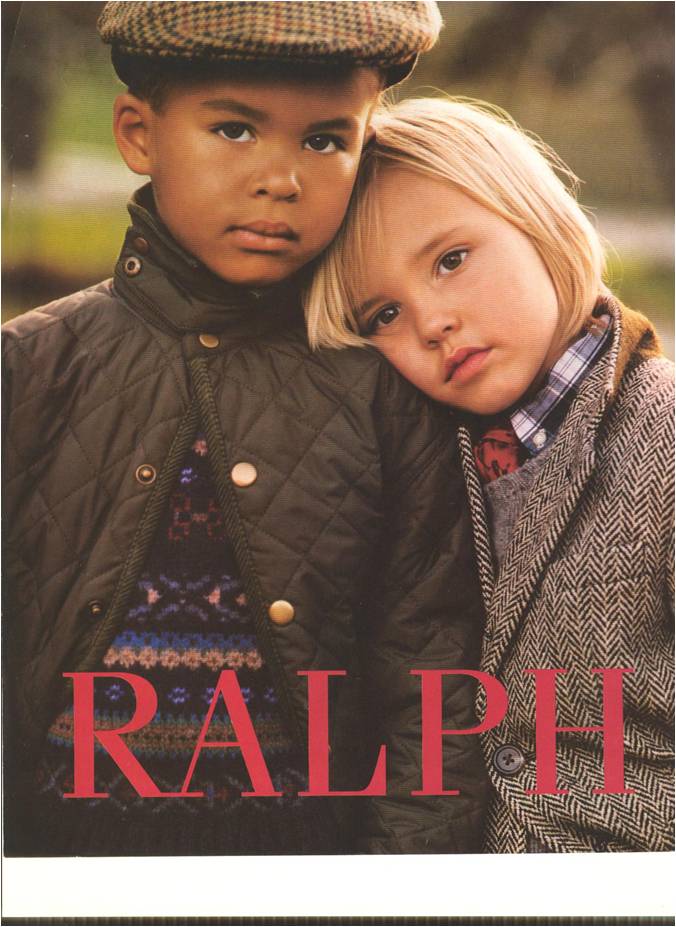
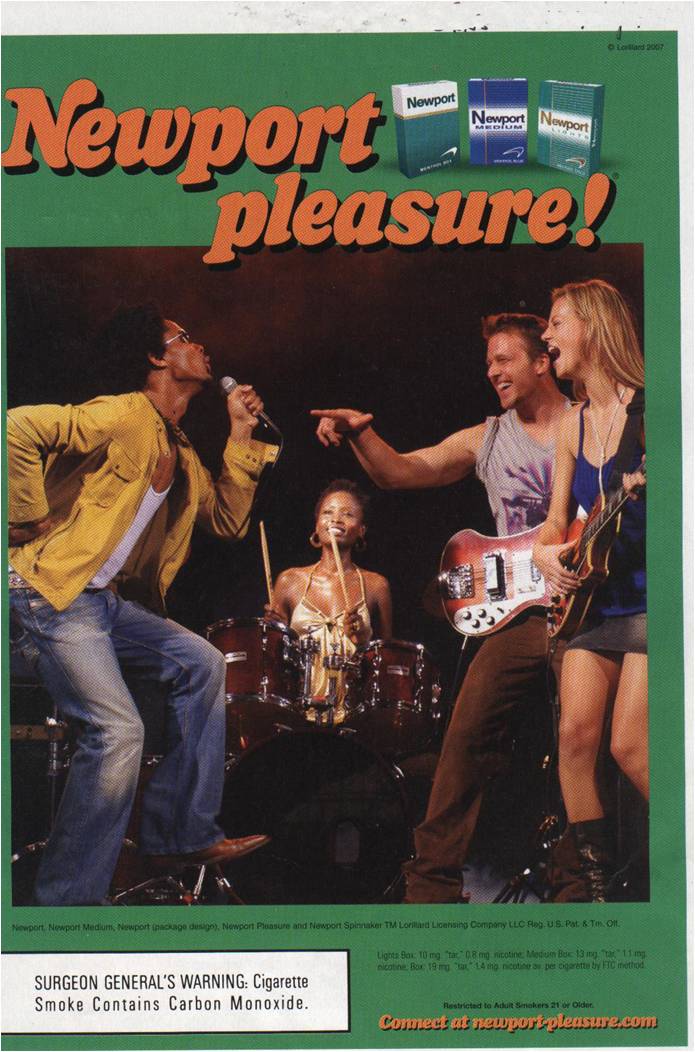
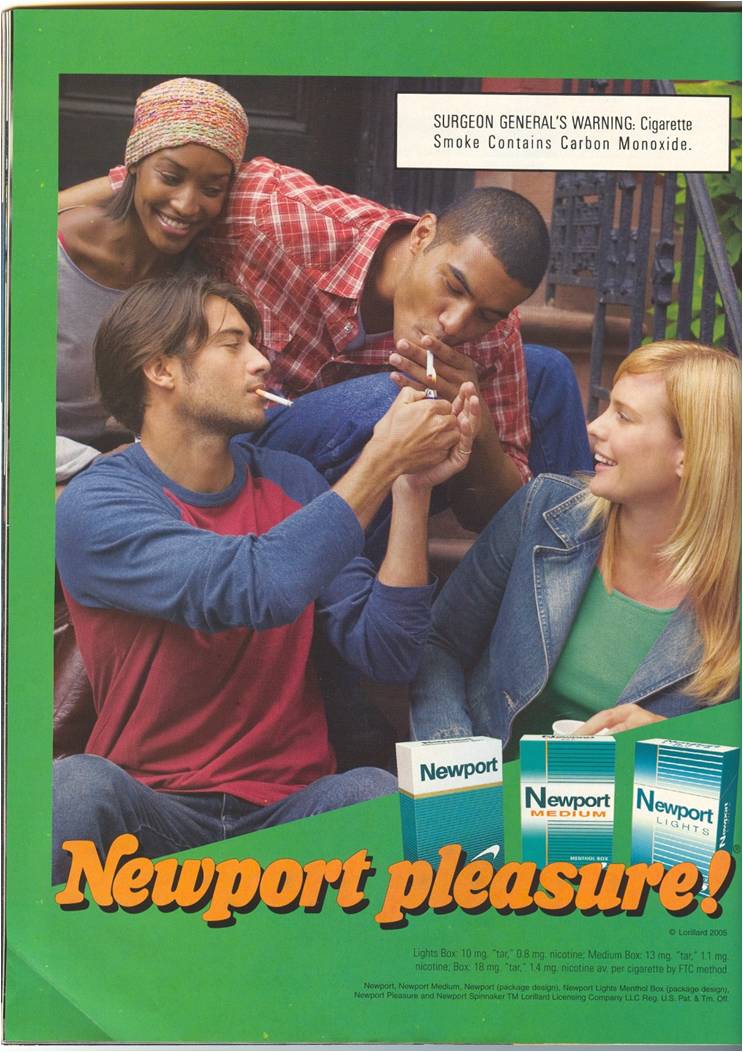
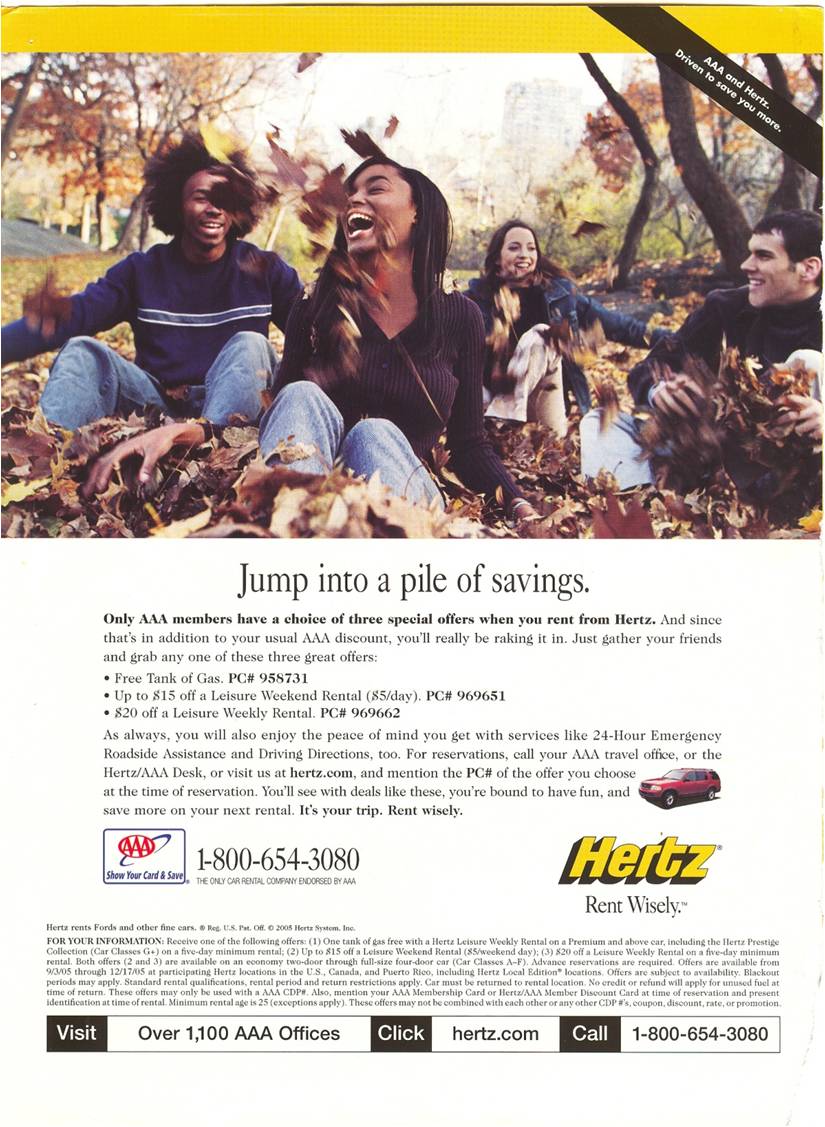
In this ninth installment, I illustrate how, while interracial friendships are frequently pictured, interracial relationships are very rarely pictured. Look closely, who is (hooking up) with who?

Also in this series:
(1) Including people of color so as to associate the product with the racial stereotype.
(2) Including people of color to invoke (literally) the idea of “color” or “flavor.”
(3) To suggest ideas like “hipness,” “modernity,” and “progress.”
(4) To trigger the idea of human diversity.
(5) To suggest that the company cares about diversity.
How are they included?
(6) They are “white-washed.”
(7) They are “chaperoned.”
(8) They are subordinated through placement or action.
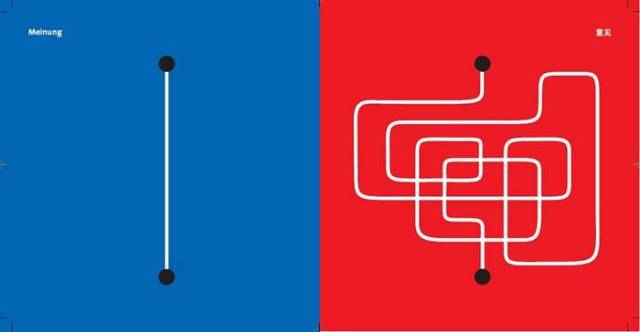
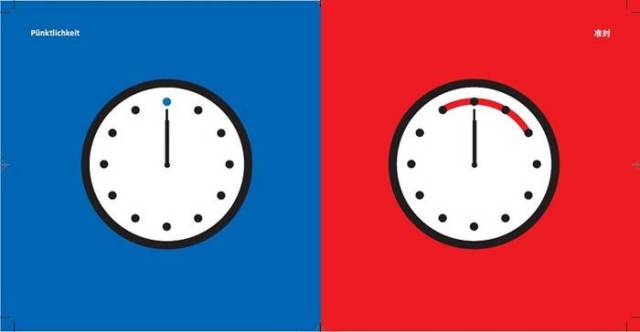
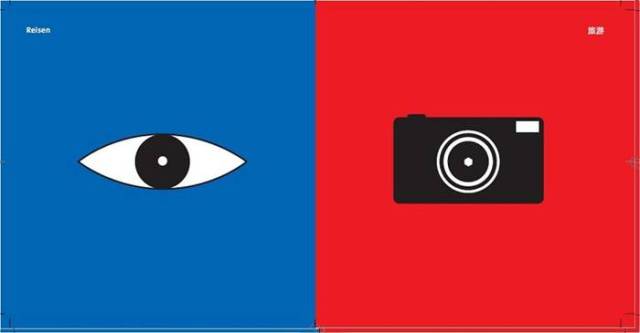
Natasha L. sent in another example of stereotypes tied to nationality/region in the form of a set of comical visual distinctions between “Westerners” and “Asians,” found here, by an artist named Yang Liu. [Note: Natasha and I both assume they’re supposed to be comical or even satirical, particularly of the way that non-Western countries are generally stereotyped as being less professional, less punctual, less rational, and so on, though we might be wrong.] Some examples:
“Opinion”:
“Punctuality”:
“Traveling”:
“In the Restaurant”

“Queue when Waiting”
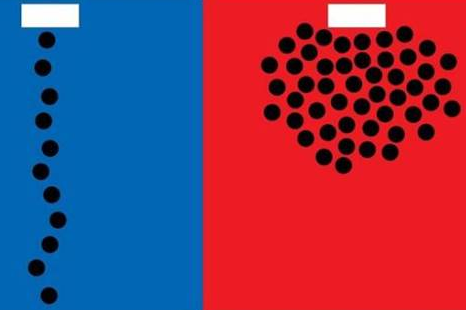
Regardless of the artist’s intent (whether they’re supposed to be satires of this type of thinking, etc.), I’m sure many people will laugh and see some elements of truth to some of the images. But I’m betting you could tell people they represent almost any set of nationalities and people would also laugh and say “OMG, it’s totally true!” It’s Germany and Spain! It’s the U.S. and Mexico! It’s Venezuela and Greece! You could also probably change this to “men” and “women” and get the same reaction. It’s the stereotypical categorization we think is funny–the idea that groups of people are systematically different, whether it’s based on gender, class, race, nationality, region within a country, and so on (particularly if these differences might lead to sitcom-like hijinx and misunderstandings!).
For a fun little activity to get across the way in which stereotypes are inconsistent and meaningless, you might present these images, not tell your students what they’re supposed to represent, and ask them what groups they think are being portrayed (either out loud or in writing), then use their guesses, which will probably vary widely and draw on lots of different human categories such as class, gender, race, and so on, to talk about stereotyping (which may or may not be negative, of course) and how little we pay attention to what the actual contents of our stereotypes are. Another good example of this would be the way that ethnic groups are often defined as having uniquely loud and boisterous families–I think of it as the “My Big Fat Greek Wedding” syndrome. Well, if Italians, Irish, Greeks, Jews, Russians, Mexicans, Spaniards, Chinese, people from the Southern U.S., New Yorkers, etc. etc. etc., all have big loud families…doesn’t that kind of indicate that lots of families are just big and loud, regardless of background?
Thanks, Ashley and Natasha!
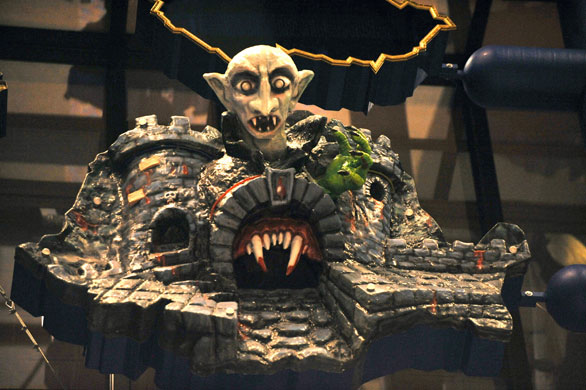
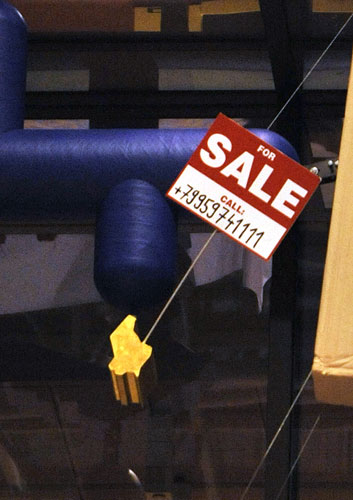
NEW! Robin sent in a link to an article in the Guardian about a Czech artist who pulled off a hoax by creating a set of sculpture that represent stereotypes of various European countries, which he said were created by 27 different artists.
Romania
Luxembourg is made of gold…and is for sale:
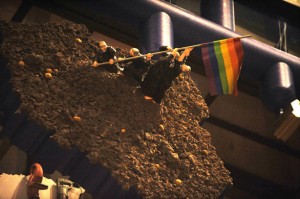
Poland has priests raising a rainbow flag. I didn’t know if the rainbow flag has the same association with gay rights in Poland as it does here, but Spiegel Online says it’s a gay pride flag:
Bulgaria is apparently supposed to be the floor of a urinal, though Spiegel Online says it’s a Turkish toilet, apparently also called a squat toilet:
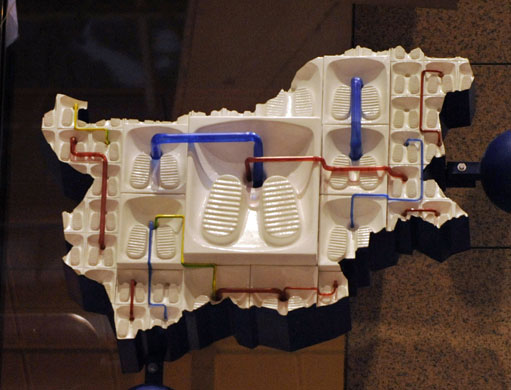
Bulgaria’s not happy about it and has demanded the sculpture be taken down.
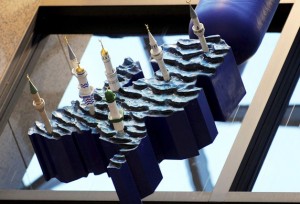
Holland has been flooded, but minarets stick out of the water to remind us about increasing concerns expressed by many Dutch about the Muslim community in the Netherlands since tension increased after the Mohammad cartoon incident:
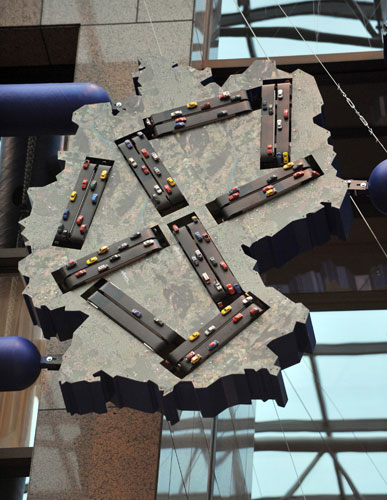
There is ongoing debate about whether this image of Germany, showing the country’s many autobahns, is supposed to look like a swastika:
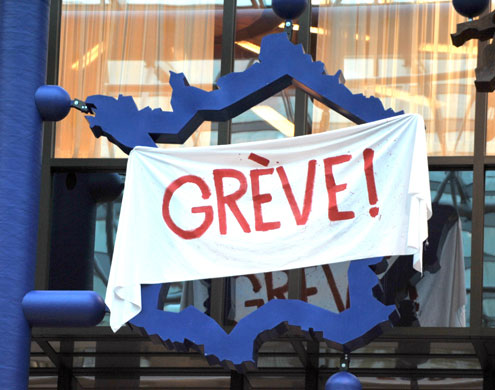
And of course France has a large banner that says “Strike!”
Apparently Great Britain was represented simply as a blank space.
Social psychologists have devised a genuis way to measure our implicit biases; that is, they have found a way to tap into those biases that we hold unconsciously and/or know better than to reveal in mixed company. You can learn all about it and take all kinds of tests to reveal your own biases here.
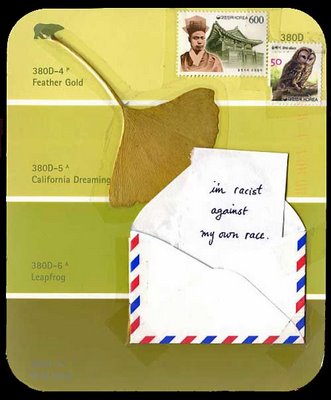
One thing these investigations have revealed is that many of us internalize biases against the groups we belong to. So, women can be sexist and people of color can be racist. Even if people consciously reject these biases, they often sink in anyway and lead to a kind of self-dislike.
Someone sent in a postcard to PostSecret this week that illustrates just this phenomenon:
Beth sent in a link to WowWee, a company that makes robot toys, including Robosapien:
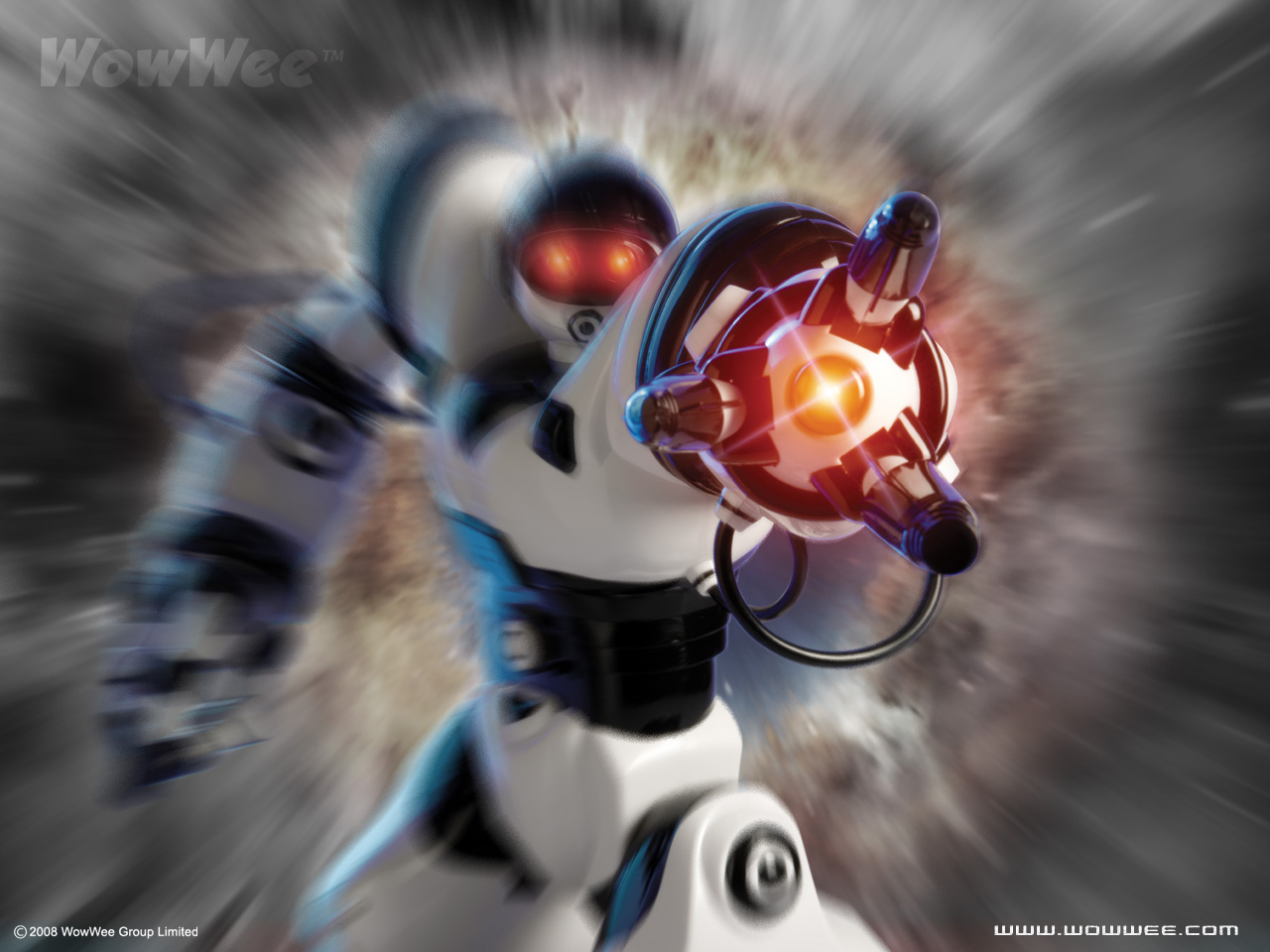
The description of Robosapien:
Robosapien™ is a sophisticated fusion of technology and personality. Loaded with attitude and intelligence, Robosapien is the first robot based on the science of applied biomorphic robotics. With a full range of dynamic motion, interactive sensors and a unique personality, Robosapien is more than a mechanical companion — he’s a multi-functional, thinking, feeling robot with attitude!
There is also a female version, called Femisapien:
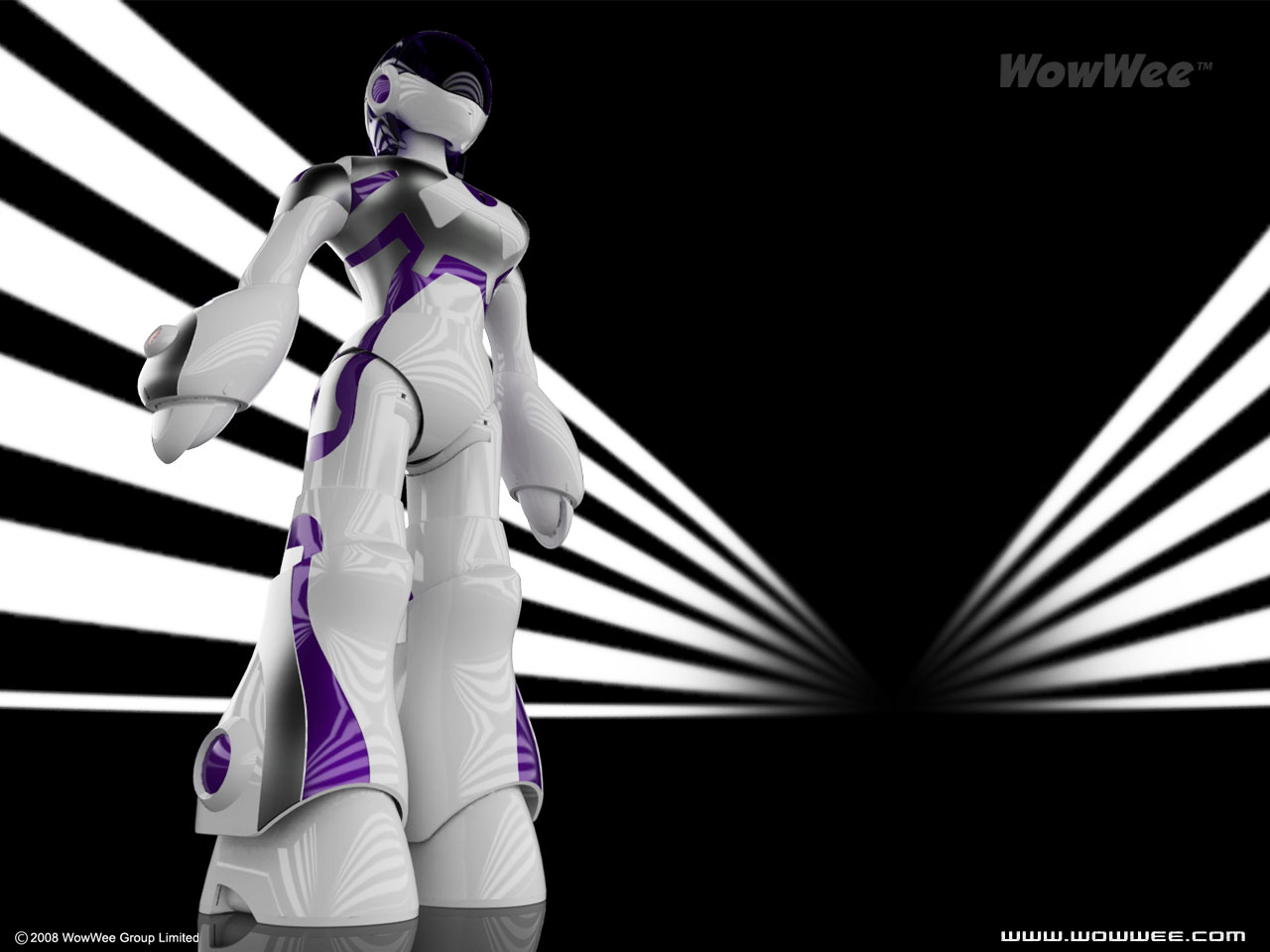
From the website:
Intelligent and interactive, RS Femisapien™ speaks her own language called “emotish” which consists of gentle sounds and gestures. There is no remote required; interact with her directly and she responds to your hand gestures, touch, and sound.
So the default robot is male, with the female being not a female Robosapien but rather an entirely different product. And the photos and descriptions of Robosapien emphasize aggression, movement, personality, and “attitude,” while Femisapien speaks “emotish” (seriously?), which is “gentle”–a characteristic that seems to be missing from Robosapien, who is dynamic and, um, maybe shoots lasers from his hands.
It’s a nice example of gendered assumptions being built into product design and marketing. There’s no particular reason that the male and female versions of a robot have to look so very different, but even if they did, the decision to associate one with words and characteristics that evoke emotion and gentleness and the other with aggression and movement isn’t accidental; it’s a result of how we think about males and females.
For another excellent example of the men are people and women are women thing, see this post on the Body Worlds exhibit.
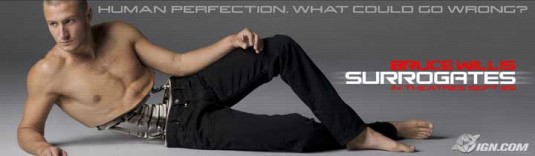
NEW! Kyle M. sent us a link to his post on the advertising for the sci-fi show Surrogates. He makes some great observations. I noticed, too, that the way in which the robotic components of men and women were designed differed slightly in gendered ways. The “spines” of the men are significantly more robust than the thin, spindly spines given to the female characters. Notice, also, that the way in which the models are posed emphasizes women’s thinness (in all of these ads, she is positioned sideways, minimizing her size) and men’s broadness (positioned so that the width of his body is emphasized).




Abby K. alerted us to this video from the New York Times about boys who cross traditional gender lines to compete on a double-dutch jump-roping team in Brooklyn:
Click here for the NYT article that accompanied the video.
It’s a good illustration of the pressures boys face to avoid anything defined as feminine, usually more than girls are told to avoid things that are masculine (which can sometimes make them cool). ZeAndre Orr’s mom tried to dissuade him from doing something that was for girls, other boys at school picked on him because of his involvement with double dutch, and of course there is the time-honored tradition of calling boys who participate in “girly” activities sissies. For many boys, the fear of such repercussions–particularly harassment by other boys–is enough to make them steer clear of things they might be good at or like doing. And yet, despite these pressures, both boys and girls do cross gender lines all the time…a fact we conveniently forget when we talk about gender in a way that implies that “real boys” just naturally like certain things and not others, for example.
The other thing this made me think about is the way that physical activities get defined as sports…or as something else. If jump-roping were in the “sport” category, it would be socially acceptable, even encouraged, for ZeAndre to take part. And there’s no particular reason I can see that double dutch is clearly not a sport–it requires stamina, physical skill, fitness, and excellent hand-eye coordination, and involves team competition. I’ll probably get myself yelled at here, but seriously, this looks like it has as much of a claim to be called a sport as golf does.
But much like competitive cheerleading, competitive jump-roping has not attained social recognition as an athletic endeavor. Some sociologists argue that physical activities that predominantly attract women tend to be defined as something other than sports simply because we associate athletics with men, not women. I’m not arguing about whether or not competitive jump-roping should be seen as a sport–I really don’t care–but you might use this video as a starting point for a discussion about why we define some activities as sports but not others, and how gender might play into this.
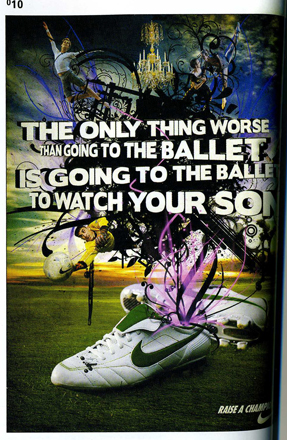
Back to the issue of the messages boys get that discourage them from doing things coded feminine, Nathan M. (see his truly awesome artwork at The House of Tomorrow) sent in a link to this Nike ad (found at gigposters), which makes it clear that parents are supposed to be horrified at the idea that their son would be in ballet:
Thanks, AK and Nathan!
Christoph B. sent in these Goldstar Beer ads, found at BuzzFeed, that show the differences between men and women:
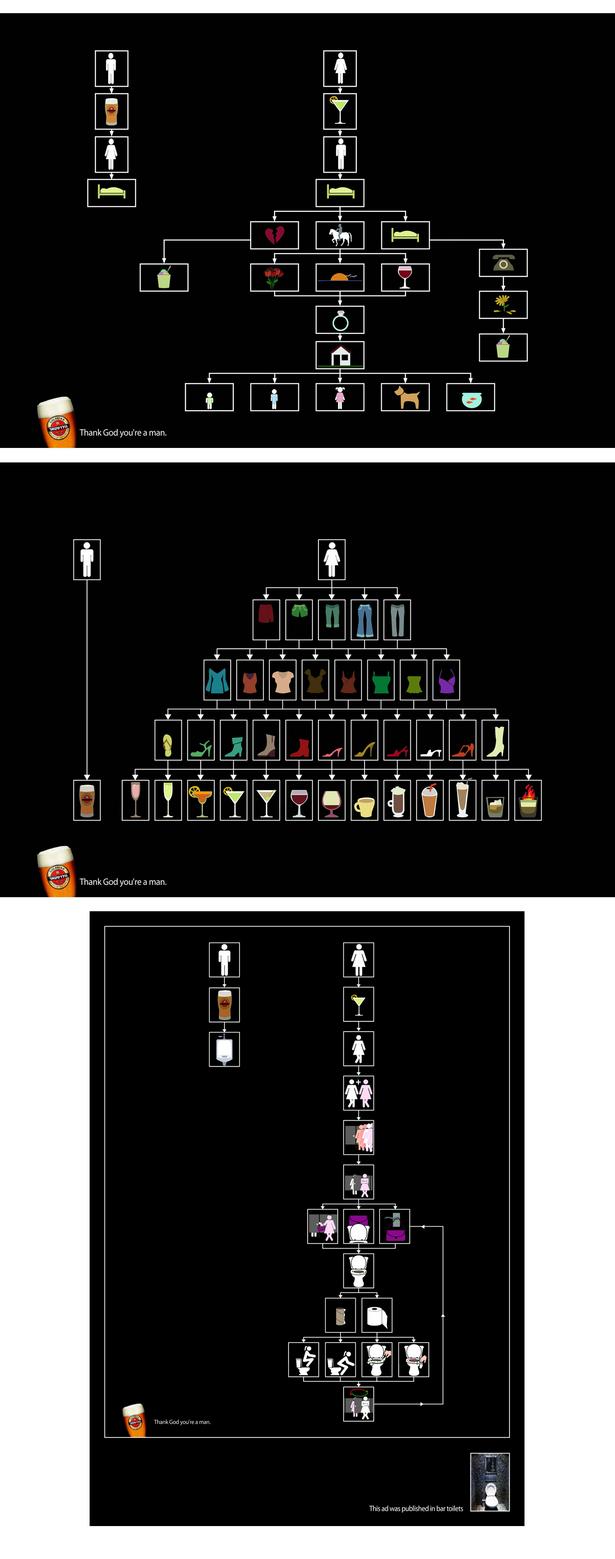
I know that I, for one, immediately start thinking about marriage every time I meet a guy. My new male neighbor waved at me the other day, and I ran out and bought a wedding dress, just in case.
The other thing here is the assumption that a) the viewer is definitely a man and b) of the two options, the “man’s” life is always preferable. I suppose in the second two ads that might be reasonable–although I never experience all that many problems using public restrooms, but whatever–but why is it automatically better to have sex with no emotional attachments or expectations of ever interacting again? I doubt that all men enjoy such encounters, any more than all women are thinking of marriage every time they have sex with someone.
Gwen Sharp is an associate professor of sociology at Nevada State College. You can follow her on Twitter at @gwensharpnv.
Erin S. sent in this screencapture of a set of ebay gift suggestions:
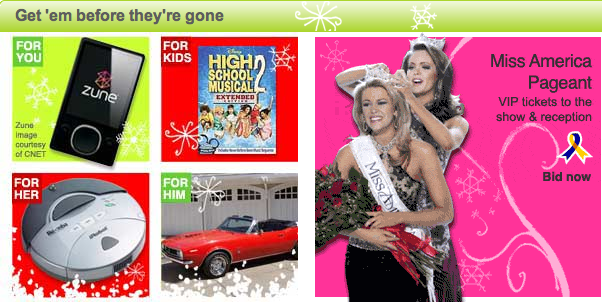
Erin says,
For her? A Roomba automatic vacuum! For him? A new sports car, of course!
Apparently Zunes are an androgynous gift, which is good to know.
Random, non-sociological story: My ex-stepdad once got my mom a mop for their anniversary. For her birthday he got her a live mouse trap–the type that doesn’t kill them but just keeps them contained so you can take them outside. She actually liked these gifts better than the time he got them “both” a rifle for their anniversary, as a “shared” gift. Ah, romance.
Thanks for the image, Erin!
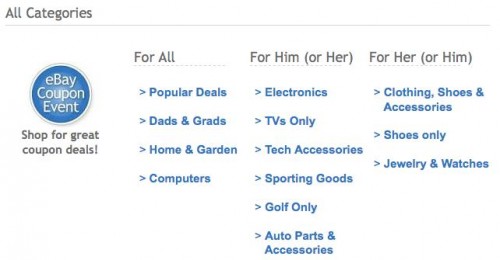
NEW! (July ’10): Carissa sent in an image of an advertisement for an eBay Coupon Event that provides suggestions for different groups. There’s a clear assumption of who would be most interested in the different categories, with the other gender thrown in as an afterthought. But it’s also an example of how we insist on dividing things by gender, even when there’s absolutely no reason to do so. If you’re acknowledging that both men and women might like everything listed, why bother to categorize them by gender at all? Why not just have a list under “All Categories” and leave it at that?