Search results for The

Screenshot used with permission

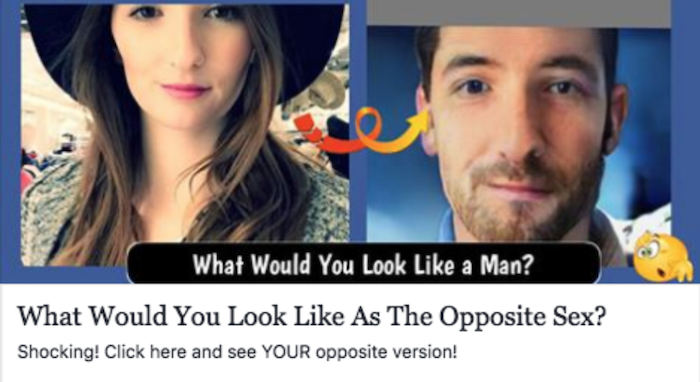
As I was scrolling through Facebook a few weeks ago, I noticed a new trend: Several friends posted pictures (via an app) of what they would look like as “the opposite sex.” Some of them were quite funny—my female-identified friends sported mustaches, while my male-identified friends revealed long flowing locks. But my sociologist-brain was curious: What makes this app so appealing? How does it decide what the “opposite sex” looks like? Assuming it grabs the users’ gender from their profiles, what would it do with users who listed their genders as non-binary, trans, or genderqueer? Would it assign them male or female? Would it crash? And, on a basic level, why are my friends partaking in this “game?”

Gender is deeply meaningful for our social world and for our identities—knowing someone’s gender gives us “cues” about how to categorize and connect with that person. Further, gender is an important way our social world is organizedfor better or worse. Those who use the app engage with a part of their own identities and the world around them that is extremely significant and meaningful.

Gender is also performative. We “do” gender through the way we dress, talk, and take up space. In the same way, we read gender on people’s bodies and in how they interact with us. The app “changes people’s gender” by changing their gender performance; it alters their hair, face shape, eyes, and eyebrows. The app is thus a outlet to “play” with gender performance. In other words, it’s a way of doing digital drag. Drag is a term that is often used to refer to male-bodied people dressing in a feminine way (“drag queens”) or female-bodied people dressing in a masculine way (“drag kings”), but all people who do drag do not necessarily fit in this definition. Drag is ultimately about assuming and performing a gender. Drag is increasingly coming into the mainstream, as the popular reality TV series RuPaul’s Drag Race has been running for almost a decade now. As more people are exposed to the idea of playing with gender, we might see more of them trying it out in semi-public spaces like Facebook.

While playing with gender may be more common, it’s not all fun and games. The Facebook app in particular assumes a gender binary with clear distinctions between men and women, and this leaves many people out. While data on individuals outside of the gender binary is limited, a 2016 report from The Williams Institute estimated that 0.6% of the U.S. adult population — 1.4 million people — identify as transgender. Further, a Minnesota study of high schoolers found about 3% of the student population identify as transgender or gender nonconforming, and researchers in California estimate that 6% of adolescents are highly gender nonconforming and 20% are androgynous (equally masculine and feminine) in their gender performances.

The problem is that the stakes for challenging the gender binary are still quite high. Research shows people who do not fit neatly into the gender binary can face serious negative consequences, like discrimination and violence (including at least 28 killings of transgender individuals in 2017 and 4 already in 2018).  And transgender individuals who are perceived as gender nonconforming by others tend to face more discrimination and negative health outcomes.

So, let’s all play with gender. Gender is messy and weird and mucking it up can be super fun. Let’s make a digital drag app that lets us play with gender in whatever way we please. But if we stick within the binary of male/female or man/woman, there are real consequences for those who live outside of the gender binary.

Recommended Readings:

Allison Nobles is a PhD candidate in sociology at the University of Minnesota and Graduate Editor at The Society Pages. Her research primarily focuses on sexuality and gender, and their intersections with race, immigration, and law.
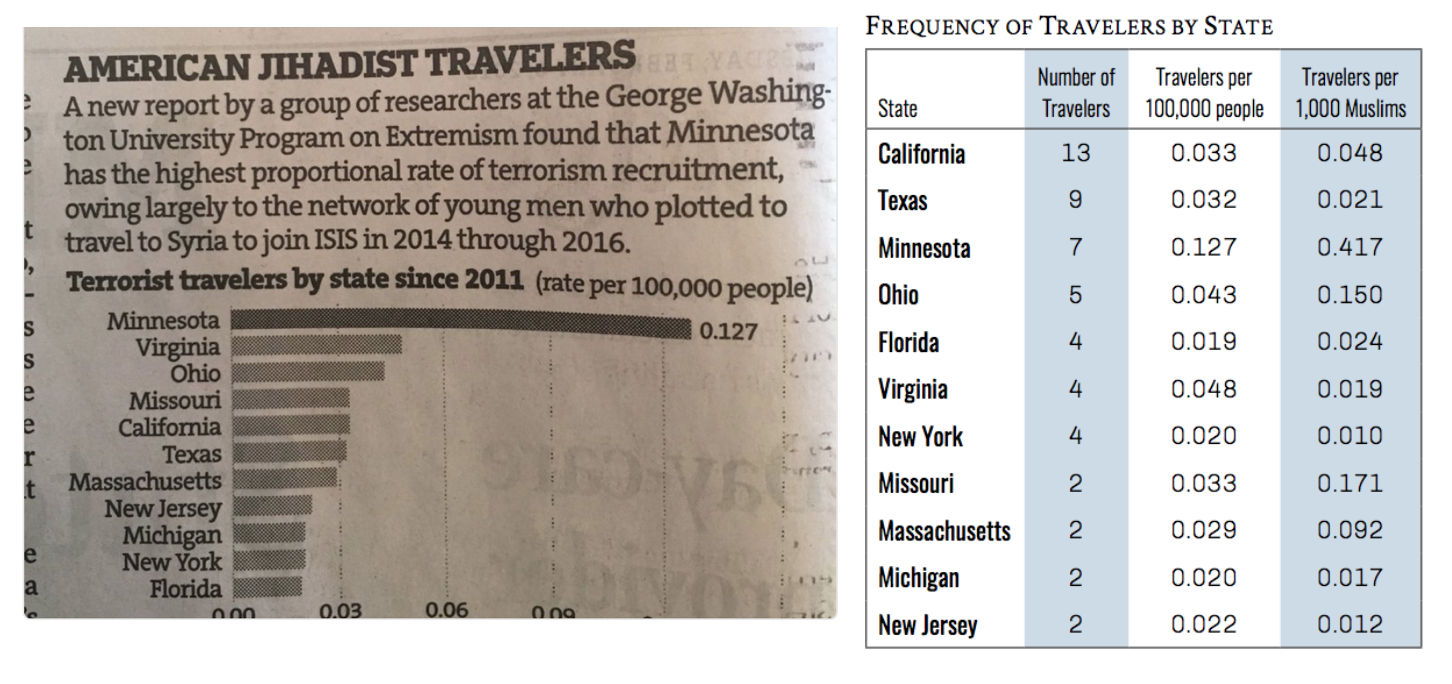
The Star Tribune recently ran an article about a new study from George Washington University tracking cases of Americans who traveled to join jihadist groups in Syria and Iraq since 2011. The print version of the article was accompanied by a graph showing that Minnesota has the highest rate of cases in the study. TSP editor Chris Uggen tweeted the graph, noting that this rate represented a whopping seven cases in the last six years.

Here is the original data from the study next to the graph that the paper published:

(Click to Enlarge)

Social scientists often focus on rates when reporting events, because it make cases easier to compare. If one county has 300 cases of the flu, and another has 30,000, you wouldn’t panic about an epidemic in the second county if it had a city with many more people. But relying on rates to describe extremely rare cases can be misleading. 

For example, the data show this graph misses some key information. California and Texas had more individual cases than Minnesota, but their large populations hide this difference in the rates. Sorting by rates here makes Minnesota look a lot worse than other states, while the number of cases is not dramatically different. 

As far as I can tell, this chart only appeared in the print newspaper photographed above and not on the online story. If so, this chart only went to print audiences. Today we hear a lot of concern about the impact of “filter bubbles,” especially online, and the spread of misleading information. What concerns me most about this graph is how it shows the potential impact of offline filter bubbles in local communities, too.

Evan Stewart is an assistant professor of sociology at University of Massachusetts Boston. You can follow his work at his website, or on BlueSky.

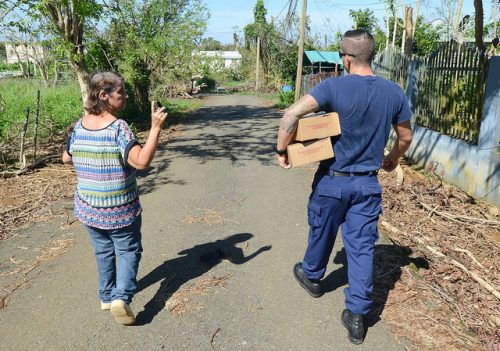
Recent reports indicated that FEMA was cuttingand then not cutting—hurricane relief aid to Puerto Rico. When Donald Trump recently slandered Puerto Ricans as lazy and too dependent on aid after Hurricane Maria, Fox News host Tucker Carlson stated that Trump’s criticism could not be racist because “Puerto Rico is 75 percent white, according to the U.S. Census.”

Photo Credit: Coast Guard News, Flickr CC

This statement presents racism as a false choice between nonwhite people who experience racism and white people who don’t. It ignores the fact that someone can be classed as white by one organization but treated as non-white by another, due to the way ‘race’ is socially constructed across time, regions and social contexts.

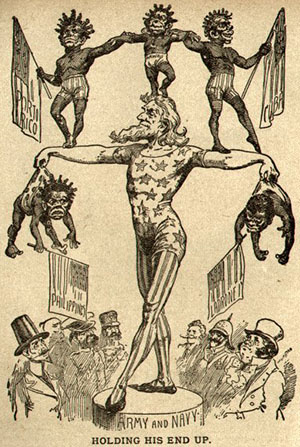
Whiteness for Puerto Ricans is a contradiction. Racial labels that developed in Puerto Rico were much more fluid than on the U.S. mainland, with at least twenty categories. But the island came under U.S. rule at the height of American nativism and biological racism, which relied on a dichotomy between a privileged white race and a stigmatized black one that was designed to protect the privileges of slavery and segregation. So the U.S. portrayed the islanders with racist caricatures in cartoons like this one:

Clara Rodriguez has shown how Puerto Ricans who migrated to the mainland had to conform to this white-black duality that bore no relation to their self-identifications. The Census only gave two options, white or non-white, so respondents who would have identified themselves as “indio, moreno, mulato, prieto, jabao, and the most common term, trigueño (literally, ‘wheat-colored’)” chose white by default, simply to avoid the disadvantage and stigma of being seen as black bodied.

Choosing the white option did not protect Puerto Ricans from discrimination. Those who came to the mainland to work in agriculture found themselves cast as ‘alien labor’ despite their US citizenship. When the federal government gave loans to white home buyers after 1945, Puerto Ricans were usually excluded on zonal grounds, being subjected to ‘redlining’ alongside African Americans. Redlining was also found to be operating on Puerto Rico itself in the insurance market as late as 1998, suggesting it may have even contributed to the destitution faced by islanders after natural disasters.

The racist treatment of Puerto Ricans shows how it is possible to “be white” without white privilege. There have been historical advantages in being “not black” and “not Mexican”, but they have not included the freedom to seek employment, housing and insurance without fear of exclusion or disadvantage. When a hurricane strikes, Puerto Rico finds itself closer to New Orleans than to Florida.

An earlier version of this post appeared at History News Network

Jonathan Harrison, PhD, is an adjunct Professor in Sociology at Florida Gulf Coast University, Florida SouthWestern State College and Hodges University whose PhD was in the field of racism and antisemitism.

Originally Posted at TSP Discoveries

Photo by oddharmonic, Flickr CC

In the United States we tend to think children develop sexuality in adolescence, but new research by Heidi Gansen shows that children learn the rules and beliefs associated with romantic relationships and sexuality much earlier.

Gansen spent over 400 hours in nine different classrooms in three Michigan preschools. She observed behavior from teachers and students during daytime classroom hours and concluded that children learn — via teachers’ practices — that heterosexual relationships are normal and that boys and girls have very different roles to play in them.

In some classrooms, teachers actively encouraged “crushes” and kissing between boys and girls. Teachers assumed that any form of affection between opposite gender children was romantically-motivated and these teachers talked about the children as if they were in a romantic relationship, calling them “boyfriend/girlfriend.” On the other hand, the same teachers interpreted affection between children of the same gender as friendly, but not romantic. Children reproduced these beliefs when they played “house” in these classrooms. Rarely did children ever suggest that girls played the role of “dad” or boys played the role of “mom.” If they did, other children would propose a character they deemed more gender-appropriate like a sibling or a cousin.

Preschoolers also learned that boys have power over girls’ bodies in the classroom. In one case, teachers witnessed a boy kiss a girl on the cheek without permission. While teachers in some schools enforced what the author calls “kissing consent” rules, the teachers in this school interpreted the kiss as “sweet” and as the result of a harmless crush. Teachers also did not police boys’ sexual behaviors as actively as girls’ behaviors. For instance, when girls pulled their pants down teachers disciplined them, while teachers often ignored the same behavior from boys. Thus, children learned that rules for romance also differ by gender.

Allison Nobles is a PhD candidate in sociology at the University of Minnesota and Graduate Editor at The Society Pages. Her research primarily focuses on sexuality and gender, and their intersections with race, immigration, and law.
My gut reaction was that nobody is actually eating the freaking Tide Pods.

Despite the explosion of jokes—yes, mostly just jokes—about eating detergent packets, sociologists have long known about media-fueled cultural panics about problems that aren’t actually problems. Joel Best’s groundbreaking research on these cases is a classic example. Check out these short video interviews with Best on kids not really being poisoned by Halloween candy and the panic over “sex bracelets.”

[youtube]https://www.youtube.com/watch?v=Bav01pAZrNw[/youtube]

In a tainted Halloween candy study, Best and Horiuchi followed up on media accounts to confirm cases of actual poisoning or serious injury, and they found many cases couldn’t be confirmed or were greatly exaggerated. So, I followed the data on detergent digestion.

It turns out, there is a small trend. According to a report from the American Association of Poison Control Centers,

…in 2016 and 2017, poison control centers handled thirty-nine and fifty-three cases of intentional exposures, respectively, among thirteen to nineteen year olds. In the first fifteen days of 2018 alone, centers have already handled thirty-nine such intentional cases among the same age demographic.

That said, this trend is only relative to previous years and cannot predict future incidents. The life cycle of internet jokes is fairly short, rotating quickly with an eye toward the attention economy. It wouldn’t be too surprising if people moved on from the pods long before the panic dies out.

Evan Stewart is an assistant professor of sociology at University of Massachusetts Boston. You can follow his work at his website, or on BlueSky.

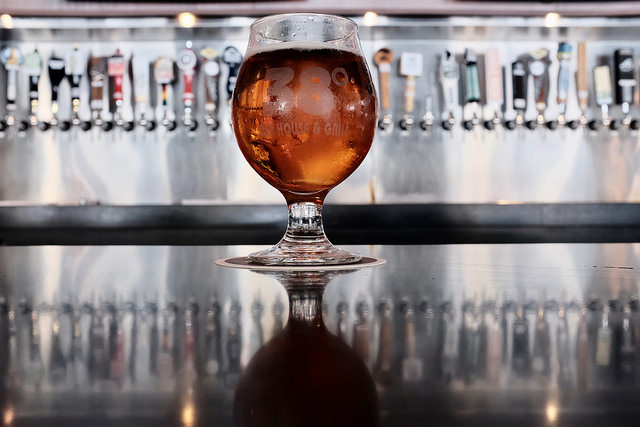
The rise of craft beer in the United States gives us more options than ever at happy hour. Choices in beer are closely tied to social class, and the market often veers into the world of pointlessly gendered products. Classic work in sociology has long studied how people use different cultural tastes to signal social status, but where once very particular tastes showed membership in the upper class—like a preference for fine wine and classical music—a world with more options offers status to people who consume a little bit of everything.

Photo Credit: Brian Gonzalez (Flickr CC)

But who gets to be an omnivore in the beer world? New research published in Social Currents by Helana Darwin shows how the new culture of craft beer still leans on old assumptions about gender and social status. In 2014, Darwin collected posts using gendered language from fifty beer blogs. She then visited four craft beer bars around New York City, surveying 93 patrons about the kinds of beer they would expect men and women to consume. Together, the results confirmed that customers tend to define “feminine” beer as light and fruity and “masculine” beer as strong, heavy, and darker.

Two interesting findings about what people do with these assumptions stand out. First, patrons admired women who drank masculine beer, but looked down on those who stuck to the feminine choices. Men, however, could have it both ways. Patrons described their choice to drink feminine beer as open-mindedness—the mark of a beer geek who could enjoy everything. Gender determined who got “credit” for having a broad range of taste.

Second, just like other exclusive markers of social status, the India Pale Ale held a hallowed place in craft brew culture to signify a select group of drinkers. Just like fancy wine, Darwin writes,

IPA constitutes an elite preference precisely because it is an acquired taste…inaccessible to those who lack the time, money, and desire to cultivate an appreciation for the taste.

Sociology can get a bad rap for being a buzzkill, and, if you’re going to partake, you should drink whatever you like. But this research provides an important look at how we build big assumptions about people into judgments about the smallest choices.

Evan Stewart is an assistant professor of sociology at University of Massachusetts Boston. You can follow his work at his website, or on BlueSky.

Photo Credit: Meagan Fisher, Flickr CC

2017 was a big year for conversations about representation in popular media—what it means to tell stories that speak to people across race, gender, sexuality, ability, and more. Between the hits and the misses, there is clearly much more work to do. Representation is not just about who shows up on screen, but also about what kinds of stories get told and who gets to make them happen.

For example, many people are now familiar with “The Bechdel Test” as a pithy shortcut to check for women’s representation in movies. Now, proposals for a new Bechdel Test cover everything from the gender composition of a film’s crew to specific plot points.

These conversations are especially important for the stories we make for kids, because children pick up many assumptions about gender and race at a very young age. Now, new research published in Sociological Forum helps us better understand what kinds of stories we are telling when we seek out a diverse range of children’s books.

Krista Maywalt Aronson, Brenna D. Callahan, and Anne Sibley O’Brien wanted to look at the most common themes in children’s stories with characters from underrepresented racial and cultural groups. Using a special collection of picture books for grades K-3 from the Ladd Library at Bates College, the authors gathered a data set of 1,037 books published between 2008 and 2015 (see their full database here). They coded themes from the books to see which story arcs occurred most often, and what groups of characters were most represented in each theme.

The most common theme, occurring in 38% of these books, was what they called “beautiful life”—positive depictions of the everyday lives of the characters. Next up was the “every child” theme in which main characters came from different racial or ethnic backgrounds, but those backgrounds were not central to the plot. Along with biographies and folklore, these themes occurred more often than stories of oppression or cross-cultural interaction.

These themes tackle a specific kind of representation: putting characters from different racial and ethnic groups at the center of the story. This is a great start, but it also means that these books are more likely to display diversity, rather than showing it in action. For example, the authors write:

Latinx characters were overwhelmingly found in culturally particular books. This sets Latinx people apart as defined by a language and a culture distinct from mainstream America, and sometimes by connection to home countries.

They also note that the majority of these books are still created by white authors and illustrators, showing that there’s even more work to do behind the scenes. Representation matters, and this research shows us how more inclusive popular media can start young!

Evan Stewart is an assistant professor of sociology at University of Massachusetts Boston. You can follow his work at his website, or on BlueSky.

Photo via Oli (Flickr CC)

Whether you’re taking a long flight, taking some time on the treadmill, or just taking a break over the holidays, ’tis the season to catch up on podcasts. Between long-running hits and some strong newcomers this year, there has never been a better time to dive into the world of social science podcasts. While we bring the sociological images, do your ears a favor and check these out.

Also, this list is far from comprehensive. If you have tips for podcasts I missed, drop a note in the comments!

New in 2017

If you’re new to sociology, or want a more “SOC 101” flavor, The Social Breakdown is perfect for you. Hosts Penn, Ellen, and Omar take a core sociological concept in each episode and break it down, offering great examples both old and new (and plenty of sass). Check out “Buddha Heads and Crosses” for a primer on cultural appropriation from Bourdieu to Notorious B.I.G.

Want to dive deeper? The Annex is at the cutting edge of sociology podcasting. Professors Joseph Cohen, Leslie Hinkson, and Gabriel Rossman banter about the news of the day and bring you interviews and commentary on big ideas in sociology. Check out the episode on Conspiracy Theories and Dover’s Greek Homosexuality for—I kid you not—a really entertaining look at research methods.

Favorite Shows Still Going Strong

In The Society Pages’ network, Office Hours brings you interviews with leading sociologists on new books and groundbreaking research. Check out their favorite episode of 2017: Lisa Wade on American Hookup!

Felling wonky? The Scholars Strategy Network’s No Jargon podcast is a must-listen for the latest public policy talk…without jargon. Check out recent episodes on the political rumor mill and who college affirmative action policies really serve.

I was a latecomer to The Measure of Everyday Life this year, finding it from a tip on No Jargon, but I’m looking forward to catching up on their wide range of fascinating topics. So far, conversations with Kieran Healy on what we should do with nuance and the resurrection of typewriters have been wonderful listens.

And, of course, we can’t forget NPR’s Hidden Brain. Tucked away in their latest episode on fame is a deep dive into inconspicuous consumption and the new, subtle ways of wealth in America.

Evan Stewart is an assistant professor of sociology at University of Massachusetts Boston. You can follow his work at his website, or on BlueSky.