Search results for The

The first nice weekend after a long, cold winter in the Twin Cities is serious business. A few years ago some local diners joined the celebration with a serious indulgence: the boozy milkshake.

When talking with a friend of mine from the Deep South about these milkshakes, she replied, “oh, a bushwhacker! We had those all the time in college.” This wasn’t the first time she had dropped southern slang that was new to me, so off to Google I went.

According to Merriam-Webster, “to bushwhack” means to attack suddenly and unexpectedly, as one would expect the alcohol in a milkshake to sneak up on you. The cocktail is a Nashville staple, but the origins trace back to the Virgin Islands in the 1970s.

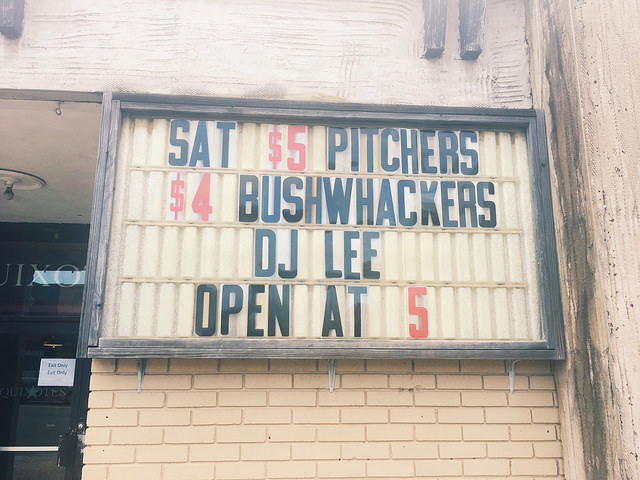
Photo Credit: Beebe Bourque, Flickr CC
Photo Credit: Like_the_Grand_Canyon, Flickr CC

Here’s the part where the history takes a sordid turn: “Bushwhacker” was apparently also the nickname for guerrilla fighters in the Confederacy during the Civil War who would carry out attacks in rural areas (see, for example, the Lawrence Massacre). To be clear, I don’t know and don’t mean to suggest this had a direct influence in the naming of the cocktail. Still, the coincidence reminded me of the famous, and famously offensive, drinking reference to conflict in Northern Ireland.

Battle of Lawrence, Wikimedia Commons

When sociologists talk about concepts like “cultural appropriation,” we often jump to clear examples with a direct connection to inequality and oppression like racist halloween costumes or ripoff products—cases where it is pretty easy to look at the object in question and ask, “didn’t they think about this for more than thirty seconds?”

Cases like the bushwhacker raise different, more complicated questions about how societies remember history. Even if the cocktail today had nothing to do with the Confederacy, the weight of that history starts to haunt the name once you know it. I think many people would be put off by such playful references to modern insurgent groups like ISIS. Then again, as Joseph Gusfield shows, drinking is a morally charged activity in American society. It is interesting to see how the deviance of drinking dovetails with bawdy, irreverent, or offensive references to other historical and social events. Can you think of other drinks with similar sordid references? It’s not all sex on the beach!

Evan Stewart is an assistant professor of sociology at University of Massachusetts Boston. You can follow his work at his website, or on BlueSky.
On November 1st, 2017, Muslim YouTube phenomenon Dina Tokio premiered her documentary project “#YourAverageMuslim,” a four-part Creators for Change series produced by YouTube. This documentary is a prime example of the meaningful feminist digital activism being undertaken by contemporary Muslim women. Such activism seeks to reframe the discourse around Muslim women by showing that successful, independent and bold Muslim women are not the exception, but the norm.

For centuries, Muslim women have been subject to the Orientalist gaze, which paints Muslim female bodies as exotic, veiled, and oppressed victims in various visual and written depictions. These depictions have largely shaped the experiences of average Muslim women, who must deal with constantly being stereotyped by the public as victims of their culture and religion. These Muslim women have now taken to the online world to fight against these stereotypes. By using online platforms to make documentaries such as #YourAverageMuslim and music videos like “Somewhere in America #Mipsterz” (both of which received millions of views online) these women have been quite successful in extending their perspectives to wider audiences.

“Somewhere In America” – dir. Habib Yazdi from XY CONTENT on Vimeo.

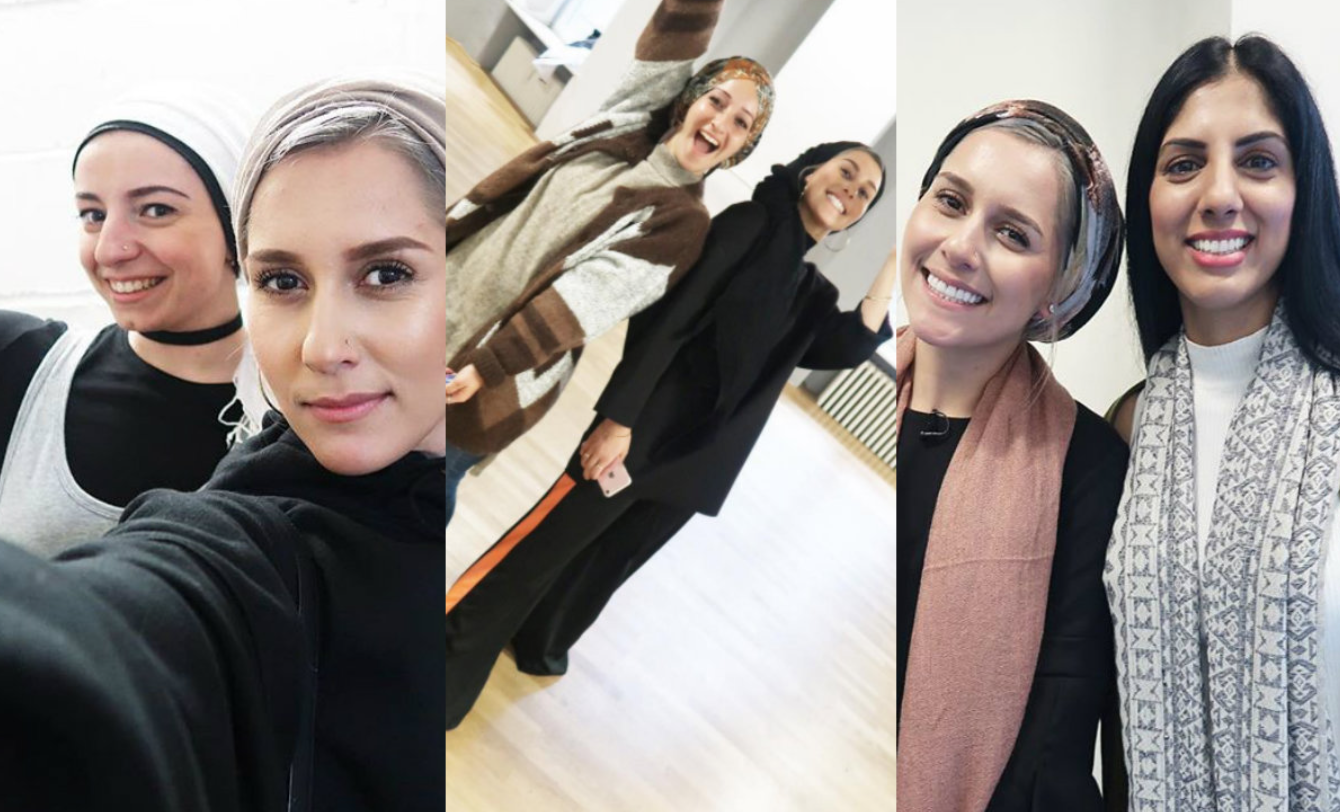
#YourAverageMuslim highlights the lives of three Muslim women in Europe – Dalya Mlouk, Emine, and Sofia Buncy. Dalya Mlouk is the world’s first female hijabi power-lifter, who has broken the world record for deadlifting in her age and weight category. German hip-hop dancer Emine dominates Berlin’s underground hip-hop dance world, and is the first hijabi dance teacher in Europe who also owns her own dance school. Sofia Buncy stands out from the other women, in that she doesn’t wear the hijab, but works primarily in an overlooked area of social work, catering to the needs of Muslim women in prisons. 

Dina Tokio with Dalya Mlouk, Emine, and Sofia Buncy

While all these women are doing exceptional work, whether it be individual or community based, the aim of this documentary is not to showcase how exceptional these women are. Rather, its priority is to normalize the idea that your average Muslim woman may come from diverse backgrounds and is successful, multi-talented, and determined to live her life the way she chooses. Western media representations of minority groups play a large role in shaping how the public conceptualizes its notions of such groups. When these conceptualizations are depicted repeatedly, they become normalized and shape the experiences of minority group members. #YourAverageMuslim seeks to disrupt those representations by normalizing an alternate conceptualization that refrains from reducing the complex nature of the Muslim female experience in the West. This project is unique as it is dedicated specifically to showing amazing women who are not breaking any stereotype, but are instead leading #YourAverageMuslim life.

Inaash Islam is a PhD student in Sociology at Virginia Tech. She specializes in the areas of race, culture and identity, and focuses specifically on the Muslim experience in the West. 

The recent controversy about local news stations in the Sinclair Broadcasting Group reading a coordinated, nationwide message against “fake news” raises questions about the state of news consumption in the United States. Where are Americans getting their news from? If more people are reading the news online, did the Sinclair message have a large impact?

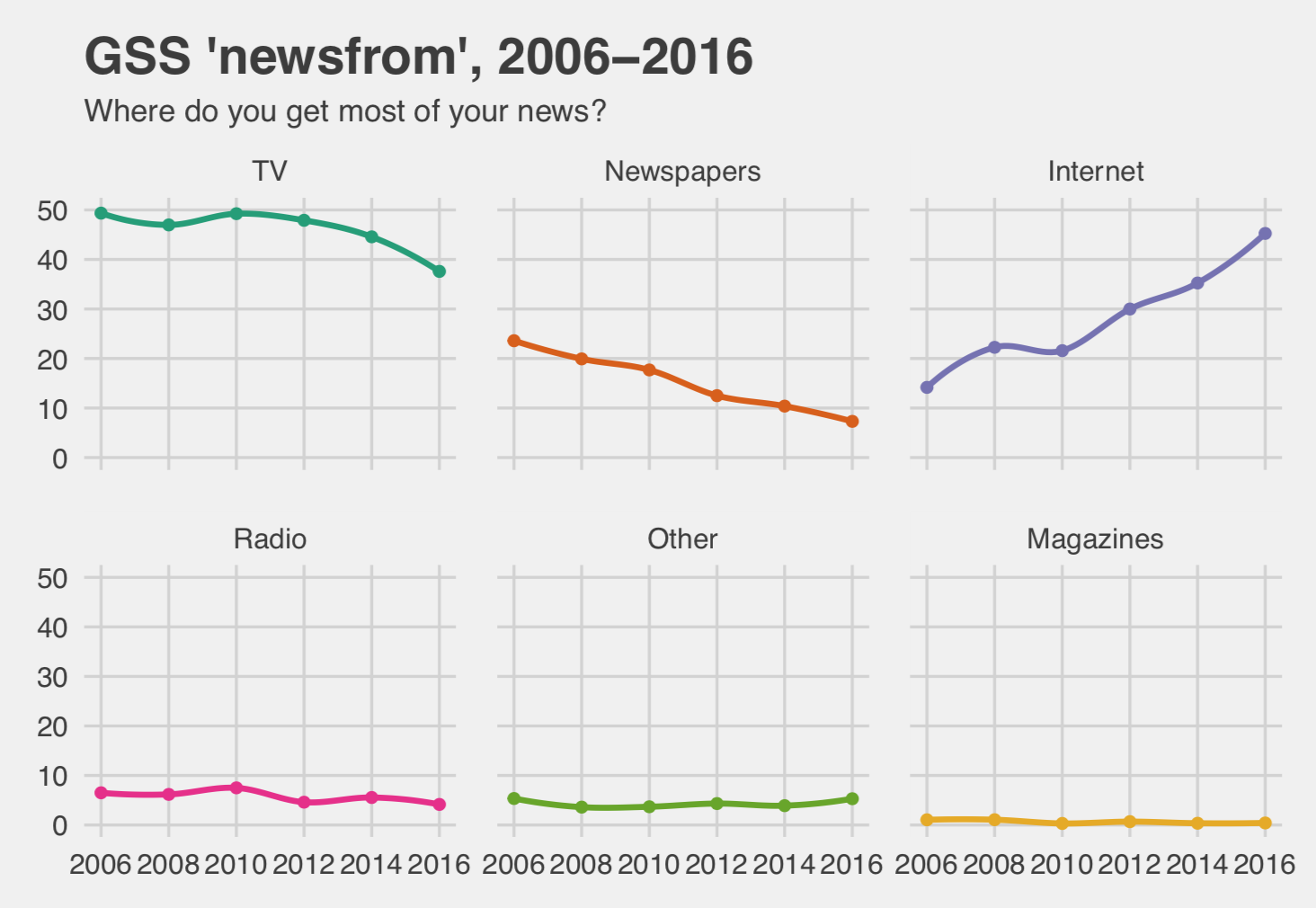
The General Social Survey asks respondents where they get most of their information about the news. This graph shows big changes in Americans’ primary news source, including the rise of online news and the decline of television and newspapers. Notably, in the 2016 GSS, the Internet overtook TV as Americans’ primary source of news for the first time.

(Click to Enlarge)

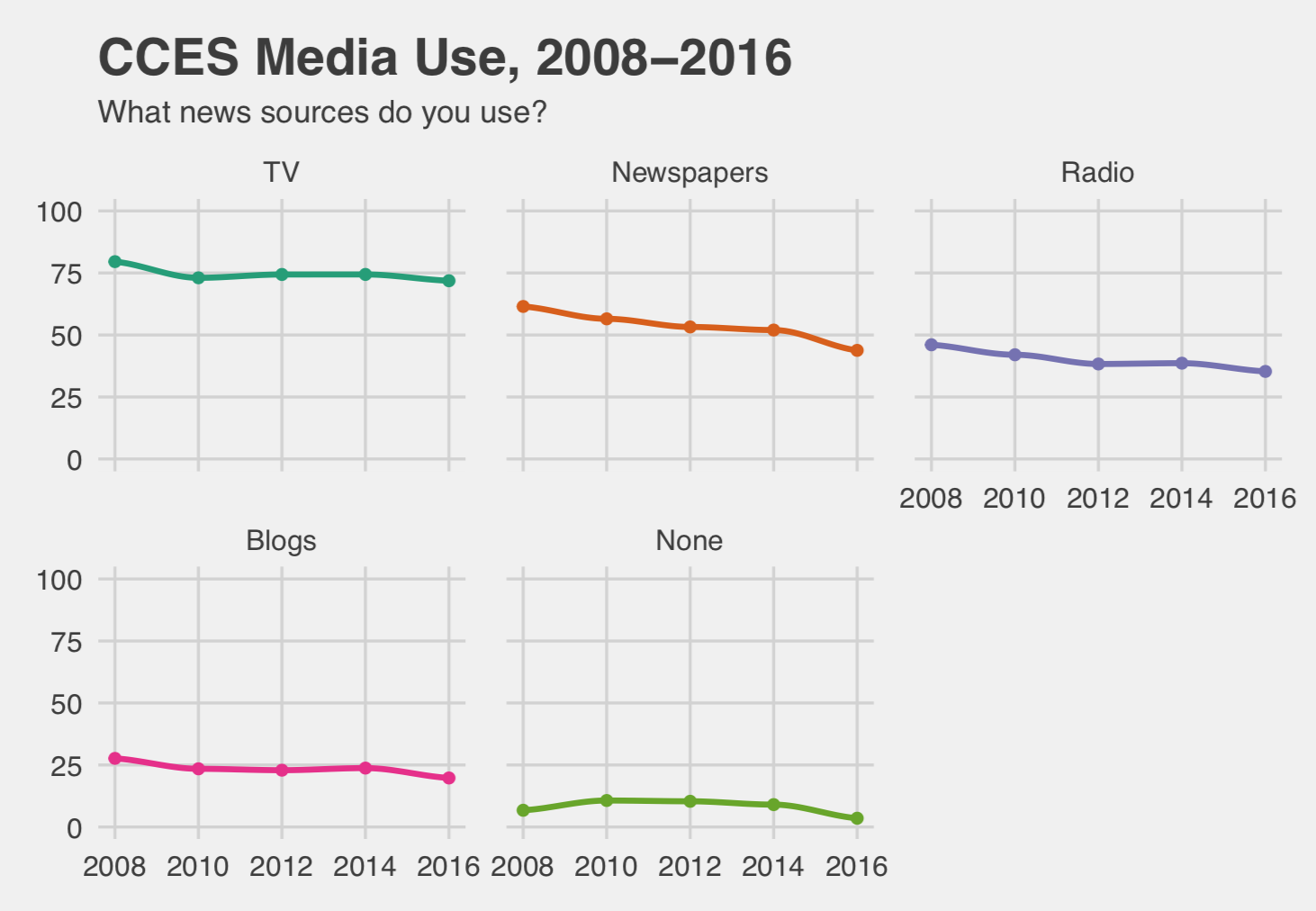
Another survey, The Cooperative Congressional Election Survey, takes a different approach. They ask respondents to select whether they use newspapers, blogs, television, or other sources for their news information. When a survey doesn’t ask respondents to pick a primary source, we see that use rates are more steady over time as people still use a variety of sources.

(Click to Enlarge)

Reported rates of news watching have also stayed pretty stable over the last eight years, with about three-quarters of Americans getting some of their news from TV. Of people who watch news on TV, many respondents report that they watch both local and national news, and this choice has stayed relatively stable over time. Since local news is still a steady part of our news diet, the Sinclair broadcast had a much broader potential reach than we would typically assume about news today.

(Click to Enlarge)

Ryan Larson is a graduate student from the Department of Sociology, University of Minnesota – Twin Cities. He studies crime, punishment, and quantitative methodology. He is a member of the Graduate Editorial Board of The Society Pages, and his work has appeared in Poetics, Contexts, and Sociological Perspectives.

Evan Stewart is a Ph.D. candidate in sociology at the University of Minnesota. You can follow him on Twitter.

Andrew M. Lindner is an Associate Professor at Skidmore College. His research interests include media sociology, political sociology, and sociology of sport.

Inspired by demographic facts you should know cold, “What’s Trending?” is a post series at Sociological Images featuring quick looks at what’s up, what’s down, and what sociologists have to say about it.

Originally Posted at TSP Discoveries

Social media serves as a space where users can react to events (like the Parkland school shooting) in real time. While these conversations can be constructive, social media can also be a haven for anger and discrimination. In a recent study published in American Journal of SociologyRené Flores examined what drives online bigotry, specifically in response to new laws. Flores focuses on Arizona’s SB 1070 law, which allowed authorities to demand immigration papers from individuals they thought may be undocumented. While a strong anti-immigrant response after the law may seem to demonstrate a change in attitudes toward immigrants, Flores argues that the law spurred changes in behavior — in this case, mobilizing those with anti-immigrant attitudes to post more negative content more often.

Photo Credit: Alex Ingram, Flickr CC

Flores analyzed over 250,000 tweets posted between three months before and three months after the passage of SB 1070. Rather than sorting the tweets as positive or negative, Flores created a metric to rate the strength of sentiment in the tweets. He compared Arizona tweets to those in Nevada to measure changes specifically related to SB 1070, rather than other national or regional dynamics. After SB 1070, not only were there more anti-immigrant tweets in Arizona, but the tweets themselves were more negative. And further, Twitter users also directed negative sentiments toward non-immigrant Latinos, showing that the effect of SB 1070 was not limited to those targeted by the law.

Flores did not find evidence that neutral or pro-immigrant users changed their attitudes. Instead, users who already expressed anti-immigrant or anti-Latino biases drove the uptick in negativity. In other words, users who previously held an anti-immigrant stance posted tweets with greater negative content more frequently, at least in the immediate aftermath of the bill’s passing. This finding questions the possibility for laws to change attitudes in the short term, but demonstrates that laws can mobilize groups who already believe in the law’s sentiments.

Brooke Chambers is a PhD student in the University of Minnesota’s Sociology Department. She is interested in genocide (with a particular focus on the 1994 genocide in Rwanda), human rights, and policy formation in response to genocide and mass atrocity.

More social scientists are pointing out that the computer algorithms that run so much of our lives have our human, social biases baked in. This has serious consequences for determining who gets credit, who gets parole, and all kinds of other important life opportunities.

It also has some sillier consequences.

Last week NPR host Sam Sanders tweeted about his Spotify recommendations:

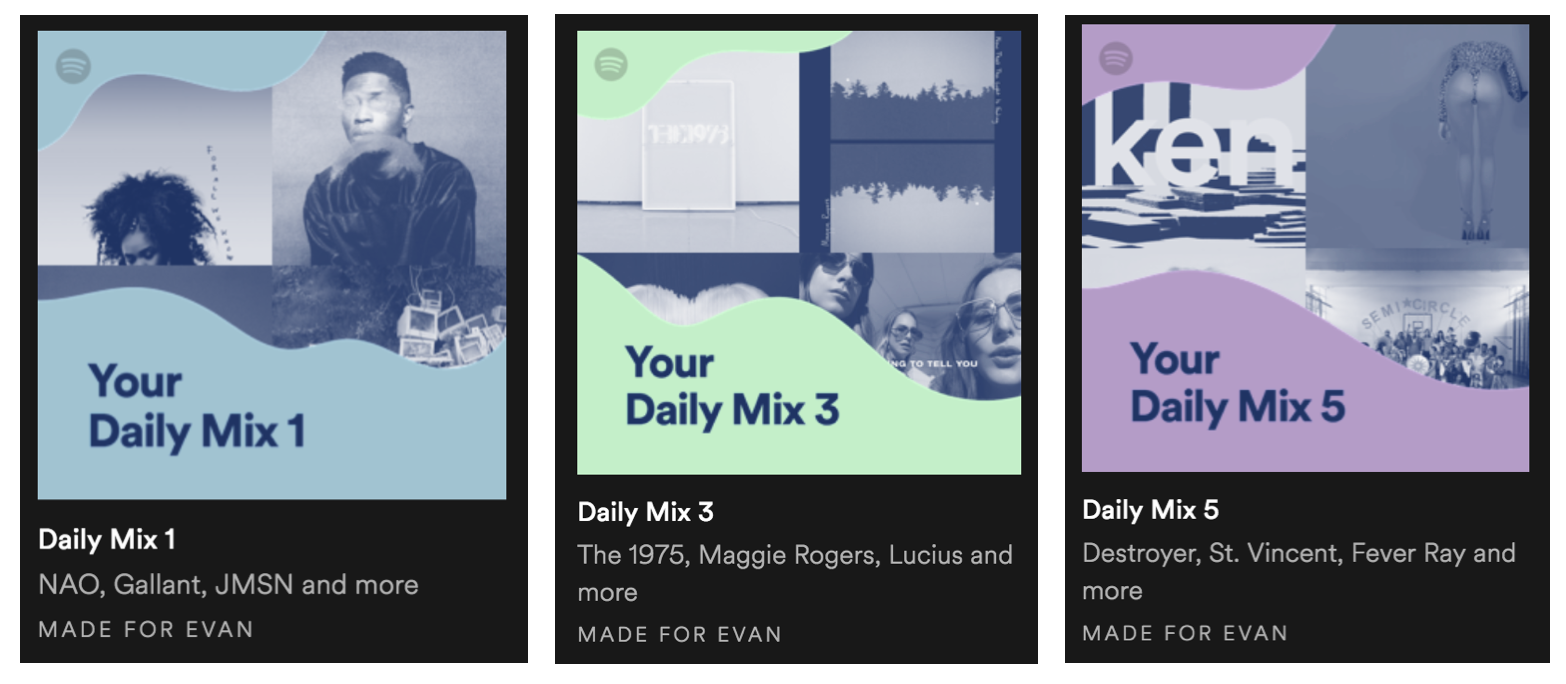
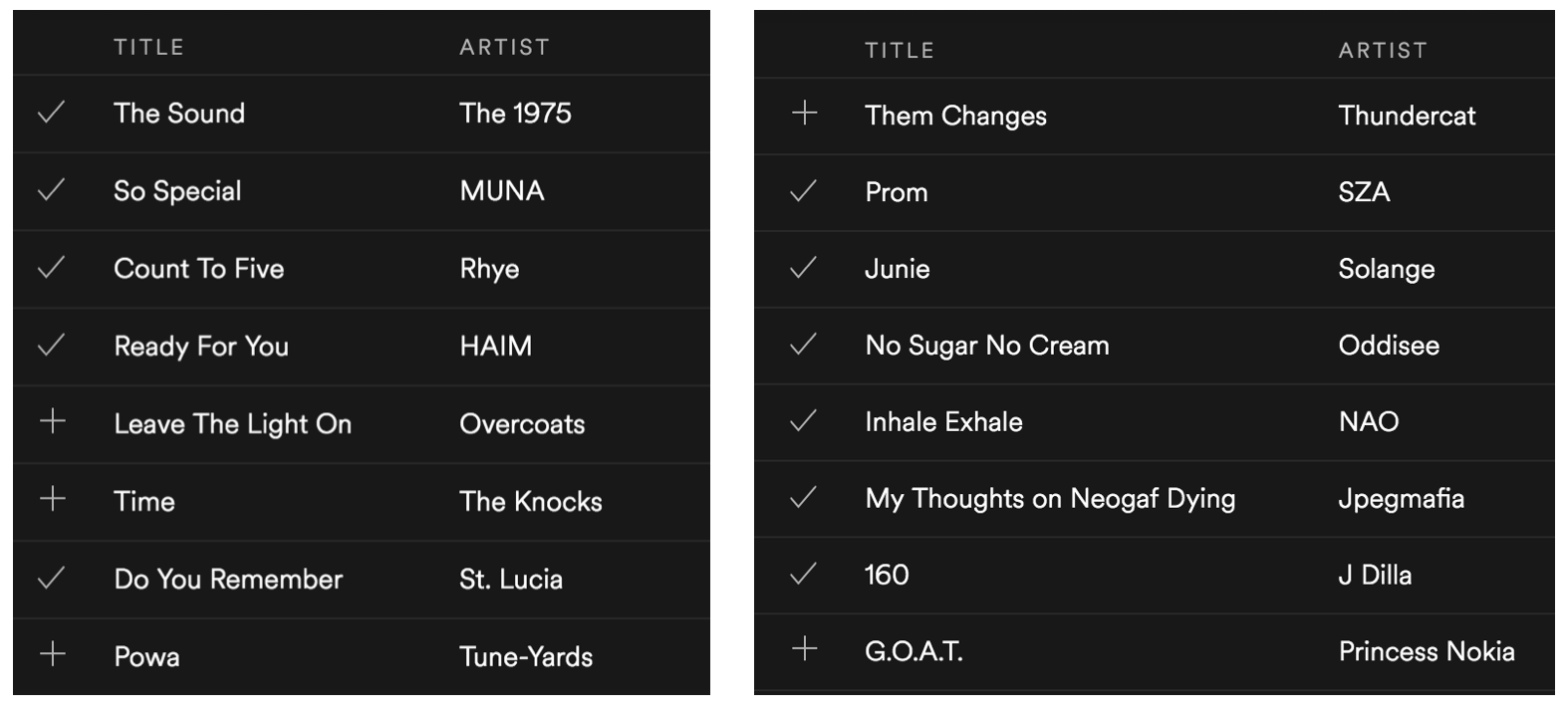
Others quickly chimed in with screenshots of their own. Here are some of my mixes:

The program has clearly learned to suggest music based on established listening patterns and norms from music genres. Sociologists know that music tastes are a way we build communities and signal our identities to others, and the music industry reinforces these boundaries in their marketing, especially along racial lines.

These patterns highlight a core sociological point that social boundaries large and small emerge from our behavior even when nobody is trying to exclude anyone. Algorithms accelerate this process by the sheer number of interactions they can watch at any given time. It is important to remembers the stakes of these design quirks when talking about new technology. After all, if biased results come out, the program probably learned it from watching us!

Evan Stewart is an assistant professor of sociology at University of Massachusetts Boston. You can follow his work at his website, or on BlueSky.
Source Photo: Ted Eytan, Flickr CC

It’s that time of year again! Fans across the nation are coming together to cheer on their colleges and universities in cutthroat competition. The drama is high and full of surprises as underdogs take on the established greats—some could even call it madness.

I’m talking, of course, about The International Championship of Collegiate A Cappella.

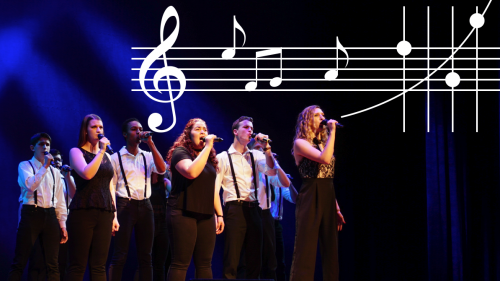
In case you missed the Pitch Perfect phenomenon, college a cappella has come a long way from the dulcet tones of Whiffenpoofs in the West Wing. Today, bands of eager singers are turning pop hits on their heads. Here’s a sampler, best enjoyed with headphones:

And competitive a cappella has gotten serious. Since its founding in 1996, the ICCA has turned into a massive national competition spawning a separate high school league and an open-entry, international competition for any signing group.

As a sociologist, watching niche hobbies turn into subcultures and subcultures turn into established institutions is fascinating. We even have data! Varsity Vocals publishes the results of each ICCA competition, including the scores and university affiliations of each group placing in the top-three of every quarterfinal, regional semifinal, and national final going back to 2006. I scraped the results from over 1300 placements to see what we can learn when a cappella meets analytics.

Watching a Conference Emerge

Organizational sociologists study how groups develop into functioning formal organizations by turning habits into routines and copying other established institutions. Over time, they watch how behaviors  become more bureaucratic and standardized.

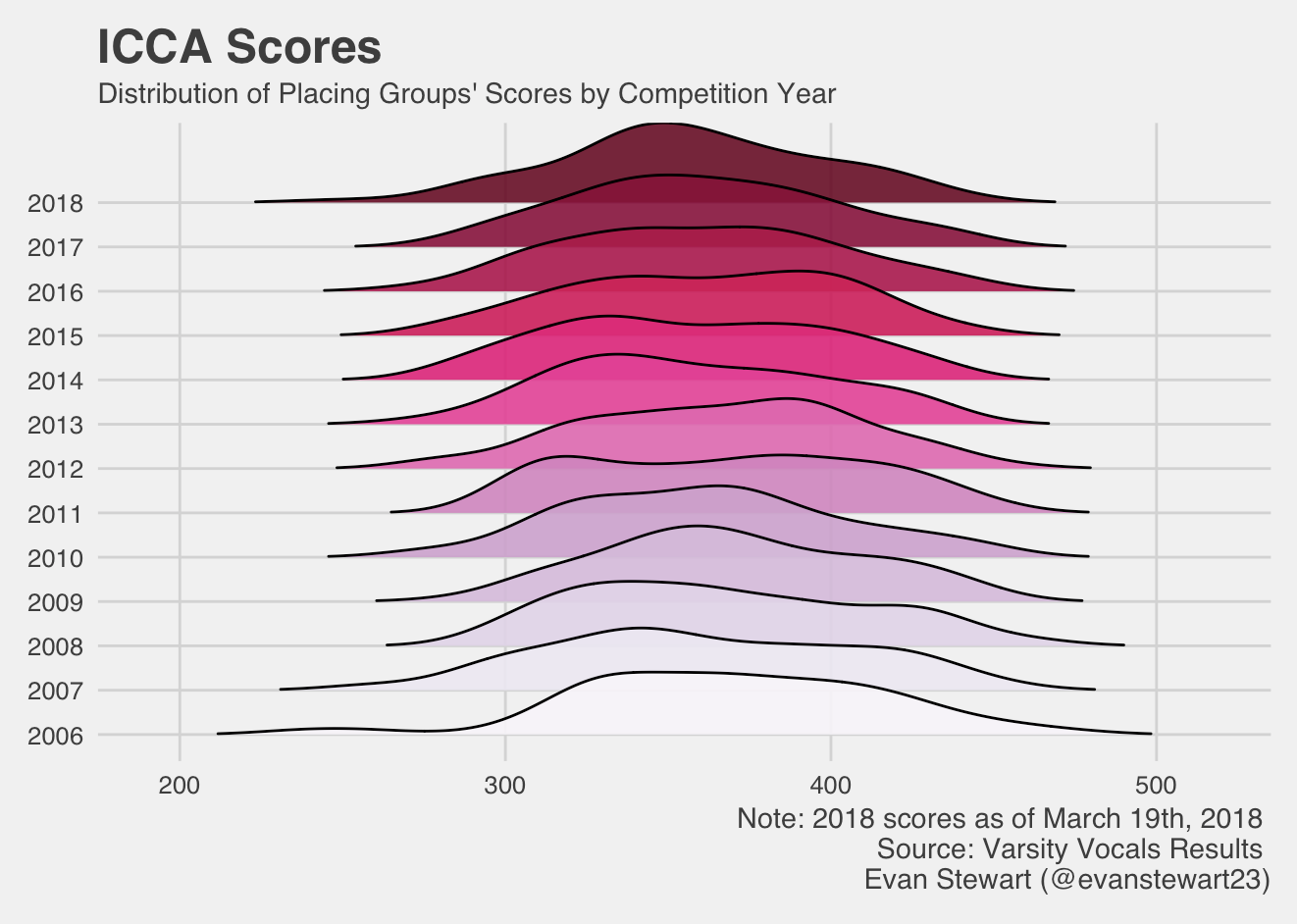
We can watch this happen with the ICCAs. Over the years, Varsity Vocals has established formal scoring guidelines, judging sheets, and practices for standardizing extreme scores. By graphing out the distribution of groups’ scores over the years, you can see the competition get more consistent in its scoring over time. The distributions narrow in range, and they take a more normal shape around about 350 points rather than skewing high or low.

(Click to Enlarge)

Gender in the A Cappella World

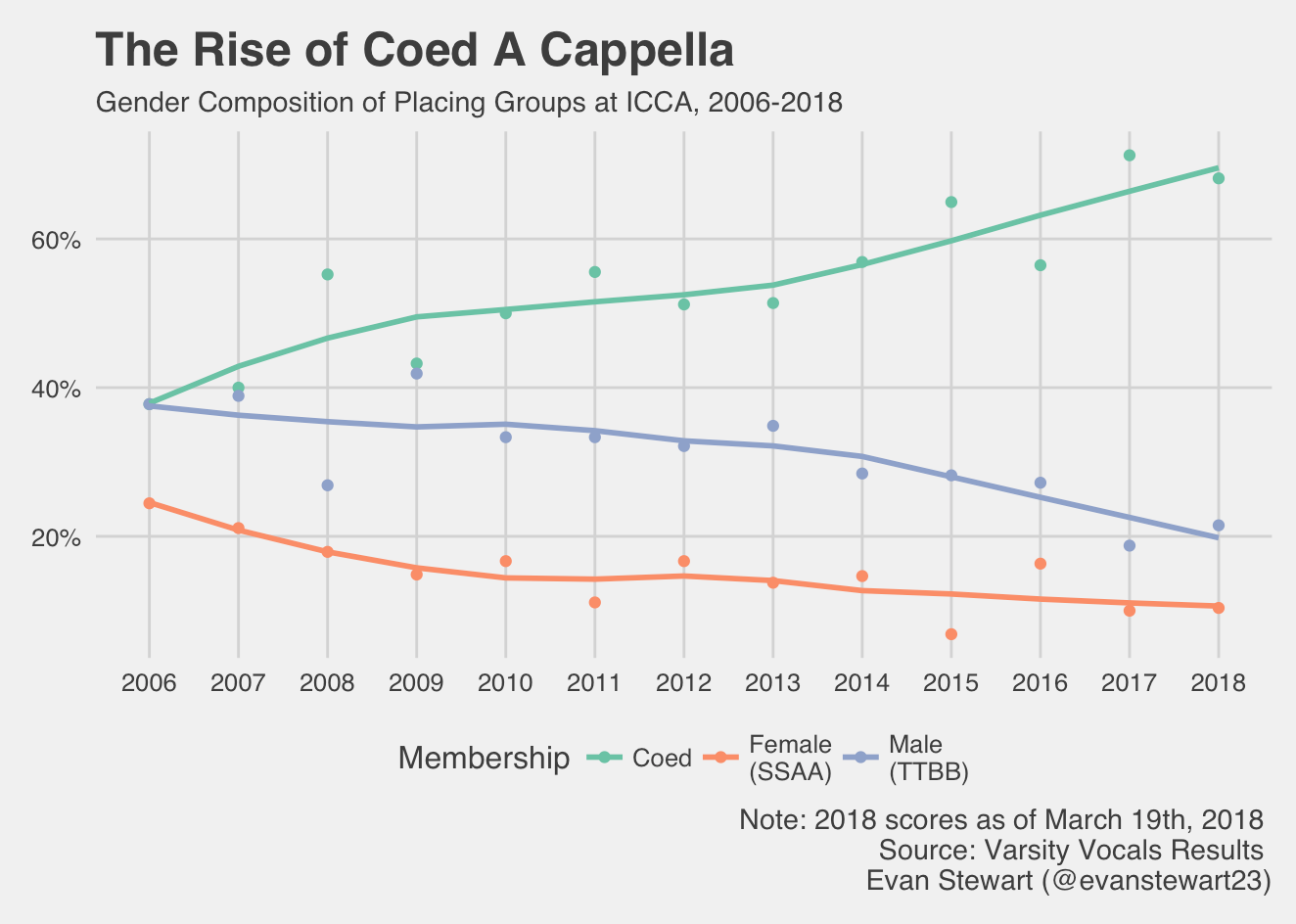
Gender is a big deal in a cappella, because many groups define their membership by gender as a proxy for vocal range. Coed groups get a wider variety of voice parts, making their sound more versatile, but gender-exclusive groups can have an easier time getting a blended, uniform sound. This raises questions about gender and inequality, and there is a pretty big gender gap in who places at competition.

In light of this gap, one interesting trend is the explosion of coed a cappella groups over the past twelve years. These groups now make up a much larger proportion of placements, while all male and all female groups have been on the decline.

(Click to Enlarge)

Who Are the Powerhouse Schools?

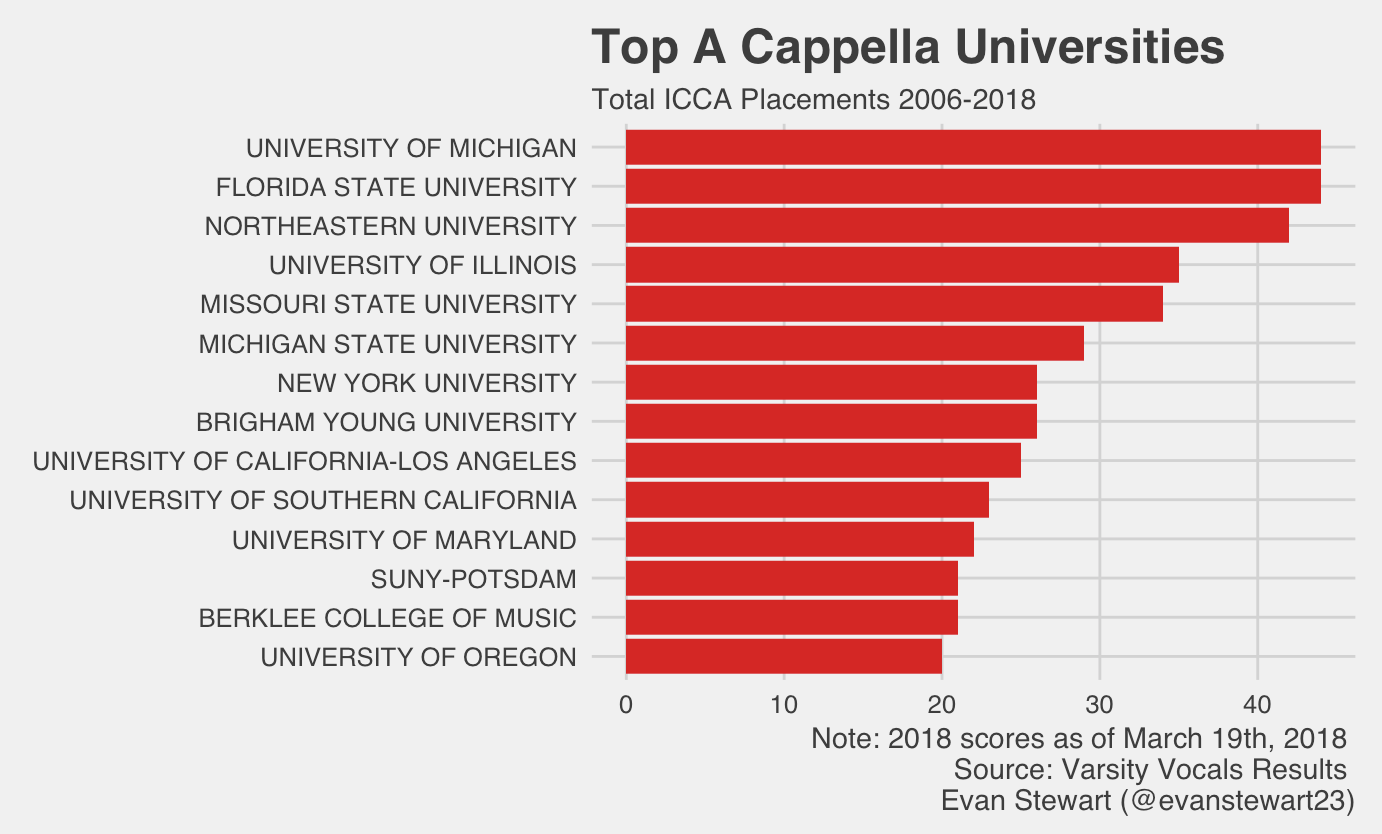
Just like March Madness, one of my favorite parts about the ICCA is the way it brings together all kinds of students and schools. You’d be surprised by some of the schools that lead on the national scene. Check out some of the top performances on YouTube, and stay tuned to see who takes the championship next month!

(Click to Enlarge)


Evan Stewart is an assistant professor of sociology at University of Massachusetts Boston. You can follow his work at his website, or on BlueSky.

Despite the fact that women played a key role in the development of modern technology, the digital domain is a disproportionately male space. Recent stories about the politics of GamerGate, “tech bros” in Silicon Valley, and resistance to diversity routinely surface despite efforts of companies such as Google to clean up their act by firing reactionary male employees.

The big tech story of the past year is unquestionably cryptocurrencies such as Bitcoin. So it’s a good time to look at how cryptos replicate the gender politics of digital spaces and where they might complicate them.

Women’s Representation

Crypto holders are not evenly divided between men and women. One recent survey shows that 71% of Bitcoin holders are male. The first challenge for women is simply their representation within the crypto space.

There are various efforts on the part of individual women to address the imbalance. For example, Stacy Herbert, co-host of The Keiser Report, has recently been discussing the possibility of a women’s crypto conference noting, “I know so so many really smart women in the space but you go to these events and it’s panels of all the same guys again and again.” Technology commentator Alexia Tsotsis recently tweeted, “Women, consider crypto. Otherwise the men are going to get all the wealth, again.”

Clearly, the macho nature of the crypto community can feel exclusionary to women. Recently Bloomberg reported on a Bitcoin conference in Miami that invited attendees to an after-hours networking event held in a strip club. As one female attendee noted, “There was a message being sent to women, that, ‘OK, this isn’t really your place … this is where the boys roll.’”

The image of women as presented by altcoins (cryptocurrencies other than Bitcoin) is also telling. One can buy into TittieCoin or BigBoobsCoin, which need no further explanation. There is also an altcoin designed to resist this tendency, Women Coin: “Women coin will become the ultimate business coin for women. We all know that this altcoin market is mainly operated by men, just like the entire world. We want to stop this.”

Cryptomasculinities

The male dominance of cryptos suggests it is a space that celebrates normative masculinity. Certain celebrity endorsements of crypto projects have added to this mood, such as heavyweight boxer Floyd Mayweather, actor Steven Seagal and rapper Ghostface Killah. Crypto evangelist John McAfee routinely posts comments and pictures concerning guns, hookers and drugs. Reactionary responses to feminism can also be found: for example, patriarchal revivalist website Return of Kings published an article claiming, “Bitcoin proves that that ‘glass ceiling’ keeping women down is a myth.” Homophobia also occurs: when leading Bitcoin advocate Andreas Antonopoulos announced he was making a donation to the LGBTQ-focused Lambda Legal he received an array of homophobic comments.

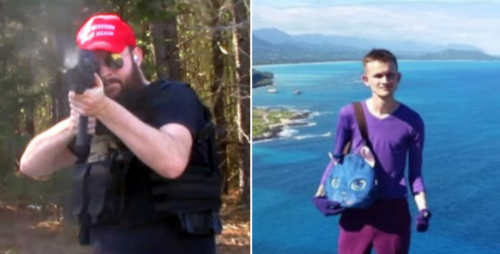
However, it would be wrong to assume the masculinity promoted in the crypto space is monolithic. In particular, it is possible to identify a division between Bitcoin and altcoin holders. Consider the following image:

This image was tweeted with the caption “Bitcoin and Ethereum community can’t be anymore different.” On the left we have a MAGA hat-wearing, gun-toting Bitcoin holder; on the right the supposedly effeminate Vitalik Buterin, co-founder of the blockchain platform Ethereum. The longer you spend reading user-generated content in the crypto space, the more you get the sense that Bitcoin is “for men” while altcoins are framed as for snowflakes and SJWs.

There is an exception to this Bitcoin/altcoin gendered distinction: privacy coins such as Monero and Zcash appear to be deemed acceptably manly. Perhaps it is a coincidence that such altcoins are favored by Julian Assange, who has his own checkered history with gender politics ranging from his famed “masculinity test” through to the recent quips about feminists reported by The Intercept.

In conclusion, it is not surprising that the crypto space appears to be predominantly male and even outright resistant to fair representations of women. Certainly, it is not too dramatic to state that Bitcoin has a hyper-masculine culture, but Bitcoin does not represent the whole crypto space, and as both altcoins and other blockchain-based services become more diverse it is likely that so too will its representations of gender.

Joseph Gelfer is a researcher of men and masculinities. His books include Numen, Old Men: Contemporary Masculine Spiritualities and The Problem of Patriarchy and Masculinities in a Global Era. He is currently developing a new model for understanding masculinity, The Five Stages of Masculinity.

The Washington Post has been collecting data on documented fatal police shootings of civilians since 2015, and they recently released an update to the data set with incidents through the beginning of 2018. Over at Sociology Toolbox, Todd Beer has a great summary of the data set and a number of charts on how these shootings break down by race.

One of the main policy reforms suggested to address this problem is body cameras—the idea being that video evidence will reduce the number of killings by monitoring police behavior. Of course, not all police departments implement these cameras and their impact may be quite small. One small way to address these problems is public visibility and pressure.

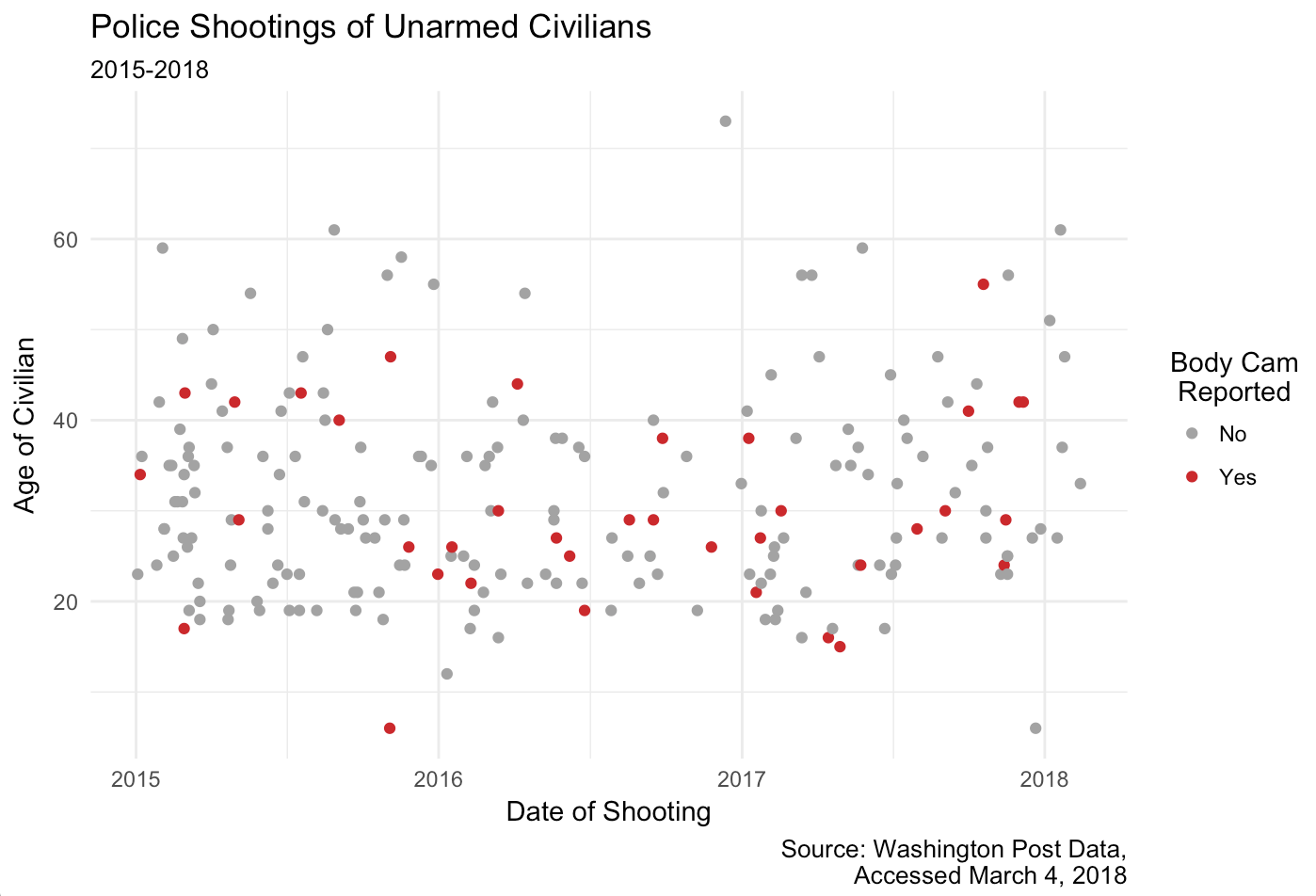
So, how often are body cameras incorporated into incident reporting? Not that often, it turns out. I looked at all the shootings of unarmed civilians in The Washington Post’s dataset, flagging the ones where news reports indicated a body camera was in use. The measure isn’t perfect, but it lends some important context.

(Click to Enlarge)

Body cameras were only logged in 37 of 219 cases—about 17% of the time—and a log doesn’t necessarily mean the camera present was even recording. Sociologists know that organizations are often slow to implement new policies, and they don’t often just bend to public pressure. But there also hasn’t been a change in the reporting of body cameras, and this highlights another potential stumbling block as we track efforts for police reform.

Evan Stewart is an assistant professor of sociology at University of Massachusetts Boston. You can follow his work at his website, or on BlueSky.