Archive: 2008

Norms of masculinity include prescriptions to pursue sex. Taught to expect women to resist, “real” men supposedly work around refusals instead of taking them at face value.

In light of this, some sociologists argue that rapists are not non-conformists (somehow deviant), but hyper-conformists. Rapist are men who take rules of masculinity to their logical conclusion.

When I discuss this in class, I show this Gucci ad:
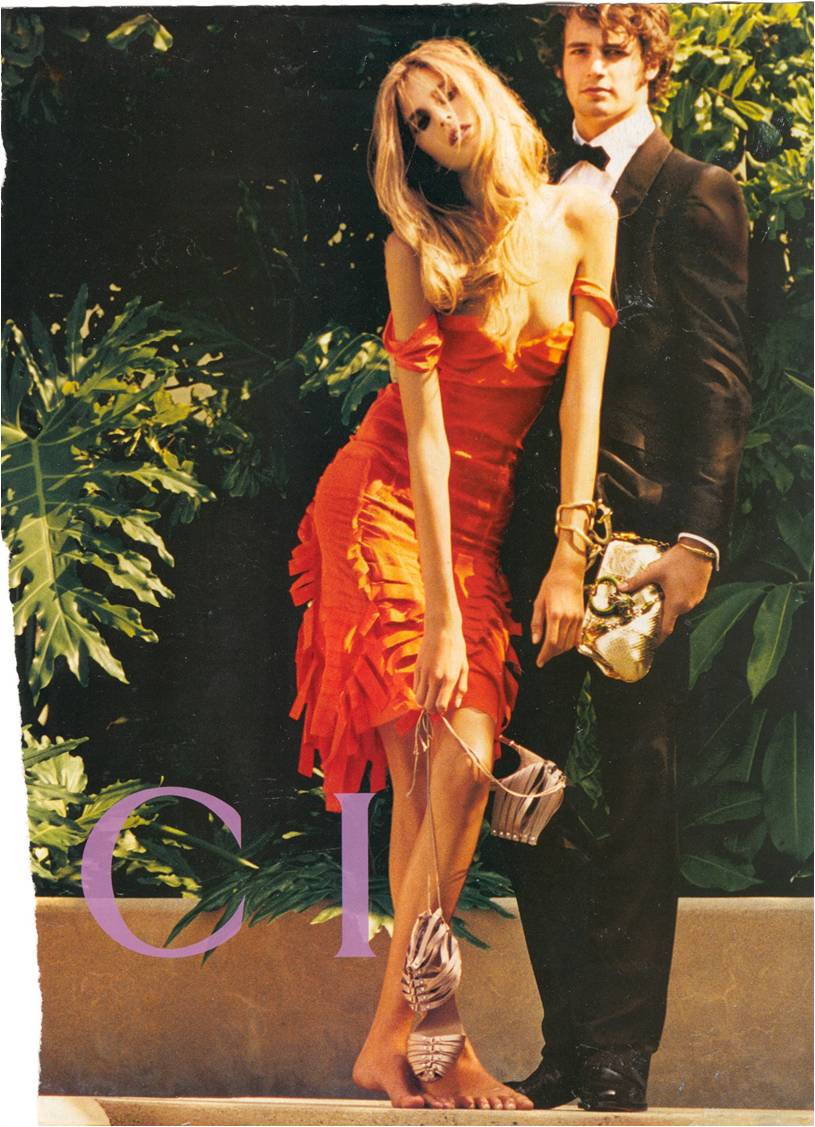
The clean-cut, clear-headed, well-dressed, all-American young man looks calmly and confidently into the camera, while the woman looks as if she is drunk, or drugged, or both.  Barely able to stand, holding onto her shoes, her dress falling off… Has she just been raped or is the rape yet to occur?

And does the imagery in this ad suggest that a (potential) rape scenario is mainstream in America, un-remarkable, even fashionable?  If so, what does that say about the depth of our rape culture?
Speaking as a 30-year-old who still cherishes a threadbare, 29-year-old specimen, I can personally testify that teddy bears are objects highly charged with affect in modern U.S. bourgeois white society. Along with blankets, stuffed animals are frequently given to young children to play with. Many times, children grow attached to their animals and blankets, naming them, talking to them, sleeping with them and taking them everywhere.

In 1951, Donald Winnicott called such stuffed animals and security blankets “transitional objects.” I’m probably grossly simplifying this, but he posited that transitional objects occupy an important position in children’s emotional lives as mechanisms by which they soothe themselves as they differentiate their identities from those of their parents. Parenting advice emphasizes that transitional objects are part of a “normal and healthy phase of development” and even a “good thing” that parents may want to voluntarily introduce to anxious children.

In short, modern middle-class bourgeois white society associates teddy bears with a deep emotional connection between people. Teddy bears symbolize comfort and a nurturing parent-child bond. To many, they are images of love.

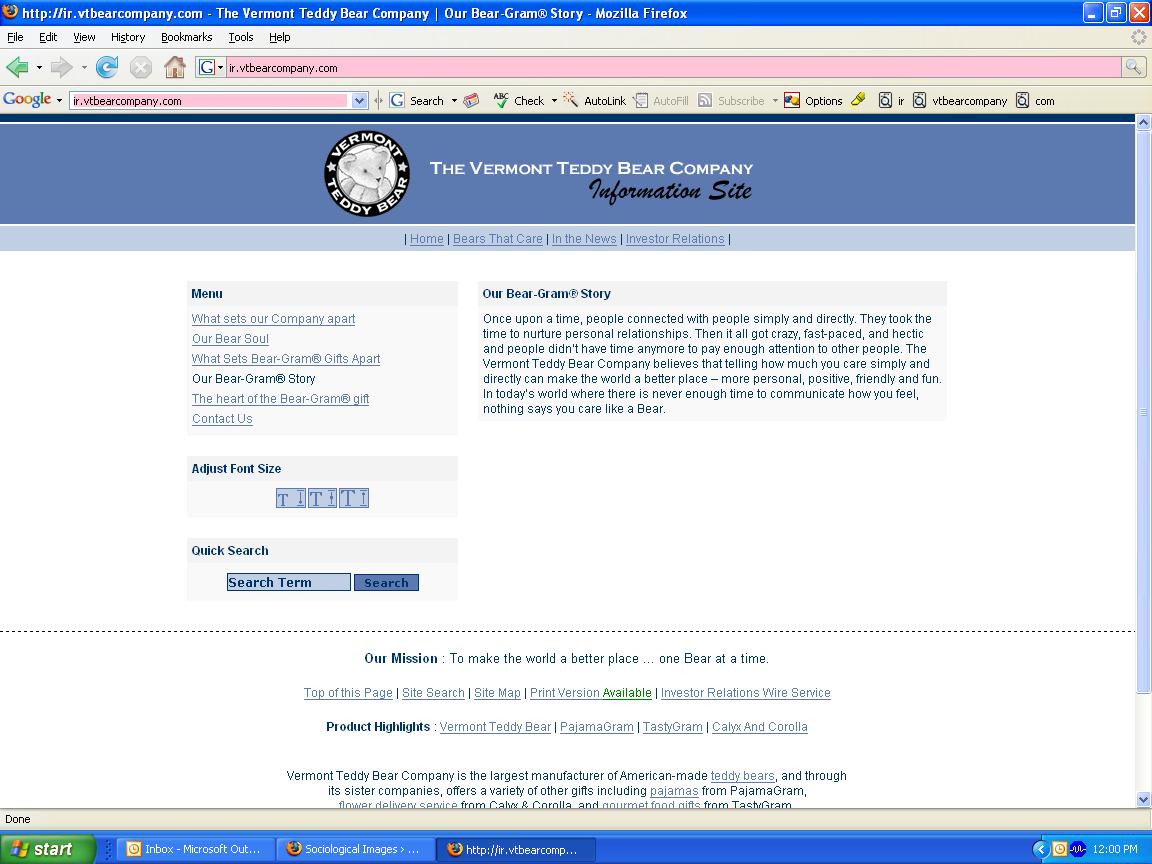
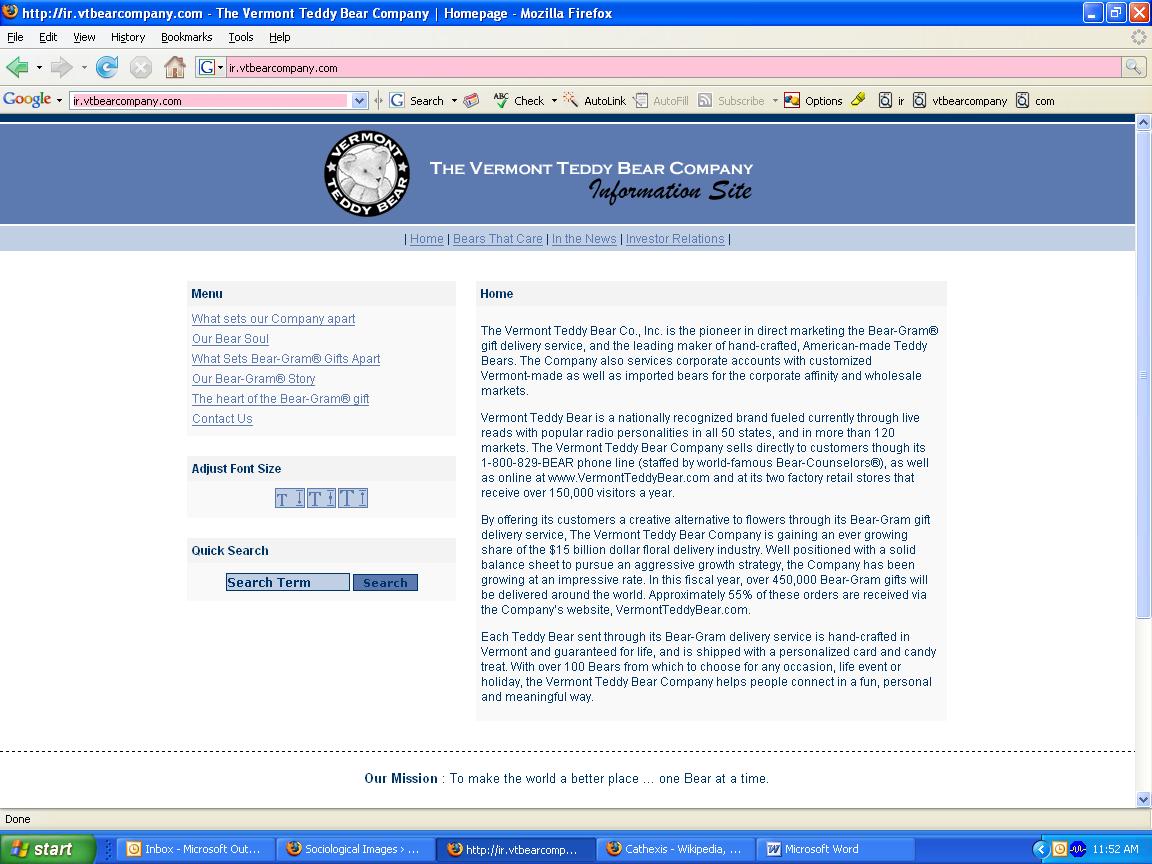
Over on its Web site for investors, Vermont Teddy Bear literally capitalizes on the “bears=love” connotations by couching its business in terms that suggest relationships and closeness. In this screenshot from the investor relations home page, for example, you can see that the over-the-phone sales staff are called “Bear Counselors,” suggesting that they give advice and mentoring about relationships.

On the page entitled “Our Bear-Gram Story,” Vermont Teddy Bear positions its product as equivalent to the emotional work of creating and sustaining authentic relationships. The “story” says:

Once upon a time, people connected with people simply and directly. They took the time to nurture personal relationships. Then it all got crazy, fast-paced, and hectic and people didn’t have time anymore to pay enough attention to other people.

Of course, the thought that it was so good back in Ye Olde Non-Hectick Tymes is problematic, but so is the thought that teddy bears will suffice instead of “pay[ing] attention to other people.” Why expend all that effort relating to someone when you can just toss him or her a teddy bear instead?

On the company’s site for customers, the same association between the toys and love appears, as evidenced by this banner proclaiming the teddy bears as “heartfelt,” an adjective usually used to describe significant declarations of sentiment:

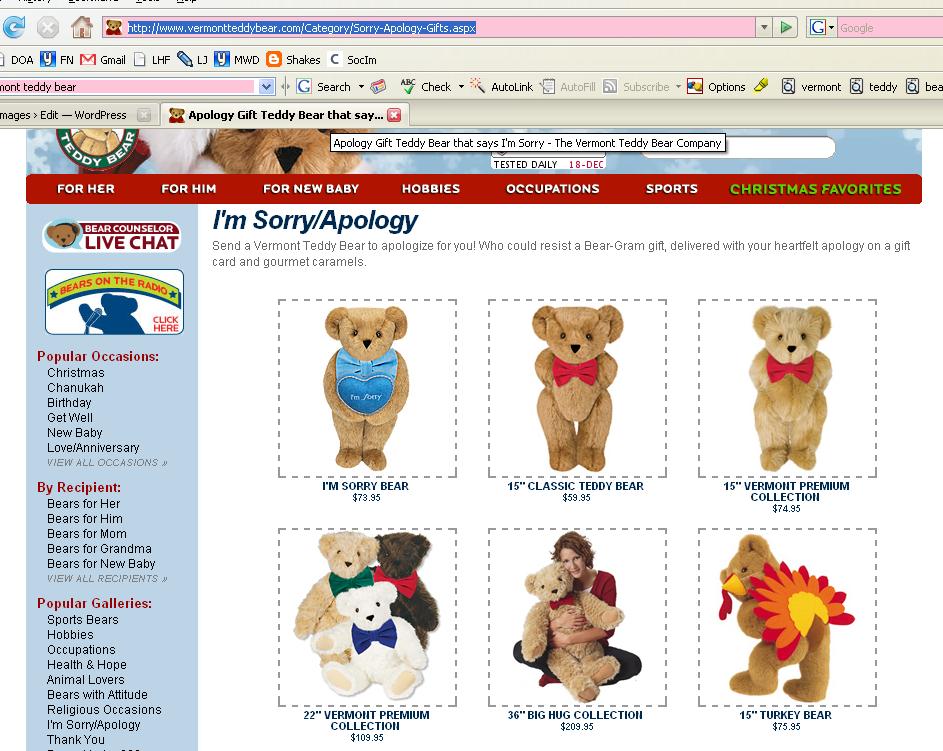
For occasions that require difficult, emotionally draining “relationship work,” there’s even a whole category of “I’m Sorry/Apology” bears available to send.

The I’m Sorry Bear comes with the following descriptive copy:

Whether you’ve broken their heart or their favorite coffee mug this Bear has got it covered. Holding a light blue pillow embroidered with the an “I’m Sorry” message and wearing a matching light blue bowtie, this Bear is a sure way to earn their forgiveness.

Ah, what price forgiveness?

Well, it’s $73.95. [Shipping and handling excluded. Insurance and rush orders extra. Please ask for international rates. Customs taxes may apply outside U.S. Order early to insure delivery by Christmas!]

I suppose that Vermont Teddy Bear’s deployment of a stuffed animal to do your emotional work for you is in the same category as ad campaigns for diamonds and credit cards that promise viewers intimacy through purchase of the products. However, Vermont Teddy Bear’s use of the “objects will fulfill you” trope is slipperier in part because a substantial number of potential consumers have experience with teddy bears as transitional objects that did [or still do] make them feel happy and calm.

In an amusing postscript, I grew up in Vermont, where we were kind of expected to support Vermont Teddy Bear Company. But when someone gave my younger brother a Vermont Teddy Bear as a gift, he never touched it. Finding the bear stiff and kind of lumpy, he preferred to drag around smaller and more squishable stuffed animals. No one else in the family was impressed with its cuddlability, not even me, and I was the one who collected stuffed animals to line the edges of my bed every night. The bear is now sitting on my mom’s desk as a display item, having not created an emotional connection at all.

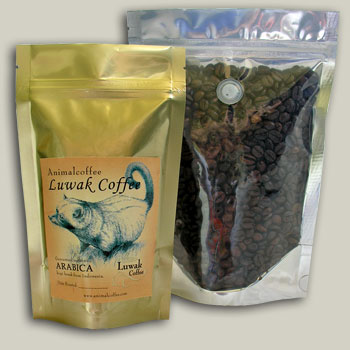
This, dear reader, is a pound of Kopi Luwak Arabica coffee, for sale here:

You can buy a pound of this gourmet coffee for just $180. If you’re on a budget, you can get 2 ounces for $40.

Now, you may be wondering, is it worth it? Should I spend so much for coffee? Luwakcoffee.com believes that it is:

Yes, the coffee is expensive, but so are all of the better things in life. You have to pay more for quality or uniqueness. This is a class issue: part of what you are paying for is exclusiveness, the knowledge that not everyone can afford a Chanel bag or Christian Louboutin shoes or Kopi Luwak coffee. Its inaccessibility to the masses is part of how you know it is worth having. And from this perspective, Kopi Luwak is quite desirable: at most 1,000 pounds or so make it to market each year, which makes it so expensive. It’s so desirable, it was included in the 2006 Emmy Awards gift bags for celebrities!

Now, at this point an ignorant but aspiring gourmand might ask, “What, pray tell, is so special about Kopi Luwak coffee? What is this ‘unusual phenomenon’? I’m so anxious to know!”

Why, my dear, the beans for your coffee were eaten by a civet and then handpicked out of its crap to be brewed into coffee for you! It’s terribly adventurous, isn’t it?

What, don’t believe me? Here is your Kopi Luwak coffee, pre-handpicking (image found here):

Delicious! If you’d prefer to buy it in this form (called “natural” coffee), you can buy it that way too. [For the record: I will never be able to eat a Payday candy bar again.]

In researching this topic for you, Reader, I found many properties ascribed to Kopi Luwak coffee. It is supposedly lower in caffeine than regular coffee because the civet’s stomach acids digest some of the caffeine. Or something. It’s supposedly less bitter and has less of some protein or other, and that’s why it tastes so much better. One researcher said it is “earthy, musty, syrupy, smooth and rich with jungle and chocolate undertones,” although I question how much better it can taste since “[though] certified blinded human tasters could find little difference in the overall flavour and aroma of the beans, an electronic nose machine could detect that the aroma of the civet coffee beans is also affected.” I’m glad a machine thinks they smell fantastic.

Why did I decide to post this on Soc Images? Well, one, the pure absurdity of it. However, there are some sociologically useful things you could use it for. One might be to discuss food and our cultural taboos on food. My guess is if you had students make lists of things they’d never, ever eat, no matter what, and then made them slowly pare them down based on the assumption that they were starving, people might give in and say, “Ok, I’d eat a slug,” but few people would say “Fine, I’d eat poop if I had to.” I could be wrong, but I think most people would see eating another animal’s fecal matter as beyond disgusting. And yet here we have an example of people doing it under no duress (that I can see) and considering it a delicacy.

I suspect that students would then express horror and shock at the idea of drinking such coffee, but you might then point out that many of them probably eat the product of an animal’s digestive tract somewhat regularly: honey. Bees digest pollen to turn it into honey. It could lead to a nice discussion of how we come to think of foods as normal or disgusting, and why we might continue to eat honey and think it’s just fine, since we’re used to it, but think people who eat beans picked out of civet poop are gross.

Of course, you could also use it as an example of how, if it is sufficiently expensive and difficult to find, anything can be labeled a delicacy and sold to upper-middle-class yuppies. Even wild cat* crap.

*Not really a cat, though it’s called the civet cat.

Gwen Sharp is an associate professor of sociology at Nevada State College. You can follow her on Twitter at @gwensharpnv.

I have seen lots of graphs showing rates of immigration to the U.S. over time, but I just found this graph showing the rates of emigration from Mexico from 2006 to early summer of 2008 (from the Migration Information Source website; this is all emigrants, regardless of destination, though of course the vast majority will be to the U.S.):

A quick note on the data: Since it required someone from a family to be left in Mexico to be asked about family emigration patters, it doesn’t include those situations where an entire family left all at once; however, my understanding of immigration patterns is that this type of immigration is a minority of all movements, since most families prefer to send one or two family members to get a foothold in the host country.

As we see, there’s a general overall downward trend during that time period, which isn’t surprising given the downturn in the U.S. economy, especially the construction industry. The Mexican government reports that remittances sent back to Mexico are down this year as well.

 There is also a seasonal pattern, with the period from August to February of each year being the lowpoint and then picking up again in the spring. My first thought, since I study agriculture, was that this might have something to do with the growing season and when agricultural workers are needed in the U.S., but of course it’s a stereotype that most Mexican immigrants are field workers, so that’s probably not it.

Any thoughts on what might explain that pattern?

In this series I have offered five explanations of why people of color are included in advertising. Start with the first in the series and follow the links to the remaining four here.

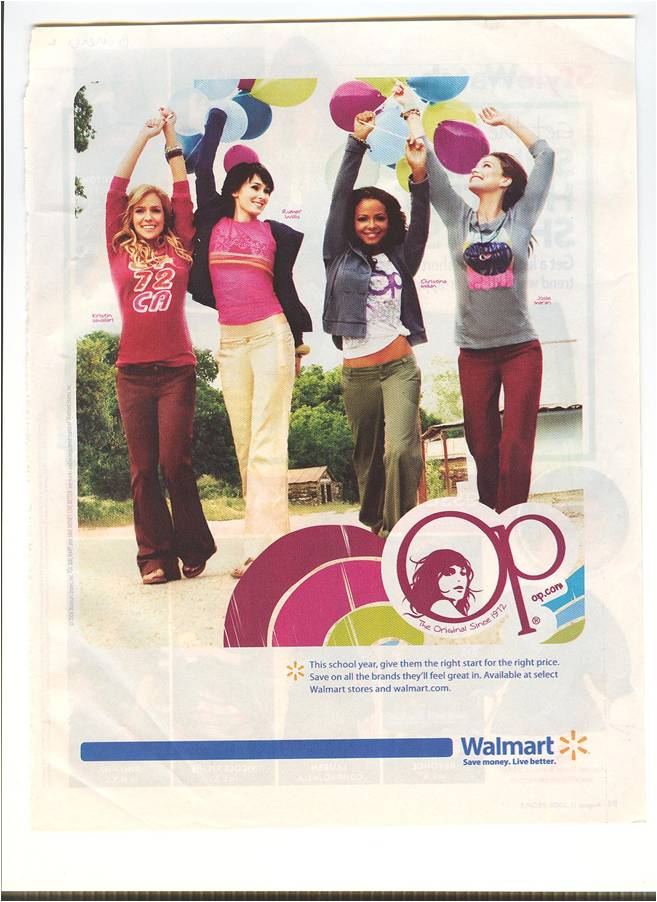
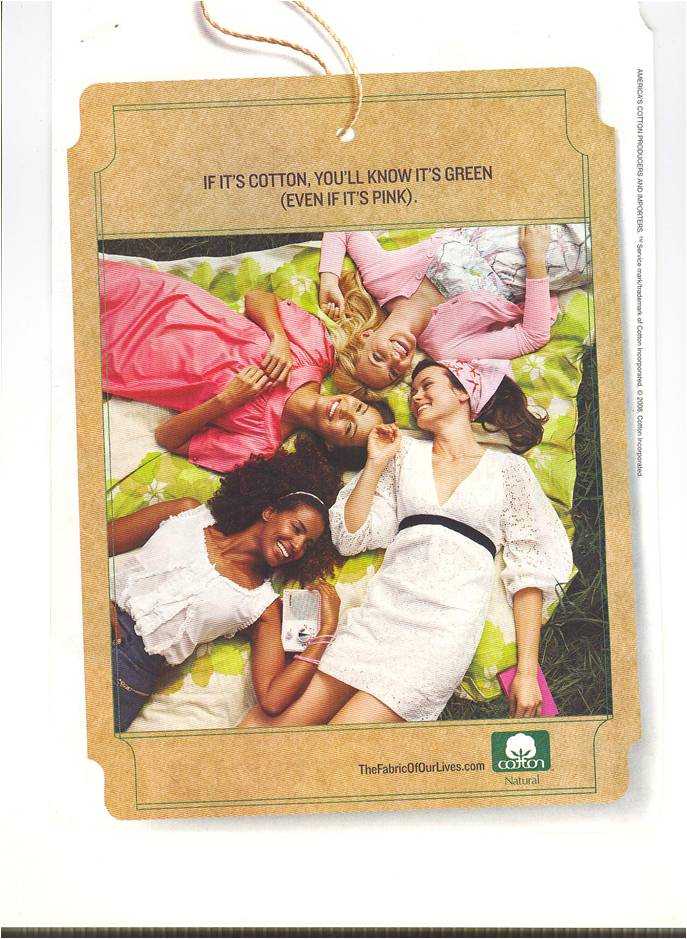
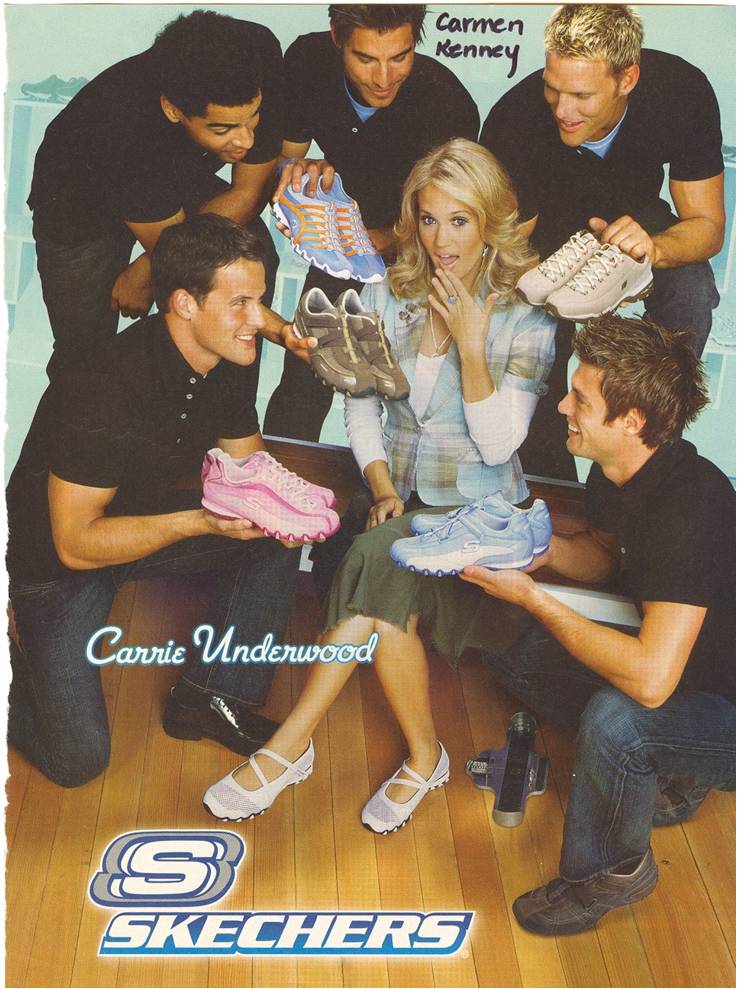
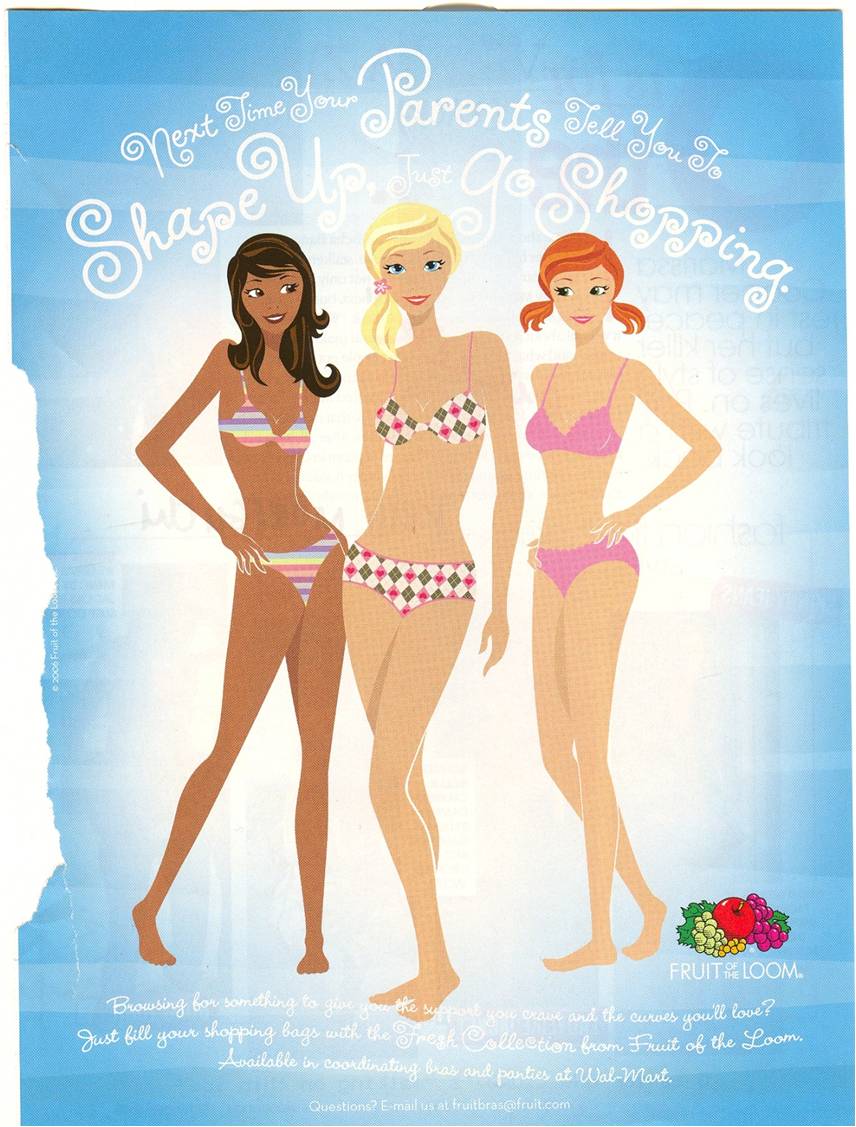
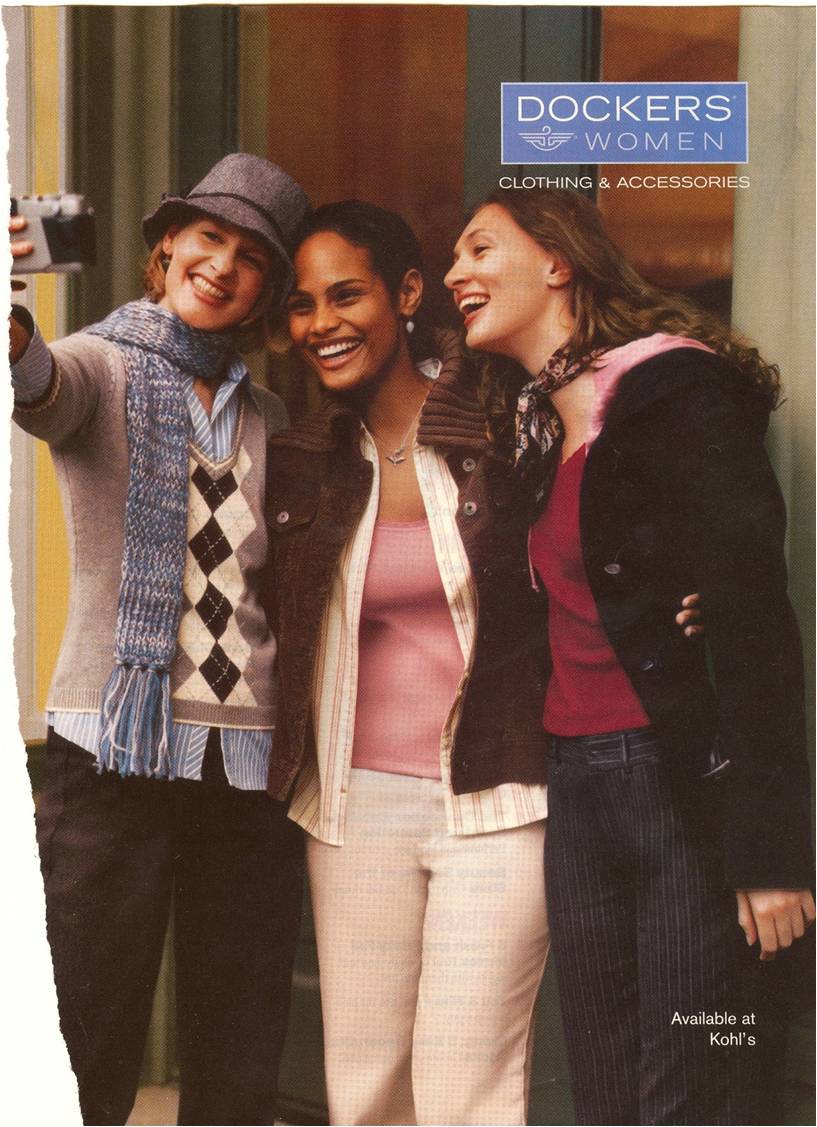
I am now discussing how they are included.  Already I have shown how people of color are whitewashed. Here I show that, when people of color are included, they are often chaperoned. That is, people of color are usually outnumbered by white people. Here are some examples:


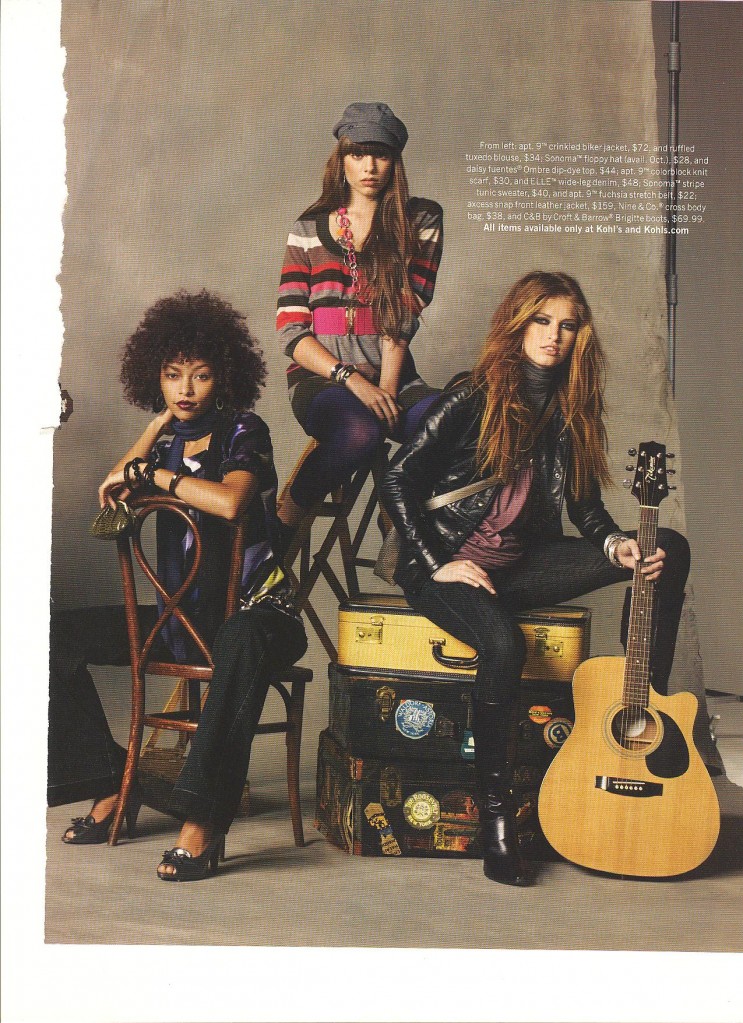
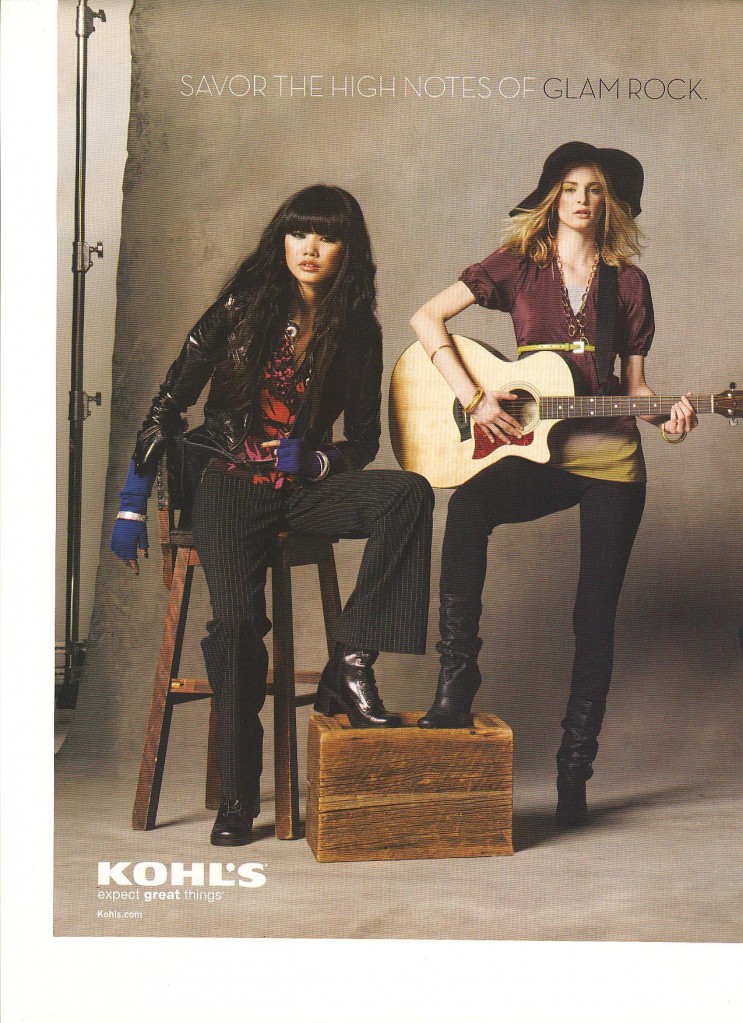
NEW!  This is a two-page ad for Kohls:

03-02103-022

I speculate that, if there are more white people than people of color in an advertisement, the inclusion of a non-white person does not threaten the status quo (that whiteness is mainstream and normative) and the product is still clearly marked as mainstream and normative (i.e, white).

Next up: Subordination.

Also in this series:
(1) Including people of color so as to associate the product with the racial stereotype.
(2) Including people of color to invoke (literally) the idea of “color” or “flavor.”
(3) To suggest ideas like “hipness,” “modernity,” and “progress.”
(4) To trigger the idea of human diversity.
(5) To suggest that the company cares about diversity.

How are they included?
(6) They are “white-washed.”

Lisa Wade, PhD is an Associate Professor at Tulane University. She is the author of American Hookup, a book about college sexual culture; a textbook about gender; and a forthcoming introductory text: Terrible Magnificent Sociology. You can follow her on Twitter and Instagram.

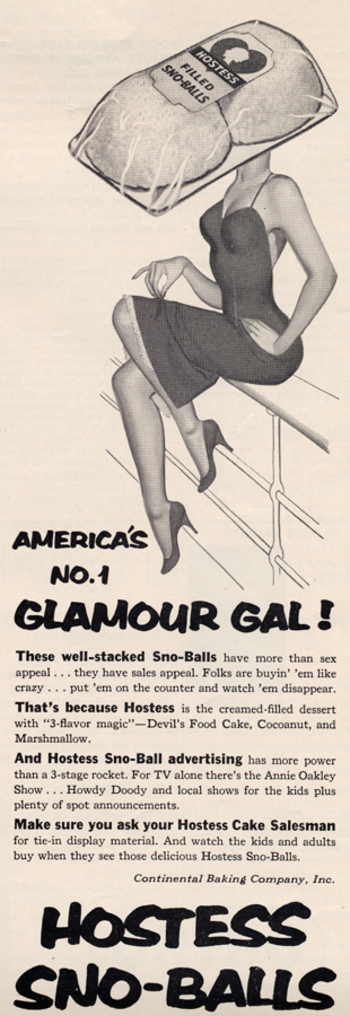
Select text: “These well-stacked Sno-Balls have more than sex appeal… they have sales appeal!”

The 1960s via Found in Mom’s Basement.

More sexualization of food here, herehere, herehere, here, and especially here.

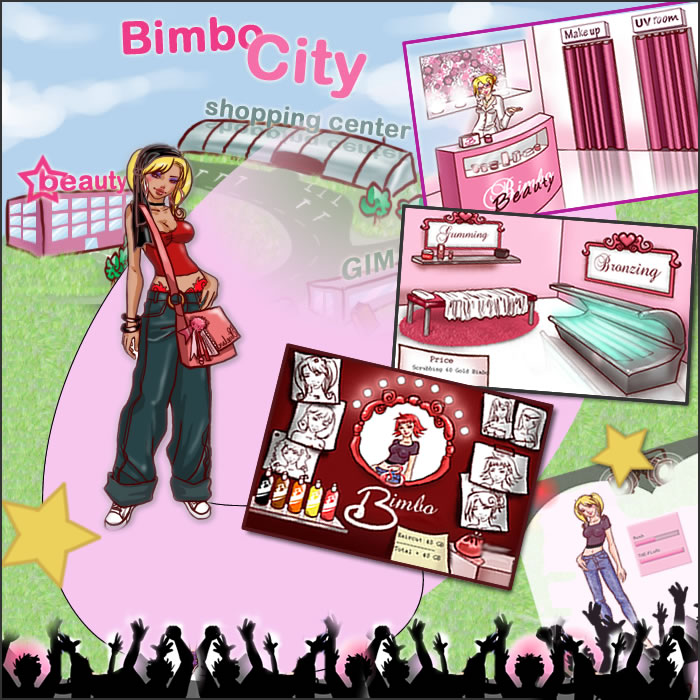
Tessa G.S. sent in a link to the online game Miss Bimbo. Here are some images from the game:

Tessa says,

In this case, you build a “bimbo” by placing your character on diets, getting plastic surgery, shopping for clothes, attending a-list parties, dating handsome men— all with the aim of becoming the most popular bimbo in the game…[According to the website] MissBimbo is an educational tool, a social meeting place and a hot pot of bimboism. It is free to enjoy bimboland.

An educational tool? Really?

According to CNN, parents have expressed concern that pre-teen girls are playing a game that encourages them to have their characters get breast implants and facelifts, as well as go on diets.

The game also reinforces the idea that girls are always rivals, whether competing for popularity or men (or the perfect wedding, as the movie “Bride Wars” shows).

While we’re on the topic of video games (sort of), Burk M. told me about Sexy Beach 3. In the game, you get to pick a female character, what she’s wearing, which of several beach-related activities she’s involved in (playing tag, “playful floating,” limbo, etc.), the location (beach, reef, waterfall, and so on) and the time of day. And then you can take the role of a disembodied hand that rubs various parts of her body while her nipples get hard and she moans in delight and eventually appears to orgasm. Here’s an example (Not Safe for Work):

more...