Archive: 2008


Aaron B. sent in this 1947 video clip (found here), titled “Are You Popular?”:

Notice the caution to women: if you go “parking with all the boys,” you might think you’re popular, but you’ll ultimately find yourself ostracized and friendless. To be really popular, you need to be well-dressed, have the respect of girls at school, and carefully guard your reputation.

Thanks, Aaron!

Gwen Sharp is an associate professor of sociology at Nevada State College. You can follow her on Twitter at @gwensharpnv.
Robin B. sent us a link to a story in the New York Times magazine chronicling one woman’s decision to have a surrogate carry her biological child.  Surrogacy is, from one perspective, extremely expensive and, from another perspective, extremely lucrative.  The photos accompanying the story illustrate, almost as if by design, how “mothering” is being spread out in systematic ways to different kinds of women. Robin note that the accompanying article bought up lots of issues, but did little to think them through.   In contrast, she points to a set of letters written in response.

Lisa Wade, PhD is an Associate Professor at Tulane University. She is the author of American Hookup, a book about college sexual culture; a textbook about gender; and a forthcoming introductory text: Terrible Magnificent Sociology. You can follow her on Twitter and Instagram.

In my post a few weeks back about stuff kids bring to college, I had a photo of a teddy bear lying atop a pile of belongings that included pink bed linens. Obviously, it belonged to a girl. (There was a purse in the picture, but even without it. . . .)

A couple of days later, Lisa at Sociological Images had a post reminding us that pink was once the color for boys. She linked to an article by Ben Goldacre in the Guardian.

The Sunday Sentinel in 1914 told American mothers: “If you like the colour note on the little one’s garments, use pink for the boy and blue for the girl, if you are a follower of convention.”

Goldacre uses this bit of history to debunk the claim recently made by evolutionary psychologists that girls’ preference for pink was an outcome of evolution.

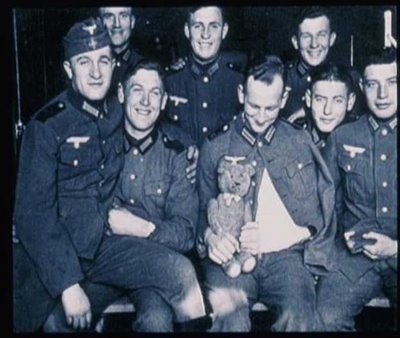
But what about the teddy bear? Isn’t there something feminine, a maternal instinct perhaps, that leads girls to keep these soft, childhood objects? It is only girls, right?

Wait, now I remember seeing NYC sanitation trucks with a teddy bear mounted on the grill like a bowsprit mermaid. And Sebastian Flyte in Brideshead Revisited who takes his bear Aloysius with him to Oxford.

Now there’s a DVD* about a Teddy bear snapshot exhibition by Canadian Ydessa Hendeles – thousands of photos from the early twentieth century of people posing with their bears. And it’s not just girls.

*The DVD is of a documentary film by Agnès Varda, who interviews the visitors to the exhibit.

Hat tip to Magda

Jay Livingston is the chair of the Sociology Department at Montclair State University. You can follow him at Montclair SocioBlog or on Twitter.

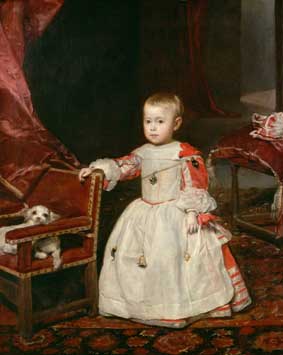
In a comment a while back, Elena pointed out that Diego Velázquez’s painting “Infante Felipe Próspero” (from 1659) provides a good example of how pink was acceptable for males to wear…as were, in some cases, dresses, which the young prince is wearing:

Elena says,

…until the late 1700s little boys would wear dresses or petticoats for as long as they could until they could dress as miniature adults…This was mainly for ease of bodily functions.

Of course, today most parents would be appalled at the idea of dressing toddler boys in dresses–dresses with frills and ribbons, at that.

The painting “Pope Innocent X,” also by Velázquez (1650) shows the Pope in light pink clothing:

Both images found at the National Gallery’s Velázquez page.

You might also check out Kent State University Museum’s Centuries of Childhood exhibit for examples of how children’s clothing has changed over time.

Thanks for the tip, Elena!

Simon O., who sent in this ad for high-speed internet, tells us that the text reads “just suck it down.” He also tells us that the Austrian government pulled the plug (so to speak) on this advertisement.

But seriously… there is good evidence that pornography has driven a great deal of the innovation in communication techology since… well, since communication technology existed.  Here’s a Guardian article on how it’s doing so even now.

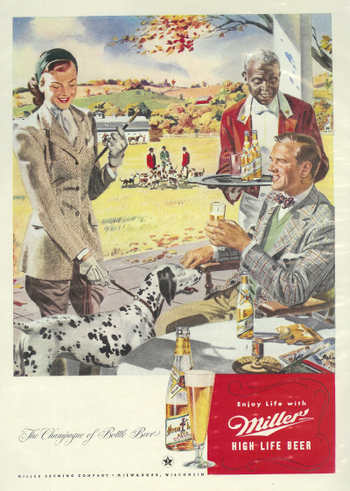
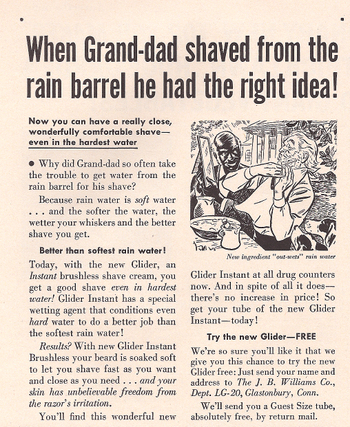
Ben O. brought our attention to this set of vintage ads (from Found in Mom’s Basement) that all use images of Black male servants.

This one for Cream of Kentucky bourbon was illustrated by Norman Rockwell. I can’t quite figure out what the expression on the Black servant’s face is supposed to convey:

Miller Beer:

Cream of Wheat:


Glider shaving cream:

Part of the text reads, “Why did Grand-dad so often take the trouble to get water from the rain barrel for his shave?” For some reason I have a feeling it wasn’t Grand-dad getting the water.

Thanks, Ben O.!

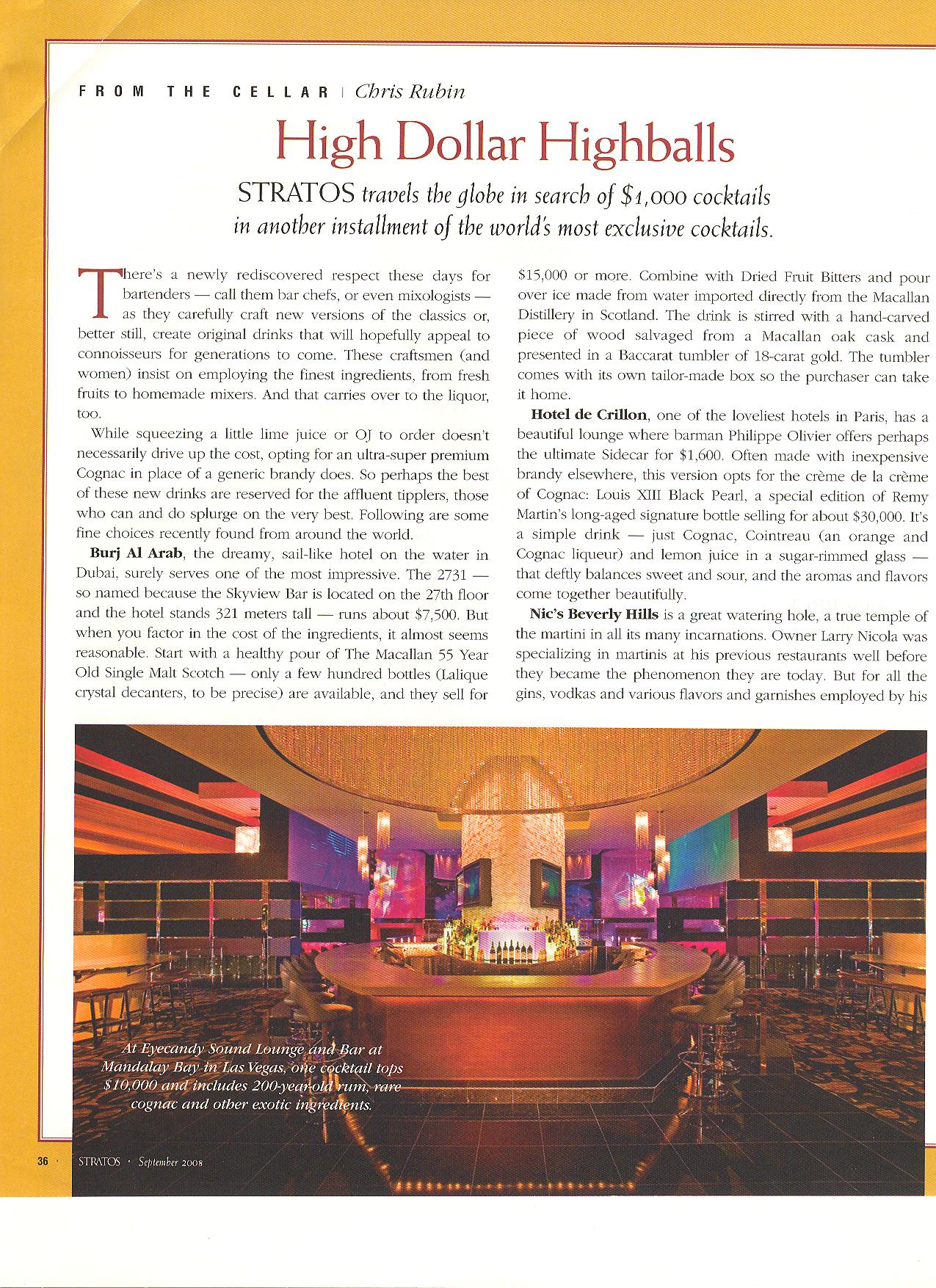
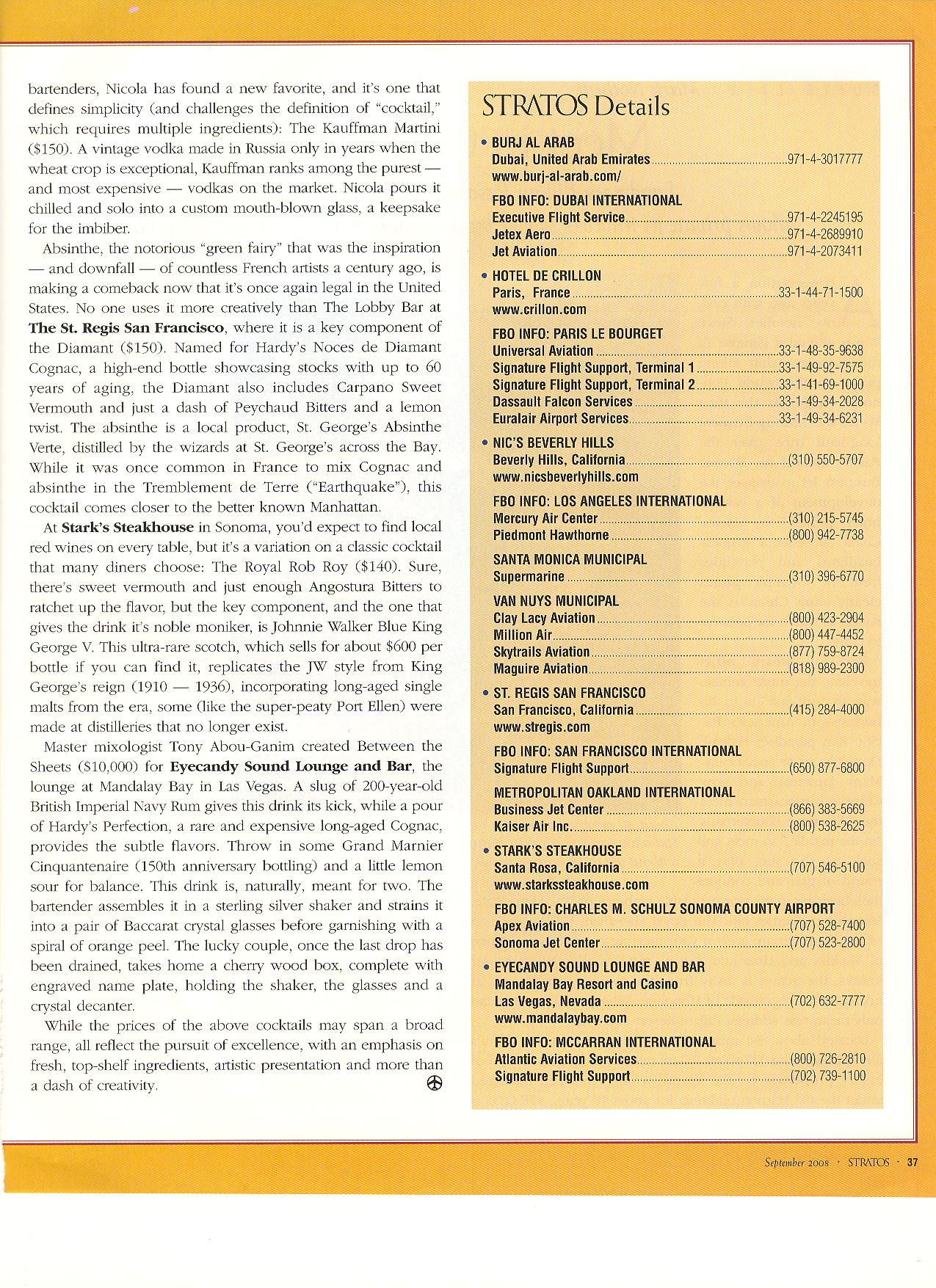
In STRATOS, “the premier in-flight magazine for corporate and private jets,” I found this two page article (text below):

Selected text:

High Dollar Highballs

STRATOS travels the globe in search of $1,000 cocktails in another installment of the world’s most exclusive cocktails.

Burj Al Arab, the dreamy, sail-like hotel on the water in Dubai, surely serves one of the most impressive… runs about $7,500. But when you factor in the cost of the ingredients, it almost seems reasonable. Start with a healthy pour of The Macallan 55 Year Old Single Malt Scotch… bottles… sell for $15,000 or more… The drink is stirred with a hand-carved piece of wood salvaged from a Macallan oak cask and presented in a Baccarat tumbler of 18-carat gold…

Hotel de Crillon, one of the loveliest hotels in Paris, has a beautiful lounge where barman Philippe Olivier offers perhaps the ultimate Sidecar for $1,600… this version opts for the creme de la creme of Cognac: Louis XIII Black Pearl, a special edition of Remy Martin’s long-aged signature bottle selling for about $30,000…

Master Mixologist Tony Abou-Ganim created Between the Sheets ($10,000) for Eyecandy Sound Lounge and Bar, the lounge at Mandalay Bay in Las Vegas. A slug of 200-year-old British Imperial Navy Rum gives this drink its kick, while a pour of Hardy’s Perfection, a rare and expensive long-aged Cognac, provides the subtle flavors… This drink is, naturally, made for two. The bartender assembles it in a sterling silver shaker and strains it into a pair of Baccarat crystal glasses… The lucky couple, once the last drop has been drained, takes home a cherry wood box, complete with engraved name plate, holding the shaker, the glasses and a crystal decanter.

An argument:  Because of the way we are segregated by class in the U.S., people rarely mix socially (pun intended) with others very far outside of their own social class.  For me, paging through magazines aimed at the super rich (see other posts from them here, here, and here), is kind of like flipping through Maxim.  There’s a whole world out there that is not aimed at me and of which I am largely unaware.  The segregation that nurtures this ignorance is part of what sustains our complacency.  Most of the time I can be completely naive to the entitlement to extremes of luxury that is marketed to the very rich, like I can remain blissfully unaware of what they are saying about women and men in Maxim magazine.  Political sociologists suggest that it is not deprivation that incites revolution, but relative deprivation.  That is, not having much doesn’t cause people to resist the system, it is the realization that others have so much more.  As long as we remain unaware, the system is likely to continue unchallenged. 

Maybe it doesn’t even make sense to say that we are segregated by class.  Class does separate people, but it also brings them together.  Working and middle class people are brought directly into interaction with people of other classes when they clean houses, are hired gardeners, and work as receptionists, administrative assistants, nurses, and nannies.  And it has often been this way throughout history (think slaves, indentured servants, etc).  So to say that we are segregated might be a stretch.

I also don’t know how I feel about this argument in light of the rash of reality shows that have emerged over the past 5-10 years that depict real, honest-to-goodness rich people basking in luxuries that most of the viewers could never afford.  Not that (I think as I write this) reality shos are all that different from the non-reality shows that have been on TV for a very long time that depict extreme wealth (e.g., Dynasty).  Do we not, on some level, recognize that those people, at least those in the reality shows, are real?  Or do we identify with them over and against people of our own class?  (I described how this might work in a previous post on McDonald’s coffee.)  Would actual physical integration (insofar as it doesn’t exist) have a different impact on us than the integration that occurs on between us and our television screens?  Or does our current social climate challenge the tenet of relative deprivation?

Asked another way, given that I am a sociologist AND watch TV, why do I still find the stupid article about expensive cocktails so surprising?

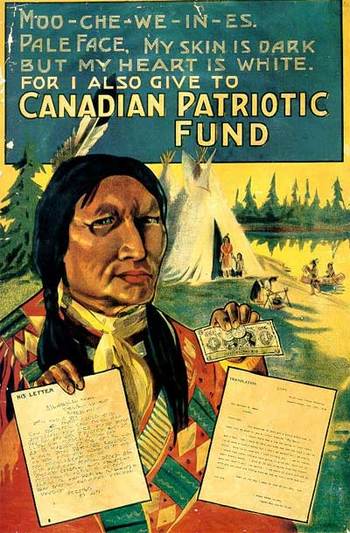
Ben O. sent in this poster (from Found in Mom’s Basement), which uses images of Native Americans (or First Peoples) to encourage Canadians to contribute to the Canadian Patriotic Fund, which was set up during World War I to support wives and children of enlisted men:

It’s a great example of the white/non-white dichotomy, where whiteness implies morality while darkness/blackness is associated with evil or immorality. In this case, his heart is “white” (i.e., he’s a good, moral being) because he does the right thing by caring for war widows. I guess the morality of his act overpowers the misfortune of his skin tone.

Thanks, Ben O.!

On a side note, I’m off to Oklahoma for the next 12 days. I’ll still be posting–Verizon’s internet access program means I can get a weak signal even at the farm–but I won’t be able to check in on comments as often as usual or update posts with information commenters or readers send in.

You will most likely not notice any difference. Just be aware that when you insult me, it’ll take a little longer before I know about it.

Cheers!