The startled reaction to the news that Michael Karkoc, an alleged former Nazi is living in Northeast Minneapolis is understandable. To have a Nazi in our midst is unsettling and leads to the larger question of how it is possible for someone who (if found guilty of war crimes) could have lived in the Twin Cities for 70 years undetected.
News
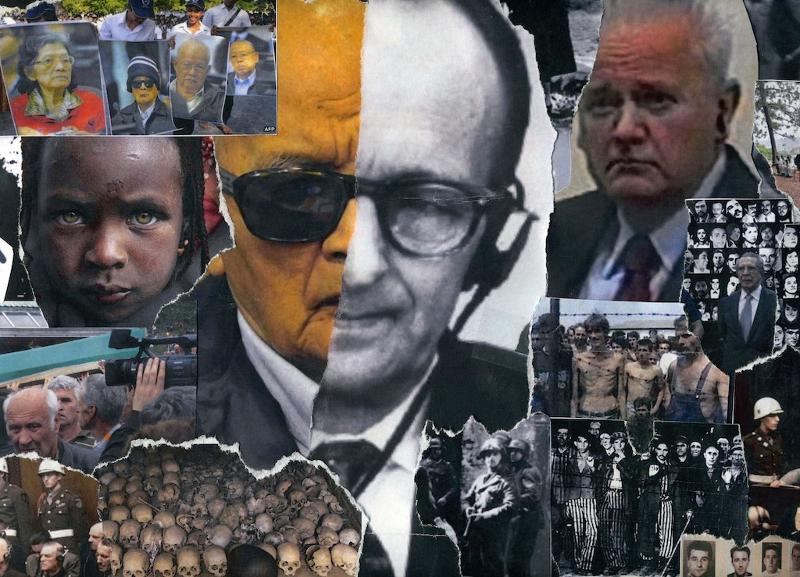 In August 1941, Winston Churchill noted that, while confronted with the atrocities that his intelligence services had discerned in Europe, the world was faced “with a crime without a name.” The second World War marked efforts to define atrocities and mold cultural memory by distinct institutions, such as the media, judiciary and academia; each of which continue to offer their own unique but overlapping framing.
“If Herodotus is the father of history,” wrote renowned historian Yosef Yerushalmi (1932-2009), “the father of meaning in history was the Jews.” The upcoming Yom HaShoah (Holocaust Remembrance Day) on April 8th, will give, like every year, this quote its proper significance.
Throughout the liturgical year-cycle the Jewish tradition looks back at the events in the history of the people of Israel not with a particular historical curiosity. Rather, it asks what the events of the past mean for us today. How can the past illuminate our present?
With the coming of the 68th anniversary of the liberation of Auschwitz, I was thinking about the Center’s first art exhibition, Witness and Legacy, curated by founding director Stephen Feinstein, with the American Museum of Art in St. Paul Minnesota in 1995. CHGS did not physically exist until 1997, but the roots of what it would accomplish were planted years earlier with this exhibition.
On December 26, 2012, at 10am, a solemn procession of horses, carrying Dakota men, women and children, will enter Mankato, MN and proceed to a site near the Minnesota River. These riders will have begun their journey in Lower Brule, South Dakota, and no matter the weather, they will ride for sixteen days in order to arrive at precisely this spot at precisely this time. They will gather near a hulking stone statue of a buffalo, across from the Mankato Public Library.
In August 1941, Winston Churchill noted that, while confronted with the atrocities that his intelligence services had discerned in Europe, the world was faced “with a crime without a name.” The second World War marked efforts to define atrocities and mold cultural memory by distinct institutions, such as the media, judiciary and academia; each of which continue to offer their own unique but overlapping framing.
“If Herodotus is the father of history,” wrote renowned historian Yosef Yerushalmi (1932-2009), “the father of meaning in history was the Jews.” The upcoming Yom HaShoah (Holocaust Remembrance Day) on April 8th, will give, like every year, this quote its proper significance.
Throughout the liturgical year-cycle the Jewish tradition looks back at the events in the history of the people of Israel not with a particular historical curiosity. Rather, it asks what the events of the past mean for us today. How can the past illuminate our present?
With the coming of the 68th anniversary of the liberation of Auschwitz, I was thinking about the Center’s first art exhibition, Witness and Legacy, curated by founding director Stephen Feinstein, with the American Museum of Art in St. Paul Minnesota in 1995. CHGS did not physically exist until 1997, but the roots of what it would accomplish were planted years earlier with this exhibition.
On December 26, 2012, at 10am, a solemn procession of horses, carrying Dakota men, women and children, will enter Mankato, MN and proceed to a site near the Minnesota River. These riders will have begun their journey in Lower Brule, South Dakota, and no matter the weather, they will ride for sixteen days in order to arrive at precisely this spot at precisely this time. They will gather near a hulking stone statue of a buffalo, across from the Mankato Public Library.