
religion

A single Palestinian flag flies in front of the Celtic FC stadium.
Supporters of Celtic FC in Scotland frequently display Palestinian flags at soccer matches (photo by Eugene Bradley)

Elite sport, especially on display at large-scale televised events, can provide a site for social and political messaging, including in the form of support, dissent, or opposition. One of the most iconic examples of dissent occurred at the 1968 Mexico City Olympics when successful US athletes John Carlos and Tommie Smith, supported by Australian silver medal winner Peter Norman, took a symbolic stand against the deep and pervasive oppression of African Americans.  In more recent times, and in the wake of the Russian military invasion of Ukraine in early 2022, around Europe some sports stadiums witnessed fans flying Ukrainian flags: representing condemnation of Russia and support for Ukraine.

Click here to read the full article...

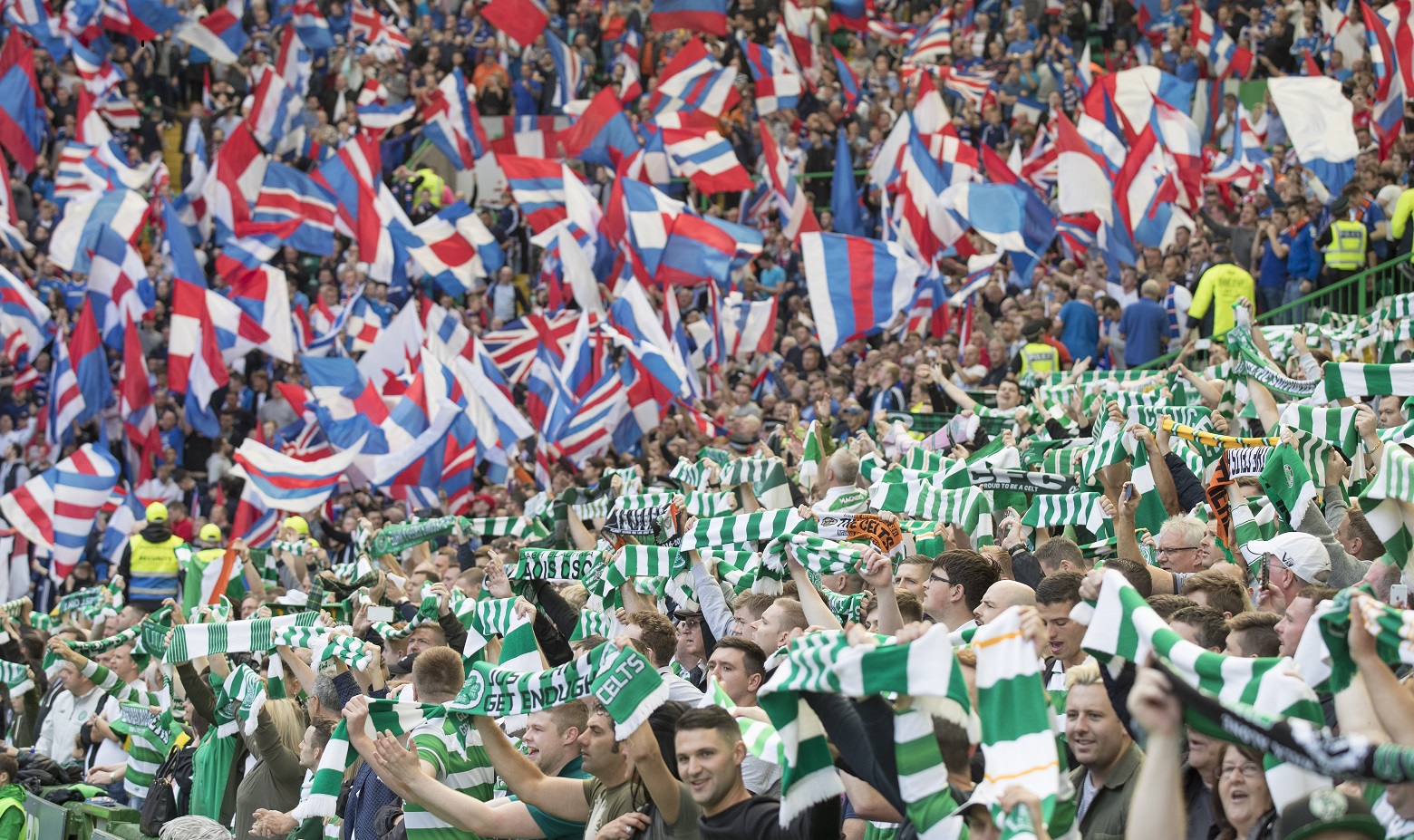
In the stands of a soccer stadium, fans of the rival clubs Rangers and Celtic can be seen displaying their respective team colors, white and green for Celtic, red, white, and blue for Rangers.
The rivalry between Scottish soccer clubs Rangers and Celtic is infused with political meanings related to religion, ethnicity, and nationalism (photo via International Business Times).

Elite soccer in Scotland operates within a relatively small financial domain compared to wealthier soccer countries like Italy, England, Spain, and Germany. Nevertheless, soccer remains the country’s dominant team sport, with attendances in Scotland’s top league the highest in Europe when population size is considered. Soccer in Scotland is largely dominated by two famous institutions: Rangers, a club and fanbase with a definitive anti-Catholic history and tradition, and Celtic, a club founded by Irish Catholic immigrants. Approximately 70% of fans in Scottish soccer devote allegiance to either of these two clubs. The histories of Rangers and Celtic, and the rivalry between them, also means they have millions of supporters around the globe, especially, though not solely, where Irish Catholic and Scottish Protestant immigrants have settled during the latter 20th and early 21st centuries.

From a sociological standpoint, it’s important to understand how communal memory contributes to this great and storied rivalry. For many supporters of Rangers and Celtic, such memory is infused with politics, religion, history, ethno-religious discrimination, colonialism, and anti-colonialism.

Click here to read the full article...