football (soccer)

A man with short, dark hair and his fist raised in the air stand in the foreground in front of a full soccer stadium with the field in the background.
The social dynamics of women’s sports fandom appear to be changing. (photo via PickPik)

In February 2024, the New York Times published a two-part series on the results of a survey of men who are fans of women’s soccer. The survey addressed how and why men became fans of women’s soccer, the relationship between their fandom of men and women’s sport, and how they perceived and participated in fan communities. The survey was motivated by the sense that men’s fandom had been overlooked and underestimated, in part due to the predominant narrative of female professional athletes as empowering for girls and women.

Are there more men who profess fandom of women’s sport now than in the past? The truth is hard, if not impossible, to ascertain, as women’s sport leagues don’t regularly publish data on the composition of their audiences. However, there are hints from polls and academic studies that men’s interest in or consumption of women’s sport may be growing and is sometimes higher than that of women.

Click here to read the full article...

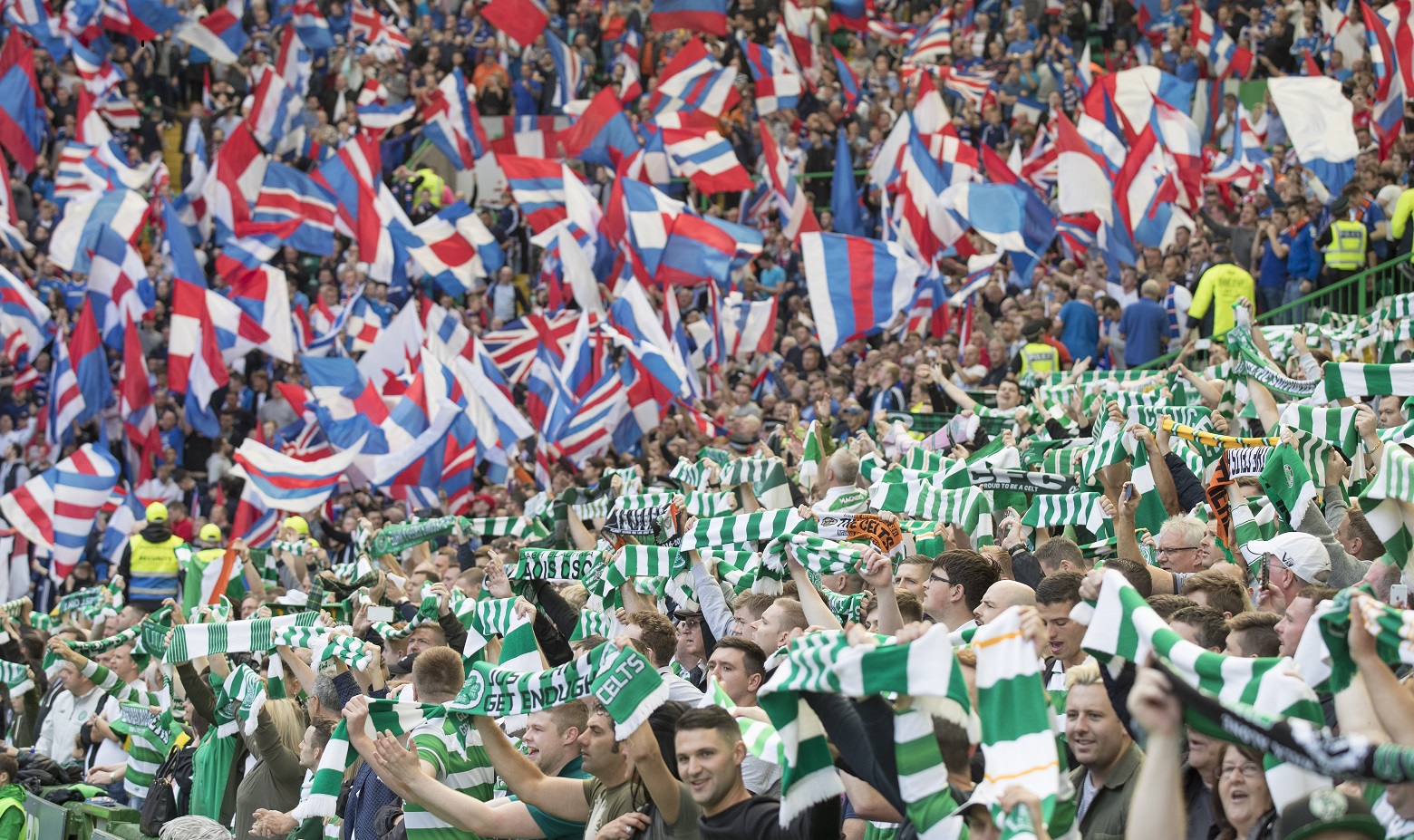
A single Palestinian flag flies in front of the Celtic FC stadium.
Supporters of Celtic FC in Scotland frequently display Palestinian flags at soccer matches (photo by Eugene Bradley)

Elite sport, especially on display at large-scale televised events, can provide a site for social and political messaging, including in the form of support, dissent, or opposition. One of the most iconic examples of dissent occurred at the 1968 Mexico City Olympics when successful US athletes John Carlos and Tommie Smith, supported by Australian silver medal winner Peter Norman, took a symbolic stand against the deep and pervasive oppression of African Americans.  In more recent times, and in the wake of the Russian military invasion of Ukraine in early 2022, around Europe some sports stadiums witnessed fans flying Ukrainian flags: representing condemnation of Russia and support for Ukraine.

Click here to read the full article...

A screenshot of the NBA Live video game shows WNBA players Brittney Griner and Maya Moore with smoothed muscles and an "hourglass figure".
A screenshot from the NBA Live video game with Brittney Griner of the Phoenix Mercury and Maya Moore of the Minnesota Lynx (Photo owned personally by the author)

On March 6, 2023, video game company Electronic Arts (EA) announced the introduction of the National Women’s Soccer League (NWSL) to their FIFA franchise. This inclusion, just like with the WNBA in EA’s NBA Live franchise, was initially celebrated as a step forward to gender equality in sport and the video game industry. However, this celebration faced pushback from many athletes about the (un)likeness of their digitized counterparts and how the game rates certain athletes’ performances. Subsequently, athletes’ public outcry drew pushback on social media, with some users urging NWSL athletes to stop making this a gender issue, arguing that it is just a technical problem because men, too, have been misrepresented in video games. In this article, we provide a different perspective on the misrepresentation of female athletes. Instead of saying “yes, the misrepresentation is about gender inequality,” or “no, it is merely a technical issue,” we want to argue, “yes, the misrepresentation may be due to technological limitations, but how these athletes are misrepresented can be a gender issue that hinders the good intention of advocating for equality.”

Click here to read the full article...

The FIFA men's World Cup trophy, a gold ball being held by robed figures, sits on the grass with blurred stadium seats in the background
How might a “thinking fan” go about watching the upcoming FIFA men’s World Cup in Qatar? (photo via insidersport.com)

The increasing public recognition of direct links between sports, social issues, and politics poses a challenging question: what should we watch? If we watched the 2022 Beijing Olympics despite concerns about IOC policy and China’s human rights record and repressive surveillance, does that make us bad people? If we watch the 2022 World Cup in Qatar despite concerns about FIFA motives along with the rights of migrant workers and LGBTQ people, does that make us complicit?

Click here to read the full article...

In the stands of a soccer stadium, fans of the rival clubs Rangers and Celtic can be seen displaying their respective team colors, white and green for Celtic, red, white, and blue for Rangers.
The rivalry between Scottish soccer clubs Rangers and Celtic is infused with political meanings related to religion, ethnicity, and nationalism (photo via International Business Times).

Elite soccer in Scotland operates within a relatively small financial domain compared to wealthier soccer countries like Italy, England, Spain, and Germany. Nevertheless, soccer remains the country’s dominant team sport, with attendances in Scotland’s top league the highest in Europe when population size is considered. Soccer in Scotland is largely dominated by two famous institutions: Rangers, a club and fanbase with a definitive anti-Catholic history and tradition, and Celtic, a club founded by Irish Catholic immigrants. Approximately 70% of fans in Scottish soccer devote allegiance to either of these two clubs. The histories of Rangers and Celtic, and the rivalry between them, also means they have millions of supporters around the globe, especially, though not solely, where Irish Catholic and Scottish Protestant immigrants have settled during the latter 20th and early 21st centuries.

From a sociological standpoint, it’s important to understand how communal memory contributes to this great and storied rivalry. For many supporters of Rangers and Celtic, such memory is infused with politics, religion, history, ethno-religious discrimination, colonialism, and anti-colonialism.

Click here to read the full article...

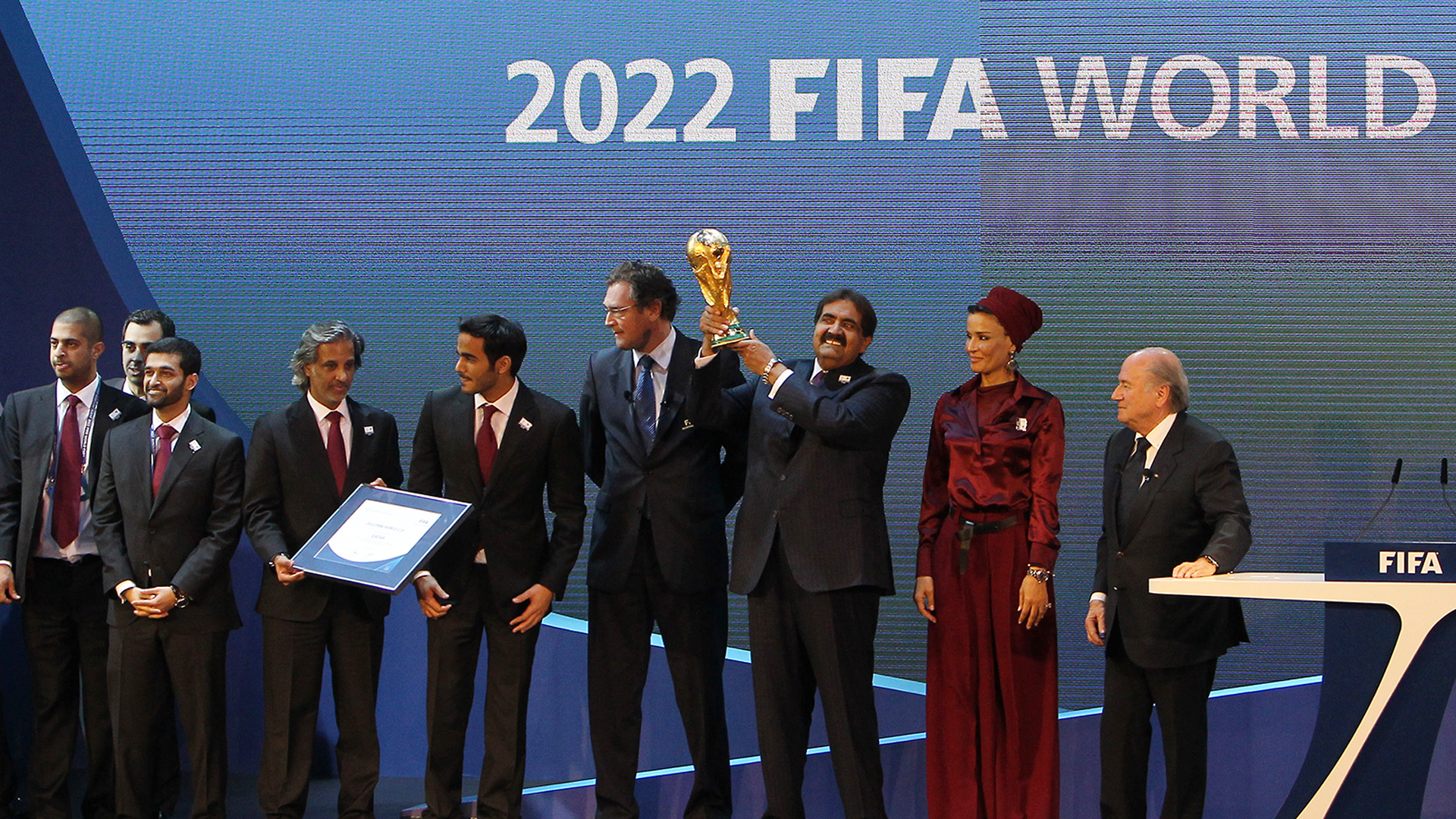
A group of Qatari soccer officials, one holding the World Cup trophy, stand next to FIFA President Sepp Blatter after being named the host nation for the 2022 World Cup.
In December 2010, FIFA awarded Qatar the rights to host the 2022 men’s World Cup (photo by Getty)

From the day Qatar was awarded an opportunity to host the FIFA men’s World Cup in 2022, Islamophobic coverage of the Qatari state has proliferated in Western media. The Western media discourse has been heavily focused on highlighting human rights issues, immigration laws, climate, and bribery accusations while obscuring possible successes of the first Muslim country to hold the FIFA World Cup. For example, an article on Bleacher Report with the title “6 reasons why the World Cup should be taken away from Qatar,“ led with concerns about scorching heat in the small Gulf State, followed by criticisms of how the event would cause a “disruption to European leagues.” At the same time, other sport media analysts have questioned why an Arab country (approximate population of 2.8 million) with little soccer history succeeded in becoming the host nation. Such reporting serves to cast doubts on the acceptability of holding a mega-sporting event in a Muslim country.

Click here to read the full article...

A black and white photo shows a stairwell at Ibrox Stadium in 1971 in which workers clear away debris.
Workers clear barricades from Ibrox stadium’s stairway 13, site of the 1971 crowd disaster that killed 66 spectators. (photo via The Scotsman)

Numerous European attendance records have been set at soccer matches in Glasgow, Scotland; 147,365 spectators attended the 1937 Scottish Cup Final at Hampden Park, 149,415 were at the 1937 Scotland vs England match, and 136,505 attended Celtic vs Leeds United in 1970. In all these instances, supporters—the vast majority working class men—stood on steep, mostly uncovered, terraces. Such a design characterised virtually all British soccer stadiums at the time. Getting as many people as possible into the stadium meant little regard for sanitation, comfort, provision of food, and safety.

Click here to read the full article...

A male soccer player in a blue jersey kneels in a soccer stadium.
Mason Holgate of Everton kneels before a Premier League match against Liverpool on June 21, 2020. (Photo by Everton FC/Everton FC via Getty Images)

On a sunny Sunday afternoon in June 2020, Black Lives Matter protesters in Bristol, England pulled down a statue of Edward Colston from its pedestal, dragged it through the city’s streets and dumped it into the harbour. Colston, who some revered for his philanthropic donations to schools and hospitals, was a 17th century slave trader. He made his fortune through his involvement in the Royal African Company, a mercantile corporation that oversaw the forced removal, transportation and annihilation of hundreds of thousands of Black Africans. The dismantling of his statue – which had stood for 125 years – was an iconic event in the demonstrations across the United Kingdom, adding new momentum to campaigns to remove or replace public monuments, and to rename buildings that have racist, colonial connections.

Click here to read the full article...

Celtic FC players in green and white striped jerseys raise their arms in celebration on a soccer field
Celtic FC players celebrate their 2-1 victory over Inter Milan in the 1967 European Cup (AP/Press Association Images via Celtic Quick News)

While St. Patrick’s Day gives people of Irish descent around the world an opportunity to celebrate their heritage, soccer serves a key role with regard to Irish ethnicity in Scotland—and on a much more frequent basis than once a year. To help understand this we need to go back to May 25, 1967, when Celtic Football Club of Scotland defeated Inter Milan, 2-1, to become the first club from outside of Spain, Portugal, or Italy to win the European Cup (now the UEFA Champions League). Recognised as the most prestigious soccer trophy in Europe, only 22 clubs have managed to win it since its initiation in 1956.

Click here to read the full article...

Members of the U.S. Women's National Soccer Team at the 2019 World Cup.
Members of the U.S. Women’s National Soccer Team at the 2019 World Cup. The costs associated with youth sports in the U.S. create barriers for many young athletes who hope to reach the elite level. (Photo from U.S. Soccer)

The success of the United States (U.S.) Women’s National Team (WNT) has encouraged millions of young female soccer players. With television viewership records being shattered at the 2019 World Cup, these elite athletes may inspire today’s young players to pursue the next level of their game, with the hopes of earning a college scholarship, signing a professional contract, or maybe donning that coveted red, white and blue jersey. However, the opportunity to achieve those dreams remains beyond reach for many girls due to the expenses associated with youth sport.

Click here to read the full article...