
race

Photo Of Ramadan Light On Top Of Table by Ahmed Aqtai is licensed under CC BY 2.0 in pexels.

In the United States, Islamophobia is at an all-time high. Muslim people have experienced increased discrimination including being singled out by airport security and other law enforcement individuals, being called offensive names, and experiencing physical threats of violence or attacks. Given that the Muslim population is continuing to grow, it is crucial to consider the experiences of Muslim people in the U.S. and the challenges they face.

Trends in Islamophobia

Muslim people do not make up a large population of the United States, comprising around 3 million people (or about 1.1% of the total US population) in 2017 and is projected to be 1.7% in 2030. And over the last decade, public perception of Muslim people has since trended towards unfavorable.

The Impact of Media on Islamophobia

The media has played a critical role in shaping how the public perceives Muslim people in the U.S., including depicting discriminatory stereotypes of Muslim people as terrorists, violent, and backwards. For some, these representations have been used to justify violence and discrimination against Islamic people and institutions.

The Racialization of Muslim and Islamic Identity

The development of Islamophobia has been driven as well by the ways in which Muslim identity has become racialized in the U.S. and other parts of the world, an example of how “religion can be raced”. In particular, people “assign Muslim-ness” onto markers of Islam (such as wearing a hijab, having a beard, or wearing traditional clothing like a thobe or abaya) that are informed by cultural ideas and appearances. It is important to keep this racialization in mind when considering how Islamophobia manifests.

Muslim is not a Monolith

It is  important to resist the ”one-size-fits-all” stigmatized representations and stereotypes  of an extremely diverse group of people. While public perceptions have conflated Arab and Middle Eastern identity solely with a singular Muslim category, Muslim people actually come from different ethnic groups that vary widely along beliefs, values, and more.

Studio Setting by Brett Sayles is licensed under CC BY 2.0 in pexels.

What does it mean to be authentic? Authenticity is frequently used to describe people or things that are believed to be genuine, sincere, consistent, or original. We evaluate both things (like music, television, or food) and people (ourselves and others) on their authenticity, often assuming that some are inherently real or beyond artifice, while others are more artificial or contrived. However, sociologists and social scientists recognize the notion of authenticity itself as a powerful social construct: we collectively decide that people and things are (or are not) authentic. We evaluate people in terms of their personal and social authenticity.

Personal Authenticity

Personal authenticity involves being “true” to one’s self. But…what is the true self? Sociologists and scholars have challenged the idea that we have a true self, arguing that we all play a variety of social roles (student, friend, employee, etc.) in different situations. As we take on these roles, some individuals believe their actions are real and genuine and others feel that they are just putting on an act. It is this subjective understanding of the true self that matters for personal authenticity, even if it is socially constructed or conditioned. When people feel that they are being true to themselves, they experience authenticity as an emotional response.

A desire to feel authenticity is a powerful motive for behavior. Sometimes we act with the specific goal of expressing our true self.  For example, some get tattoos and body art to express their authentic selves.

However, societal pressures, from social norms to economic needs, may influence us to embrace behaviors that feel inauthentic. In the context of economic exchange, many roles require emotional labor (or, the management of feelings to create a certain emotional display). For example, flight attendants are expected to be friendly and helpful to the travelers–even if the travelers are rude or unruly. For workers, engaging in emotional labor can feel like acting or maintaining an illusion, leading to feelings of inauthenticity and a sense of emotional numbness.

Social Authenticity

Individuals are a part of many different groups (unions, trivia teams, fandoms, religious groups, etc.) and social categories (age, race, class, and gender/sexuality) and social authenticity is the idea of truly belonging to that group or category. Group members define certain characteristics as authentic and evaluate the authenticity of others based on those criteria. Authenticity can serve as a way to draw boundaries around groups, establishing who is in and who is out. For example, members of local punk scenes may display their authenticity through personal appearance, knowledge of punk music, and extensive vinyl collections—setting them apart from “posers.” Outsiders–or, individuals who fail to meet the authenticity criteria established by a group–may be viewed as appropriating the culture of a group to which they don’t belong.

Of course, group members may disagree on what it means to be an authentic member. When the authenticity of a group member is questioned, they may respond by challenging the validity of the authenticity standards used to judge them.

The Role of Race, Class, and Gender

Being perceived as an authentic member of a social group can yield rewards, from the tangible reward of admission to a university to simply achieving group belonging. However, marginalized groups often face bias or unattainable expectations of what an authentic member of their group should be like. These expectations can be produced within groups or perpetuated externally, through institutions like schools or the media. For instance, socially constructed notions of an authentic Asian American student or Black woman can exclude those who may not conform to these expectations, while also reaffirming sweeping generalizations about these groups.

The relationship between perceived authenticity and social acceptance is especially vital in professional life. For instance, people of color in White-dominated professions face unique pressure to prove themselves as “authentic” because whiteness is an implicit expectation of a good leader. Similarly, evaluations of people’s merit based on class and gender are embedded with assumptions about who can be authentic in their position. People with marginalized identities in certain professions or organizations are not only expected to fulfill their duties- but must also juggle personal and social authenticity based on ambiguous standards. 

About Us

AJUS is dedicated to the proposition that every idea deserves a platform. We welcome dissertation chapters, voice memos, vague thoughts, lecture notes, and data analysis that speaks for itself. Use your sociological imagination.

Manuscript Types

  1. Theoretical Speculations – Wildly ambitious frameworks with no empirical evidence.
  2. Data? – Raw numbers in an Excel file, preferably unformatted.
  3. Ethnographic Musings – 1-2 notes jotted down on a used napkin.
  4. Methodological Hot Takes – No actual study, just vibes.
  5. Unfinished Dissertations – Someone, someday might just read it.

Submission Guidelines

  1. Proposing sociological questions?
  2. Fully conceptualized, partially completed work is acceptable.
  3. Include 1+ cite(s) you “meant to look up later.”Placeholders and “TBD” acceptable.
  4. Feature tables and figures that may or may not be related to the topic.
  5. Write the conclusion at 2 AM, ideally over- or under-caffeinated.
  6. ORCHID ID required.

Formatting Requirements

  1. Length: We encourage all manuscripts to be between 500 words and wherever your heart tells you to stop.
  2. Proofreeding optional.
  3. Font: Something not so basic, expand your horizons.
  4. Citations: Surprise us. APA, MLA, CFG, SSD, GHD, DGD, NFL, NHL, KCF… 
  5. Abstract: Don’t be too, somewhat vague.
  6. References: Don’t forget anyone, because we will send it to whomever you forget to cite…

References: Don’t forget anyone, because we will look through and will send it to whomever you forgot to cite…

Peer Review Process

All submissions will undergo our patented Mega-Triple-Blind Peer Review System™, where:

  1. The authors forget what they wrote.
  2. The reviewers skim the abstract and pick 1 or 2 arbitrary things to call out.
  3. The editors decide based on their breakfast.

We guarantee comprehensive feedback (e.g., “Interesting…” and “?”).

If your paper is rejected, you may submit an appeal by:

  1. Resending the same manuscript in a different font.
  2. Signing an affidavit attesting that “Foucault would have accepted this.”
  3. Threatening to start your own journal.

How to Submit:

Send your completed-ish manuscript via:

  1. A blurry PDF screenshot in an email attachment labeled “Final_Draft_3_(Actually_Final).doc”
  2. A Google Doc with unresolved comments.
  3. Mail.
  4. AJUS Signal Editors Only Group Chat.
  5. Give us a call and read it aloud: ‪(715) 600-2187‬ (after 10:33 PM only)

2025 Issue | Outside the Box Thinkers


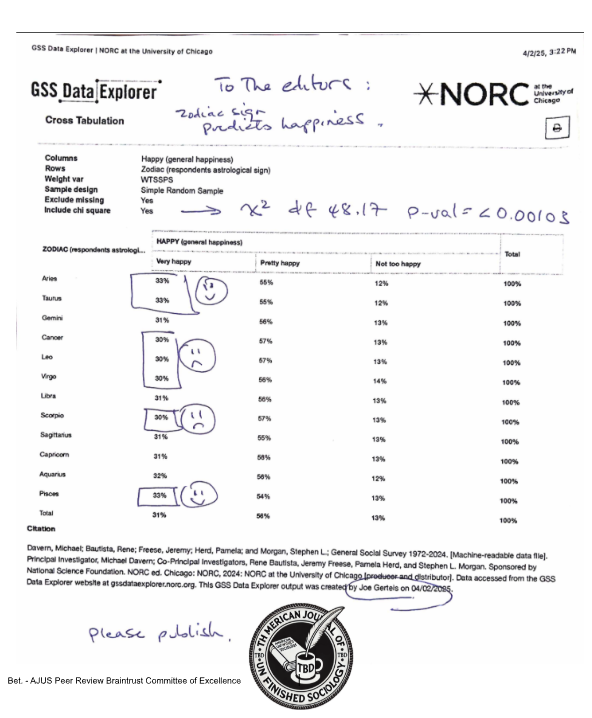
Zodiac Sign Predicts Happiness


An empty corporate office meeting room, with the empty, white chairs surrounding a table. Photo by Mikhail Nilov from Pexels under Pexels license.

The image of Asian Americans as “model minorities” seems to be ingrained in American culture. Asian Americans are painted as high-achieving minorities who have overcome racial discrimination to reach the same heights as, or even exceed white Americans. This model minority framing, a so-called “positive stereotype,” disguises the discrimination that Asian Americans face within professional employment. How is it that Asian Americans can occupy some of the most desirable jobs but never move up the ranks? The overrepresentation of Asian Americans in fields like tech, law, and business but underrepresentation in leadership positions represents the paradoxical discrimination of the “bamboo ceiling” that Asian Americans continually bump against.

The Limits of Asian American Success

The image of the model minority is double-sided: on the one hand, it upholds Asian Americans as hard-working and model employees; on the other hand, it portrays Asian Americans as meek and subservient. This stereotype, in other words, creates the bamboo ceiling, which is where Asian Americans are perceived as ideal entry-level workers and unable to be creative or assertive in the manner needed for leadership, preventing them from reaching high-ranking positions. 

Navigating the Professional Workplace

In addition to confronting cultural stereotypes that limit their advancement, in spaces that are dominated by white leadership, minoritized people are regularly pressured to “assimilate” or adjust how they display their ethnic and racial identities. Some Asian Americans experience microaggressions or being “othered” in the workplace. These might include “being mistaken for other Asian Americans [or] hearing culturally insensitive comments about ethnic names, food, culture, or language” (Huang 2020).

The Intersections of Gender and Race

However, Asian American workplace discrimination does not only relate to race. Studies interviewing Asian Americans have demonstrated that what Asian Americans navigate is not just racism but how racism interacts with other identities such as gender. For example, some Asian American women receive comments about “looking young”, which influences how seriously they are taken in comparison to their male colleagues. These intersecting identities are not only sources of discrimination, they can be important components of how the workplace shapes Asian American racial and ethnic identities as well.

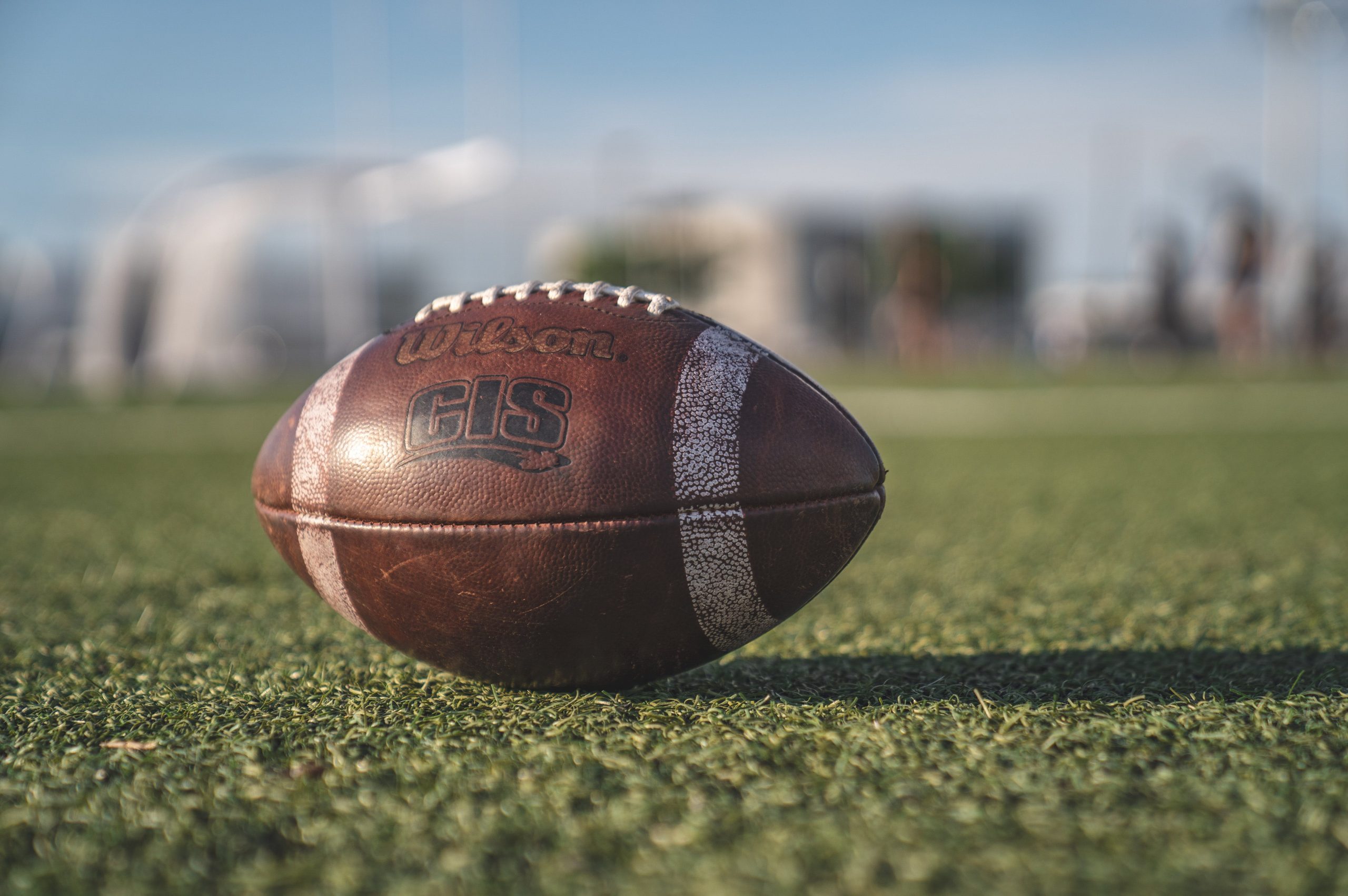
A closeup of a football on a turf field. Photo by Jean-Daniel Francoeur from Pexels under Pexels license.

In the United States the quasi-holiday Super Bowl is this Sunday. This year the Kansas City Chiefs and the Philadelphia Eagles face off in New Orleans. In the spirit of the Super Bowl, check out some sociology from us and our partners Engaging Sports and Contexts on the Super Bowl, football, and sports:

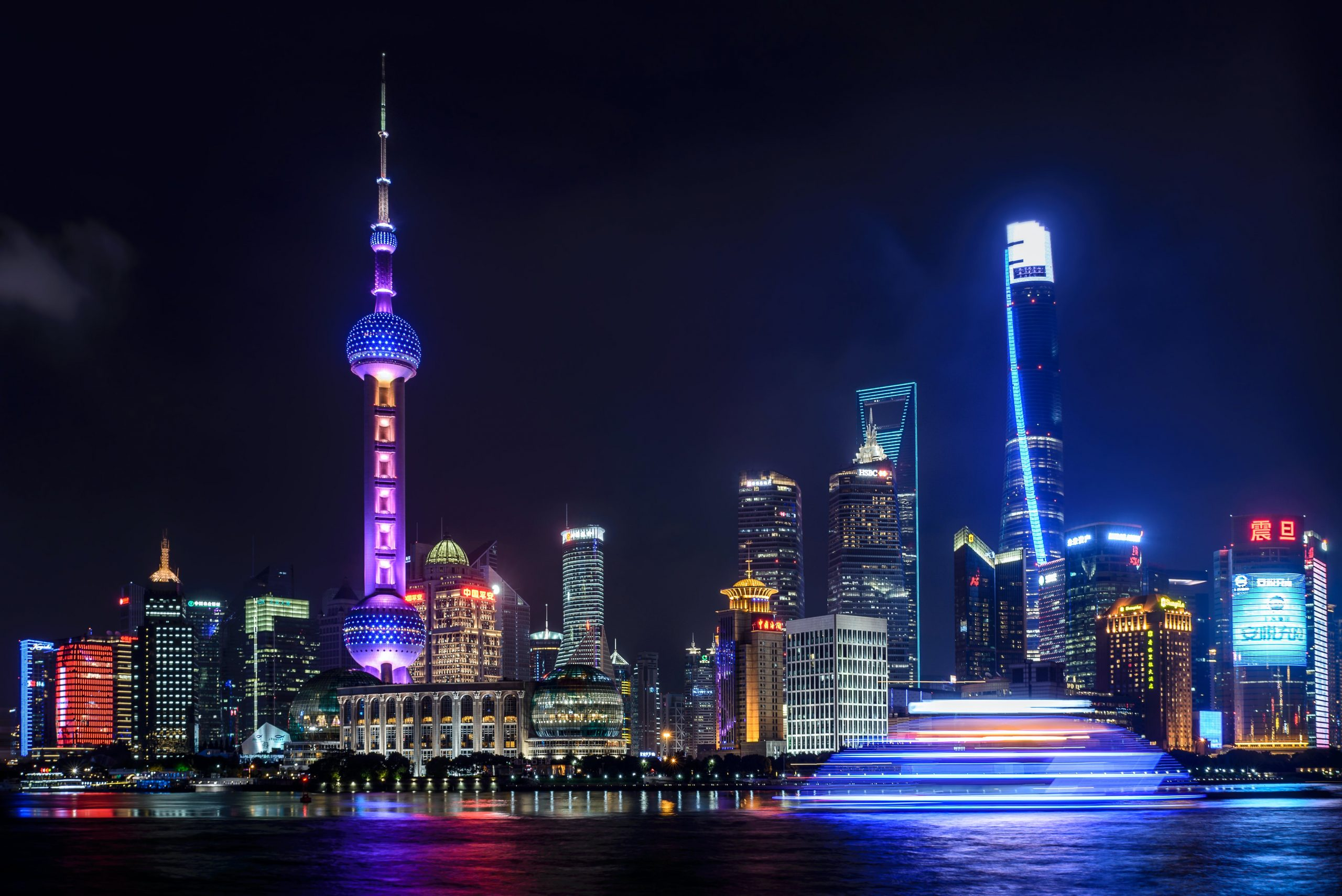
A large city at night, with colorful lights illuminating the cityscape. Photo by Wolfram from Pexels under Pexels license.

From Hollywood actors to community activists and literary writers, Asian Americans have been gaining increasing visibility on public platforms. However, given that Asian Americans come from over 20 ethnic and national groups, there is variety and diversity in history, language, culture, and experience that the umbrella term “Asian American” cannot encompass. Over time, in fact, Asian Americans have been lumped into a monolithic culture and stereotypes typically associated with East Asians, erasing the diversity that is a crucial part of Asian America. 

What does it mean to be “Asian American” in the United States? How are Asian Americans defying, redefining, and embracing this ambiguous and monolithic label? 

Immigration and Asian Americans

Asian Americans and their immigration to the United States have always been an important part of the history of the United States. Ethnic groups like Chinese and Japanese Americans have been around since the gold rush and sugarcane fields of Hawaii respectively. Other groups, especially Southeast Asian refugees, came to the United States as a result of colonialism and war. It is important to acknowledge how these different histories compose and have shaped Asian American identities, cultures, and communities.

  • Lee, Erika. 2015. “A Part and Apart: Asian American and Immigration History.” Journal of American Ethnic History 34(4):28–42. 
  • Lee, Erika. 2016. The Making of Asian America: A History. New York, NY: Simon & Schuster.

Panethnicity

Panethnicity refers to any collective identity built across ethnic boundaries and differences (Okamoto and Mora 2014). For Asian Americans, panethnicity was created as a political identity for activism and solidarity among Asian-origin peoples in the face of a deeply racialized United States. In more recent decades, “Asian American” has become an identity for Asian Americans to share in panethnic cultural histories, activities, and media. However, it has also become an identity forced upon Asian-origin peoples, where entities like the government group all Asian-origin ethnicities under this broad umbrella term to distinguish them from both White people and other people of color.

  • Lee, Jess. 2019. “Many dimensions of Asian American pan‐ethnicity.” Sociology Compass 13(12). 
  • Nakano, Dana Y. 2013. “An interlocking panethnicity: The negotiation of multiple identities among Asian American social movement leaders.” Sociological Perspectives 56(4):569-595.
  • Okamoto, Dina G. 2014. Redefining race: Asian American panethnicity and shifting ethnic boundaries. New York, NY: Russell Sage Foundation.
  • Okamoto, Dina, and G. Cristina Mora. 2014. “Panethnicity.” Annual Review of Sociology 40:219-239.Espiritu, Yen Le. 1992. Asian American panethnicity: Bridging institutions and identities. Philadelphia, PA: Temple University Press.

The Monolithic “Asian American” – Commonalities and Variations

In recent decades, “Asian American” as a panethnic category has also become a point of contention for people who are categorized and racialized as such. Many ethnic groups, like South Asian ethnic groups, feel unrepresented in an umbrella category that seems to predominantly reflect East Asian culture, values, experiences, and socio-cultural status. An example of this is the “model minority” stereotype, which upholds Asian Americans as hard-working and high achieving in comparison to other racial minority groups, and yet still inferior and a threat to White people (Kim 1999). However, the model minority is often in reference to East Asians (although depending on the context this can also include Asian Indians and Vietnamese), ignoring the disparities many Asian Americans like South and Southeast Asians experience.

As a result, there have been calls to disaggregate, or break down, Asian Americans by ethnic groups because of how this monolithic racial label camouflages the vast differences and inequities between Asian American groups. Examples include the income gaps between groups like Chinese Americans and Nepalese Americans, and even within ethnic groups, like Chinese Americans, there are vastly different and unequal experiences. 

  • Kibria, Nadia. 1998. “The contested meanings of ‘Asian American’: Racial dilemmas in the contemporary US.” Ethnic and Racial Studies 21(5), 939-958.
  • Lee, Jennifer, and Karthick Ramakrishnan. 2020. “Who counts as Asian.” Ethnic and Racial Studies 43(10):1733-1756.
  • Tsuda, Takeyuki. 2022. “I Don’t Feel Very Asian American”: Why Aren’t Japanese Americans More Panethnic?” Sociological Inquiry 92: 919-942. 
  • Yamashita, Liann. 2022. ““I just couldn’t relate to that Asian American narrative”: How Southeast Asian Americans reconsider panethnicity.” Sociology of Race and Ethnicity 8(2):250-266

Xenophobia and Anti-Asian Racism

Asian Americans continue to face xenophobic sentiments in a country where, no matter who is included or how long their family has been in the US, they are treated as foreigners (Tuan 1998). Even when praised as “model minorities” who “made it” compared to other minority groups, this valorized position can quickly crumble beneath them. The COVID-19 pandemic and the rise of anti-Asian hate that followed is an example of Asian Americans’ tenuous position in the racialized hierarchy of the United States. 

  • Kim, Claire Jean. 1999. “The Racial Triangulation of Asian Americans.” Politics & Society 27(1):105-138. 
  • Kim, Nadia. 2007. “Asian Americans’ experiences of “race” and racism.” In Handbooks of the Sociology of Racial and Ethnic Relations, pp. 131-144. Boston, MA: Springer US.
  • Tessler, Hannah, Meera Choi, and Grace Kao. 2020. “The anxiety of being Asian American: Hate crimes and negative biases during the COVID-19 pandemic.” American Journal of Criminal Justice 45:636-646.
  • Tuan, Mia. 1998. Forever Foreigners or Honorary Whites? The Asian Ethnic Experience Today. New Brunswick, NJ: Rutgers University Press. 

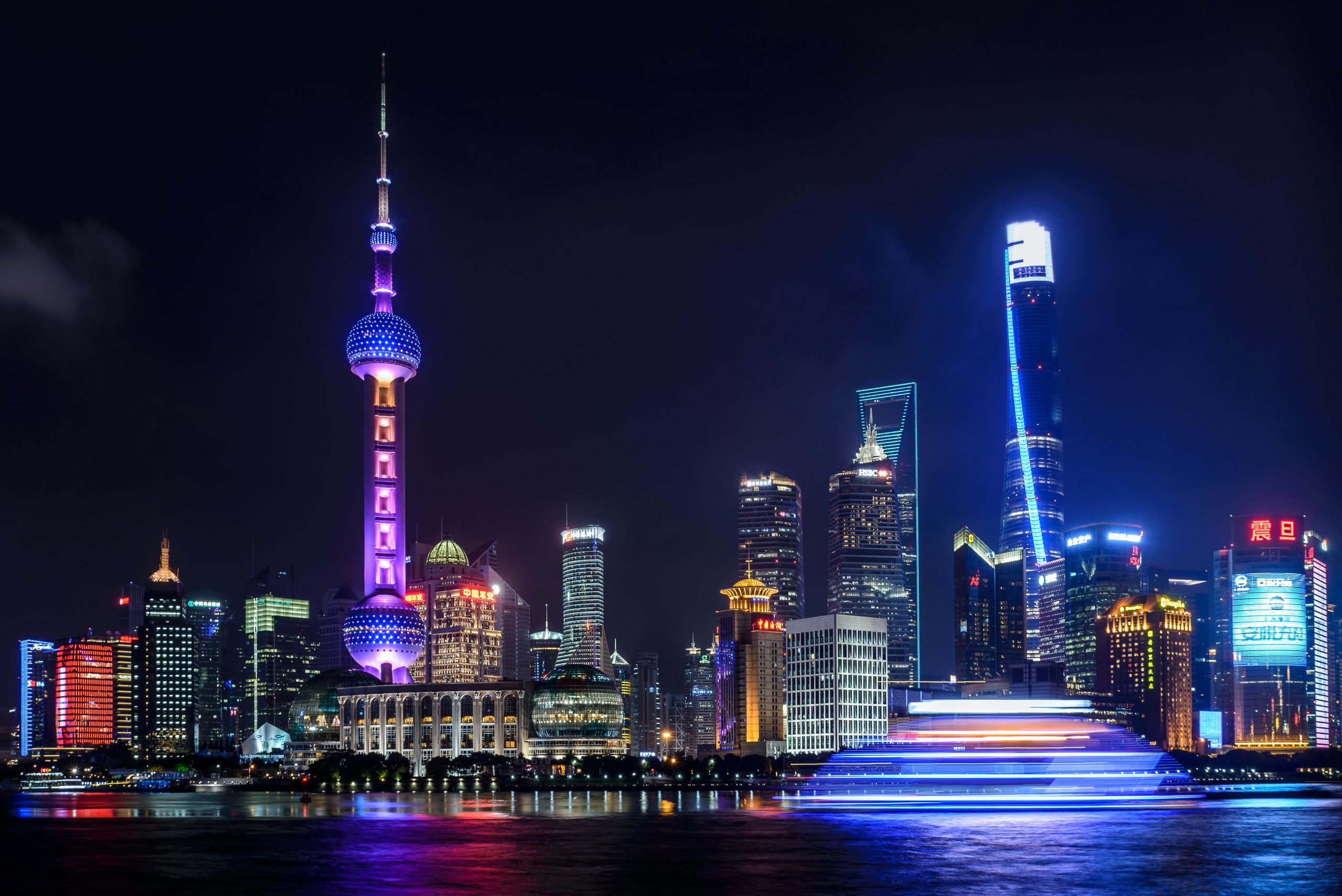
A large city at night, with colorful lights illuminating the cityscape. Photo by Wolfram from Pexels under Pexels license.

From Hollywood actors to community activists and literary writers, Asian Americans have been gaining increasing visibility on public platforms. However, given that Asian Americans come from over 20 ethnic and national groups, there is variety and diversity in history, language, culture, and experience that the umbrella term “Asian American” cannot encompass. Over time, in fact, Asian Americans have been lumped into a monolithic culture and stereotypes typically associated with East Asians, erasing the diversity that is a crucial part of Asian America. 

What does it mean to be “Asian American” in the United States? How are Asian Americans defying, redefining, and embracing this ambiguous and monolithic label? 

Immigration and Asian Americans

Asian Americans and their immigration to the United States have always been an important part of the history of the United States. Ethnic groups like Chinese and Japanese Americans have been around since the gold rush and sugarcane fields of Hawaii respectively. Other groups, especially Southeast Asian refugees, came to the United States as a result of colonialism and war. It is important to acknowledge how these different histories compose and have shaped Asian American identities, cultures, and communities.

  • Lee, Erika. 2015. “A Part and Apart: Asian American and Immigration History.” Journal of American Ethnic History 34(4):28–42. 
  • Lee, Erika. 2016. The Making of Asian America: A History. New York, NY: Simon & Schuster.

Panethnicity

Panethnicity refers to any collective identity built across ethnic boundaries and differences (Okamoto and Mora 2014). For Asian Americans, panethnicity was created as a political identity for activism and solidarity among Asian-origin peoples in the face of a deeply racialized United States. In more recent decades, “Asian American” has become an identity for Asian Americans to share in panethnic cultural histories, activities, and media. However, it has also become an identity forced upon Asian-origin peoples, where entities like the government group all Asian-origin ethnicities under this broad umbrella term to distinguish them from both White people and other people of color.

  • Lee, Jess. 2019. “Many dimensions of Asian American pan‐ethnicity.” Sociology Compass 13(12). 
  • Nakano, Dana Y. 2013. “An interlocking panethnicity: The negotiation of multiple identities among Asian American social movement leaders.” Sociological Perspectives 56(4):569-595.
  • Okamoto, Dina G. 2014. Redefining race: Asian American panethnicity and shifting ethnic boundaries. New York, NY: Russell Sage Foundation.
  • Okamoto, Dina, and G. Cristina Mora. 2014. “Panethnicity.” Annual Review of Sociology 40:219-239.Espiritu, Yen Le. 1992. Asian American panethnicity: Bridging institutions and identities. Philadelphia, PA: Temple University Press.

The Monolithic “Asian American” – Commonalities and Variations

In recent decades, “Asian American” as a panethnic category has also become a point of contention for people who are categorized and racialized as such. Many ethnic groups, like South Asian ethnic groups, feel unrepresented in an umbrella category that seems to predominantly reflect East Asian culture, values, experiences, and socio-cultural status. An example of this is the “model minority” stereotype, which upholds Asian Americans as hard-working and high achieving in comparison to other racial minority groups, and yet still inferior and a threat to White people (Kim 1999). However, the model minority is often in reference to East Asians (although depending on the context this can also include Asian Indians and Vietnamese), ignoring the disparities many Asian Americans like South and Southeast Asians experience.

As a result, there have been calls to disaggregate, or break down, Asian Americans by ethnic groups because of how this monolithic racial label camouflages the vast differences and inequities between Asian American groups. Examples include the income gaps between groups like Chinese Americans and Nepalese Americans, and even within ethnic groups, like Chinese Americans, there are vastly different and unequal experiences. 

  • Kibria, Nadia. 1998. “The contested meanings of ‘Asian American’: Racial dilemmas in the contemporary US.” Ethnic and Racial Studies 21(5), 939-958.
  • Lee, Jennifer, and Karthick Ramakrishnan. 2020. “Who counts as Asian.” Ethnic and Racial Studies 43(10):1733-1756.
  • Tsuda, Takeyuki. 2022. “I Don’t Feel Very Asian American”: Why Aren’t Japanese Americans More Panethnic?” Sociological Inquiry 92: 919-942. 
  • Yamashita, Liann. 2022. ““I just couldn’t relate to that Asian American narrative”: How Southeast Asian Americans reconsider panethnicity.” Sociology of Race and Ethnicity 8(2):250-266

Xenophobia and Anti-Asian Racism

Asian Americans continue to face xenophobic sentiments in a country where, no matter who is included or how long their family has been in the US, they are treated as foreigners (Tuan 1998). Even when praised as “model minorities” who “made it” compared to other minority groups, this valorized position can quickly crumble beneath them. The COVID-19 pandemic and the rise of anti-Asian hate that followed is an example of Asian Americans’ tenuous position in the racialized hierarchy of the United States. 

  • Kim, Claire Jean. 1999. “The Racial Triangulation of Asian Americans.” Politics & Society 27(1):105-138. 
  • Kim, Nadia. 2007. “Asian Americans’ experiences of “race” and racism.” In Handbooks of the Sociology of Racial and Ethnic Relations, pp. 131-144. Boston, MA: Springer US.
  • Tessler, Hannah, Meera Choi, and Grace Kao. 2020. “The anxiety of being Asian American: Hate crimes and negative biases during the COVID-19 pandemic.” American Journal of Criminal Justice 45:636-646.
  • Tuan, Mia. 1998. Forever Foreigners or Honorary Whites? The Asian Ethnic Experience Today. New Brunswick, NJ: Rutgers University Press. 

A sheet with two holes cut in for eye holes to resemble a ghost, sitting (or floating?) on a bed. Photo by Ryan Miguel Capili under Pexels license.

It’s a dark and stormy night, and the wind is howling as the trees tap, tap, tap along your window. Out of the night comes an unearthly noise, and an eerie feeling takes over you as the room becomes cold. Your mind begins to race as you feel a presence close by. It must be all in your head…mustn’t it?

Whether you believe in ghosts or the things that go bump in the night, the supernatural has proved to be a prevailing source of intrigue for the world and sociologists. We may not be able to prove the existence of the supernatural, but we can certainly look into the factors that shape and guide our experiences. 

Cultic Milieu

Cultic or paranormal beliefs and experiences are both wide-ranging (including unorthodox science, magic, witchcraft, astrology, mysticism, healing practices, the occult, and more) and persistent across time. 

These beliefs are unified by the fact that they are typically viewed as deviant to the dominant culture, particularly traditional religion and mainstream science. This stimulates a tolerance for other belief systems and a sense of support, as believers in the cultic or paranormal share an experience of having to justify their beliefs to mainstream society. 

Colin Campbell argues that this cultic milieu is, “an underground region where true seekers test hidden, forgotten, and forbidden knowledge.”

Supernatural Skepticism

Some scholars have also explored the process of how people come to develop cultic or paranormal beliefs. When patterns of strange and uncanny events occur, people often experience layers of doubt before concluding they have experienced a ghostly encounter. The will to believe battles against a desire to remain skeptical, especially in a highly rationalized, materialistic world. 

“Because a ghost seemingly defies rationality, the person who believes risks his or her credibility and stigmatization.”

Studying practitioners of ritual magic in London in 1983, Tanya Marie Luhrmann questioned why users practiced magic when – to the eye of the outside observer – it did not work. Luhrmann found that individuals engaged in unintentional interpretive drift (a slow shift in how someone interprets events, what events they find significant, and what patterns they notice). Over time, they began to interpret events as a result of their magical practice. For Lurhman, such beliefs and practices are not so much exceptions to the modern quest for instrumental, scientific knowledge but a direct reaction to its limitations and shortcomings. 

Hauntings

Some scholars focus on the social functions of ghostly hauntings. Hauntings may draw attention to loss (either of life or of opportunity) or reveal repressed or unresolved memories of individuals or communities (particularly memories of social violence). Ghosts can represent our empowered hopes, fears, and values. Experiences with ghosts may spur action, and–whether they truly exist or not–have real effects on those who believe in them. 

Gender and Race Belief Differences

Sociology has also found that social factors like race, education, and gender can influence someone’s perspective on the paranormal and supernatural, as one survey of American fears found. Women have been found to have a higher belief in things like ghosts, zombies, and supernatural powers while men are more likely to believe in things like bigfoot or extraterrestrials. The results suggest a difference in the material quality of the creature and its relation to scientific inquiry. 

Black people were found to have higher beliefs in alien life and ghost encounters while Asian Americans had the largest fear of zombies. White people were more likely to believe in UFOs and psychic healing. The cultural significance of religion or spirituality for race may be an influencing factor in the findings. The level of education also impacts someone’s beliefs. Those with a bachelor’s degree or higher were less likely to believe in aliens, bigfoot, ghost encounters/hauntings, and Atlantis. However, other supernatural beliefs – such as supernatural human abilities and zombies – were not impacted by education. 

The supernatural and paranormal have managed to intrigue the public for centuries and sociologists are no different. Why and how people engage with the spooky aspects of life can often tell us more about the social world than we’d first think. “To study social life one must confront the ghostly aspects of it.”Avery Gordon

A police officer in uniform wearing a walkie-talkie and a square body-camera by Sanderflight. Image from Wikipedia Commons is licensed under Creative Commons Attribution-ShareAlike 4.0 International.

The public is no stranger to “body-cams”. Images and videos from police body cameras are now a frequent feature in the media as a direct source of “what really happened” during contentious interactions between police and the public. But what have we learned from sociological research about body-cams? Who are they “for”?

Body-Cams

Law enforcement agencies have used recording technologies like dash-cams for years, but the rise of cell phone recordings and public demands for police accountability dramatically expanded the use of body-cams across the US. Body-cams, or cameras attached to the officer’s uniform, vary in the quality of video produced, the requirements regarding when to turn on the camera, and how the recordings are handled and by whom.

Research on Body-Cams

Police departments began implementing body-cams in the early 2010s. By 2015, survey showed that 19% of police departments were using body-cams in the United States. One year later in 2016, a different survey reported 47% of police departments were using body-cams – suggesting exponential growth in the use of body-cams during the mid 2010’s. As of 2023, the use of body-cams is likely higher, and many states have since ratified statewide body-cam requirements to different extents for their law enforcement.

Research has shown that officers’ perceptions of body-cams have been largely positive since they can aid and assist with arrests and investigations, and can help address excessive use of force complaints (allegations when a police officer uses more physical force than needed).

Arrests

Research on arrests and the use of body-cams shows promise. Studies have found that when body-cams are used, officers made fewer arrests, but made more citations (less serious charges than arrests). Researchers suggest that the reason for fewer arrests may be the result of both officers and citizens adjusting their behavior because they are on camera and being recorded. This decreased rate of arrest decreases the burden on police and the criminal legal justice system and can reduce harm to the broader community.

Excessive Use of Force

The results are more mixed regarding excessive use of force: some research shows a decrease in excessive force after the implementation of body-cams and some studies show no difference. These mixed findings may be tied to whether officers have discretion, or choice, to activate their cameras. In studies that found no effect on excessive use of force, officers had high discretion and could choose when (or when not) to activate their body-cams. In short, if officers have the discretion to turn their body-cams on or off, they may be more likely to use excessive force than when they are required to turn on their body-cams during an interaction.

Complaints

For formal complaints made by community members, officers who used body-cams had fewer reported complaints against them than those who did not use body-cams. Several studies have shown a marked decline in complaints after body cams are implemented, with one reporting a 90% reduction in complaints against police officers. Such complaints seem to decrease even when the body-cam was not turned on but still physically visible on the officer. It appears that “being on camera” is again impacting the behavior of both officers and community members.

Future of Body-Cams

Across the board, there are fewer and fewer outright opponents of body-cams. Public discussion now centers around the accessibility of unedited recordings, limited officer discretion of when to activate the body-cam, the privacy of bystanders to crimes, and the development of new laws regulating body-cam use. At the societal level, body-cams are generally considered an asset and a means to help both police and community members stay accountable and safe.

Mother’s day is a good opportunity to surprise your mom with breakfast in bed, flowers, or a gift. It’s also a good opportunity to reflect on the challenges of motherhood, particularly in the United States, and consider how both individual and social change can help all mothers continue to thrive. We’ve rounded up some TSP classics, and some great scholarship on motherhood we haven’t covered, that puts contemporary motherhood in context.

Moms do More at Home

Although gender norms in the United States have changed considerably over the past half century, moms are still primarily responsible for raising children. Most moms are expected to figure out how to balance full-time work and motherhood. Moms must make it work when these responsibilities conflict, like when the covid-19 pandemic shut down public schools, leaving millions of children without daytime care. 

Although ostensibly gender norms are changing in heterosexual couples, mothers spend more time caring for children and doing housework than their male partners, even when both partners work outside of the home. The “second shift” of work that moms do at home includes the “cognitive labor” of managing and scheduling family members’ time. For instance, scheduling vacations, or doctors appointments for family members. 

Mothering Intensively and Alone

In the absence of public support for parenthood, It is particularly challenging for low-income moms to handle the responsibility of motherhood. The problem is not only that welfare support and childcare provisions are extremely limited in the United States; making matters worse, American culture tends to blame low income moms for their poverty and heavily scrutinizes the parenting decisions of poor moms put in tough positions and struggling to make ends meet for their families.

Another factor that makes parenting challenging for all moms are beliefs “ideal motherhood.”  Mothers are expected to mother “intensively,” devoting considerable time, energy, money, and emotion to their children. Although some parents wax nostalgic about their own childhoods, when they played independently with neighborhood children until the streetlights came on, or were “latch-key” kids free to play video games or watch television until their parents returned from work, they are now investing considerable amounts of time and energy in packed schedules of activities for their children and discipline through negotiation.

Diverse Moms, Different Experiences

Sociological research has also shown that “intensive mothering” and a focus on nuclear two-parent households may not accurately reflect the experiences of all mothers. For instance, Patricia Hill Collins talks about “collective mothering,” or how Black women rely on communities of caregivers and the work of “other moms” to help raise their children in a hostile society. Dawn Marie Dow also emphasizes that black motherhood is not necessarily incompatible with professional responsibilities, and black mothers have long had to balance work outside of their own home with the responsibilities of motherhood.

Sociological research also shows that for some moms, the expectations that the institutions of social life have for “good motherhood” don’t fit with their reality. They experience challenging situations that require them to, for instance, prioritize the safety of their children or make tough decisions about what expenses they can cover for their child. Some moms use “inventive mothering” to figure out how to meet their children’s basic needs for, for instance, diapers. Disabled moms and black moms are particularly vulnerable to being seen as “risky” for failing to live up to the ideals of motherhood, experiencing increased surveillance and punishment from doctors’ offices, schools, and child welfare workers. 

Black mothers, in particular, worry about the safety of their children in a world that often views black children as a threat, particularly black boys. Black mothers’ worry about their children experiencing racism can negatively impact their health. Cynthia G. Colen and colleagues found that children’s experiences of discrimination harmed black mother’s health. 

Gendered expectations of women also create challenges for women who cannot or do not want to become mothers. Women that experience infertility experience stigma, or the sense that there is something marked or discrediting about them that contributes to others’ negative perception of them. Women who are “childfree by choice” also experience stigma. 

Political and Personal Solutions?

Policy changes could ease some of the challenges mothers face. For instance, research shows that there is a smaller “happiness gap” between parents and non-parents in countries with more generous public support for raising children. Mothers also feel less guilt in countries with better social and economic support for parenthood. More generous welfare provisions could help working-class moms better meet their children’s basic needs. 

Within families, couples can work towards greater equality of responsibilities. However, studies show that most young people still expect mothers to do the majority of housework and childcare. Even when young women anticipate having more gender equality in household labor, actually implementing more egalitarian schedules proves difficult, particularly for working-class women.