race

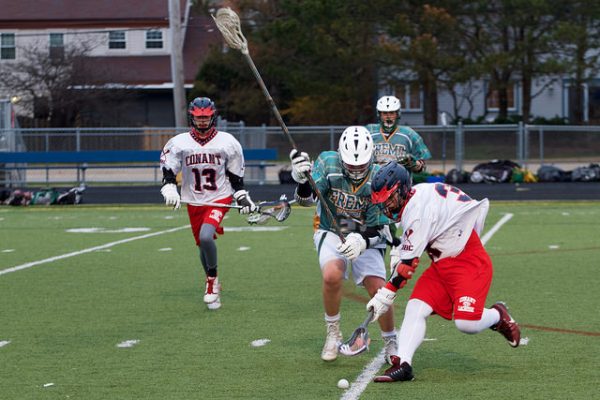
Photo of two high school lacrosse players fighting for the ball. Photo by H. Michael Miley, Flickr CC

During his Supreme Court confirmation hearings, Brett Kavanaugh repeatedly referred to his experiences in high school and high school athletics in ways that depicted sports as wholesome and beneficial for youth. While not denying the benefits of sports, sociological research highlights the detrimental impacts of athletic involvement as well. And in contrast to Kavanaugh’s characterizations, this research shows that athletic participation is often associated with substance use and abuse, violence, and risk-taking among boys and young men in the United States.

The connection between athletic involvement and alcohol use is well-established through research, and the connection is especially pronounced for white male athletes at the top of their peer status hierarchy. Ironically, being high-status in high school drives both alcohol use and some of the protective features of sports, like connection to school and higher grades. Nationally representative surveys have also demonstrated that involvement in organized sports is associated with binge drinking in college, and that binge drinking continues after actual athletic participation ends. Recent work on drug use indicates that male athletes are more likely to be prescribed opioids, accidentally overdose, and have used opioids recreationally than non-athletes or female athletes.
Classics in the field of sport sociology discuss the “Triad of Violence” that is taught through sports: 1) violence against women, 2) violence against others, and 3) violence against the self. For example, male athletes learn to play through pain and to talk about (heterosexual) sex as a conquest. More recent research continues to find links between sports and violent behavior, especially for contact sports. Since risk-taking is central to both the meaning of sport and the meaning of masculinity, it is not surprising that male athletes are more likely to engage in a variety of “risk-taking” behaviors, from drunk driving to unprotected sex.


For other work on how masculinity norms in sport link to sexuality and race, see here!
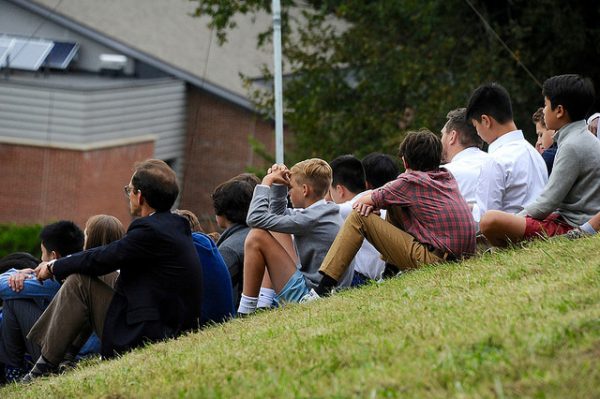
Photo of students sitting on a hill. Photo by EaglebrookSchool, Flickr CC

The confirmation hearing for the recently appointed Supreme Court Justice, Brett Kavanaugh called public attention to what goes on inside elite, private boarding schools. Sociologists have long been interested in the role played by elite private prep schools in the intergenerational transmission of advantage. In 1956, C. Wright Mills contended, “if one had to choose one clue to the national unity of the upper social classes in America today, it would be the really exclusive boarding school for girls and the prep school for boys.” By selecting and training the newer members of the upper class, and by upholding the distinctive standards among the children of families who have long been at the top, the prep schools serving America’s “power elite” have long been the ticket to acceptance into elite colleges and corporations.

Today’s elite boarding schools provide many students with opportunities to cultivate a sense of ease and familiarity with authorities and gatekeepers. They also cultivate students’ beliefs in their own exceptionality by providing opportunities to specialize in unique activities and to hold leadership positions. Yet, because prep schools also escalate the process of separating the winners from the losers, they trap students in a “triangle of tension”: families pressure students to succeed, while the school (at least publicly) encourages them to adhere to a strict moral code, and their friends adopt a culture of “eat, drink, and be merry.” To escape this stress, youth often partake in the student underlife.
Many view surviving boarding schools as a rite of passage, though one more difficult for some than others. Designed to spread the values of affluent white families, students of color often experience prep school culture as extremely unwelcoming.
Moreover, not everyone agrees which private prep schools warrant the label “elite.” Schools may be considered elite on account of characteristics such as their independence from state funding and control, prestigious curricular offerings or teaching methods, the wealth and power of the families whose children they admit, and their geographic locations.

Rubén Gaztambide-Fernández. 2009. “What is an Elite Boarding School?Review of Educational Research 79(3): 1090-1128.

Elite boarding schools enable privileged families to pass on wealth and advantages to their offspring, and they do so by enculturating students to a lifestyle that is tied to wealthy whiteness. This raises serious questions about how we currently think about the qualities and skills inculcated by elite socializing institutions, and about the legitimacy of the many privileges enjoyed by their graduates.

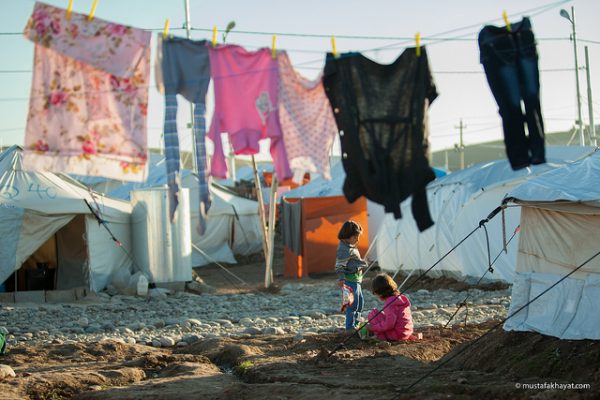
Photo of two children standing between white tents in a refugee camp. Photo by Mustafa Khayat, Flickr CC

The murder of journalist Jamal Khashoggi sparked criticism of Saudi Arabia across the globe. But a recent New York Times article brings forward a striking paradox – this single incident has drawn far more outrage than Saudi Arabia’s large-scale intervention in Yemen. Over the past three years, thousands of civilians have been killed, half of Yemen’s population is at risk of famine, and over 20 million people need humanitarian aid. This conflict is largely caused by Saudi Arabia’s intervention, like attacks on civilian infrastructure and continual deadly air strikes. These factors caused the United Nations to label the violence in Yemen as 2018’s worst humanitarian crisis. Yet in the United States, this conflict has received only limited attention. Research can help to explain the lack of coverage of this crisis and why distant conflict may result in selective empathy.

Depictions of violence play an important role in understanding distant conflict. Places with a history of violence, like Afghanistan or Syria, become linked with this conflict – violence may become understood as timeless or inevitable. Individuals in conflict zones are then minimized into stereotypes, like tribal savages or helpless, incapable victims.
Aid campaigns can unintentionally reinforce these depictions. While campaigns that feature starving children or crying mothers are often well-intentioned, they can reinforce dehumanizing depictions by characterizing groups only through their suffering. In such campaigns, civilians caught up in conflict are  displayed as objects of pity, rather than people with rich lives that were devastated by violence. And more concerning, real suffering can be reduced to a tool to remind viewers of their own luck or deserving.
While we understand our own lives as complex, our conceptualizations of others are often less vivid – such comparisons tone how we understand ourselves and those around us. This contrast can result in stereotypical depictions of groups we see as distant from ourselves. For example, Edward Said argued that influential Western texts about Africa and Asia exoticized these places and the people that lived there. These simplifications become particularly problematic during times of violence because those experiencing conflict in far-away spaces may be understood as less complex and, therefore, less deserving of empathy.

The cultural and physical distance of international conflict can affect empathy, one reason that front-page coverage of Yemen has been limited. However, those seeking a deeper understanding of conflict can challenge these depictions by informing themselves about the history and day-to-day reality of violence and those who experience it. Doing so has the potential to counter these simplified tropes about conflict across the globe.

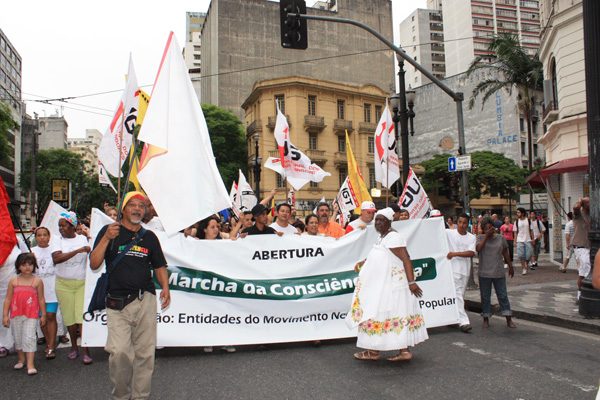
Photo of a march for Dia Consciência Negra in São Paulo. Photo by Central dos Trabalhadores e Trabalhadoras do Brasil CTB, Flickr CC

Historically, Brazil had presented itself as a “racial democracy” where interaction between racial groups formed a utopian, raceless society. In the last few decades, Brazil has come to acknowledge its underlying racism and resulting disparities, leading to the 2001 enactment of race-based affirmative action projects. Social scientific research can help us better understand the functions and necessity of these programs, which are likely to be under threat following the election of right-wing candidate Jair Bolsonaro who has been openly critical of Blacks and the LGBT community and the policies that serve them.

In Brazil, skin color has been the defining mechanism for racial categorization and identity in between a black and white binary. Some official methods, however, including the Brazilian Census, recognize multiracial identity and a number of racial categories. Multiple methods of classification can be tricky, and this can obscure deeper and more basic racial inequalities. Though pardos (a mixed-race category used in the census) can face similar social situations as dark-skinned Blacks (sometimes referred to as pretos), recent research finds that pardos actually do experience less disadvantage than pretos, complicating decisions about who receives help from affirmative action programs.
Given this complexity, determining who is Black and a possible beneficiary of the racial quota program has differed. Some universities have required applicants to be of African descent to qualify for racial quotas, which has caused complications since many Brazilians could claim African ancestry even though they may have light skin or are not seen as “Black.” In other cases, verification committees at different universities confirm whether an applicant should be considered Black and a beneficiary of the racial quota system. The quota program has now significantly broadened to include applicants from low-income families as well as Indigenous peoples. Independent of skin color or racial group, support for affirmative action programs and race-targeted public policies is strong. Research suggests, however, that the more education someone has, the less likely they are to support racial quotas. It is important to consider what factors affect support and execution of these policies as opponents such as President-elect Bolsonaro attempt to dismantle it.

4238252310_b81af757bd_z

Originally posted November 22, 2016.

For many Americans, this weekend is the time for food, football, and family we don’t see often. Given the heightened tensions surrounding the presidential election, social media is teeming with advice on how to constructively engage with friends and family who have different political views. Avoidance, wine, and crying is one strategy, but thinking about what family meals mean and actually engaging in constructive conversations about political issues may be more fruitful.

We often think of Thanksgiving as a time to have a family meal together and strengthen family bonds. But research shows that family dinner does not actually increase well-being in and of itself – it only works if the meal-time discussion is used to actually engage with those at the table and learn about their day-to-day lives. In other words, “polite” conversation may not be the best way to bring everyone together.
We know that people avoid talking politics because they want to seem polite and avoid conflict. But this does not necessarily mean they don’t have political views. In fact, being “not political” is a cultural performance that people do with different styles. It takes work to not be political and those strategies can be overcome without necessarily causing conflict. In fact, a recent study found that having a 10-minute canvassing conversation about trans-related issues was associated with reduced prejudice, at least in the short term.
For those of us who are academics, it is important to remember that engaging in these discussions does not mean spouting off your best summary of Gramsci’s theory of hegemony or Bonilla-Silva’s take on color-blind racism. We need to do as much, if not more, listening than we do talking, because listening to how others are thinking about and responding to the current political climate can help all of us better understand our shared situation. And if and when we do bring up social science theories and research, we should do it in a way that is approachable, not pedantic. As bell hooks argues, “Any theory that cannot be shared in everyday conversation cannot be used to educate the public.”
That’s not to say that academics cannot effectively draw on their experiences as teachers. There are many strategies we use in the classroom to teach things like race, gender, and class that can be useful outside of the classroom. Relying on personal examples and discussions about family histories instead of facts and figures is one example of how to do this. Focusing on experiences that you or your loved ones have had with racial discrimination, generational mobility, or gender role conflict can help them connect the social construction of race, class, and gender to concrete events and stories from their own lives.
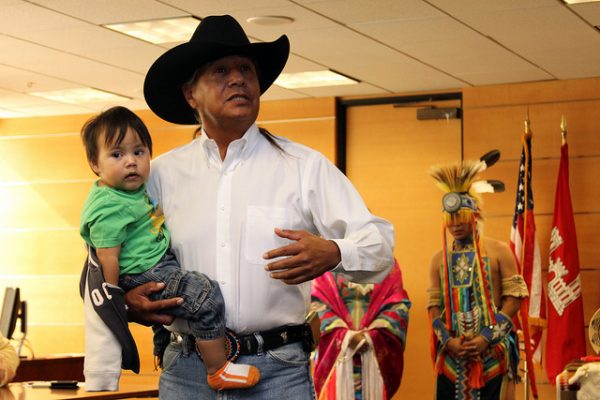
Photo of a Seminole man holding his child at an American Indian Heritage Month celebration. Photo by Los Angeles District, Flickr CC

After years of debate, the Indian Child Welfare Act (ICWA) — which sets minimum requirements for caseworkers handling state child custody proceedings involving Native children — was recently ruled unconstitutional by a Texas federal judge. The judge argued that ICWA violates constitutional rights to Equal Protection because it “elevates a child’s race over their best interest” — despite the fact that Native children are actually citizens of federally recognized tribes. Social science research helps us understand the historical context necessitating ICWA’s creation, with respect to the problematic history of child removal from Native communities as shaped by racialized, gendered, and cultural ideas.

The ICWA was enacted in 1978, a time when Native children were being removed from their homes and placed in foster care at staggering numbers under the guise of protecting children. At that time, 25-35% of Native children were removed from their homes by state child welfare or by private adoption companies. And the majority (about 85%) of these children were placed outside of their families and communities, even when relatives were willing to take them. Today, despite the minimal protections offered by the ICWA, Minnesota places more Native children in foster care than any other state, making up 20% of children in the system.
The ICWA’s creation and implementation has not only been a response to child-removal through adoption, however. Even earlier, Native children were sent to government or Christian-run boarding schools where teachers forced children to abandon their distinct tribal cultures — they cut Native children’s hair, did not allow them to speak their native languages or participate in cultural practices, and enforced strict discipline through corporal punishment. The boarding school era prevented generations of Native people from learning (and passing on) parenting tools. This separation of families, along with the disruption to Native cultural and spiritual practices, has been linked to symptoms similar to post-traumatic stress disorder, increased exposure to physical violence, and substance abuse in Native communities.
The removal of Native children is also couched in deep-set racialized, gendered, and cultural notions of family, specifically the white middle class ideal of the nuclear family, characterized by two married parents and children. Conversely, non-Native supporters of these adoption practices often relied on stereotypes of Native women as sexualized, unmarried, and thus unfit, which pathologized Native families as neglectful. They have also argued that each child’s best interests should be considered on an individual basis, rathering than acknowledging what tribes see as the importance of culture and identity, tribal rights, and belonging. In other words, supporters of Native adoption saw “disadvantaged” Native children that needed to be “rescued” by individual acts of goodwill (from white, middle class Americans).

So what will legal reconsideration of the Indian Child Welfare Act bring? Many tribes fear that the Texas ruling sets a dangerous precedent that could dismantle the federal laws put in place to correct historical injustices like the boarding school system. Other tribal leaders see the ruling as an attempt to destroy their right to political and cultural survival through their children, while simultaneously compromising efforts to heal from the wrongdoings inflicted upon tribal communities. In the context of the current political division over the treatment of immigrant children separated from their parents at the U.S. border, such concerns warrant serious attention.

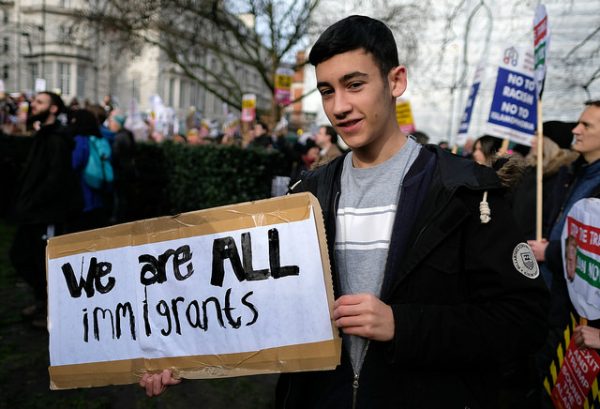
Photo of a protester holding a sign that says, “we are all immigrants.” Photo by Alisdare Hickson, Flickr CC

Politicians, pundits, and critics in Germany, England, and the Netherlands have recently advocated for harsher restrictions on migrants’ access to social assistance in their countries. This has led scholars to evaluate whether increased immigration is eroding historically strong support for welfare in Europe.

Earlier in the decade, the answer seemed clear. Drawing on basic public opinion data from various European countries, scholars found that rising immigration levels preceded a spike in favorability for restrictive welfare laws. More recent and sophisticated analyses, however, suggest that a rise in restrictive welfare attitudes is not directly connected to increasing immigration. Rather, this relationship appears to be better explained by a combination of factors such as national economic conditions, political ideology, individuals’ self-interest, and prejudice towards racial and ethnic minorities.

This work shows that social attitudes about welfare are complex and linked to a variety of factors. Though critics of immigration in Europe have been vocal, it is unclear exactly whether and how attitudes about immigration and migrants relate to beliefs about welfare.

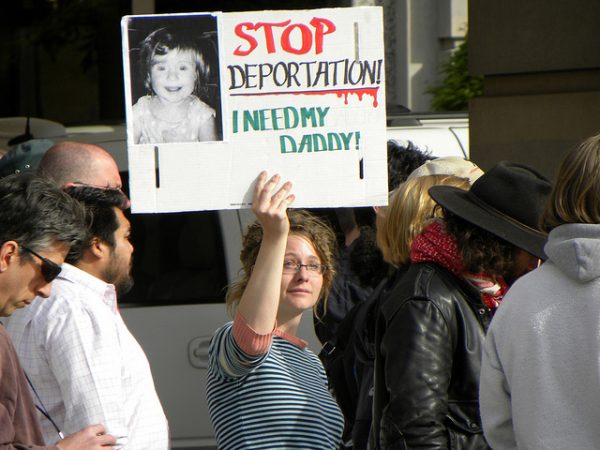
Photo of a protester holding a sign that says, “Stop deportation! I need my daddy,” with a picture of a child. Photo by Fibonacci Blue, Flickr CC

This post was created in collaboration with the Minnesota Journalism Center

A Way Out of the Immigration Crisis.”Like it or Not, Immigrant Children are Our Future.” “Trump Talks Tough on Immigration in Nevada but it Could Backfire.

All three of these news headlines were published by mainstream news outlets in the United States in September 2018. All three portray immigration in a negative light. While much news and media coverage across the globe portrays immigration negatively, researchers who study this area also identify media outlets that include more positive coverage. 

One thing scholars have found is that immigration coverage has increased rapidly since 2004. In U.S. coverage, there is a heavy focus on “immigration reform” and “tougher border control” as solutions to the immigration “problem.” Across the pond in the United Kingdom, polls have ranked immigration as one of citizens’ top concerns, with coverage of immigration being overwhelmingly negative and centered on conflict through utilization of crime frames and discussion of immigrants as “illegal” or “failed.”
But not all publications discuss immigration in the same way. For example, scholars have found that African-American media outlets publish immigration stories with racial frames that depict immigrants as allies, while other major mainstream media outlets frequently utilize crime frames that discuss the legal status of immigrants.
Research also shows suggests that the conflict-oriented news coverage of immigration contributes to polarized public opinions about immigration policies in digital spaces as well as comment sections of mainstream news sites. Conversely, social and mobile media in Australia has been used as a platform for asylum-seekers in detention to share their experiences with the public directly. Journalists and citizens alike have collaborated with detained asylum-seekers to create journalistic narratives that raise awareness of human rights violations unfolding in offshore detainment centers. Though not embraced by all consumers, such stories about immigration appear to cultivate expressions of empathy from audiences.
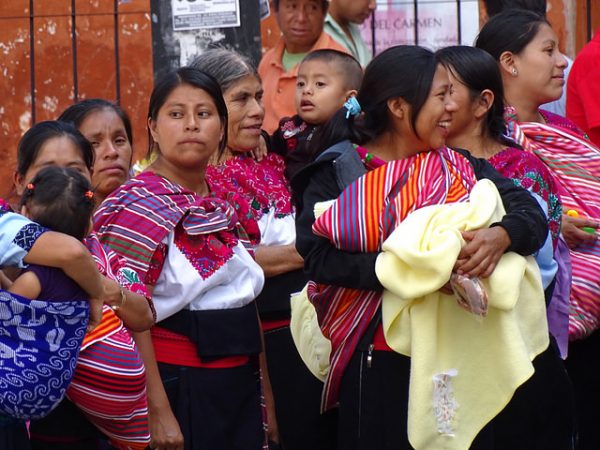
Photo of Indigenous Women, some holding children, outside of a Church in Chiapas, Mexico. Photo by Adam Jones, Flickr CC

More and more Americans have begun observing Indigenous Peoples Day, at least in part to push back against national narratives of “discovery” associated with Christopher Columbus and his commemoration. While a relatively recent development in the United States, other nations of the Americas officially acknowledged the importance of their Indigenous heritage for much longer. For example, in Mexico, Día de la Raza or “The Day of the Race” was officially recognized back in 1928 and was part of a larger national project that emphasized that all Mexicans share a history of racial and cultural mixing — known as mestizaje — since the coming of the Spanish. Sociological research highlights how this recognition of Indigenous people as integral to the formation of the nation has actually had mixed consequences for Indigenous peoples and cultures of Mexico.

The notion of mestizaje emphasized that all Mexicans were fundamentally “mixed” individuals, or “mestizos.” It was adopted by the State in an effort to promote inclusion and national cohesion across racial lines — including Indigenous peoples — and even resulted in the removal of racial categories from the census (after 1921). In this spirit, the Mexican government sought to “improve” Indigenous individuals through education, social integration, and economic development, assimilating them into the newly defined mestizo nation. While some benefited, some lost their language and cultural identity, and many others, especially those with darker skin, faced further marginalization and found themselves pushed underground.
Due to internal and external political pressures in the 1990s, the Mexican government abandoned its assimilationist policies and began instead to protect and promote the languages and cultures of Indigenous peoples. These shifts appear to have contributed to greater ethnic pride and greater likelihood to self-identify as Indigenous, especially for more educated, wealthier, or urban populations. However, skin color continues to carry economic and social weight in Mexico. Non-white Mexicans tend to have lower levels of education and employment and are more likely to live in poverty than their lighter-skinned peers.

So, while Mexico may still celebrate a day to acknowledge its mixed racial heritage, it is worth wondering if there might be other, better ways to recognize and address the challenges that actual Indigenous people in the country face on a day to day basis.

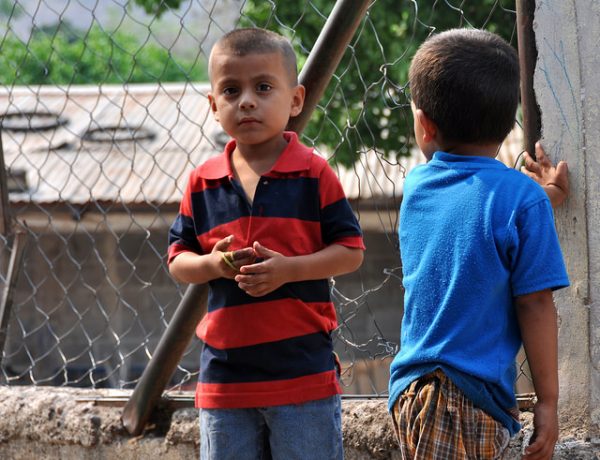
Photo by Eva Cristescu, Flickr CC

Unaccompanied minors have been migrating to the United States from Central America for decades, but media coverage of this harrowing journey rarely focuses on the reasons behind migration. Though violence and economic peril tend to drive these migration patterns, the journey from Central America is dangerous itself, and the backgrounds of child migrants are not always well understood. Fortunately, sociological research on migration can provide context on the difficulty of the decisions and experiences involved in migration.

Structural conditions, like violence or poverty, do not alone predict unaccompanied child migration. Recent analysis finds that when a parent migrates, their child is more likely to follow them — especially compared to children who do not have parents that migrated. Indeed, unaccompanied migrant children are most likely to migrate the same year as their parents. Gender is also a factor — girls are less likely than boys to migrate when they had parents who migrated, and even less likely when these were unauthorized trips.
Some unaccompanied minors make this dangerous journey in order to flee life-threatening gang violence at home, which leads many children to claim asylum or special immigrant status upon arrival in the United States. Upon arrival, however, they may be placed in a detention center or be deported back to their countries of origin. Further, to cover costs for the journey to the United States, Central American families gather their money and take on debt. And this all may be for naught if their child is apprehended and deported back to their country of origin.