race

Photo by torbakhopper, Flickr CC

Originally published July 30, 2019.

As candidates gear up for this week’s democratic debates, constituents continue to voice concerns about the student debt crisis. Recent estimates indicate that roughly 45 million students in the United States have incurred student loans during college. Democratic candidates like Senators Elizabeth Warren and Bernie Sanders have proposed legislation to relieve or cancel  this debt burden. Sociologist Tressie McMillan Cottom’s congressional testimony on behalf of Warren’s student loan relief plan last April reveals the importance of sociological perspectives on the debt crisis. Sociologists have recently documented the conditions driving student loan debt and its impacts across race and gender. 

In recent decades, students have enrolled in universities at increasing rates due to the “education gospel,” where college credentials are touted as public goods and career necessities, encouraging students to seek credit. At the same time, student loan debt has rapidly increased, urging students to ask whether the risks of loan debt during early adulthood outweigh the reward of a college degree. Student loan risks include economic hardship, mental health problems, and delayed adult transitions such as starting a family. Individual debt has also led to disparate impacts among students of color, who are more likely to hail from low-income families. Recent evidence suggests that Black students are more likely to drop out of college due to debt and return home after incurring more debt than their white peers. Racial disparities in student loan debt continue into their mid-thirties and impact the white-Black racial wealth gap.
Other work reveals gendered disparities in student debt. One survey found that while women were more likely to incur debt than their male peers, men with higher levels of student debt were more likely to drop out of college than women with similar amounts of debt. The authors suggest that women’s labor market opportunities — often more likely to require college degrees than men’s — may account for these differences. McMillan Cottom’s interviews with 109 students from for-profit colleges uncovers how Black, low-income women in particular bear the burden of student loans. For many of these women, the rewards of college credentials outweigh the risks of high student loan debt.
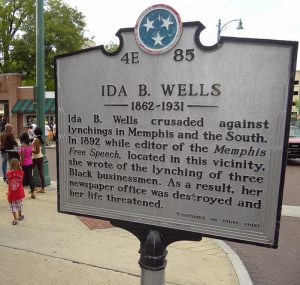
Photo of a plaque commemorating Ida B. Wells. Photo by Adam Jones, Flickr CC

As Black History month draws to a close, it’s important to celebrate the work of Black scholars that contributed to social science research. Although the discipline has begun to recognize the foundational work of scholars like W.E.B. DuBois, academia largely excluded Black women from public intellectual space until the mid-20th century. Yet, as Patricia Hill Collins reminds us, they leave contemporary sociologists with a a long and rich intellectual legacy. This week we celebrate the (often forgotten) Black women who continue to inspire sociological studies regarding Black feminist thought, critical race theory, and methodology.

Ida B. Wells (1862-1931) was a pioneering social analyst and activist who wrote and protested against many forms of racism and sexism during the late 19th and early 20th century. She protested Jim Crow segregation laws, founded a Black women’s suffrage movement, and became one of the founding members of the NAACP. But Wells is best-known for her work on lynchings and her international anti-lynching campaign. While Wells is most commonly envisioned as a journalist by trade, much of her work has inspired sociological research. This is especially true for her most famous works on lynchings, Southern Horrors (1892) and The Red Record (1895).
In Southern Horrors (1892), Wells challenged the common justification for lynchings of Black men for rape and other crimes involving white women. She adamantly criticized white newspaper coverage of lynchings that induced fear-mongering around interracial sex and framed Black men as criminals deserving of this form of mob violence. Using reports and media coverage of lynchings – including a lynching of three of her close friends – she demonstrated that lynchings were not responses to crime, but rather tools of political and economic control by white elites to maintain their dominance. In The Red Record (1895), she used lynching statistics from the Chicago Tribune to debunk rape myths, and demonstrated how the pillars of democratic society, such as right to a fair trial and equality before the law, did not extend to African American men and women.
Anna Julia Cooper (1858-1964) was an avid educator and public speaker. In 1982, her first book was published, A Voice from the South: By A Black Woman of the South. It was one of the first texts to highlight the race- and gender-specific conditions Black women encountered in the aftermath of Reconstruction. Cooper argued that Black women’s and girls’ educational attainment was vital for the overall progress of Black Americans. In doing so, she challenged notions that Black Americans’ plight was synonymous with Black men’s struggle. While Cooper’s work has been criticized for its emphasis on racial uplift and respectability politics, several Black feminists credit her work as crucial for understanding intersectionality, a fundamentally important idea in sociological scholarship today.
As one of the first Black editors for an American Sociological Association journal, Jacquelyn Mary Johnson Jackson (1932-2004) made significant advances in medical sociology. Her work focused on the process of aging in Black communities. Jackson dismantled assumptions that aging occurs in a vacuum. Instead, her scholarship linked Black aging to broader social conditions of inequality such as housing and transportation. But beyond scholarly research, Jackson sought to develop socially relevant research that could reach the populations of interest. As such, she identified as both a scholar and activist and sought to use her work as a tool for liberation.

Together, these Black women scholars challenged leading assumptions regarding biological and cultural inferiority, Black criminality, and patriarchy from both white and Black men. Their work and commitment to scholarship demonstrates how sociology may be used as a tool for social justice. Recent developments such as the #CiteBlackWomen campaign draw long-overdue attention to their work, encouraging the scholarly community to cite Wells, Cooper, Jackson, and other Black women scholars in our research and syllabi.

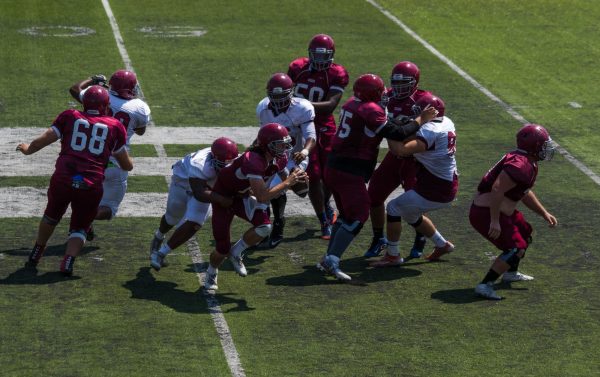
Student Athletes from the Sierra College Football team play in the pre-season football scrimmage at Sierra College in Rocklin, Calif. on August 20, 2016. (Photo by davidmoore326, licensed under CC BY-NC-ND 2.0)

Thanksgiving has NFL games, Christmas has the NBA, and New Year’s has college football. This season as you sit down to watch bowl games or the college football playoff, check out some of the sociological college football research from our partner Engaging Sports

Football can be a path toward economic opportunity, but scholars find race and class patterns in who takes this risky path. For example, Black players are generally from more disadvantaged areas while white players come from more advantaged areas, perhaps indicating that white players benefit from more resources in training while financial necessity drives black players. 
Fans may not have a say in recruiting college athletes, but they certainly have strong opinions about the young athletes at their favored schools. Fans stay away from overtly racist language on message boards, but a criminal record did affect fan support of prospective athletes. 
Finally, both American football and the NCAA seem to constantly be dealing with scandal. Read the articles below for some context on current scandals within the NCAA and how the concussion crisis is affecting a number of sports. 
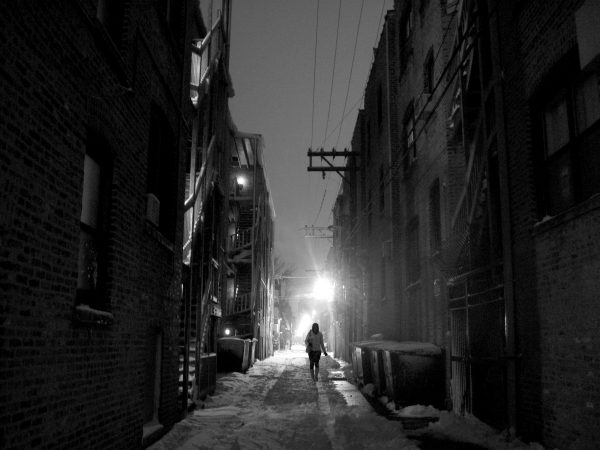
A woman walks alone in a dark alley. Photo by renee_mcgurk via Flickr.
While opinions of particular environments, situations, or objects may appear to be objectively dangerous or safe, sociologists argue otherwise. Instead, they find that opinions about safety are subjective. While there is a physical reality of harm and fear, beliefs about safety and danger spread through socialization, rather than direct observation. For example, Simpson notes that snakes and turtles can both cause illness and death through the transmission of venom or bacteria, yet snakes are seen as dangerous and turtles as benign. In other words, danger and safety do not exist on their own; they are contextual.
Socialized beliefs about safety and danger are also raced, classed, and gendered. While statistics indicate that men are predominantly the victims of violent crime, women express greater fear of crime. This fear often acts as a form of social control by limiting women’s daily activities, like when they leave the house and what they wear. Furthermore, the construction of fear and crime is often tied to racist legacies. In the United States, white women express prejudicial fear about areas marked as “dangerous” or “sketchy,” due to the occupation of this space by men of color.
Safety and danger are also constructed at the international level, as national security is politicized. For example, instances of large-scale political violence, such as genocide, war, and acts of terrorism revolve around the social construction of an enemy. More generally, national enemies are constructed as dangerous and a threat to the safety of a nation’s people. This construction of the enemy and perception of fear can move people to join terrorist organizations, participate in genocidal regimes, and enlist in state militaries.
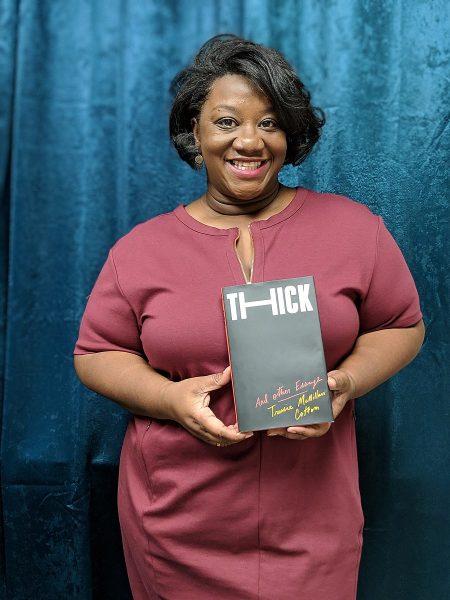
Tressie Mc Millan Cottom displays her essay collection Thick, which was nominated as a National Book Award Finalist. Photo via Wikimedia Commons.

In addition to being a formidable sociologist of technology and education, Tressie McMillan Cottom is an upender extraordinaire of class, race, and gender hierarchies throughout academia and the broader social world. Her book, Thick, was recently nominated as a National Book Award Finalist. With over 100 thousand followers, she is the center of gravity of an ever-expanding Twitter community, and also writes an extremely influential blog. Moreover, she has created a new program of study–Digital Sociology–at Virginia Commonwealth University, where she teaches as an Associate Professor in the Sociology Department.

Even before making her mark in the sociology of higher education with her book, Lower ed: The troubling rise of for-profit colleges in the new economy, McMillan Cottom had become an expert at using social media to assert and establish her legitimacy among scholars. As a graduate student she posted a critical analysis of arguments made by a more senior scholar on her blog, and this earned her the support of a wide and diverse readership. She carries on this tradition of bringing voice and legitimacy to Black women in Thick. Through her essays, McMillan Cottom centers the Black women’s intellectual tradition and their experiences while asking readers to get comfortable with some of the most uncomfortable topics: misogynoir, child loss, sexual violence, to name a few. Her powerful blend of sociology and poignant, personal stories give voice and representation to so many, in a space where such stories so often go unheard.
On Twitter, McMillan Cottom has also created a conversation space where thousands of followers feel supported as they navigate intersecting identities which are oftentimes complicated offline. This virtual space has also become a novel topic for scholarly research. Known as Black Cyberfeminism, this research explores how identities are created and interpreted in virtual places. It also critically examines the intersectional oppressions faced by Black women in virtual institutions. As Cottom argues, Black Cyberfeminist Theory provides a new lens for understanding and engaging in conversations around sociological phenomena.
Working with the Virginia Commonwealth University Sociology Department, Tressie McMillan Cottom has developed undergraduate and graduate Programs in Digital Sociology. Digital Sociology focuses on the use of social media as part of everyday life and the ways it contributes to patterns of human behavior, social relationships, and concepts of the self. Her curriculum encourages students to apply sociological theory to analyze data produced by online human activity, including endless timelines and trends offered from various digital technologies and platforms.

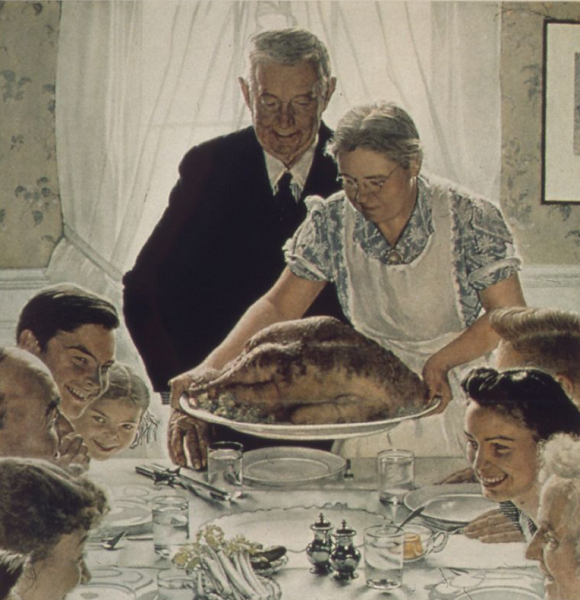
Peaceful holiday meals may still be the ideal, but they are not the norm. The image shows part of a World War II propaganda poster by Norman Rockwell, proclaiming, “OURS… to fight for: Freedom from want,” via Wikimedia Commons.

As we prepare for Thanksgiving, many people look forward to sharing a warm meal with their family and friends. Others dread the holiday, gearing up to argue with their relatives or answer nosey questions. TSP has written about the political minefield that holiday meals can be in the past. This year we want to point out that the roots of difficult dinners actually run deep in everyday family mealtime. Thanksgiving, like any family mealtime, has the potential for conflict. 

Scholars have documented how important meal time can be for families in terms of cultivating relationships and family intimacy. However, they also show that despite widespread belief that families should share “happy meals” together, meals can be emotionally painful and difficult for some families and family members.
Disagreements between parents and children arise at mealtime, in part, because of the meal itself. Some caregivers go to battle with “picky eaters.” Migrant parents struggle to pass cultural food traditions to children born in the United States. Low income parents worry that their children will not like or eat the food they can afford.
Family meals also reproduce conflict between heterosexual partners. Buying, preparing, and serving food are important ways that women fulfill gendered expectations. At family meal-times men continue to do less work but hold more power about how and when dinner is served.
Thanksgiving, or any big holiday meal, can involve disagreements. However, that is not altogether surprising considering that everyday family meals are full of conflicts and tension.
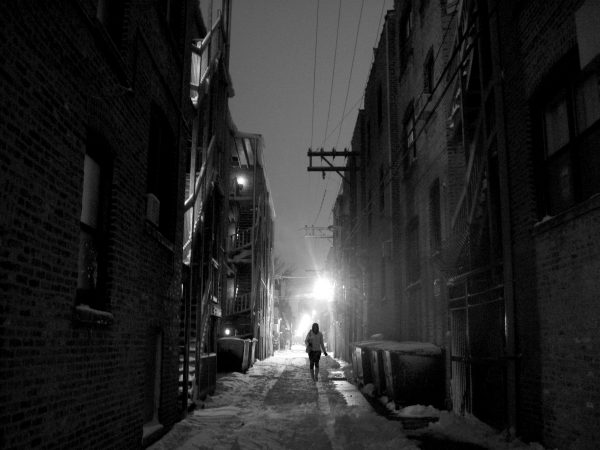
A woman walks alone in a dark alley. Photo by renee_mcgurk via Flickr.
While opinions of particular environments, situations, or objects may appear to be objectively dangerous or safe, sociologists argue otherwise. Instead, they find that opinions about safety are subjective. While there is a physical reality of harm and fear, beliefs about safety and danger spread through socialization, rather than direct observation. For example, Simpson notes that snakes and turtles can both cause illness and death through the transmission of venom or bacteria, yet snakes are seen as dangerous and turtles as benign. In other words, danger and safety do not exist on their own; they are contextual.
Socialized beliefs about safety and danger are also raced, classed, and gendered. While statistics indicate that men are predominantly the victims of violent crime, women express greater fear of crime. This fear often acts as a form of social control by limiting women’s daily activities, like when they leave the house and what they wear. Furthermore, the construction of fear and crime is often tied to racist legacies. In the United States, white women express prejudicial fear about areas marked as “dangerous” or “sketchy,” due to the occupation of this space by men of color.
Safety and danger are also constructed at the international level, as national security is politicized. For example, instances of large-scale political violence, such as genocide, war, and acts of terrorism revolve around the social construction of an enemy. More generally, national enemies are constructed as dangerous and a threat to the safety of a nation’s people. This construction of the enemy and perception of fear can move people to join terrorist organizations, participate in genocidal regimes, and enlist in state militaries.
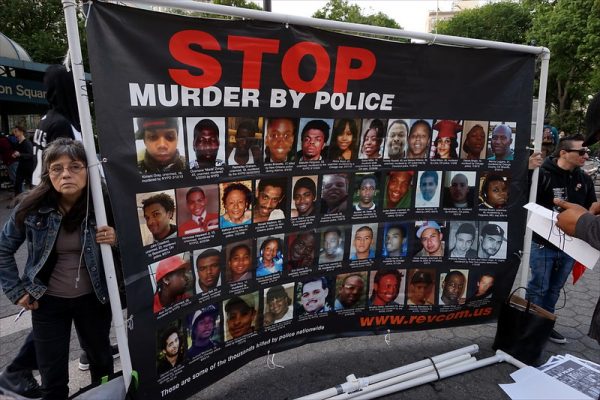
Photo shows a large sign that reads, Stop Murder by Police, and shows pictures of women and girls killed by police.
Photo by The All-Nite Images, Flickr CC

Earlier this month another Black American, Atatiana Jefferson, was fatally gunned down by a Fort Worth police officer in her own home. In the weeks since her death, community activists and residents have called for law enforcement accountability and reform of the police department’s use of force policies. As the Fort Worth community continues to grieve and fight for justice, Jefferson’s death reminds us Black women must be included in conversations around police violence, reform, and accountability. After a decades long struggle for visibility, Black women activists created the hashtag #SayHerName to bring awareness to the growing number of Black cis- and transgender women killed by law enforcement — a list Jefferson has now joined at just 28-years-old. A small but impressive group of sociological works have highlighted Black women’s experiences with police and the racialized and gendered challenges that lie ahead in developing police-community trust.

Similar to Black men and boys, Black women and girls also hold higher levels of legal cynicism (distrust) in law enforcement than whites. They report being stopped and facing verbal harassment for traffic incidents or, in the case of Black girls, breaking curfew — especially when in the presence of Black male peers. Black women and girls also distrust police due to their unresponsiveness to serious calls involving interpersonal, domestic, and sexual violence. For many Black women and girls living in low-income communities, police violence is simply one form of a larger “matrix of violence,” where they must also navigate interpersonal and neighborhood violence. At times, police are the perpetrators of these gender-specific forms of violence. These matrices remain interconnected, as cynicism towards law enforcement hinders reliance on police to address other forms of violence.
Motherhood also brings distinct challenges that shape Black women’s attitudes towards police. Black women are targeted through “family criminalization,” where they fear law enforcement will target both their children and themselves for being “bad mothers.” Since motherhood places Black women responsible for the safety of their children, they attempt to protect Black youth from police suspicion by sharing cautionary tales, sheltering them, and teaching them to comply with police demands. Black women’s cautionary tales, however, often emphasize the police assaults against Black sons, while treating police violence against Black daughters as improbable and less violent. While Black mothers often view police as illegitimate and unresponsive, they may also use police services to help (mostly male) loved ones when other resources remain scarce.

Photo by the euskadi 11, Flickr CC

Originally posted April 2017. We’re reposting this in light of California’s recent decision to prevent the renewal of contracts with for-profit prison companies.

Last month, Attorney General Jeff Sessions reinstated the use of private prisons in the federal system. This move is welcome news to top corrections corporations such as CoreCivic, but human rights activists are concerned about this shift. Opponents claim that these corporations bring in large profits while their prisons remain rife with safety and healthcare deficiencies, as well as underpaid employees. While these concerns are important to consider, the private prison industry represents a small segment of the American correctional system. According to the Bureau of Justice Statistics, only 17% of inmates in federal prisons and 7% in state prisons were held in private facilities in 2015.

During their initial inception, private prisons were believed to be a cost-effective option that could provide better services than government facilities. Despite these goals, much of the current evaluative research suggests that private facilities are no more cost effective than public facilities. Likewise, private prisons appear to perform worse in reducing recidivism than public correctional facilities and have similar (and sometimes worse) conditions than public facilities. In contrast, some evidence suggests that private prisons may be less overcrowded. Due to these ambiguities, scholars of the privatization debate are calling for more research into the qualitative differences between the private and public sector of prisons.
Regardless of their effectiveness, research suggests that the demographic composition of private prisons is racially disparate. In an analysis of adult correctional facilities in 2005, private prisons had significantly fewer white and more Hispanic populations when compared to their public counterparts. As to why racial and ethnic disparities exist, research points to the role of private prisons in immigrant detention, which has lead some scholars to argue that the private prison industry is just a small segment of a massive immigrant industrial complex. This line of research posits that this complex perpetuates the criminalization and stigmatization of immigrants, especially among Latinos, and as a result comes at a significant cost to immigrant families and communities.

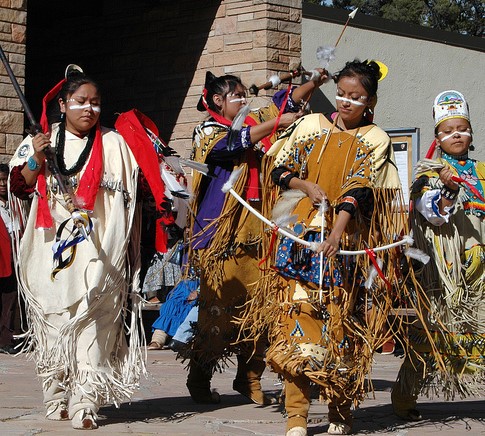
The Dishchii’ Bikoh’ Apache Group from Cibecue, Arizona, demonstrates the Apache Crown Dance. Photo by Grand Canyon National Park, Flickr CC

Originally posted October 9, 2017

In recent years,  an increasing number of Americans are celebrating Indigenous People’s Day to honor those who suffered at the hands of explorers like Christopher Columbus. Social science research helps us understand the underlying gender and racial components of colonial settlement in the United States.

In what is now the United States, Andrea Smith argues that sexual conquest — the rape of native women — was closely tied to the conquest of land. Europeans perceived the indigenous people that inhabited the Americas as uncivilized. Ideas of white civility deemed native women as hypersexual and uncontrollable, unlike white women, whose perceived purity they could not match. These ideas of native women’s sexuality allowed for European males to rape native women without consequence.
Ideas about native men’s and women’s  inferiority were also important for white men’s identities. In the U.S., white settlers believed themselves to be superior to indigenous peoples, bringing enlightenment to an empty wilderness. White, male identity was thus closely tied to the control of land and ownership of property.  
Colonizers viewed land as a metaphor for women’s subjugation. Land – similar to women – was something to be taken and possessed by European men. For example, Europeans who colonized parts of Africa referred to the continent as “virgin land.” Just as virginity was used to describe young women who are perceived as pure and untainted by sex, referring to unconquered land as “virgin” reflects the European’s beliefs that it was also pure, untainted, and ripe for European colonization.