race

Photo by the euskadi 11, Flickr CC

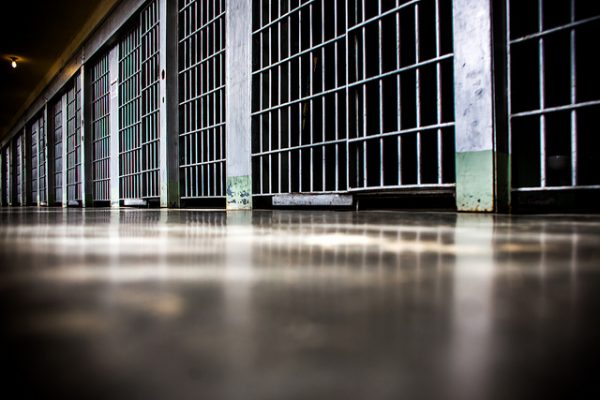
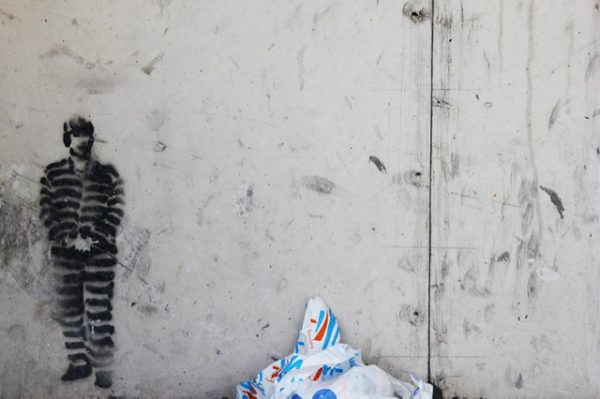
For most of us, our only way to know what life in prison is like is through occasional movies and TV shows. But for inmates, the prison impacts all aspects of their lives. Recent stories have filled newsfeeds about a food protest in a Washington state facility, religious discrimination in Michigan, and a massive fire in a Venezuelan jail that claimed 68 lives. These events put the often-dismal conditions, lack of programs, and corruption in carceral spaces on full display. Social science research on prisons can help us understand the conditions of prison life and how broader social context shapes prison structures.

Classical sociological perspectives view prisons as totalizing institutions that define both the day-to-day routines and the personal identities of those incarcerated. This leads to “pains of imprisonment” beyond loss of freedom. More recent scholarship demonstrates how structural inequality, and especially racial inequality in the United States, shaped the development of prisons. Racialization and racial segregation still shape practices within prisons today.
Prison overcrowding has been a major concern in the United States since the beginning of the prison boom in the 1970s. Research clearly shows that overcrowding has serious physical and mental health effects for the incarcerated, and deleterious impacts for safety in prisons. In Latin America, prisons are also overcrowded, and often include a disproportionately high number of prisoners who are awaiting trial, but have not been convicted. Since these prisons lack government oversight and often have insufficient financial resources, many prisons suffer from corruption, persistent abuse by prison officers, and a crumbling physical infrastructure. Religious entities, and sometimes even prisoners themselves, play crucial role in administering and organizing prisons, as well as providing resources and rehabilitation opportunities.

Recent events and protests shine a light on the importance of continued research on prison conditions across the globe. These studies both help us to understand how social contexts “on the inside” and outside of prisons shape the lives of the incarcerated, and bring awareness to an issue that is often obfuscated from public life.
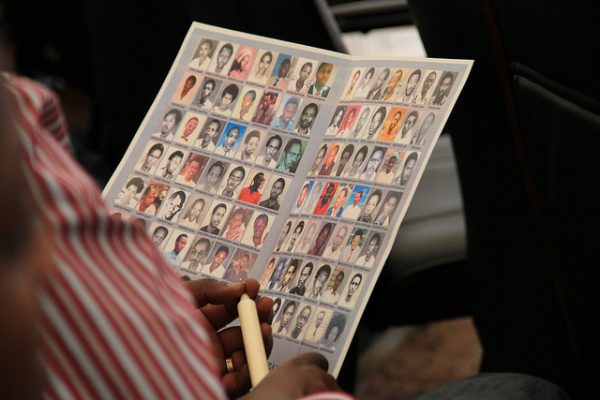

Photo by Kwibuka Rwanda, Flickr CC

The effects of violent conflict are difficult to measure, from refugee displacement to PTSD or other mental health concerns. Humanitarian advocates may look at refugee displacement while psychologists examine PTSD or other mental health concerns. Though sociological insights often remain overlooked, a number of scholars have made essential contributions in understanding the long-term effects of violent conflict. Their work illustrates how conflict can have social and relational effects, and their findings may help to prevent future violence or perpetuate tension for generations to come.

In the context of conflict, the word “trauma” often refers to psychological effects for an individual who has experienced violence. However, sociology allows for a look into the social consequences of violence. Coined by Jeffrey Alexander, “cultural trauma” describes the irrevocable impact of violence upon a group which was subjected to atrocities, influencing understandings of identity far past the conflict itself. The violence experienced by subjugated groups like African Americans and Jews, for example, becomes a key part of how members of these groups understand their identity in the present.
Cultural trauma does not always occur following a violent event. An event must first become widely understood and accepted as a violation, and this generally occurs with the help of institutions, like the law, education, or the media. Some injustices, like violence against native populations in the Americas, are still not fully accepted as persecution. Powerful institutions may seek to limit a group’s capacity to identify as victims, like educational structures that don’t teach the persecution of Native Americans to students. Conversely, those who experienced the violence (or their ancestors) can use institutions to try and reframe this narrative.
Over time, understandings of past violence can change. Commemorative events can pass on memories from atrocities, but often shift in content over time as new individuals take over elements of the commemorative process. Narratives may also shift to reflect contemporary understandings of violence or identity. For example, recognition of Native American genocide — and subsequent declarations of Indigenous People’s Day on Columbus Day — captures a shift in attitudes about past violence.
Photo by Joe Flintham, Flickr CC

This month many celebrated Easter Sunday, symbolizing the resurrection of Christianity’s most prominent figure, Jesus. In this context, we find ourselves reflecting on the rise of the U.S. evangelical movement and the individuals who constitute its membership. Most recently progressives criticized evangelicals for their support of Donald Trump, who received over 80 percent of the evangelical vote despite his lack of religious practice, and his purported incidents of sexual misconduct. Sociological research provides a complicated picture of evangelicals in the United States and their beliefs.

The evangelical movement emerged during the mid-twentieth century and quickly gained popularity among conservative Whites in the 1990s. The core belief of evangelicalism, which has its roots in fundamentalism, lies in its assertion of the Protestant Bible as God’s actual word. Evangelicals see the Bible as the ultimate authority over moral matters and believe it cannot be contested. Their mission seeks to convert non-believers to Christianity so they may see Jesus as their savior and save their souls from eternal damnation.
Evangelicals also make up an essential part of the Republican Party. Several explanations exist for the strong link between evangelicalism and right-wing politics, including religiosity, gender and family ideologies, and moral standards. For example, evangelicals support political causes that reaffirm Biblical beliefs and support ideologies that center patriarchal models of family. Further, moral traditionalists hold universal ideas about what is right and wrong and support political causes and figures that uphold moral principles they perceive to be under threat.
Yet, several scholars warn against overgeneralizing about evangelicals. For example, Andrew Greeley and Michael Hout point out that while a significant amount of African American Christians share some of these evangelical beliefs, they overwhelmingly support democratic policies. Furthermore, outside of the U.S. context, many conservative White Christians reject right-wing social politics.
Photo by Open Grid Scheduler / Grid Engine, Flickr CC

Following the arrest of two Black men at a Philadelphia Starbucks, public attention has increasingly focused on how race impacts whose presence in certain areas is questioned or not. The incident at Starbucks is part of a broader phenomenon about who we see as belonging or not-belonging in social settings and different spaces. Often, these perceptions — about who should and shouldn’t be at particular places — are rooted in race and racial difference.

Research shows that beliefs about belonging particularly affect how Black people are treated in America. Sociologist Elijah Anderson has written extensively about how certain social settings are cast as a “white space” or a “black space.” Often, these labels extend to public settings, including businesses, shopping malls, and parks. Labels like these are important because they can lead to differences in how some people are treated, like the exclusion of the two Black men from Starbucks.
When addressing the intersections between race and social space, social scientists often focus on residential segregation, where certain neighborhoods are predominantly comprised of members of one racial group. While these dynamics have been studied since the mid 20th century, research shows that race is still an important factor in determining where people live and who their neighbors are — an effect compounded by the 2008 financial crisis and its impacts on housing.
Photo by Takver, Flickr CC

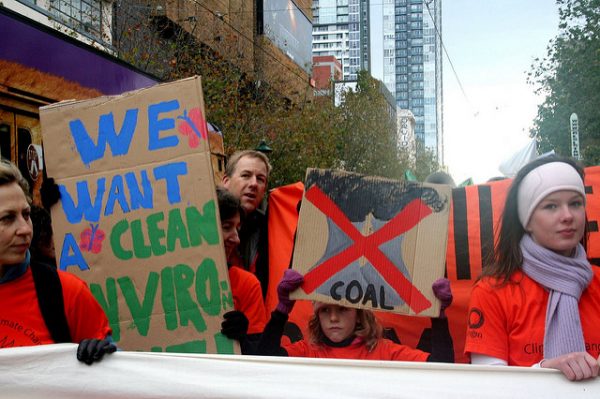
On Earth Day, we think about the environment and how we can protect it. While we tend to think of “going green” as something that began in the 1970s, the history of U.S. environmental movements stretches much further into the past. Over the course three specific historical periods — Conservationist/Preservations, Ecocentrist, and Political/Deep Ecology — environmental activism has shifted in its issues, from parks to pollution and clean water to climate change.  

The early Conservationism and Preservation movements emerged in the 1860s as reactions to the Industrial Revolution and explosion of cites. The mostly White, male elites argued that nature has a functional value in maintaining human societies. These activists were largely unconcerned with the rights and livelihoods of rural residents and native peoples, and were more focused on their own need for distinction, space, and recreational opportunities. We can thank these early movements for the National Arbor Day Foundation, The Sierra Club, the World Wildlife Organization, and the creation of National Parks.
The Ecocentrist movement began its development at the turn of the 20th century, but remained dormant until Rachel Carson’s publication of Silent Spring in 1962 connected the maintenance of clean, pollution-free ecosystems to public health and human survival. This period’s series of landmark successes includes the establishment of the Environmental Defense Fund in 1967, Earth Day in 1970, the Environmental Protection Agency, the Clean Air Act, Clean Water Act, and the Endangered Species Act.
The later historical period and the Political and Deep Ecology period linked social inequalities and consumerism to environmental degradation. Environmental issues like toxic waste, for example, primarily affect poor and working-class citizens. In contrast to earlier periods of elite-driven environmental activism, the toxic waste movement has been made up of people who experience environmental hazards first-hand.
The most recent period of the U.S. environmental movements has seen less success than previous eras. By the 1980s, environmental issues became more complicated and abstract. Ozone depletion, acid rain, and global warming fell outside the jurisdiction of existing regulatory agencies and were more difficult to see than something like chemicals and garbage in rivers, lakes, and streams. Although many citizens generally support environmental protection, fewer people support government spending on environmental issues, especially since these issues are often invisible. Furthermore, contemporary concerns like climate change require international cooperation because they span geographic boundaries.
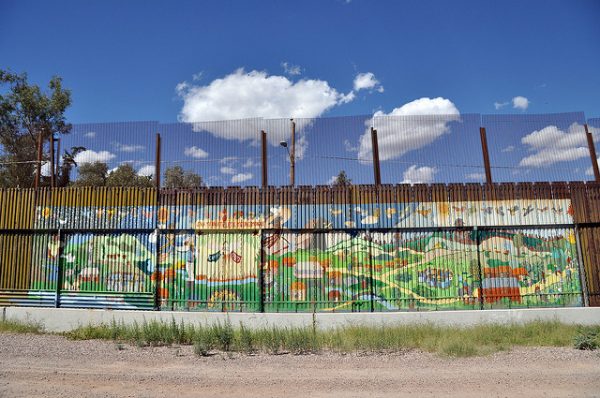
Wall Mural in Nogales. Photo by Jonathan McIntosh, Flickr CC

Migration on the southern border has been a hot topic in U.S. media and politics of late, only intensified by the recent release of plans for the first phase of the construction of a wall and the end of Temporary Protected Status for a number of Central American countries. Unfortunately, media reporting and the debates about these policies are all too rarely informed by social science research on border policies and their impacts on migrants and migration flows.

Since the late 1980s, restrictive policies and measures on immigration (e.g. limiting the number of visas available) and the tightening and militarization of the U.S. southern border have kept potentially undocumented Mexican migrants in the country. With higher costs and risks at the border for undocumented migrants, research suggests that the choice to stay in the United States, rather than moving back and forth over the border, is more of a necessity today than ever before.
On the other hand, as undocumented Mexican migration to the United States wanes — driven also by demographic changes in Mexico — undocumented migration from Central America is increasing. This shift is largely caused by civil wars in the region that sent refugees north, subsequent U.S. immigration policies of the 1990s that expelled many of these refugees that had criminal records, and the social instability in Central America that continues to drive migration back to the United States.
And these policies not only drive the movement of peoples, but also the transfer of their monies. Recent research shows that legal status in the United States (or lack thereof) affects decisions to send money and travel to home countries. For example, Salvadorans — many of whom arrived in the United States undocumented — sent remittances at high rates than other national groups, though traveled back home less than half the rate of the typical Latino migrant. This same research finds that Mexican migrants were more likely to travel back to their home country than Cubans (as travel home was tightly restricted), though both sent remittances at similar frequencies.
Photo by Thomas Hawk, Flickr CC

With recent calls from President Trump for the death penalty for opioid drug traffickers, it is no surprise that the United States is one of the most punitive democracies in the world. But does the Trump administration’s position reflect that of most Americans? Gallup recently re-released findings from a 1987 poll that suggests a majority of Americans opposed the death penalty for drug dealers during a period of heightened concern about drugs. Social scientists continue to investigate the social factors that inform punitive attitudes. 

Among Whites, racial stereotypes about crime drive punitive attitudes. Whites’ racialized perceptions of crime — like the idea that Black individuals are more violent — contribute to support for several policies, including mandatory minimums, lowering the adult age-limit for juveniles, and the death penalty. Among Blacks and Hispanics, racial stereotypes do not appear to drive punitive attitudes. Instead, political beliefs and crime concerns seem to be more consequential for the punitive attitudes for people of color.
Recently, research indicates that criminal stereotypes about Hispanics and Latinos, anti-immigrant sentiments, and xenophobia also contribute to Whites’ punitive attitudes. One cross-national study comparing punitiveness across the European Union found that individuals who endorse anti-immigrant sentiments are more likely to support harsh punishments, even when accounting for other individual characteristics, like religious background. In the U.S. context, xenophobia may be more important than racial attitudes for heightened punitiveness.

This research helps us to understand what influences the increased “get tough on crime” talk in U.S. politics. Concerns about crime control reflect more than just current crime trends. They are connected to both race relations and immigration patterns. So, while many of us may dispute the notion of executing drug dealers in general, keep in mind that racial stereotypes and racial or ethnic hostility drive many current — and likely future — criminal justice policies and practices in the United States.

Check out this Contexts piece by Chris Uggen and Ryan Larson about how the American public may be “getting smarter” on crime and crime control.

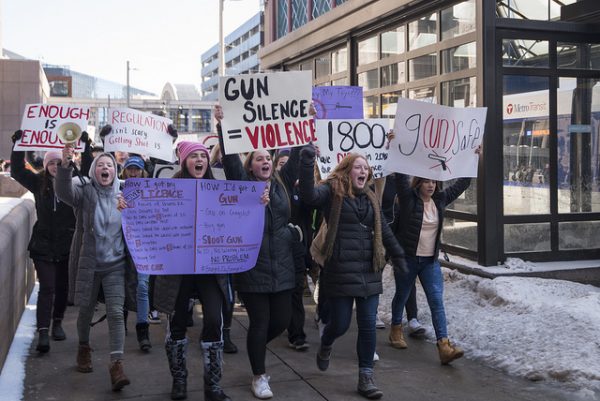
Minneapolis High School Students Protest for Gun Law Reform. Photo by Fibonacci Blue, Flickr CC

“They say…That us kids don’t know what we’re talking about, that we’re too young to understand how the government works. We call BS.” –Emma Gonzalez

Many of us are still reeling over the killing of 17 students at Marjory Stoneman Douglas High School in Florida nearly three weeks ago. Since then, lawmakers, advocates, and concerned citizens have called for stricter US gun control laws — particularly for assault weapons. Those spearheading the current movement are the teenage survivors of the shooting like Emma Gonzalez and Cameron Kasky. Students around the country are joining their peers in Parkland, Florida for the first annual March for Our Lives rally later this month. From the Freedom Riders and 1960s anti-war protesters to Black Lives Matter and Me Too, youth have played a vital role in shaping social movements. Sociological studies on social movements and young people’s mobilization help us understand the energies behind their activism.

School environments, social networks, and families influence youth civic participation in activities such as volunteering, voting, and engaging in political protest. Campus life, for example, fosters political action by exposing students to an array of social issues, allowing them to congregate in nearby locations, introducing youth to new social networks, and provide the free time necessary to organize. Families where parents were highly politically-involved may also increase youth likelihood of participating in political action. At the same time, parents may serve as a hindrance for some youth, as young women and girls may be more likely to experience parental opposition to their political activism.
Attention to youth activism raises questions about the effectiveness of political protest more generally. Recalling the 1960 Black student-led sit-in during the Civil Rights movement, one study found that southern cities with sit-ins were more likely to desegregate lunch counters in the months following protest. These social movement successes are often the product of effective framing strategies that depict certain social problems as moral injustices.  Moral frames often include identifying victims, blaming those responsible for their victimization, and calling individuals to act against the injustice. Different from prior waves of activism, however, newer generations can utilize social media to transmit moral frames to the broader public. Youth of color, for example, have used profile picture changes, comics, memes, and hashtags to garner support against police brutality and anti-immigration policies.
Photo by davecito, Flickr CC

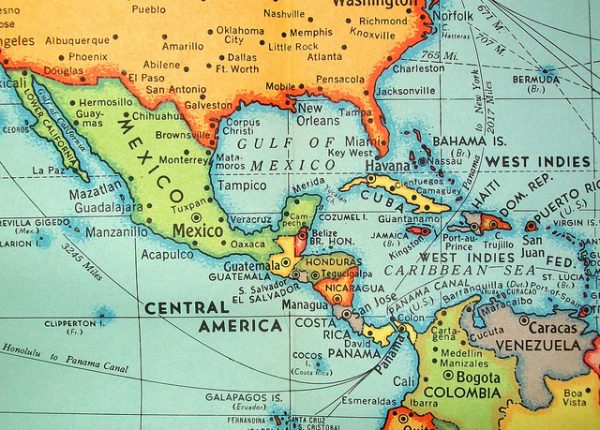
As Black History Month continues, we are reminded of the pivotal role that race plays in the United States. But how does race shape social life in other nations in the Americas? Despite similar historical roots — European colonial expansion and slavery — Brazil and Mexico, for example, witnessed the emergence of race mixing cultures that stood in stark contrast to the distinct racial divisions in the United States.

Ideas about mestizaje — or racial and cultural mixture — have had a powerful effect on racial identity and mobilization across 20th century Latin America. In Brazil, for instance, research suggests that the focus on racial mixture has made racial or color boundaries ambiguous, and racial group membership weak. Mixed-race individuals have been celebrated as national symbols — proof of past and hope for future positive race relations. Because of this, some Latin American countries view themselves as morally superior to the United States, with its history of segregation and investment in White racial “purity.”
But there are complications. In Brazil, weak racial boundaries made organizing along racial lines for the purposes of racial justice and equity difficult. In Mexico, the popular belief that there can be no racism in a nation where everyone is “mixed” makes the recognition of persistent racial inequalities complicated. Some scholars also suggest that Latin American racial boundaries are more rigid and consequential than often realized.
In the past few decades, Latin American countries have begun to recognize distinct racial and cultural groups and the rights of minority groups, leading to changes in both formal laws and public policies. Social scientists will continue to track how Latin Americans’ ideas about mestizaje evolve and what impacts these cultural shifts have on racial identities, movements, and policies across the Americas.
Language Learning Classroom. Photo by Jim George, Flickr CC

Duolingo, the free language-learning platform, has reached more than 200 million registered users around the world. For some, learning a new language is a hobby; for others, it’s a necessity. Whatever the reason, social science research demonstrates that learning a new language has significant social and cultural benefits. 

Learning a new language can improve interpersonal skills. For immigrants, it not only can increase earnings and labor market opportunities, but it can also improve adjustment into a new cultural context. Many factors influence this learning process. One study of 180,000 immigrants found that the societies of origin and destination play the biggest role in determining language proficiency — societies that promote the coexistence of multiple languages can actually encourage newcomers to learn a new language.
Learning a new language also influences the way children form and maintain their friendships. One study demonstrated that fluent bilingual children, and bilingual children whose dominant language was not English, surpassed their peers in getting along with children from different backgrounds, comforting or helping other children, and expressing feelings, ideas, and opinions in positive ways. When children bridge two languages and two cultures at the same time, they are better able to interact with others and build stronger bonds.

In sum, learning a new language is not only about studying words, pronunciation, or grammar structure. The process can have substantial payoffs for social skills and integration.