
race

Photo by Mike Baird, Flickr CC

The recent treatment of superstar tennis player Serena Williams provides plenty for discussions of discrimination against women of color in sports and more broadly, in public. Even before this most recent incident involving her technical violations for supposedly “aggressive” behavior against the match’s umpire, Williams received a violation in the French Open for her black athletic catsuit, despite numerous instances of white players sporting similar wear at the French Open in prior years. Serena Williams’ experience is not only familiar to adult women of color, but also to girls of color. Social science research highlights how enduring patterns of policing and regulating racial minorities begins at an early age — often within educational institutions

Schools have long served as sites for social control and discipline that hinder the educational attainment of minority youth. Girls of color experience a unique set of institutional discriminatory practices that are coded in both racialized and gendered controlling images. All too often, these images depict girls of color as overly aggressive, hypersexual, and too adult-like. One two-year ethnographic study showed that while some teachers appreciated Black girls’ assertiveness in the classroom, by and large, teachers and administrators discouraged Black girls from talking in “loud” or aggressive manners, especially when such behaviors threatened teachers’ authority. They attempted to incentive Black girls into more quiet and docile behavior in order to achieve status as young “ladies” — a status shrouded in ideals of white female innocence.
Dress code enforcement serves as one of the primary ways educational institutions police girls of color. In one study, girls were told, “Don’t come in here with no hoochie-mama dress all tight up on your butt!” Similar remarks demanded that girls “Close [their] legs” and act like ladies. At times, girls resisted these policies and the racialized and gendered stereotypes that emerged alongside them. Still, girls also participated in the regulation of their female peers’ clothing by degrading those who wore “sleazy clothes.” Such policies and practices reinforce educational institutions as sites that perpetually reproduce simultaneous race, gender, sexuality, and class inequalities.
Sign in a store that says “We Accept SNAP.” Photo by ajmexico, Flickr CC

Recently, Trump advisor Stephen Miller announced plans to bar documented immigrants from citizenship if they or their families have ever used social assistance programs such as food stamps or welfare. Such action reflects stereotypes about who uses social assistance — in the United States, people of color take the blame. Not only are these stereotypes often incorrect, they are also deeply rooted in a long history of race and racism in America.

It is important to understand that racial minorities and immigrants do not necessarily use more public resources than native-born whites. Racial minorities and immigrants do tend to have lower incomes and levels of education than native-born whites, but research shows that they do not excessively use social assistance programs when compared with other groups.
Americans’ attitudes towards welfare — particularly myths that certain groups overuse programs such as welfare and food stamps — are heavily rooted in politics of race and racism. In fact, several scholars have illustrated how political and ideological opposition to social spending are shaped by racial appeals. Even in the post Civil Rights era, political figures use implicit messaging and coded language to attack social spending programs and recipients of these programs, subtly implying racial minorities overuse such programs, thus perpetuating these racist narratives.
Miller’s plan to bar citizenship for immigrants who have used social spending programs must also be understood as a consequence of historical racism in the American welfare state. During the 19th and 20th centuries, white working-class immigrants from a variety of European countries accessed social spending programs, opportunities for home ownership, and union membership due to their racial privilege.  On the other hand, Blacks and other non-white groups — including non-white immigrants– were denied the same opportunities. This heightened racial inequality while simultaneously validating racist beliefs about minorities and immigrants. In short, while Miller’s plan seems to primarily focus on immigration, it most certainly also about race.
Photo by Steven Depolo, Flickr CC

Originally Posted September 14, 2016.

It’s September, which means students are zipping up their backpacks and sharpening their pencils for a new school year. For many kids, however, disciplinary actions like suspension and detention make school feel less like a place of learning and more like a minefield for getting into trouble. Some schools are experimenting with restorative justice practices to address disruptive behavior in lieu of more traditional means that often mean missing class. These new policies tend to take a lot of time and effort to implement, and very little research has been done regarding the efficacy of these restorative justice initiatives. However, research points to an array of problems with the more traditional, exclusionary methods educators have relied on in the past. 

Many schools have increased their use of punitive discipline and zero tolerance policies, despite drops in school-based delinquency. A shift in school disciplinary procedures would likely result in fewer days of missed tests and lectures for African American students, who are the most likely to receive suspension as a punishment in schools, especially in more racially diverse schools. Research shows that black students are more likely to receive the brunt of disciplinary action when overall delinquent behavior in school is low because teachers and administrators perceive them as threatening day-to-day proceedings.  
Educators often evaluate certain behaviors and mannerisms like punctuality, quiet voices, and particular styles of dress as indicative of being good students. These perceptions of good behavior often stem from teachers’ raced and classed biases regarding what a model student looks like. But many of the characteristics that teachers think make bad apples, like tardiness and attendance inconsistencies, are in fact the same red flags that a student is at risk of dropping out of school. And new research finds that exclusionary punishments like detention and suspension lead to lower test scores and increased tensions between teachers and students.


Photo by Indi Samarajiva, Flickr CC
The word “rave”evokes different responses depending upon one’s generation. For many it symbolizes fun all-night dance parties with friends. While the public may be quick to associate rave culture with youth delinquency, social science explores the broader range of social, spiritual, and cultural elements of raves and electronic dance music (EDM). Raves began in 1980s Britain and quickly spread to the United States. Youth created these anti-establishment and and underground events to celebrate peace, love, unity, and respect — otherwise known as “PLUR.” However, heavy drug consumption resulted in media scrutiny and government crackdowns of these underground locations in the 1990s and early 2000s, pushing raves into more formal spaces like clubs.
Social scientists have explored raves and the electronic dance music scene from two different perspectives. The cultural perspective emphasizes a sense of community and empathy for its members as the roots of the scene. From this perspective, drug use enhances these experiences. The rave has been portrayed as a youth cultural phenomenon, characterized by belonging, self-expression, acceptance, camaraderie, escape, and solidarity, and where drugs — particularly ecstasy or “E” — are often central to the scene or tools in rebellion. From the public health perspective, excessive drug use is the defining feature of rave culture. Here raves and the electronic dance music scene are perceived as dangerous drug subcultures that increased drug-related health problems in the United States. However, some debate these claims and argue that the effects of ecstasy itself are linked to feelings of closeness and solidarity at raves.
While typically not linked to public perceptions of rave culture, some scholars connect raves and electronic dance music culture (EDMC) to religion and spirituality. In particular, scholars point to the non-Christian religiosity of rave’s dance “ritual,” likening it to the non-denominational “new church.” Further, EDM inherits its ritualistic, chanting, and percussive elements from African, Asian, and Indigenous cultures in North America, and African American, Latino, and gay communities in Chicago and New York City in the 1970s and 1980s. Thus, youth promoted raves as place of growth, sacredness, and unity, where youth were not divided through class, ethnicity, and gender.

Though the shape and form of raves and rave culture continues to change, both cultural and public health scholars agree that these events are much more than sporadic, all night dance parties.

Photo by Sara Star NS, Flickr CC
Despite the stressful experiences and the poverty that often accompany immigration, social science research shows that Hispanics as a whole fare better in health outcomes than non-Hispanic Whites. The ‘Hispanic Paradox’ refers to the fact that these good health conditions in Hispanic populations represent a curious puzzle for researchers. This is because Hispanics also exhibit low-income status, disproportionate exposure to stress factors associated with the immigration process such as learning a new language, adapting to an unfamiliar environment, and encountering persistent discrimination — factors associated with poor health outcomes.
Some studies explain the ‘Hispanic Paradox” based on Hispanic culture-specific features that act as protective factors of health and wellbeing. They include the cultural emphasis in the development of social resources, family ties, and religious affiliations. Hispanic mothers in the United States, for example, enjoy favorable birth outcomes due to their close relationships with family, friends, and community members who provide a protective network of informal prenatal care. However, new research has found that Hispanic mothers’ adaptation to the norms of U.S. society — known as acculturation — erode these healthy behaviors.
Notably, the Hispanic Paradox may not remain consistent when researchers consider the specific composition of Hispanic populations living in the United States, compared to Hispanic populations in their places of origin. For instance, Hispanics who migrate may have better health conditions than those who stay in their home countries, known as the ‘healthy migrant effect’. On the other hand, less healthy Hispanics may be more likely to return to their home countries and thus less likely to participate in research studies, what is called ‘the salmon bias’. A study of Hispanics tested both the ‘healthy migrant’ and ‘the salmon bias’ effects among Cubans (for whom returning to their home countries is not feasible), Puerto Ricans, and U.S.-born Hispanics (whose deaths are recorded in the U.S. national statistics). Findings reveal that lower mortality for Hispanics remains constant, even when controlling for these alternative hypotheses.

Alberto Palloni and Elizabeth Arias. 2004. “Paradox Lost: Explaining the Hispanic Adult Mortality Advantage.Demography 41(3): 385-415.

Ana F. Abraido-Lanza, Bruce P. Dohrenwend, Daisy S. Ng-Mak, and J. Blake Turner. 1999. “The Latino Mortality Paradox: A Test of the” Salmon Bias” and Healthy Migrant Hypotheses.” American Journal of Public Health 89(10): 1543-1548.

Studies on the Hispanic Paradox shine a light on how ethnicity can affect health outcomes. However, concerns about health outcomes among minorities require both strengthening the benefits and preventing potential harmful consequences of being Hispanic in the United States.

Photo by Debra Sweet, Flickr CC

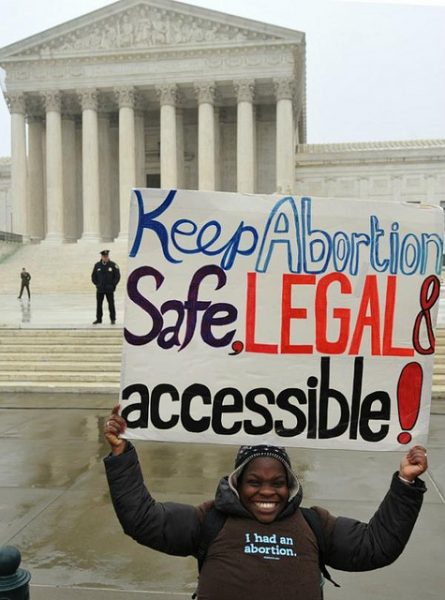
With the appointment of a new Supreme Court Justice looming, Roe v. Wade — the landmark legislation that legalized abortion across the United States — faces an increasing threat of being overturned. While we often talk about the women who have or seek abortions, we tend to forget about the providers who perform them. Abortion providers today certainly face many challenges to performing this service, but before Roe v. Wade, choosing to perform abortions was usually illegal and dangerous. Despite this precarity, many providers risked their lives to ensure women had access to abortions.

Abortion didn’t always receive public concern. In fact, prior to the mid 1900s, abortion was considered a strictly medical matter. In the late 1800s, medical professionals began advocating for the criminalization of abortion, arguing that women who sought them were medically ignorant about pregnancy. And, at a time when a growing number of immigrant groups seemed to threaten the dominance of White, Anglo-Saxons, doctors vehemently opposed abortions for White, Anglo-Saxon women who defied their “natural” purpose — to reproduce. Many doctors remained opposed to abortion into the mid to late 1900s, but not all. These others doctors — known as “doctors of conscience” — performed illegal abortions, often requiring the women they served to wear blindfolds so they could not identify the doctors if they were later arrested.
It was not only trained medical professionals who performed illegal abortions. Some providers had little to no legitimate medical training. For example, members of the underground abortion service in Chicago — known as “Jane” — sought training so they would not need to rely on outsiders to perform services. Surprisingly perhaps, many clergy used their status and privilege of confidentiality with clients to provide referrals and assistance to women seeking abortions through an organization known as the Clergy Consultation Service (CCS).

The CCS alone estimates that the abortion providers they worked with were able to supply hundreds of thousands of women with abortion services before Roe v. Wade. And this was only possibly through the collaborative efforts of individuals who formed organizations and networks, and used their privileges and resources to help women who sought their assistance. Today women continue to fight for reproductive rights, and with the possibility of Roe v. Wade‘s overturning, many worry that women will once again need to rely on providers like doctors of conscience to meet their reproductive needs. 


This episode of the podcast, Criminal has more about the Clergy Consultation Service.

Photo by Matt Wade, Flickr CC

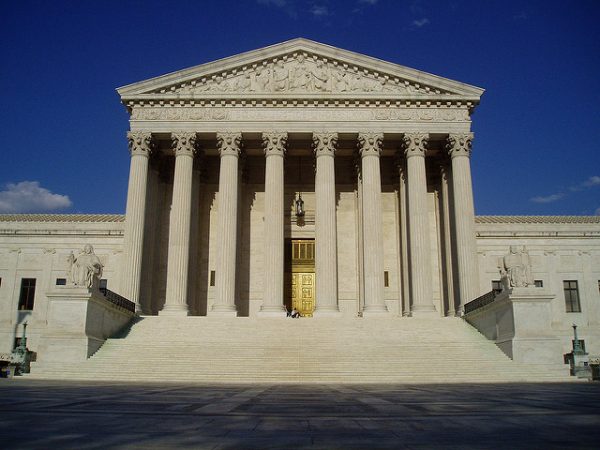
Brett Kavanaugh’s recent nomination for Supreme Court Justice faces much opposition from Congressional Democrats and other progressive political groups. These groups express concerns over a possible overturning of Roe v. Wade, redaction of climate change policies, and implementation of more punitive criminal justice policies. This political contention is crucial, as Supreme Court justices and their rulings can have far-reaching impacts. One area where the Court has been highly influential is shaping how colleges and universities consider applicants’ racial identity during their admissions decisions.

In the 1960s and 1970s, several colleges voluntarily implemented admissions programs designed to boost the presence of underrepresented racial minorities and women within their student bodies. These policies became known as “affirmative action,” a highly politicized issue since its inception. During the 1978 case, Regents of the University California v. Bakke, the Supreme Court ruled against the use of racial quotas and thresholds, but Justice Lewis F. Powell stated that pursuing “diversity” is a constitutional goal. His written opinion affirmed colleges’ right to pursue a diverse student body and therefore consider applicants’ race in admissions, albeit with several considerations and under a standard of “strict scrutiny.”
Since Bakke, The Supreme Court has ruled on affirmative action in cases such as Gratz v. Bollinger in 2003, Grutter v. Bollinger in 2004, and Fisher v. University of Texas, which appeared before the Court in both 2013 and 2016. In each instance, the “diversity” rationale in the Bakke ruling was upheld; colleges have been allowed to consider race in admissions under certain conditions. Yet, several scholars note that prioritizing “diversity” often ignores issues regarding privilege, access, and racial inequities in America. The Supreme Court inspired a defense of race-based policies in admissions for the sake of promoting a cosmopolitan, worldly, “diverse” college experience. By contrast, the original proponents of affirmative action highlighted the need to address pervasive racial inequalities in America, inequalities that persist today.

The history of race-based policy and the Supreme Court illustrates how the Supreme Court justices can shape public policies and social problems. It is likely that anti-affirmative action lawsuits will appear before the Supreme Court again (see Margaret M. Chin and Syed Ali’s recent TSP feature on race, merit, litigation, and school admissions procedures). For now, it is unclear whether the Supreme Court will continue to rely on Bakke or turn to a different rationale in the future. Thus, as the nomination and confirmation process for the next Supreme Court justice plays out, we can be sure that many people will be keeping a close eye on proceedings.

Photo by Rodrigo Soldon Souza, Flickr CC
The FIFA World Cup is in full swing in Russia, and fans from all over the world have been traveling or tuning in to catch their favorite teams and players. The World Cup may seem like fun and games, but for social scientists all over the world, soccer — or “football,” as most of the world calls it — is Exhibit A in the argument that sport and its mega-events are a powerful social force on the world stage.
Sport elites and enthusiasts often celebrate the positive, community-building dimensions of soccer’s social power, highlighting soccer’s role in building national unity and fostering international cooperation. Across various geographic boundaries and historical periods, soccer can and often does bring people together through shared traditions, social networks, and goals. International sports can even shape international politics and diplomacy.
As TSP co-Publisher Doug Hartmann has insisted for years however, even as sport builds community and social connections, it simultaneously crates differences and distinctions, some of which can lead to conflict or inequality. Global soccer exhibits these social dynamics as well. For example, the popularity of sports and competition in many parts of the world can be connected to historical processes of colonialism and imperialism. Another common theme in the social scientist’s playbook is the racism and violence that so often accompanies soccer in both national and international settings.

All this might help explain why some scholars have been cautious and critical of the Russian World Cup, such as Jules Boykoff, who warns against the presence of bigotry and ultranationalism in an op-ed with the LA Times. The complicated intersections of sport, power, and race means that there are times when it’s not all fun and games.


For more, check out this NBC Think article on “sportwashing”– using mega-sports events to elevate a country or politician’s reputation and distract from their negative human-rights records.

Photo by André Zehetbauer, Flickr CC

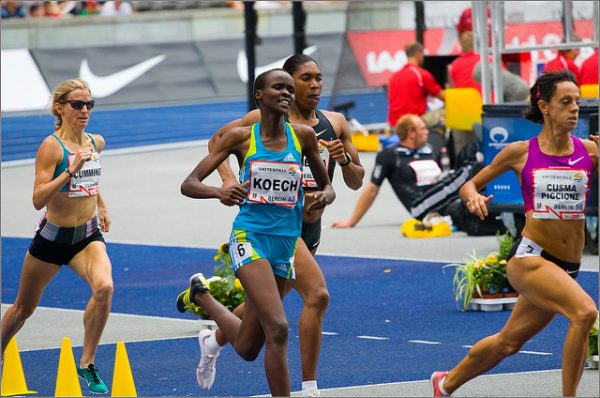
During PRIDE month Americans celebrate gender and sexuality spectrums, but many social arenas still rely on a rigid binary. Athletics is one of the spaces where gender segregation still dominates. In fact, its strict separation of sports into male and female competitions actually requires sport administrators to set and police the boundaries between the sexes and has created many controversies and conundrums in recent years. Sociological research illustrates how actors use gender verification, or sex testing, in athletics as a weapon of nationalism, sexism, and racism, thus reinforcing a medical view of the gender binary in an attempt to ensure “fair play.”

Gender verification in international athletics was part of the battlefield of the Cold War. Systematic sex testing in the Olympic Games began in 1968, largely in response to concerns about the dominant performances of the East German women and fears or rumors of men posing as women. In addition to being used as a weapon of nationalism, gender verification testing targeted athletes who did not conform to white, Western norms of femininity. Even after systematic sex testing was (briefly) eliminated by the International Olympic Committee in 2000, “suspicious” athletes such as the middle-distance runners Santhi Soundarajan and Caster Semenya were forced to undergo gender verification in 2006 and 2009.
Sport federations continue to defend gender verification of women — but not men — on the basis of “fair play,” or the idea that women competing against men face an unfair athletic disadvantage. Feminist scholars have critiqued the fair play reasoning as a smokescreen for the policing of women, especially as sex segregation and drug testing are two of the only ways that sport federations attempt to enforce a level playing field. Additionally, sex testing forces a medical definition of sex and draws sharp lines that punish individuals who are intersex, have chromosomal abnormalities, or have higher than average levels of androgens.

How sex has been defined and verified has shifted as the medical understanding and technology available has advanced, but all gender verification methods will continue to struggle with how to fit the wide spectrum of gendered individuals into only two boxes.

Photo by US Department of Education, Flickr CC

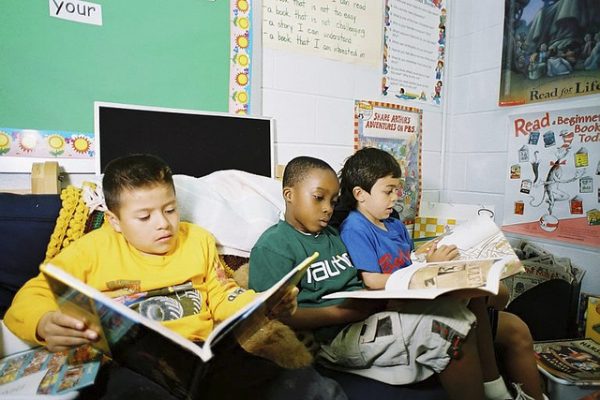
Teaching about race and racism in school systems and classrooms is a complex task, and crafting curricula and policies in these areas are even more so. As recent debates over history textbooks and lesson plans about slavery illustrate, race and racism are often emotional and controversial, and vary from community to community, state to state, or nation to nation. The notion of “antiracism” has been another recent touchstone — and research on the topic may lead to more informed policies and decisions on how to address racism in educational contexts.

In its definition, antiracism confronts racism and challenges White gains from the exclusion and oppression of people of color, even if those gains are unintentional. Antiracism in education follows these tenets, by focusing on racial inclusiveness and questioning how conceptions of race and racism have shaped what counts as knowledge.

David Gillborn. 2008. “Developing Antiracist School Policy.” Pp. 246-251 in Everyday Antiracism: Getting Real About Race in SchoolNew York: The New York Press.

Audrey Thompson. 1997. “For: Anti-racist Education.” Curriculum Inquiry 27(1): 7-44.

Many antiracist education programs focus on White individuals, assuming that Whites are the main actors that can produce change, but also major obstacles to progress. But research suggests that students of color are also an important part of the teaching and learning process. These students can bring their own personal experiences — which can’t be learned from books — into the classroom and thus, these students can be instrumental in promoting antiracist change. Involving communities of color in educational processes, by informing students on African languages, cultures, and heritage, for example, can promote collective learning and knowledge production to benefit both students of color and White students.

David Gillborn. 1996. “Student Roles and Perspectives in Antiracist Education: A Crisis of White Ethnicity?British Educational Research Journal 22(2): 165-179.

George J. Sefa Dei. 2008. “Schooling as Community: Race, Schooling, and the Education of African Youth.” Journal of Black Studies 38(3): 346-366.